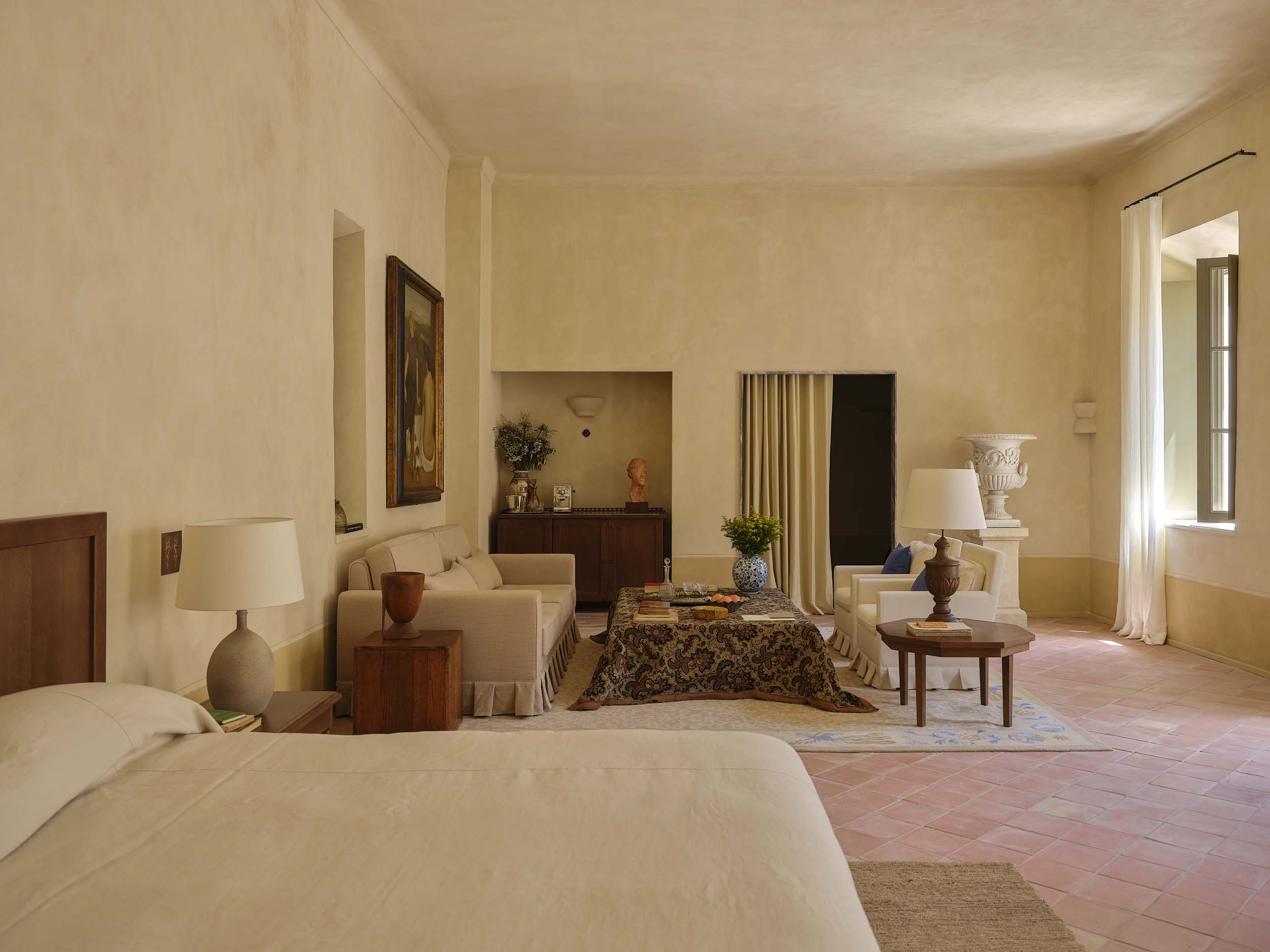
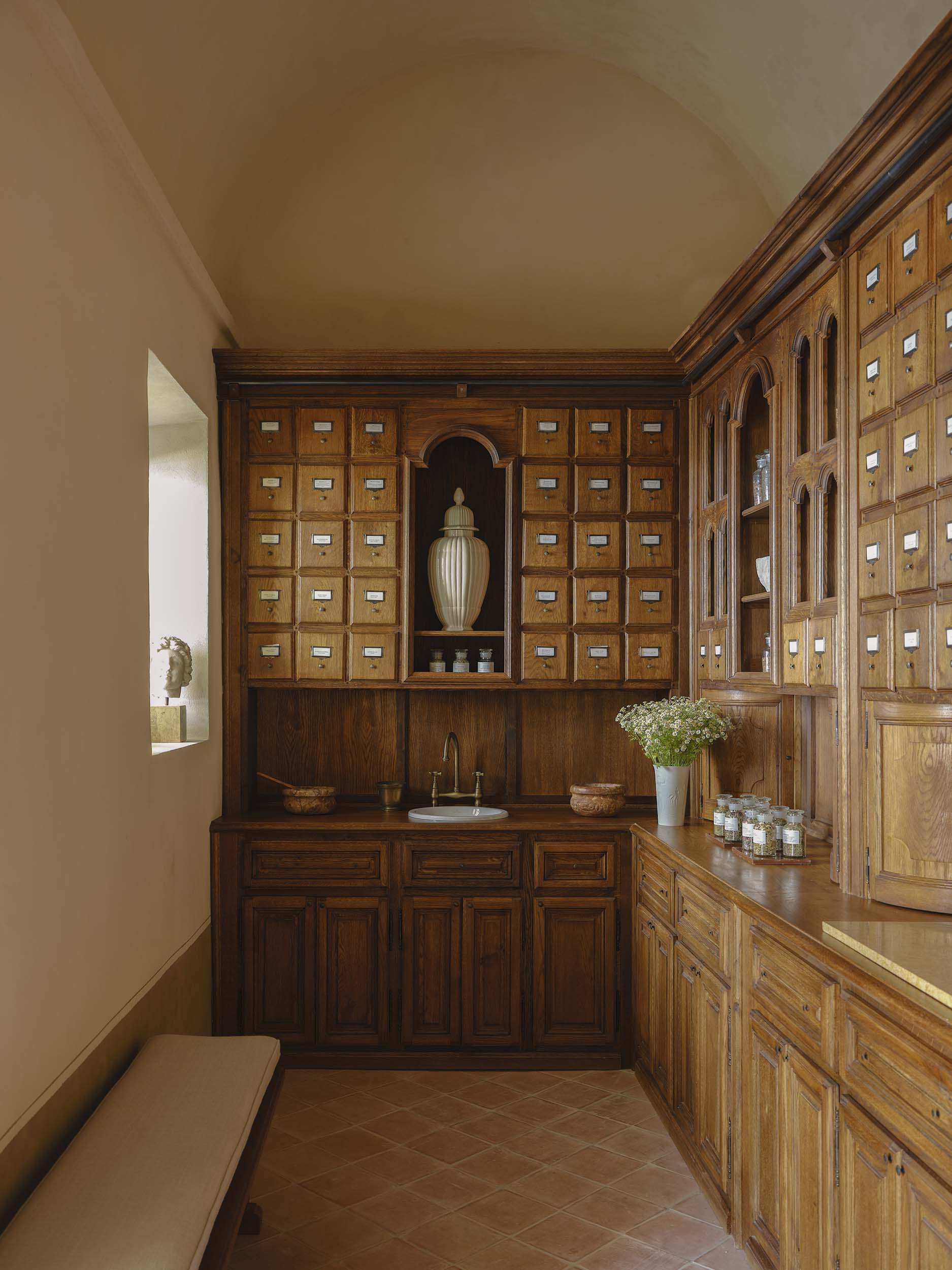
In its over four centuries of existence, the Couvent de la Visitation in Nice, France saw many residents come and go. First the sisters of Sainte-Claire for whom the convent was erected starting in 1604. After being declared a historic landmark in 1989, part of the large structure briefly functioned as a shelter but was finally vacated in 2009. Fifteen years later, the same walls have been rehabilitated by Studio Mumbai and Studio Méditerranée to accommodate the grounds’ latest function: the five-star Hôtel du Couvent. Hotelier Valéry Grégo, who took on a 93-year lease of the premises in 2021, envisioned converting the abandoned complex into a less conventional luxury property: a refined refuge for contemplation, mindful of the site’s notable history. Besides 88 guest rooms with interiors by Paris-based firm FESTEN, the former nunnery now encompasses a Roman bath complex, a bakery, a library full of rare art journals, and a herbalist’s shop. Only natural wine is served. TVs are banned.
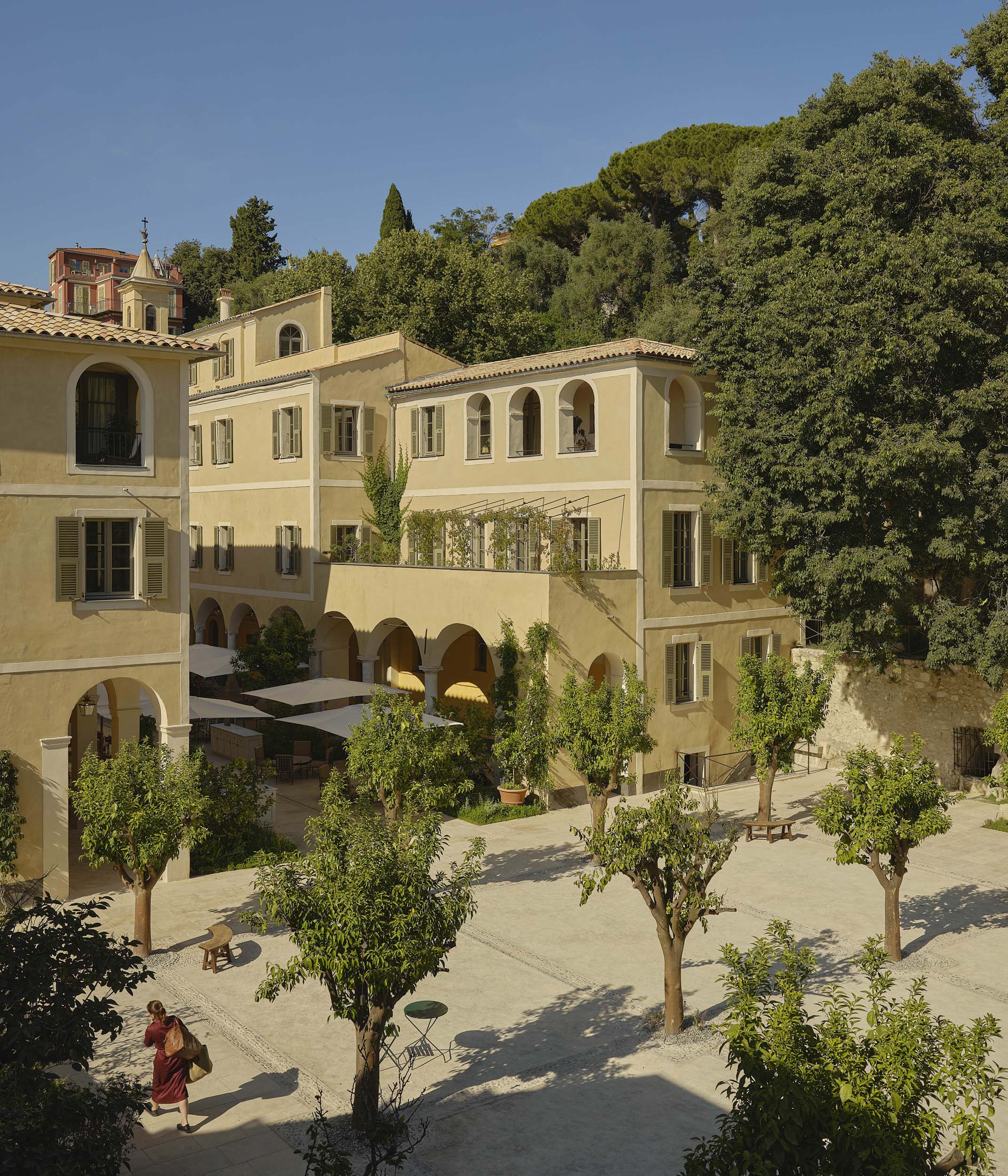
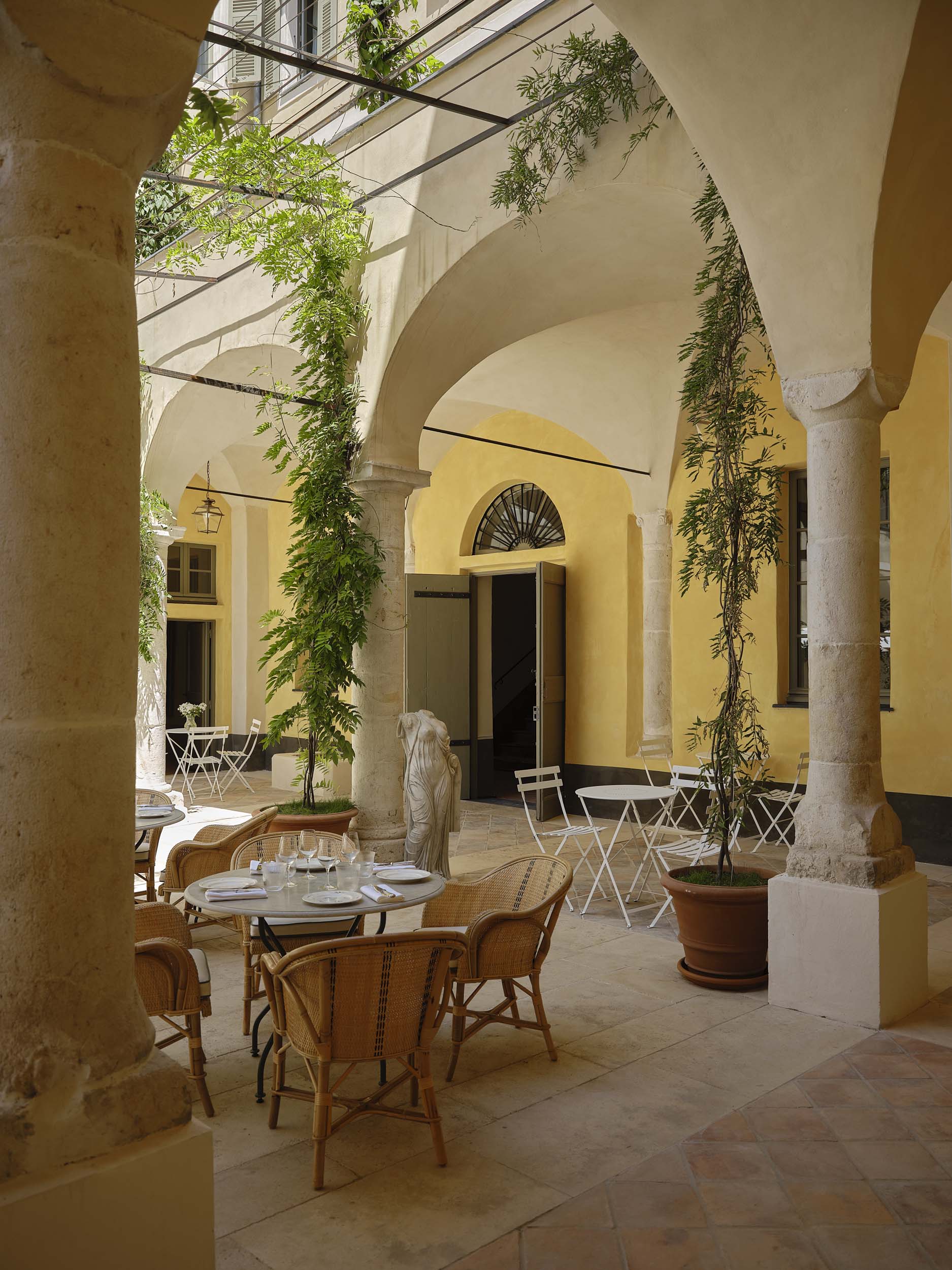
Entering the new hotel one might be fooled into thinking the place is still an institution of some kind rather than a hospitality business. There is no conventional reception lobby, just a sequence of graveled courtyards, vaulted cloister hallways, and high-ceilinged, country-chic salons full of elegant stained oak woodwork. To the left, the architects added a stuccoed wing that blends with the restored old structure. That original U-shaped building, in ruins when work started, has been reborn as a suite of indoor-outdoor spaces that mimic a monastic ambiance but temper any excess austerity with nods to comfort and taste a nun would find immodest: chambers and corridors now feature antique busts, deep mocha-colored velvet couches—even a small Picasso.
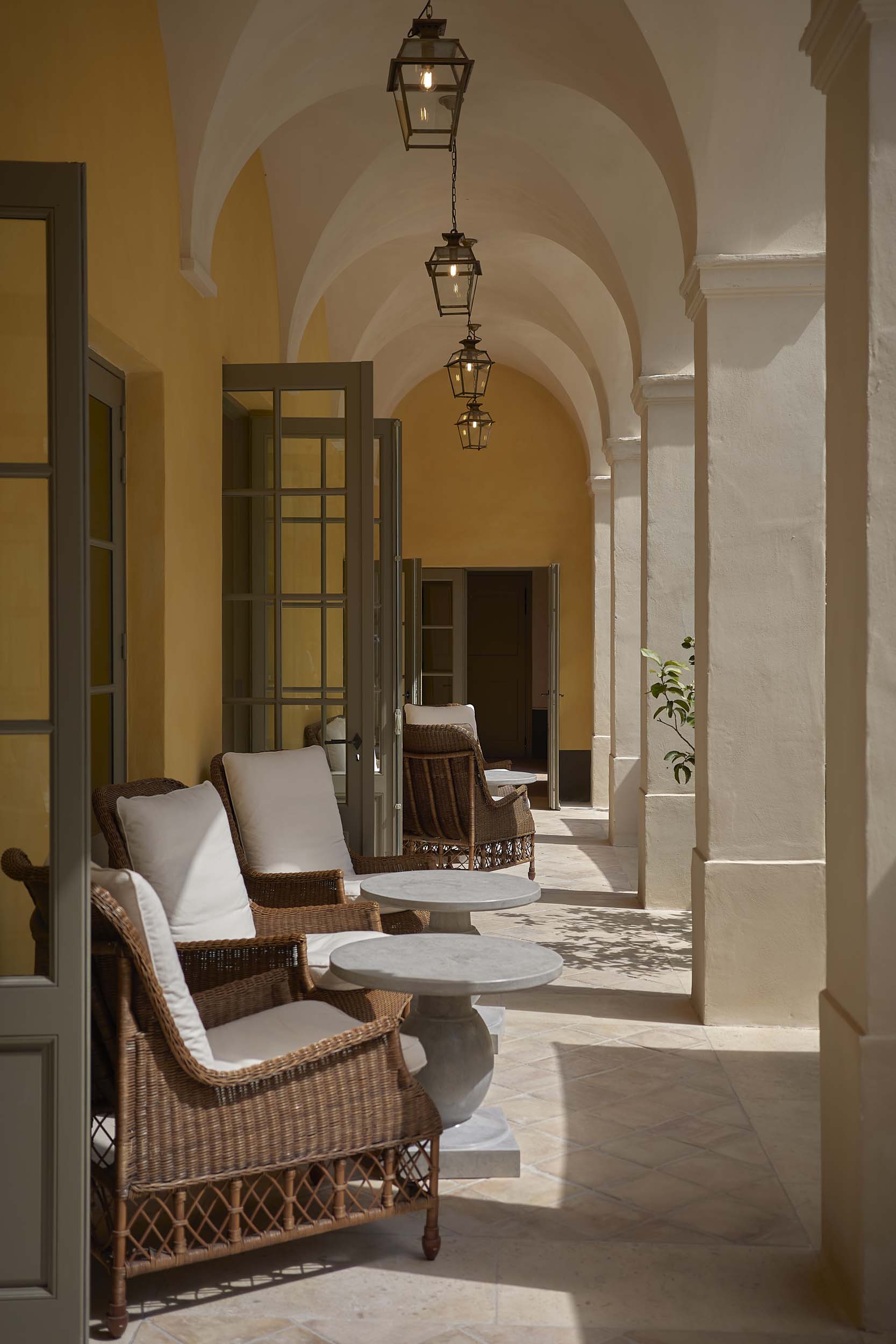
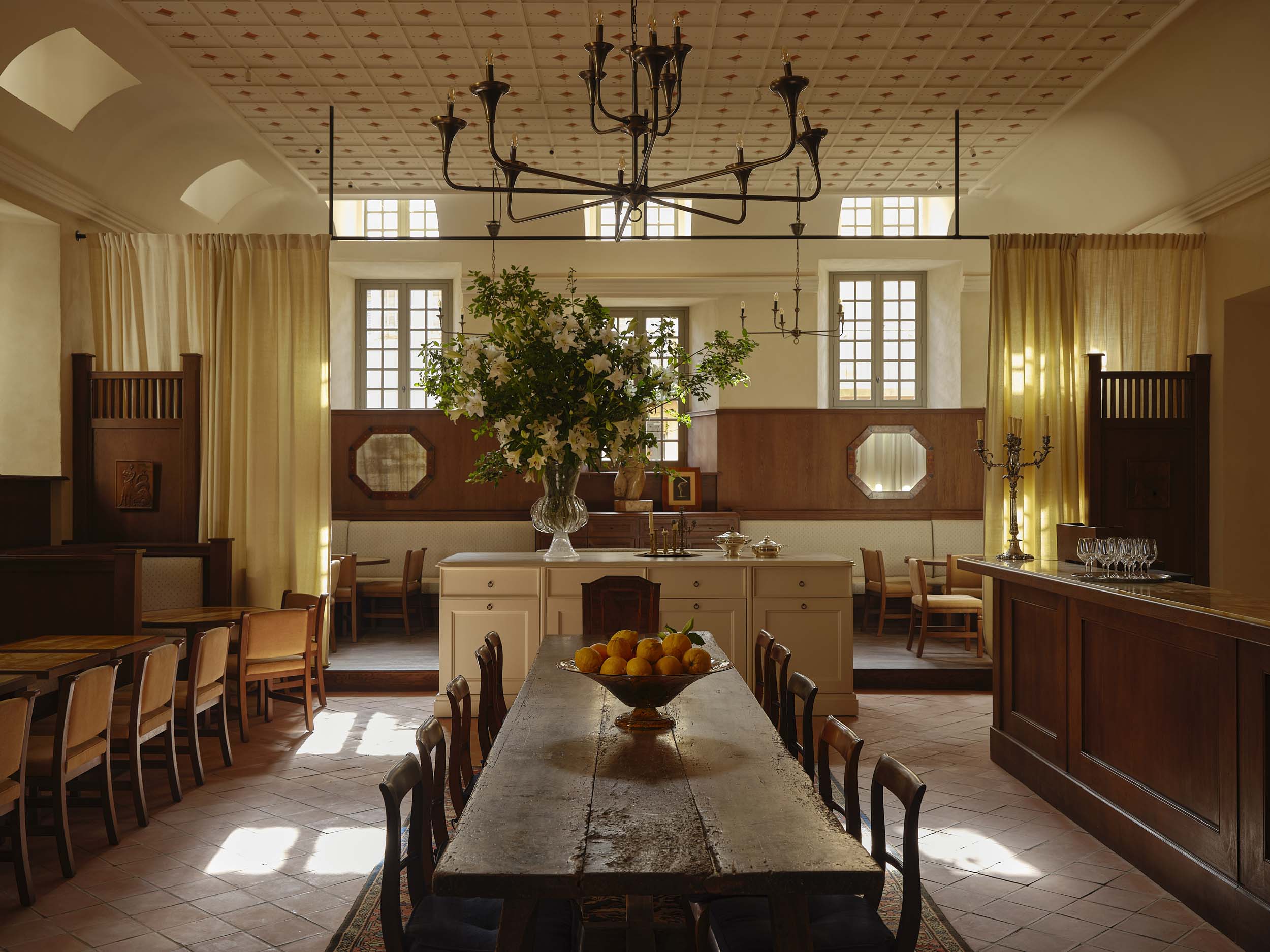
Everywhere one looks, pale ochre surfaces are punctuated with deeper toned accents, creating an ensemble just historic enough to resonate with current sensibilities. On the ground level, a central courtyard used for al-fresco dining is the hotel’s convivial nexus, flanked by two grand indoor spaces: a cozy bar lounge and the lofty main restaurant. The vast rooms would feel cold and staidly classic if it weren’t for a deft contemporary treatment through lighting, seating, and wall decor. The balance of pared-down and plush, low-key and bold, custom and vintage is the work of Hugo Sauzay and Charlotte de Tonnac of FESTEN.
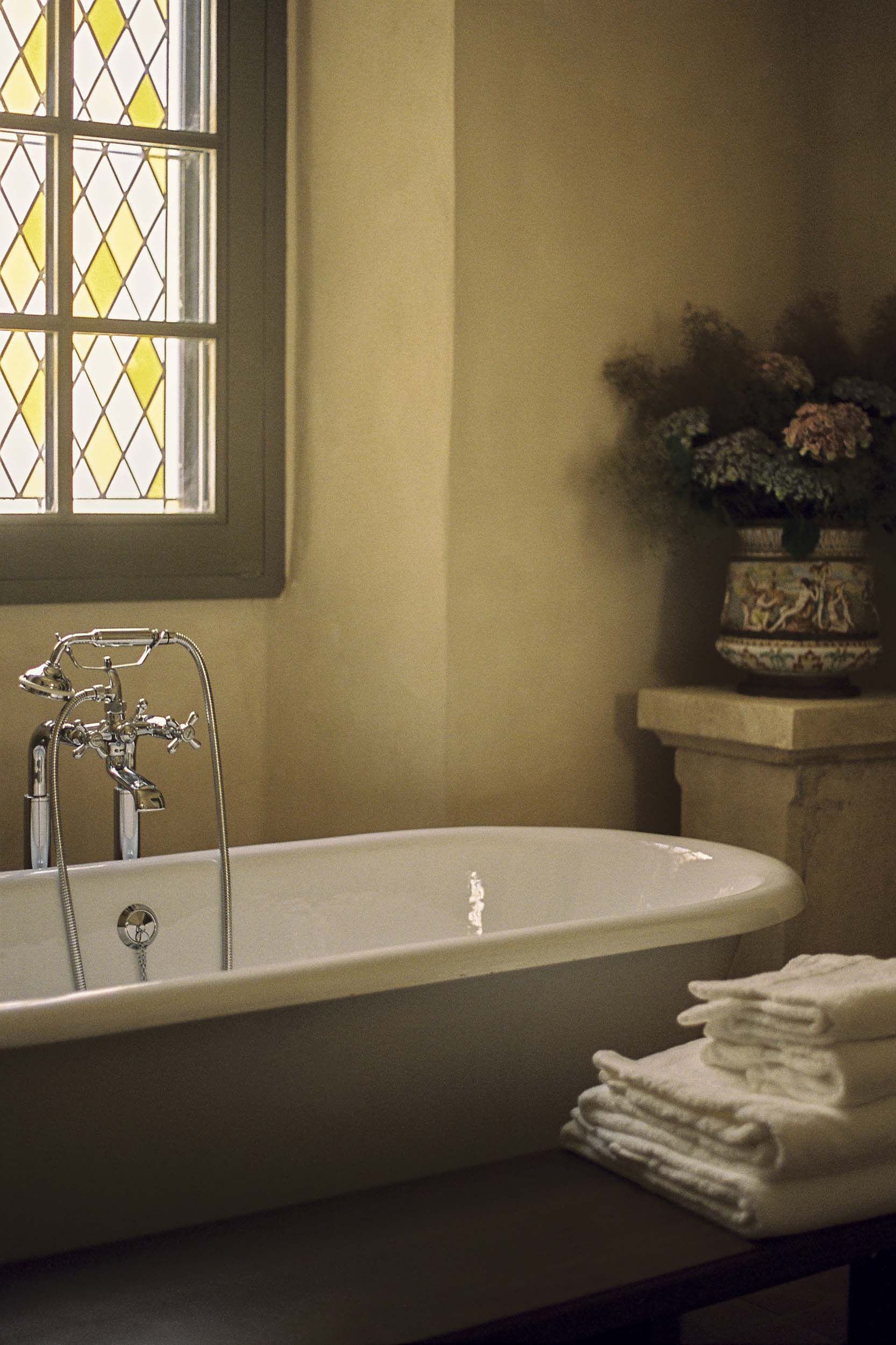
Ambling through the hotel, it’s hard to separate what has always been there and what’s new, as subtle references to the convent’s past, like terra-cotta floors and lime-washed walls, are layered with rich details befitting its new role. The convent’s original earthy palette, uncovered during a research phase, are an evocative canvas for Sauzay and de Tonnac’s measured scheme for rooms and public areas, which are furnished with antique stone tables, custom carpentry, ceramics, textiles, and impressive gray marble sinks modeled after holy water stoups.
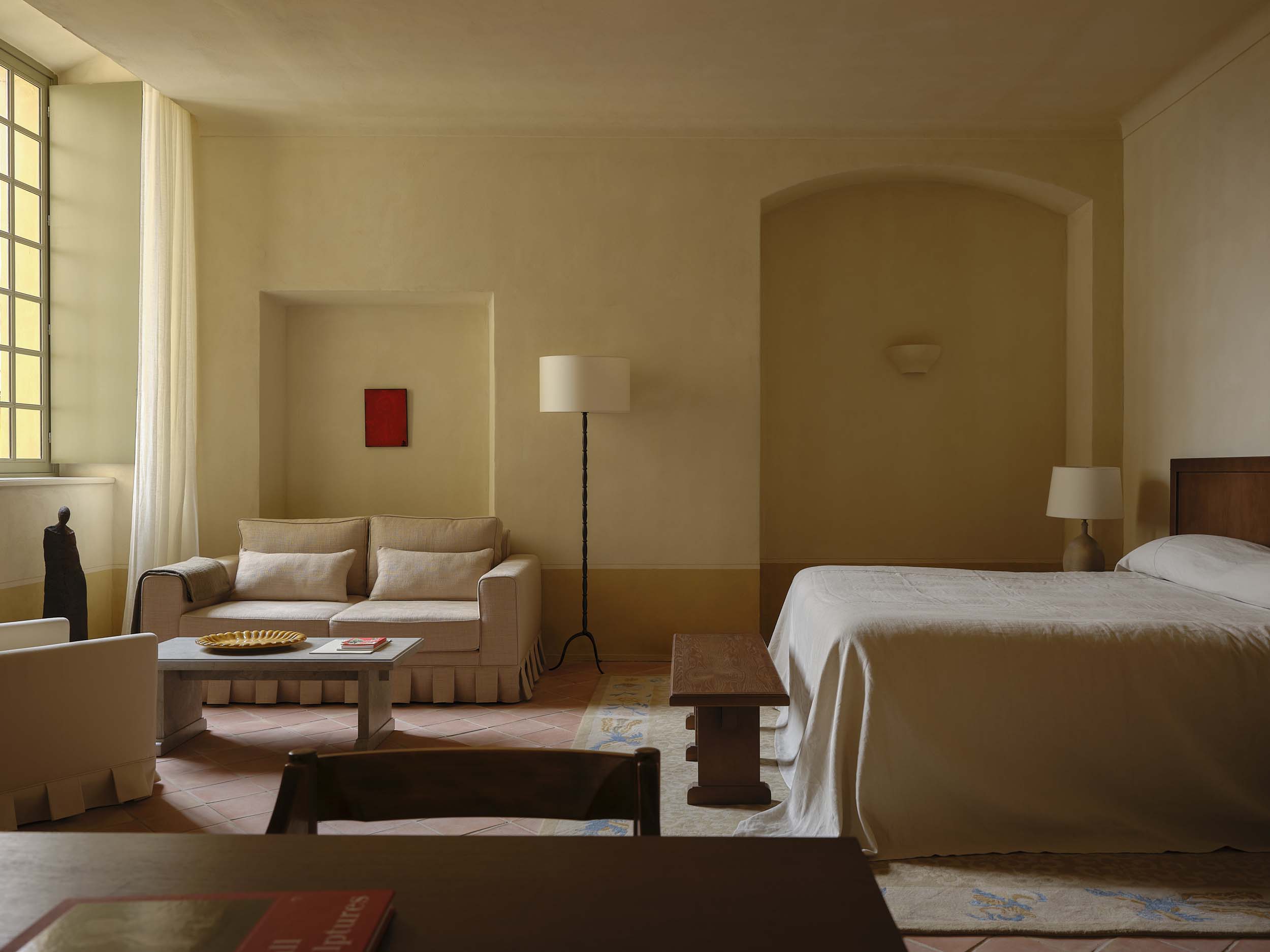
“What we loved about the project is that it allowed us to do what may seem like almost nothing, just working with light and emptiness,” said Sauzay. “We treated it like restoring a painting, we wanted our work to be invisible.” Indeed, the duo’s intervention effectively echoes Studio Mumbai’s, in which light, an interplay of voids and solids, and sobriety rule.
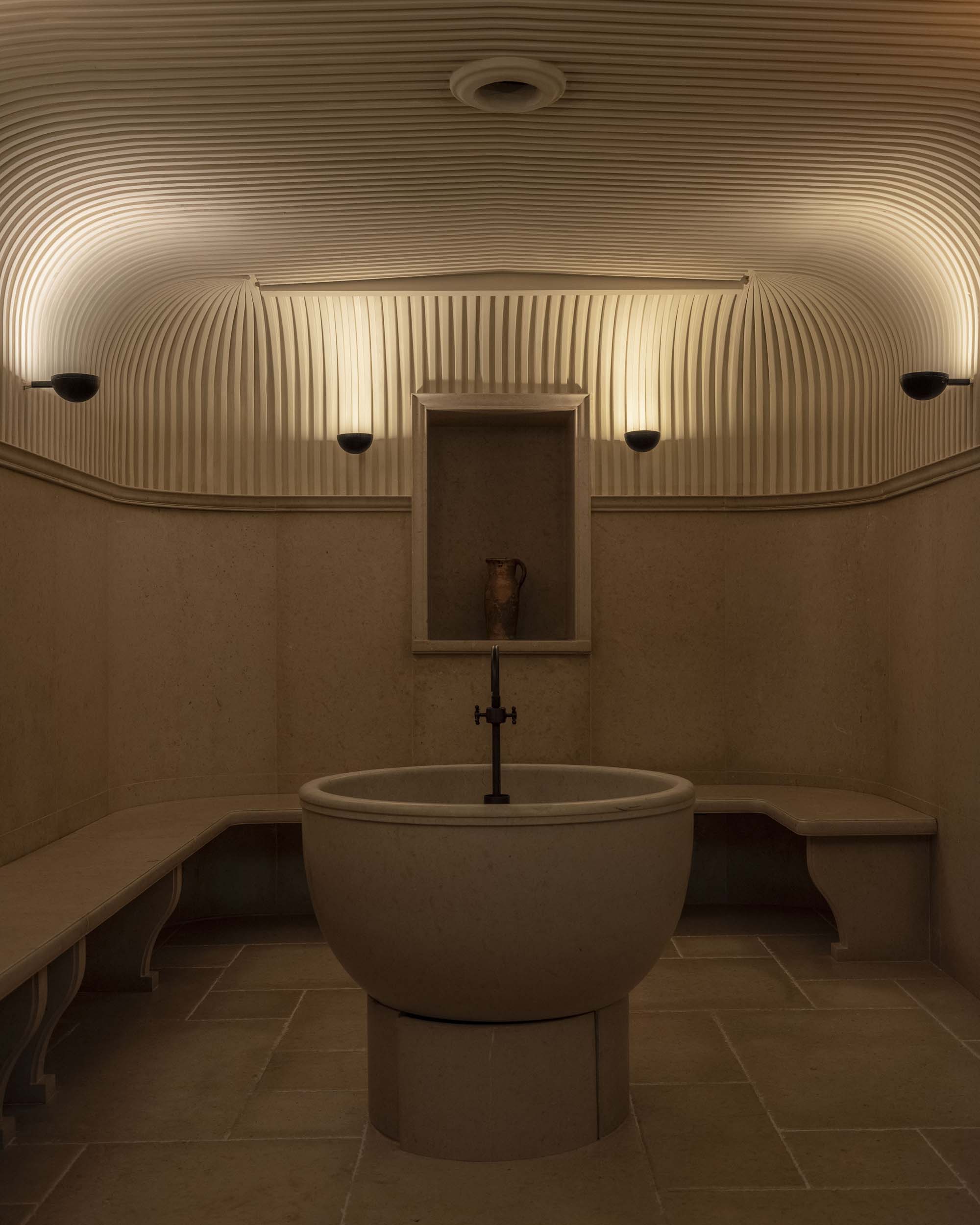
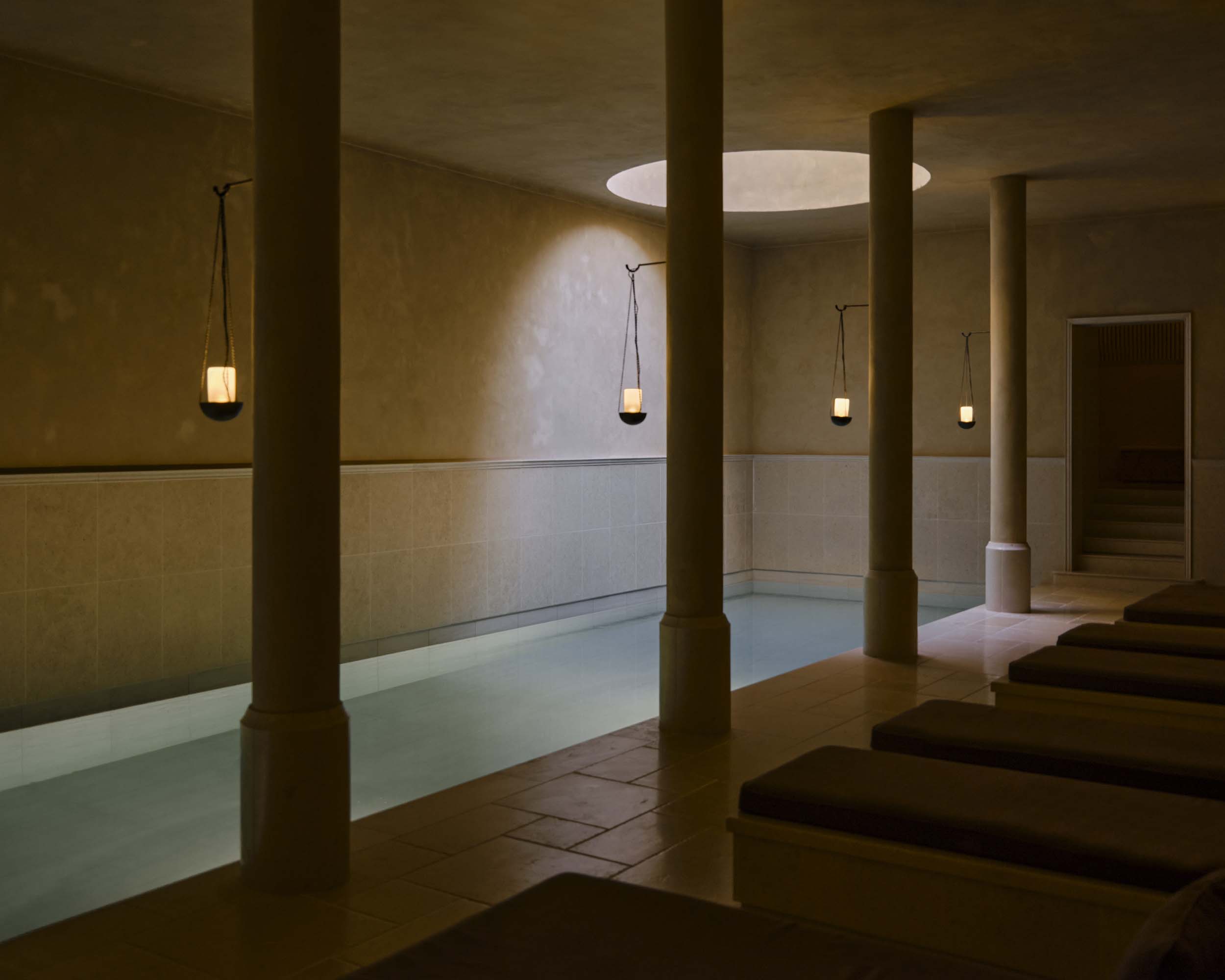
Yet the property’s most compelling feature is hidden underground: Nodding to the area’s ancient bath culture, Hôtel du Couvent’s Roman baths are a softly enveloping cream-colored environment for relaxation clad in brushed Italian Thala stone. Exemplifying the hotel’s guiding motive to eschew excess, the stripped circuit of rooms for swimming and steaming—featuring a cold basin and fluted plaster vaults inspired by traditional hammams—bears little in common with a conventional upscale spa. Here too, FESTEN’s work is in dialogue with Studio Mumbai’s design, which most strikingly occurs as an oculus over the main pool that dramatically opens the space to the elements. For a price, the baths are accessible to non-hotel guests. But on a recent visit, it was another of Hôtel du Couvent’s rare offerings that already appears to have won over once-skeptical locals: the boulangerie’s fresh loaves of bread and madeleines for which Niçois line up all day.