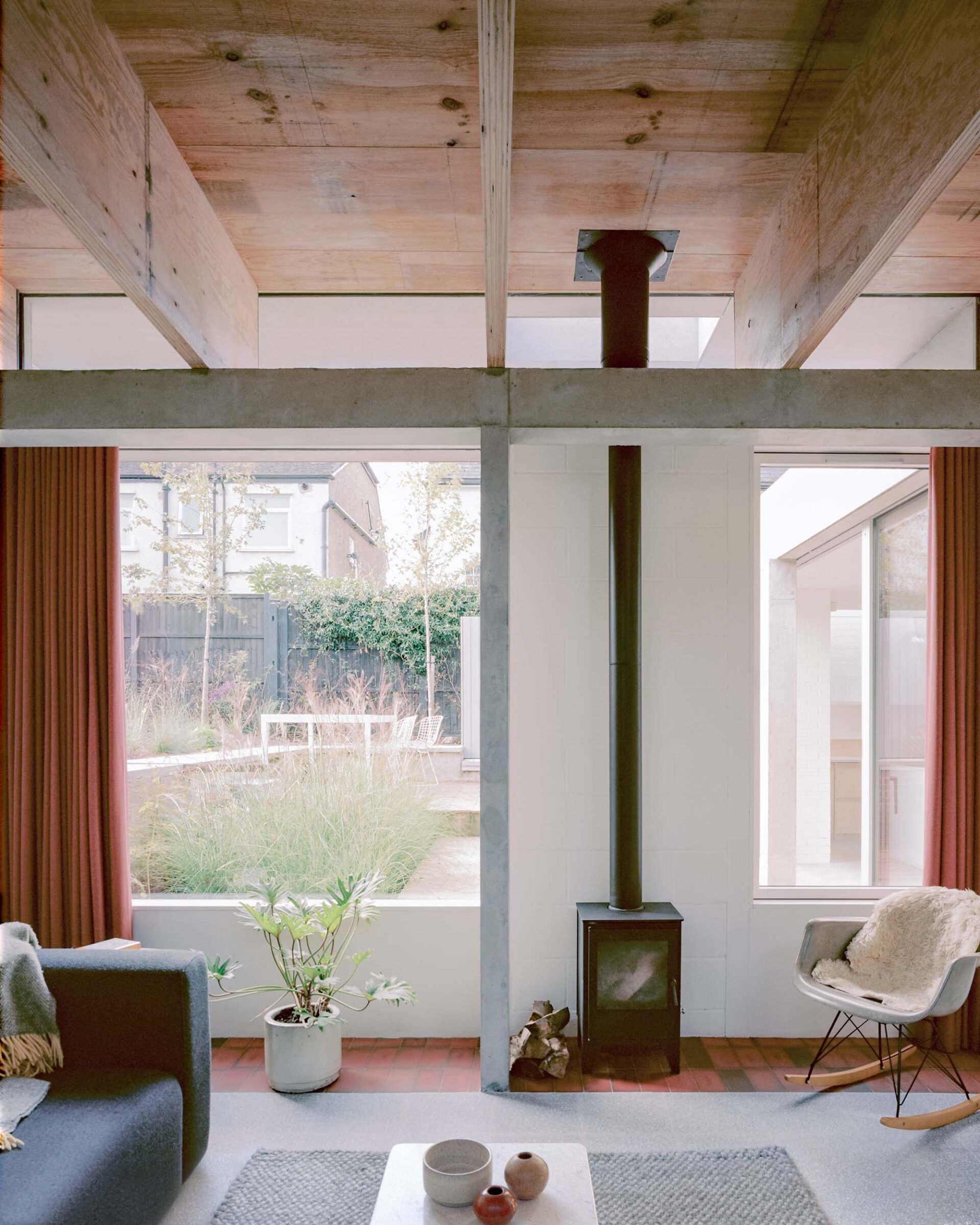
Ruins have long been a capital-R Romantic source of inspiration for architects. The formal references and physical spolia of prior epochs often serve as the inspirational building blocks for tomorrow’s architecture. Lately, one contemporary flavor of this inspirational search has flourished among British architects who generationally follow practices like David Chipperfield or Caruso St John and among whom the legacy of figures like Louis Kahn still lingers. Here a sense of solemn spatial expression is joined with a still-life appreciation of domestic messiness and the tightening belts of the U.K.’s climate goals. One of the best expressions of this sensibility is Six Columns, a ground-up home designed by Will Burges of 31/44 Architects for his family.

The residence, massed in three wings, occupies a sloping, trapezoidal site outside of London that used to be a side garden. Perhaps at a distance it looks typical with its brick frontage and sloped roof, but up close things veer into more expressive territory. At the ground level, bricks are set in a staggered texture or with small vertical apertures, and one encounters a (perhaps unnecessary?) column that proudly supports a beam on the way to the front door, which itself is set next to a green-marble panel that feels like a Milanese facade. Above, six (perhaps eponymous?) columns—pilasters, technically—are set on either side of a wide glazed opening that brings light into the stairwell.
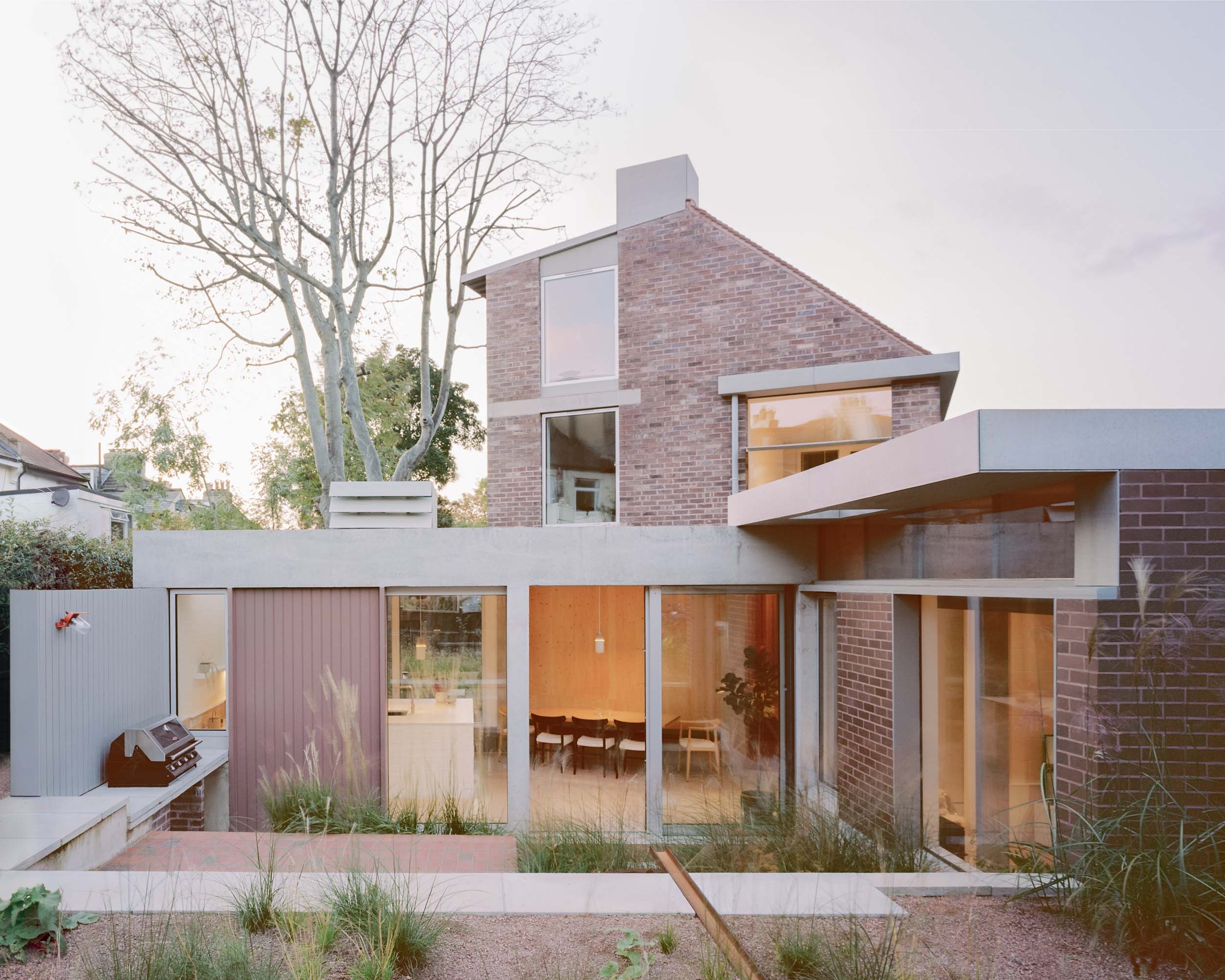
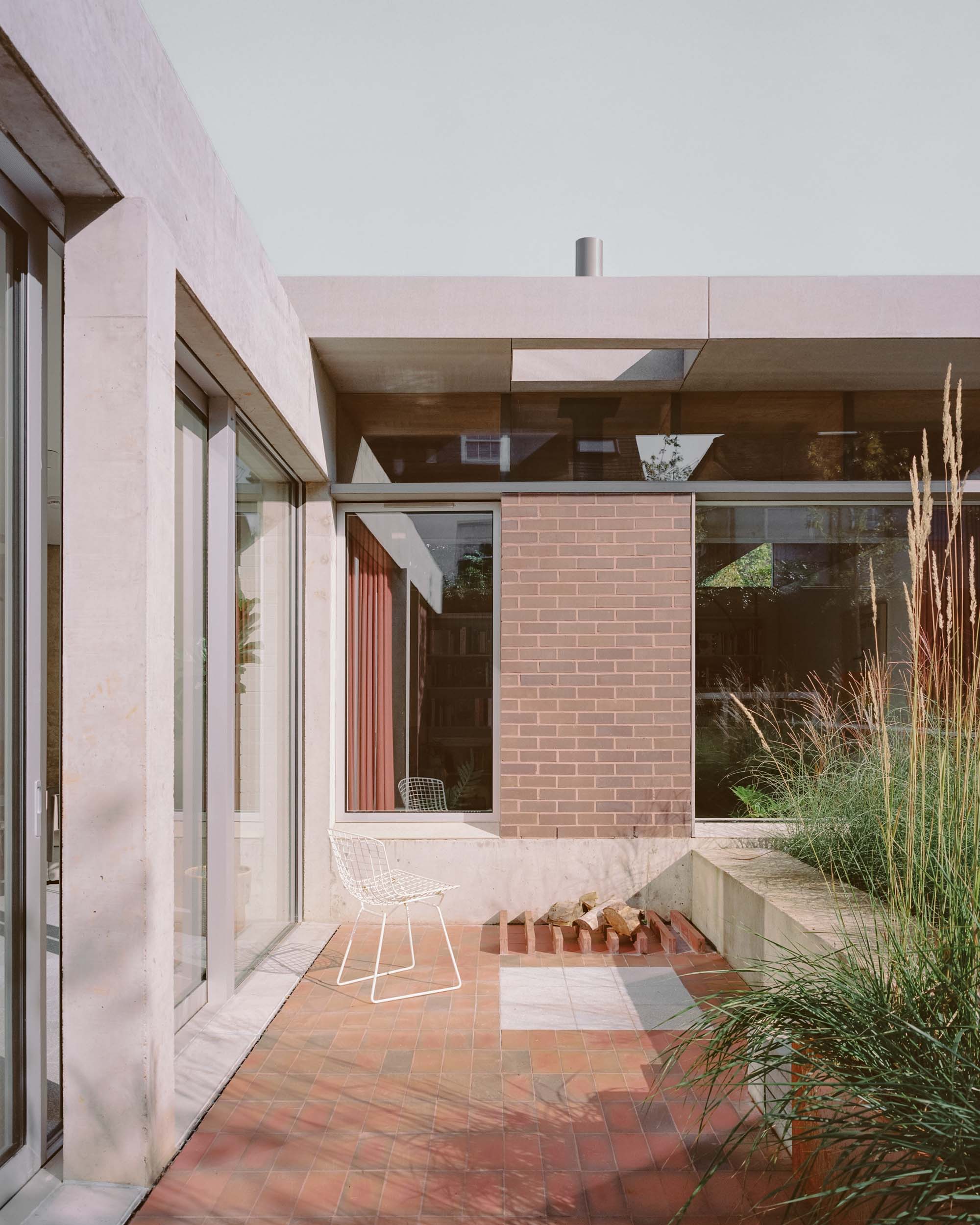
Upon entry, another freestanding column dialogues with its exterior twin and establishes a vestibule that is the center point for the home’s pinwheeling plan. Throughout, the concrete frame supports exposed wooden beams and ceilings, while the living room and terrace are lined in red tiles. The spaces feel tight but are opened with internal views across the ground floor and are warmed by the knotty millwork, wood floors, and green curtains and sofa. Across the two floors and loft, shared spaces are prioritized and individual spaces like bedrooms are minimized in size.
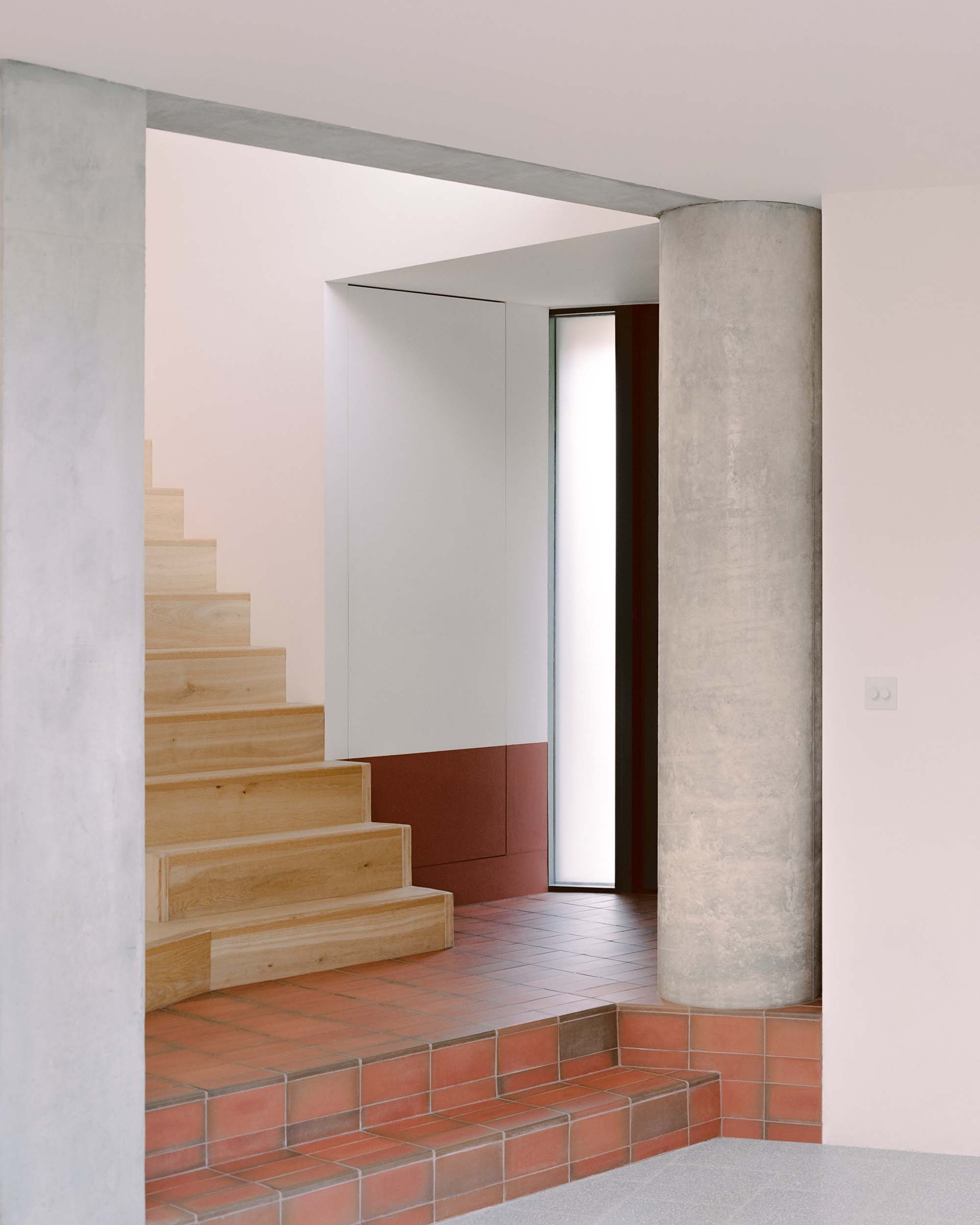
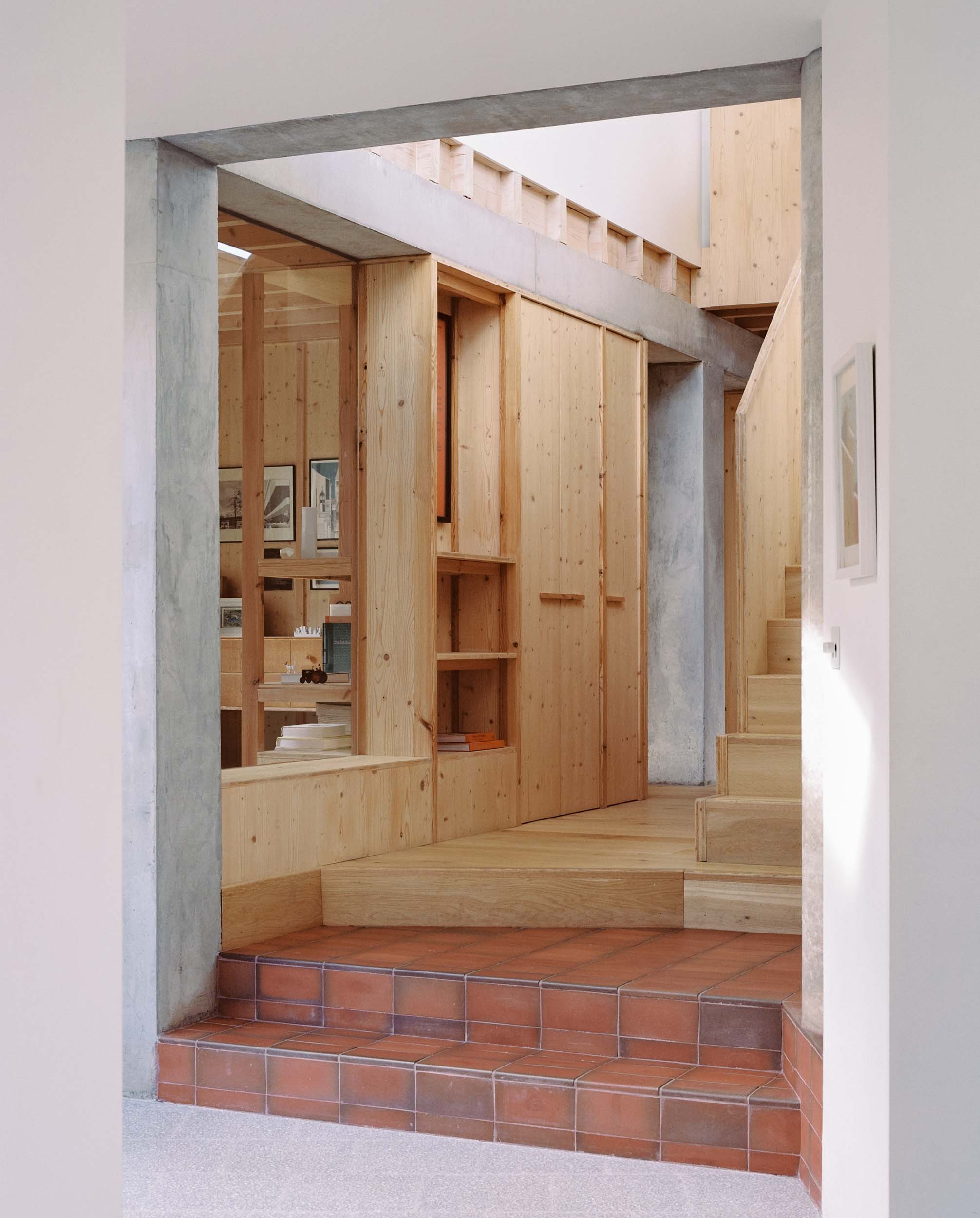
Burges’s synthetic, eclectic approach is on full view in the project. The design draws on a wide set of references, from farmhouses to the postwar Case Study Houses and 1950s British architecture like that of the Smithsons. “As architects, we arrive at buildings through diverse experiences of architecture throughout life, and this house is no exception,” Burges said. “But the references influencing this house are more personal—from childhood memories of holidays, student visits to remarkable houses such as Turn End in Haddenham, architectural excursions around the globe with students, and more recent family trips.”
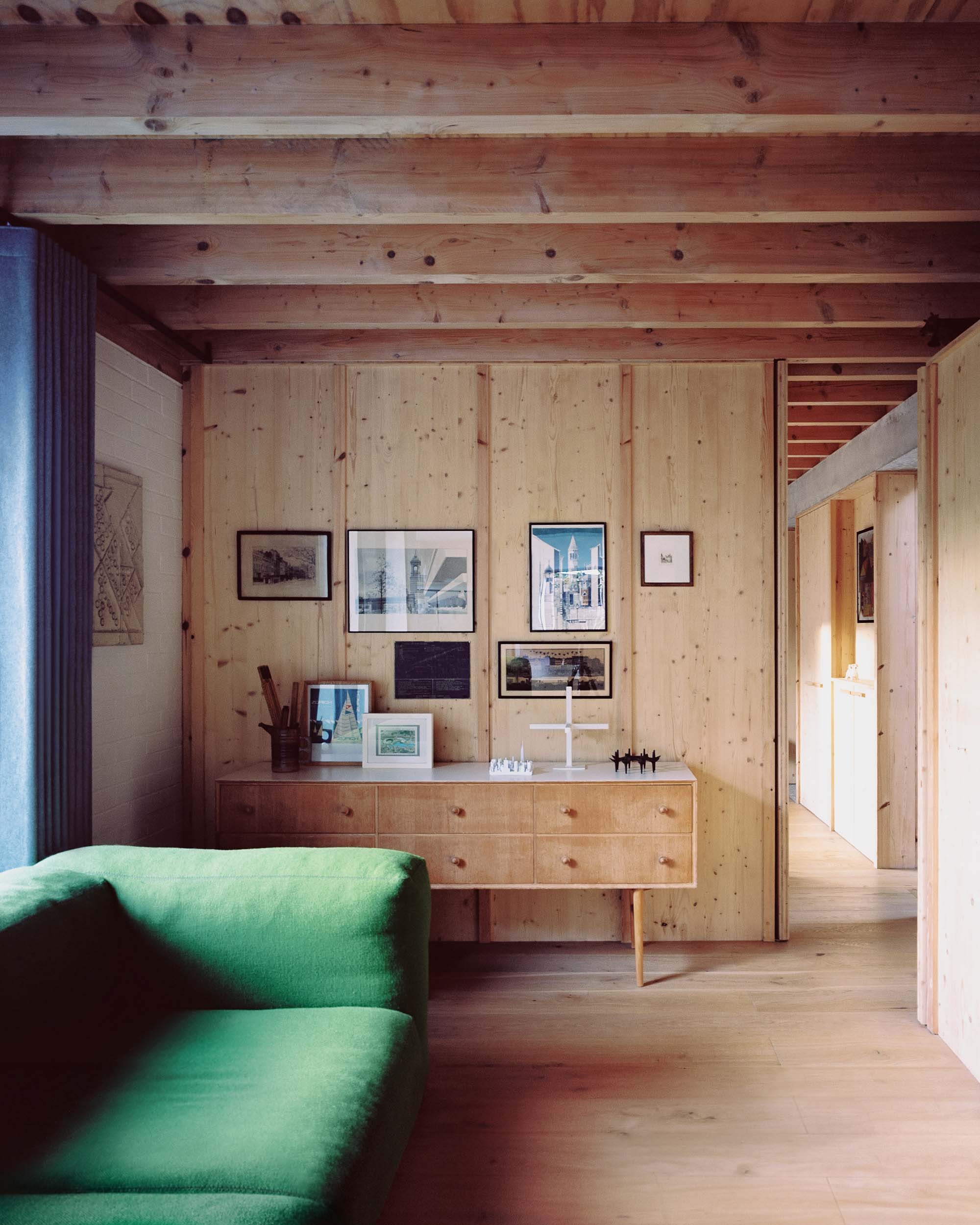
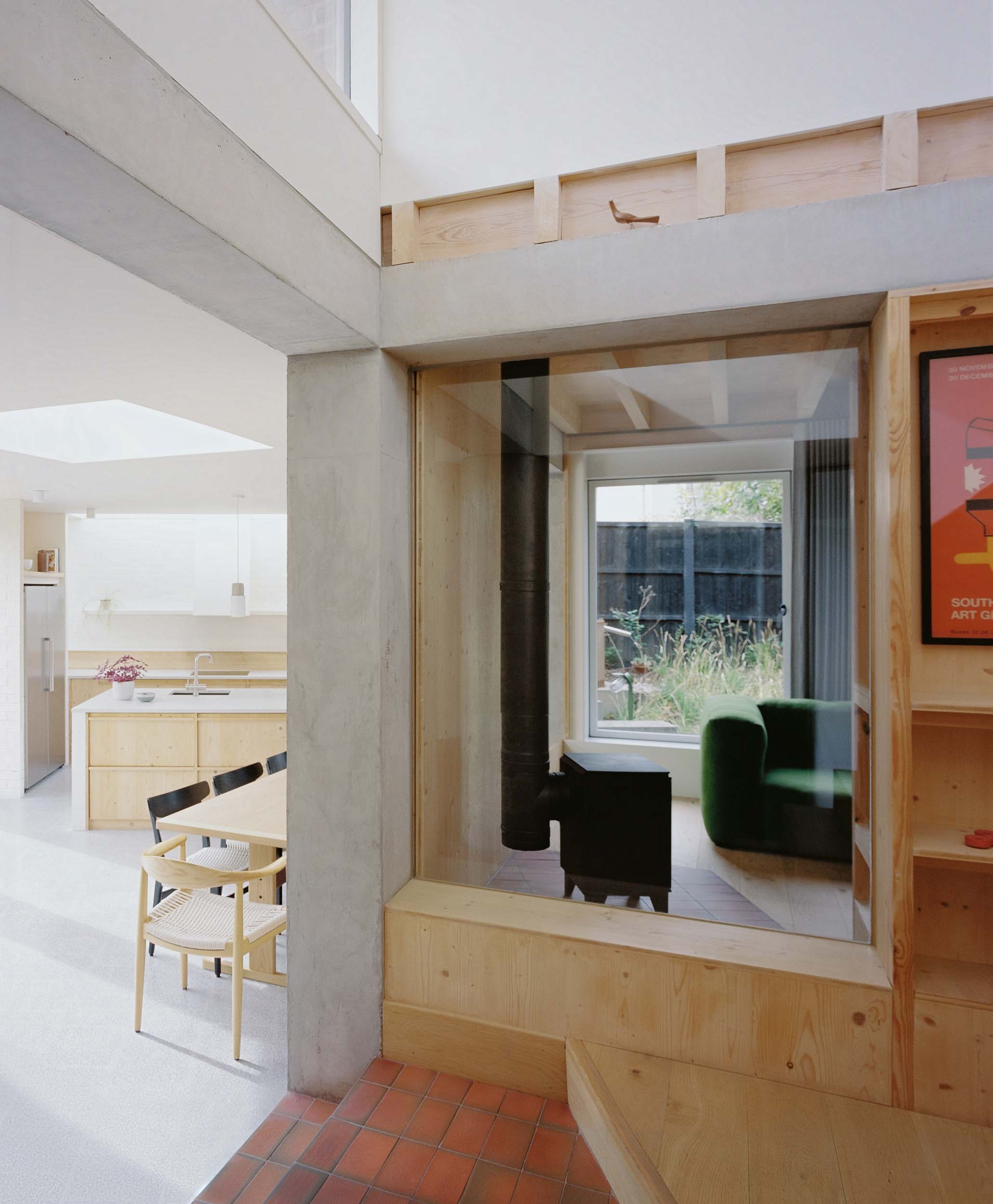
31/44’s design incorporates climate-sensitive strategies. High-carbon finishes have been avoided, passive ventilation is favored, and the gardens collect run-off. Construction details also support the goal of low–embodied energy: The building navigates a protected sycamore tree, so its foundations use screw piles, and the wood framing was laid out so as to avoid the use of any structural steel. Plus, the home is all electric.
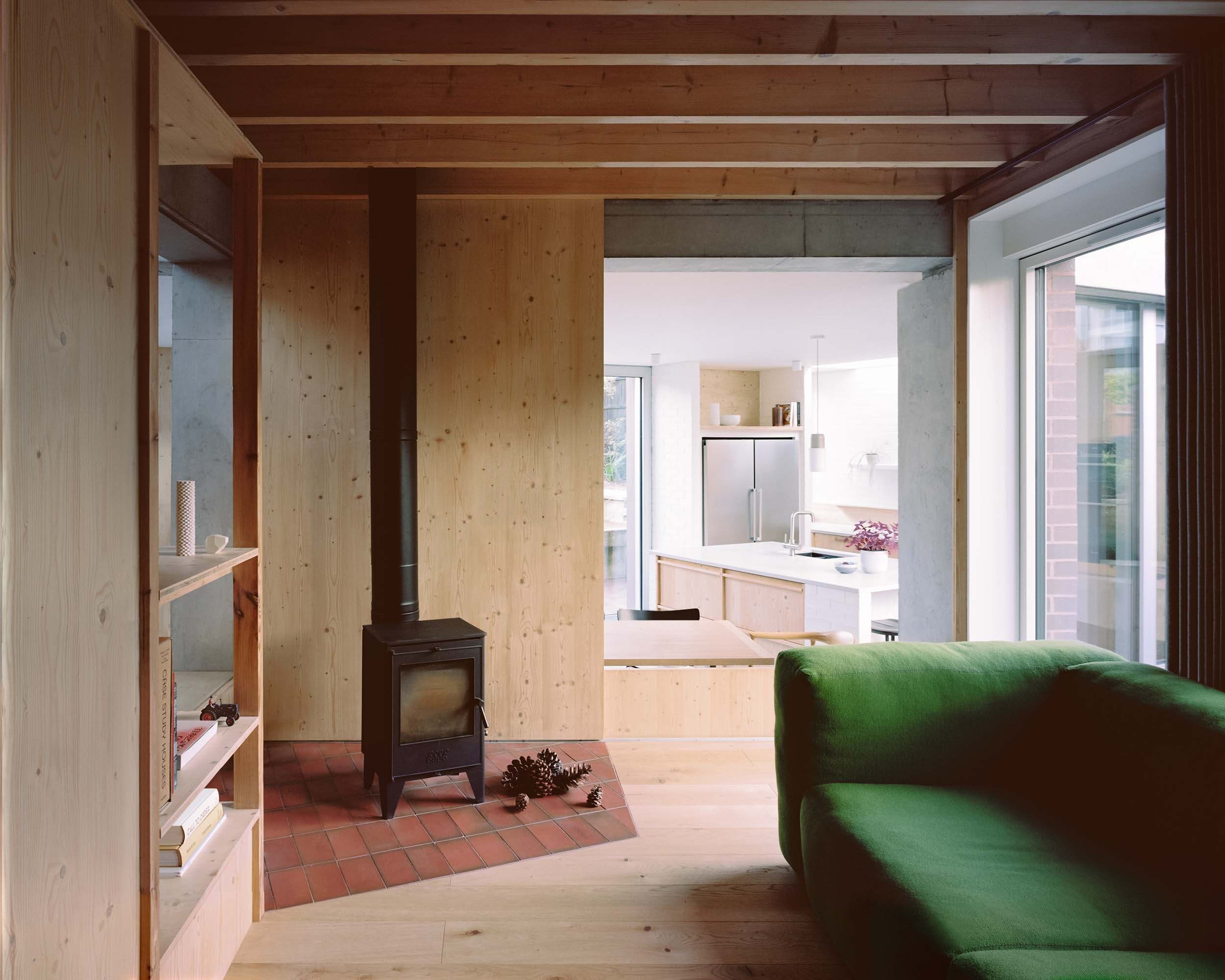
The rawness and the “loose fit” approach to the interiors are deliberate, as Burges anticipates the spaces will change over time. Often, the homes of architects are a site for tinkering and experimentation. “Designing a home for your own family is both tantalizing and terrifying—particularly if taken as a definitive statement of your interests and knowledge,” Burges remarked. “I wasn’t comfortable with this sense of closure.” He anticipates the interior will morph, as “houses need to evolve and grow in simple and sometimes even radical ways, and they also need to be useful with the potential to change as your needs change.”
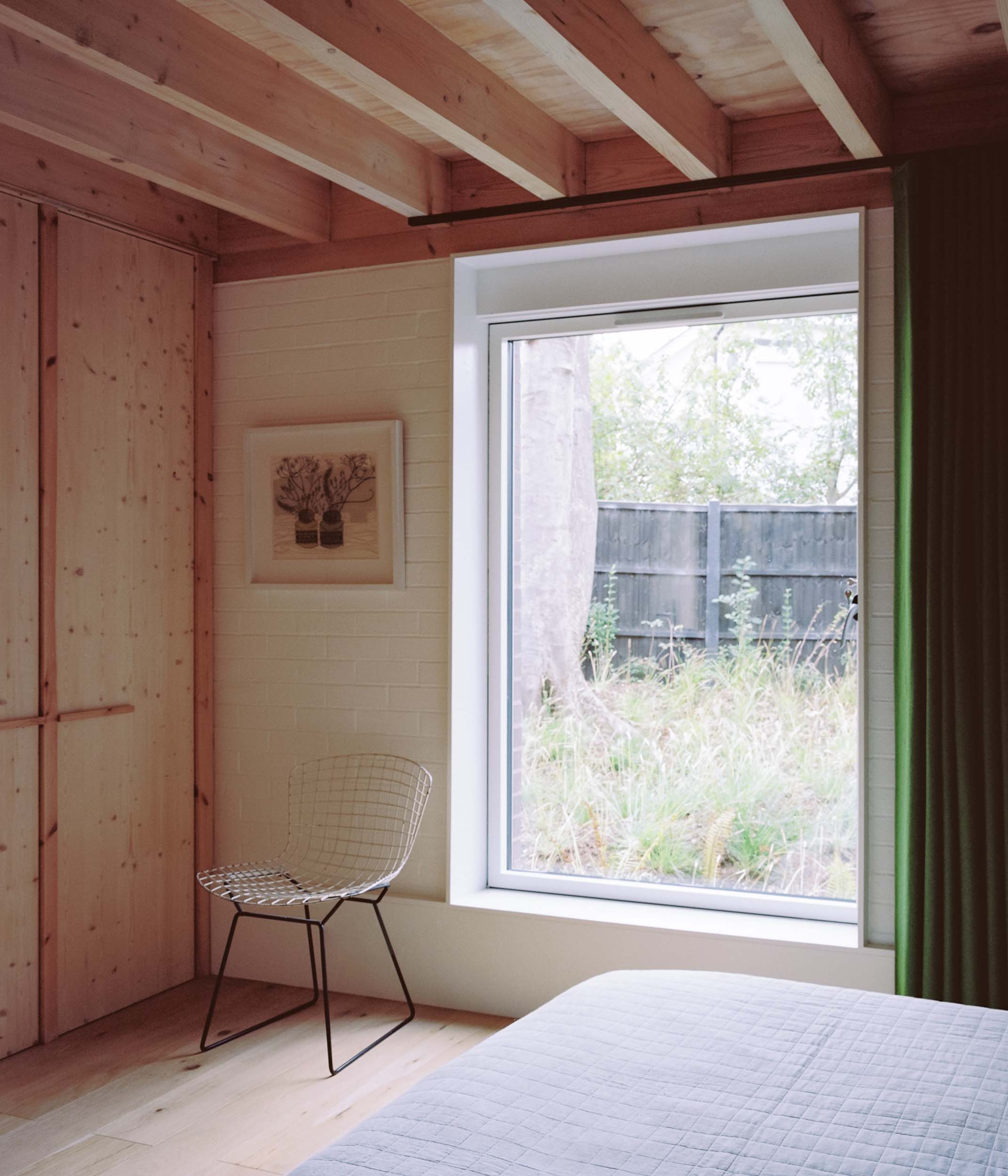
Burges acknowledges the inevitability of time as a force that shapes architectural design. The idea seems central to the operations of 31/44 Architects, which he founded in 2010 with Stephen Davies. (The outfit also has an outpost in Nantes, France, headed by Benoit Sanson.) Other projects by the firm offer a similar contextual sensitivity and showcase a preference for a generous but peculiar massiveness, equal parts structural puzzle and an invitation to get comfy. The office also teaches postgraduate students at Kingston School of Art and Architecture, which keeps its architects close to the “constant articulation of ideas, observations, and proposals” required by studio coursework.
This intellectual restlessness is put to good use at Six Columns, where the concrete and timber frames give way to rooms that are tastefully furnished with architectural accoutrements. The home makes the most of its reasonable budget of just over $600,000, and it is no surprise that the residence is shortlisted for RIBA House of the Year this year. “We always envisaged that Six Columns would be an ongoing project, without a prescribed endpoint,” Burges shared. It seems well equipped to stand the test of time.