
In Spain in the 1960s, the market was opening up to international trade. Economic liberalism and modern industrialization were brought forth from the Stabilization Plan of 1959. Homes thus followed suit, embodying the optimization and efficiency of industrialism to become compartmentalized, minimal homes that serve objective functionality and the nuclear family. An apartment in Guipuzcoa came from this era, but its layout no longer remains so. Architect Ismael Medina Manzano, who splits his time between Spain and New York, transformed the apartment into a cacophony of materials and color, stitched together by rough-hewn portals. The project, dubbed Unplanned Domestic Prototype, is an experiment that asks: What does a home look like when it’s not regulated or dictated by policy, the market, or any singular ways of life?
Fluidity is key. Manzano converted the 861-square-foot apartment from three bedrooms to two with a large entrance hall-cum-dressing room, two bathrooms, and an open living room and kitchen. But the floorplan, both visually and conceptually, doesn’t adhere to static functions.
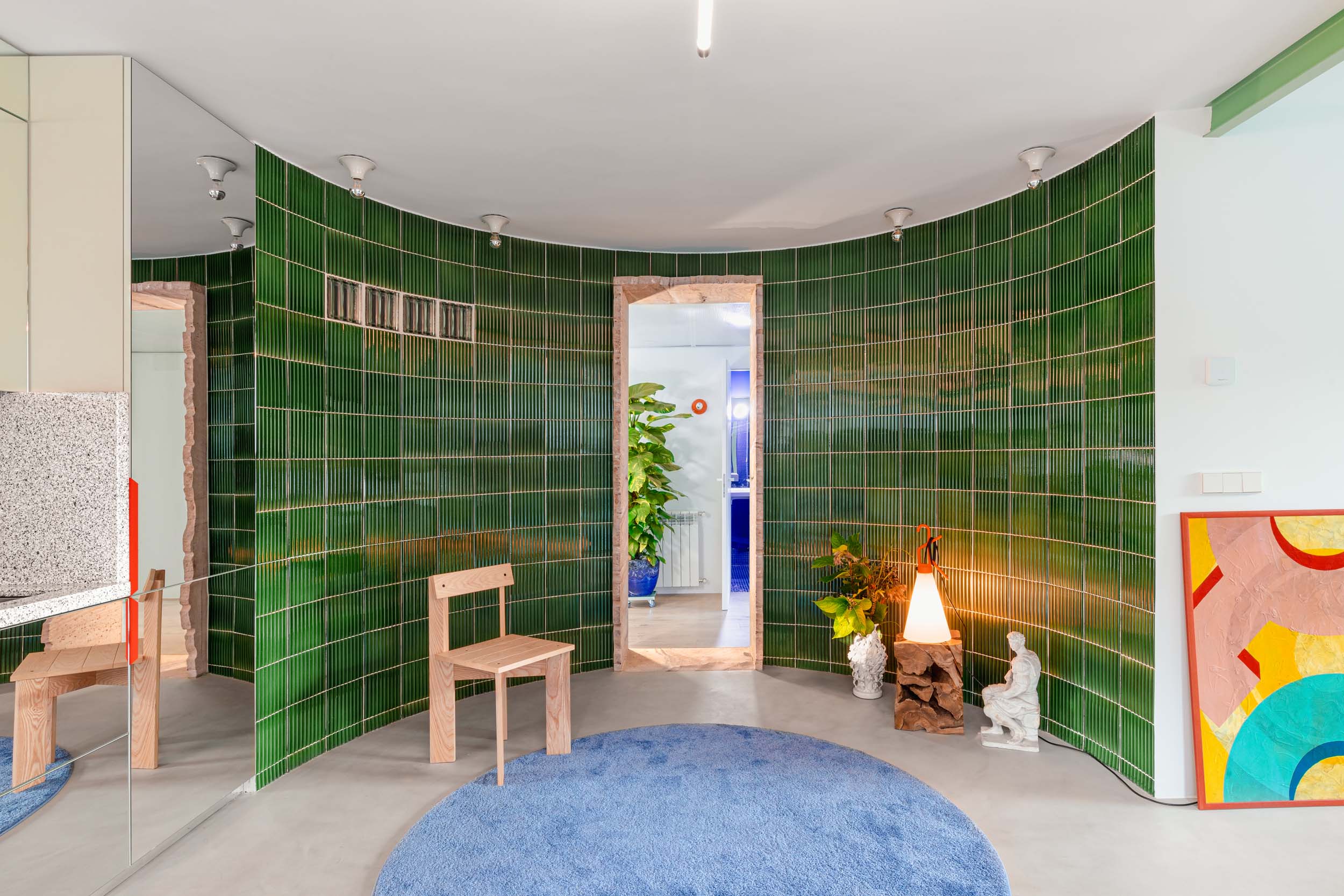
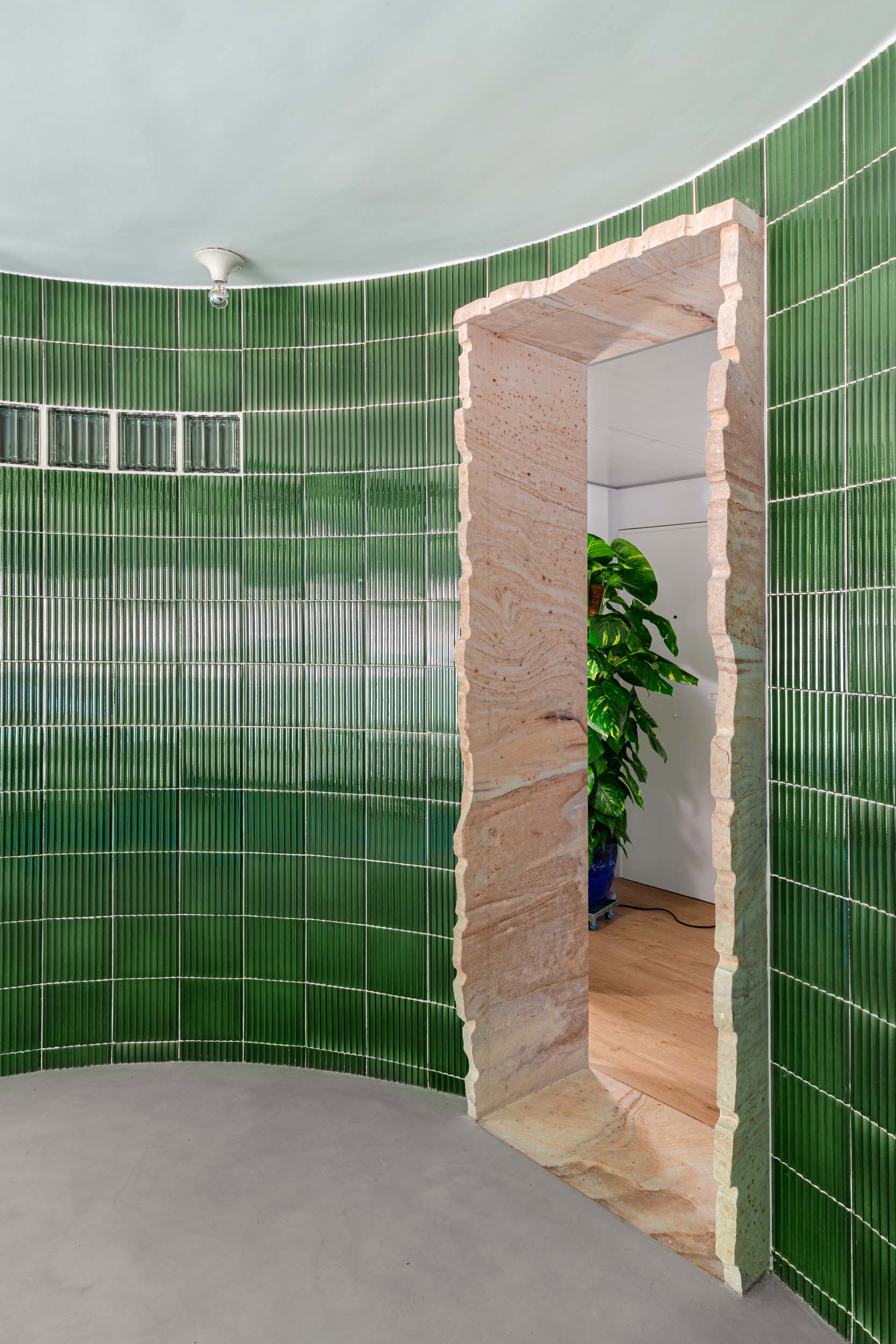
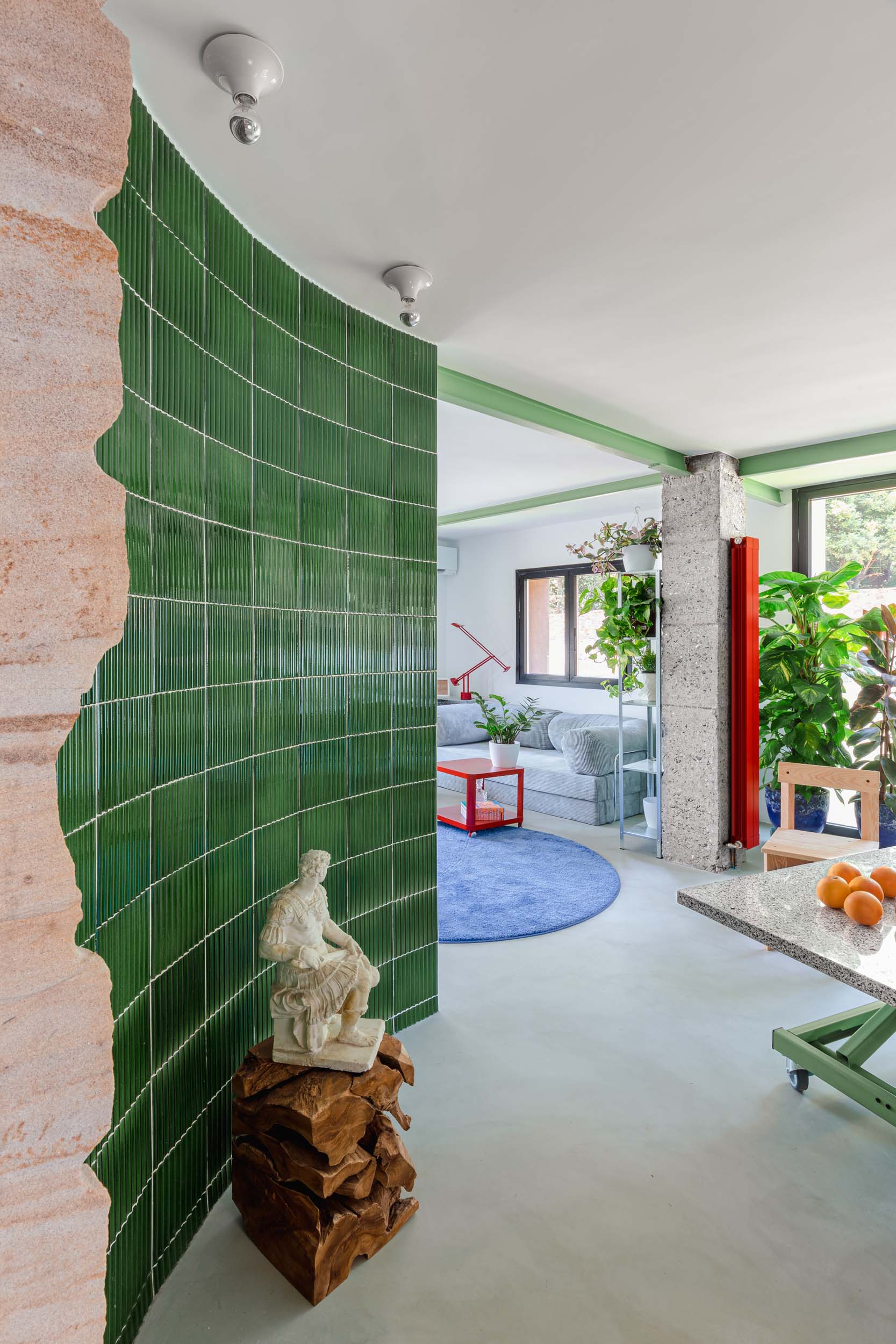
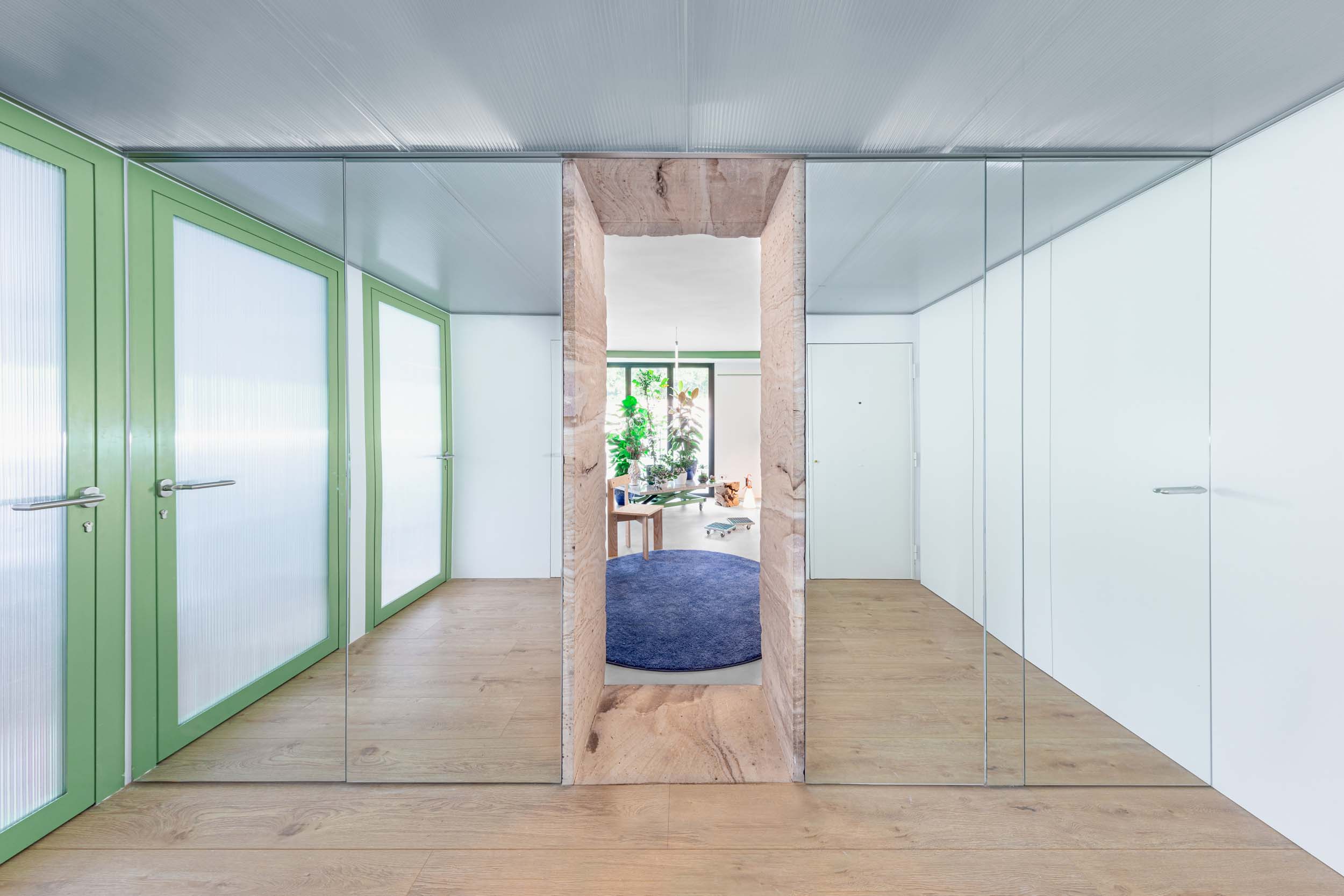
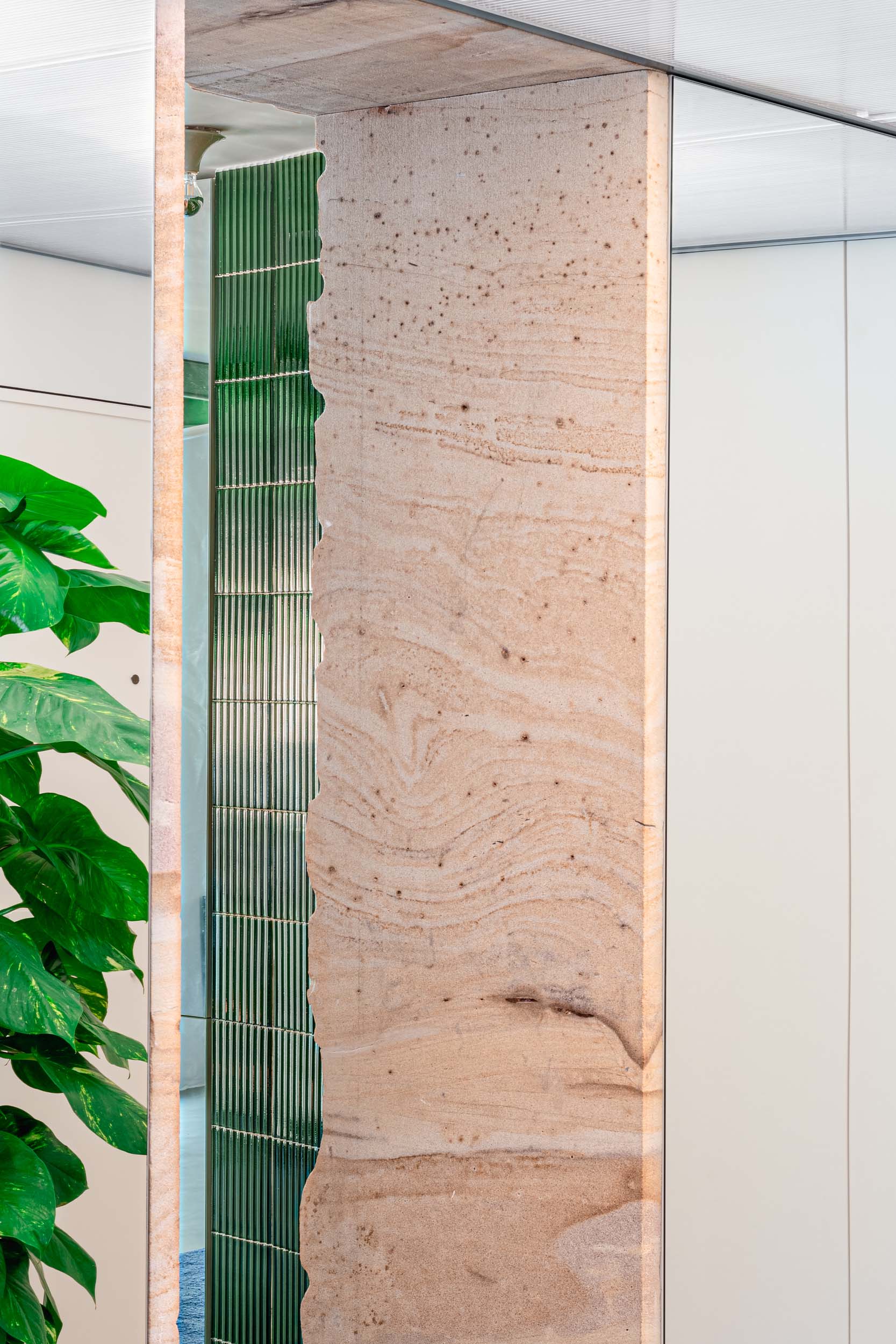
Central to this ethos is the home’s anchoring intervention: the curved wall of glazed ceramic tiles which divides the entry from the kitchen and living room and storage on one end, and entry and bathroom on the other. The tile is interrupted by a portal covered in sandstone from the region’s commonly used San Sebastián. Its jagged edges make it appear as if a chunk was taken from the wall to reveal the stone underneath. The jarring material palette heightens the moment of transformation as one enters and moves around the space, while alluding to the many multiplicities that define the interior.
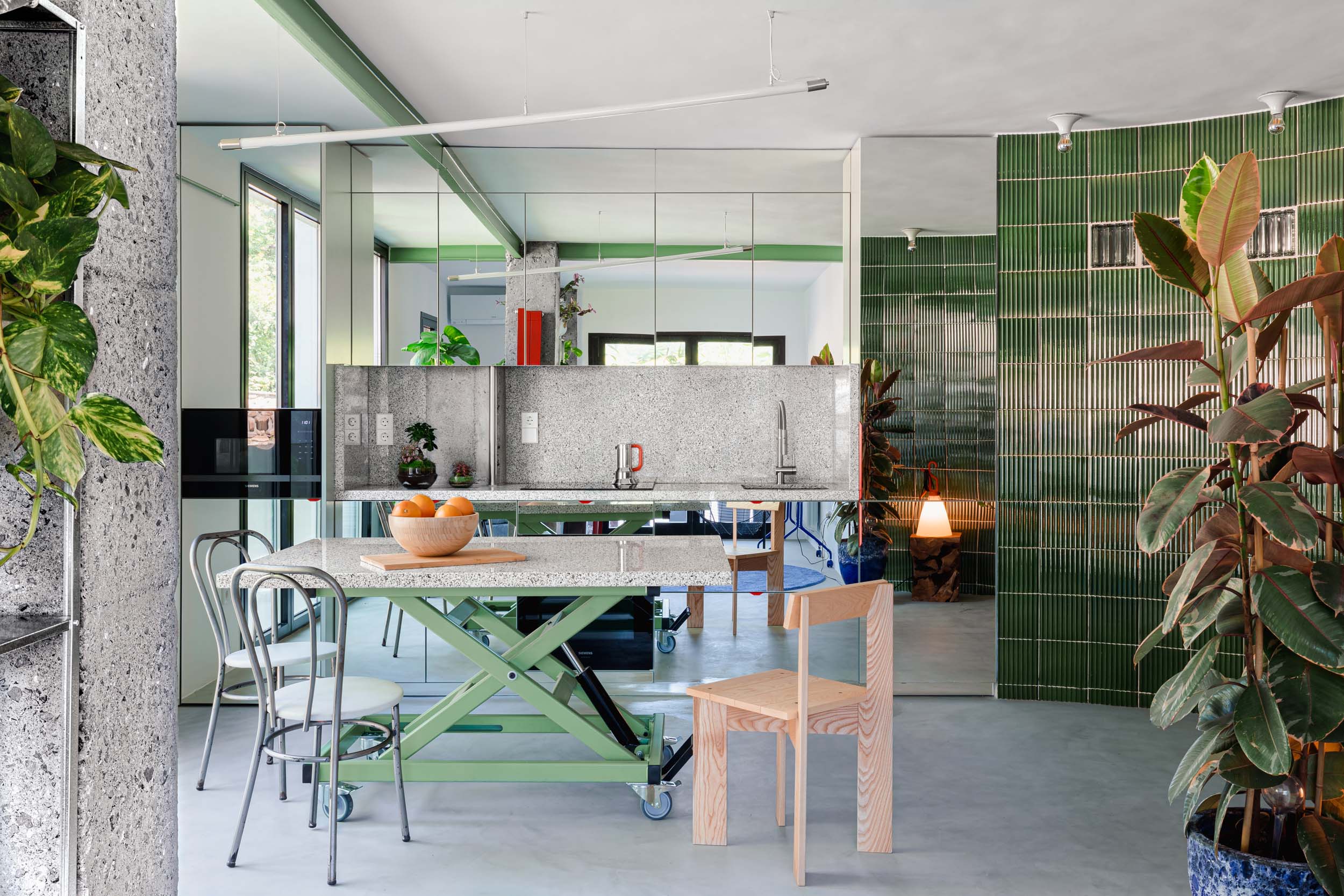
At one vertex of the wall, tile merges with a mirror-clad wall of cabinets that conceal kitchen appliances while making the wall appear to extend. A granite backsplash is the only non-mirrored surface in this area. The kitchen challenges the conventions of traditional domestic kitchens and storage, making the area a distinct visual element while simultaneously concealing its own function.
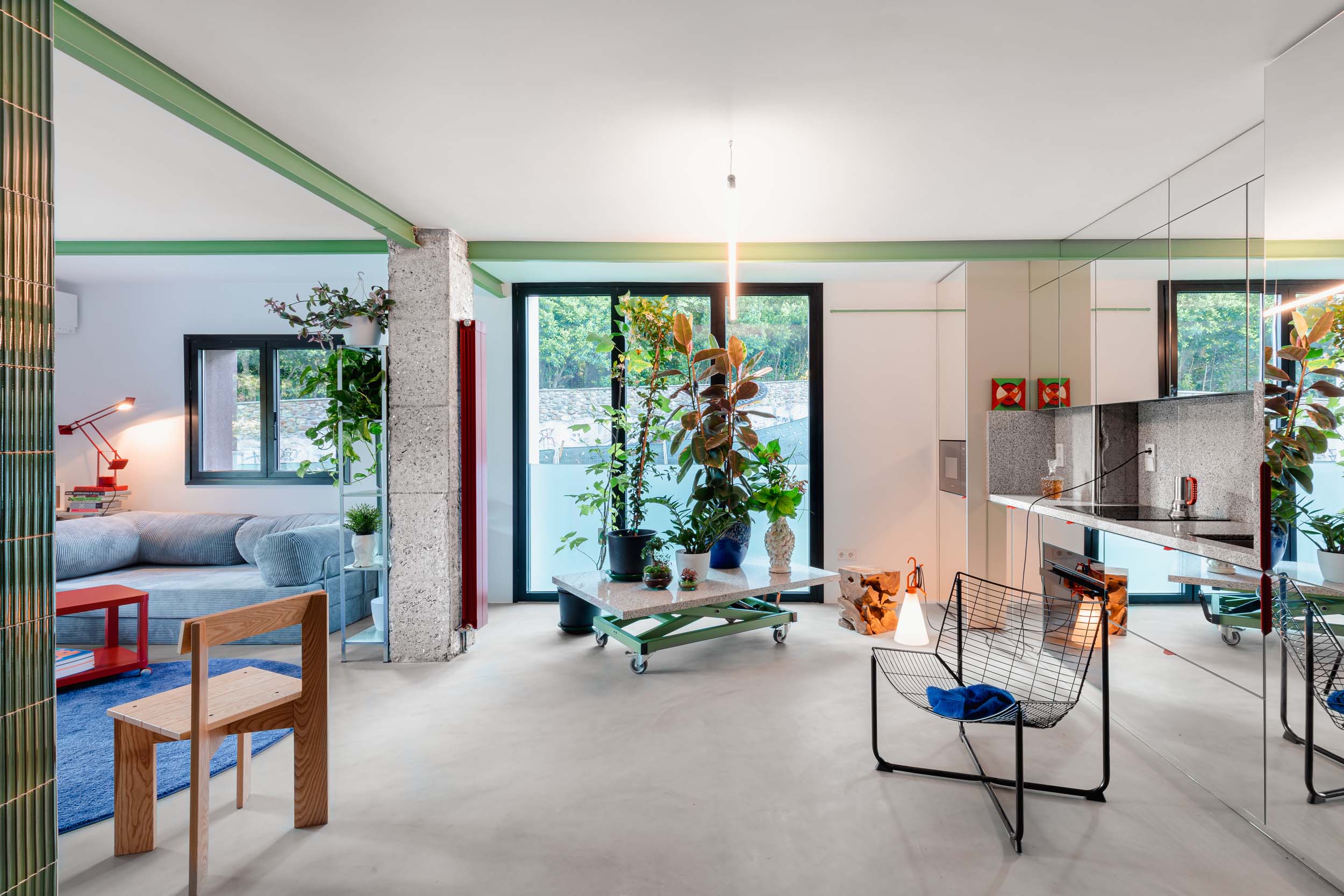
The kitchen, as well as the living room which it opens up to, is made versatile through its furnishings, all of which are either mobile or transformable. In front of the kitchen, an island can also be a dining or work table, as it’s situated on a steel frame with a hydraulic piston on wheels. Thus, it can lift up or down, or roam where it’s needed. The other furnishings like a stool made from reused tree trunks and a chair of recycled aluminum tubes orbit the space. Even the Teddy sofa boasts multiple configurations; its modular construction can unfold into a bed or seating pit.
As the kitchen flows into the living room, exposed steel beams coated in green frame the structure alongside columns of concrete. Revealing the bones of the apartment, Manzano continues the site’s origin story. To warm the industrial nature of the space, lots of vegetation (which is also on wheels) populates the area. The architect added an internal irrigation duct system to keep them watered.
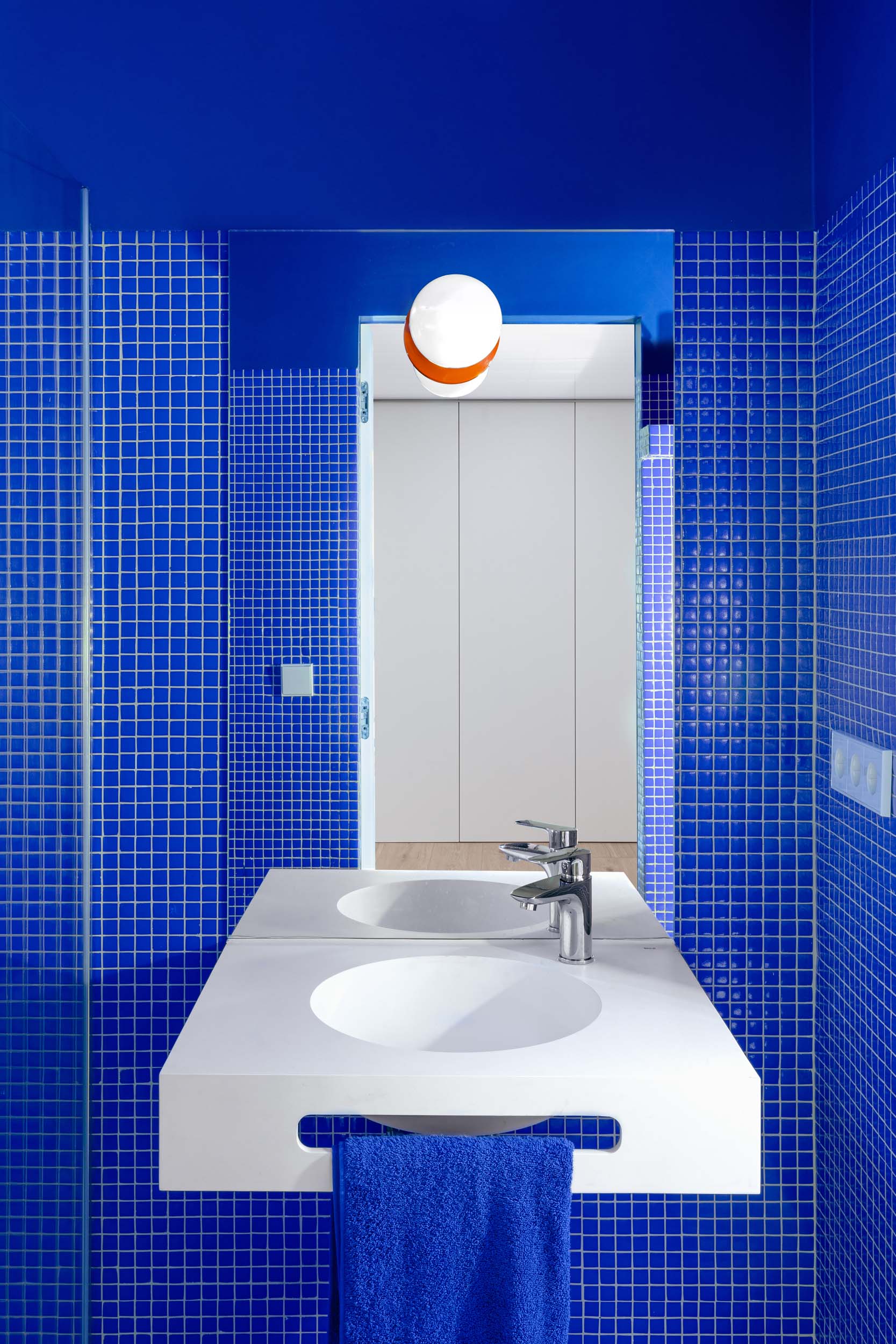
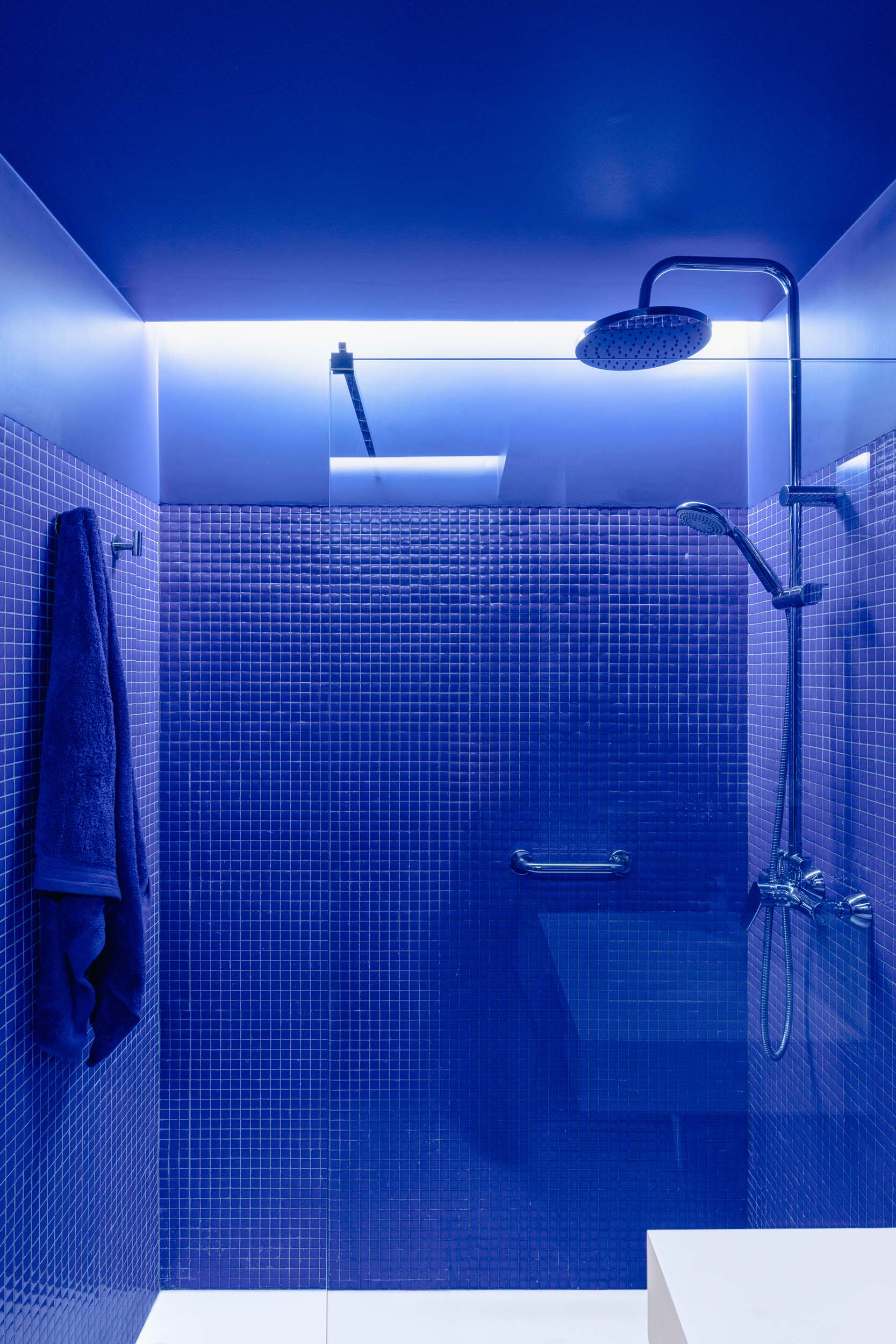
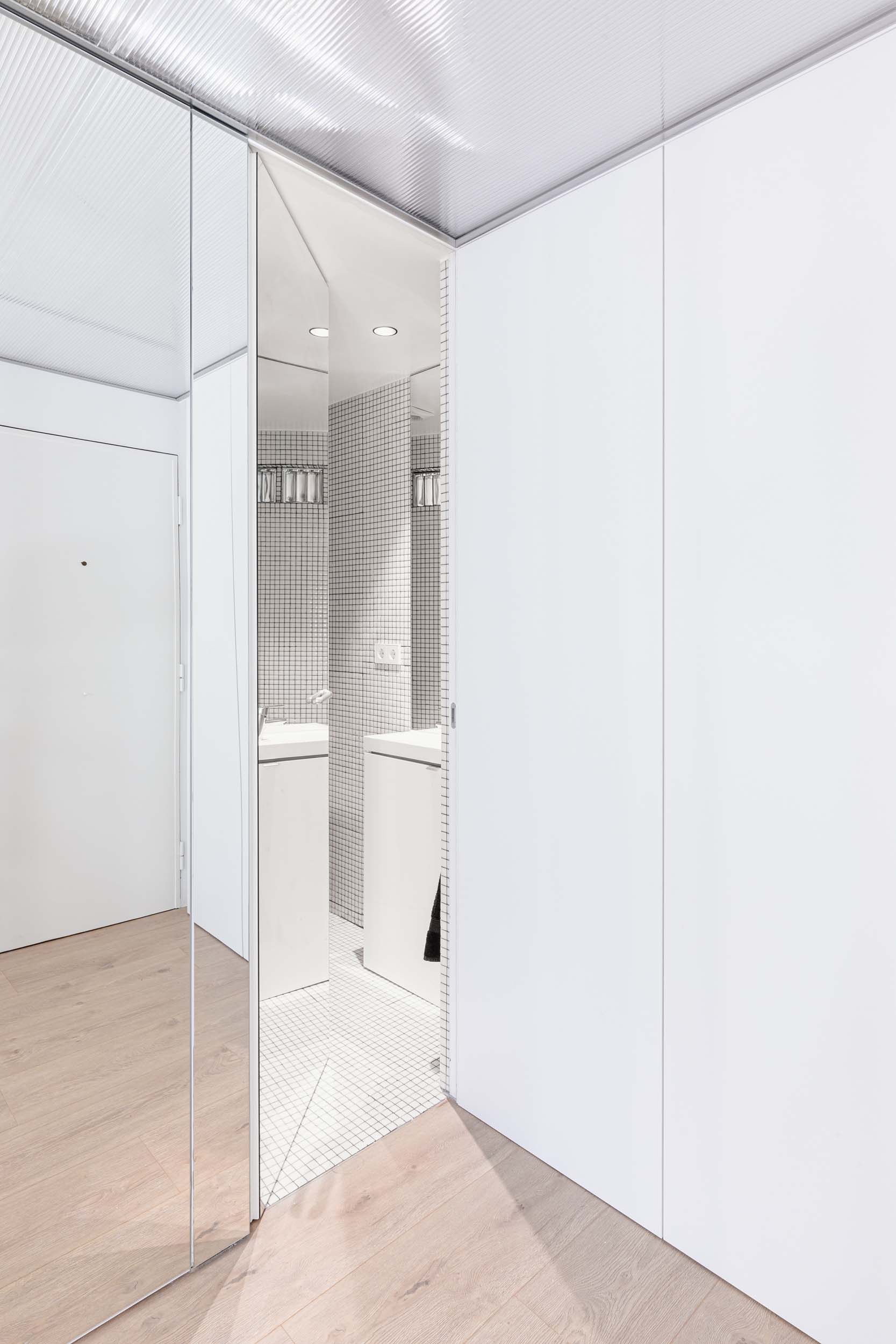
On the other side of the curved wall, sits a bathroom and entry, each creating its own bold and distinct zone. Walking across the sandstone portal, one arrives at the reflective entry. More storage is clad in mirrors. Metal panels cover the ceiling, emphasizing this stark reflectiveness. But before one can orient themselves to the new space, just across the way, a blue-tiled bathroom continues the interior’s celebration of chaos and contrast.
Unplanned Domestic Prototype refuses to be static to any one palette or function. Ismael Medina Manzano designs not for a particular way of life, but for how life doesn’t go to plan. The messiness of domesticity is reflected in the juxtaposing colors and compositions. The result is fluid and free.