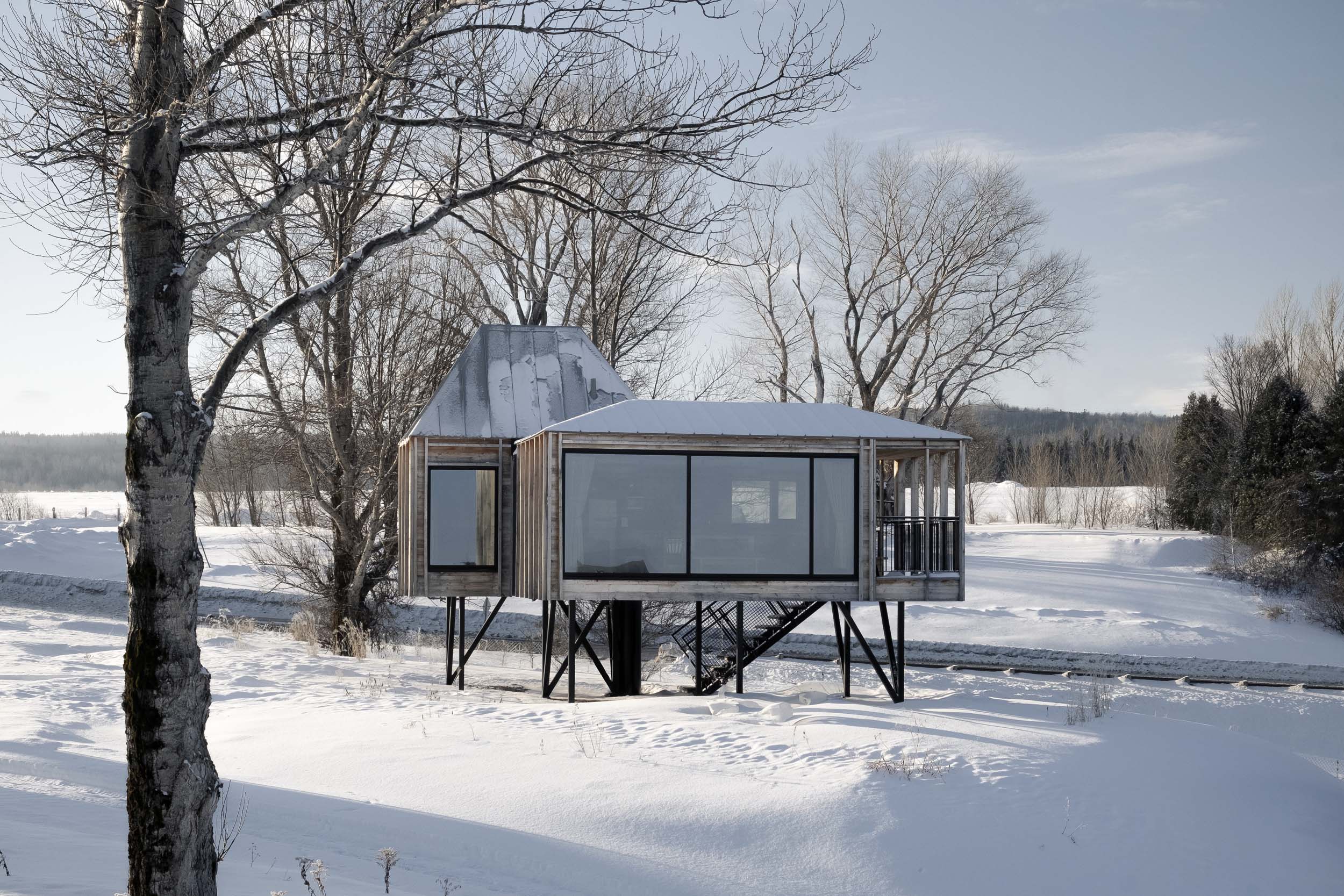
La Cache, a collection of hideaways on the shores of Quebec’s Lac Saint-Jean, represents the contemplative and adaptable work of Delordinaire, a studio based in Paris and Montreal. This total immersion in the landscape was pioneered in the firm’s earlier High House in Saint-Ferréol-les-Neiges. Built on minimal foundations, stilt typology allows better views, more light, and puts inhabitants in touch with the scenery. An artfully integrated site with landscape design was abandoned due to the client’s financial problems. So, as Adrian Hunfalvay, partner of Delordinaire, said, “We decided to exclusively communicate on the ‘architectural object,’ the design of a modular house that can adapt to its environment.”
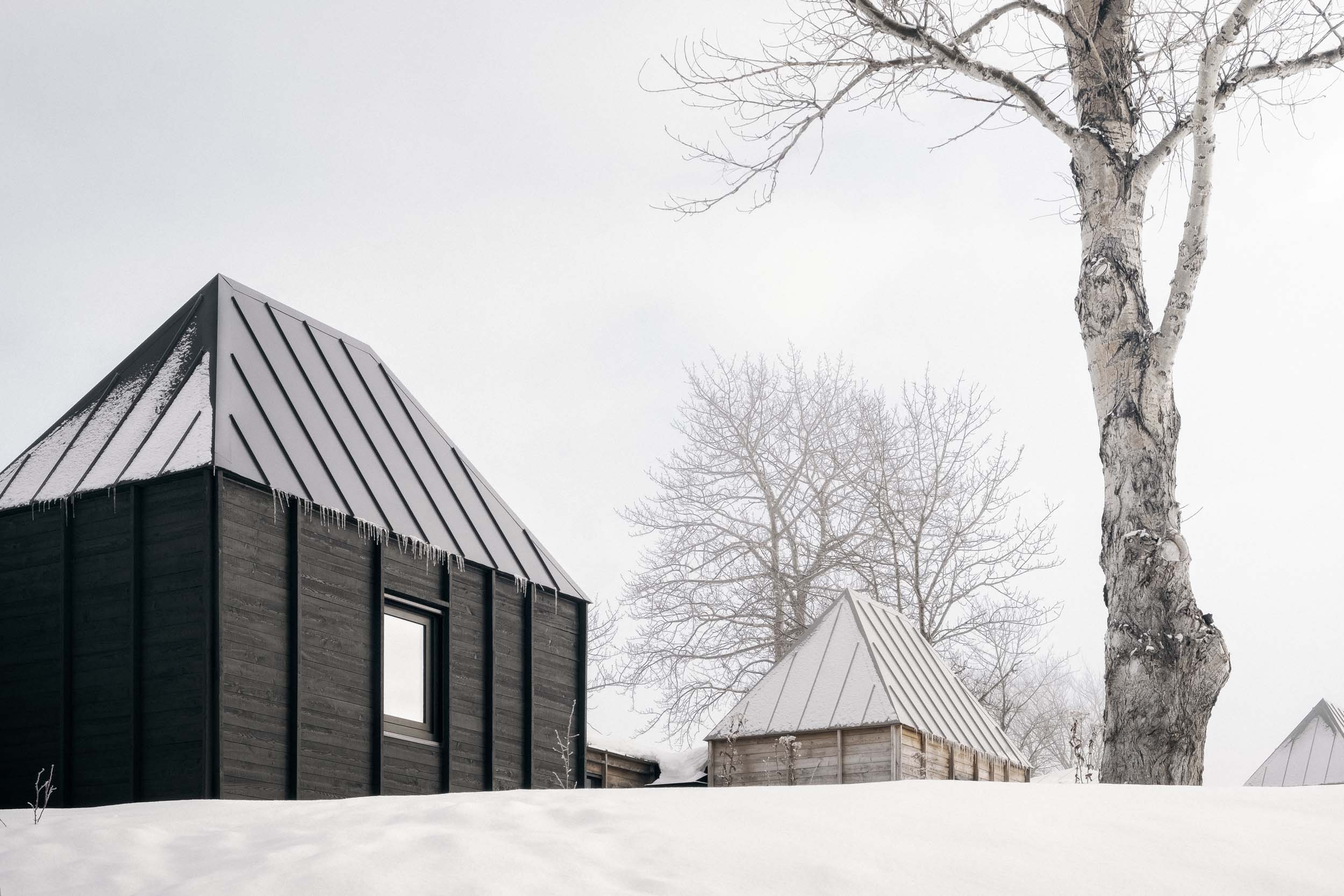
Located 150 miles north of Quebec City, Lac Saint-Jean is hardly a tourist destination. There’s not much more here beyond scenery—a vast forest interrupted only by some hardscrabble farms. Yet it is the perfect locale for solitude, lack of distraction, and long nature walks. Raised on stork-like stilts, La Cache is a hideaway, an elevated platform to safeguard supplies from wild animals, the hermitage that most architects yearn to design. With walls a combination of natural and black-stained larch, these cabins might be mistaken for duck blinds. The steeply pitched conical roof makes a nod to the regional vernacular; its metal sheathing both elegant and agricultural.
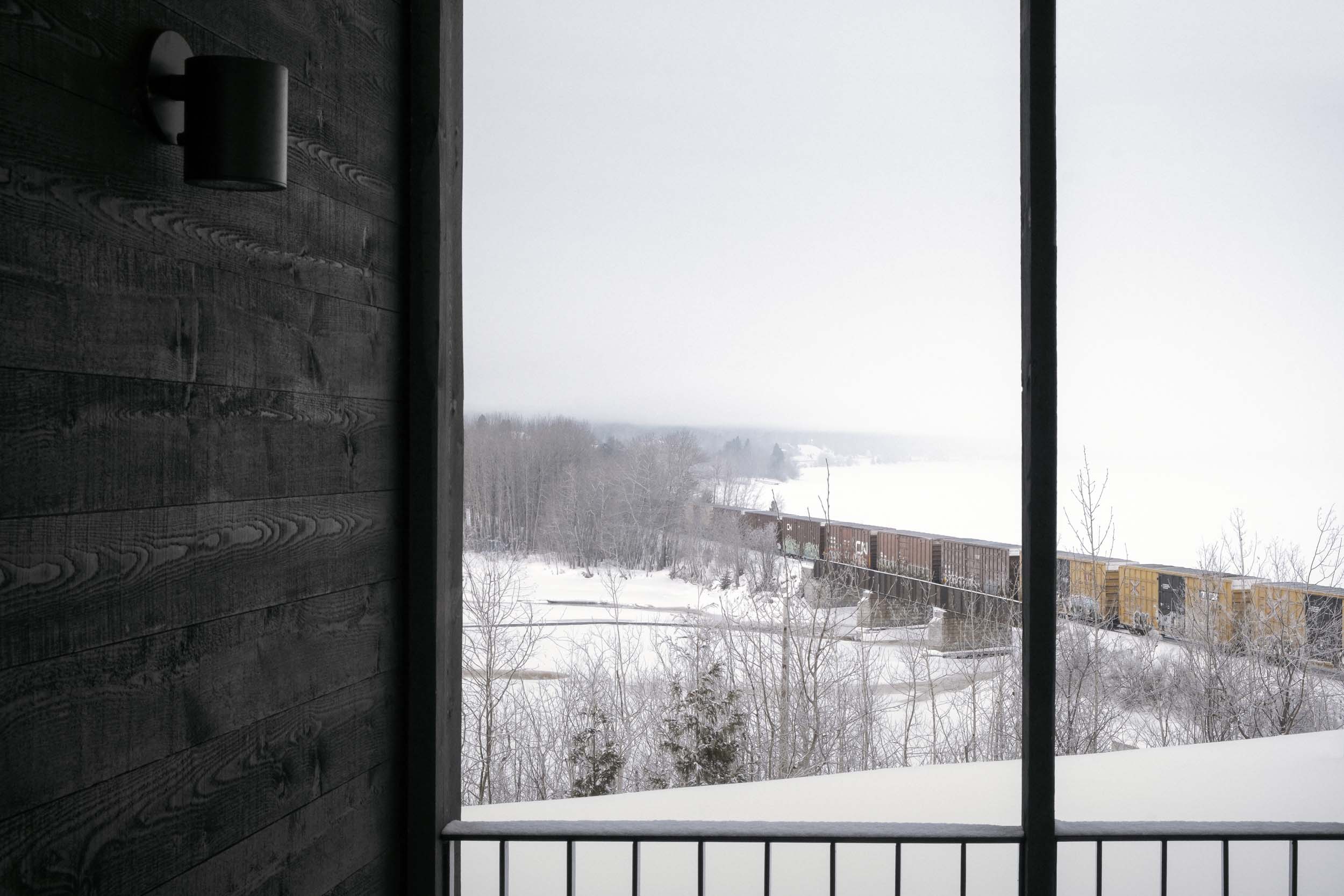
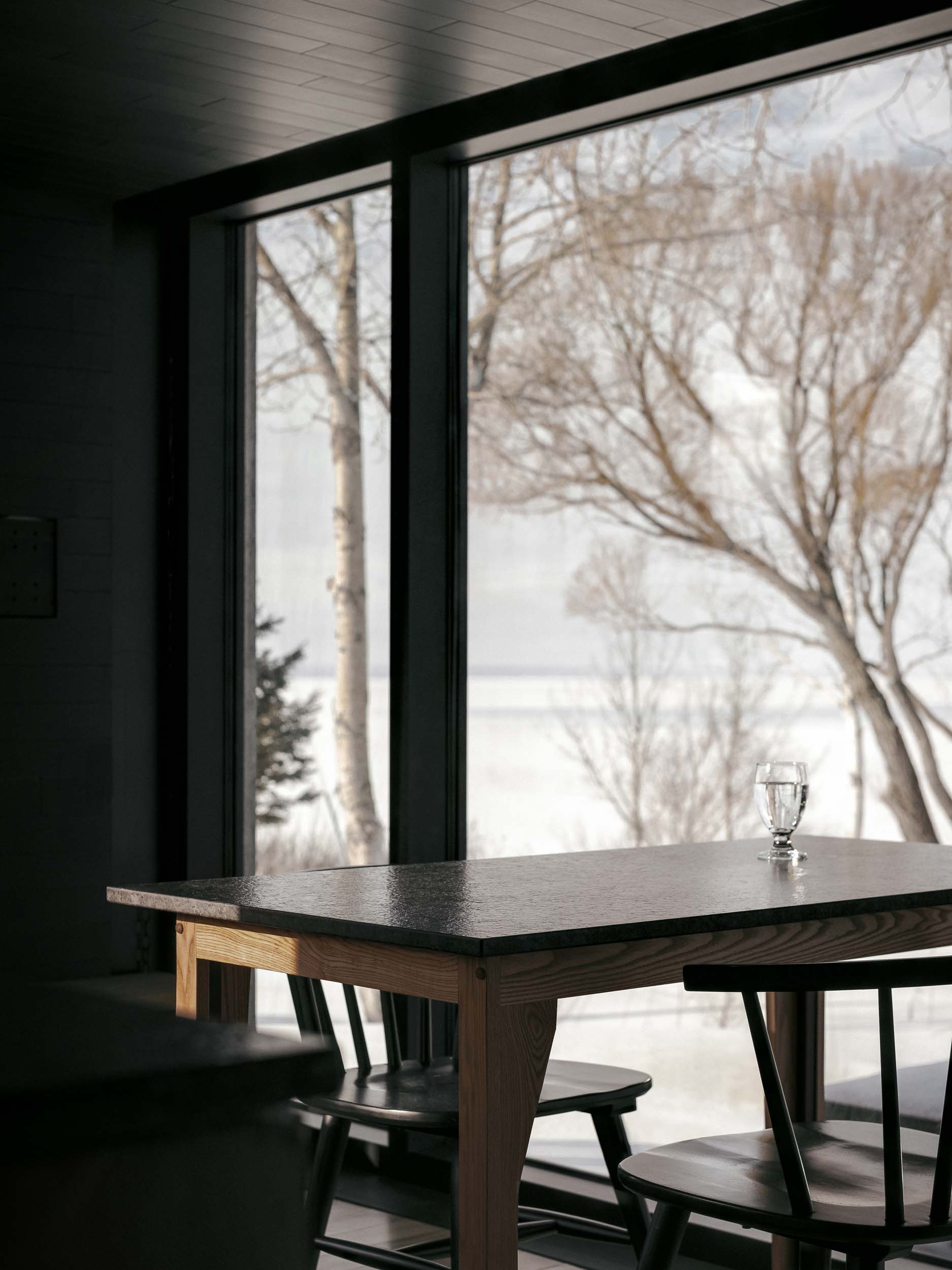
Ideal for weekend getaways, La Cache has no basement, no storage. Its 538 square feet of living space is absolutely barebones, or as architect Jean-Philippe Parent noted, it was designed “like a hotel room where you drop your luggage” before heading out to ski, hike, and commune with nature. The focus is clearly on the outdoors: The view of the large lake is strategically placed to frame landscape pictures, so much so that the living area and the bedroom are dominated by floor-to-ceiling sheets of glass. The lack of decoration, such as moldings, bookcases, or built-in furniture on the lime-washed interior walls, suggests that the house is for contemplation, a haven of serenity—sort of glamping with Thoreau.
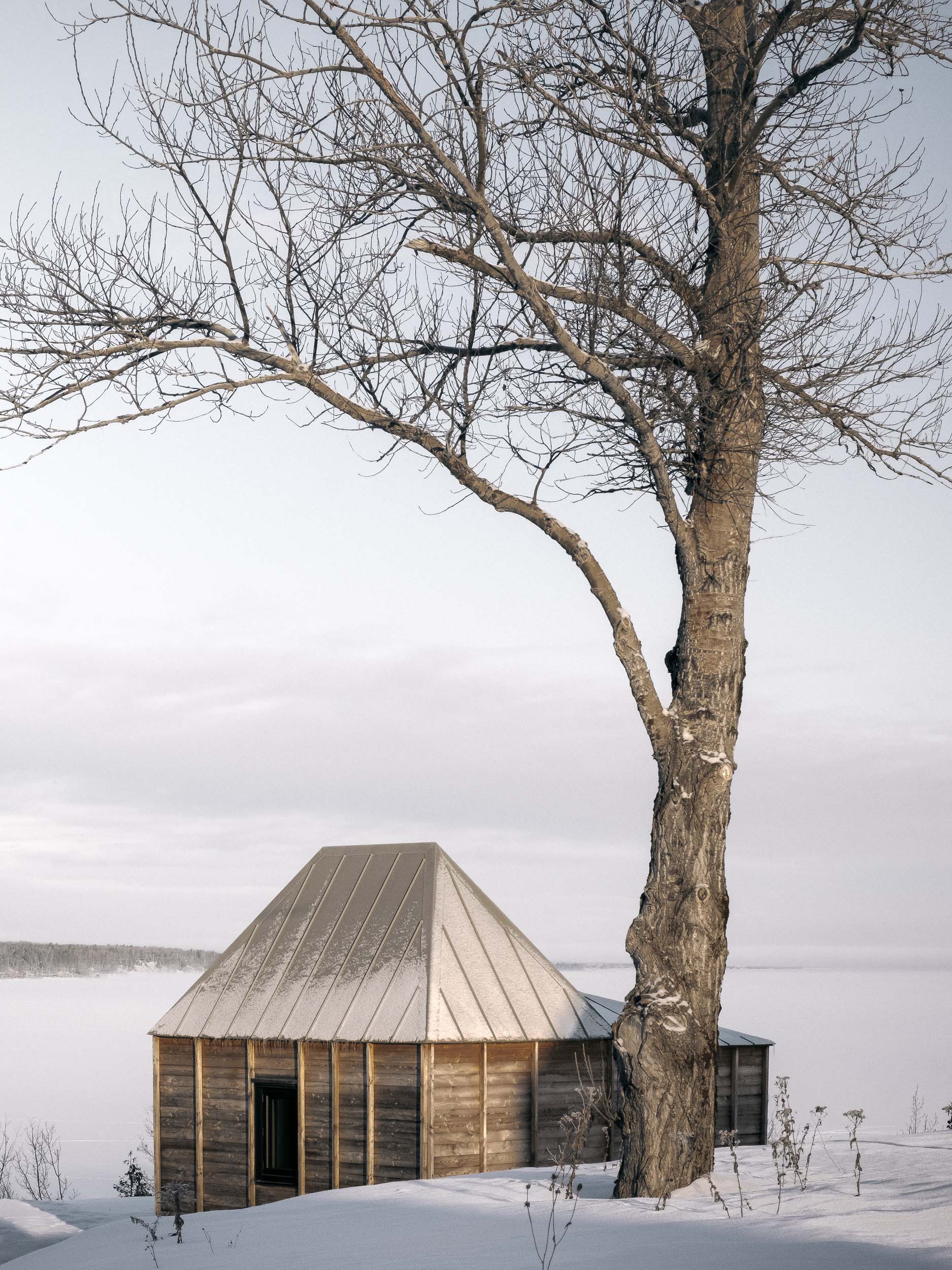
Working with Montreal designer Annie Sylvain as the local architect, Delordinaire ensured the modular dwelling units at La Cache are adaptable and repeatable. But the main focus is the invention of an architectural typology that adapts itself to the environment. Building on stilts is something usually associated with tropical climates. But here, Hunfalvay noted, “we are able to adapt a stilt structure to a cold and snowy environment.” A house on stilts is less expensive to build, as there is no foundation, and the structure sits lightly on the land. Erwan Lévêque, the third principal of the always experimental Delordinaire, remarked that in a world of climate change, “traditional typologies will need to adapt to offer us better places to live.”
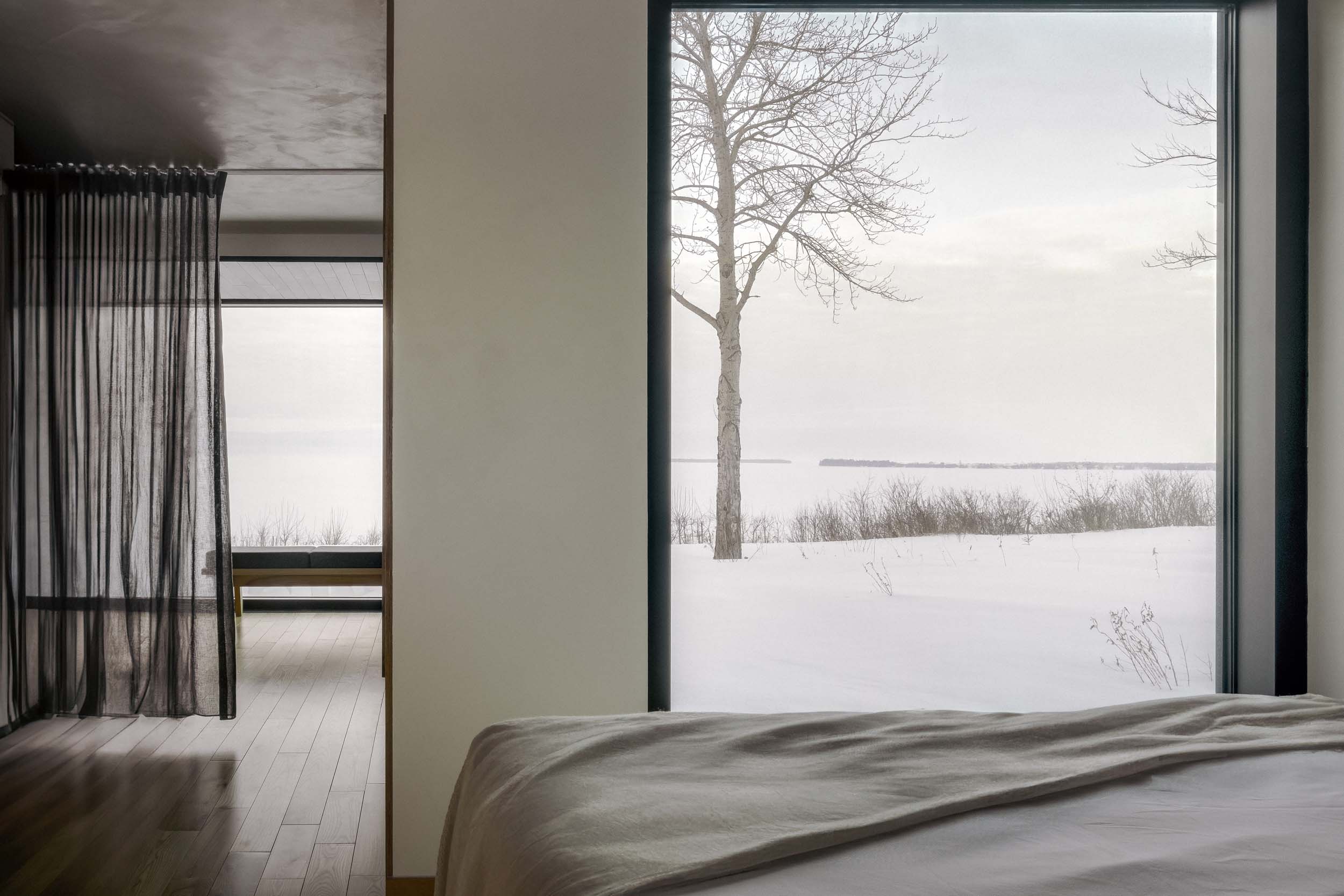
Delordinaire may translate as “out of the ordinary,” but this particular subject matter is quite ordinary. It is shelter at its most basic, prefabricated wood panels and a little steel, functionally and psychologically light. These Lac Saint-Jean cabins, with their sophisticated architecture of subtraction, makes the structures at once contemporary and pre-industrial. La Cache is the primitive hut for the 21st century.