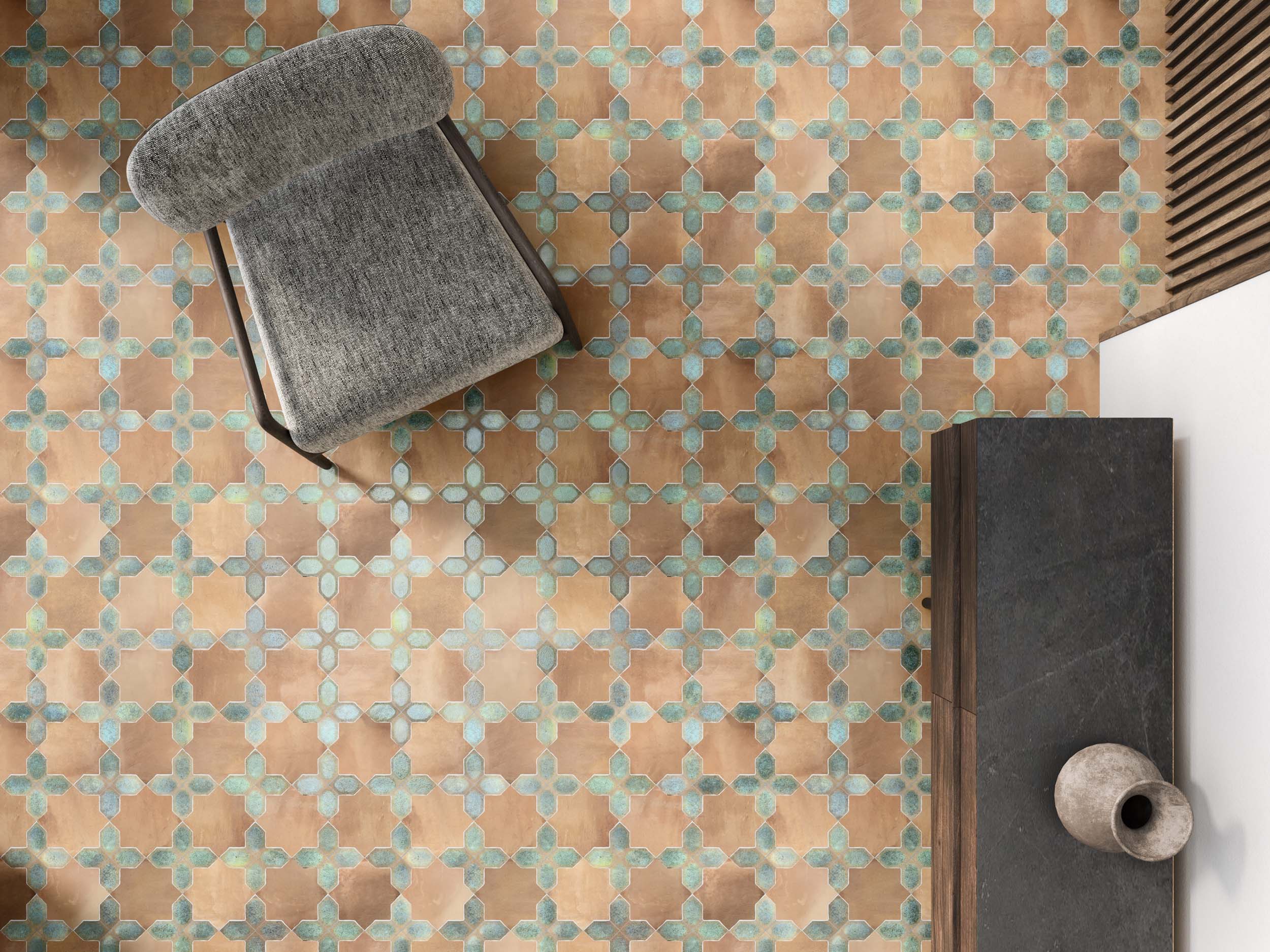
When it comes to aesthetics, this year’s interior designs are not playing it safe. While clients are largely leaving jewel tones in 2024, they are now wrapping spaces in earthen hues—think: blues, greens, and multidimensional browns—as well as embracing textured surfaces in these all-over shades. Tile is one of the ways to achieve this tactile trend, which adds a multisensory experience to a room.
At Spanish ceramic tile trade fair Cevisama in February, more than 40 local companies exhibiting their latest collections for wall, floor, and exterior use welcomed the refreshing popularity of nature’s colors while emphasizing that their product is itself nature borne. But the tile-making process is also enhanced by new technologies allowing more durable, versatile, and creative results through constant innovation. These four trends predict what’s next, both in tile and the interiors they decorate.
Pedal to the Metal
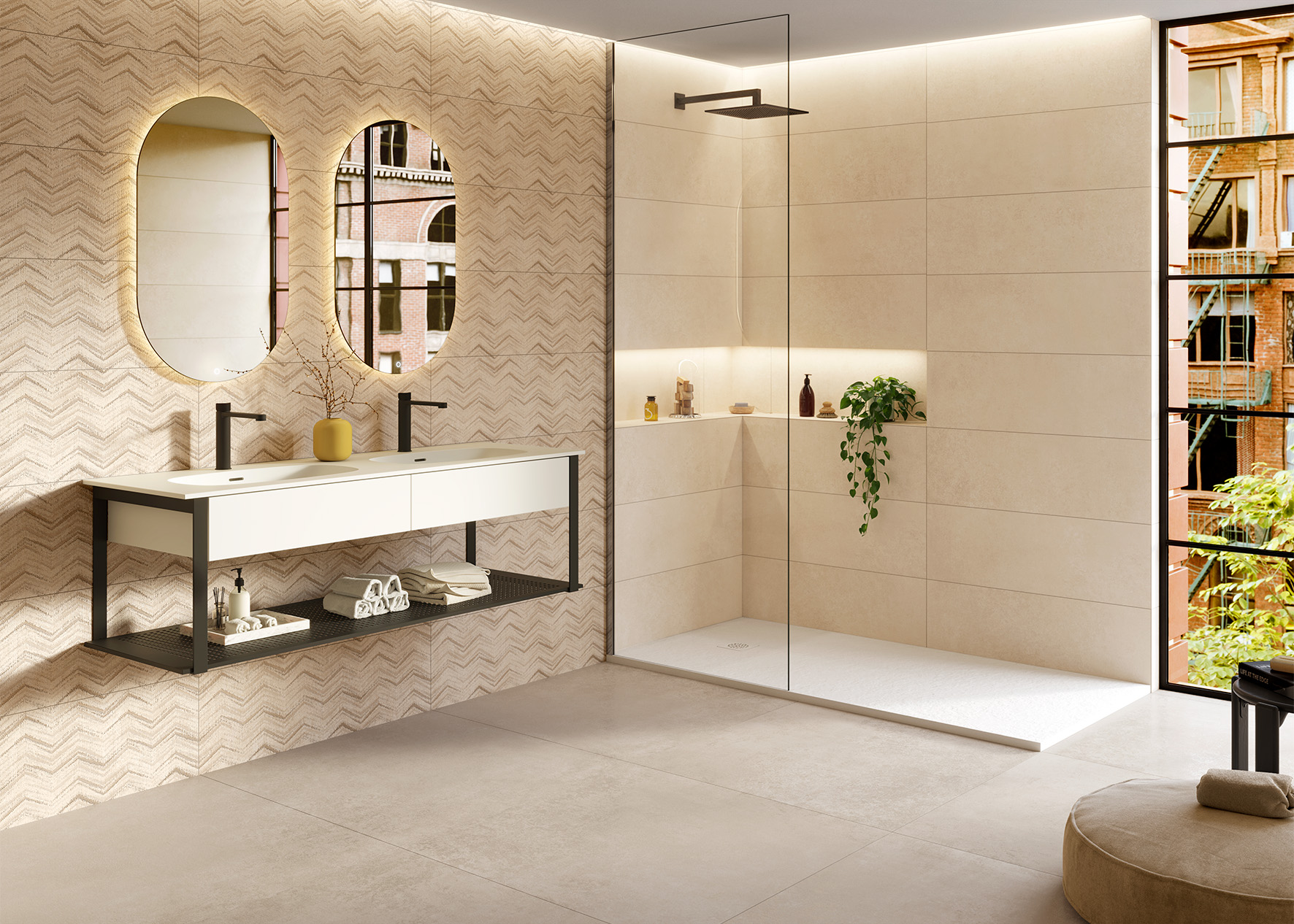
Advances in inkjet printing technologies at Spanish tile factories—90 percent of which are in Castellón, a province just an hour north of coastal city Valencia, where Cevisama is held—have encouraged companies to explore more multi-textured tiles. Increasingly in demand by interior designers in the United States are those with patterns that incorporate a metallic shimmer. The effect gives ceramic or porcelain tiles the look of a wallcovering but the durability to handle a moist or high-traffic area without the ability to stain. Metropol’s San Francisco collection offers a handsome chevron with a silvery sheen, while Apavisa Porcelánico’s cork adds light-reflecting flecks to its large-format porcelain mimesis.
Others are crafting 3D surfaces that mimic natural stone’s look and feel, as well as its sparkling mineral veining. STN Group has recently opened an award-winning factory for new brand Venux, which is using robotic technology to craft sintered stone slabs as large as 126 by 63 inches and as thin as a quarter inch. They can be used on countertops, floors, and walls, or to design flat-topped furniture. Tile company Museum’s Strata technology similarly digitally prints relief, color, and reflective properties into its highly detailed new Lumiere collection, inspired by Calacatta marble.
Easy Breezy Blocks
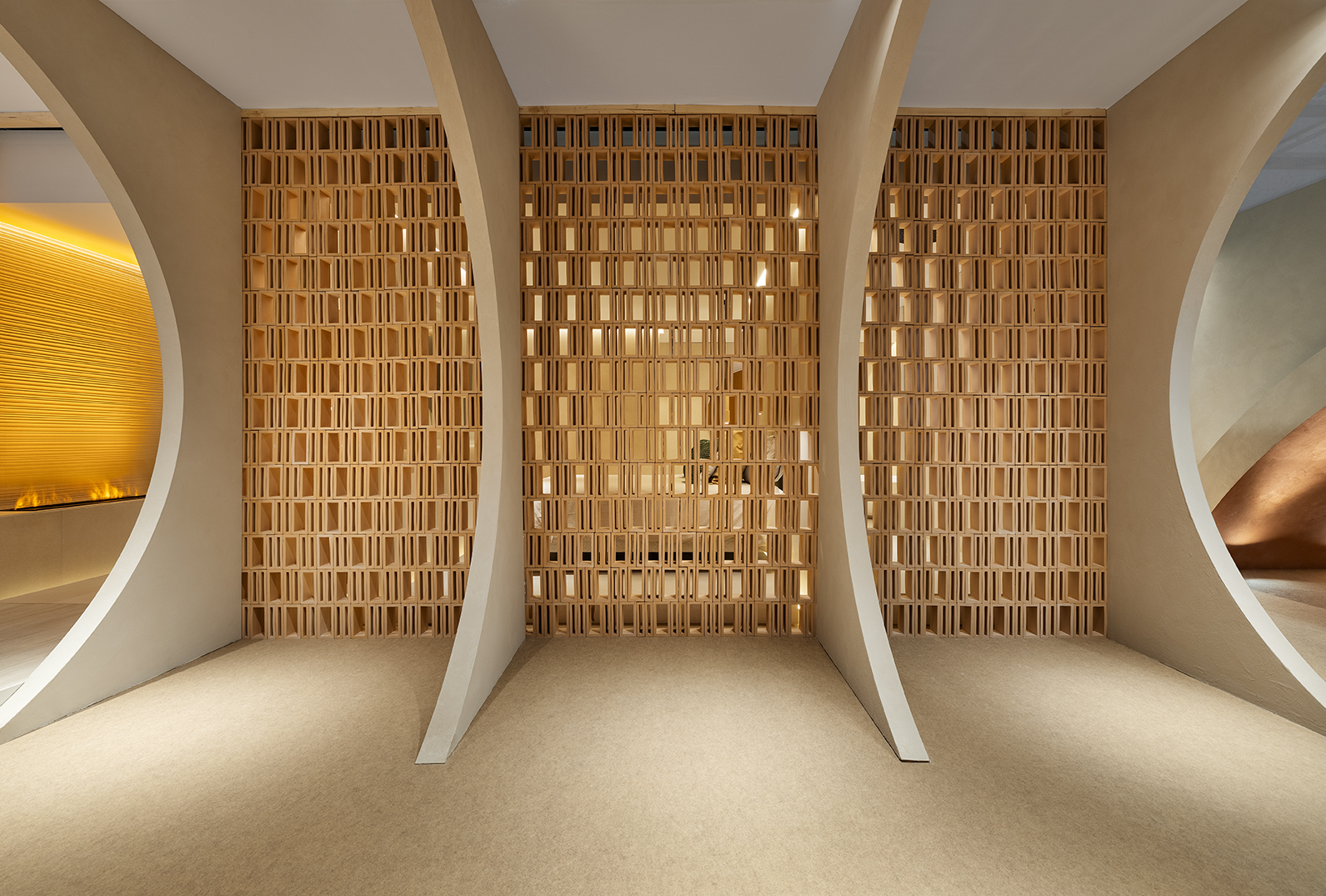
In conjunction with the building industry’s rising interest in passive design, slip-cast breeze blocks saw a resurgence at Cevisama this year but took on new forms and finishes. Cevica’s new playful Celosia Symbol collection offers five pseudo-glyphic block patterns, which can be glazed on any surface in the company’s large range of bold hues or left untreated to allow their red ceramic to shine on its own. Also highlighting the functional elegance of ceramic breeze blocks, a special hospitality installation by Madrid-based, Puerto Rican architect Héctor Ruiz-Velázquez employed rectangular versions to create a screen between two concept designs for sustainable, wellness-focused hotel rooms.
Reinvented Tradition
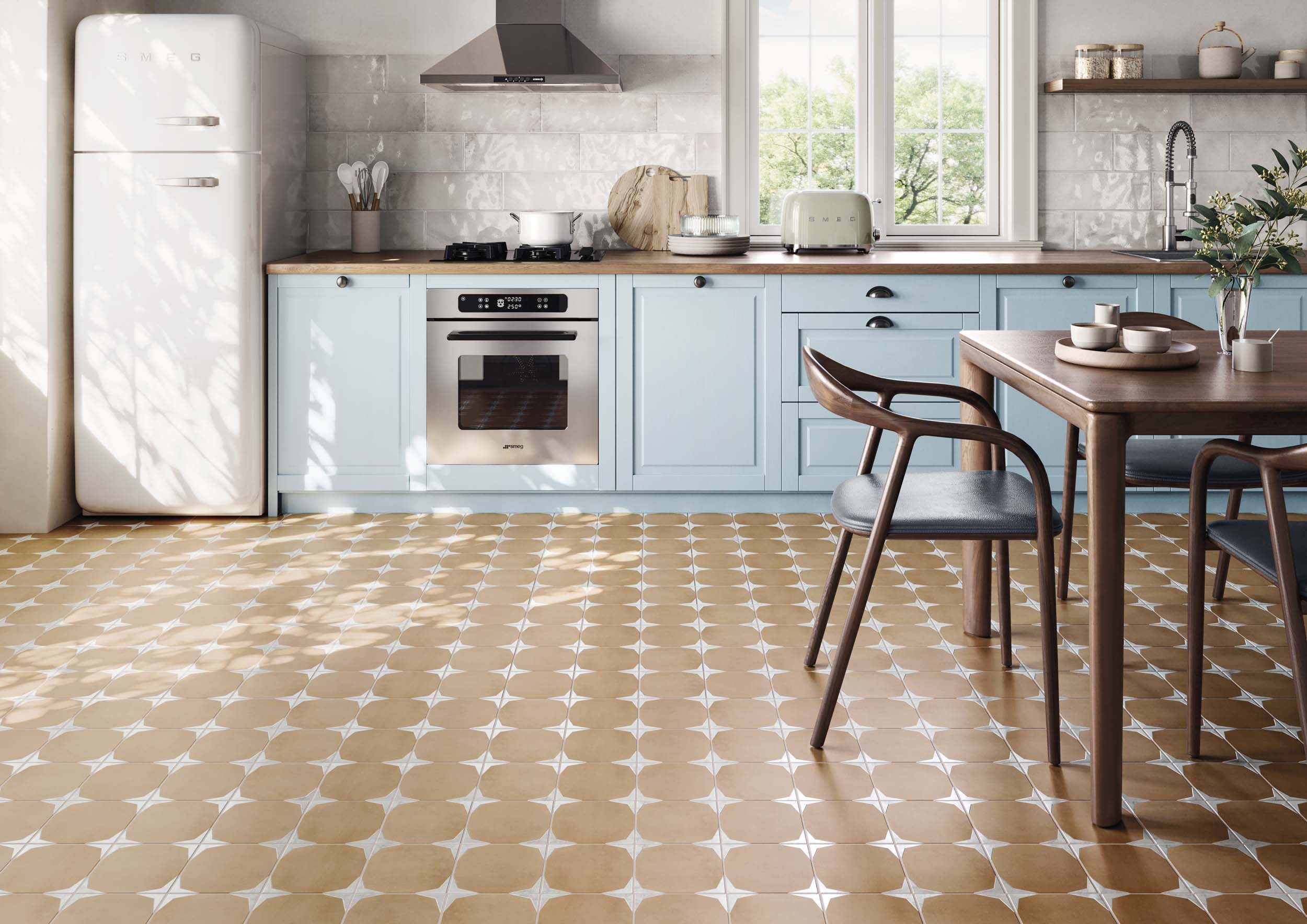
The prevailing interior design trend toward earth-bound colors has encouraged the Spanish industry to embrace its own tile heritage—with a contemporary twist. Decocer and Natucer noted the popularity of their Moorish cross-and-star patterns in North American markets; the latter’s new Unika collection focuses on trending colors white, taupe, terra-cotta, blue, and gray. Other brands are bringing a classic terra-cotta tile floor into the 21st century with gridded patterns interrupted by a boldly-colored porcelain accent, like in Peronda Group’s FS Nonna collaboration with designer Francisco Segarra, or pared back Andalusian-style motifs that include both glazed and unglazed clay (Realonda has several such star-inspired novelties). Meanwhile, Harmony’s Pangea tile collection brings whimsy to the traditional terracotta with a bas-relief glazed dot pattern on a sand, clay, or chocolate-hued porcelain background.
Coming Up Wildflowers
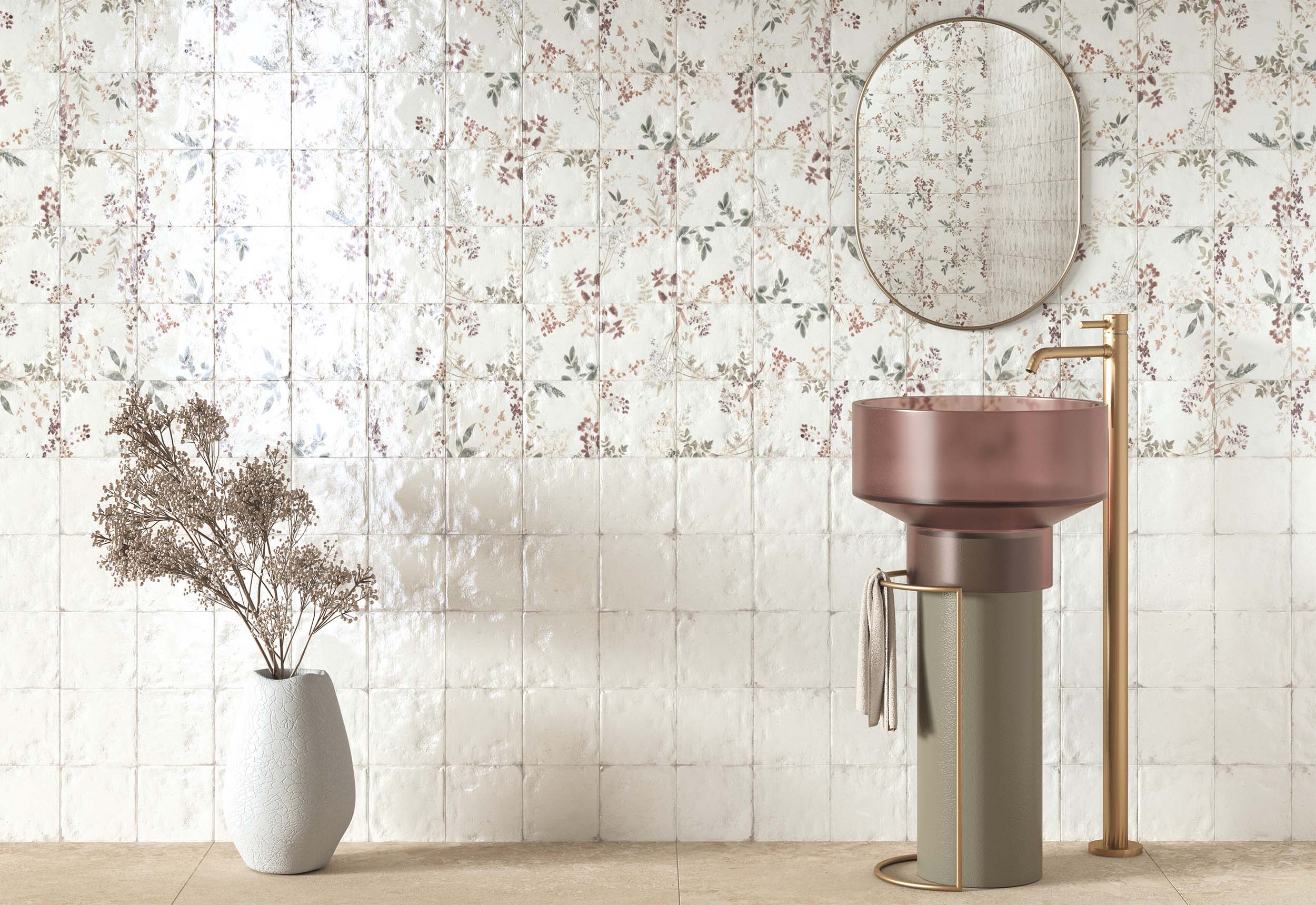
Among the ubiquitous geometric patterns at the fair, several Spanish companies have released recent patterns that focus on floral details—either all-over chintz or glazed wildflowers that appear almost like botanical studies atop neutral grounds. Ibero’s Botanical collection features hexagonal examples printed with leaf pressings as well as large-scale rectified wall tiles with a jumble of dainty vegetation on a textured backdrop. Decocer’s Hexa Fleur collection focuses on single wildflower motifs, while Harmony’s Mayolica collection conjures a more English vision. While bolder nature-inspired color designs might be topping current trends, this refreshingly delicate take also brings the outdoors indoors to charming effect.