In New York’s Long Island City, a semi-detached, single-family residence dates back to the 1890s and, until recently, still looked like it. The home, dubbed LIC Residence, was left unmaintained and unimproved for decades. The inhabitants, a family of four, tapped Brooklyn-based architecture firm, Keith Burns Architect, to update the home with energy efficient upgrades while shifting the home to three bedrooms and two and a half baths from its previous two bed, one bath. Deft maneuvering results in a tight design—both in terms of layout and air leakage.
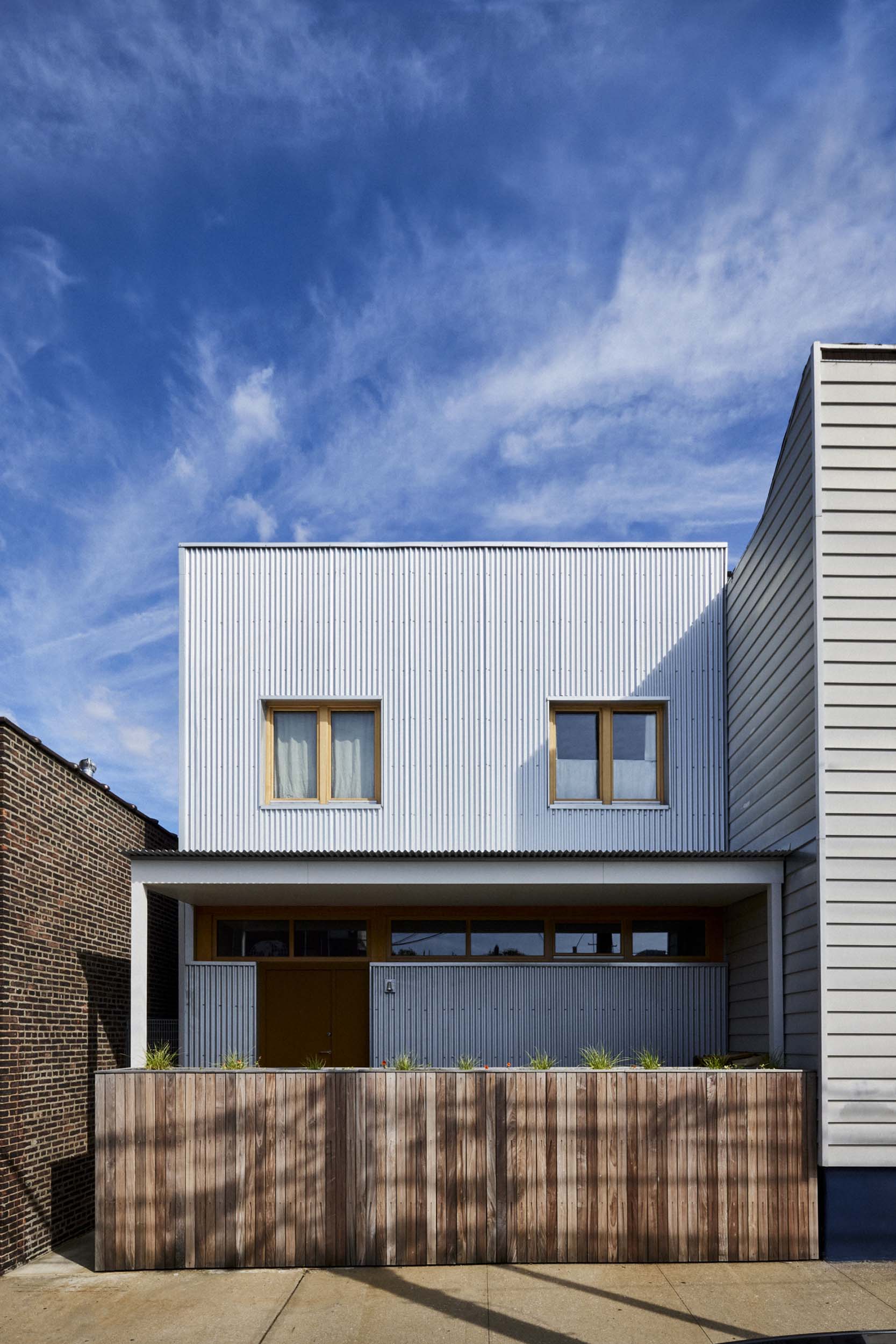
The architects integrate denser programming without adding space, all while maintaining the existing foundation. Many of the exterior walls and floors were also maintained with adjustments as needed in order to meet the tight budget. From the exterior, the updates and original form can both be felt. A porch covered with a roof overhang still clads the front facade, but it’s now encased in Atlas Corrugated Steel Siding. A planter clad in vertical ipe wood acts as a barrier from the street and as a quaint flower bed. The front door is tucked within the porch underneath a narrow clerestory. Windows are wrapped in pine wood.
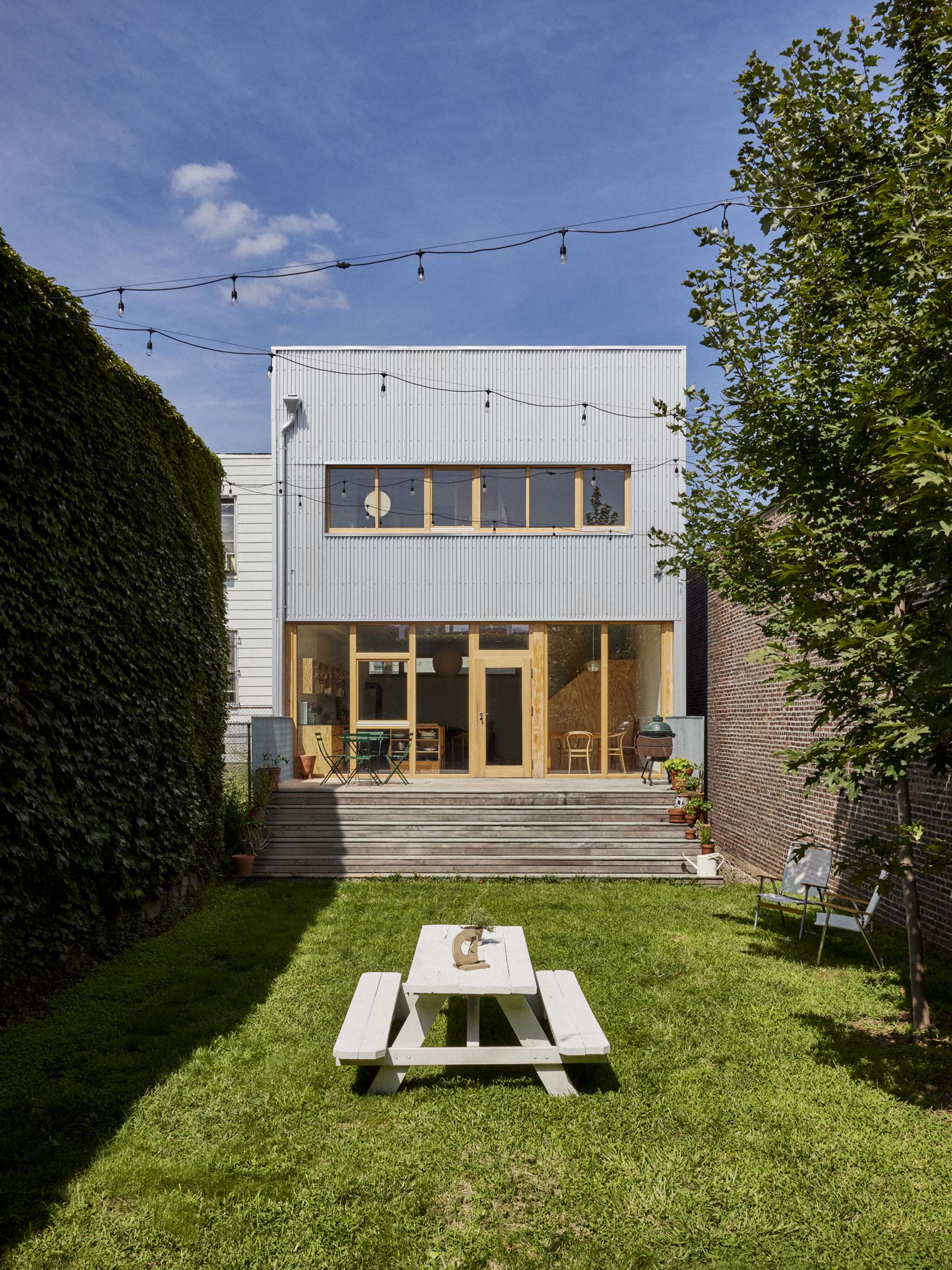
Within, the back of the house takes center stage. The stretch of glass windows and doors, spanning 9 feet by 21 feet, lights the whole open floorplan. Keith Burns, founder of Keith Burns Architect, shared with AN Interior, “The first floor windows at the rear are a full wall of windows but that same pattern is mirrored to the front facade but only as a clerestory. This brings light in from both the east and west as well as allows cross ventilation through the space.” He continued, “This results in both enlarging the living space to the rear yard but also emphasizes the rear yard as an additional ‘room’ with walls on all sides.”
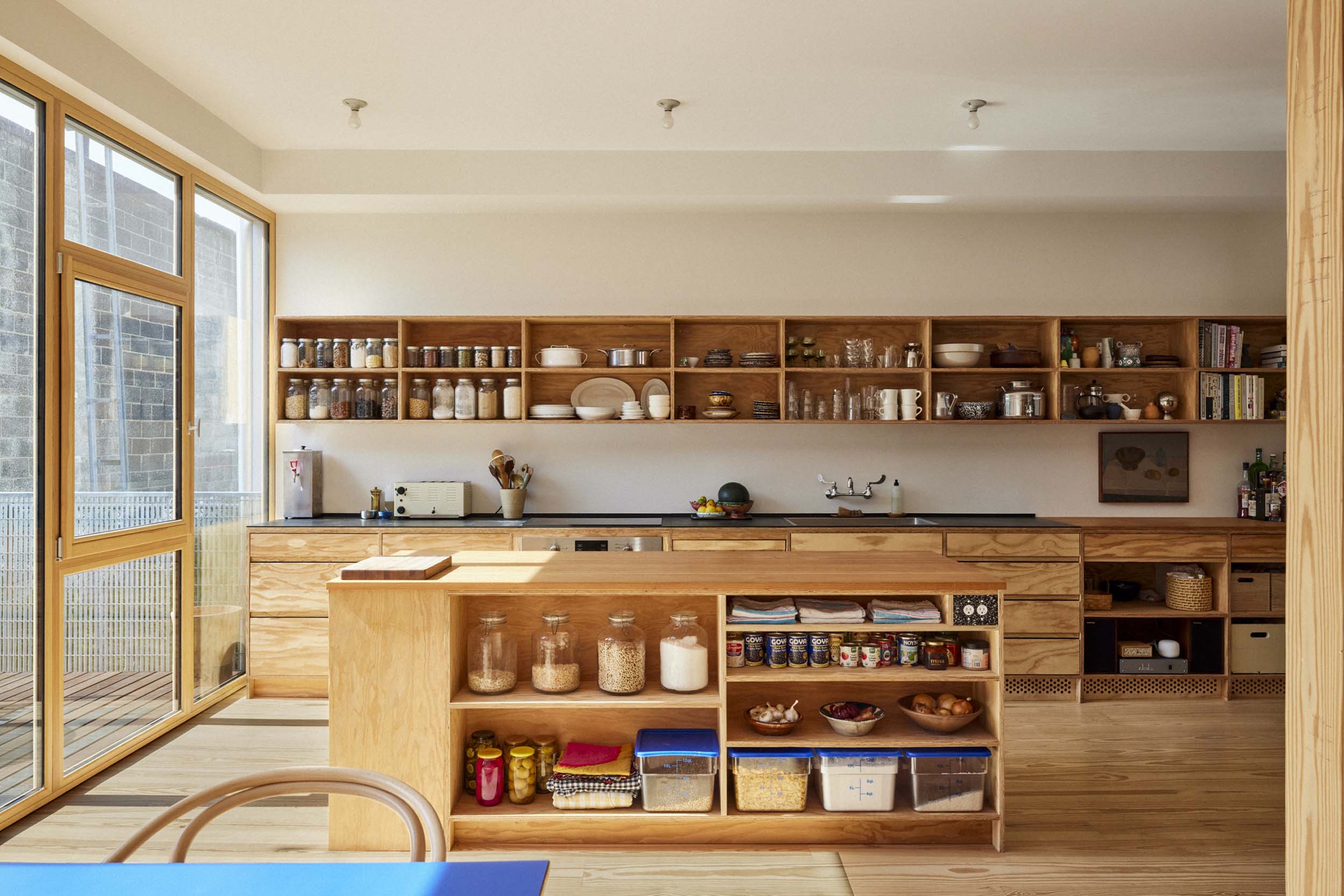
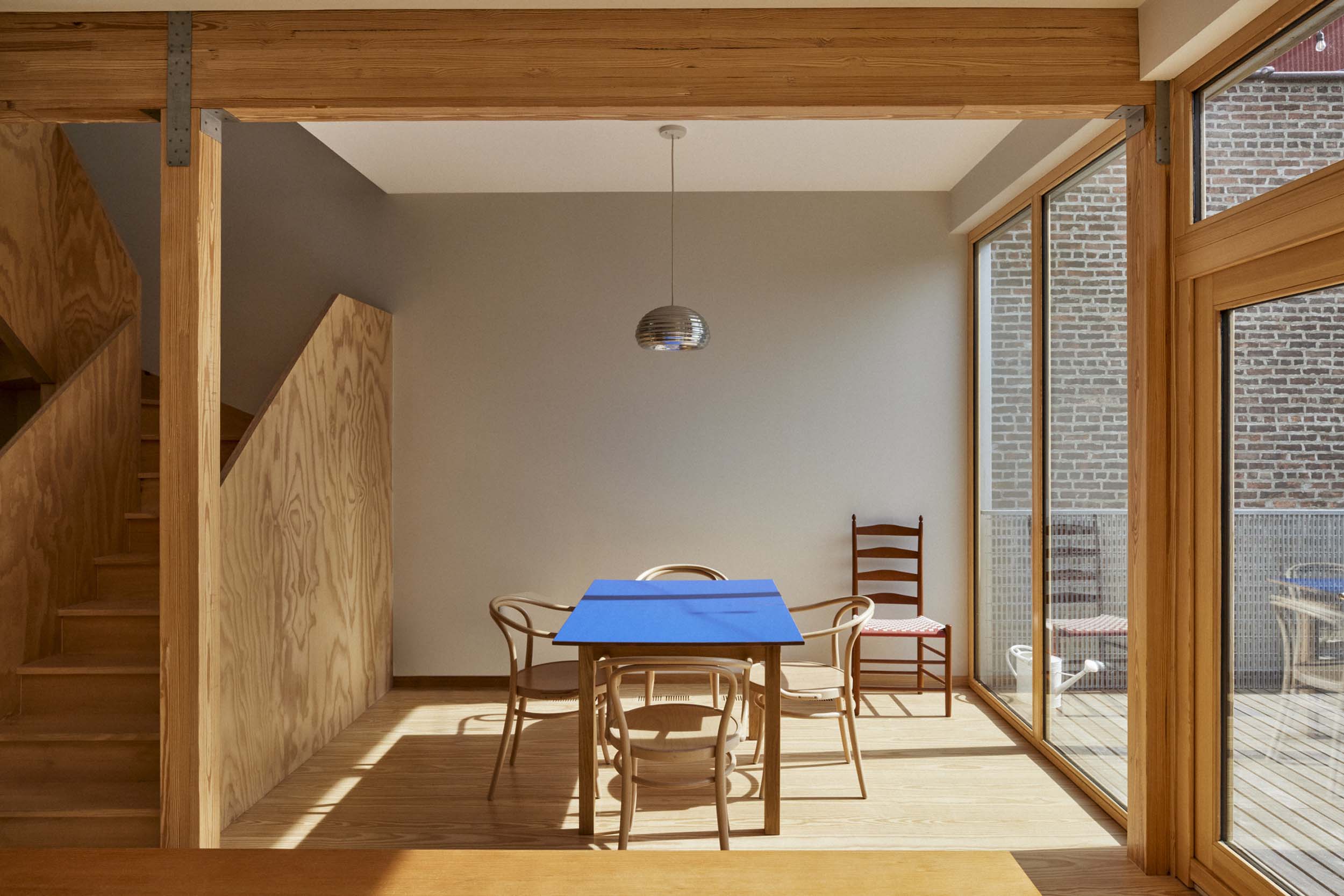
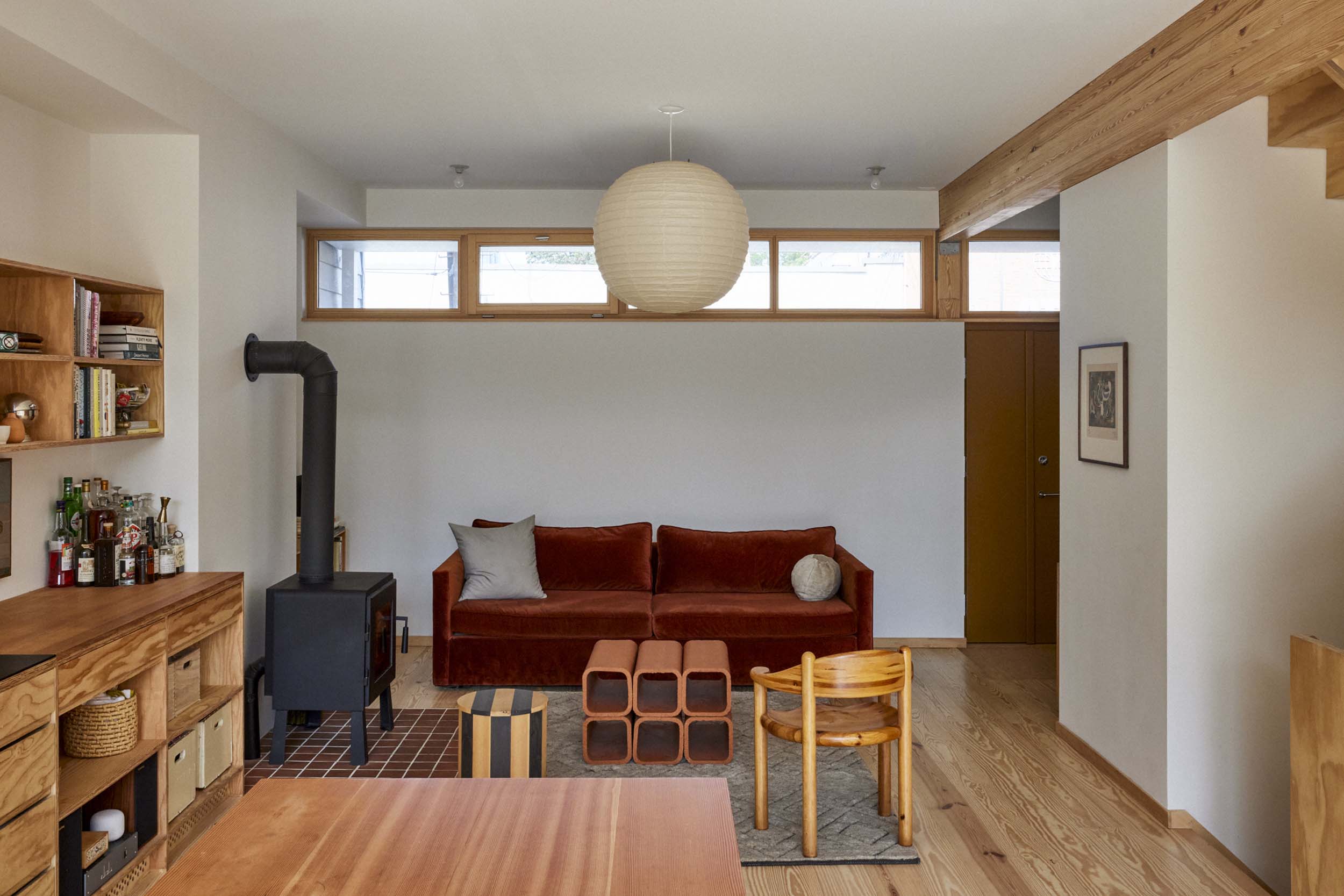
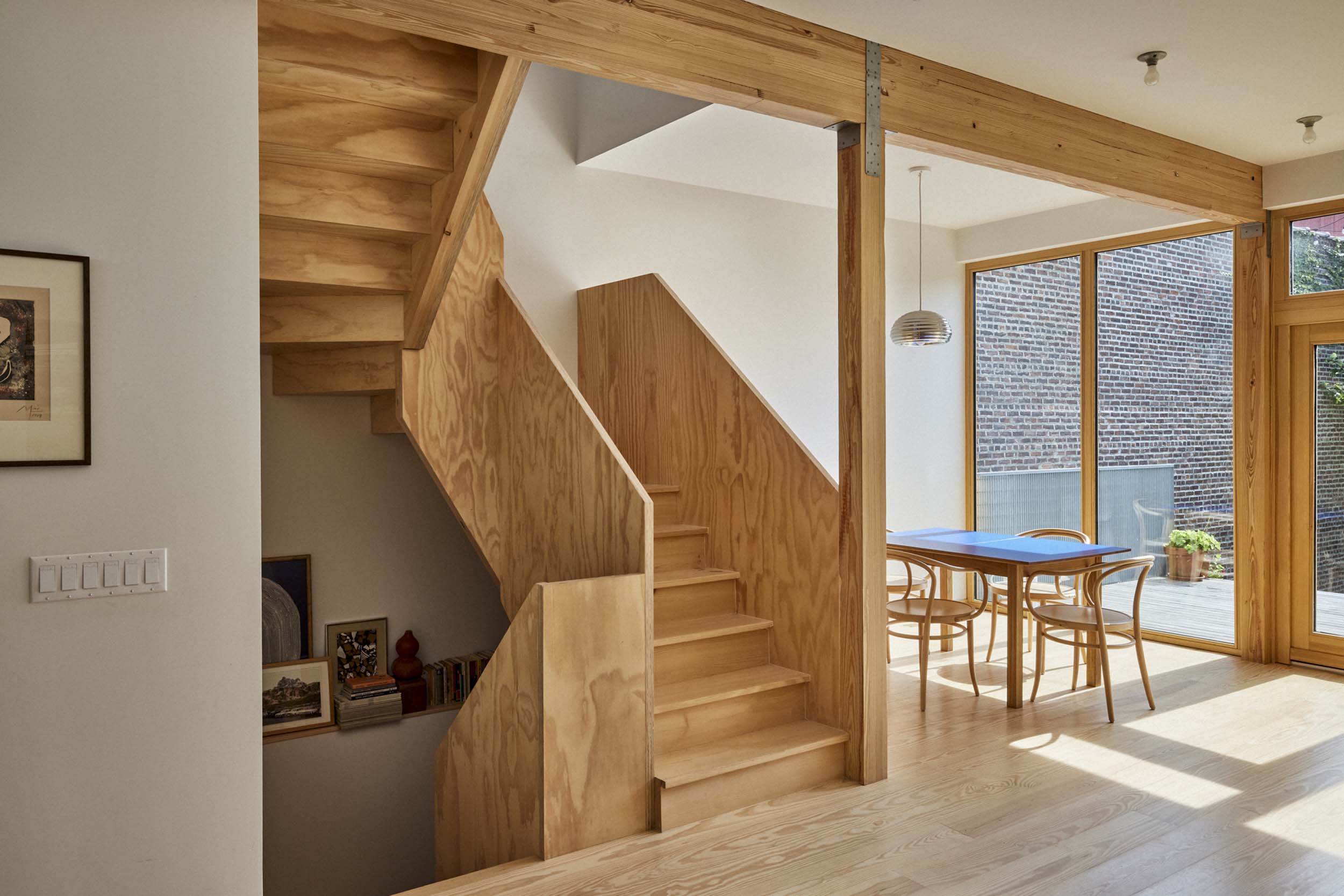
The abundant natural light is complemented by warm wood: the pine wood floors, solid Douglas fir kitchen island countertop and cabinets, exposed glulam, and the Douglas fir plywood millwork staircase. The stairwell, along with the rest of the house, celebrates the uniqueness found in the natural materials applied in the home.
The second floor proved the most challenging. To add the additional bedroom and bathrooms, the design team devised a grid system composed of nine squares to maximize the efficiency of the entire floor. Dividing the floorplan to three rows by three columns created units that can range from from 77 square feet to 86 square feet. The bedrooms make up the corner units with the primary bedroom flowing into a private bath. The second bathroom sits adjacent to it. All rooms feel proportioned but not too small.
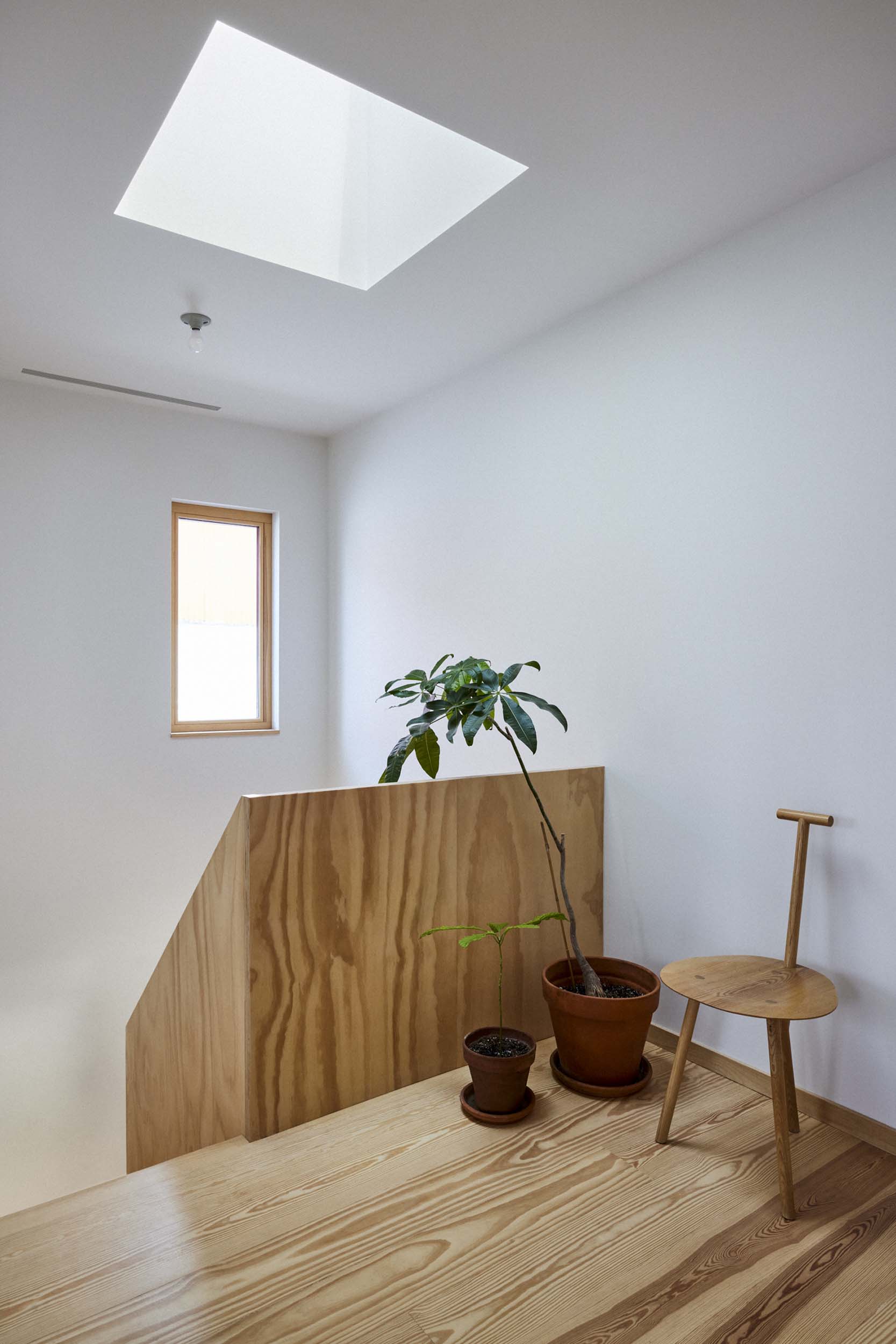
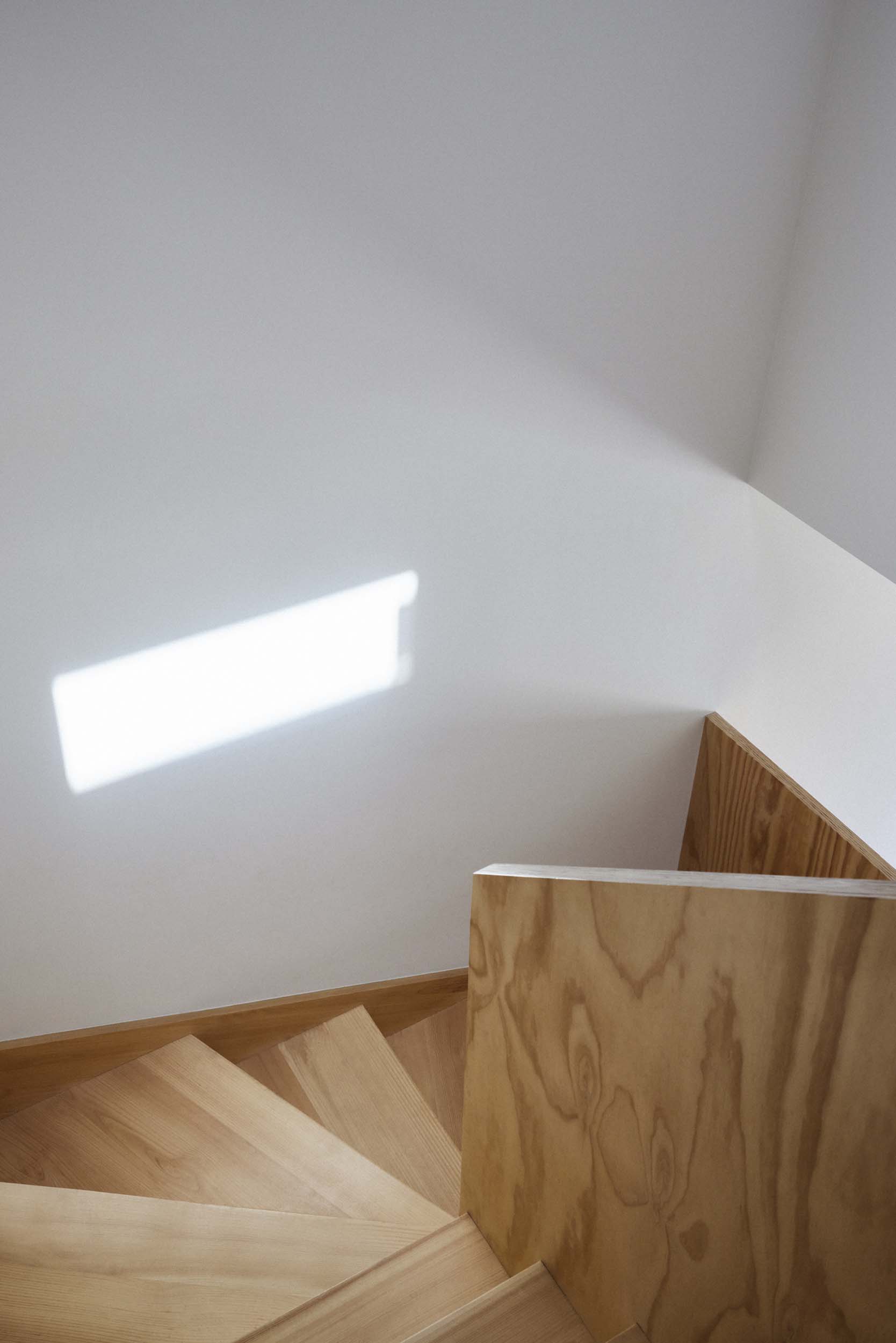
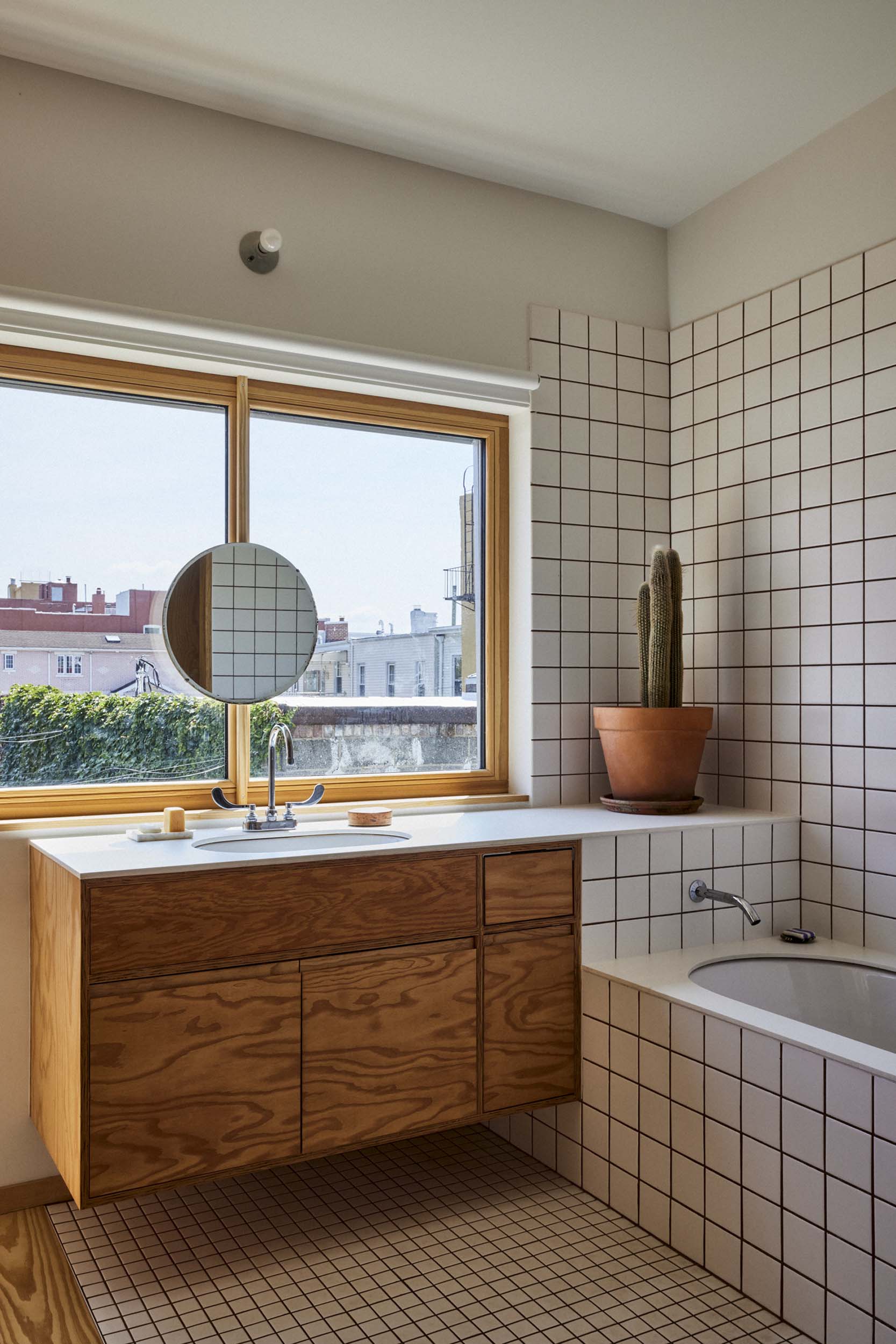
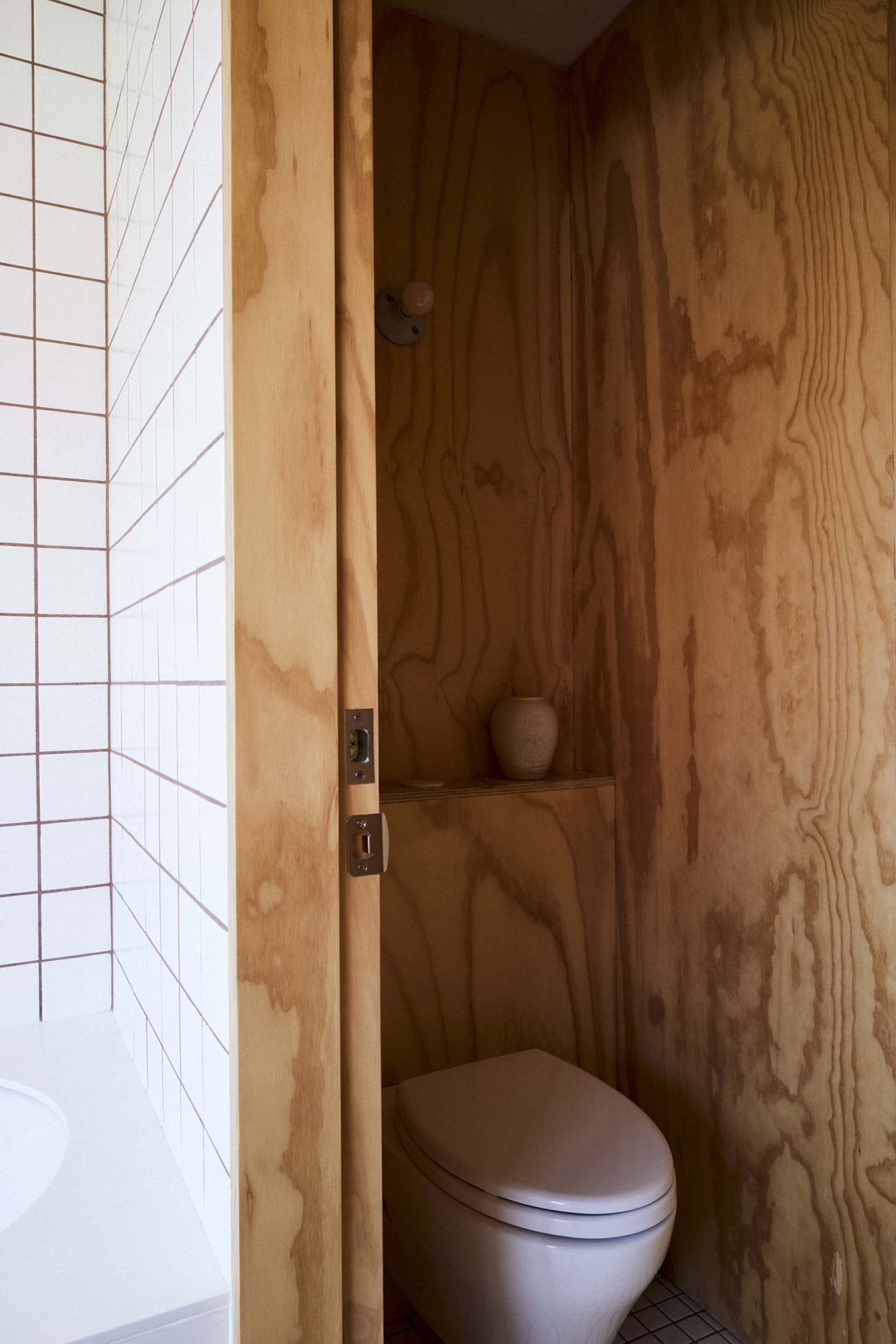
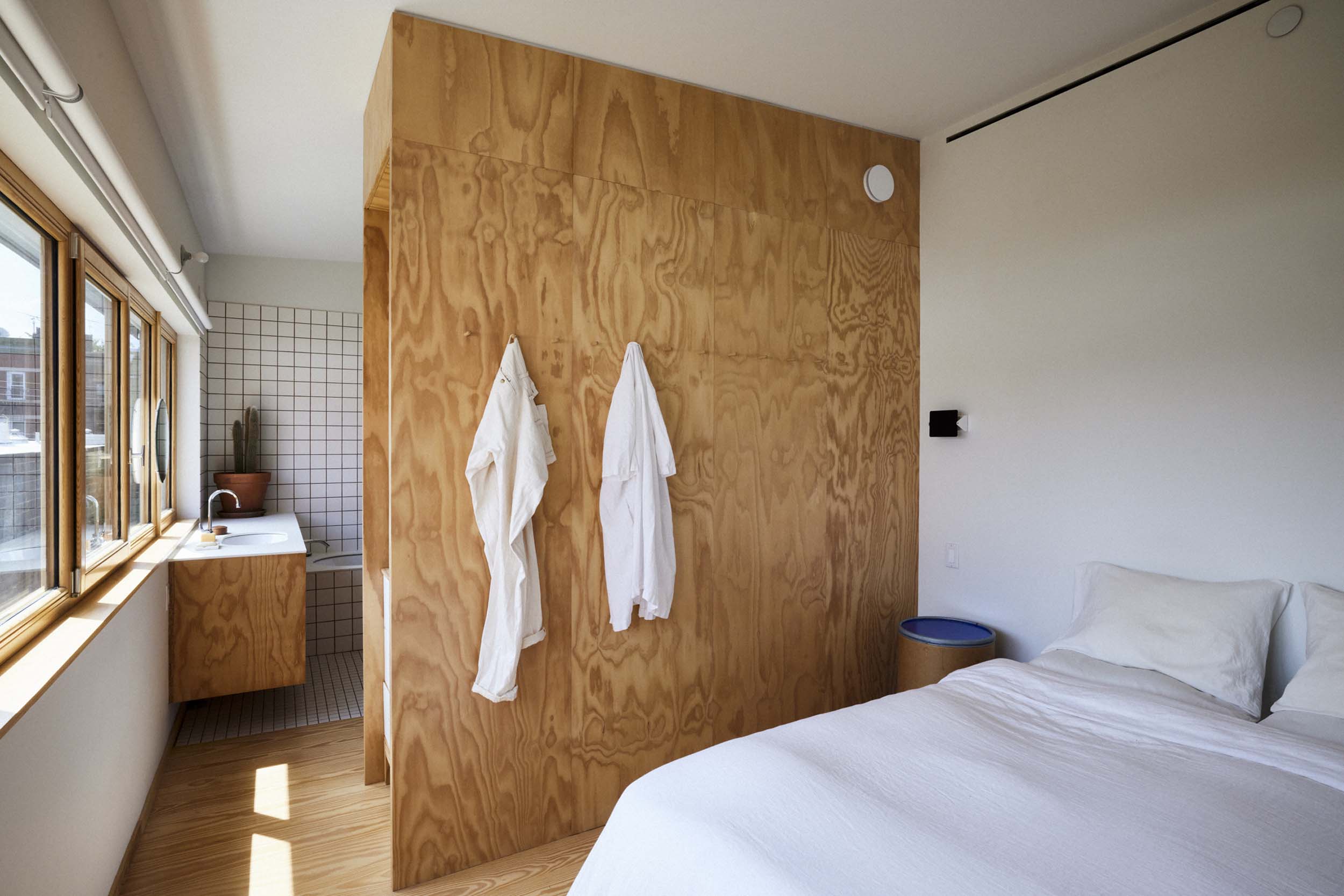
The material language continues to the second floor, where white walls, Douglas fir, and pine wood reign supreme. Perhaps one of the most noticeable departures from this can be found in the primary suite. Here the open plan bedroom and bath are divided by a built-in closet that signifies the material shift to the white subway tiles with black grout.
LIC Residence is, in many ways, like a game of Tetris where rooms were strategically placed to fit within the barriers of the house. Though the composition was challenging, the warm, easy interior finishes and fixtures belie the project’s many programmatic puzzles.