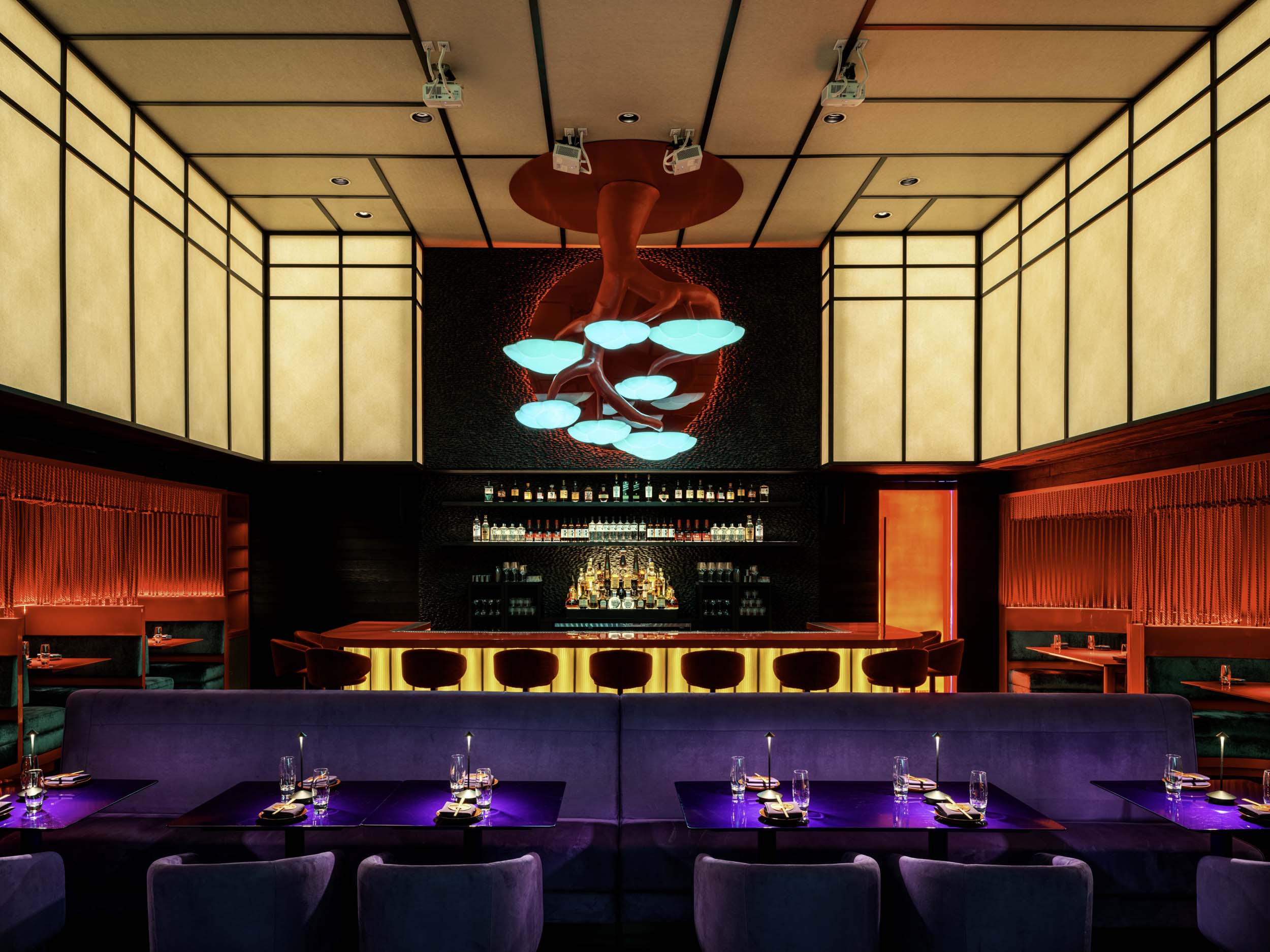
A slice of the fantastical and cinematic has landed in Houston, Texas’s River Oaks neighborhood. Haii Keii is a pan-Asian restaurant for unique, traditional-meets-modern cuisine. Think lobster mousse dumplings and bánh mì’s transformed into sushi rolls. Just as the concept is far from par for the course, so too is its design. gin design group went immersive and fantastical for the 2,800-square-foot eatery. The design transports guests to an imagined Japanese ryokan, drawing inspiration from the neon lighting of Blade Runner and the cinematic intensity of Kill Bill.
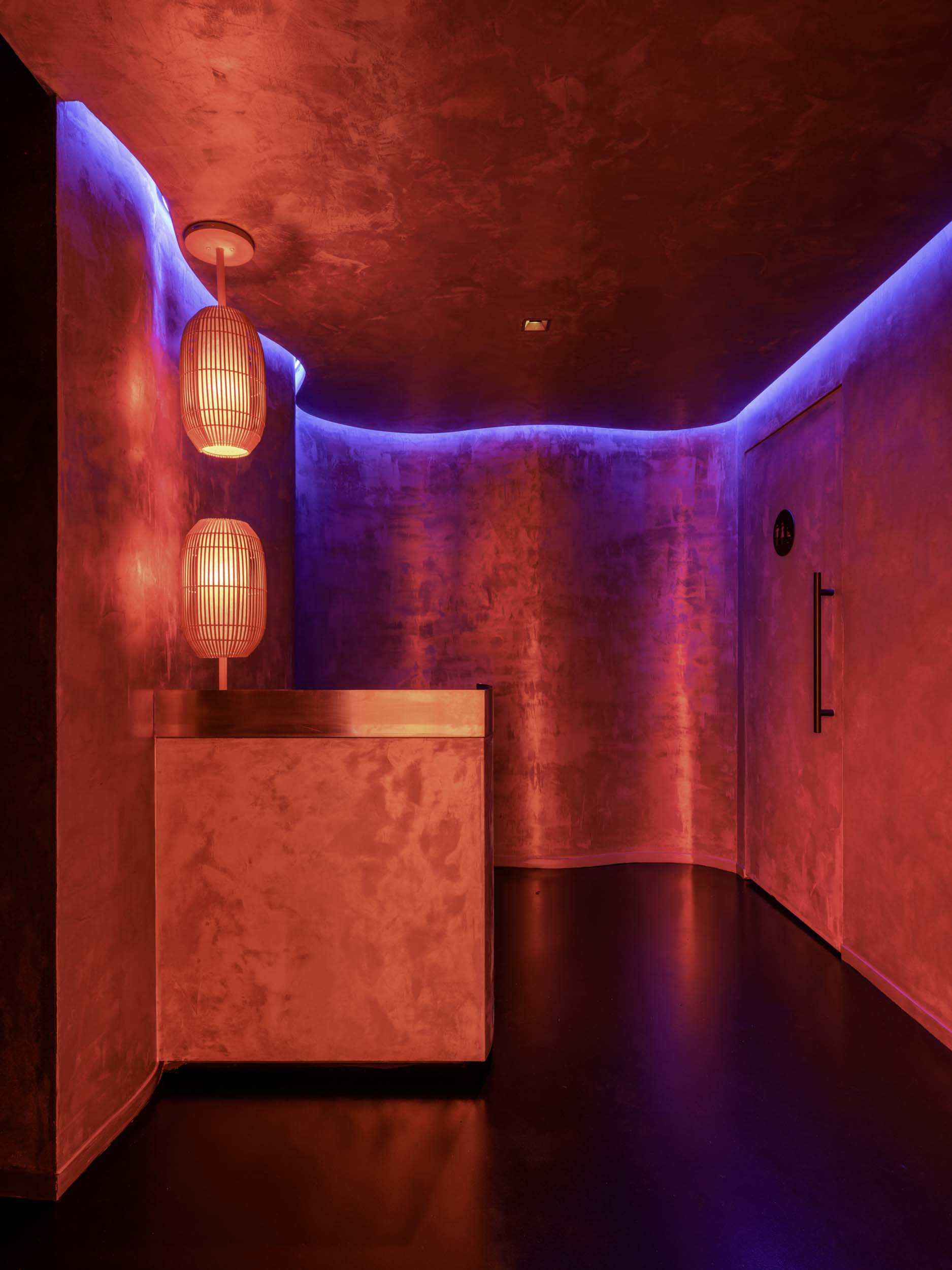
The futuristic vision is immediately apparent. In the entryway, undulating walls and an irregularly shaped ceiling are clad in metallic plaster. A long, glowing hallway leads to the main dining room. The host stand is made up of the same material to better reflect the red glow of the lantern lighting. The hallway serves as a transitional space for guests to shed the outside world, while introducing the key themes of the space: neon lighting, fantastical concept, mystery, and reflective materiality.
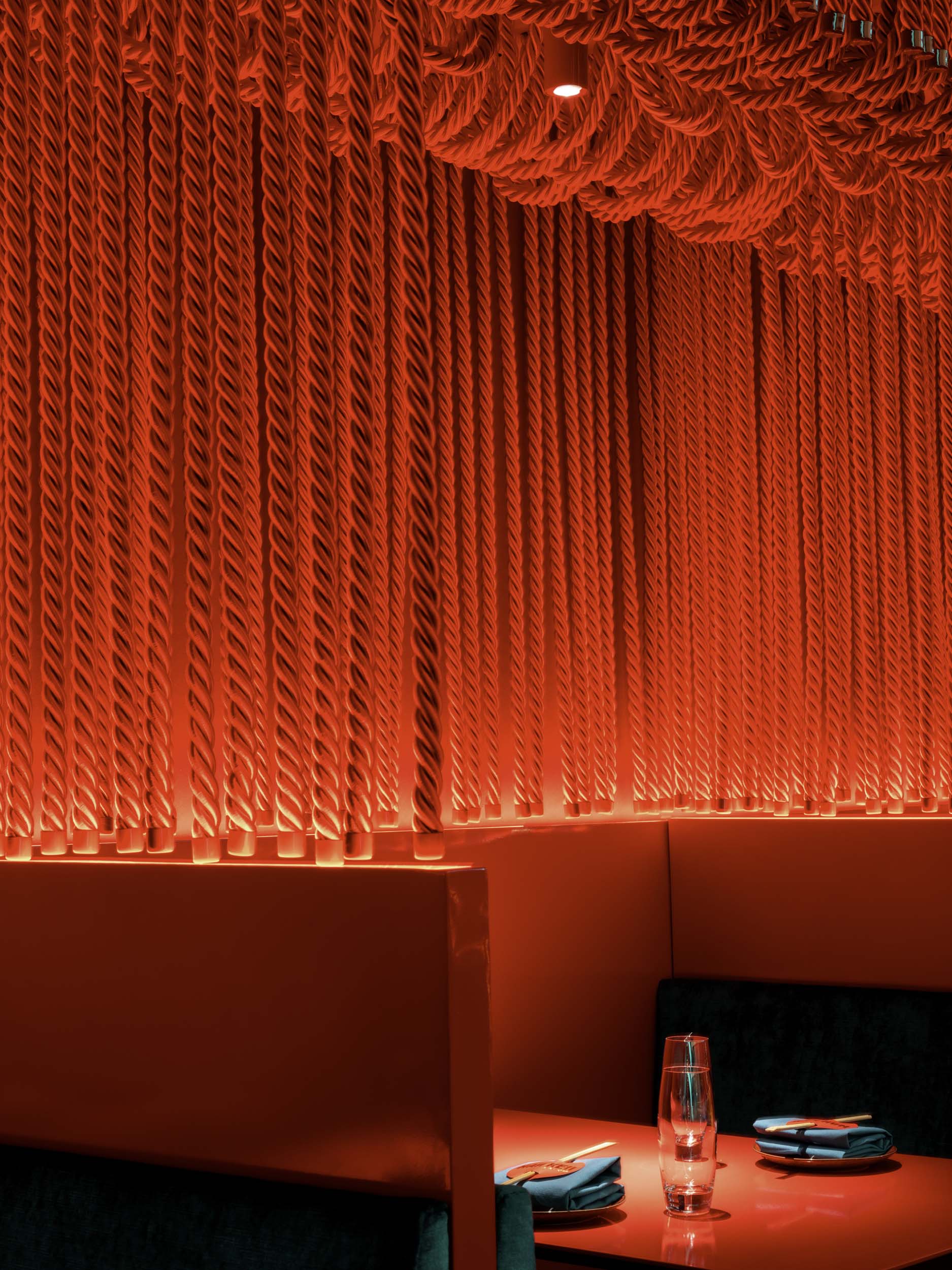
The compressed corridor allows for a grand reveal, opening up to the main dining room, encased with large shoji screens and lit with projected shadows that recall the fight scenes in Quentin Tarantino’s Kill Bill. Below the screens, crimson ropes drop down to velvet banquettes. At the center, a bar combines a river rock mosaic with red metal and gold mesh. An upside-down bonsai tree hangs above it. Like the rest of the space, the tree is set aglow, using LED-embedded leaf clusters made by a custom process of inflating heated acrylic sheets into molds with painted fiberglass skin.
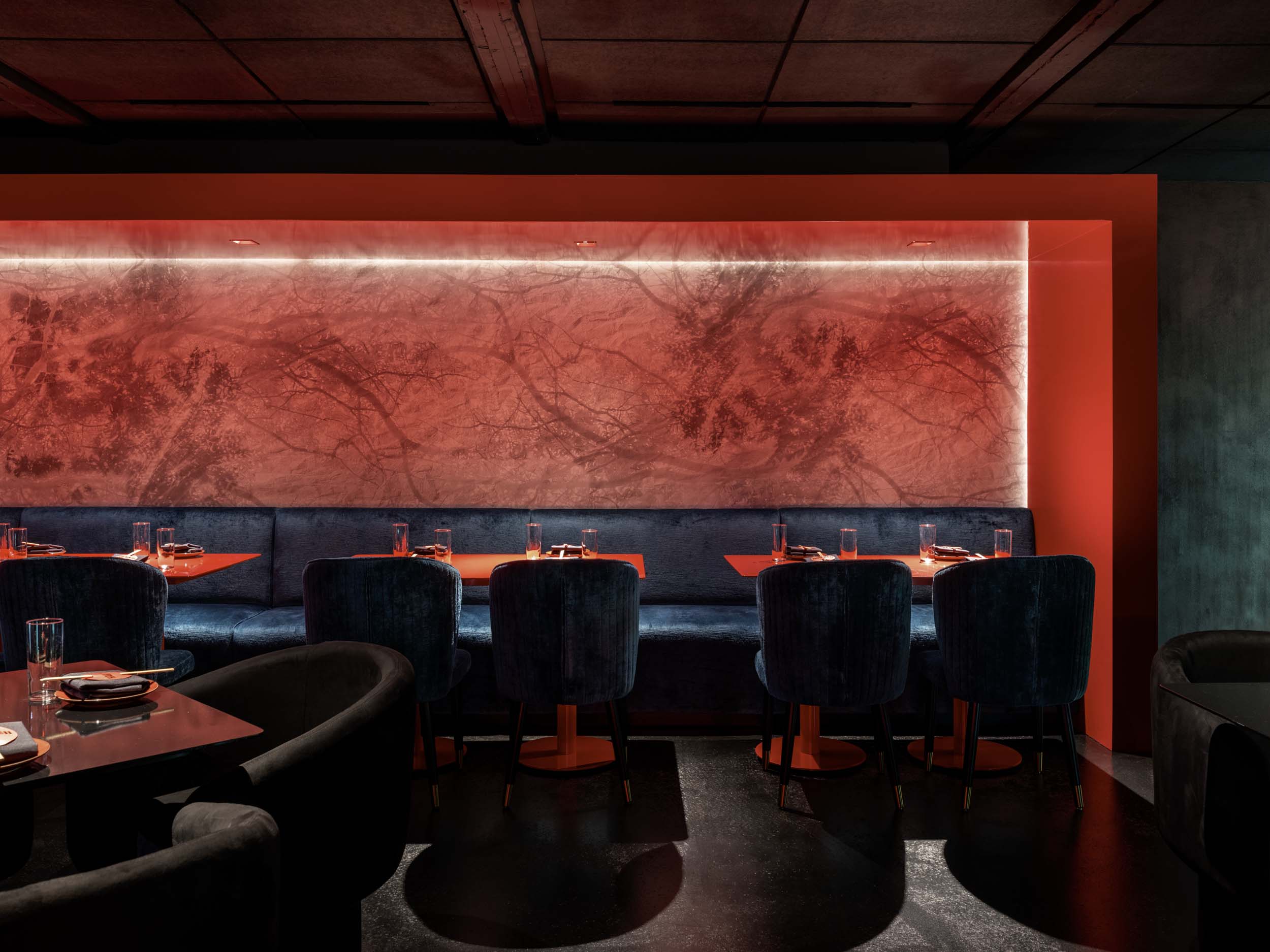
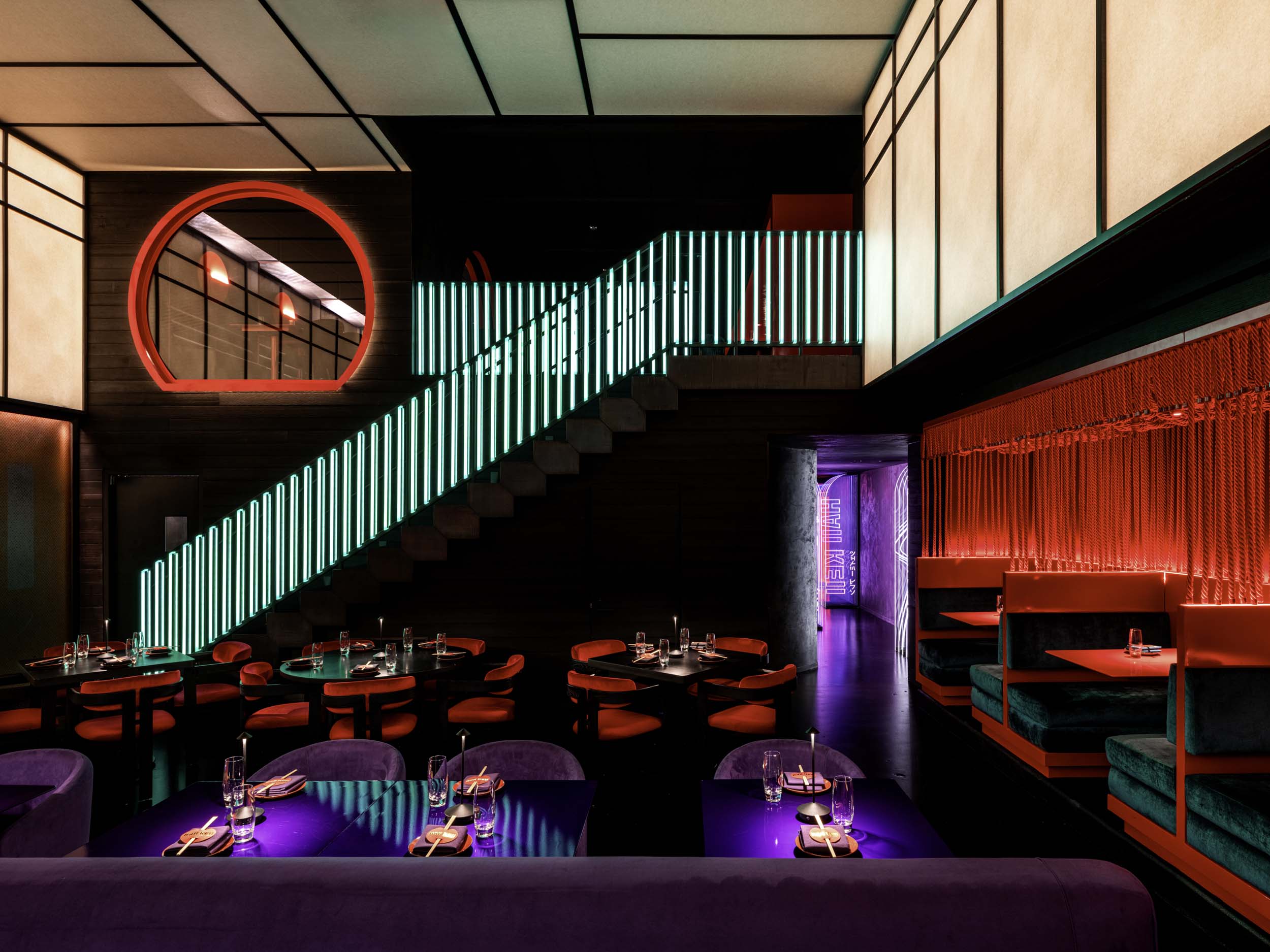
A staircase with treads of solid blocks of shou sugi ban and illuminated, fin-like balustrades leads to the mezzanine level where the sense of enigma continues. Here black plastered walls perimeter the space while cladding the floors and ceiling. A turquoise banquette provides seating within a red enclave.
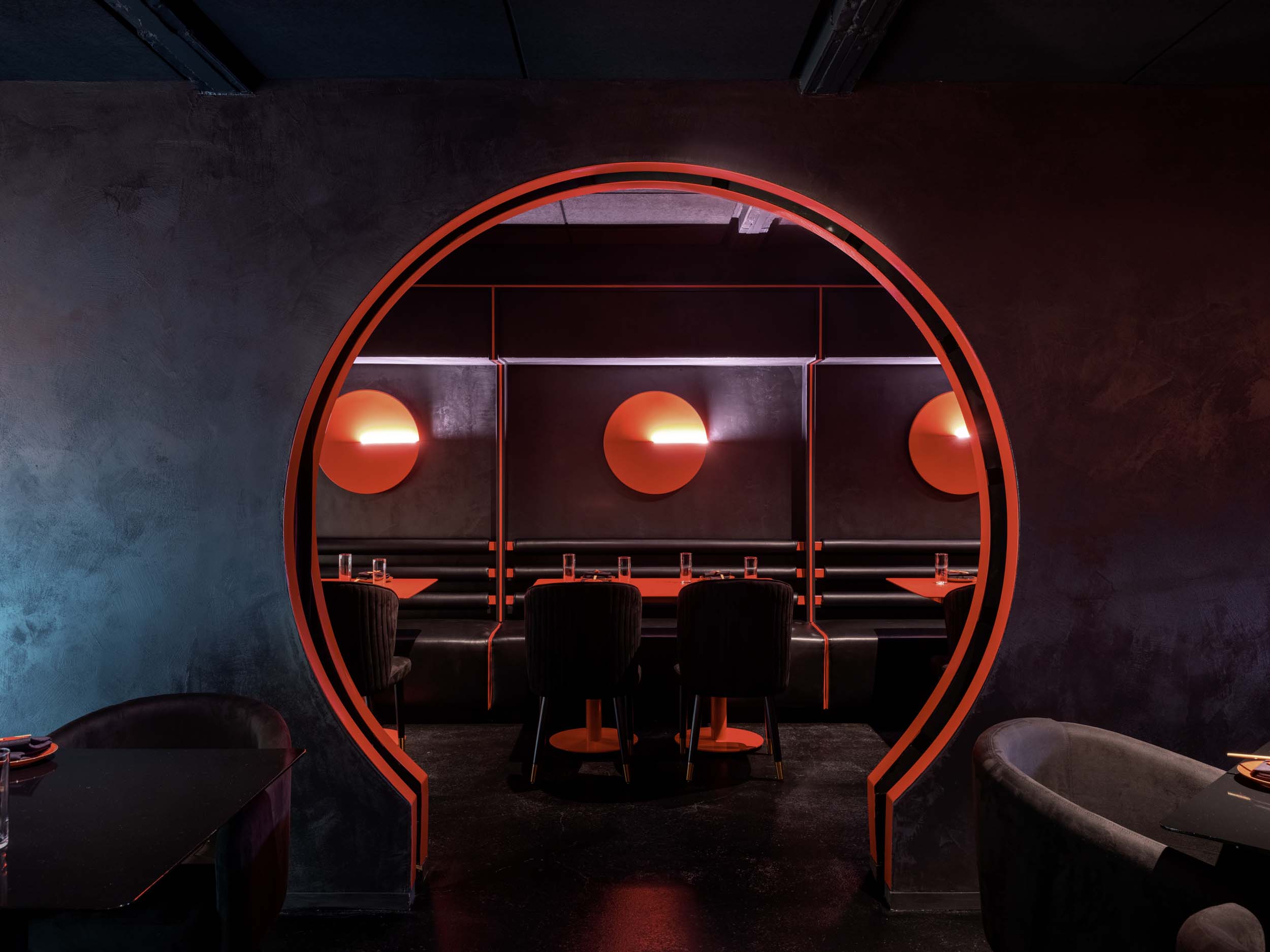
Traditional Chinese moon gate portals lead to a private dining area. The circular aperture carries the subtle curvature used within the space—from the mirrors in the bathrooms to the red disc that acts as the base of the bonsai tree—to break up the gridded, clean lines of the space. Through the portal, black leather makes up the seating, interrupted by red metal detailing and scones. Another circular aperture decorates the space, allowing views back down to the main dining room.
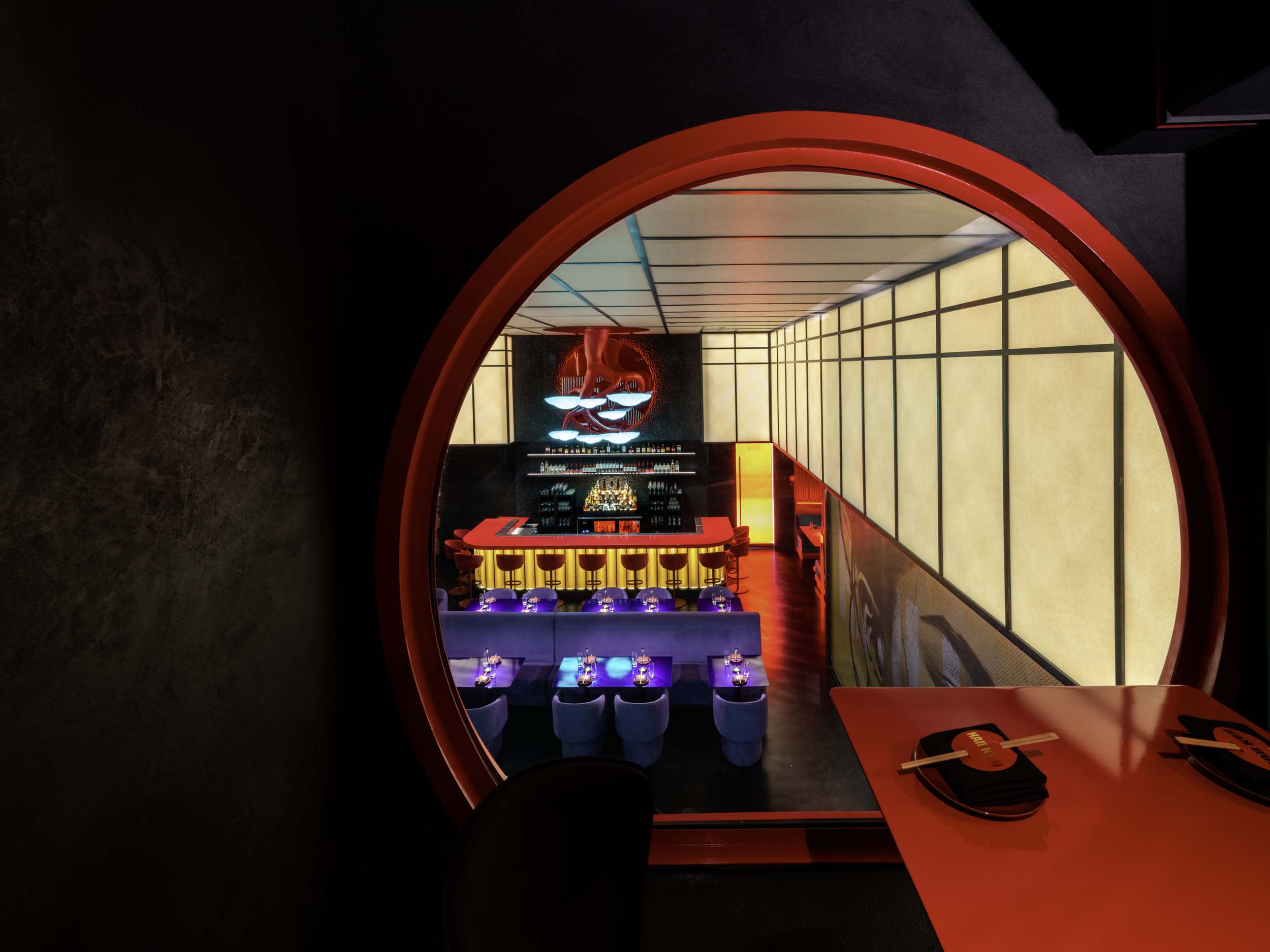
Visibility and obscurity, reflection and perception: The mythical interior plays with the senses to transport guests to a surreal atmosphere. gin design group creates a design that shifts between putting guests on view or hidden from sight, a journey of constant transitions.