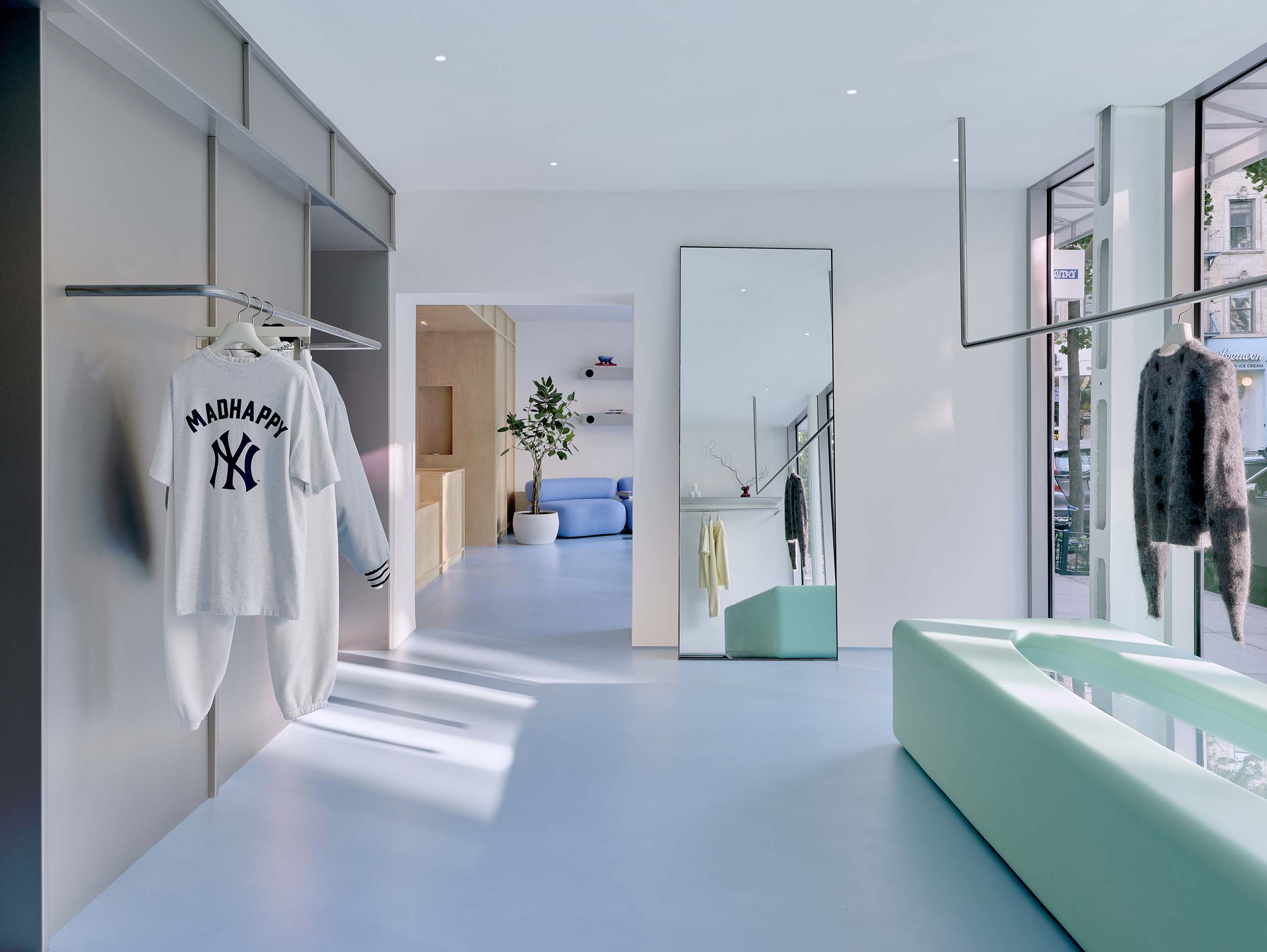
Though the world may feel trapped in a cycle of doom and gloom, Los Angeles clothing company Madhappy is committed to optimism. In addition to offering cozy apparel collections, Madhappy publishes a magazine and funds a nonprofit foundation that both supports mental health awareness and research. Opened on June 7, its new flagship in New York’s Nolita neighborhood conjures the same spirit through design. Saturated in pastel hues, the bi-level 1,400-square-foot concept store was designed by the multidisciplinary Los Angeles–based studio PLAYLAB, as a place to gather, connect, and even share a meal while shopping.
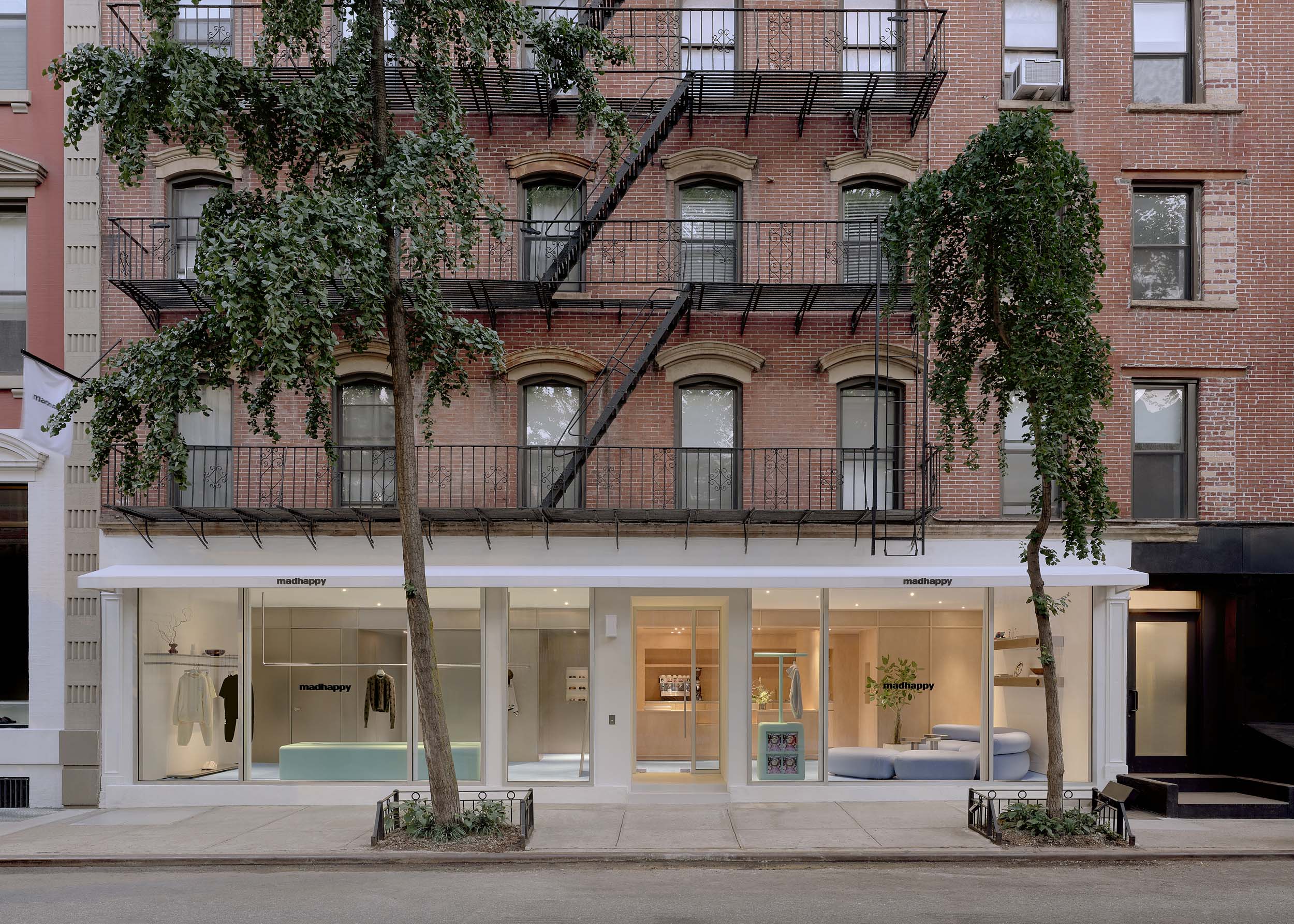
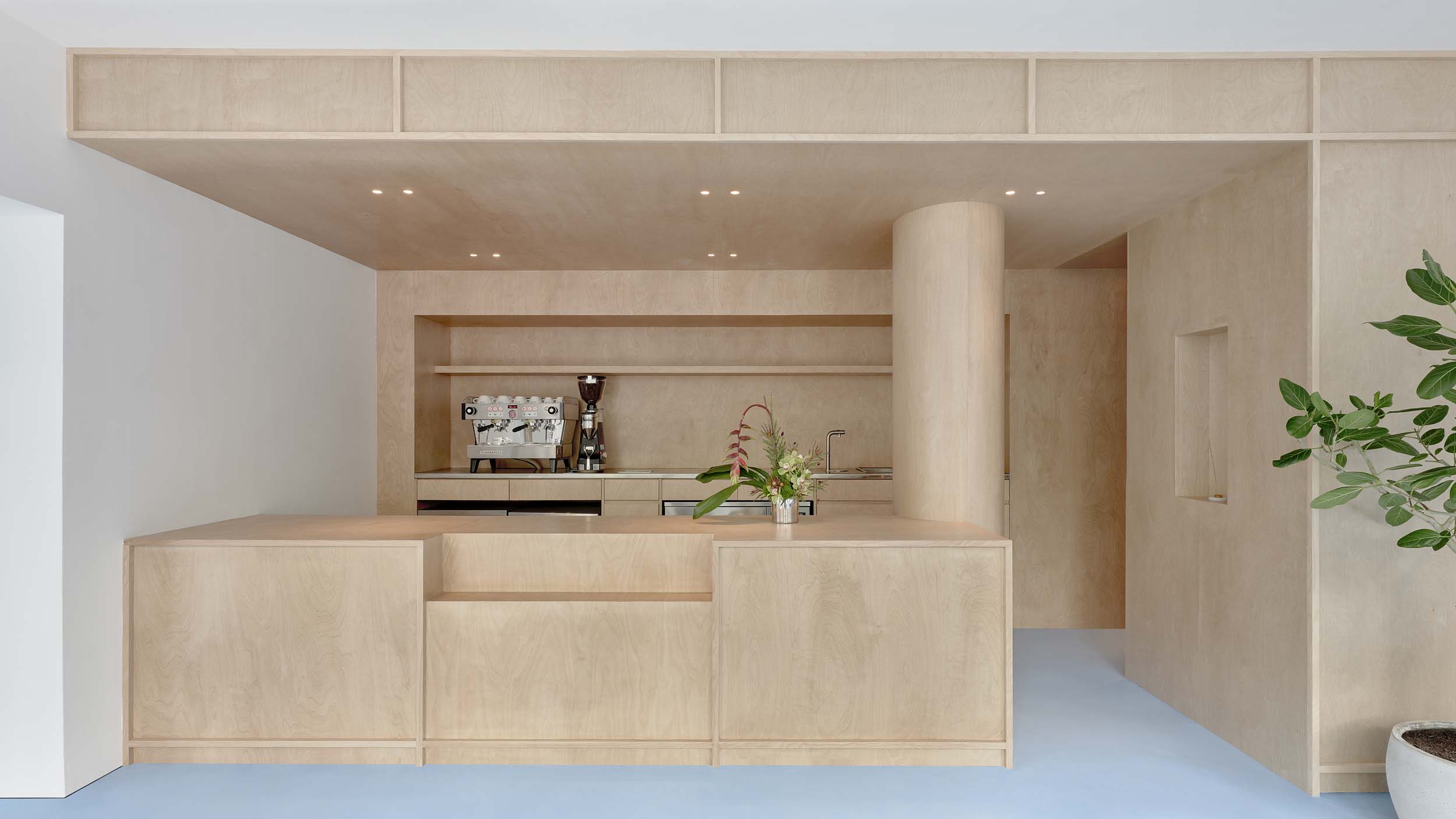
Combining a storefront and cafe, the space fosters a richer visitor experience than traditional retail. “Throughout the store, we aimed to continue a concept of the L.A. flagship store design: creating spaces for conversation,” explained Jeff Franklin, a partner at PLAYLAB. On the ground floor, a custom curved sofa, with pebble-like cushions upholstered in a robin’s egg blue Knoll felt, offers a sharp visual contrast to the entirely Douglas fir-paneled cafe. From behind its linear bar, employees serve espresso, tea, baked goods, and cold-pressed juices from local eateries Sofreh and Toms Juice, as well as Japan-based cafe Hotel Drugs.
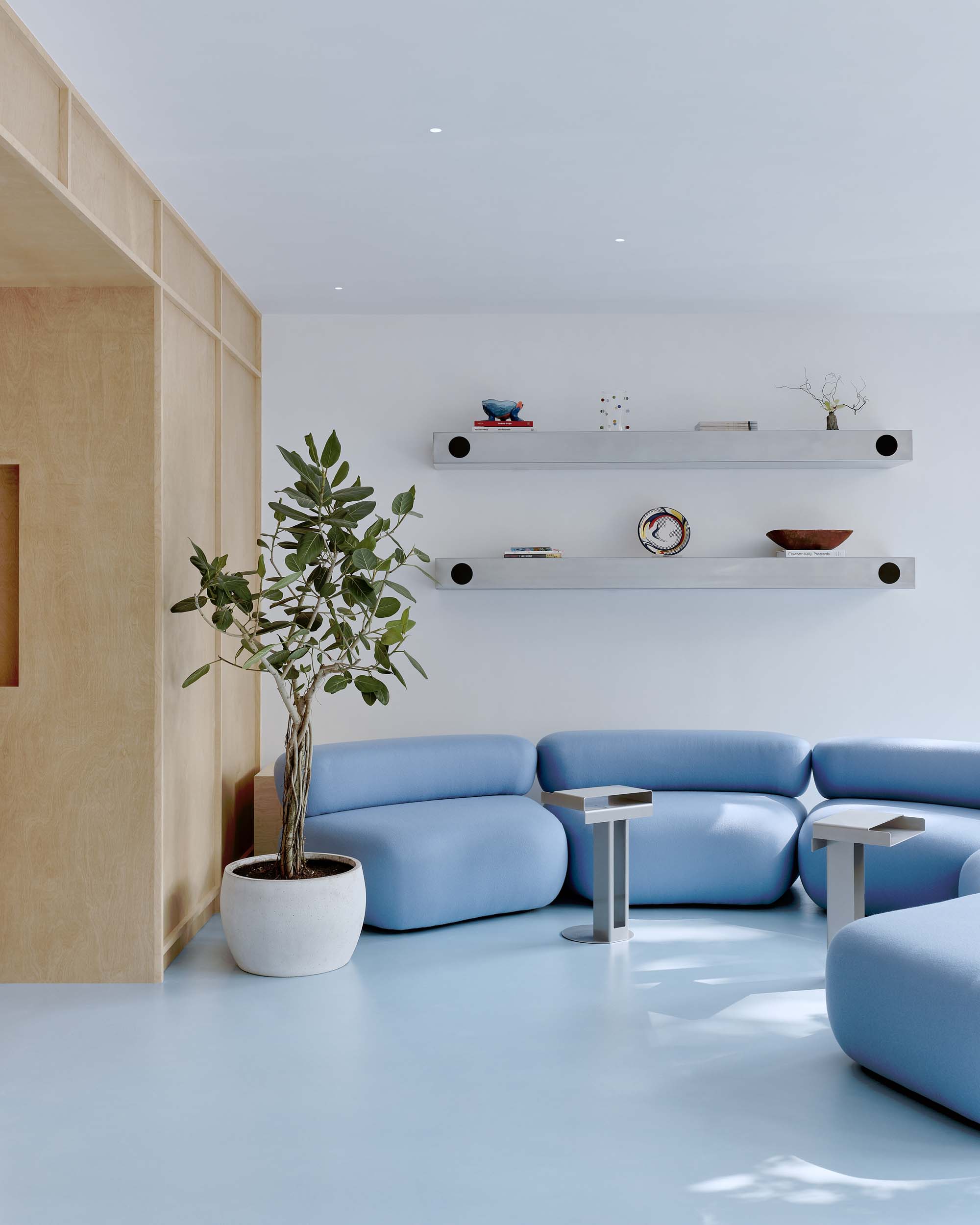
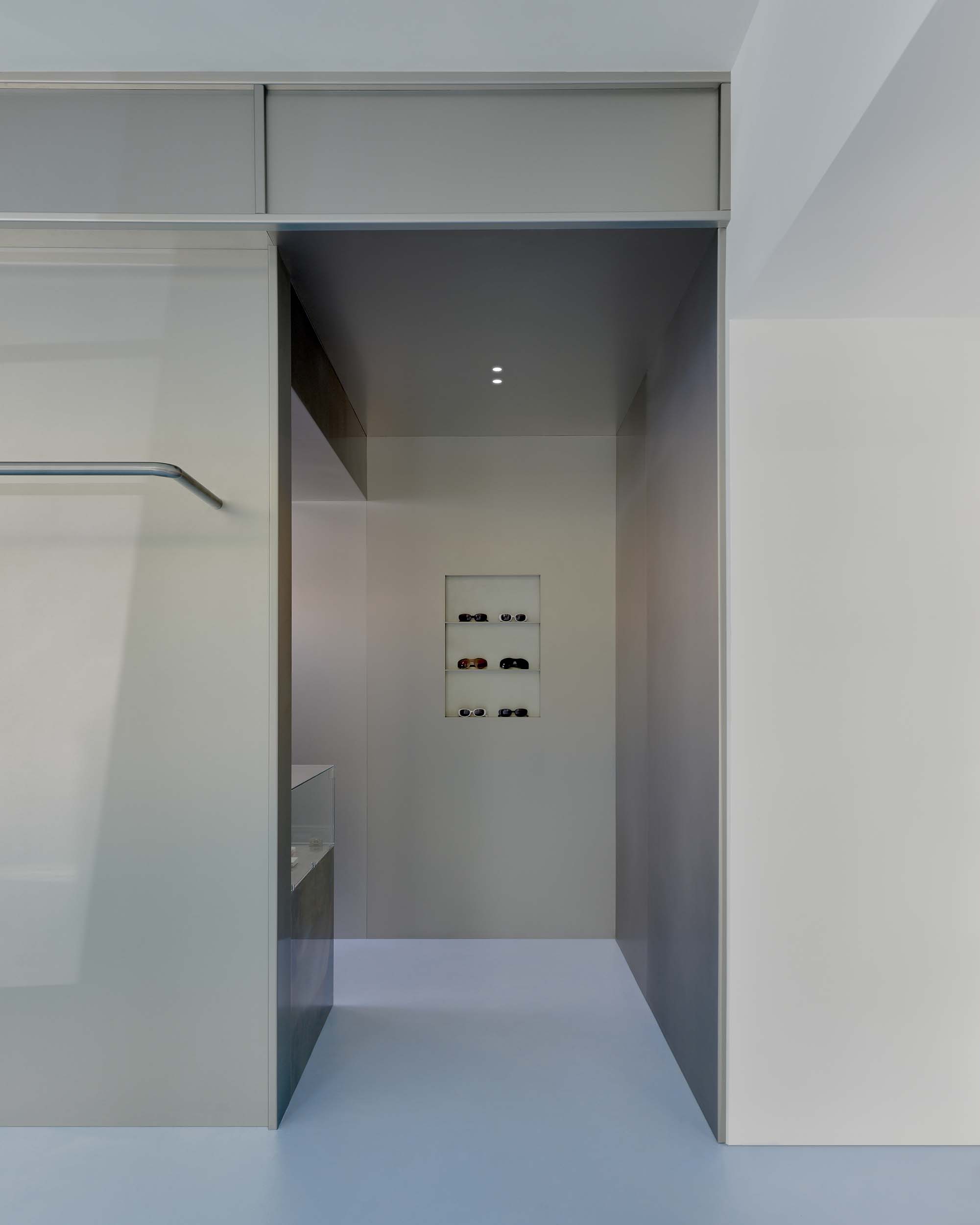
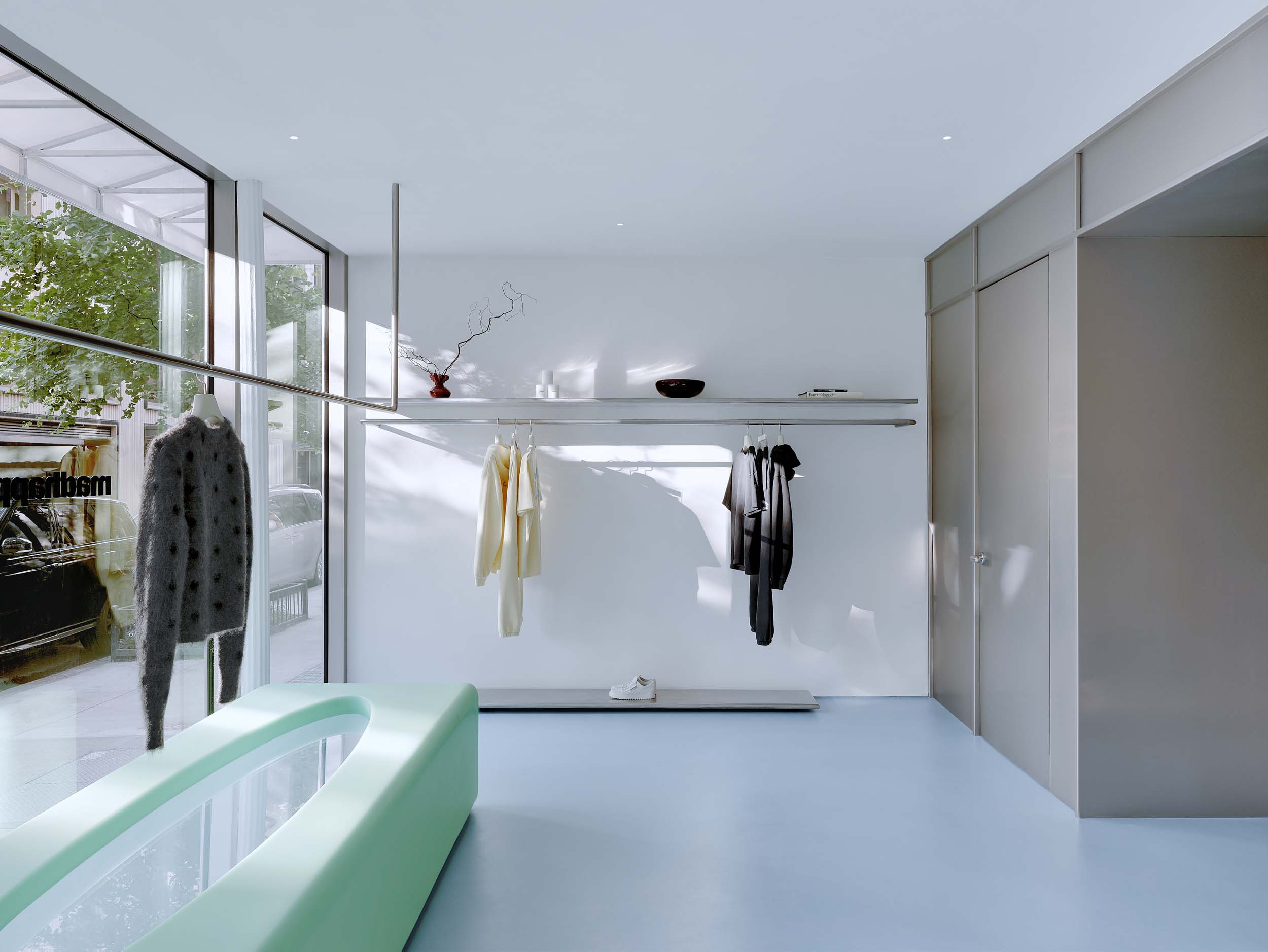
In the retail area of this level, the same style of pared back paneling clads a dressing room with display cases in brushed aluminum. The metal material is also used to create clothing racks and bespoke shelving with integrated speakers.
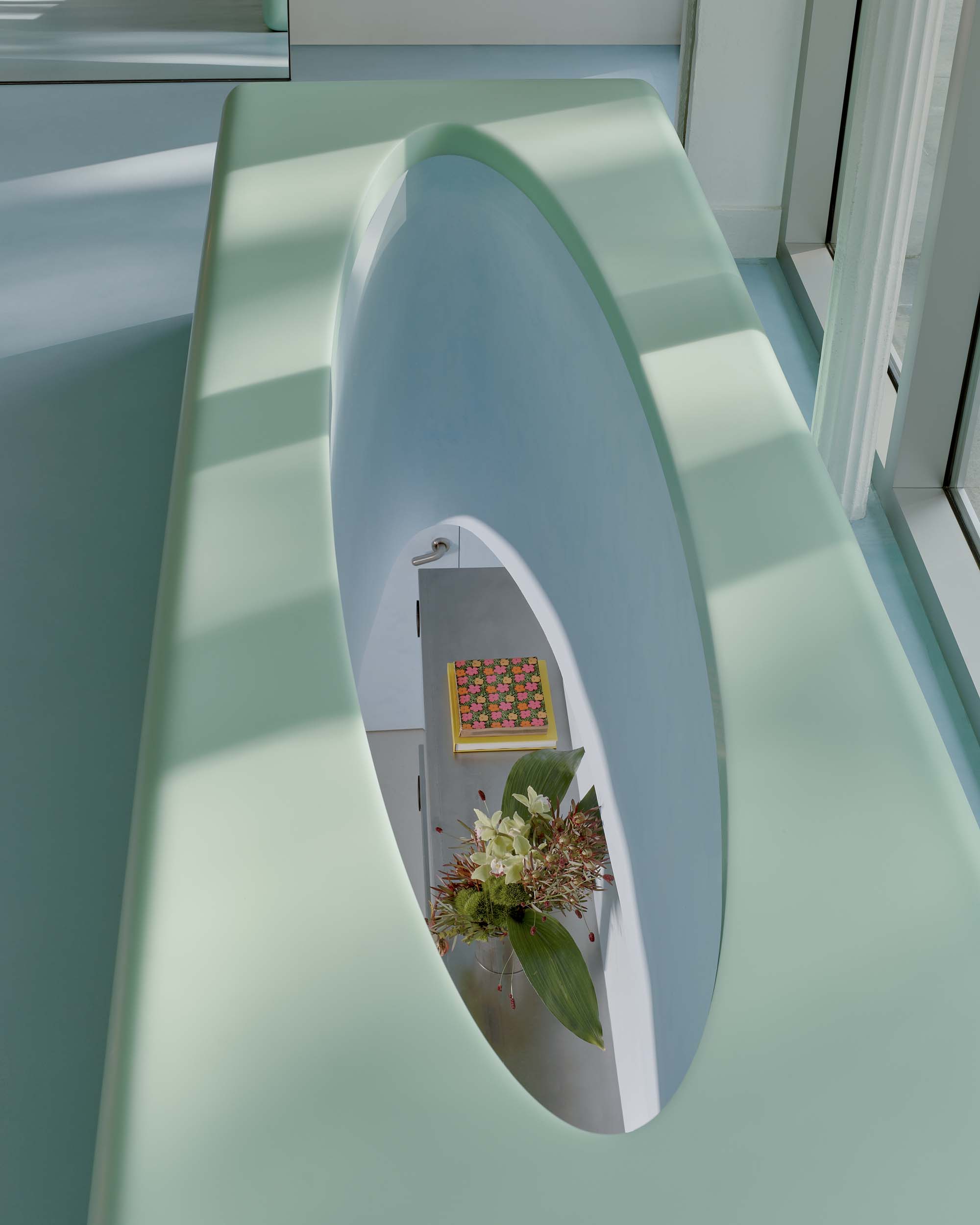
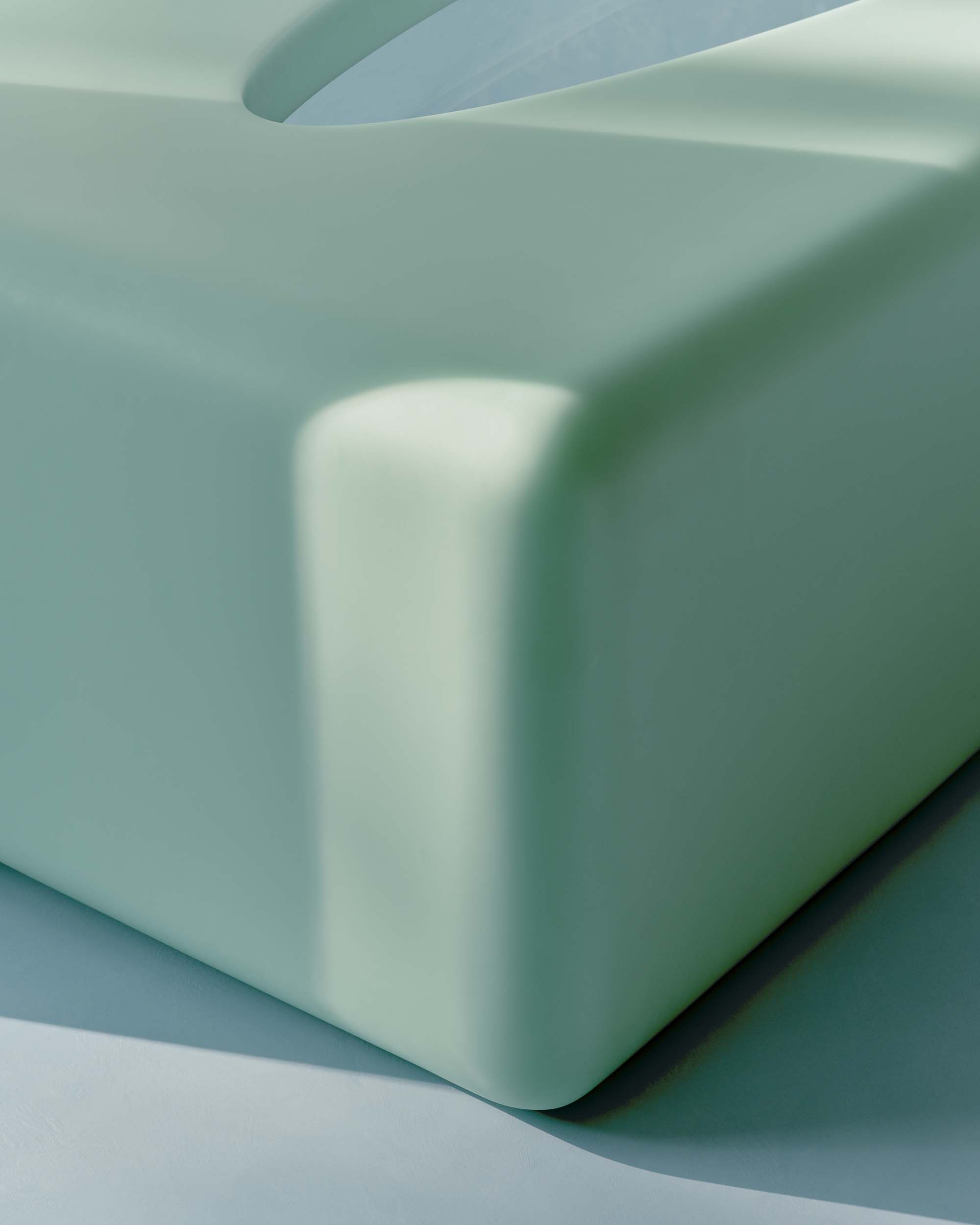
While materials clearly “delineate between program types, with wood being a focal material on the cafe side and metal on the retail side,” explained Franklin, “all are connected by the blue floor”—the brand’s signature pastel blue concrete. However, there is another visual relationship between Madhappy New York’s upper and lower floors. A mint green resin table, designed by PLAYLAB and fabricated by Quincy Ellis with curved edges and a glass oval insert, serves as a hidden skylight for the level below. Its Surrealist peekaboo form was inspired by the skylight-cum-table at the Gala Dalí Castle House-Museum in Púbol, Spain.
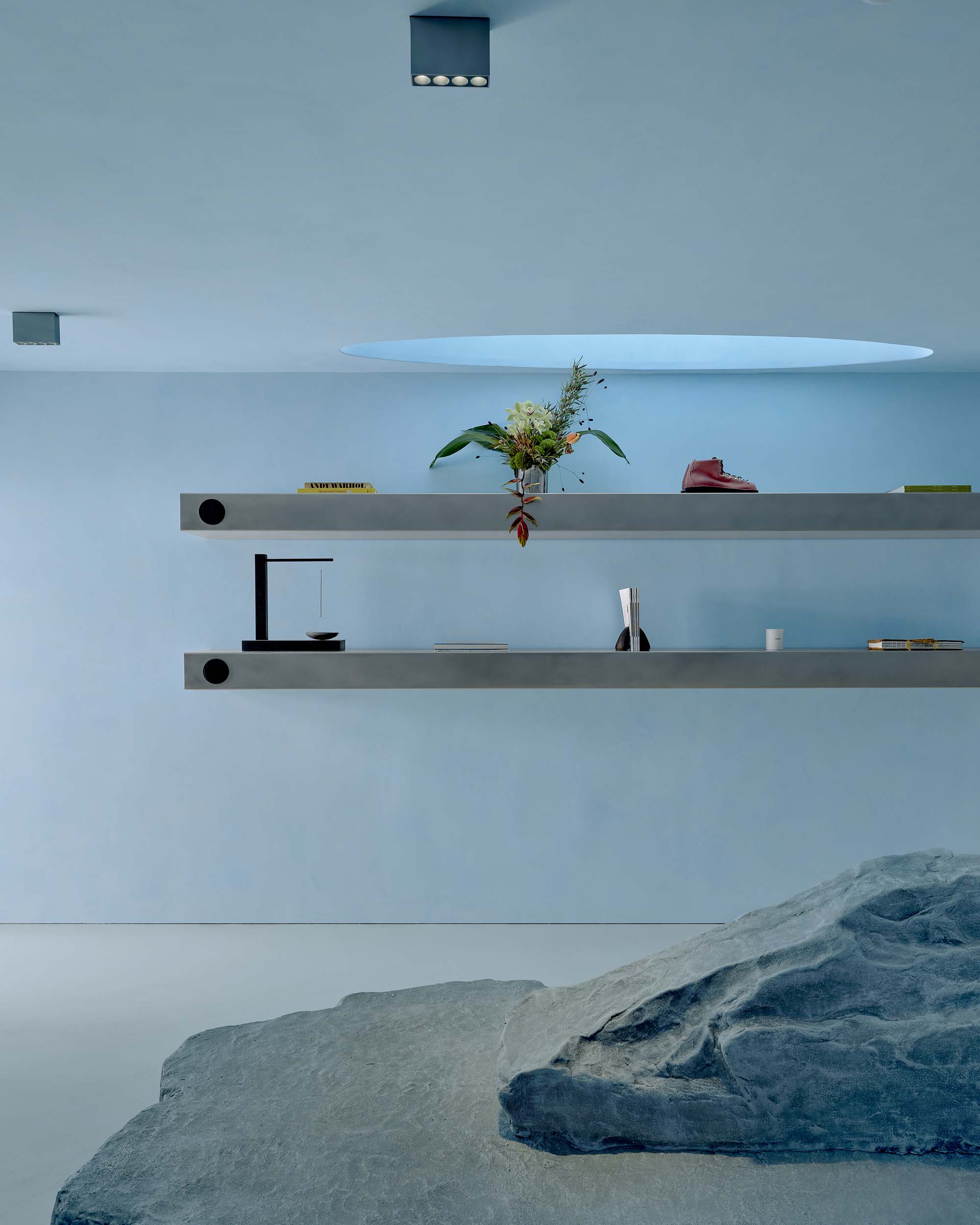
“Being a compact New York City footprint, the space had to be as efficient as possible,” while maintaining the “bright and open feeling” of the L.A. original, said Franklin. Cheery baby blue paint helps reflect and refract the sunlight penetrating the basement, which takes a more literal approach to the store’s natural inspirations. In the fitting room, faux rock benches are sculptures that double as seating while the faux wood painted walls were detailed by New York artist Ferdinand Tschinkel, “a local legend who is known for his faux wood doors painted throughout New York,” described Franklin. Outside the changing areas, companions offering a valuable second opinion can rest on an additional stone-look Borne settee from furniture company Oursociety.
Throughout Madhappy New York, contrasting balloon-like and organic forms with sleek, rectilinear millwork introduces a playful atmosphere without losing the design’s inherent air of sophistication. Allusions to forms as diverse as bubble lettering and traditional wood paneled rooms, as well as a Y2K twee reminiscent color scheme and industrial material palette all contribute to a space that feels wholly rooted in today’s style. As an amalgamation of several design history pasts, it becomes a fresh (and perhaps even optimistic) take on the present.
While the store may have been designed to start conversations between its patrons, the design itself sparks a visual dialogue that might even encourage them to linger. “We wanted the space to feel inviting and joyful,” said Franklin. “A place with attention to detail and few surprises, somewhere you want to return to often.”