
Cross-laminated timber continues to gain traction in the United States and a home in Duchess County, New York, picked up on the trend. The residence, aptly named CLT House, was built by nARCHITECTS for the firm’s own cofounders, Eric Bunge and Mimi Hoang. The duo prioritize the rawness of the material with an inventive floorplan that truly embodies the saying, “form follows function.”

The architects sited the home 200 feet away from a lake. Adopting a light touch approach, they kept the footprint compact and replaced any removed trees with new species and cleared invasive plants to improve the quality and flow to the nearby lake water. The 2,200-square-foot structure was a quick build: prefabricated concrete foundation was installed in one week, providing a base for the CLT floor, roof, and walls, which were installed within 11 days.
While the house is constructed from CLT, the design team opted for a slightly different application for the facade: cedar wany board, or “live edge” siding. This traditional technique overlaps rough-sawn timber boards horizontally, leaving the natural edge exposed and creating a wavy, textured shell that nARCHITECTS left untreated, welcoming the weather to change the appearance over time. The smooth wood within the interiors offers a unique contrast to the exterior, where the variability of a material is on display.
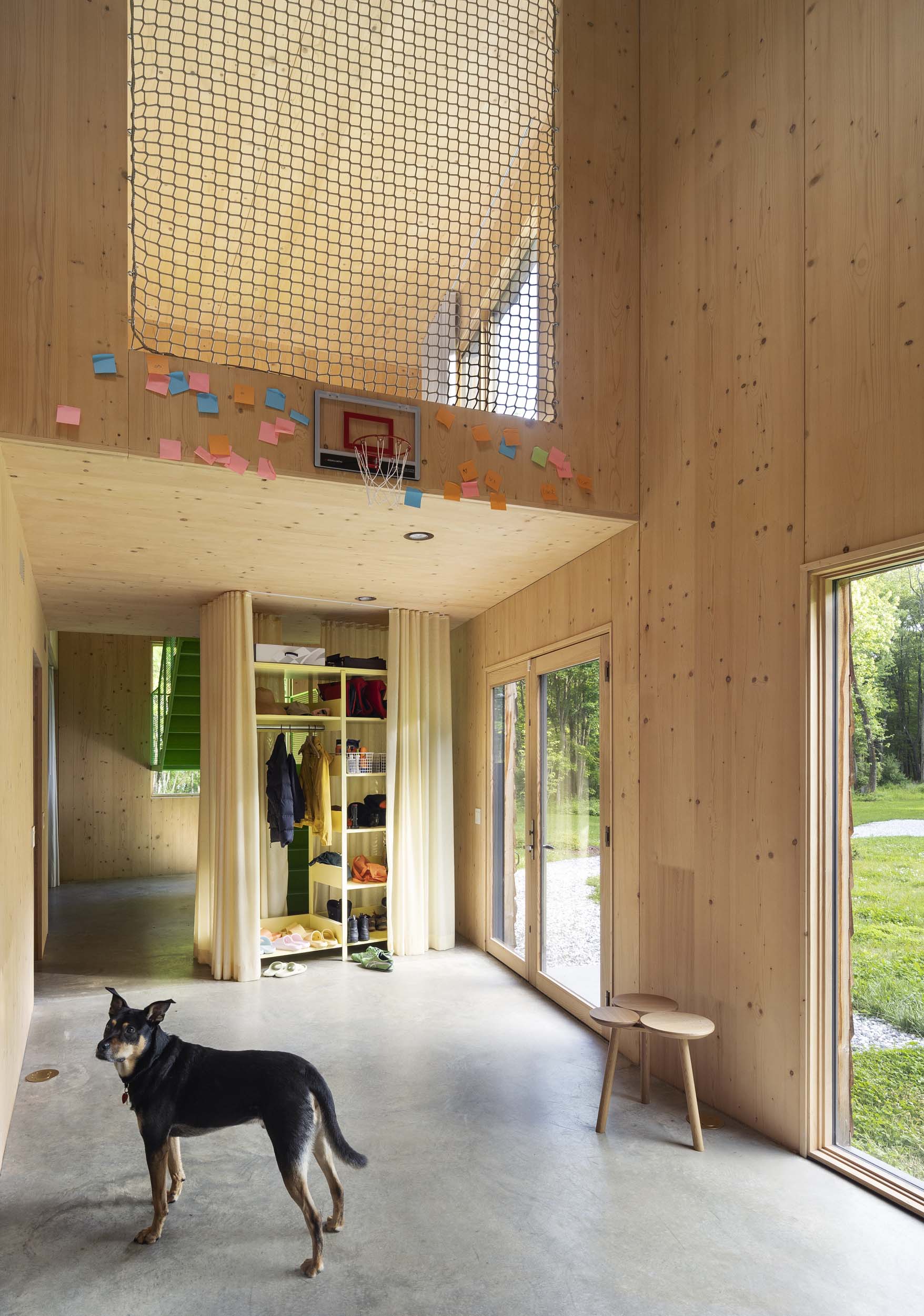
On the ground floor, a continuous kitchen and living areas circle around the core of the home where the bathroom and mechanical room are located. On the second floor, the floorplan is organized as a plus sign, housing three bedrooms, a study, and additional bathroom. This configuration creates double-height spaces within the four corners of the first floor. The idea takes inspiration from the firm’s 2008 unbuilt Villa-Villa project for Ai Weiwei’s Ordos 100 project in Inner Mongolia.
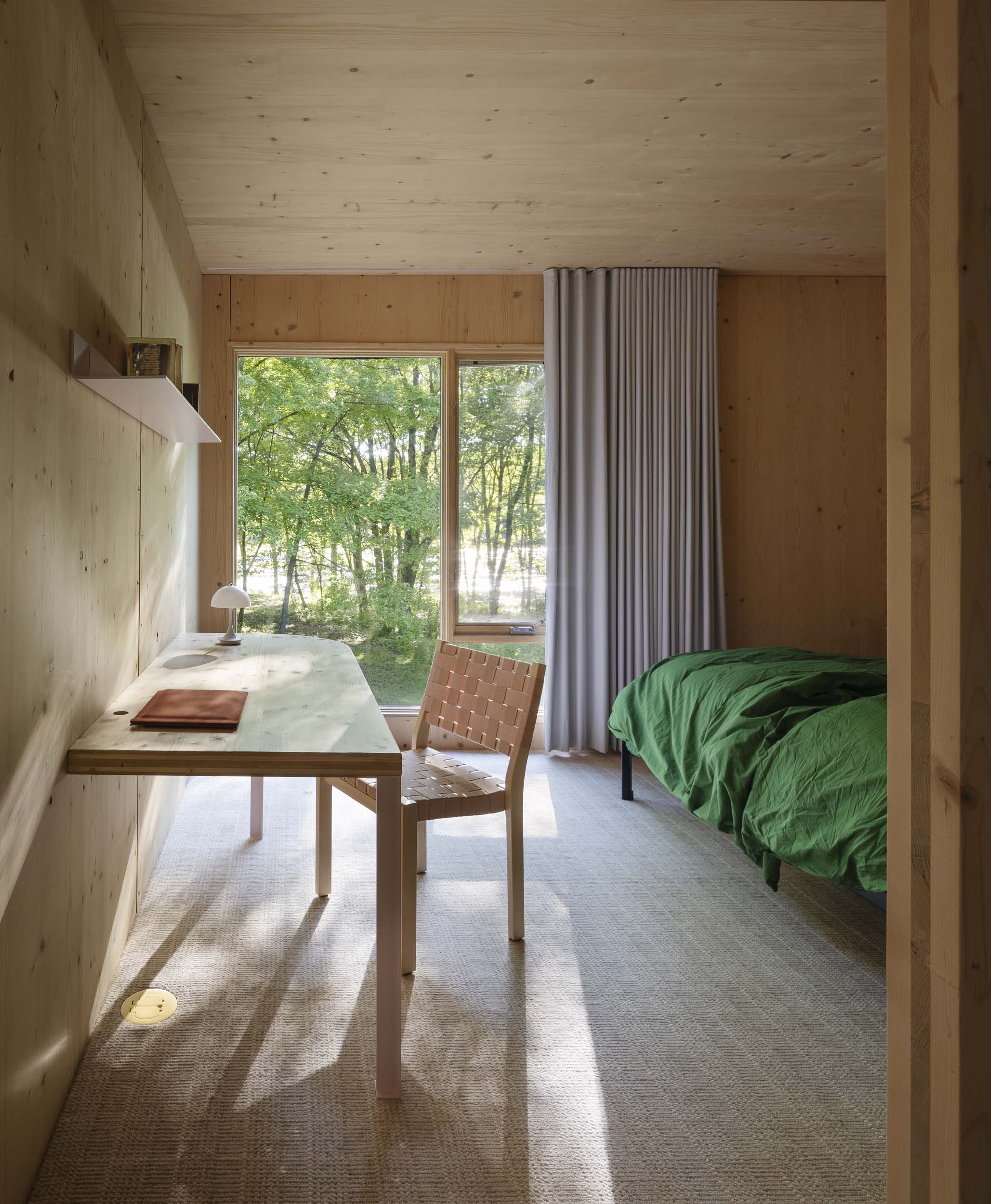
The vacation home has large windows and sliding doors framing numerous views of the surrounding landscape, further drawing connection from the exterior to the interior. Skylights clad with mirror panels are located at the top of three of the four corners of the house. The placement of these skylights allow for strong beams of natural light to shift throughout the residence depending on the time of day.
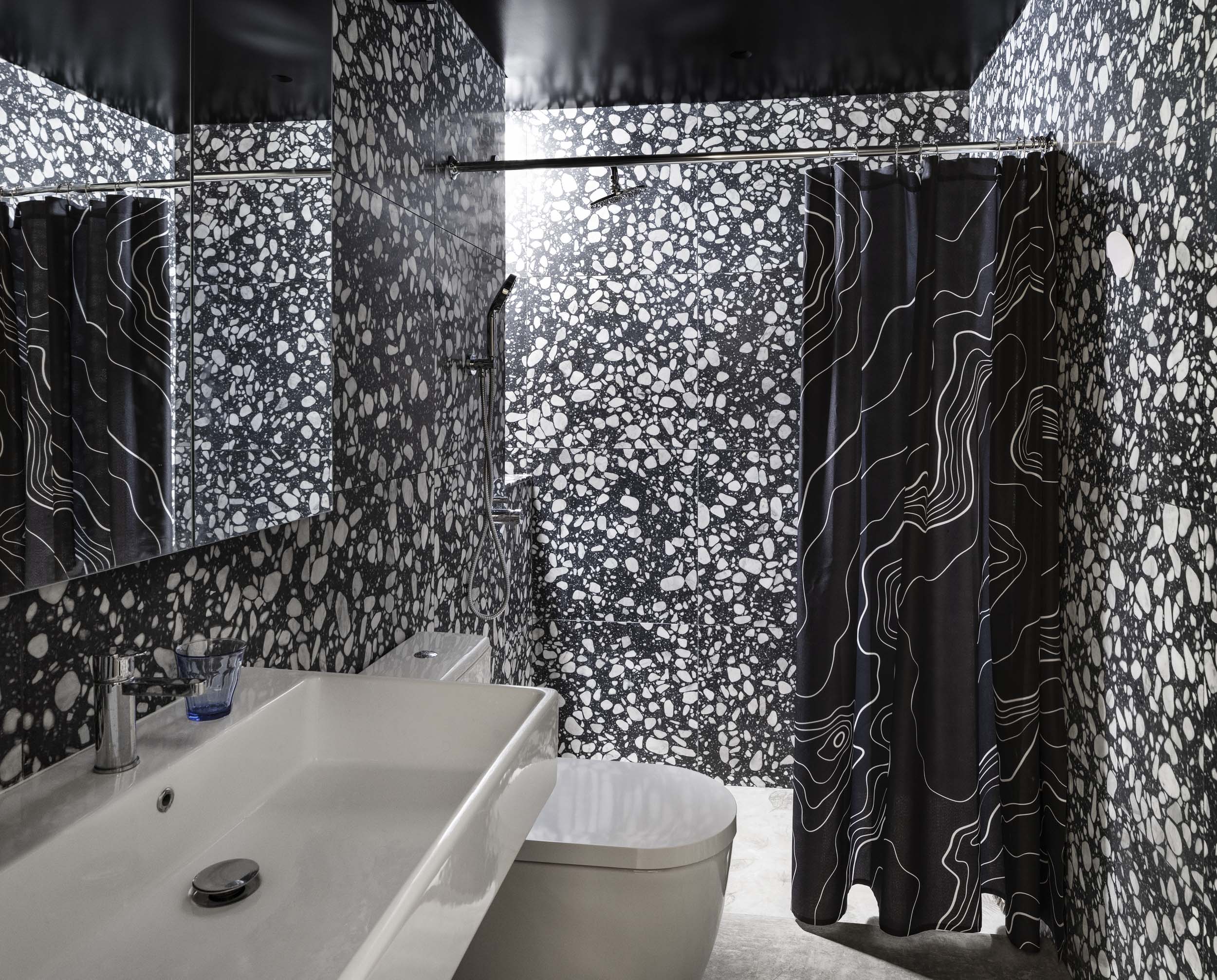
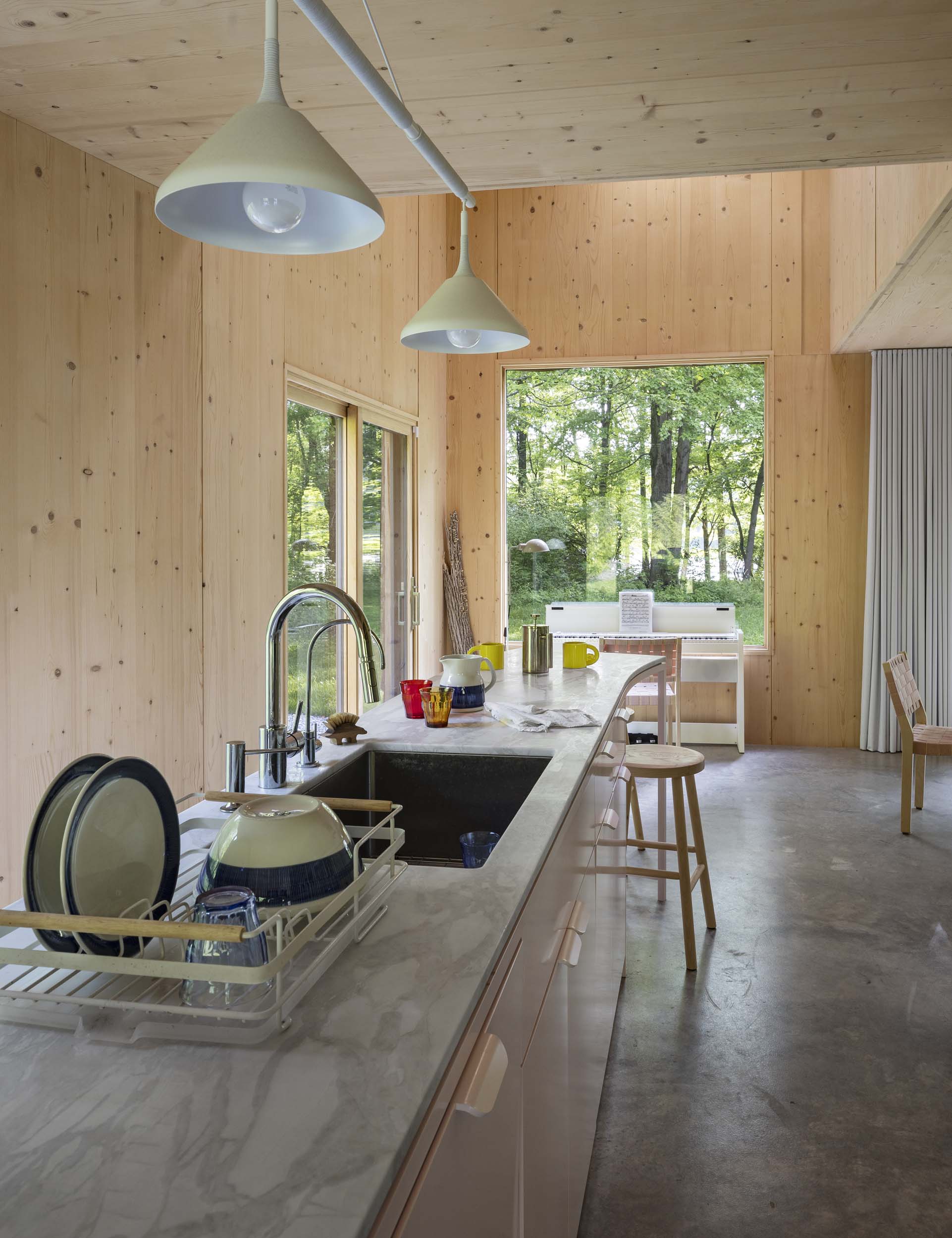
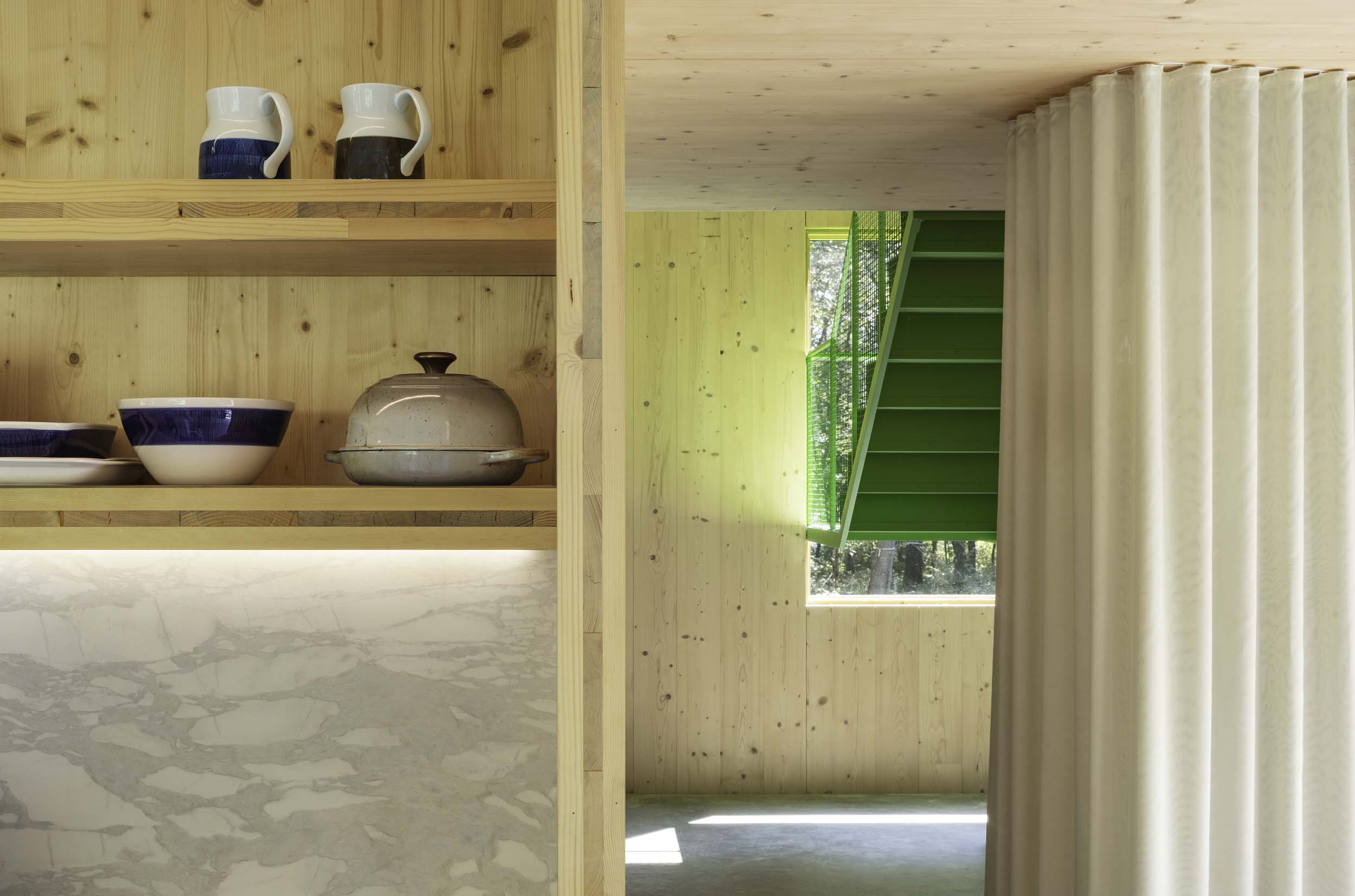
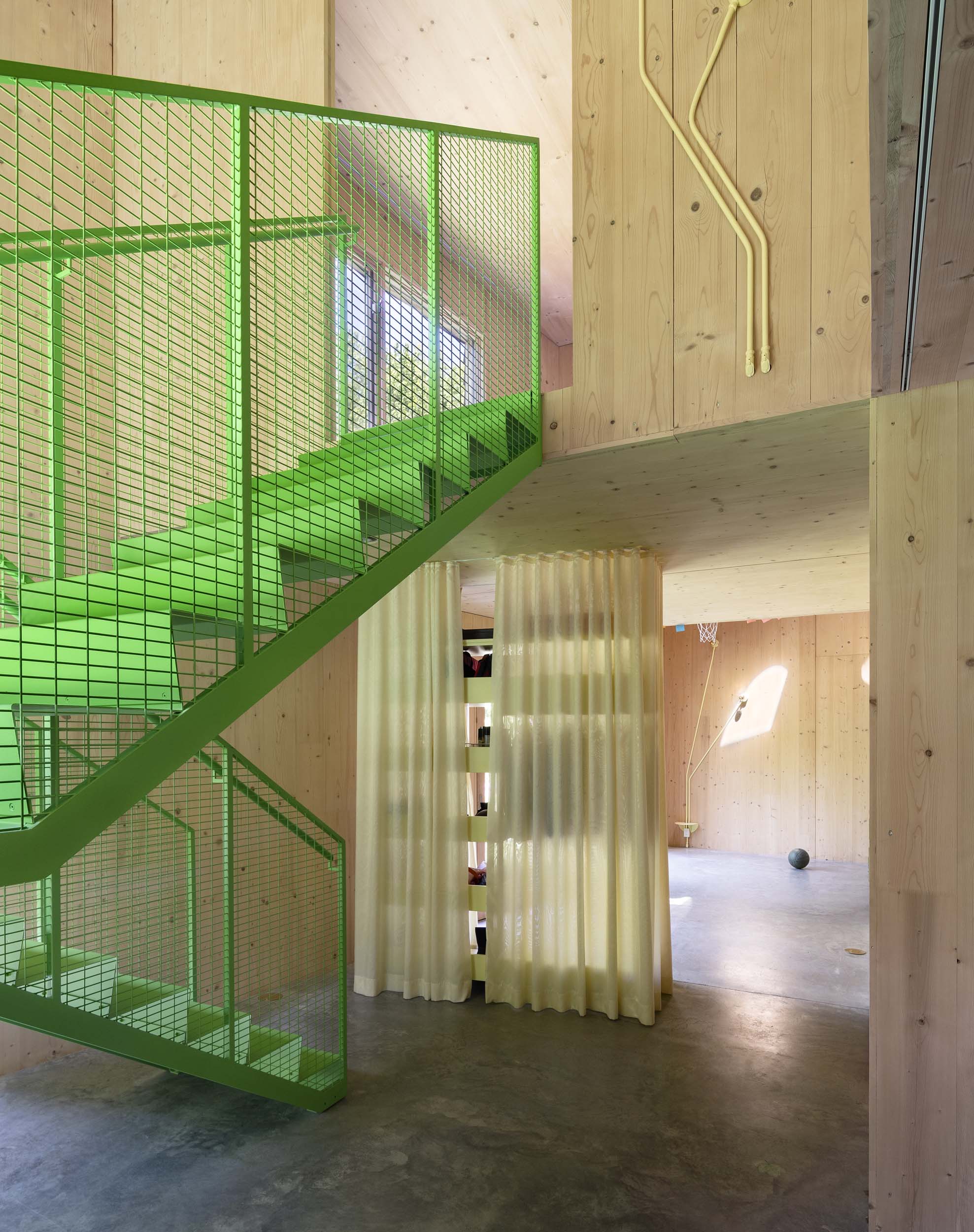
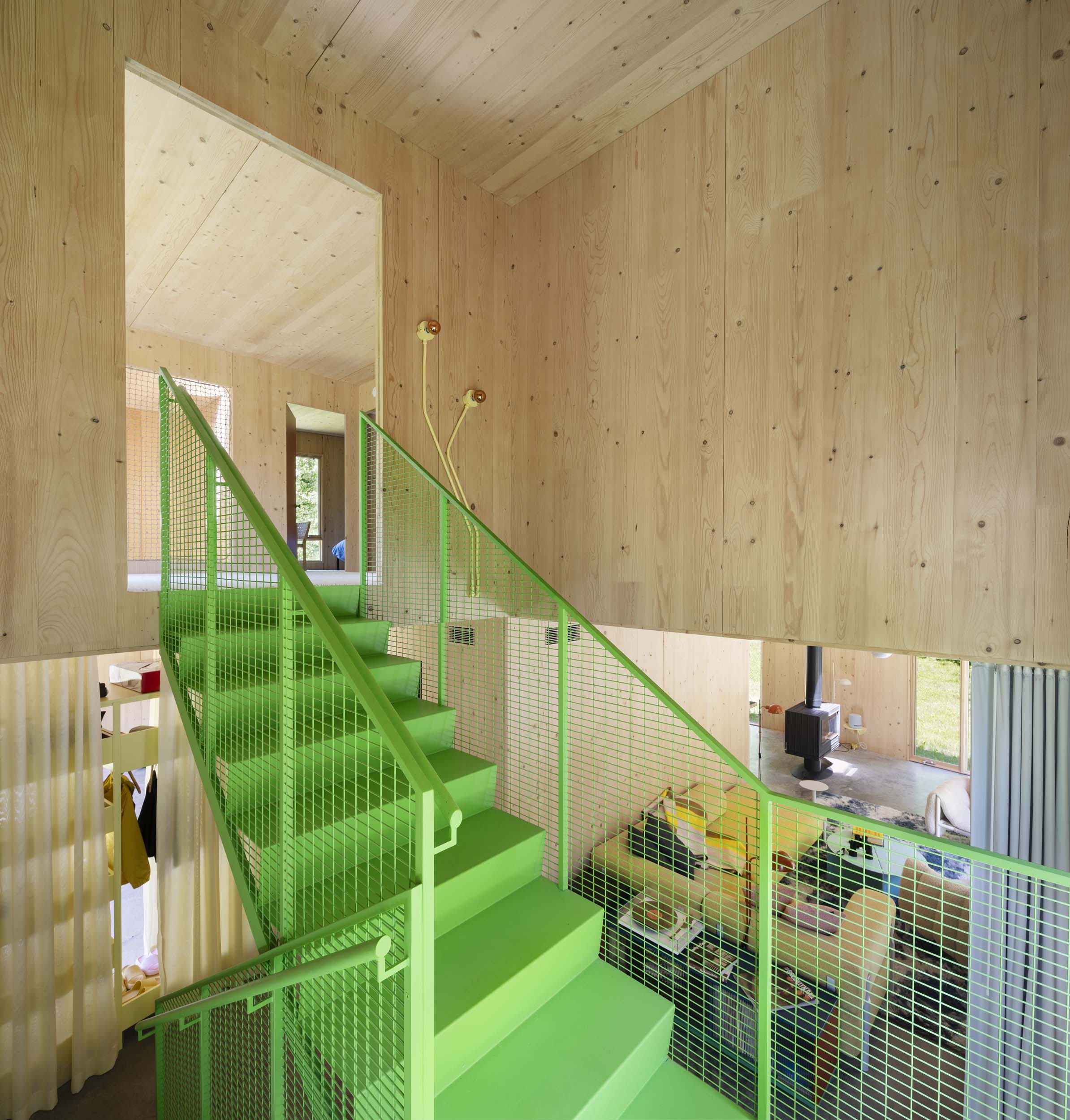
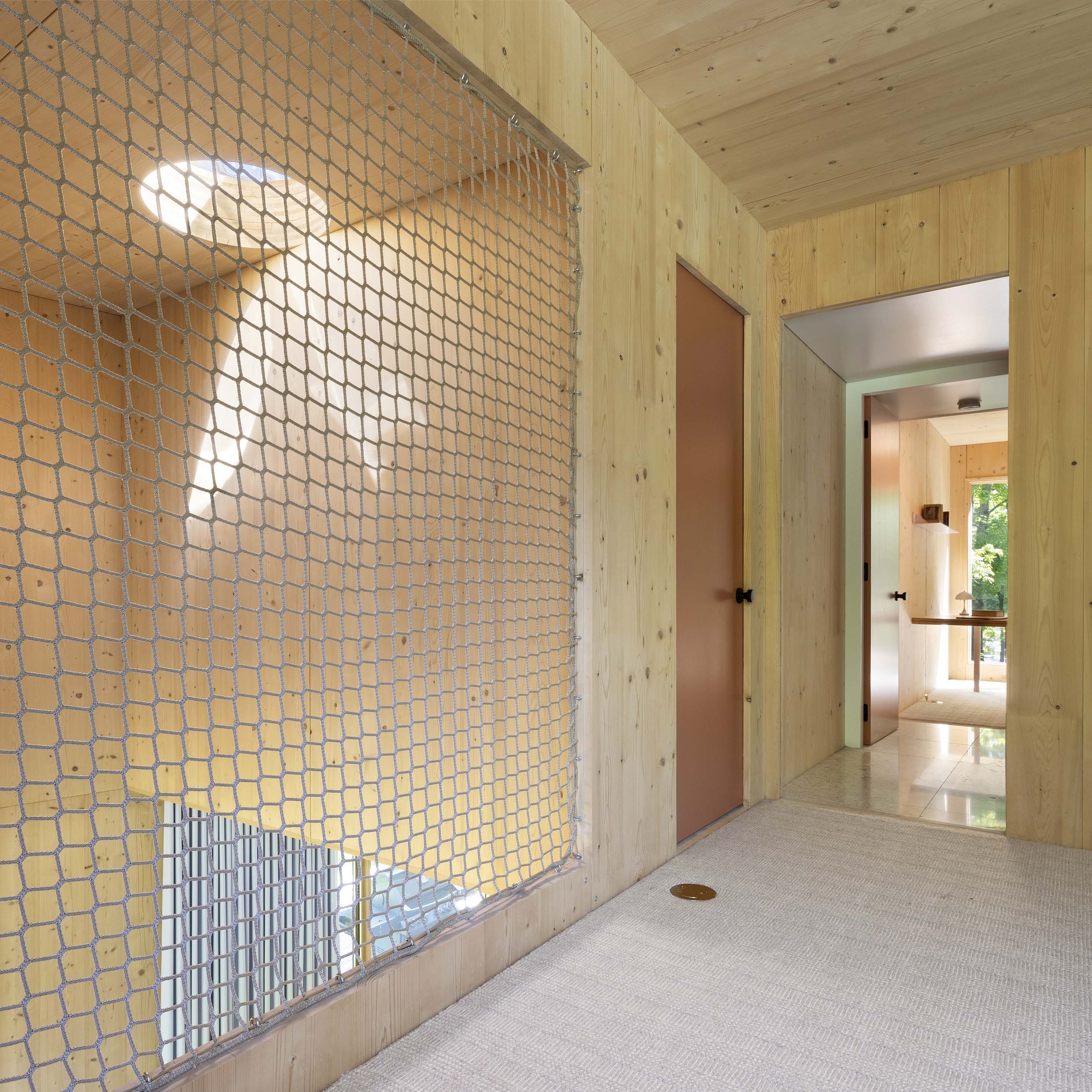
The quiet base of the structural CLT panels allows for bold internal design components. nARCHITECTS incorporated several elements that play with color and texture in unique ways: the steel staircase painted in an electric green paint, the soft pink aluminum cabinets in the kitchen, a rope netted wall on the second floor, and the first floor bathroom encased in black and white terrazzo tile.
nARCHITECTS’s CLT House flips the script on how to effectively create a quiet retreat that is also playful and sustainable. CLT House uses its materiality to embrace a new, fun form.