
A new facility at New Hampshire’s Dartmouth College is designed to allow students to “play” architecture like instruments. The Warehouse is an experimental venue for spatial sound that serves a new Master of Fine Arts program in sonic practice. Ash Fure, the program director, helped establish the new facility, tapping architecture firm T+E+A+M (cofounded by Fure’s brother, Adam Fure) and stock-a-studio to convert what was formerly an administrative office into a playground for sound and light.
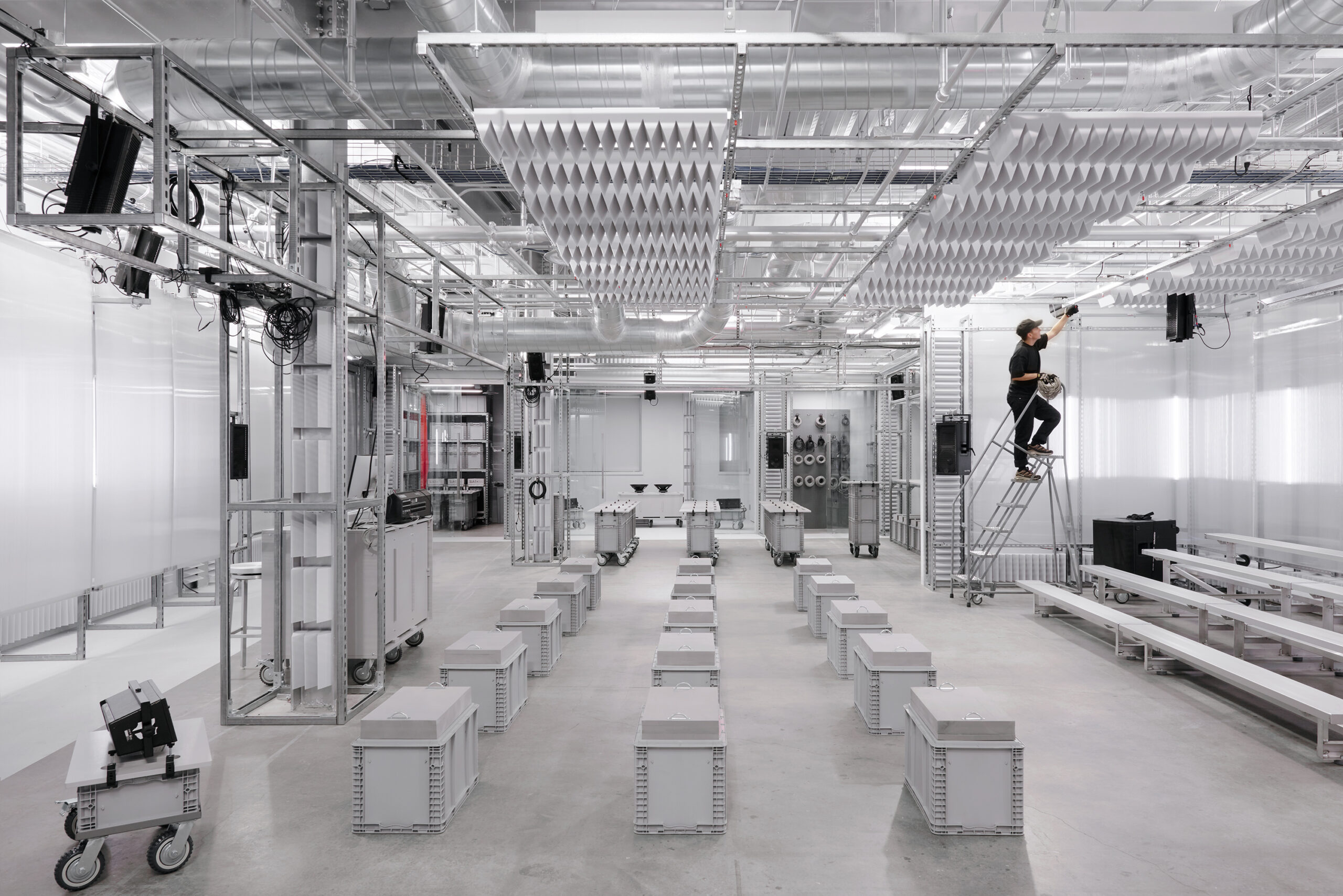
The team stripped back the 2,500-square-foot space to its raw, industrial roots. Concrete makes up the flooring while silver paints the ceiling and polycarbonate wraps the outer walls. A steel structural system provides rigging for speakers, lights, and acoustic fins. The space houses a 24.2-channel Meyer speaker array and built-in DMX lighting which, affixed to the flexible structural system, can be played or tested throughout the room to experiment with how sound moves through a space.
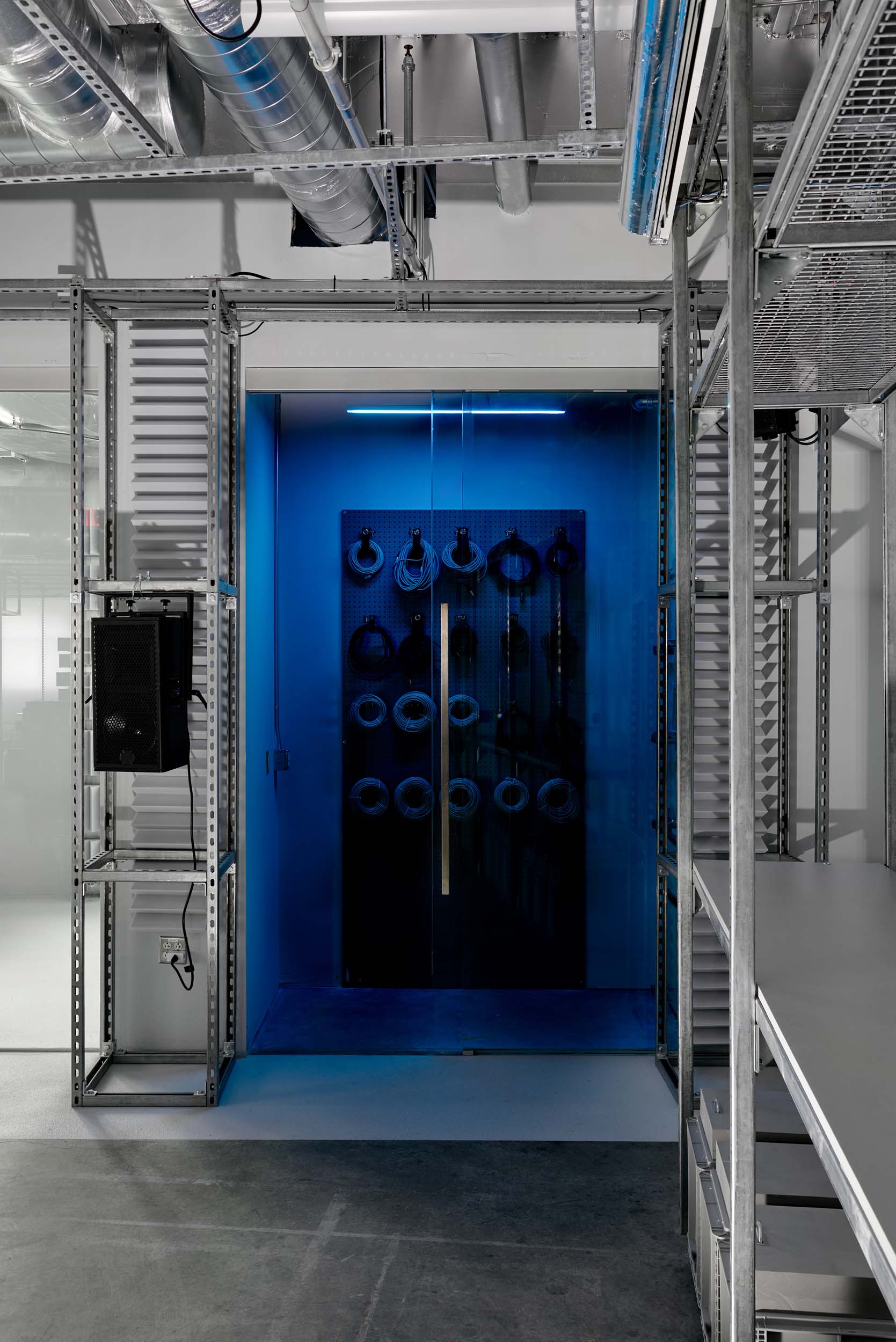
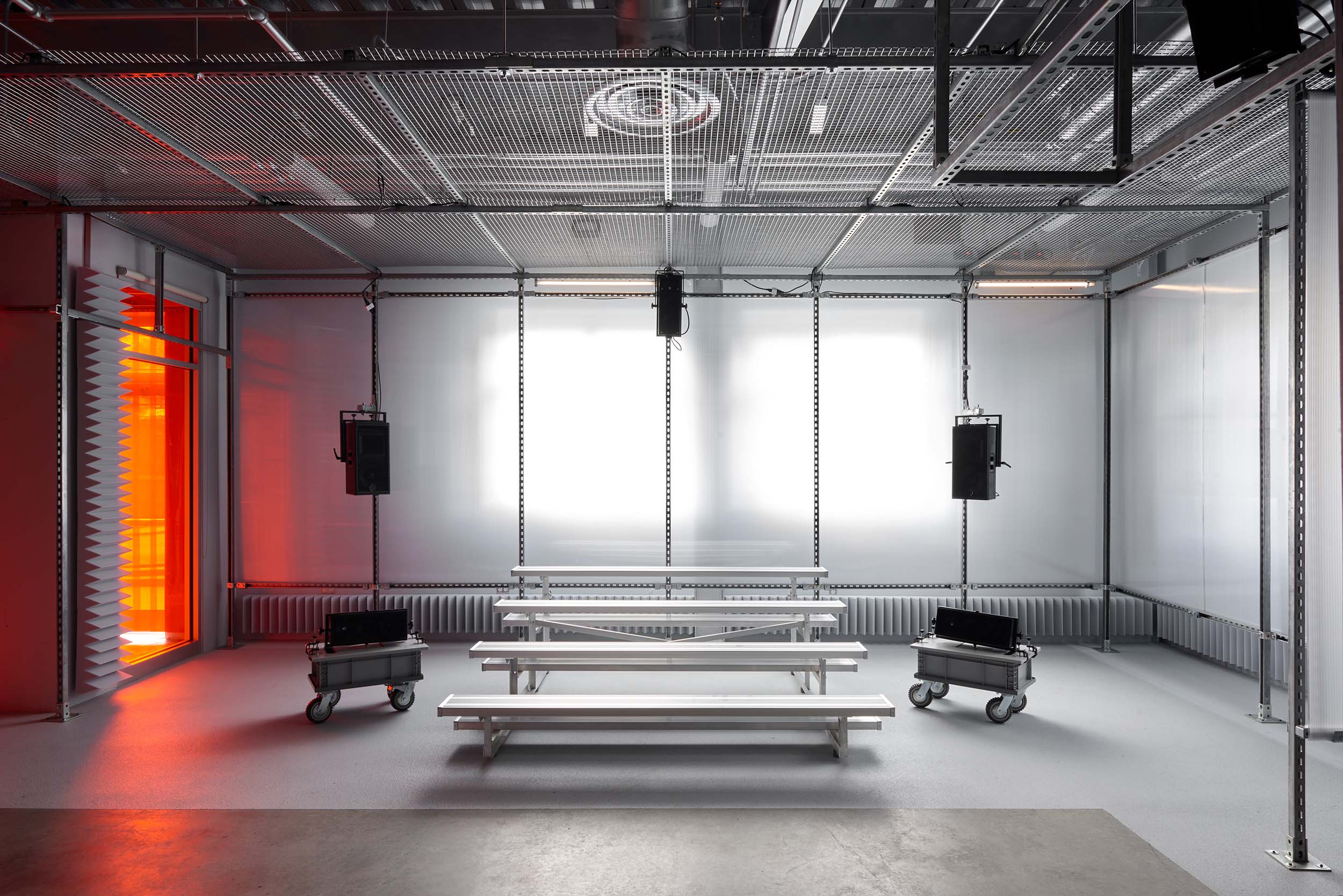
The rest of the design prioritizes flexibility. The Warehouse accommodates various events from teaching to club nights or other types of performances. The team designed a fleet of custom furniture that can be reconfigured as necessary to meet all these needs. Steel carts and crate-like stools can act as speaker podiums, tables and benches, DJ booths, stands for equipment, or easily moved away for an open space. Aluminum bleachers provide shifting audience arrangements. A room, marked by glass doors, doubles as an office space and storage for equipment.
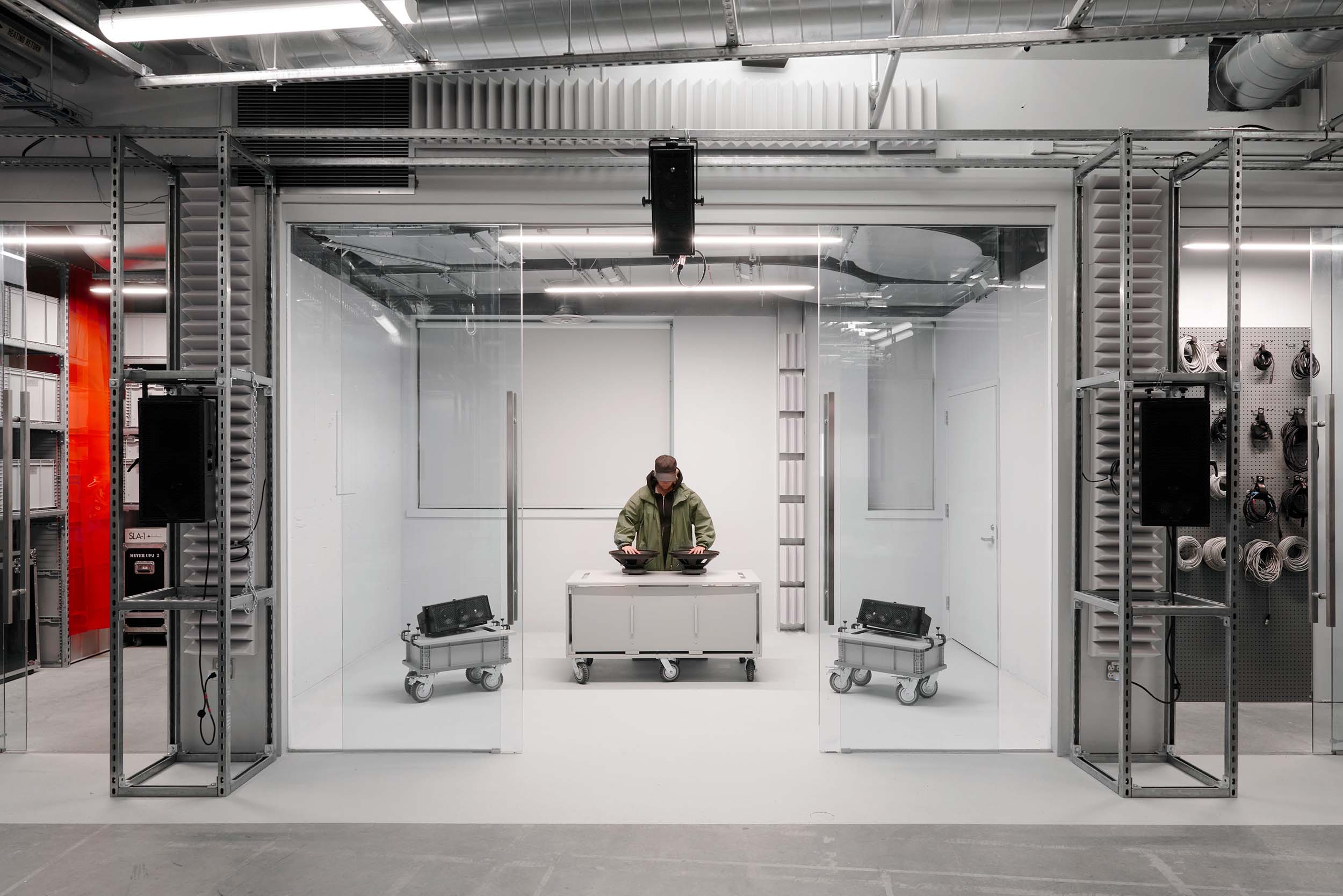
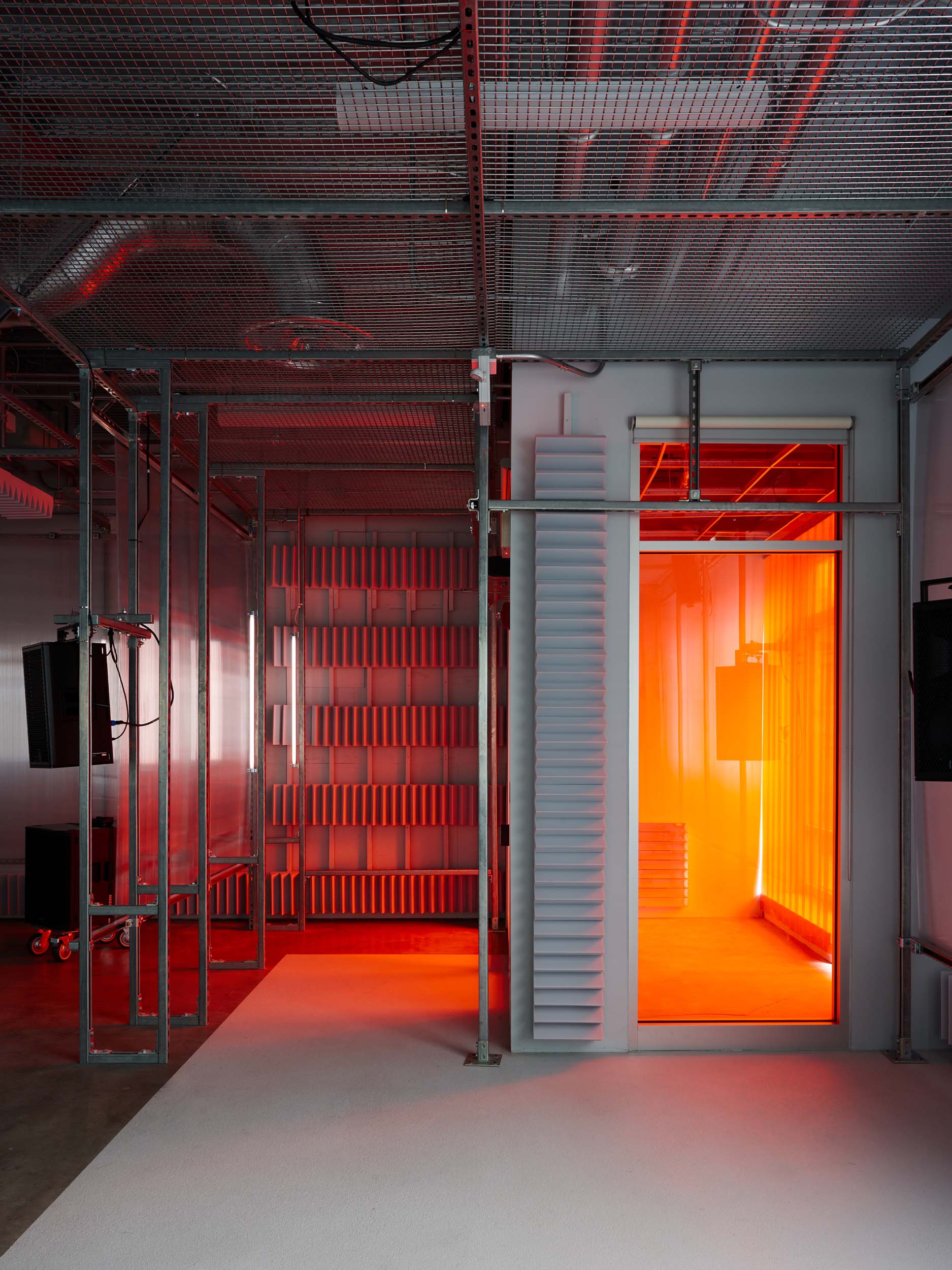
While the design folds all bulky audio and lighting gear and The Warehouse’s many functions into one compact space, it also does so with a sleek design. Exposing the structural system—the infrastructure of the space—the designers use the industrial nature of the room to its aesthetic advantage. Cables, pipes, tubes, and wire hang from walls like decoration. Featuring translucent polycarbonate panels and plastic curtains that line the entry and reflect the neon lights, the space feels wondrously unfinished.