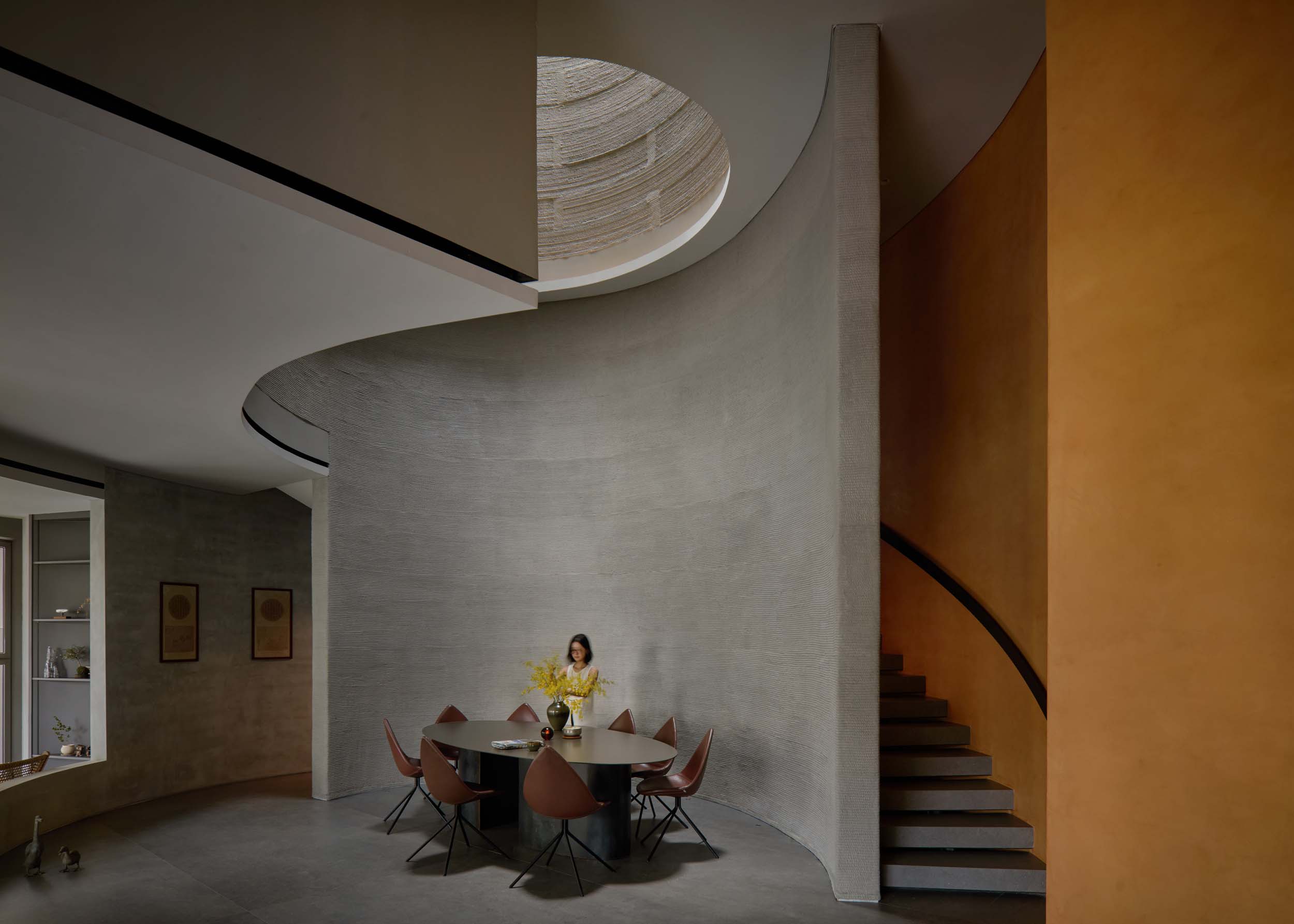
Singapore’s first fully 3D-printed, multi-story home was completed this year by Park + Associates (P+A). The residence, dubbed QR3D, is not only a case study for working with the novel technology, but it’s also an experiment that pushes the method’s limits. The home, for the firm’s own founder Lim Koon Park, expands Singapore’s use of 3D printing to larger and more complex structures. With QR3D, the construction method is used, in partly unconventional ways, to create a 4-story, 7-bedroom, 6,130-square-foot abode with curving and conical sculptures.

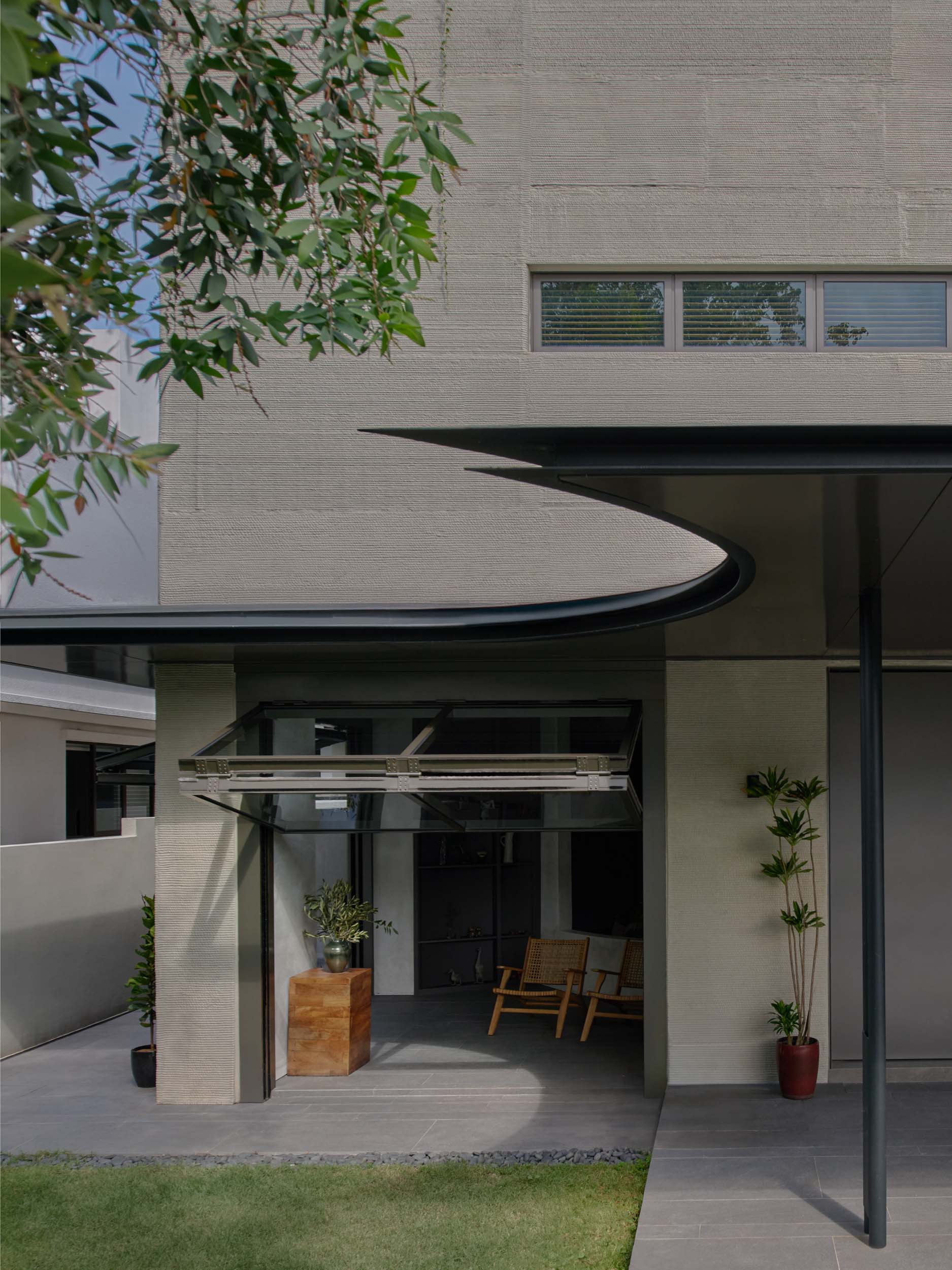
P+A worked with specialists in 3D-printed concrete, CES_InnovFab, for the construction. The process created parts of the structure onsite and offsite where necessary. From the exterior, the residence reads as a concrete rectilinear volume, whose striations, which reveal the printing process of each layer, contrast against the vertical lining of its fence.
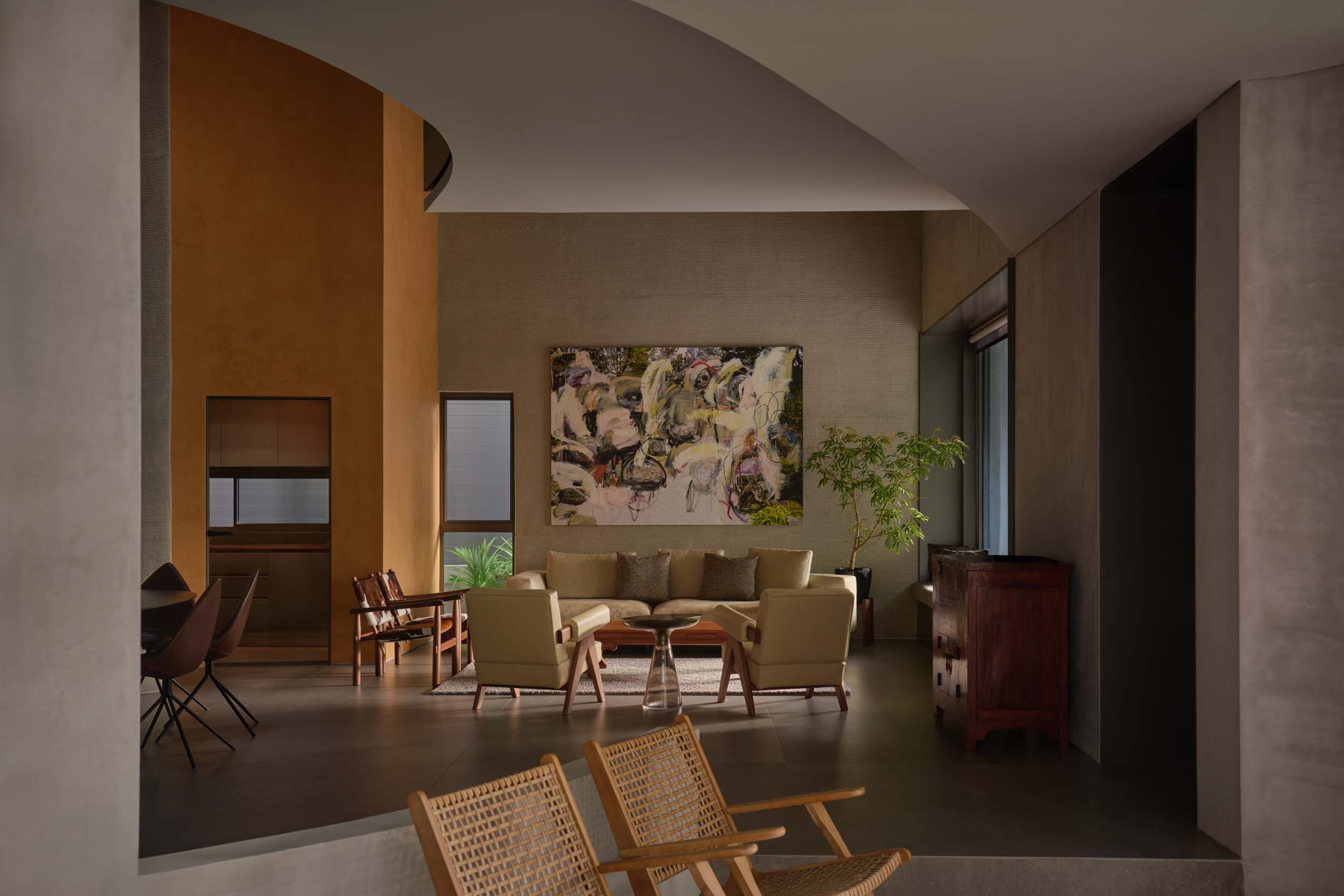
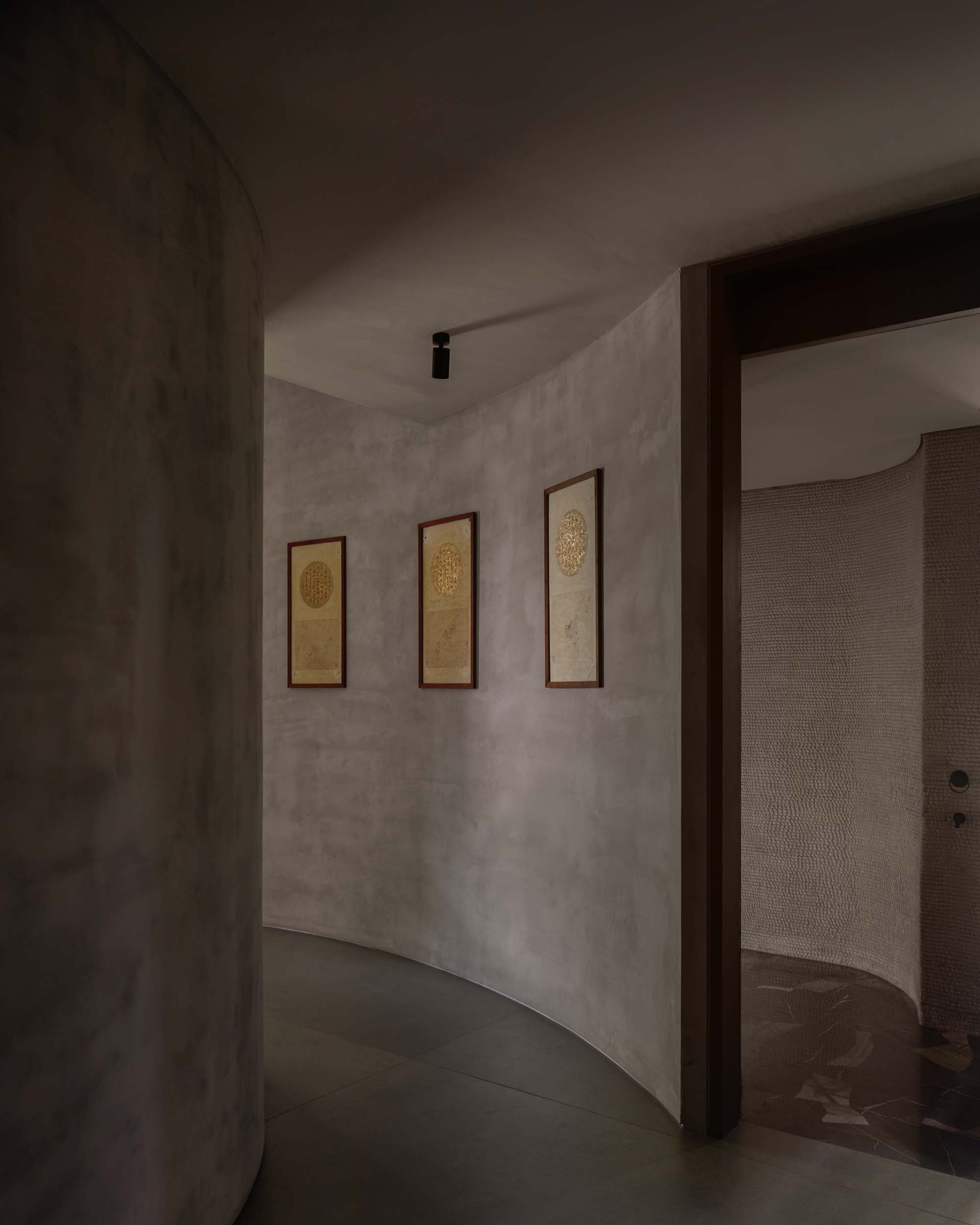
The exposed striations from printing continue inside, celebrating the methodology of the build. But while the home is made up of more than 90 percent of 3D-printed materials, QR3D imparts a warm, human feel. Part of this is due to the rounded walls that welcome visitors deeper inside, the orange tones, wood and leather furnishings, and the spatial layout.
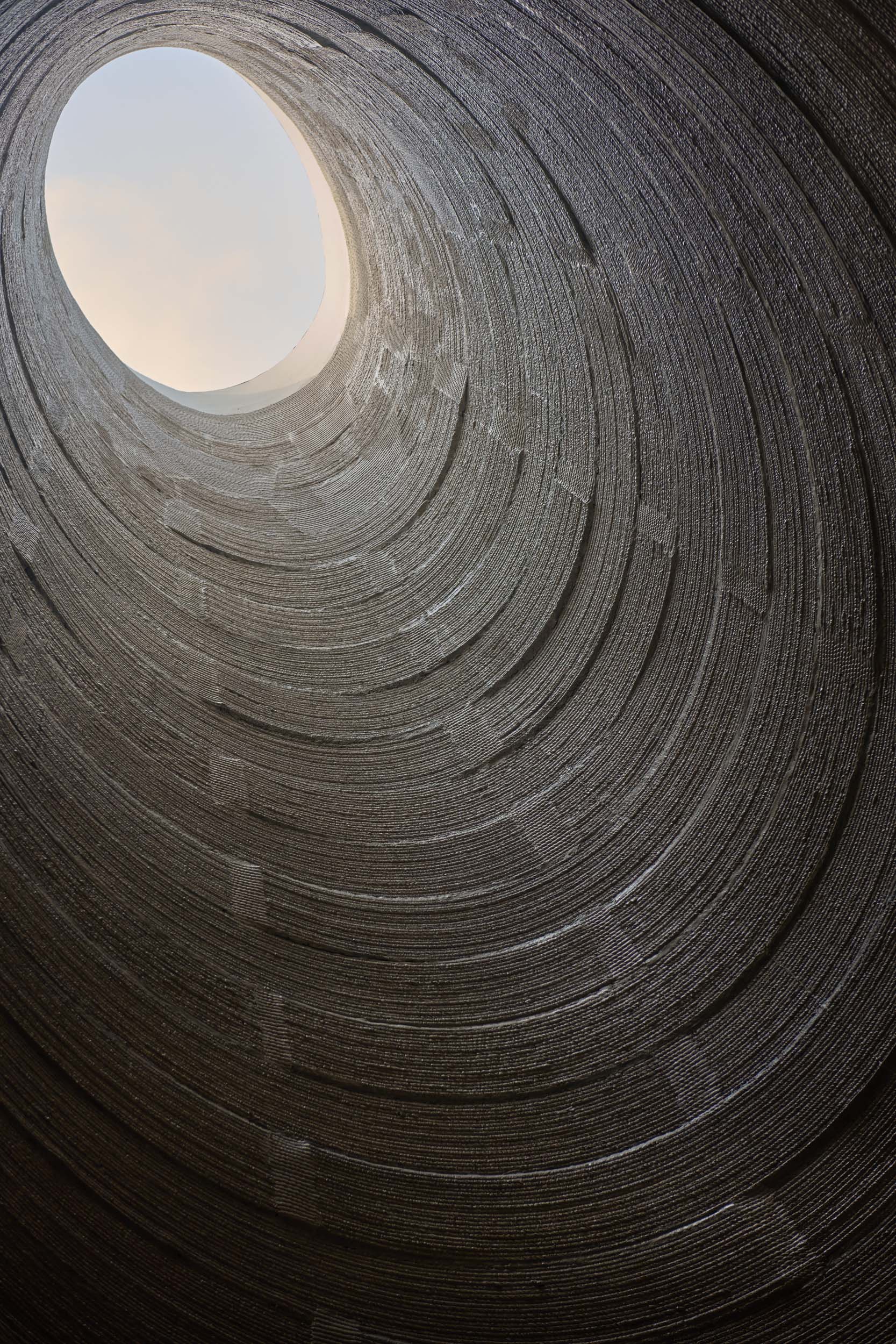
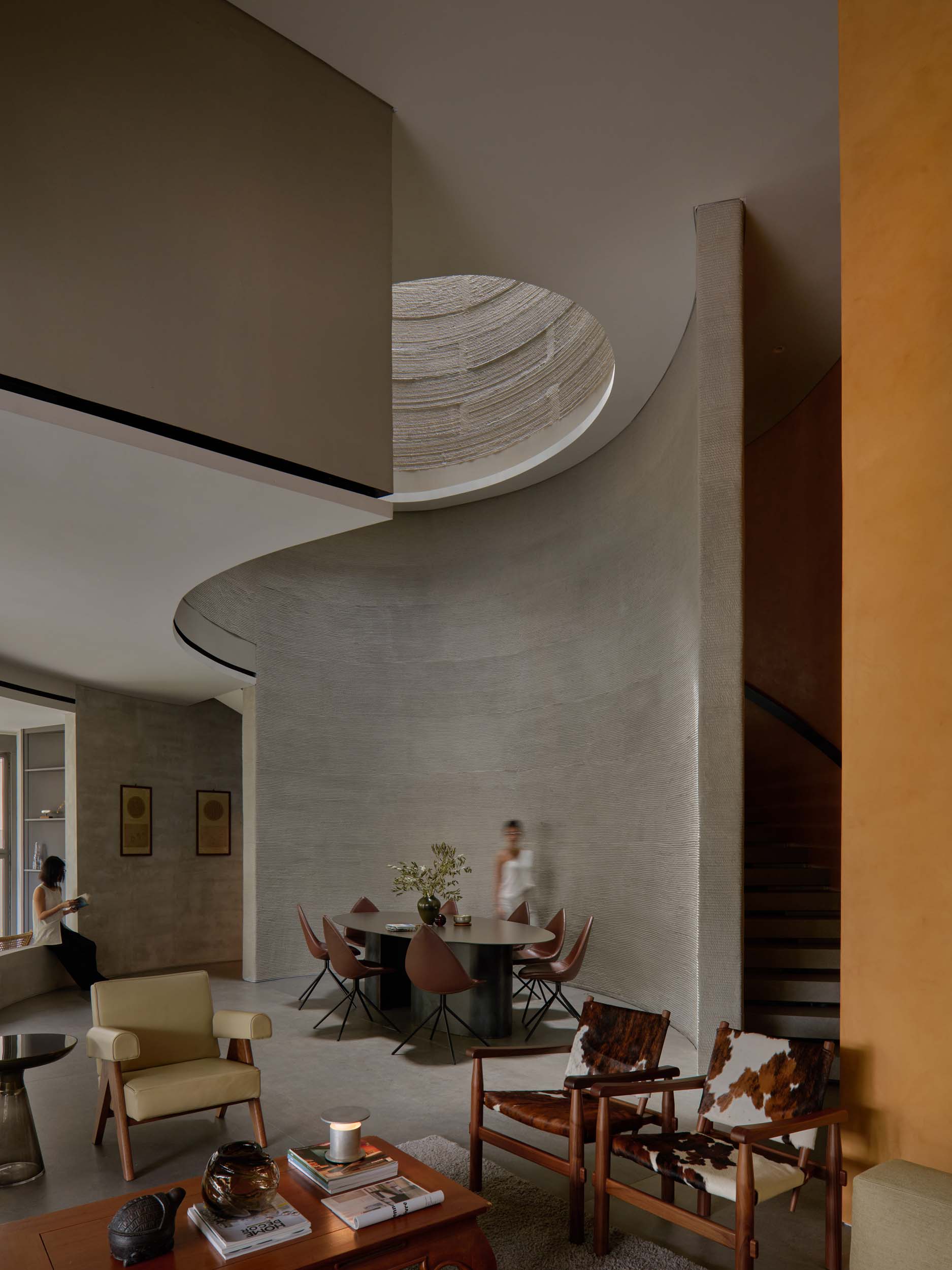
QR3D is organized around a central oculus which sculpts a staircase around this opening. Other programmatic functions spiral outward from it. The conical walls shaping the oculus are left textured, providing comfort to this grand void. It allows light to punctuate the deep core of the home, shining onto the dining table that sits underneath. To achieve the particular steepness of the oculus, the team printed smaller pieces, like “bricks,” of concrete offsite and then assembled them together onsite.
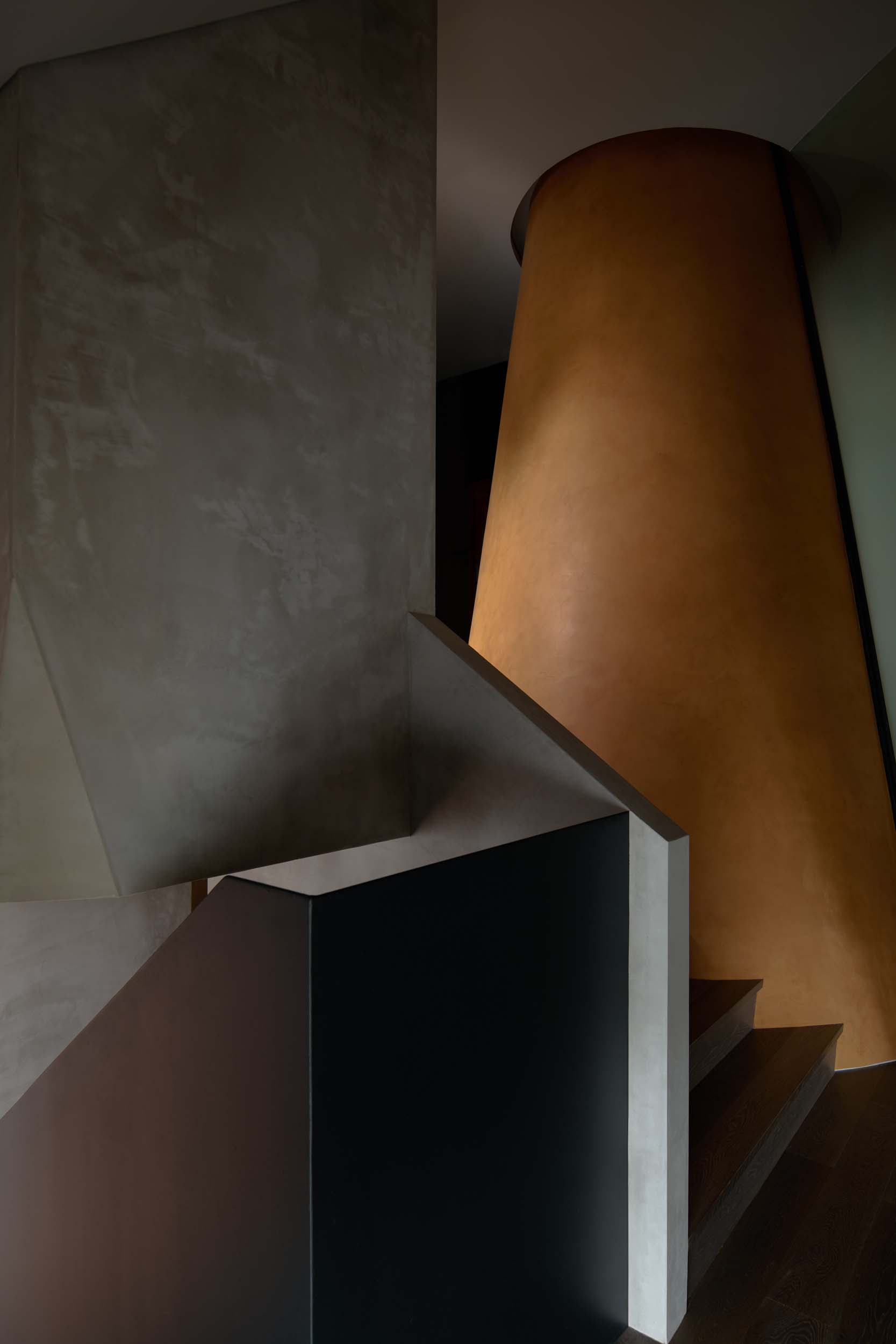
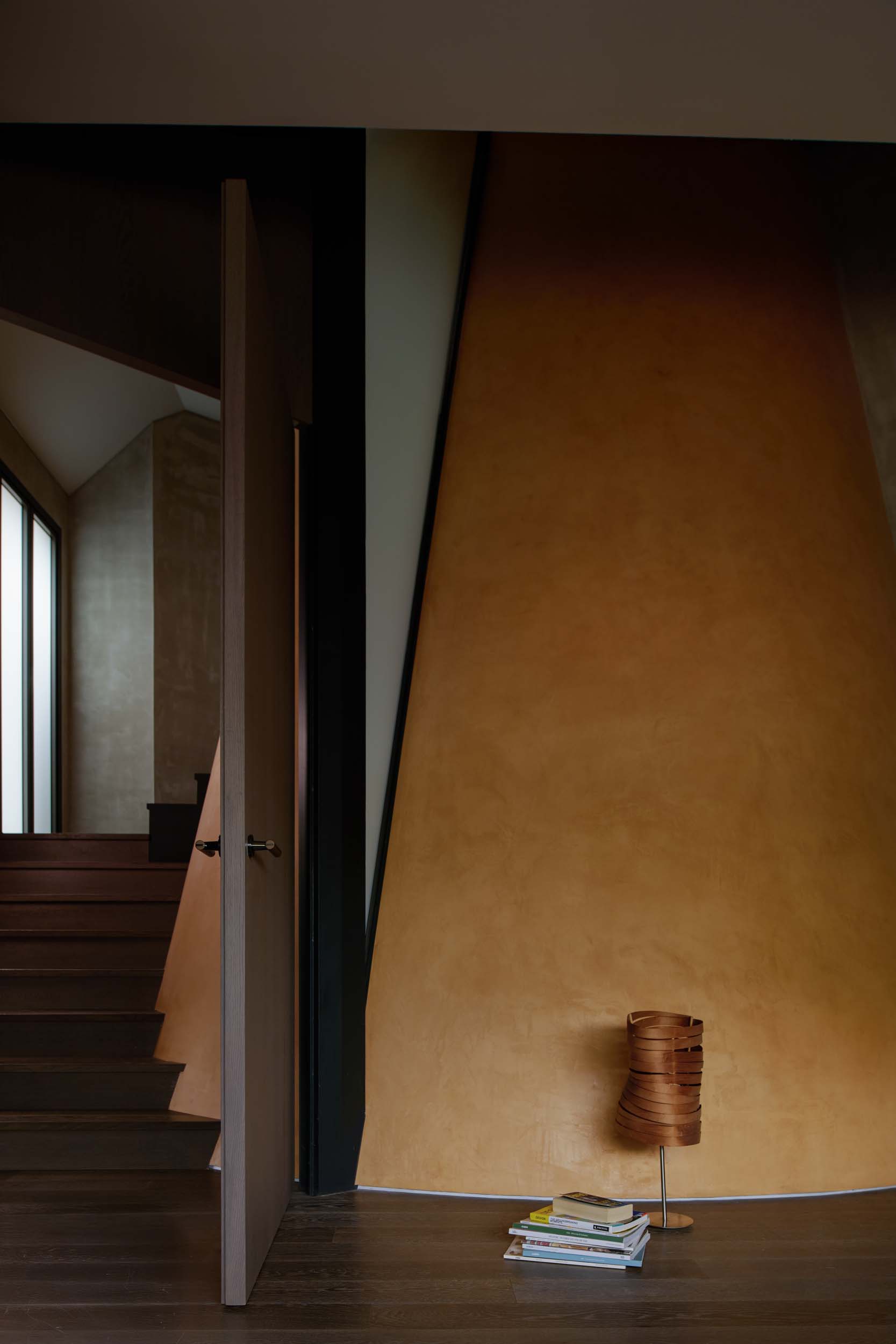
The oculus is more than decorative, it serves as a passive cooling system. The structure conceals an extractor fan which channels hot air up and outside while, in turn, directing cool air down.
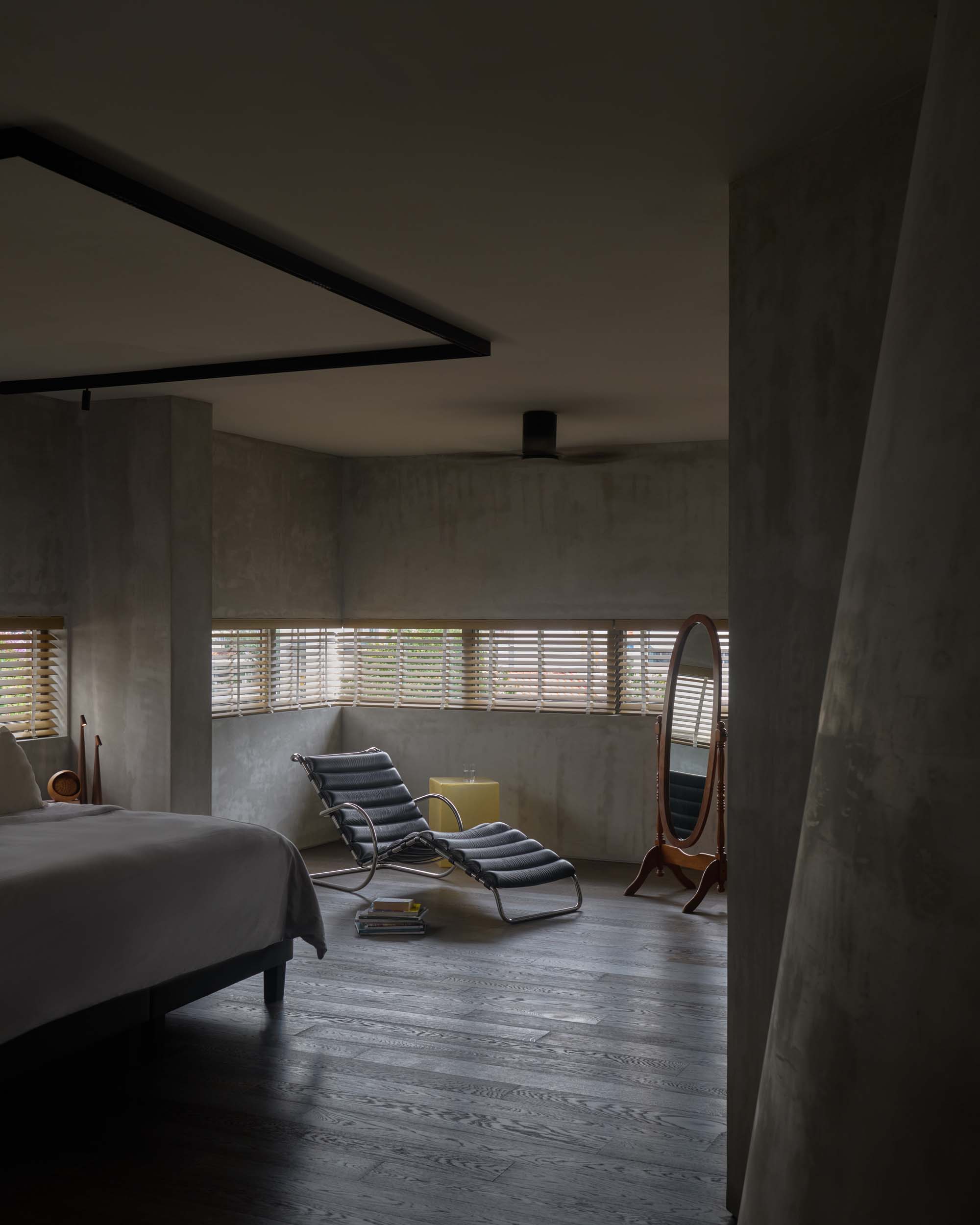
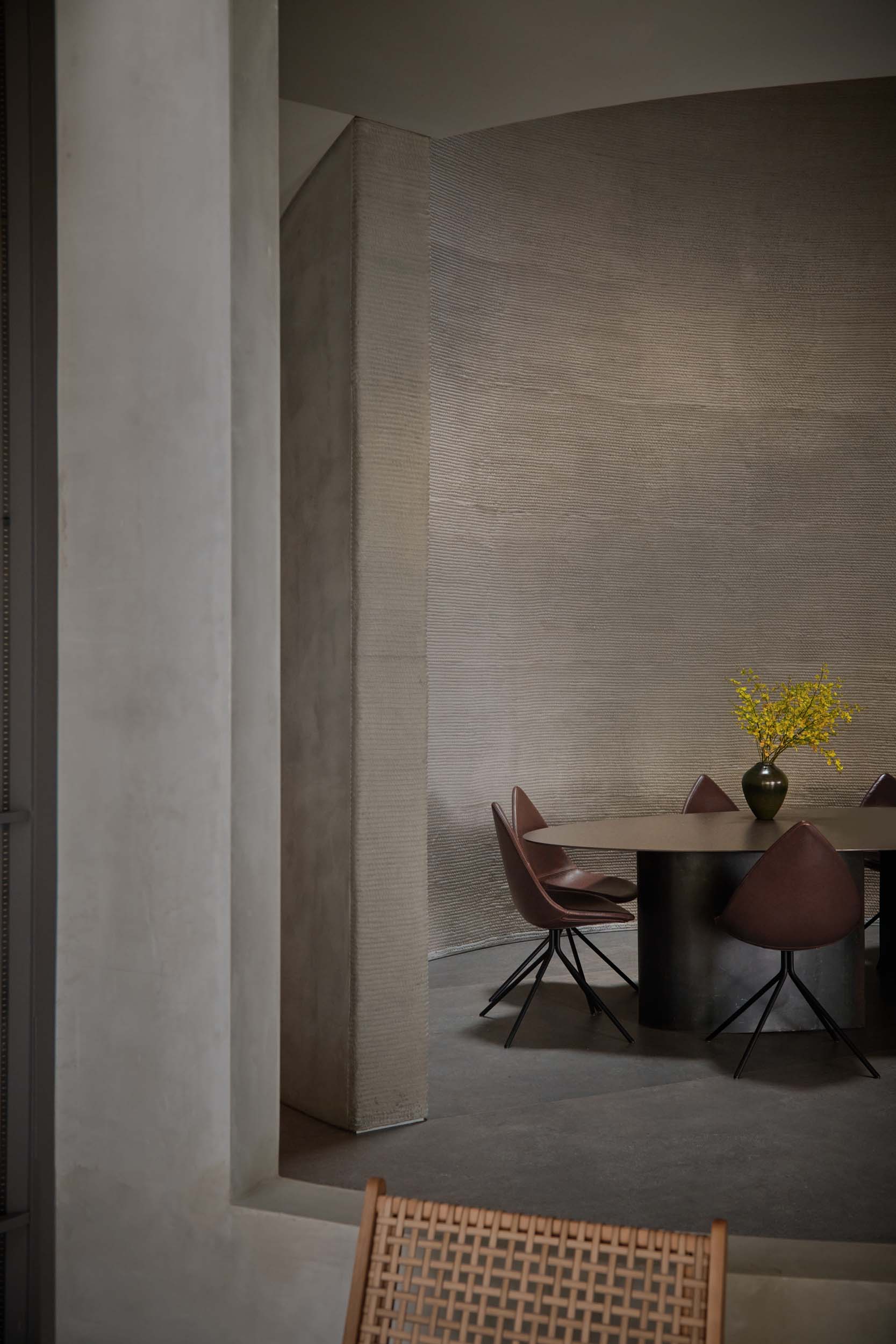
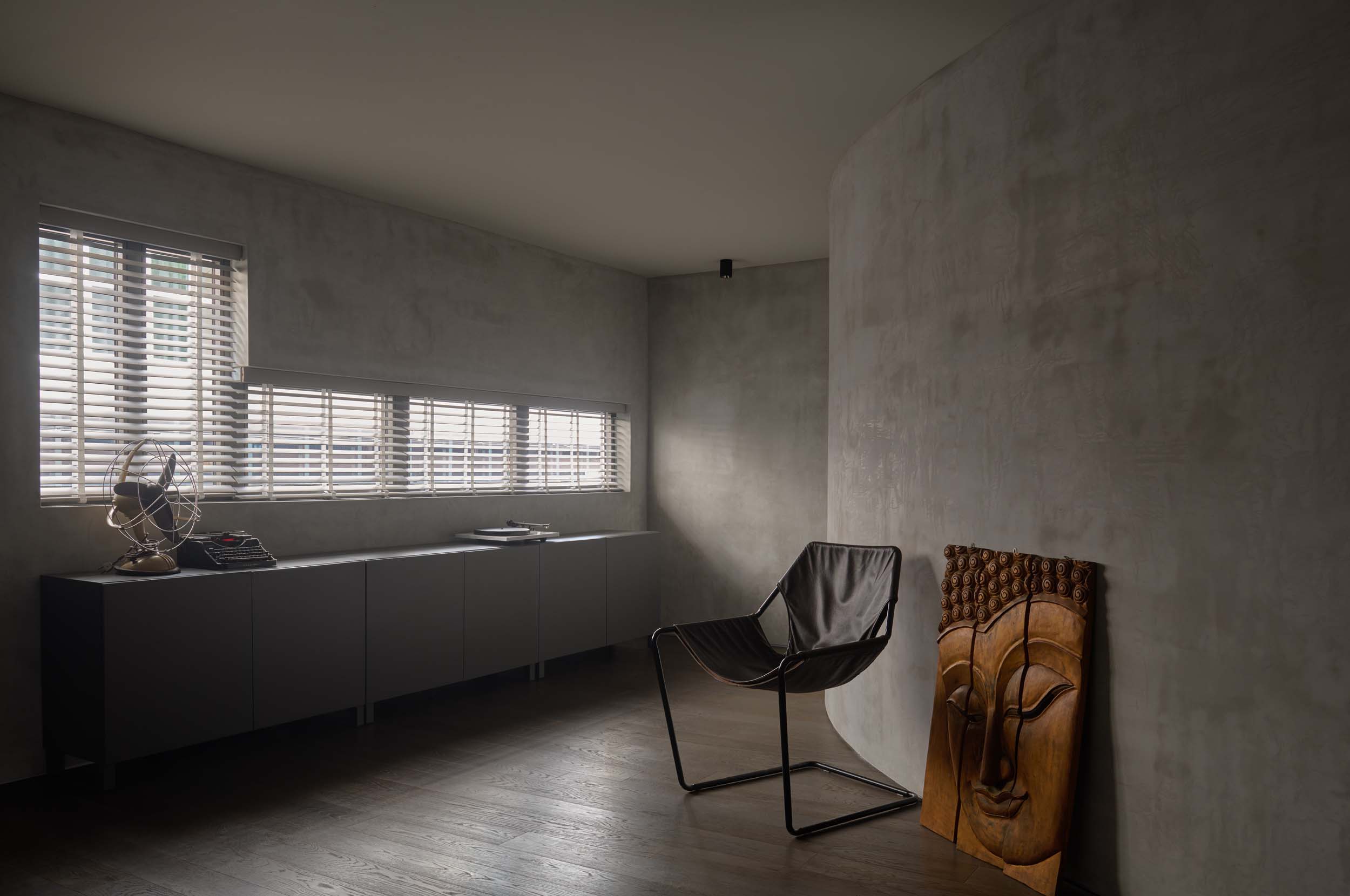
The oculus-lit dining room is framed upon entry, as the room opens up onto the indoor terrace and living room. P+A employs openings throughout the residence to lighten the heavy use of concrete. In the bedrooms, for instance, ribbon windows are contrasted against a low-ceiling, concrete, and dark wood room. Other times, apertures look down over stairs, creating rhythmic surfaces and voids within the quiet, austere spaces.
The result carries a certain magnanimous presence and a gentle quality. The effect was carefully sculpted by Park and his team in an effort to use new technology in a way that’s not confined to digital or trendy aesthetics. “While we were excited by the novelty of 3D printing, our aim was always to create a family home that would be relevant and respected decades from now,” said Park. “We didn’t want the technology to overshadow the essence of the home.”