
Sunlight filtering through the leaves of trees casts magical shadows on the forest floor. The beauty of the light, how it shifts throughout the day and the warmth it brings, inspired clients in Victoria, British Columbia, to design a home for aging in place that embodies what they loved about the island. Local firm Patkau Architects elevated the idea of an indoor-outdoor connection for their house. With a ceiling of interlocking hemlock that casts shadows along the home like tree canopies, Arbor House nestles itself, visually and thematically, within the landscape.
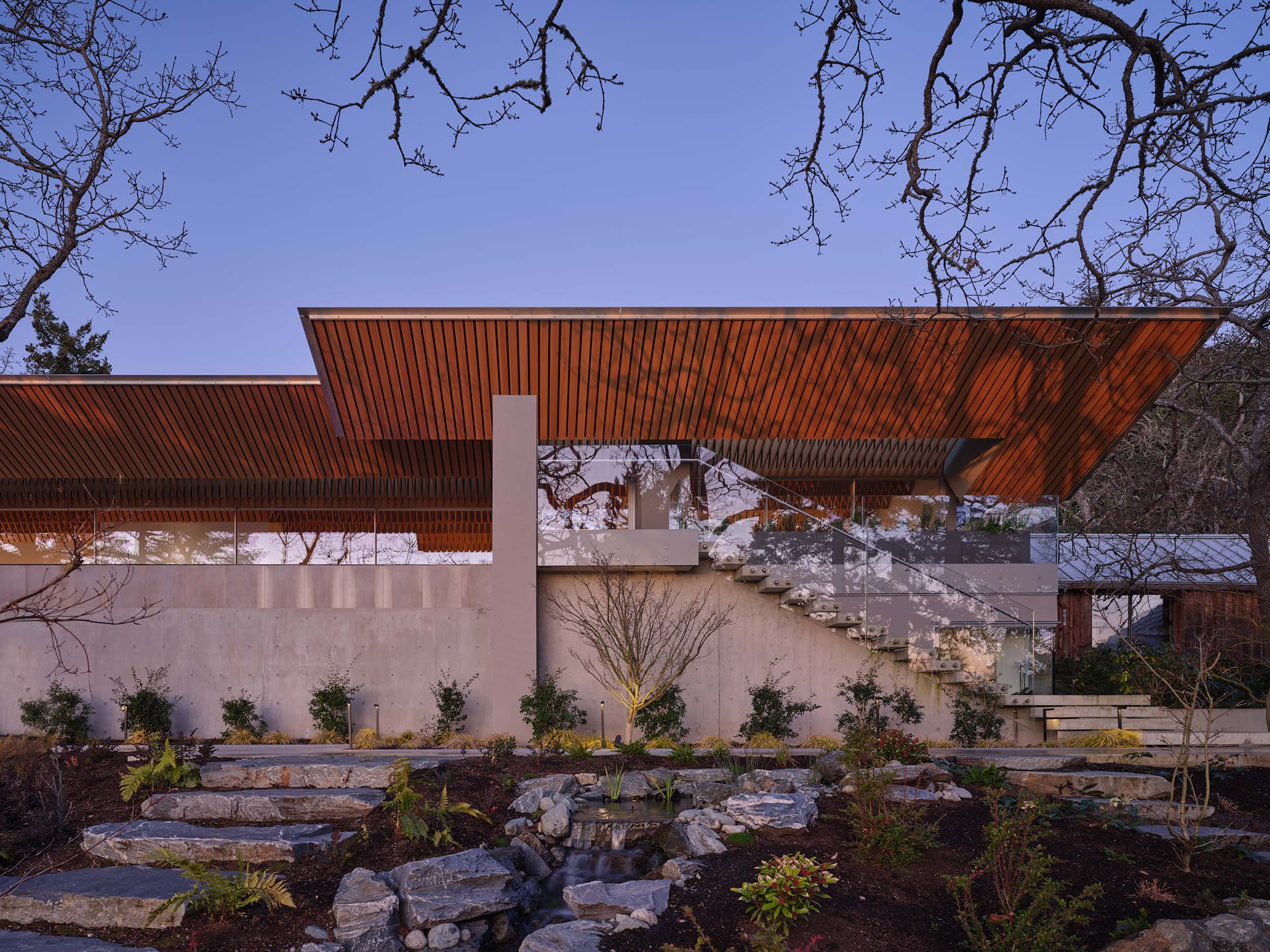
While empty nesters, the clients host large family gatherings and require a house that accommodates nine grandchildren. They are also conscious of their desire to grow old in the house, so all living areas are located on a single floor for easy access. “This created some challenges and opportunities,” said David Shone, principal of Patkau Architects. Of the challenges: locating most rooms on the same floor requires a very wide floorplate which is particularly tricky given the sloped site.

But this brought opportunity: “We moved the house up to the top of the site where there were more natural openings in terms of the existing trees,” continued Shone. This means at the back of the home, which overlooks Cadboro Bay, the floor is at grade, but toward the front, street-facing side, the floor is nearly a full story above grade. “This put the front of the house up in the canopy of the trees,” said Shone—a likely place for an arbor.

The ceiling, which completely spans the interiors and extends outside to cover the decks, drew from research the architects were working on. The canopy, created using solid Western hemlock that’s sourced and milled on the island, is constructed with interlocking horizontal boards and vertical slats. Throughout the home operable skylights are placed atop the arbor so natural light shines through the slats. “We modeled different widths and thicknesses to really maximize the amount of light that we could get through it,” Shone told AN Interior. In places without operable skylights, the architects inserted solar panels which covers 75 percent of the home’s energy.
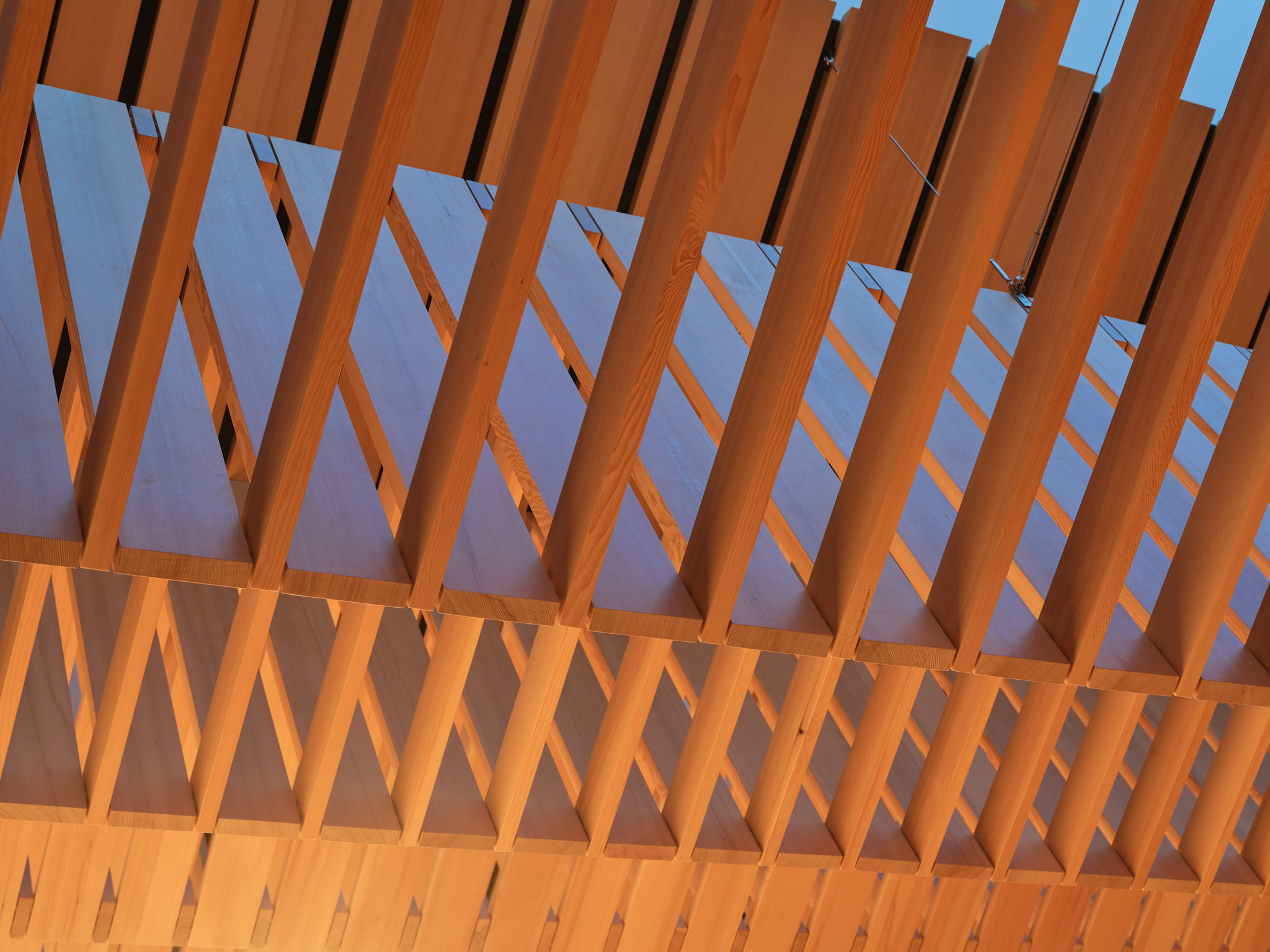
Paired with clean white walls and interior glazing, the continuous arbor allows this interplay of light to dance around the home. If the design engages the senses of visual light, it also deals with the feeling of the breeze between trees. The home is surrounded by retractable glass walls to completely open Arbor House to its environment.
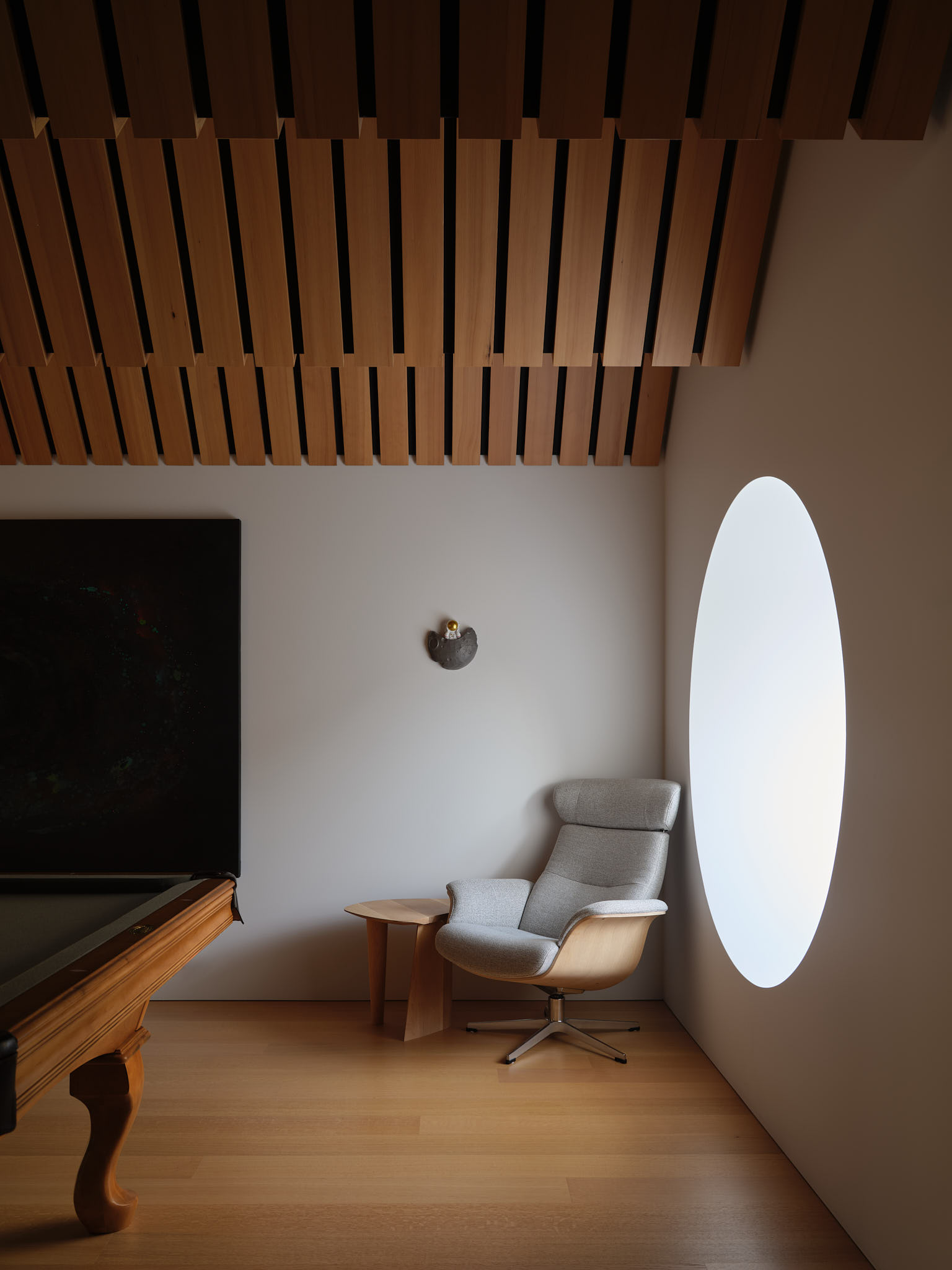
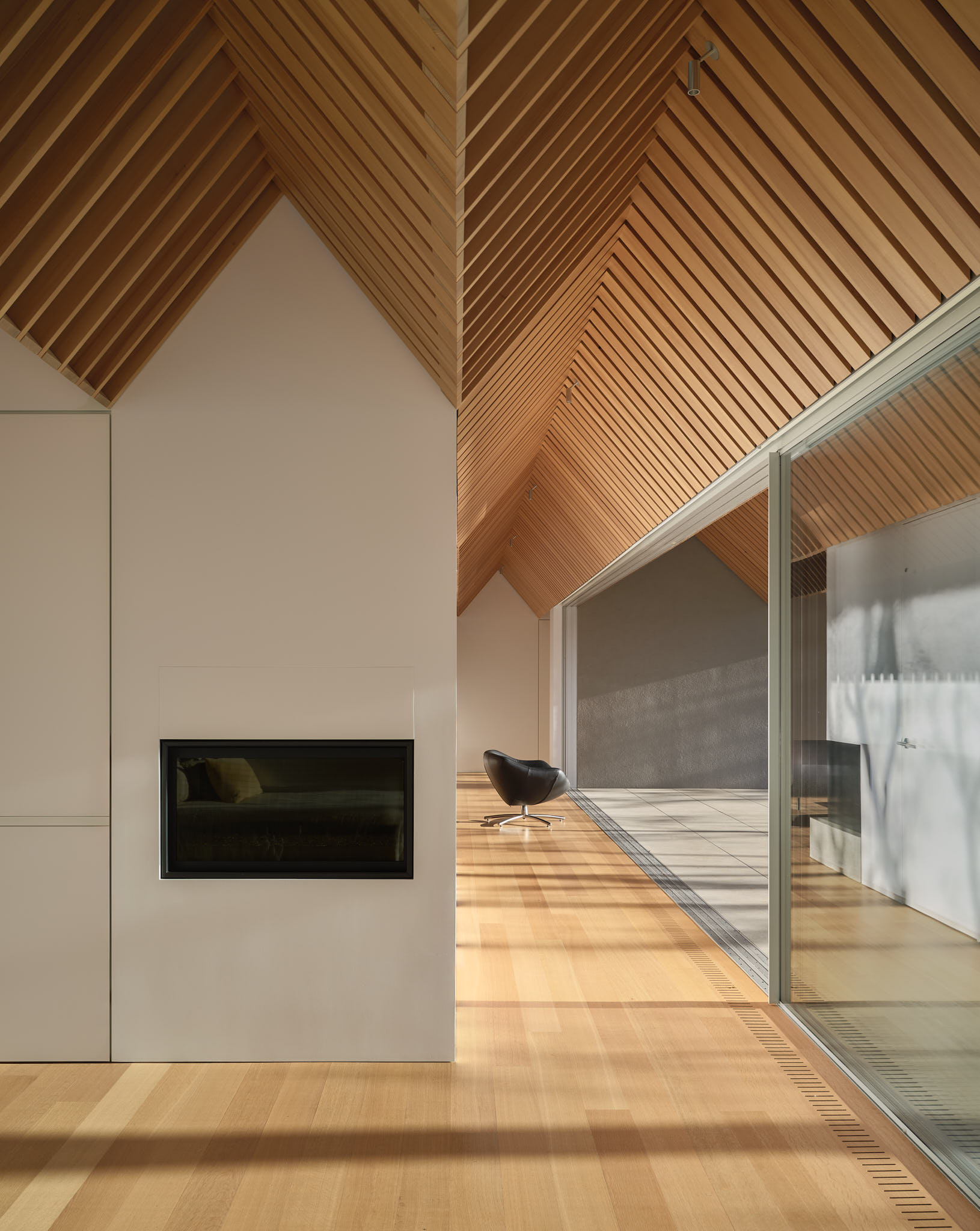
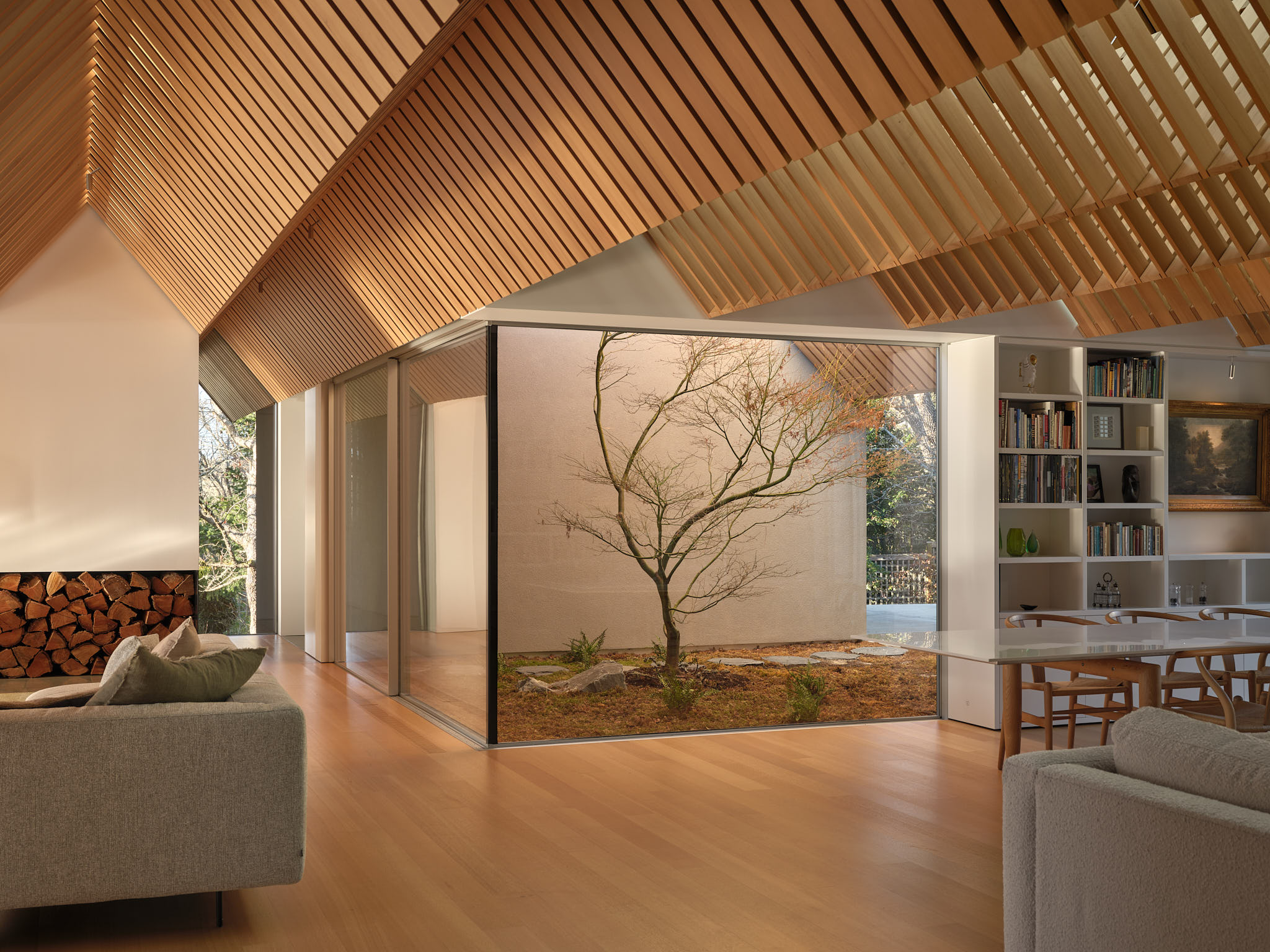
“In terms of the interior arrangement, it’s a loose arrangement of spaces. It’s very open and continuous,” said Shone. Rooms flow into one another, each minimally furnished and decorated. The scale and rhythm of the arbor modulate the different spaces while unifying them to one another. Site lines throughout the home are also maintained, either by looking outward over the pool and into the bay or across an inner courtyard anchored by a young tree.

The embrace of nature is more than sensorial—the home also uses geothermal energy and ground source heat pumps for heating and cooling. In both function and passive house design, Arbor House is drawn from and part of the land.