New developments are par for the course in New York’s fast-growing Williamsburg, the so-called “Manhattan of Brooklyn.” The latest multifamily project thankfully departs from the all-gray and concrete interiors of new, multifamily builds. The design of 103 Grand Street, a new construction and renovation project led by local architecture firm Of Possible (one of AN Interior’s Top 50 Architects and Designers of 2025), emphasizes emotions and wellbeing. Of Possible uses original materials and thoughtful craftsmanship to retool the 1910 structure into a graceful environment with a sustainable edge.
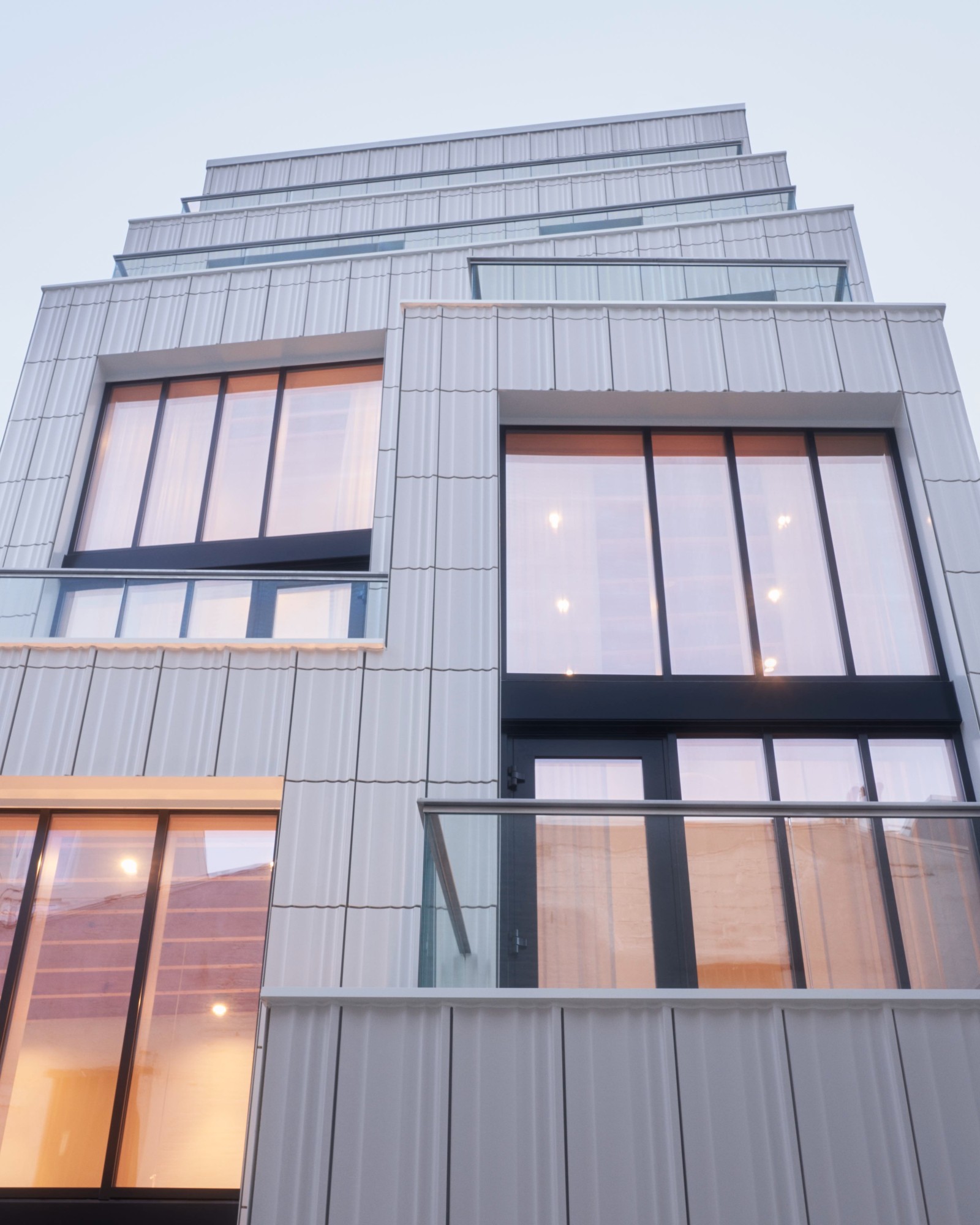
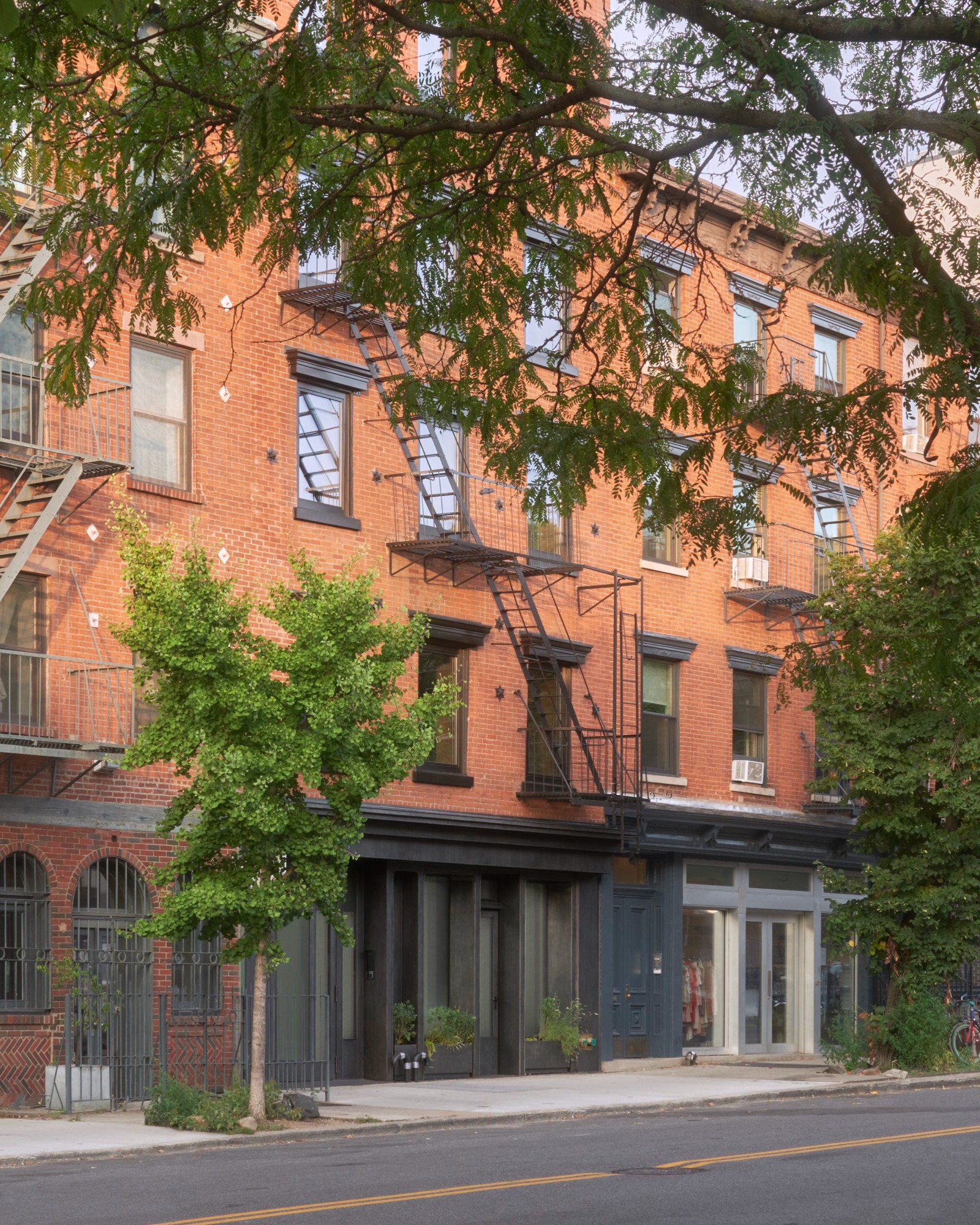
From the street, original masonry cladding 103 Grand Street integrates the residence with its neighbors. The front of the building was, however, partially rebuilt and extended vertically. The team reclaimed brick for the front from the structure’s rear facade. Vincent Appel, founder of Of Possible, shared with AN Interior that he looked to European cities, like Amsterdam, Barcelona, Munich, Vienna, and Budapest, where developers intentionally incorporate the back of buildings by creating quiet inner-blocks. The design team applied white, fluted S-curve custom terra-cotta by Shildan around the extruded rectangular cubes the stagger the structure.
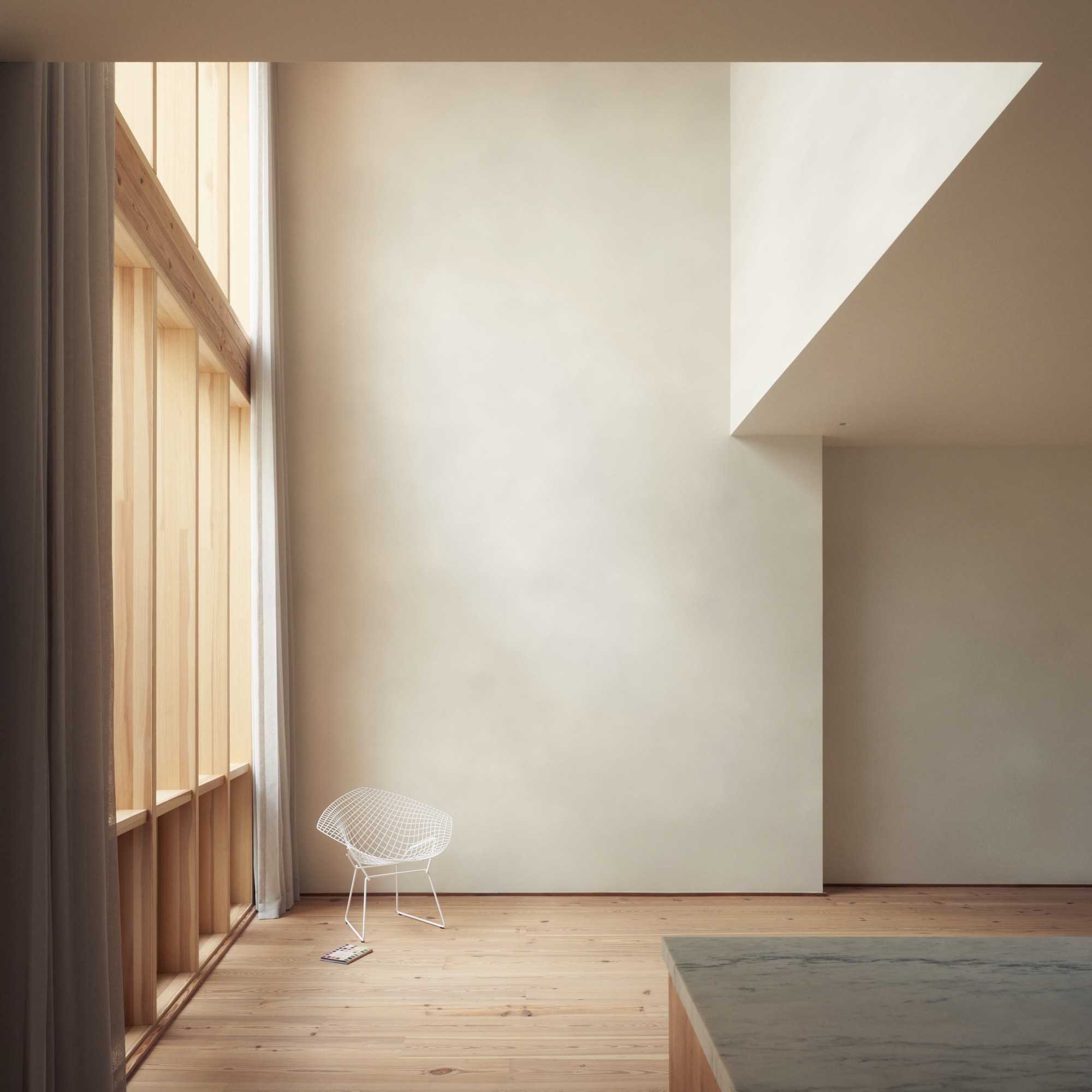
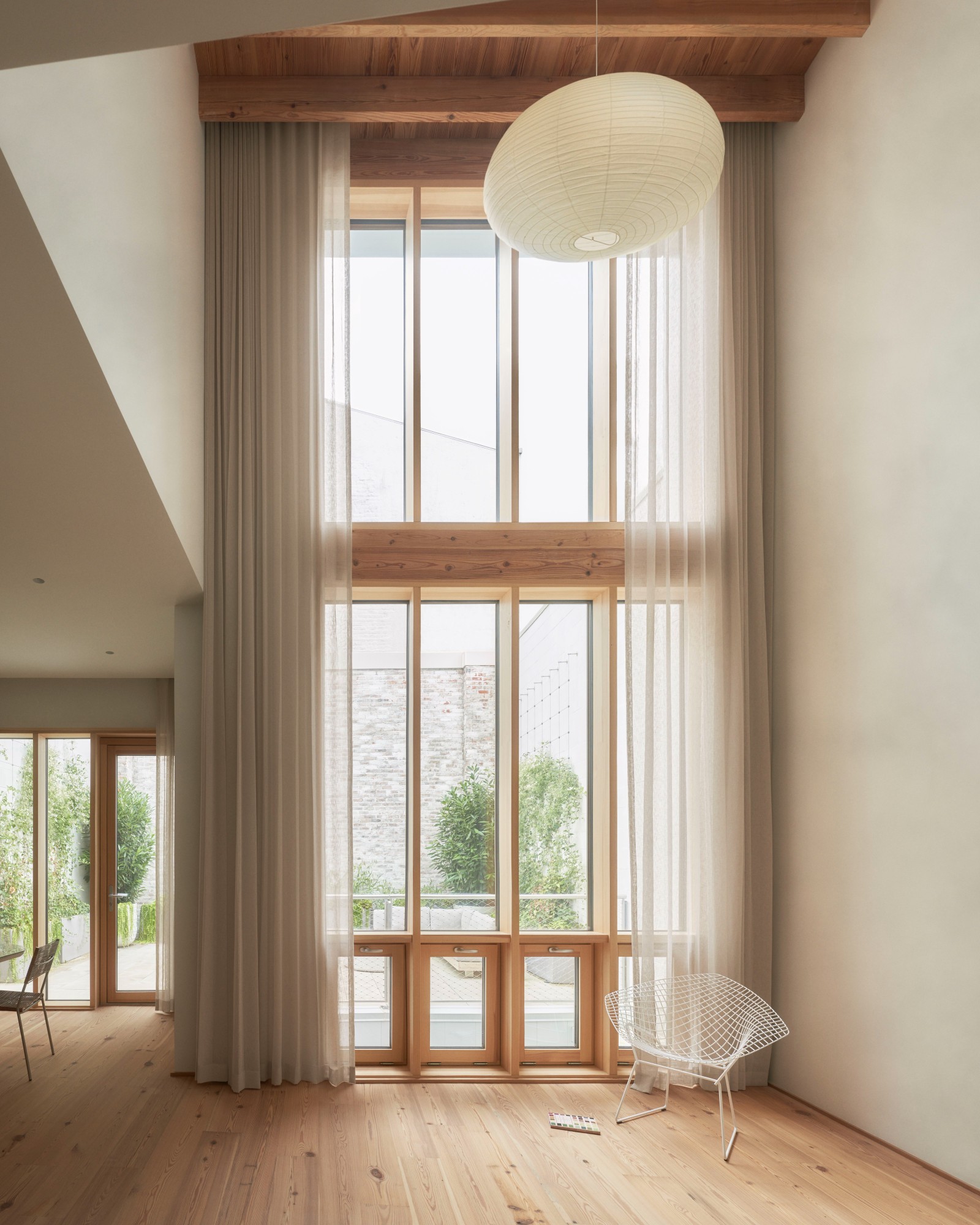
The reinvented rear allows for each of the two duplexes and triplex to have double-height loft spaces with expansive floor-to-ceiling glass windows. “Creating the double-height spaces within each unit is the most important and unusual part of the design. The zoning code in New York City regulates two fundamental characteristics of a building’s size: floor surface area and, indirectly, the overall volume of a building,” said Appel. Focusing on creating more three-dimensional space was not only financially cost-effective compared to expanding the floor area, but it also increased the sense of grandeur inside.
“When you create more volumetric space in a home, you are creating something more inspiring and uplifting with more room for things to breathe emotionally,” explained Appel. “The American anthropologist Edward Hall called this ‘The Cathedral Effect,’ which is the idea that high ceilings are awe-inspiring, provoking abstract thinking, creativity, and feelings of freedom and openness.”
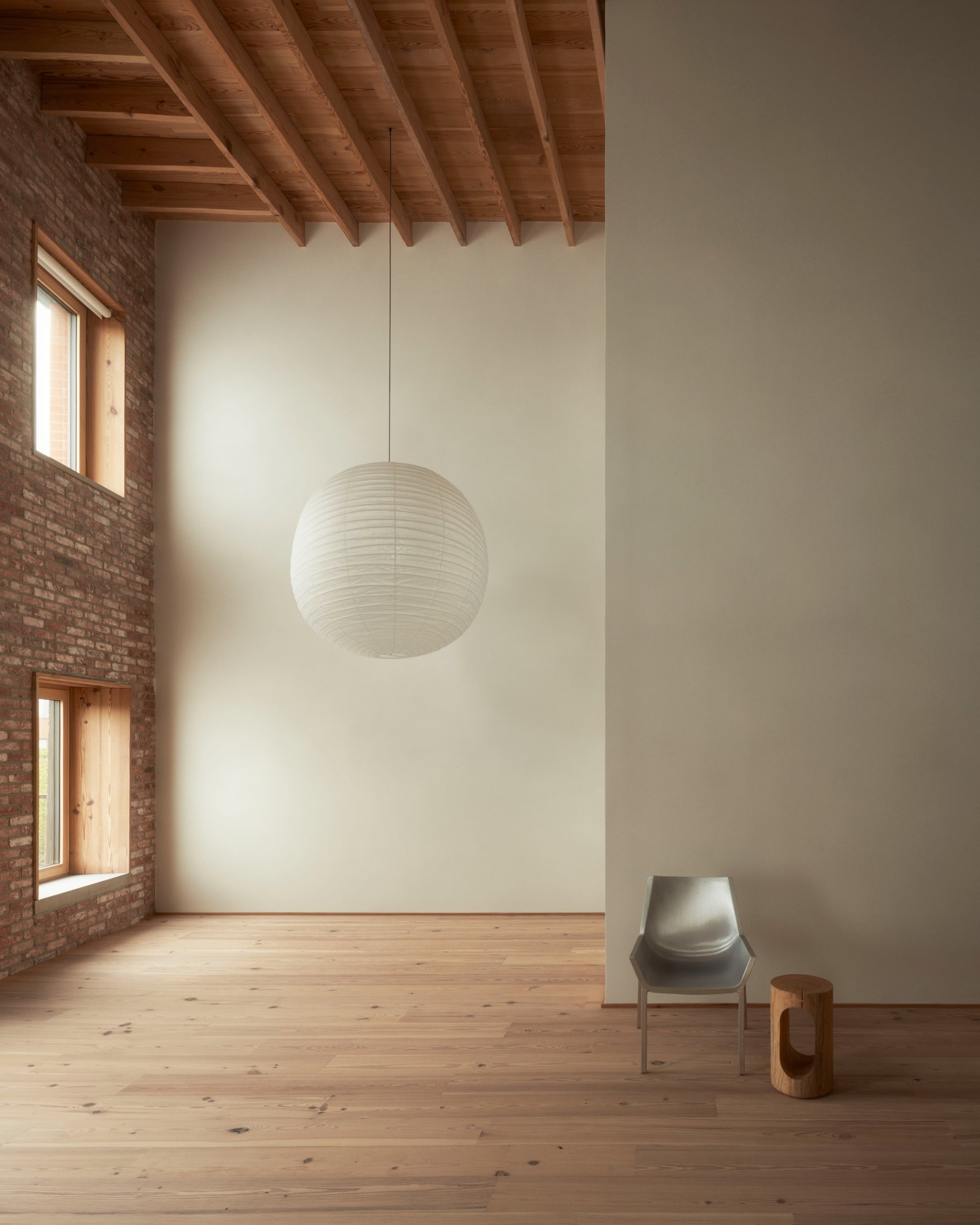
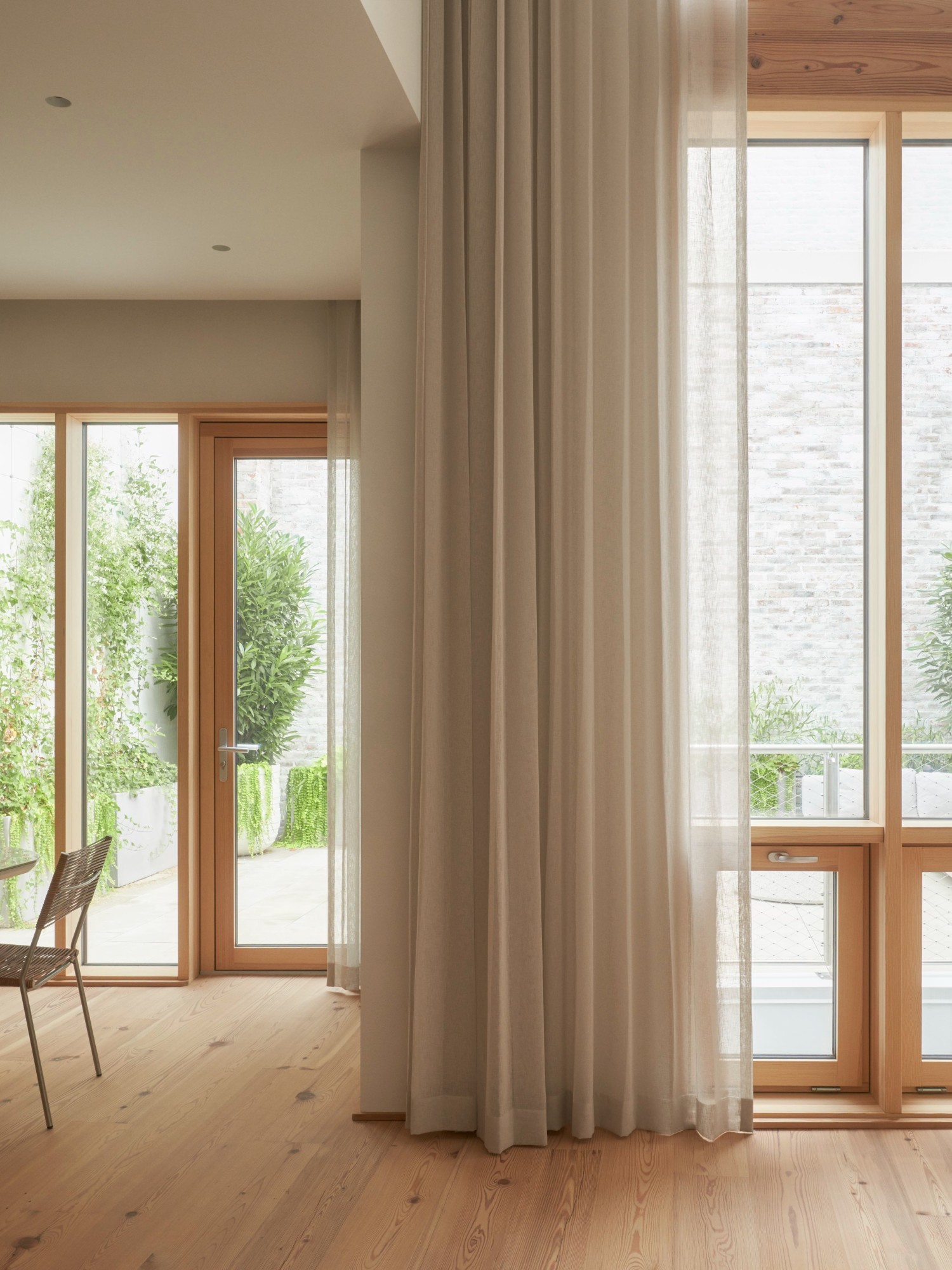
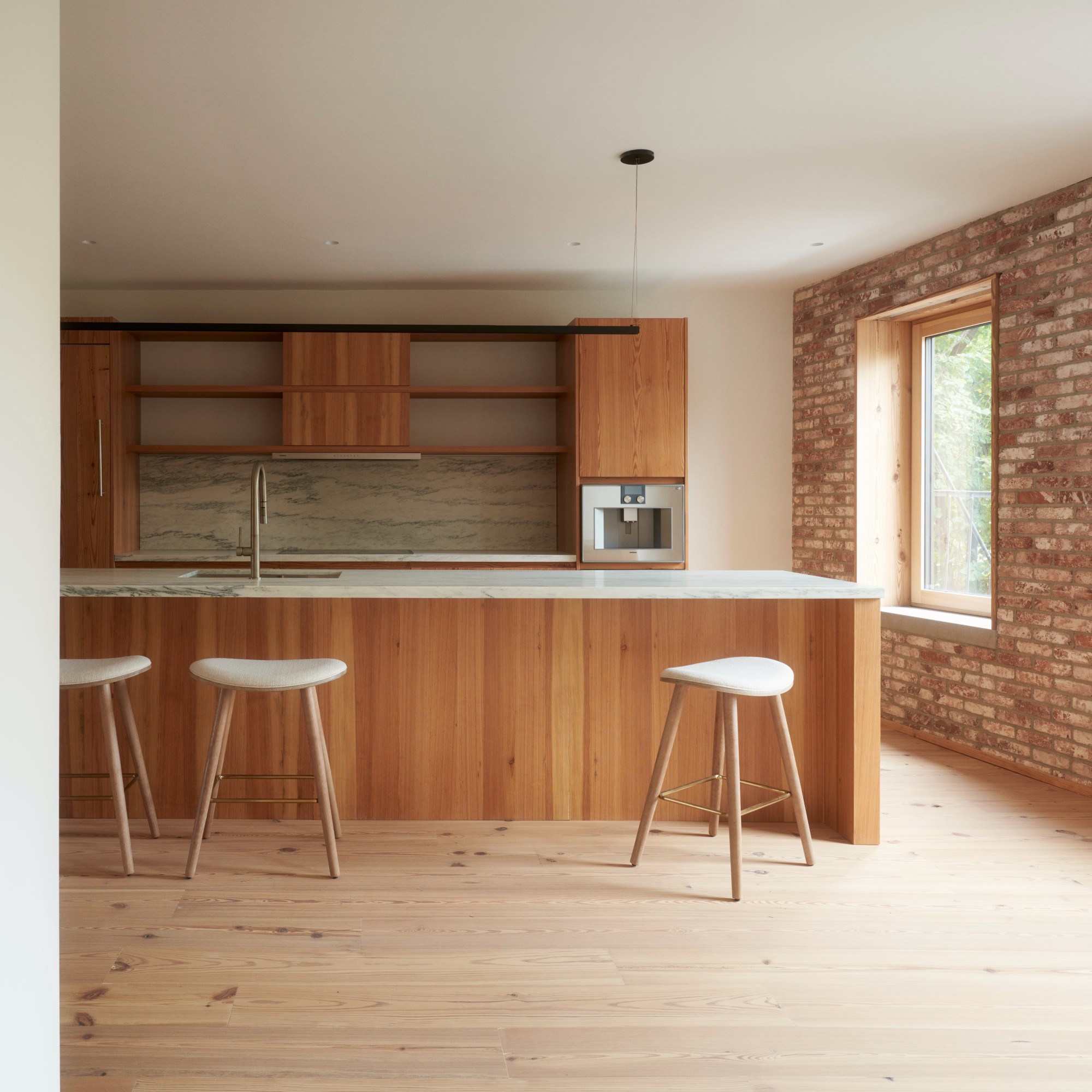
The interiors also draw connections to the neighboring manufacturing buildings occupied by artists in Brooklyn. The team wanted to continue this historic language. In order to do this, the team sought to include heart pine, the material predominantly throughout the original structure. Although heart pine was a common material for that time period, it is not as easily accessible today. Of Possible collaborated with Madera Surfaces to source locally milled heart pine from a nearby warehouse that was set to be demolished. The material makes up the flooring, door jambs, stairs, interior window trims, ceiling beams, and kitchen millwork.
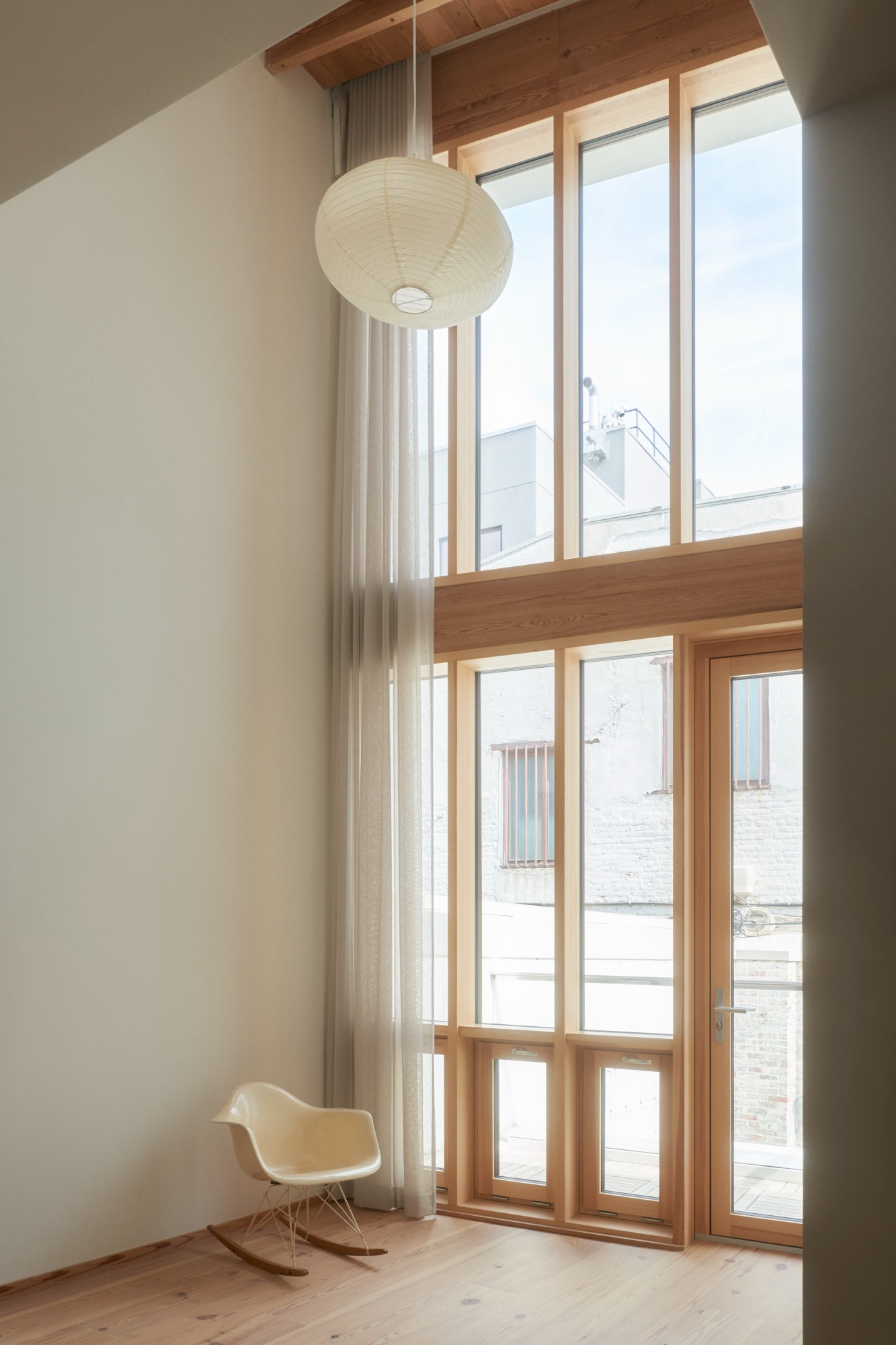
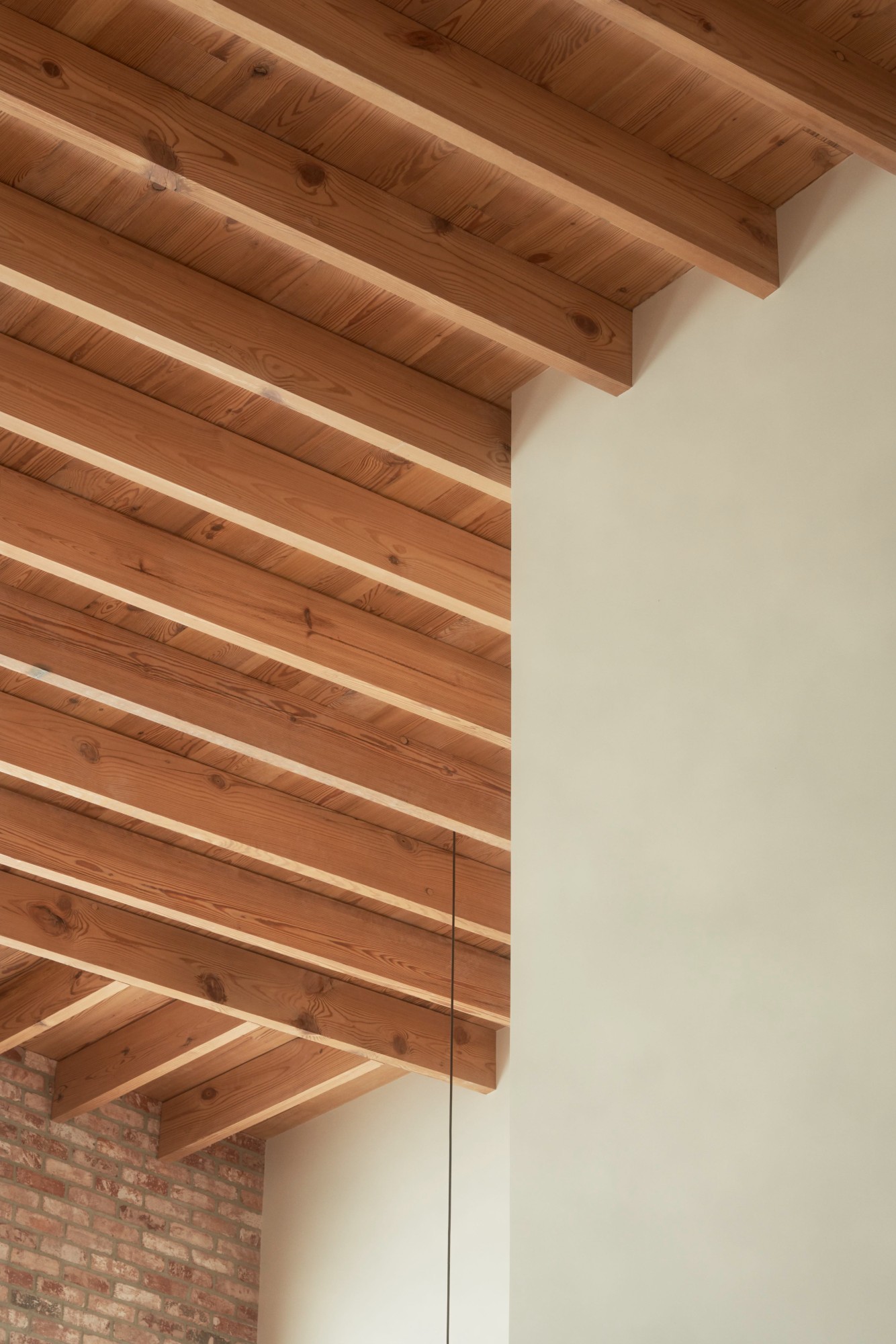
The reused heart pine is one of many ways 103 Grand Street achieved its sustainable goal, allowing the building to also meet New York City’s Zone Green initiative. The passive-house-performance-level windows from Ikon Windows offer more insulation and the triple-pane glass helps control the amount of solar heat gain let into the building. Additionally, the entire building is electric and runs off high-efficiency heating and cooling systems.
Of Possible reimagined 103 Grand Street with its occupants’ sensibilities in mind, weaving in traditional material application and modern design. “Architecture, like politics, can sometimes feel obsessed with either discovering newness or preserving the past. It shouldn’t be radical to propose a nuanced and less dogmatic approach, but somehow it feels that way,” said Appel. “Even though 103 Grand was not a landmarked building subject to the Landmark Preservation Commission’s purview, we approached some elements with sensibility to bring the past forward.”