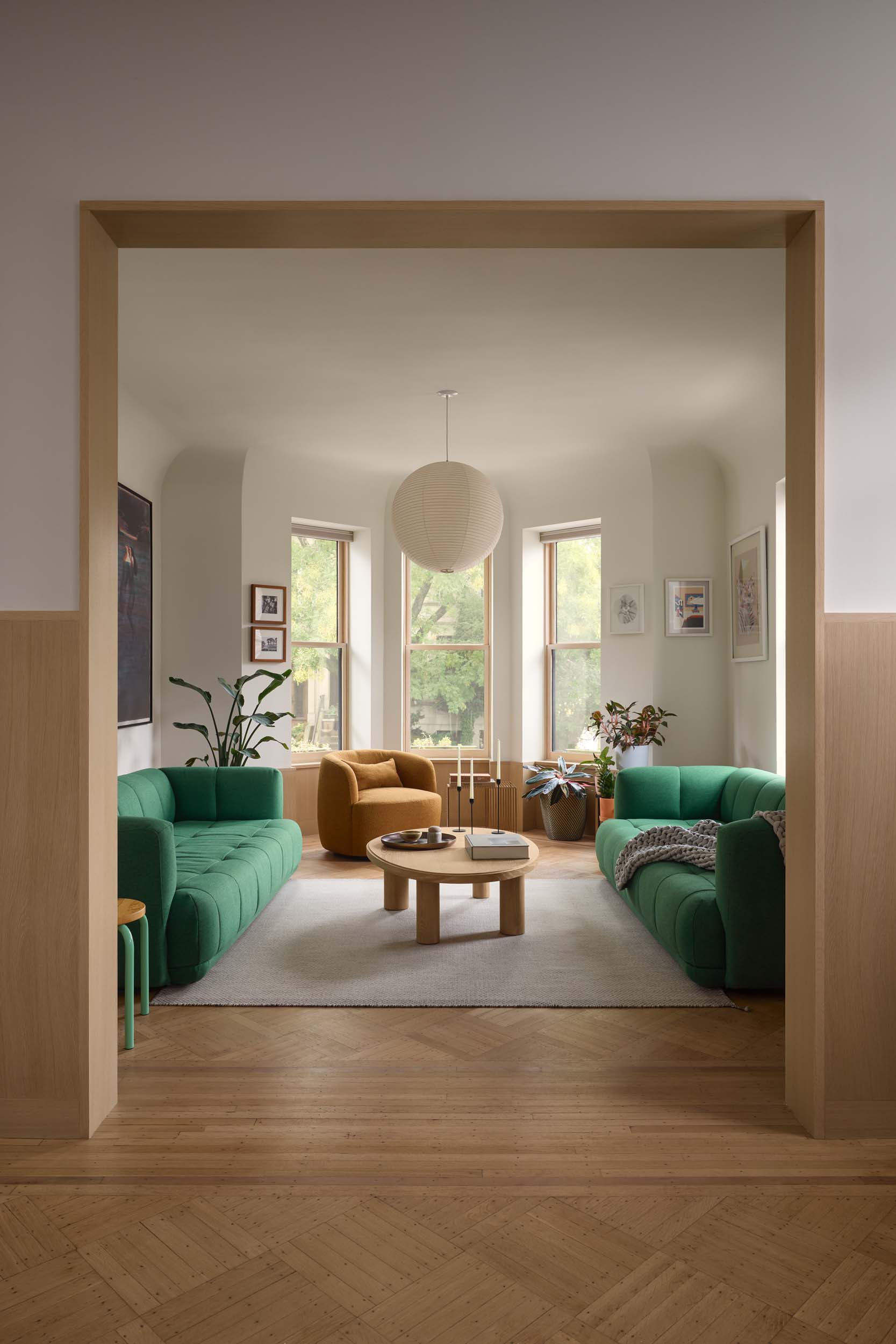
A townhome on a corner lot in Prospect Lefferts Garden, a historic district in Brooklyn, New York, follows in the footsteps of the neighborhood’s lineage of late 19th- and early 20th-century houses. Though the building’s exterior is landmarked, the interior offers free rein. For the clients, a couple with two children who needed a home that’s “clean, bright, natural, highly purposeful/functional, and kid-friendly,” Abruzzo Bodziak Architects (ABA) didn’t attempt to recreate or restore the historic, but rather gestured toward it in less ornamental fashion. This “low resolution” approach captures the essence of the home with the least details possible.
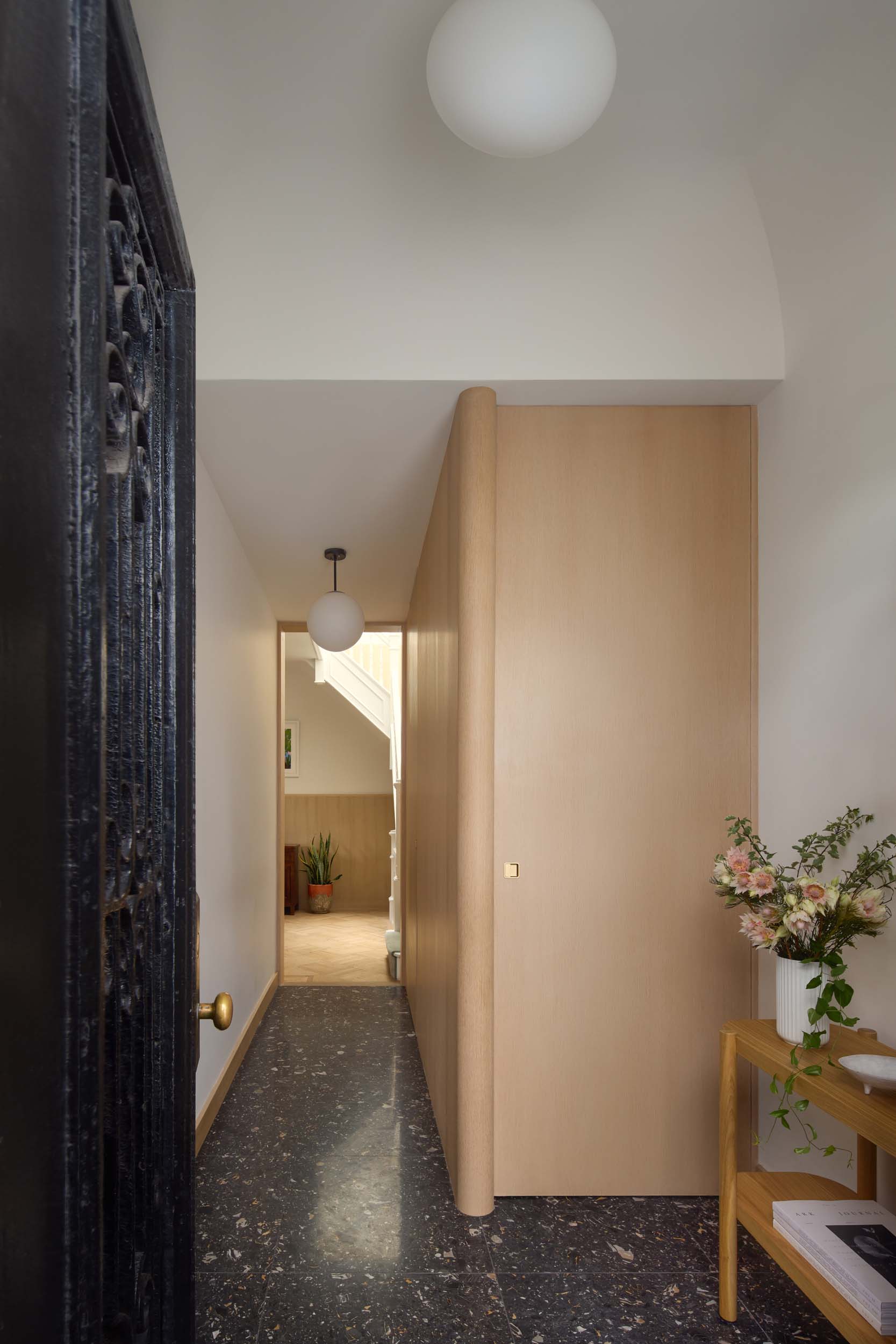
The design borrows from minimal modernists like Adolf Loos. The architects particularly looked to his restrained use of materials to inform Lefferts Manor House. Pared back and uniform materials now make up the interior: white oak, pre-existing historic parquet flooring, terrazzo in areas of high traffic, and plaster. ABA uses these throughout to unify the interior while loosening up the formality of the spatial divisions.
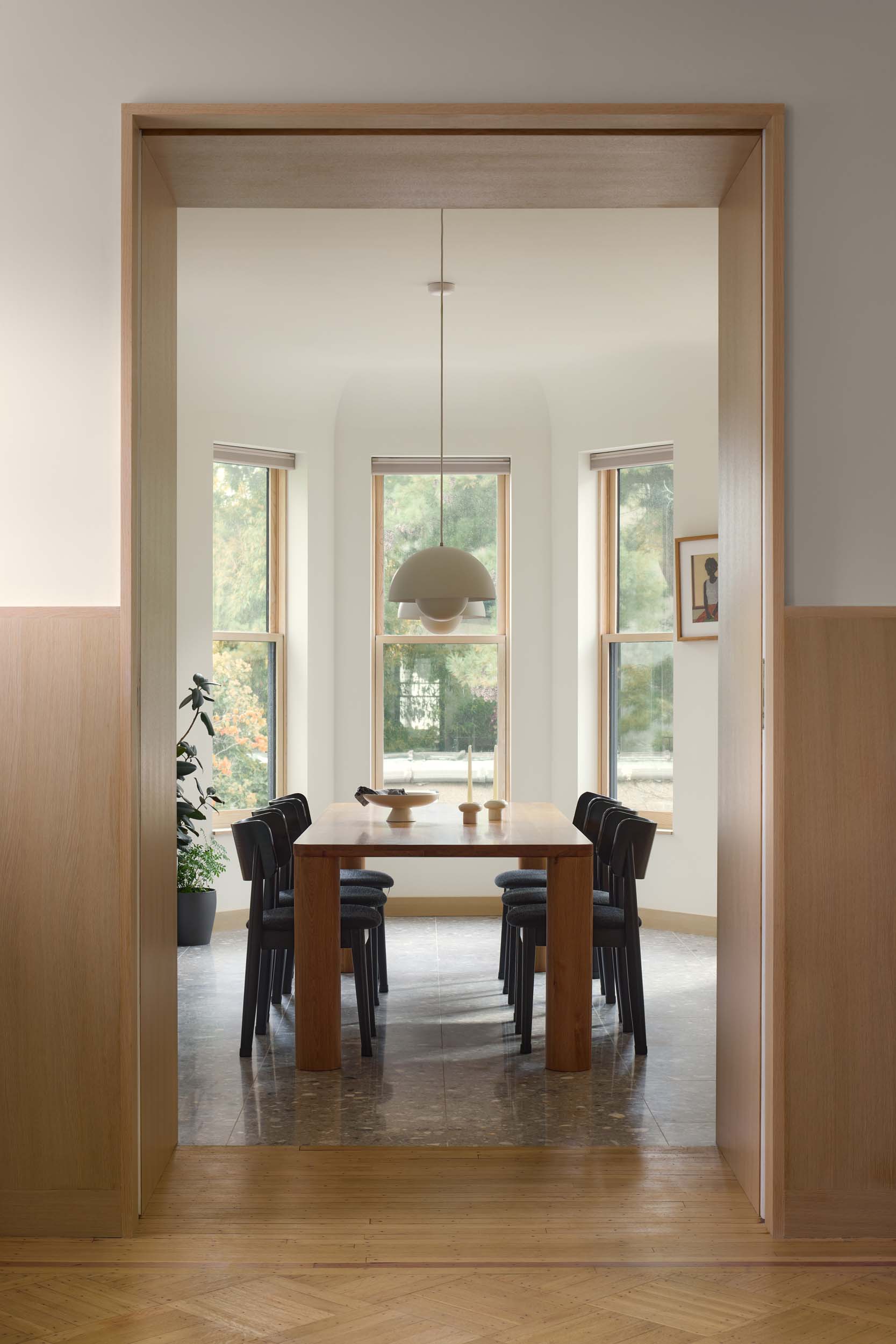
Oak acts as the design’s main ingredient. It begins at the entry where a new wooden volume creates space for coats, shoes, and a powder room. This replaces the previous tight vestibule with shallow closets. The white oak continues into the other rooms of the house, most of which take the form of paneling that, like a ribbon, ties together each distinct space.
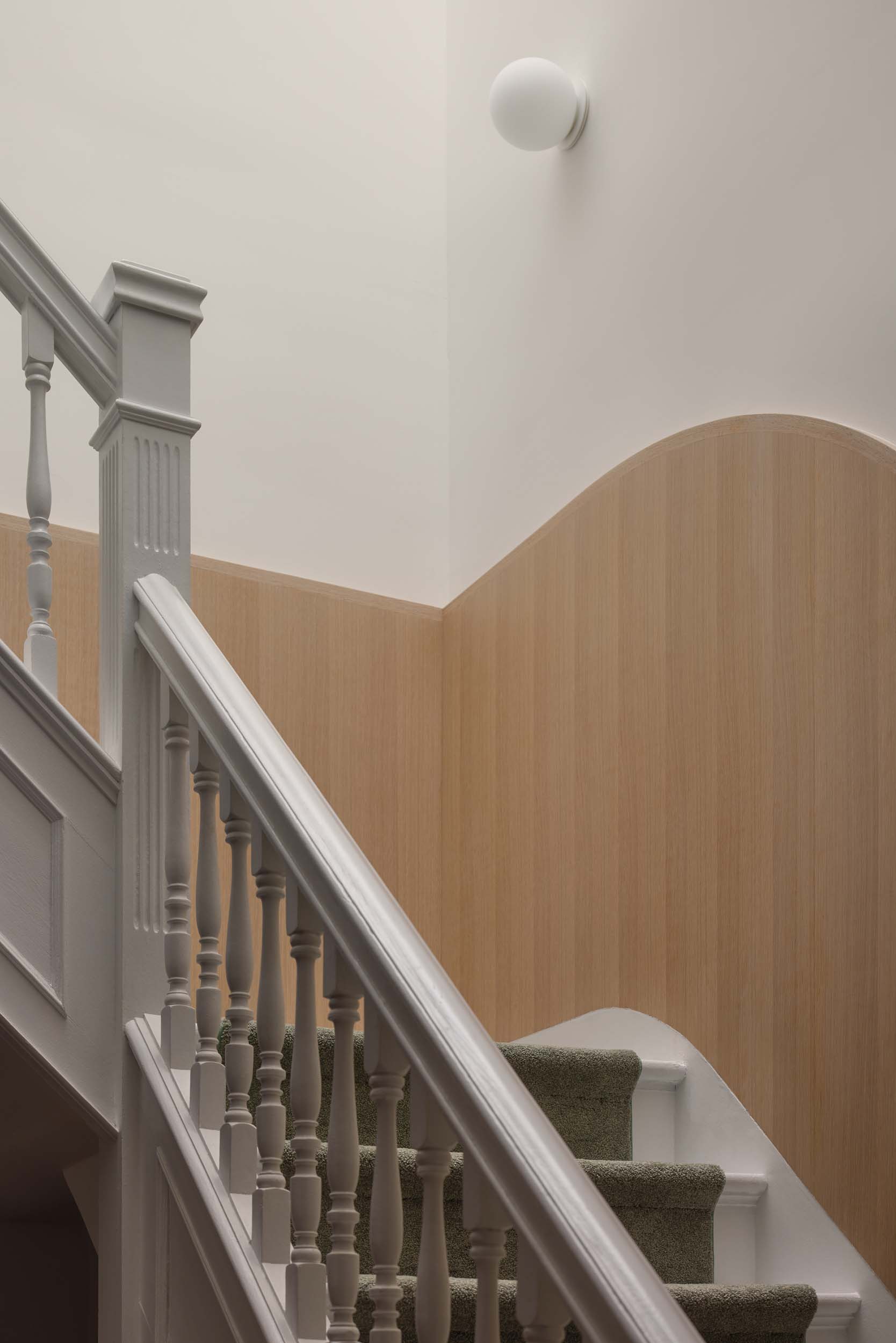
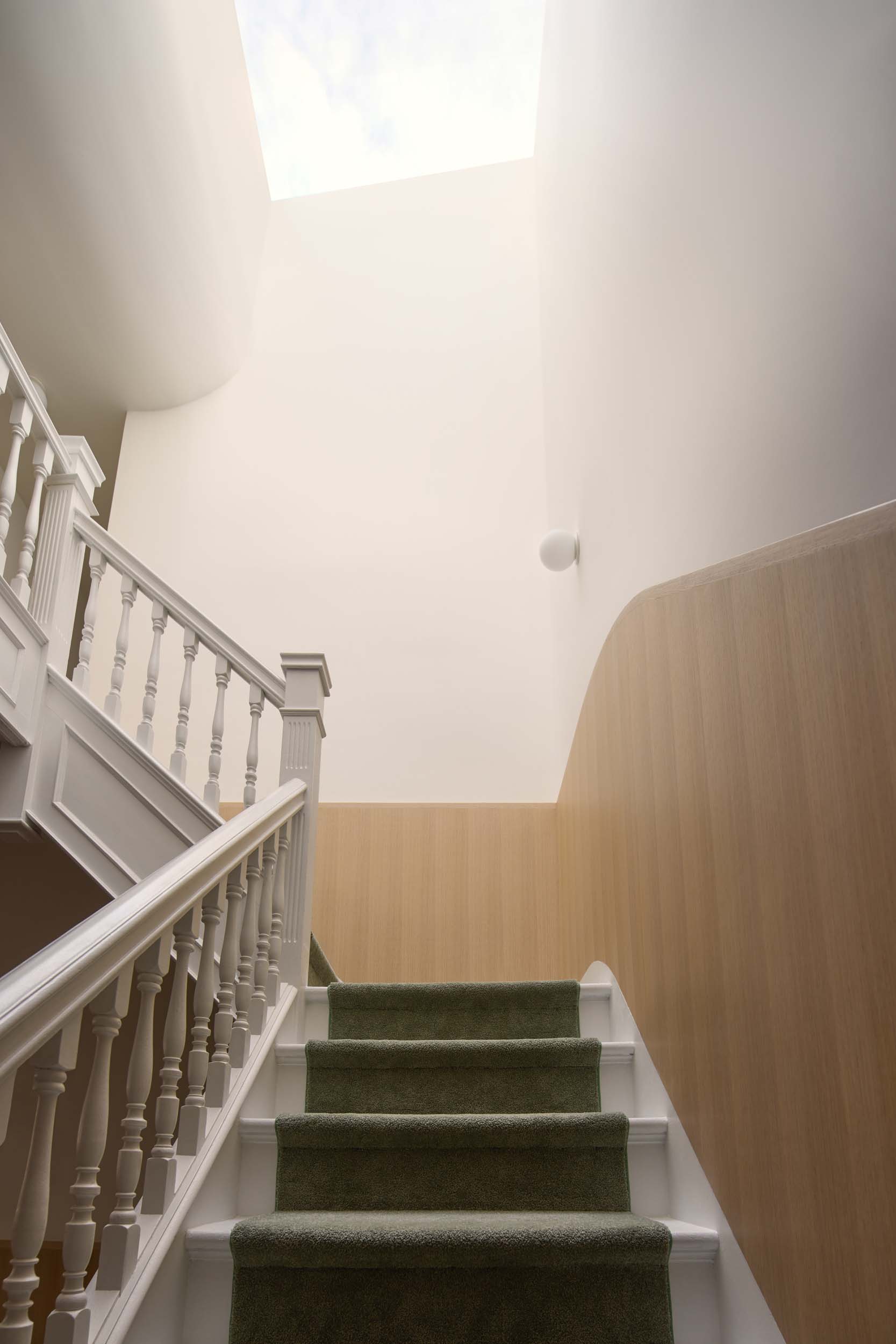
This is seen from the entry’s opening into the stair hall, where the oak panels create a wainscot that continues up the stairs. The panels slightly curve upward in alignment with the pre-existing ornamental railing, lit by a new skylight above the treads.
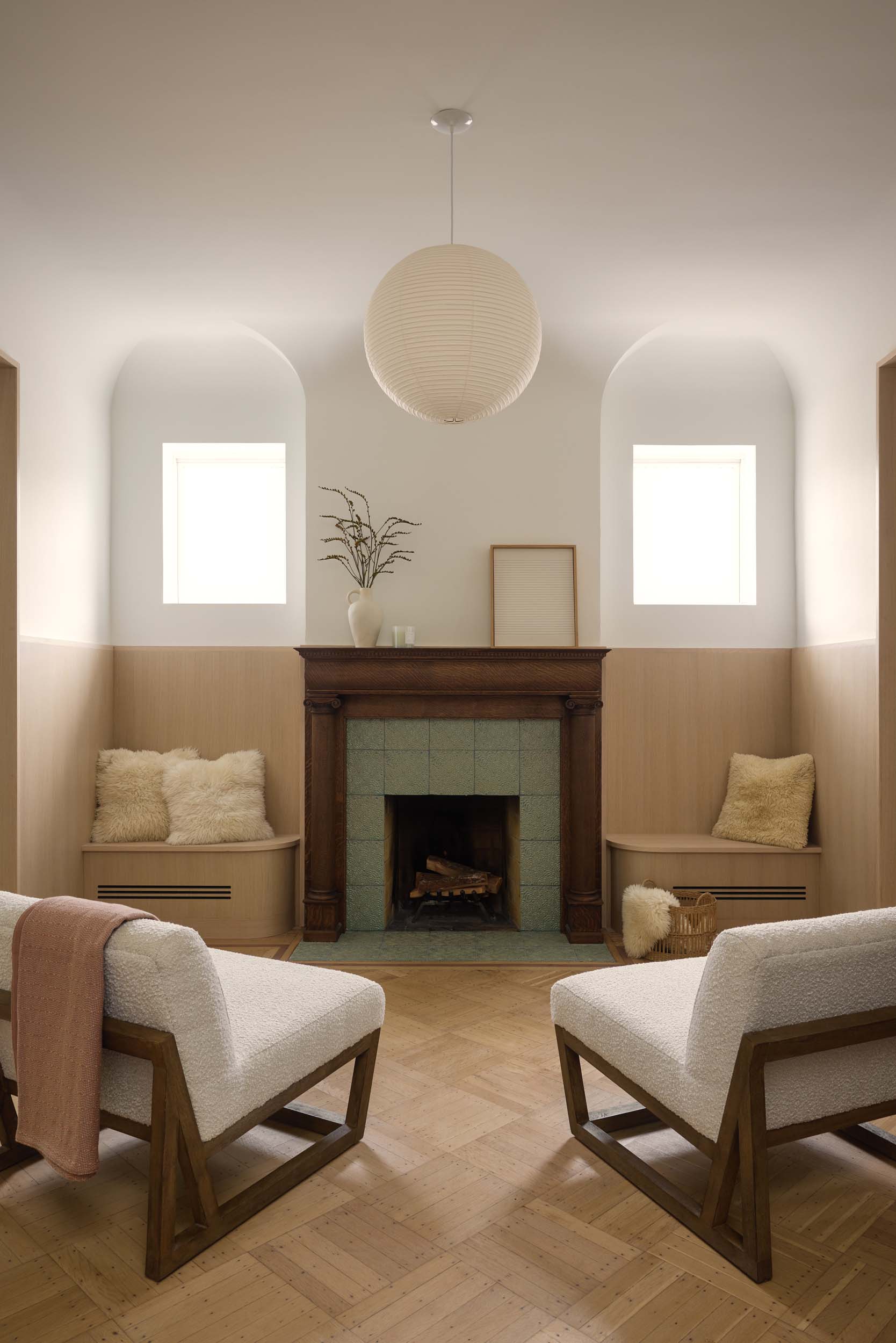
Or follow the line of white oak into the parlor room, where the panels meet the newly restored fireplace. The central piece is framed by new, deep cornices that replace the previously mismatched cornices. The arches blend softly into the ceiling, an effect created by the use of locally fabricated glass fiber–reinforced gypsum that blends into plaster crafted on site. Underneath, the cornices hold built-in benches, which are also rendered in matching wood and integrate the HVAC system.
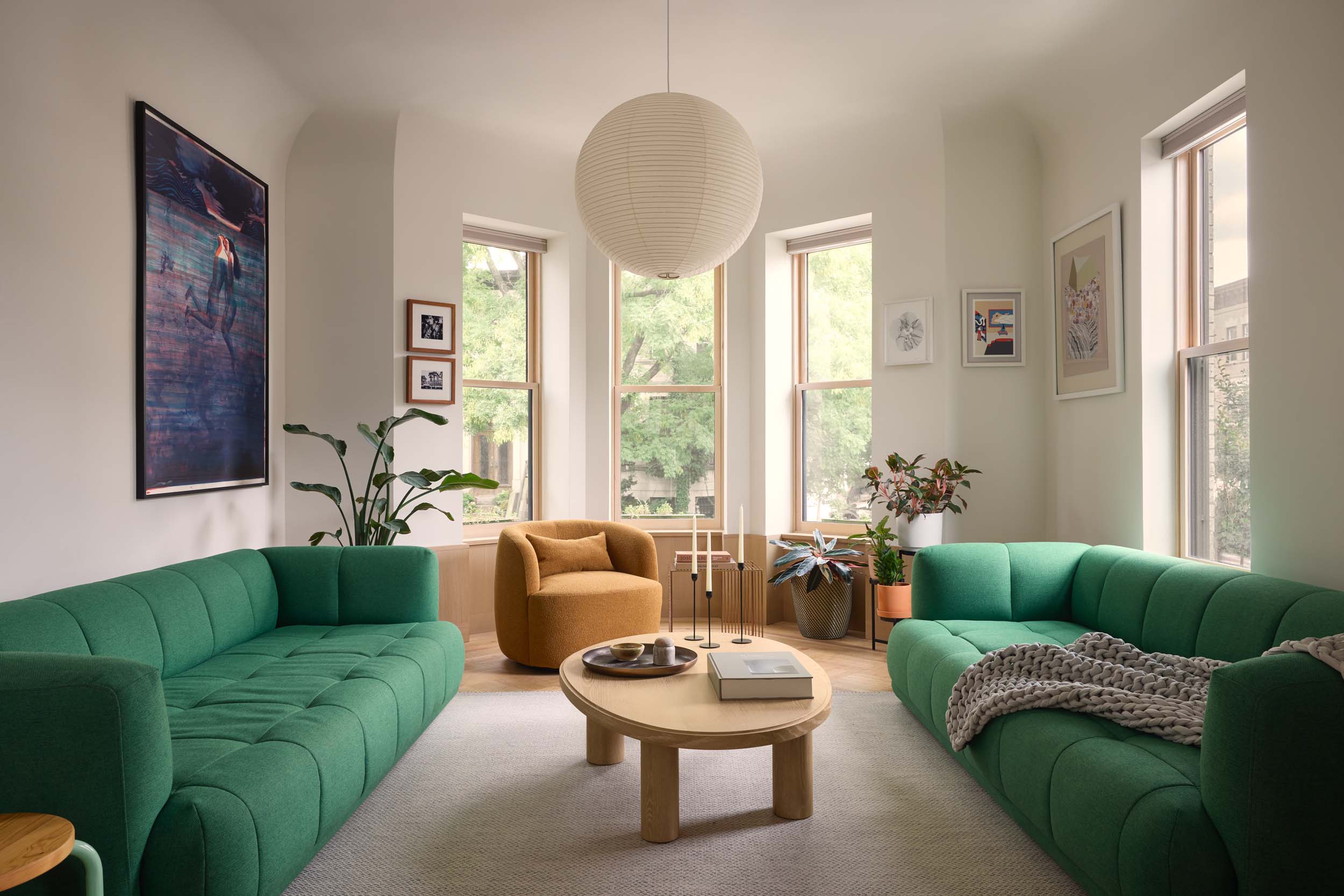
The parlor opens into the living room. Here the paneling is rendered as a low picture rail. The architects used window placement as a guide to shift and center the paneling as needed. With longer apertures circulating the bay window, the railing frames this roundness, further emphasized by the soft contours of the plaster wall and ceiling. Two Quilton sofas by Doshi Levien in Bonsai brighten the neutral palette.
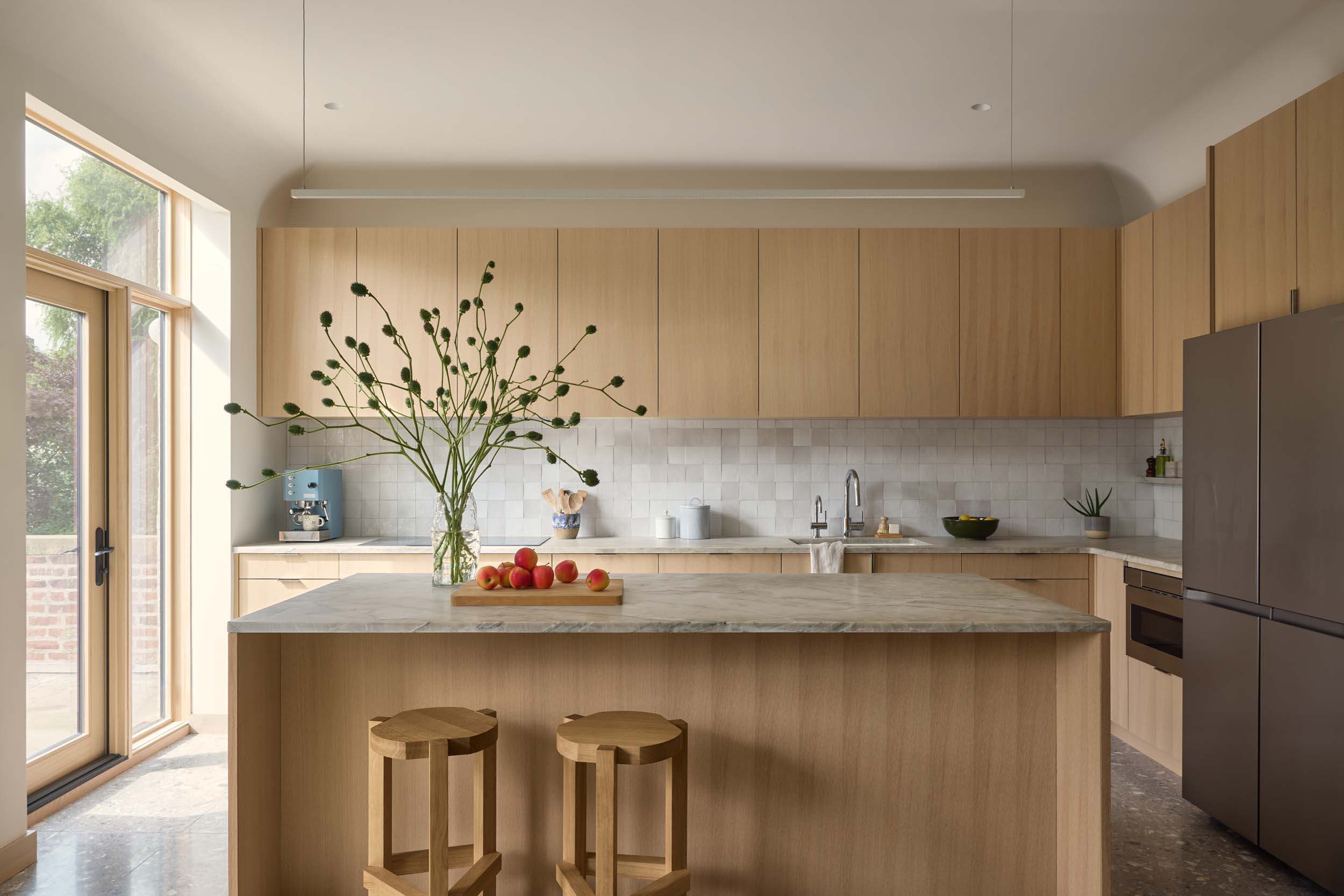
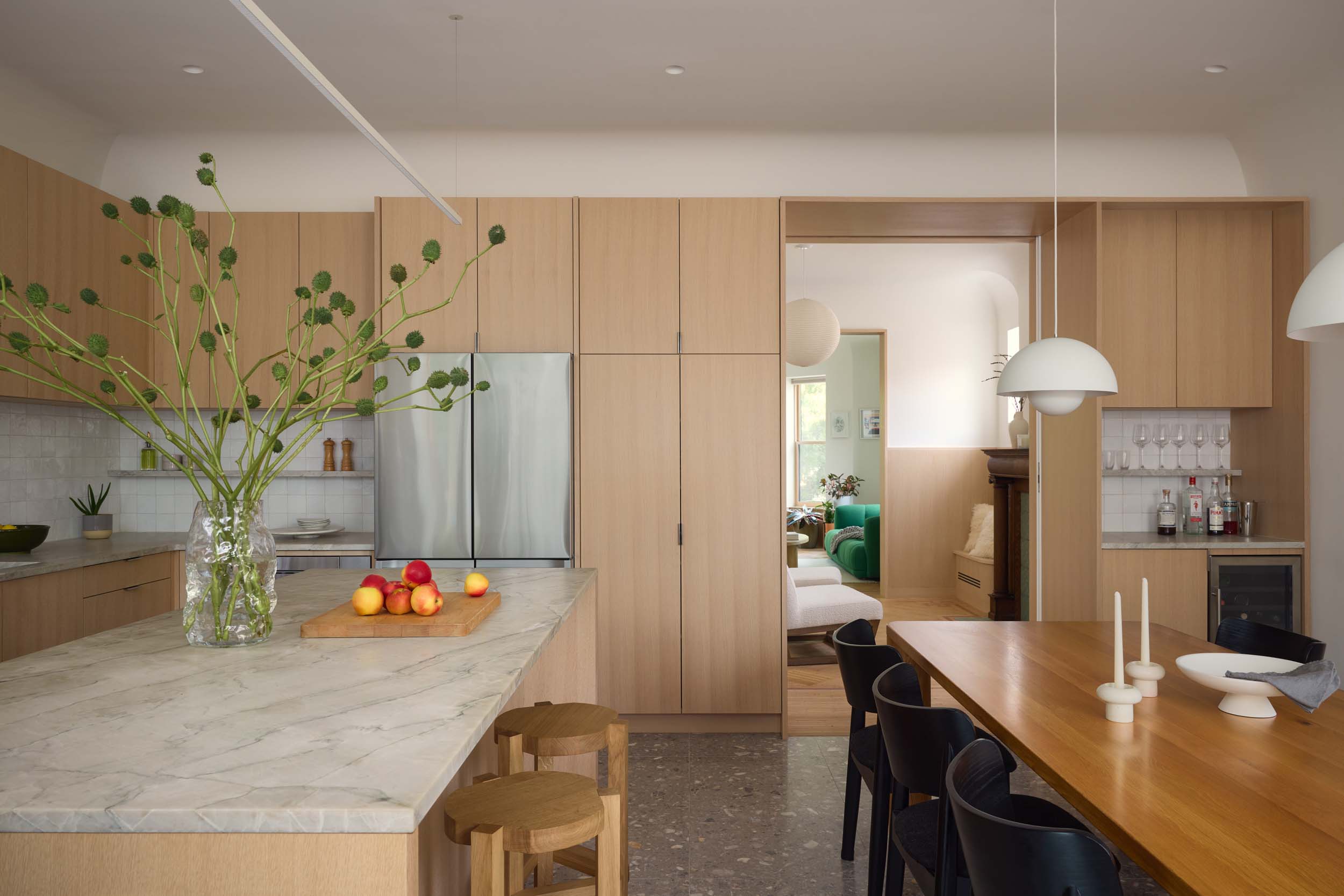
In the kitchen, wainscoting is replaced by wall-to-wall oak millwork which extends to make a beverage-making station for the husband, a cocktail and drinks writer. The white oak is paired with quartzite counters and handmade tiles for the backsplash.
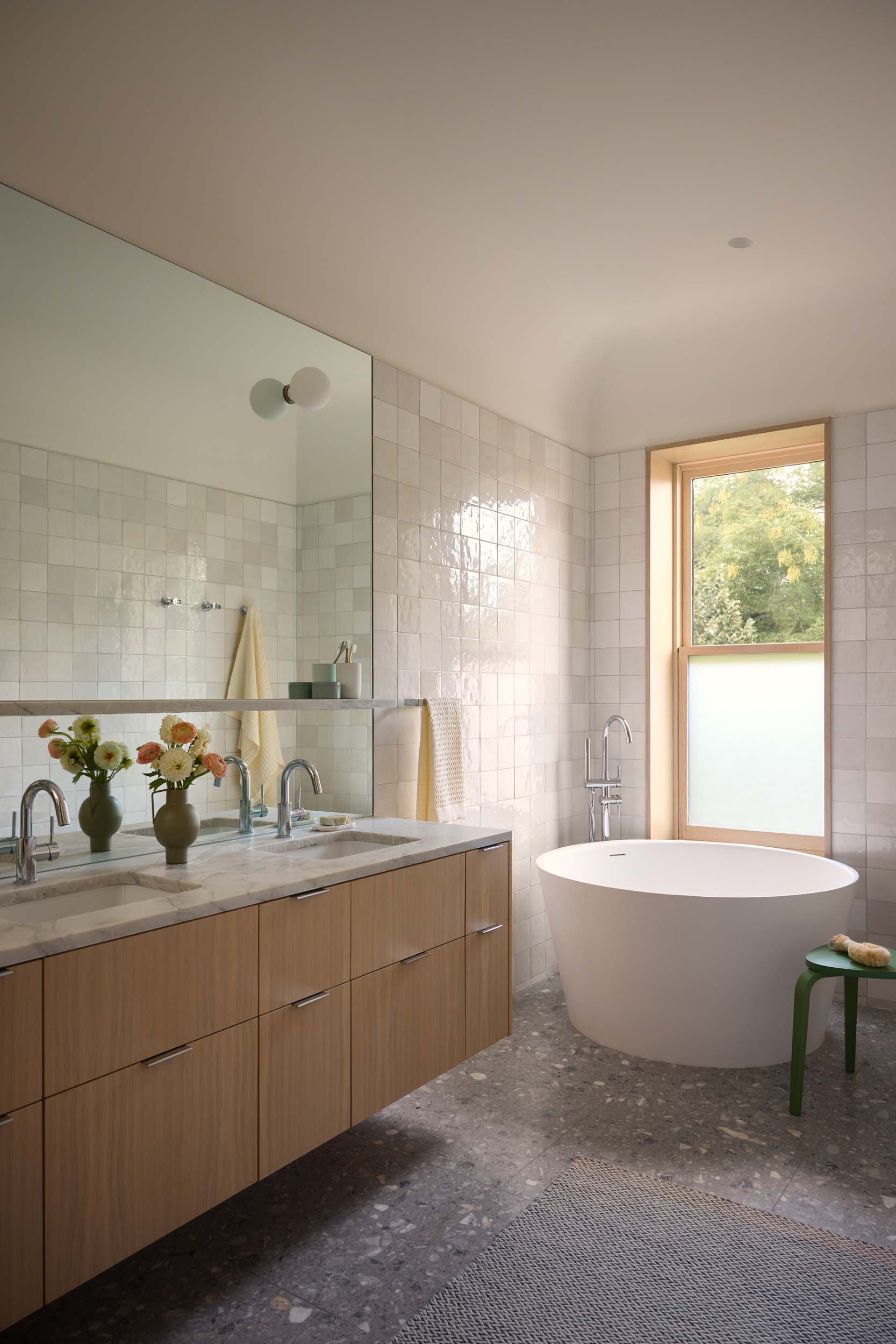
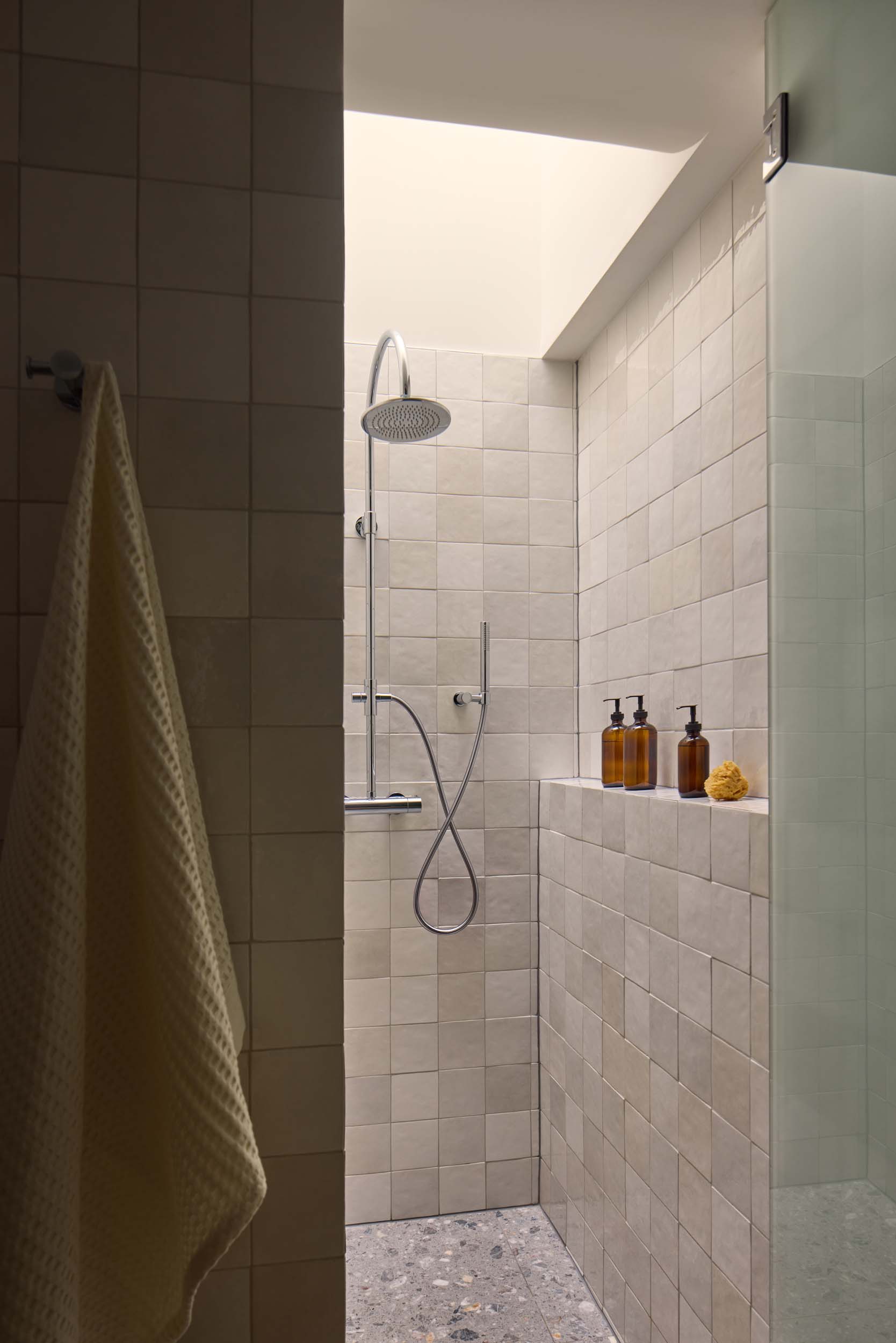
Upstairs, the neutral tones and material palette continue in even more minimalist forms. The bathroom is clad in Bedrosians tile by Ann Sacks and light dominates: the Dowell Freestanding Soaking Tub is placed in front of the window whereas the shower is lit overhead with a skylight to mimic outdoor bathing.
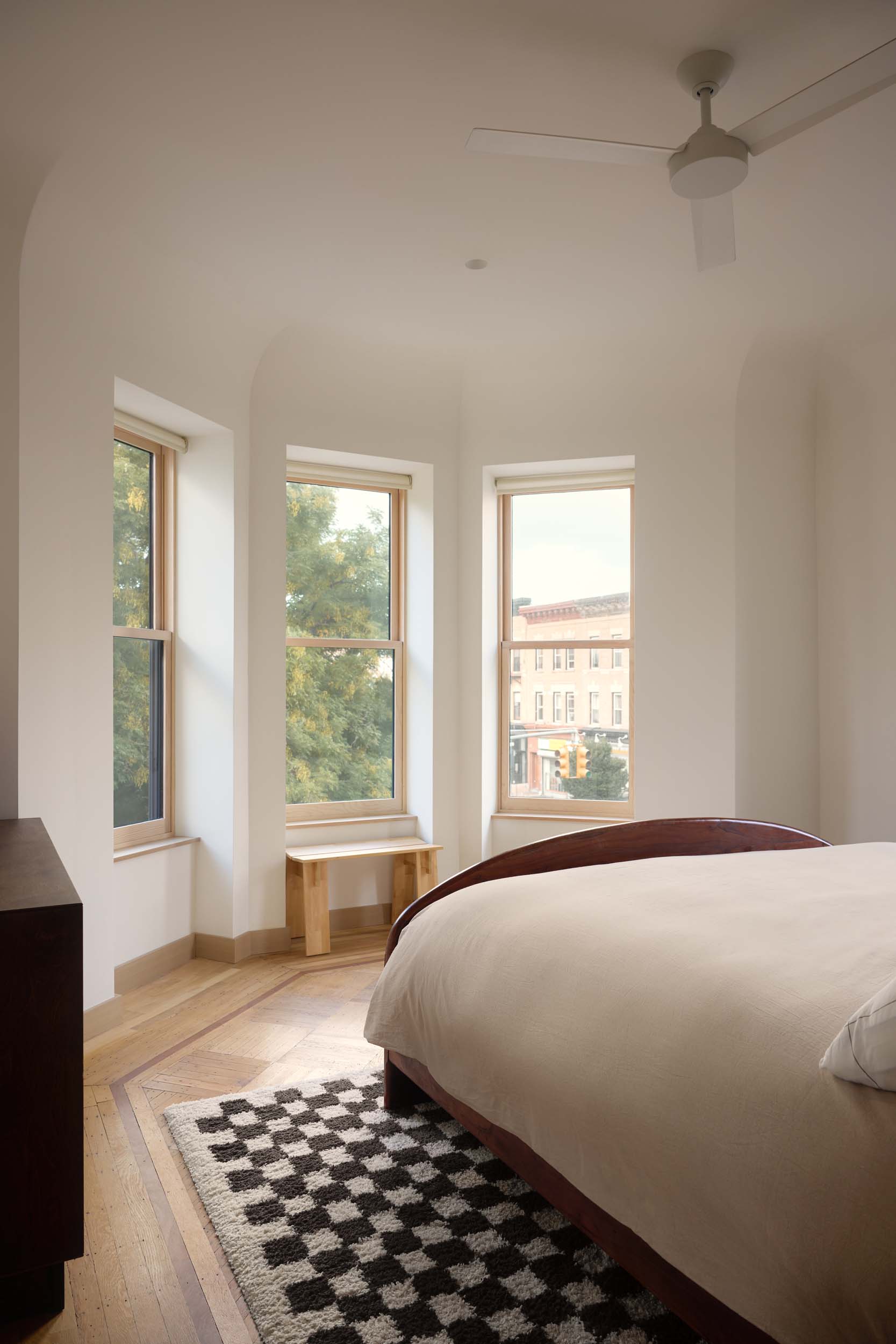
The bedrooms also implement restraint, where the paneling drops lower to baseboard height, leaving white walls and more bay windows to shine. The view outside, much like the interior concept, is unobstructed.