Playful might not be the first word used to describe Rathnelly House in Toronto, sparing as it is in its color, concrete, and dark wood materiality. But the Edwardian-era, semi-detached home curates surprising and expressive moments. Local firm Studio VAARO renovated the home to expand it spatially and introduce a geometric design language that coheres with the needs of a young family.
The 3,670-square-foot home was previously broken up into many small rooms with an unusable basement and a cramped attic. The architects opened up the home, raised the ceiling heights, and dropped the ground floor by a foot and a half, giving the clients the desired expansiveness. This organization locates two main rooms on the ground floor; a library and primary bedroom on the second floor; a bedroom, guest room, and bathroom in the former attic; and a spa and storage room in the former basement.
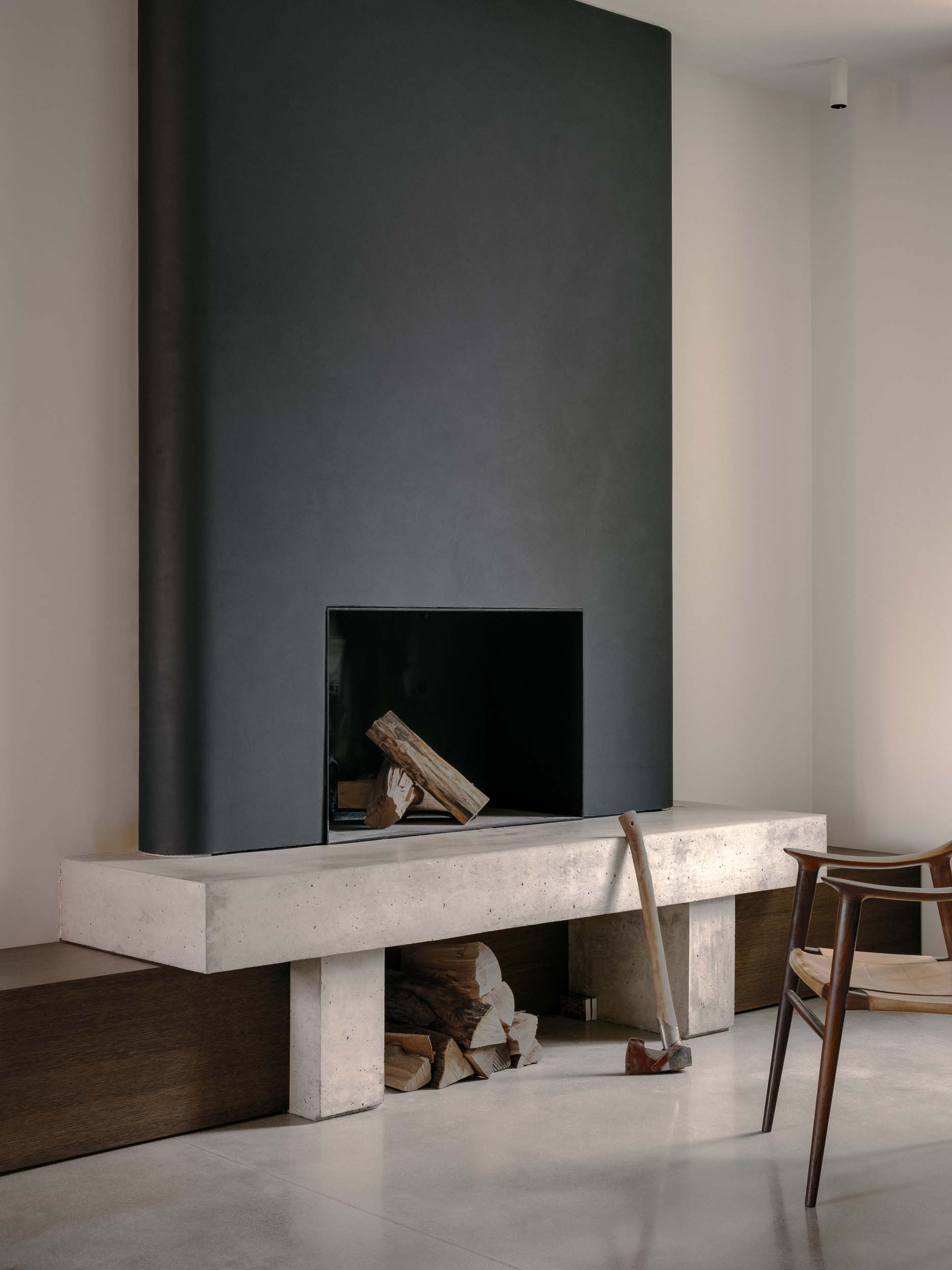
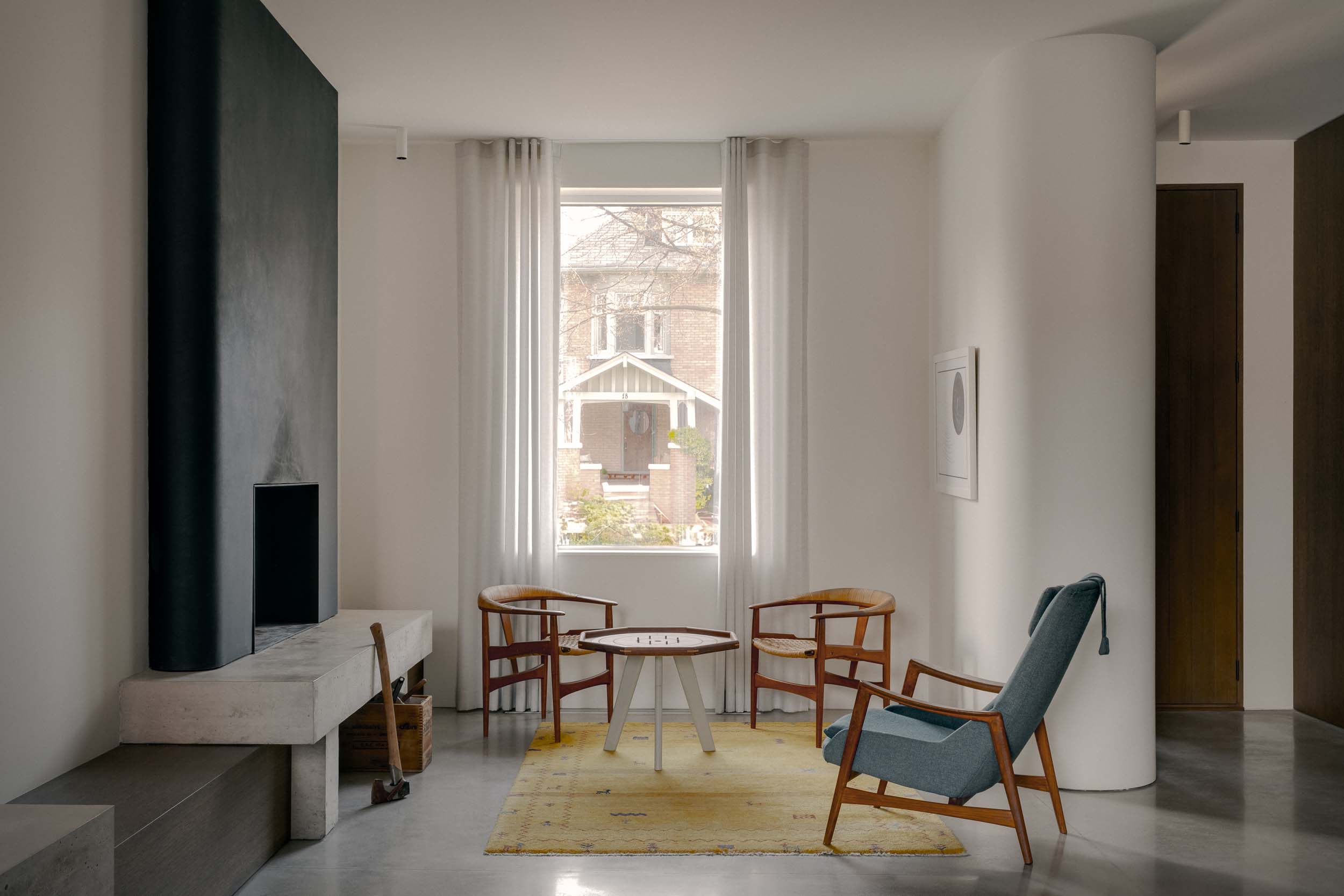
The new spatial fluidity is felt right away. Rathnelly House opens into the seating area which lies just past a rounded partition and curving recession in the ceiling. The living room holds the only piece of the interior that remained intact from the gut renovation: the fire box. Dropping the floor level left the pre-existing fireplace hovering off the ground. Rather than try to move it, Studio VAARO designed a cast-in-place concrete hearth that stores firewood. It’s used again to create a media console. Resting atop a wooden bench, both surfaces of the built-ins register the previous level of the floor.
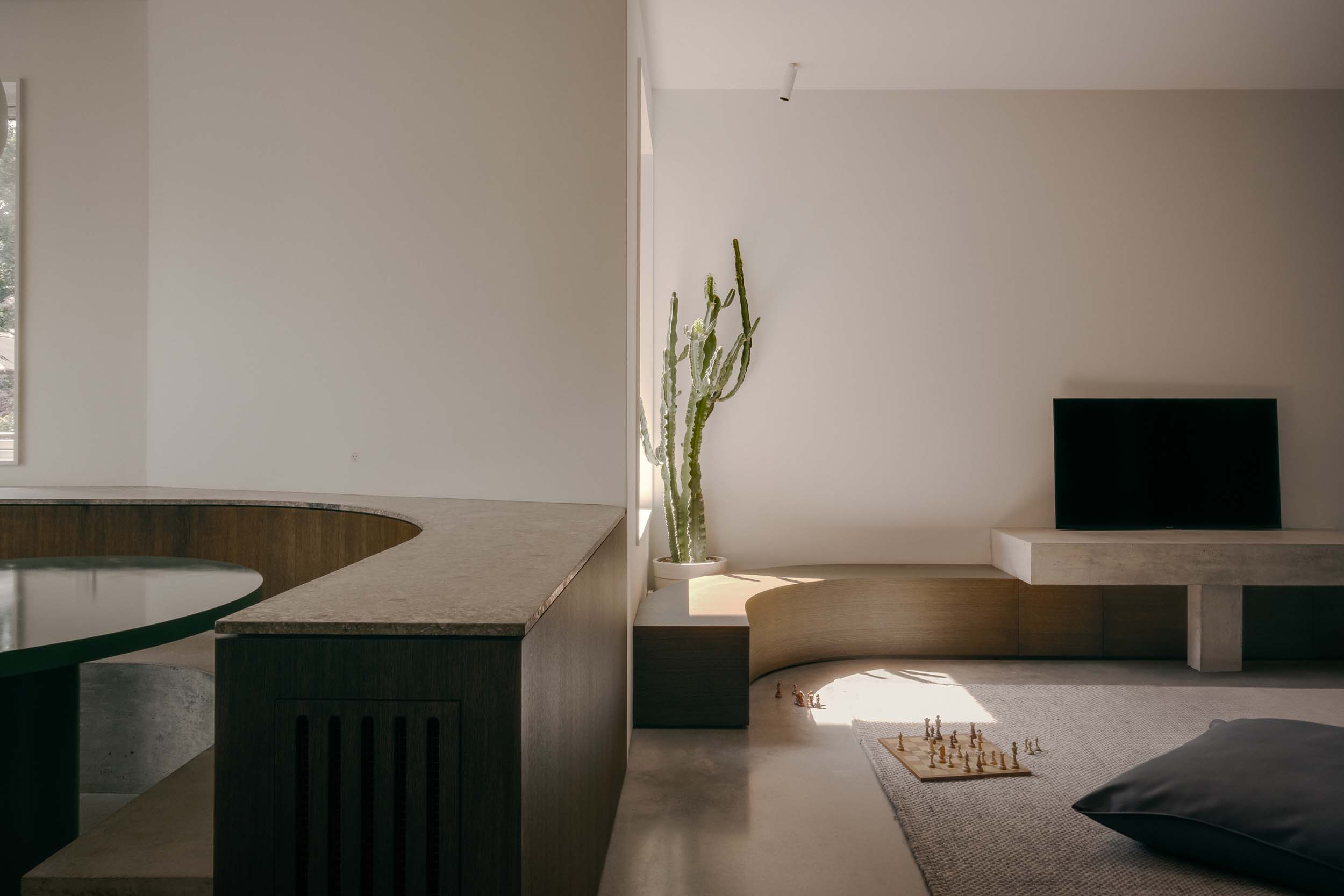
These structural moves make up the linchpin of the design. “The idea, in the end, was to play between right angles and curves. So whenever there’s an idea of movement or visual interest we’re trying to highlight, we created a curve in the space,” said Aleris Rodgers, cofounder of Studio VAARO.
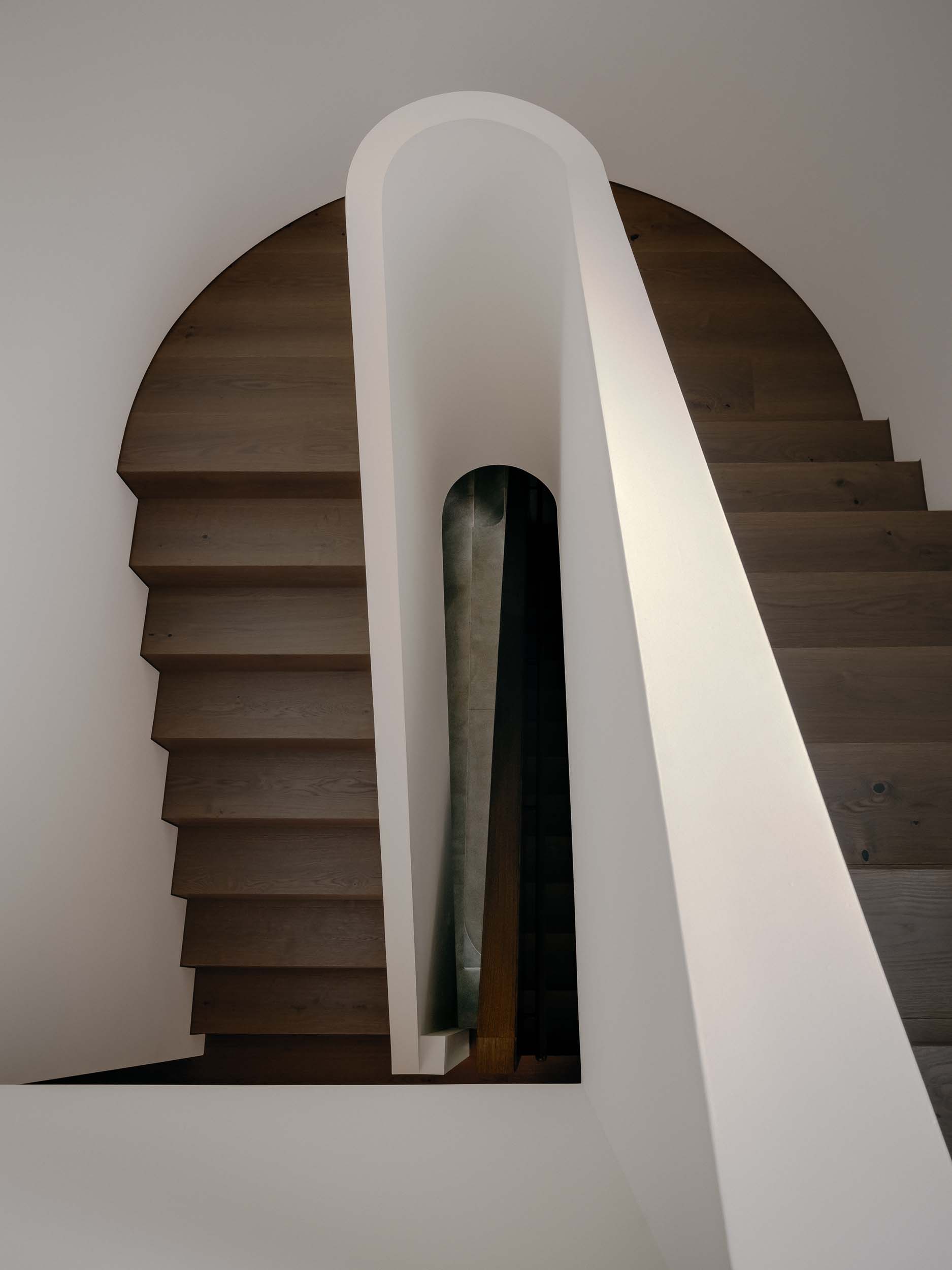
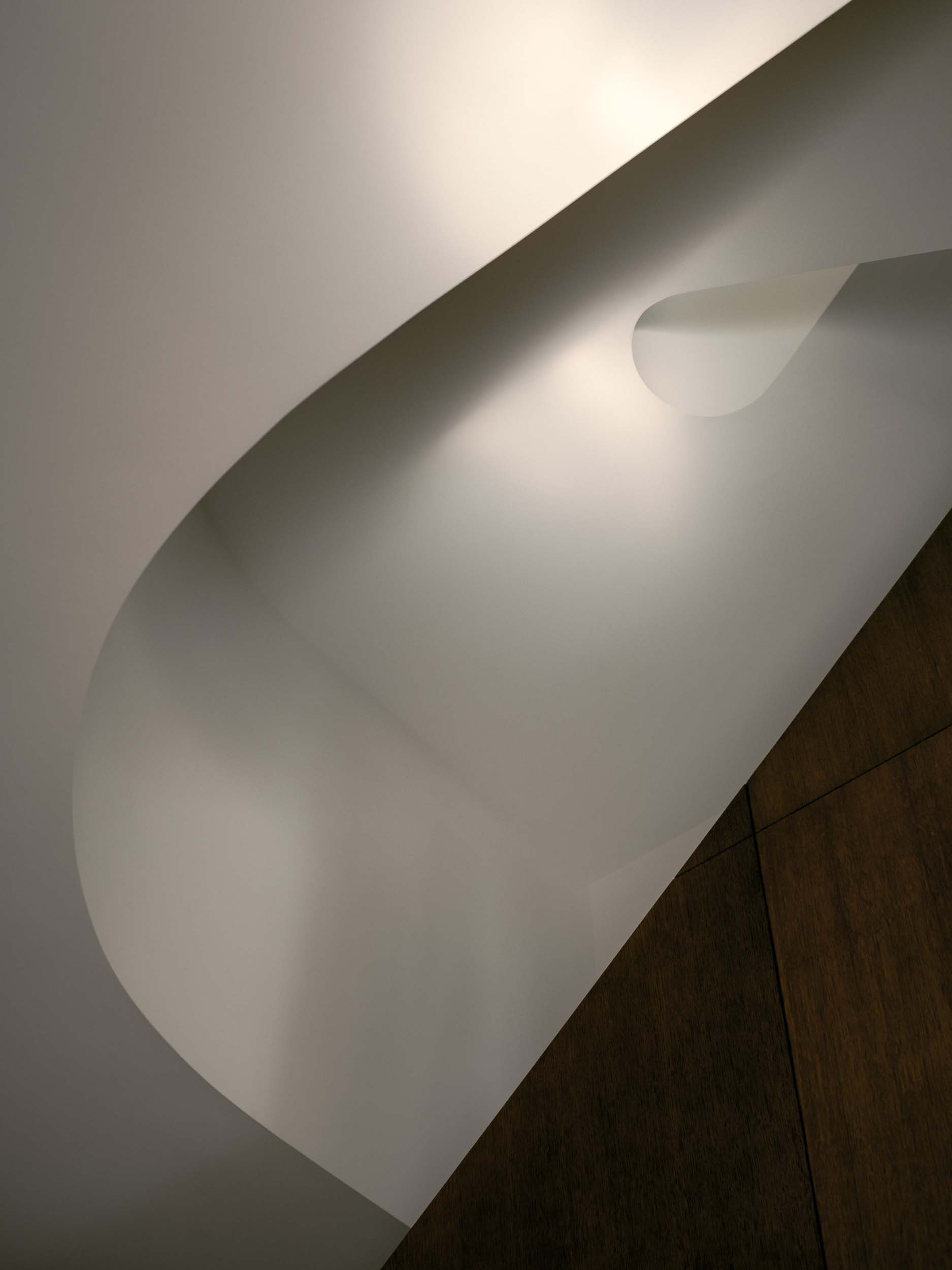
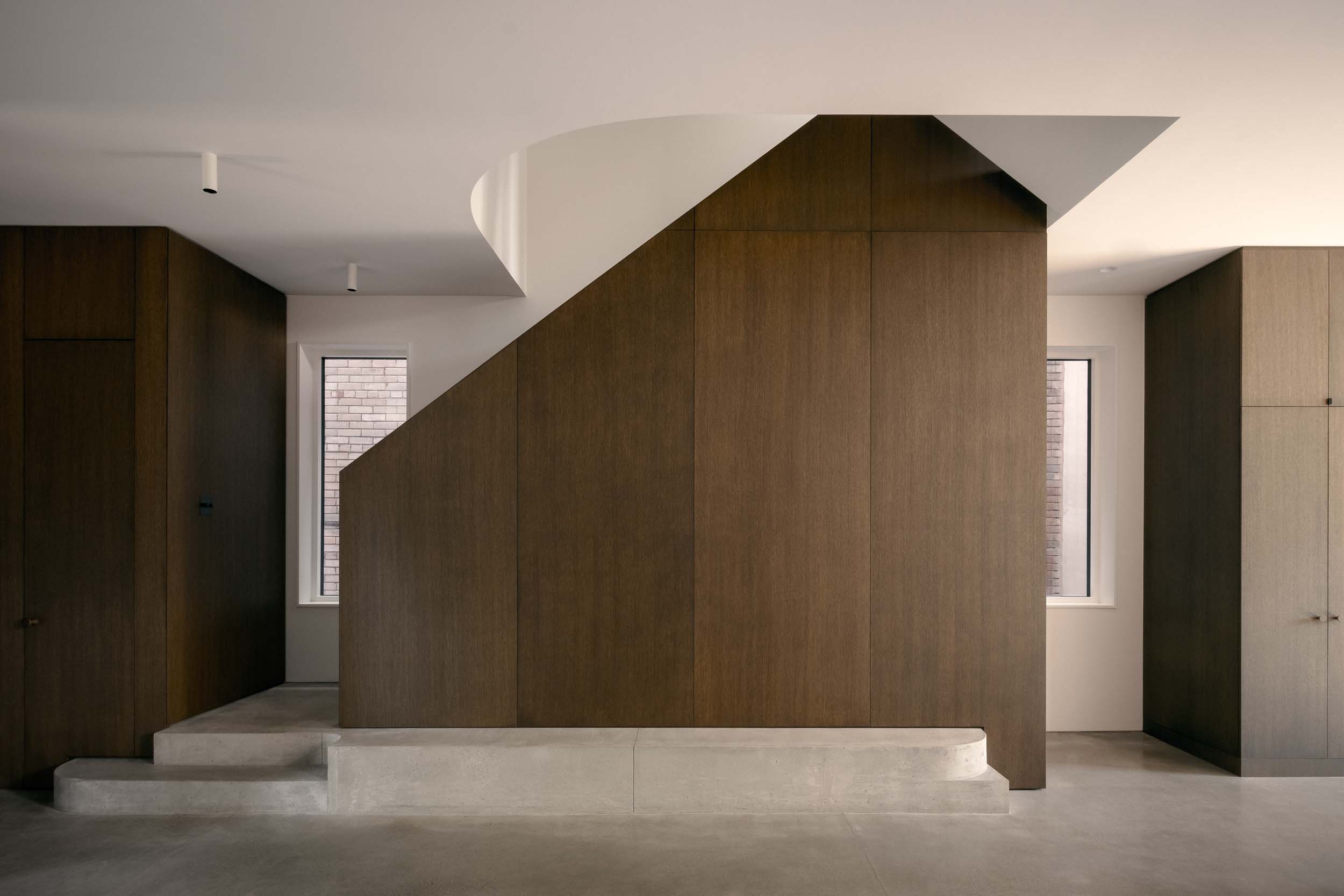
The staircase nearby uses curvature as an expression of motion most explicitly. Dark brown millwork defines the transitional space in linearity but as you go up, curvature moves with you. “What is expressed, just as a figure in the ceiling, grounds the stair as the center of the living space,” Francesco Valente-Gorjup, the other cofounder of Studio VAARO, told AN Interior. “It turns into a curved wall between level two and level three, and a window brings light across that surface.”
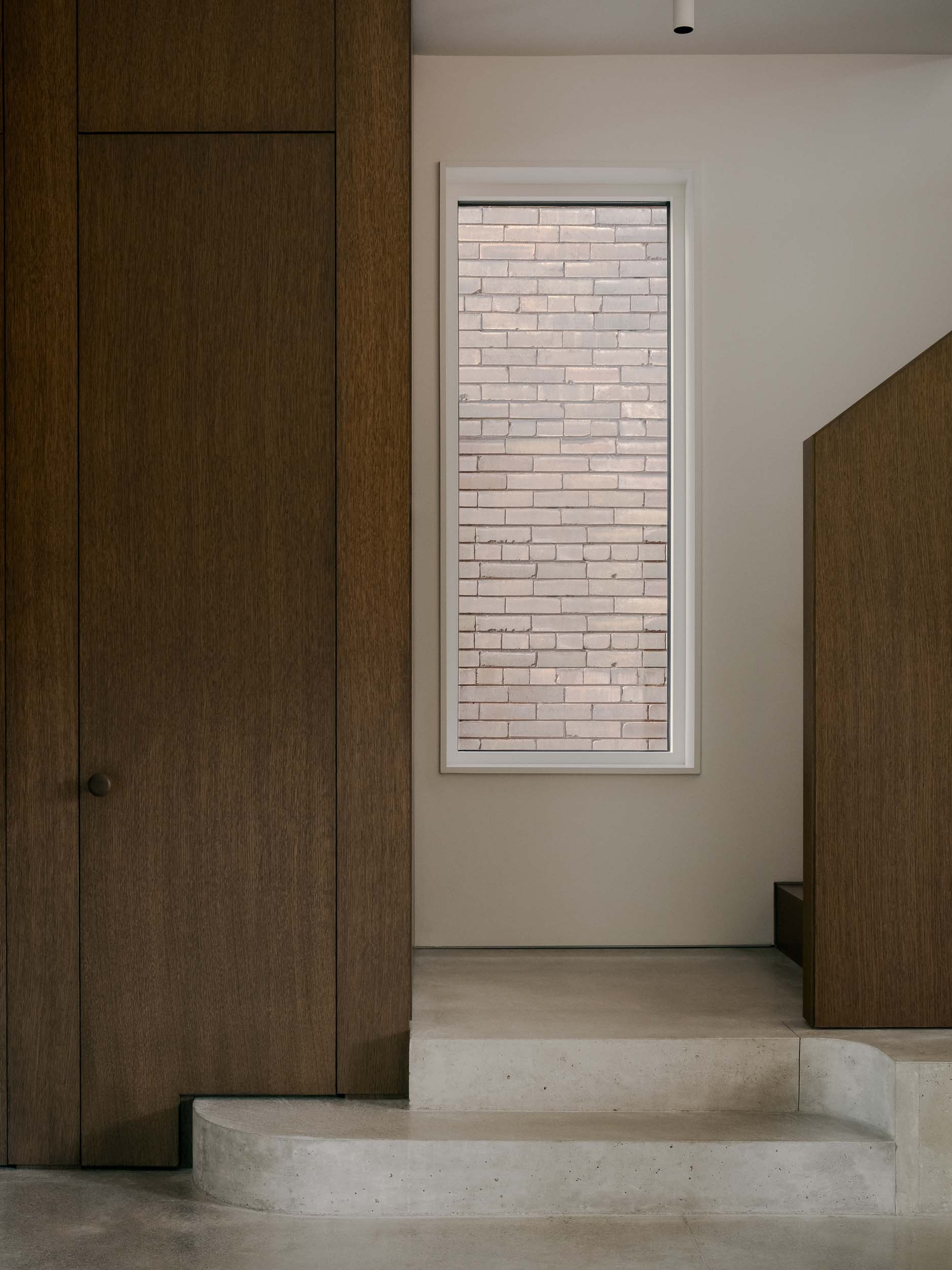
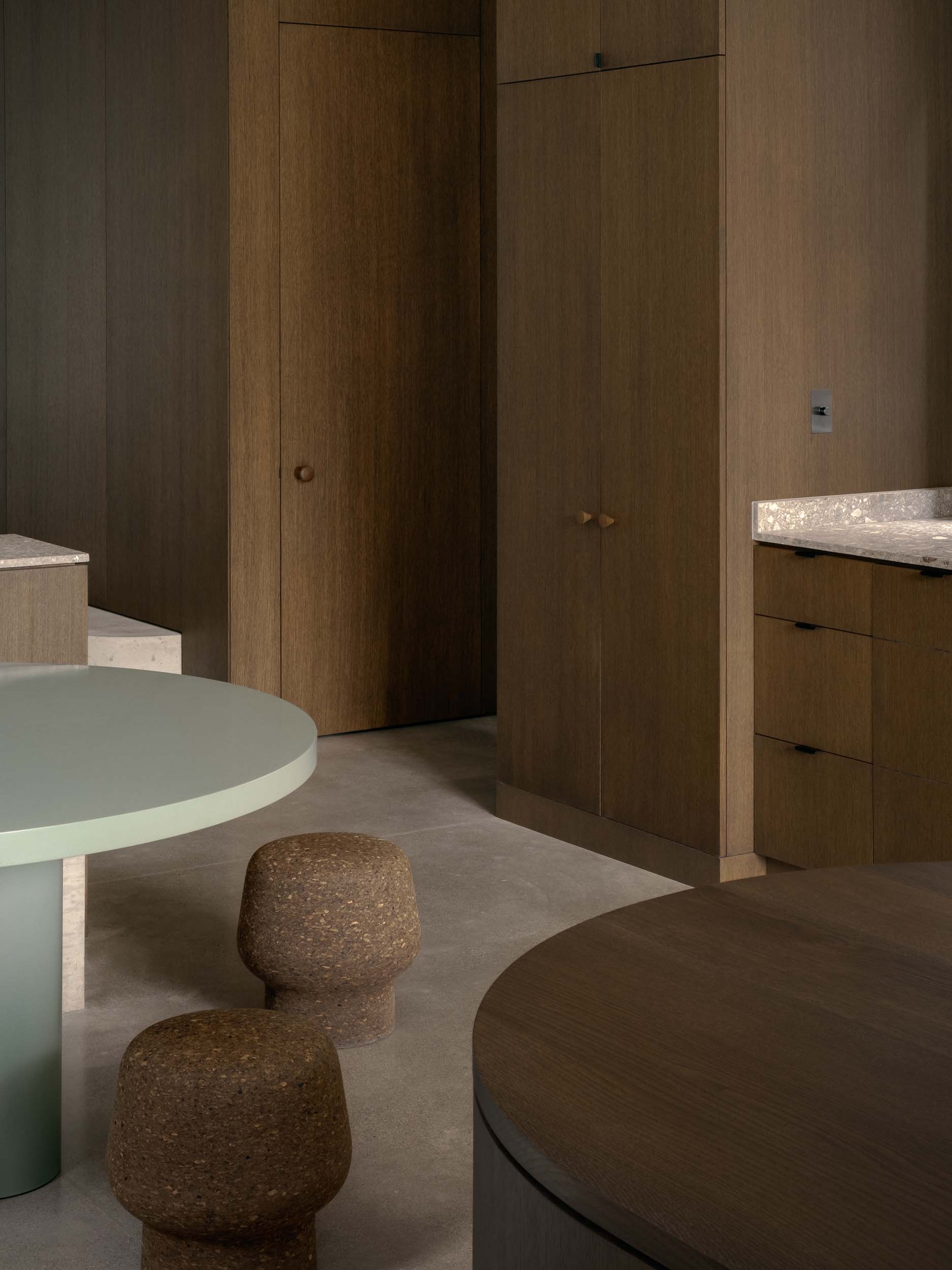
The sculptural gestures soften the minimal color and material palette, and tie the spaces together. The foot of the concrete staircase is also rounded, which is put into dialogue with the door of the coat closet where space has been cut out on the lower portion to follow the radius of the lowest step. “The two radii—the radius of the door opening and the radius of the curve of the stair—are thought together in tandem,” explained Rodgers.
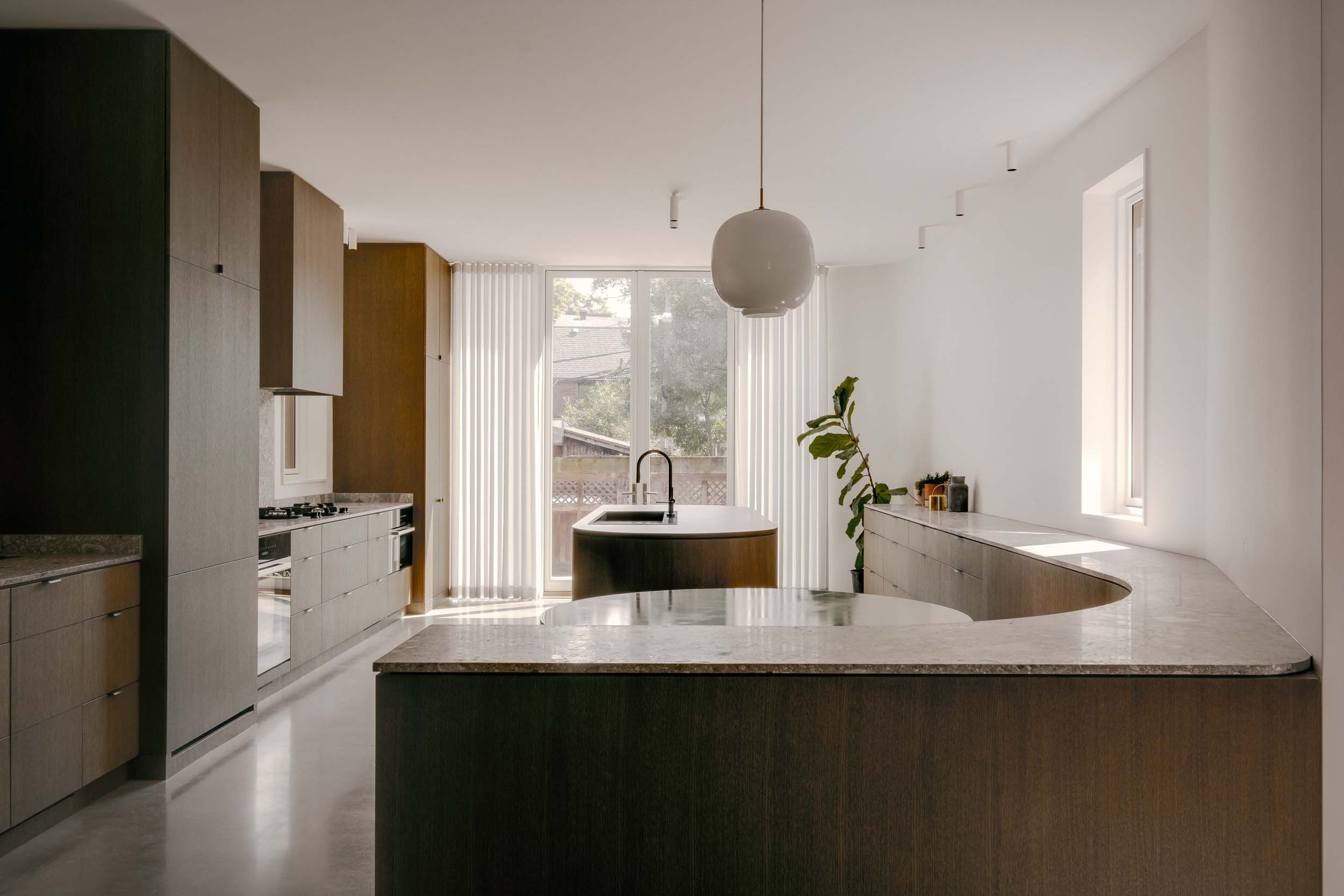
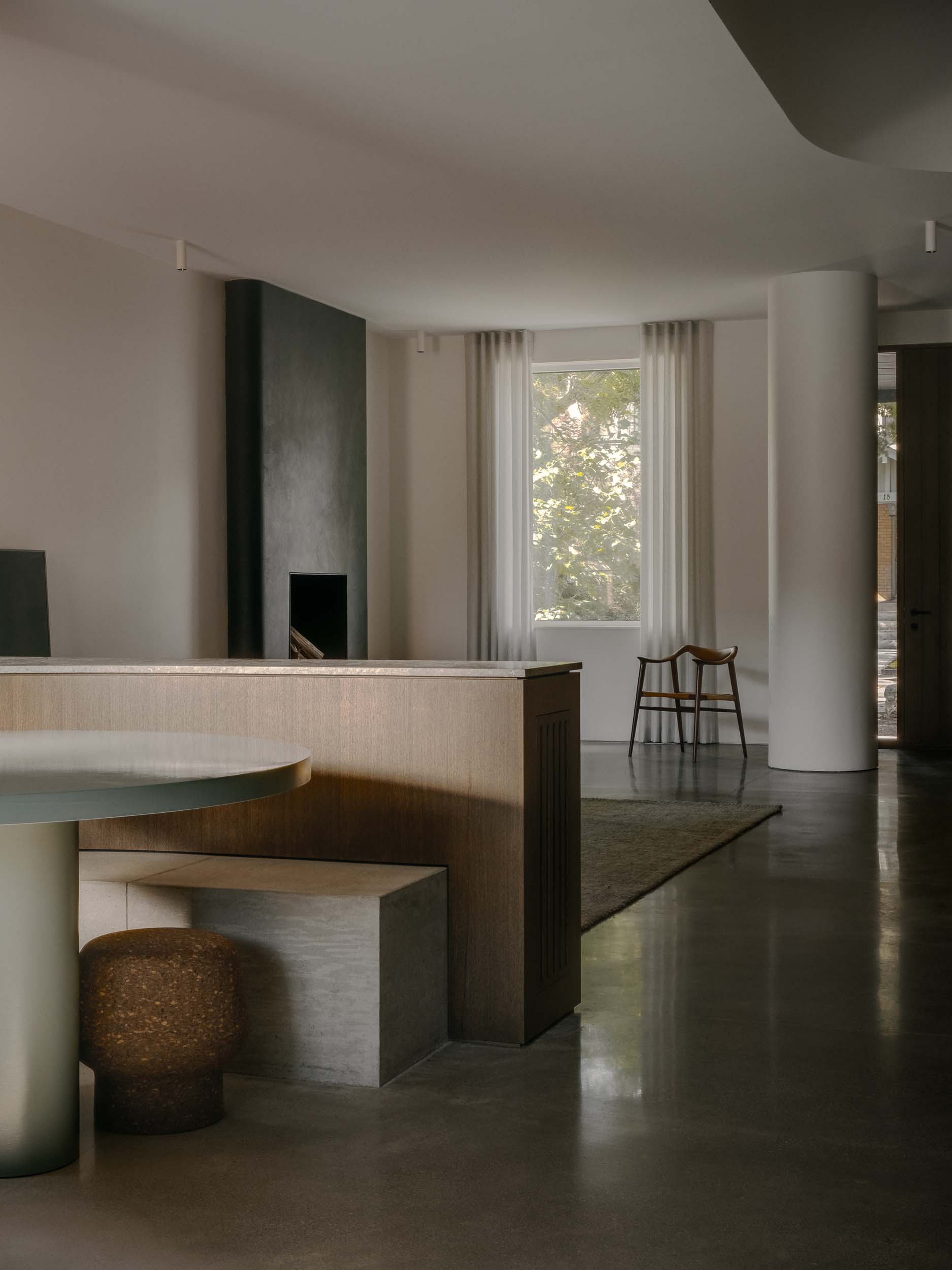
The expressive moments aren’t just visual—they’re functional. In the kitchen, the same dark wood creates swooping banquette seating that further extends to create more storage and usable countertop space. The curved partition wall divides the living and kitchen areas and conceals ductwork.
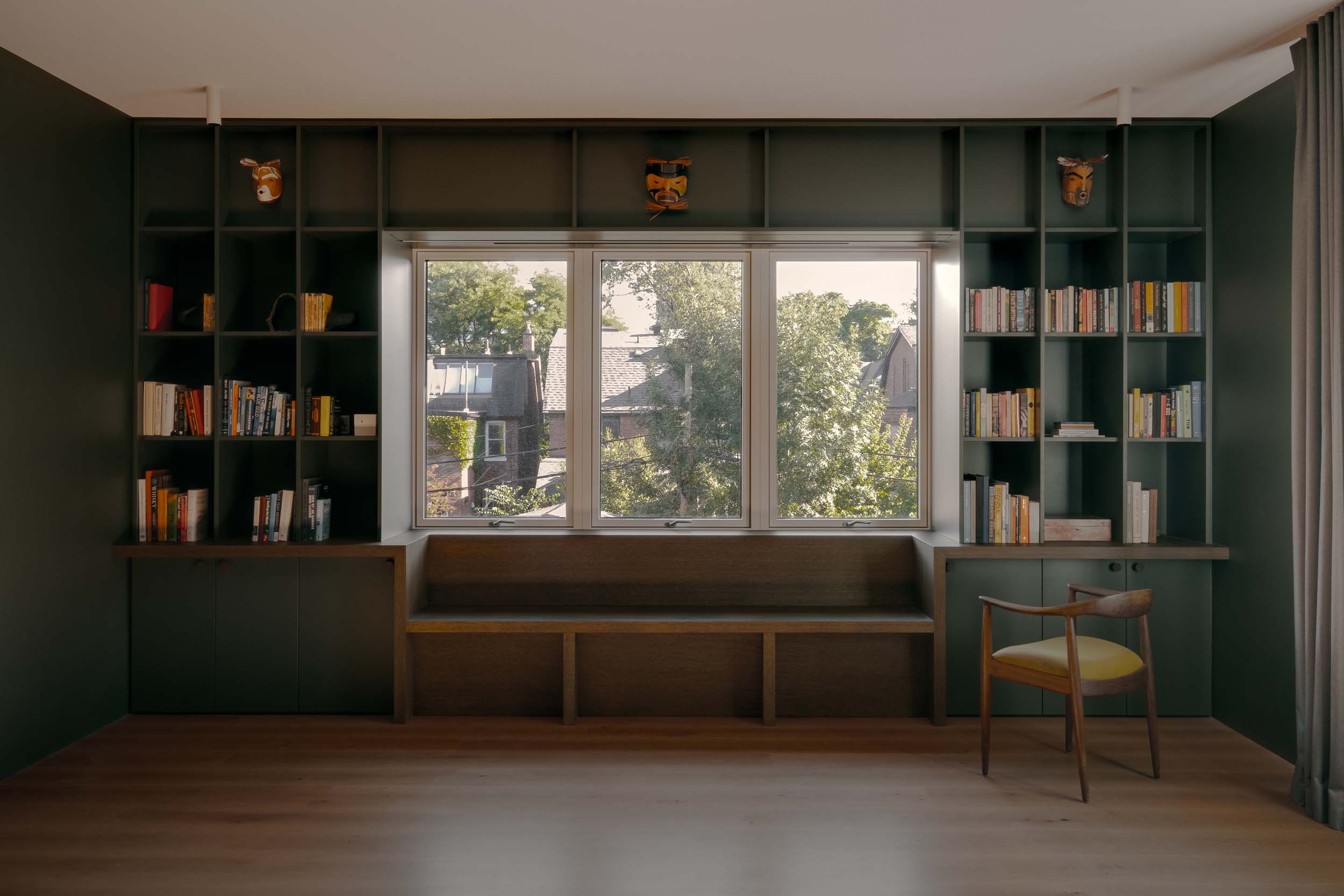
Upstairs, the geometric surprises are used to resolve tricky floorplans. The primary bath is located where a former 2-story addition was added at an odd angle. To work with the awkward kink, the walk-in shower encloses around the space, creating an intimate niche.
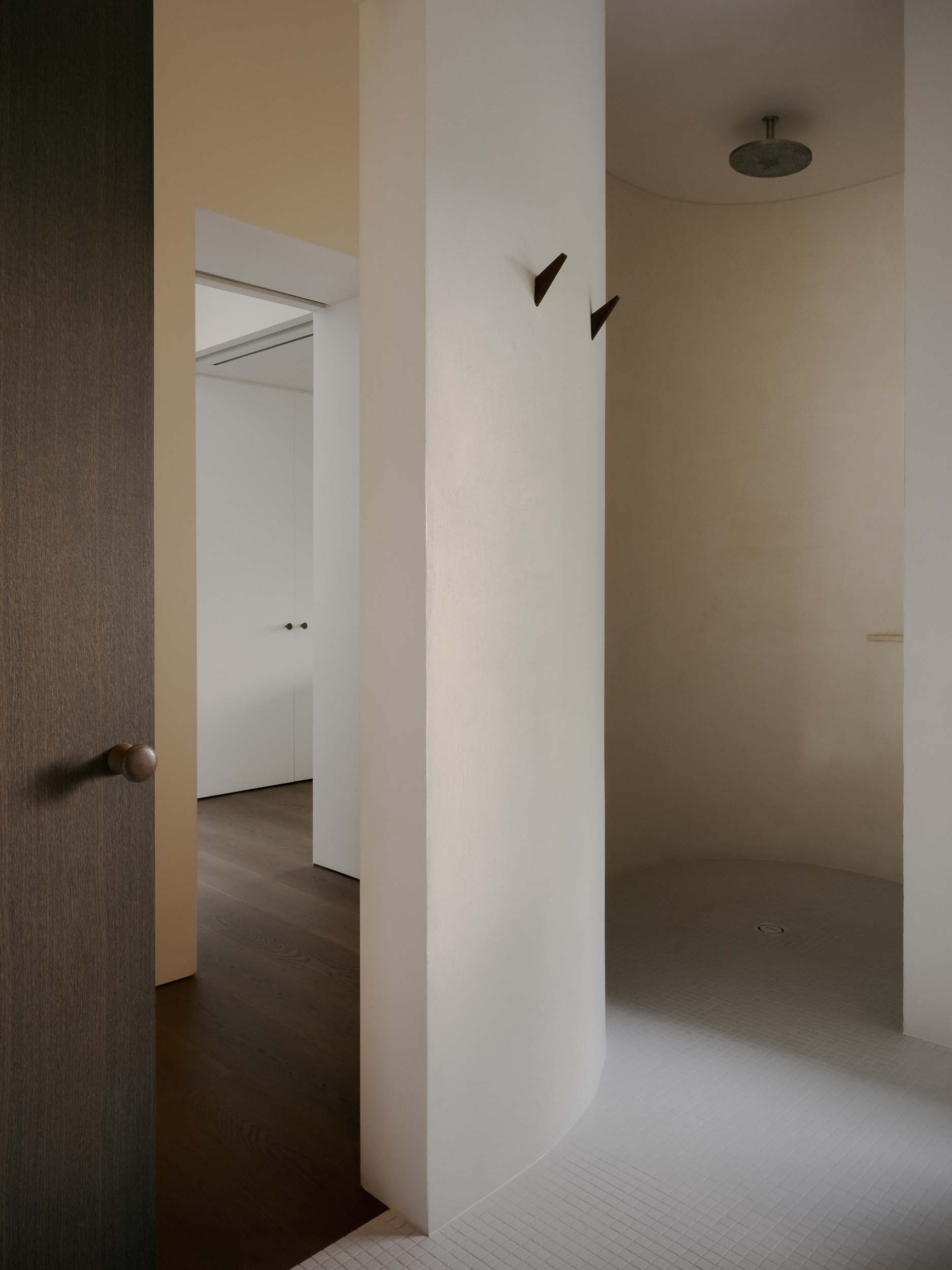
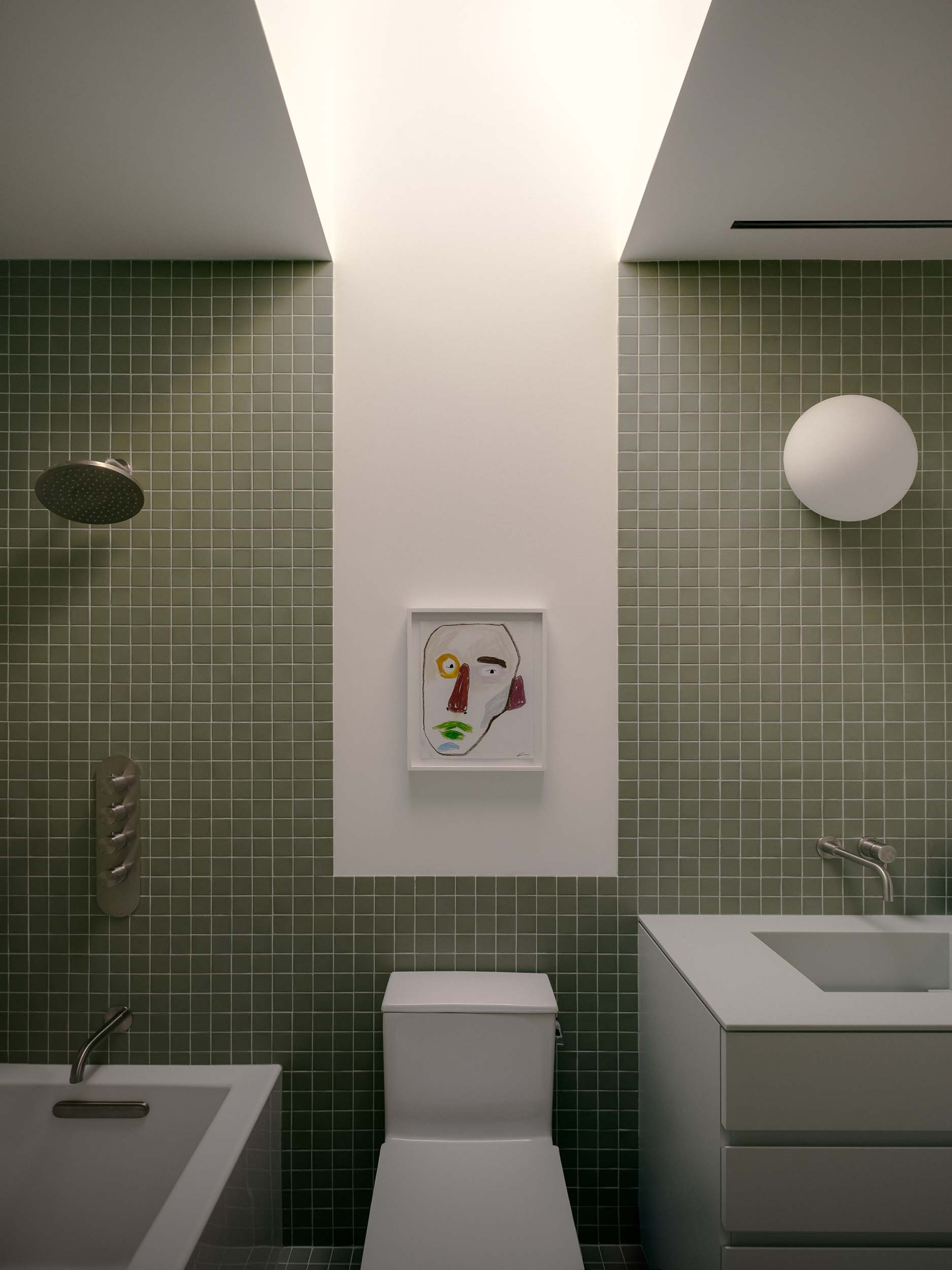
In the same bathroom, his and her sinks are emphasized by a triangular plaster protrusion from the wall. The design was borne out of the clients request for a recessed sink on the other side of the wall, where the toilet is located. “The constraint and client request pushed us to think through what might work geometrically. In the end, we developed a plaster column that, on the primary washroom side, looks like a plaster V that’s splitting the vanity in two,” explained Rodgers.
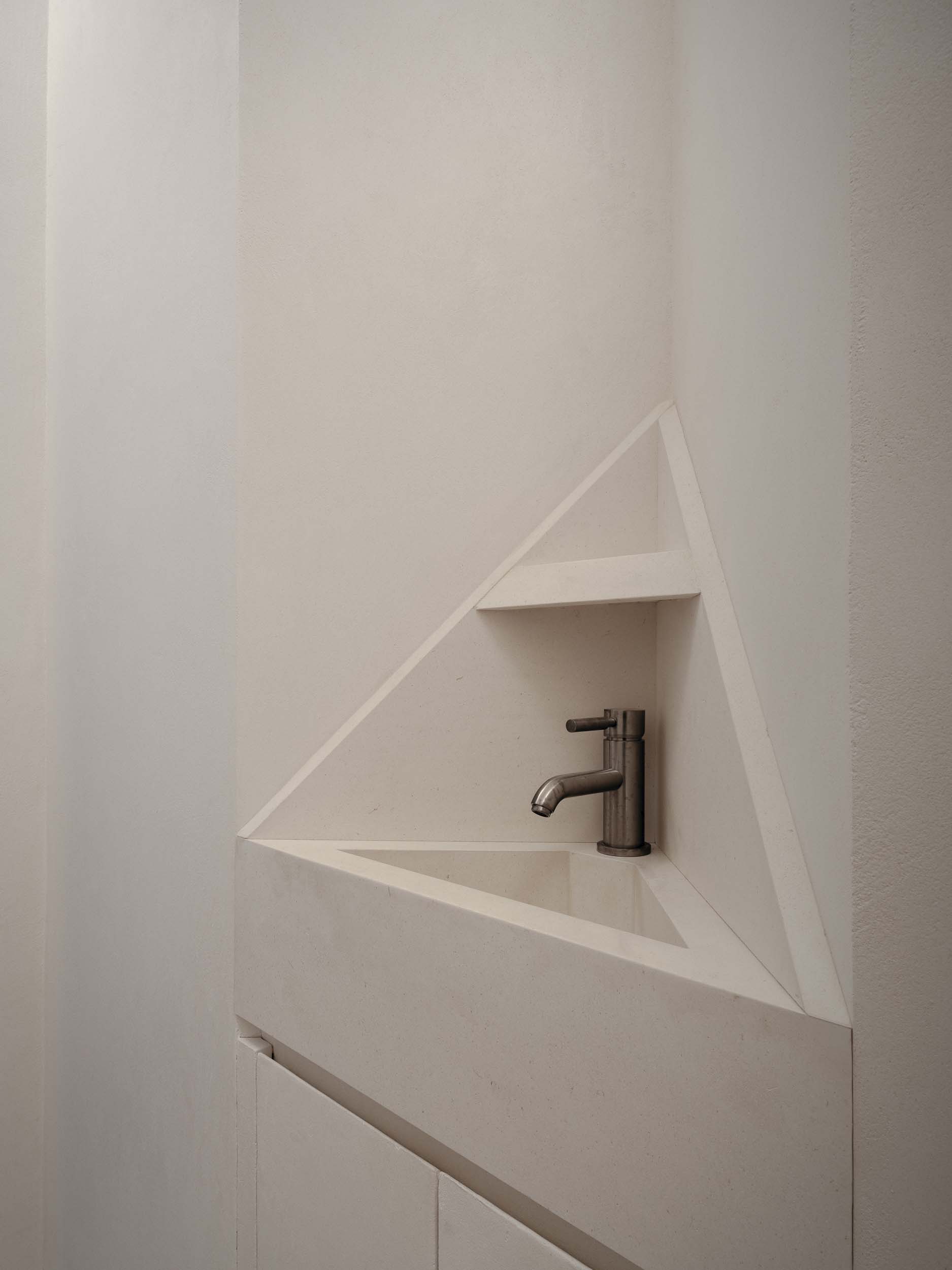
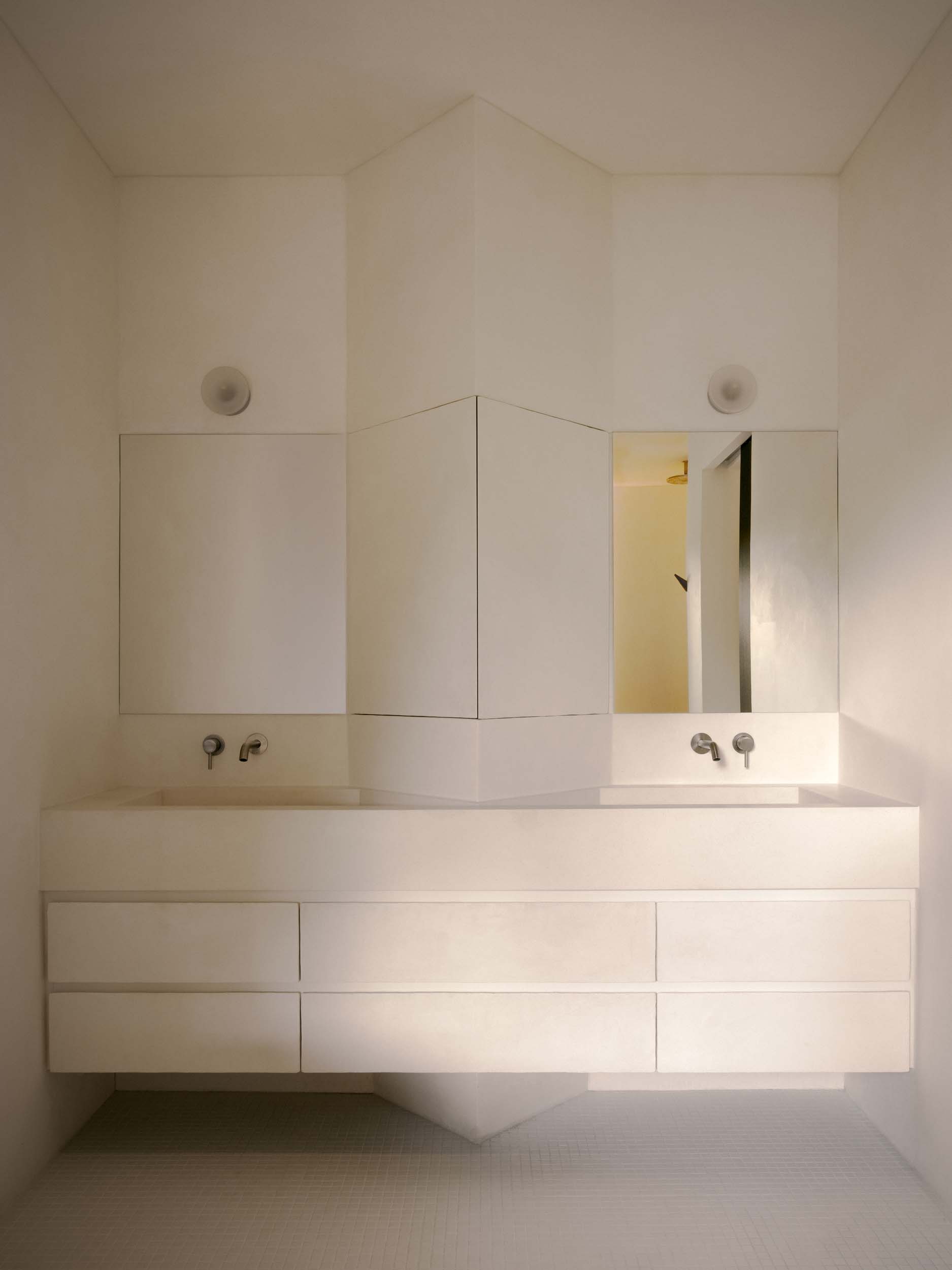
“What I like about that move is that it not only creates the recessed sink on the powder room side, but then on the vanity side, it visually splits the His and Her sinks,” said Valente-Gorjup. He added, “We’re extremely pleased with the result, and we think it’s a great representation of where we are now in our practice.”
The themes of Rathnelly House will continue to be explored in future projects from the firm.