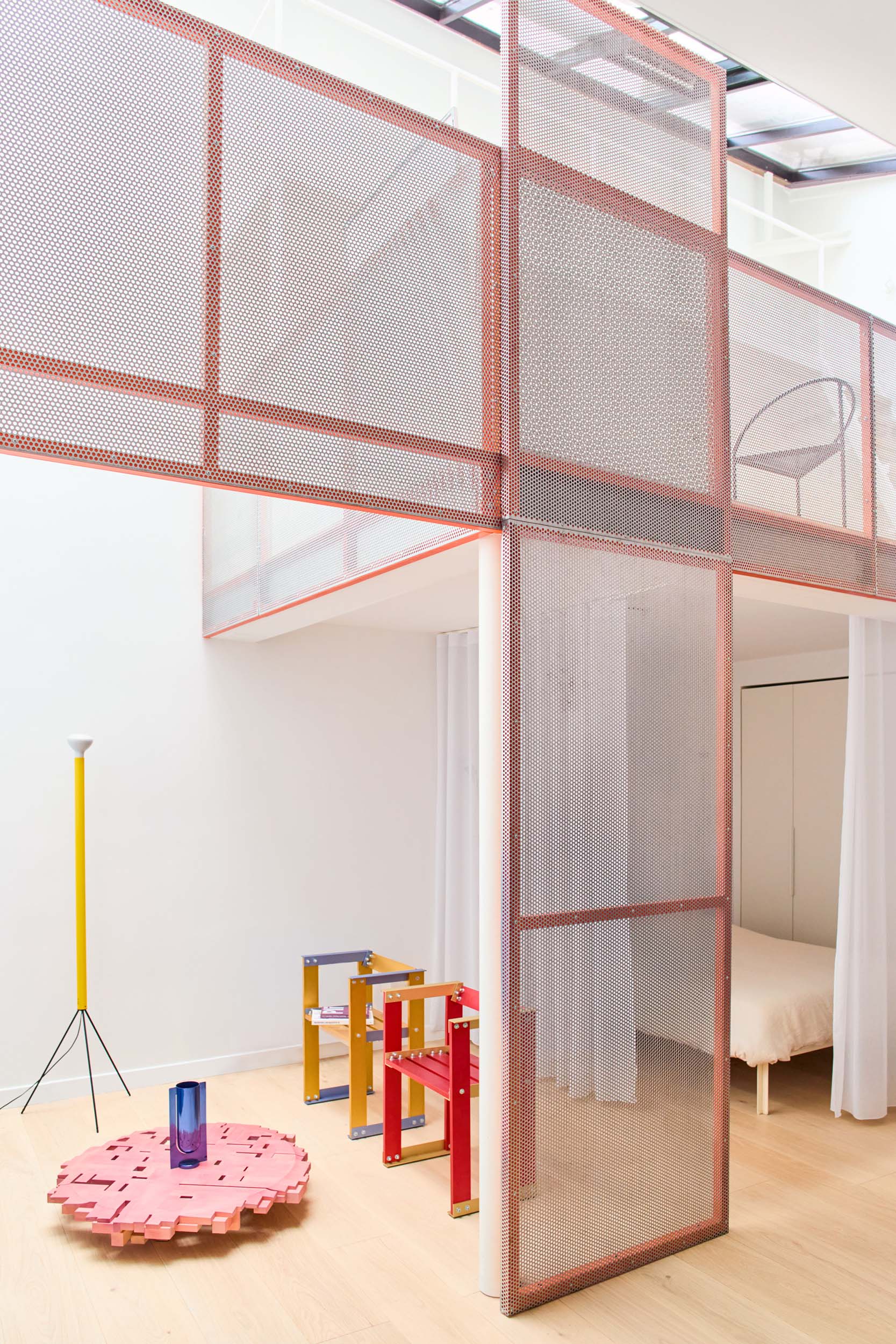
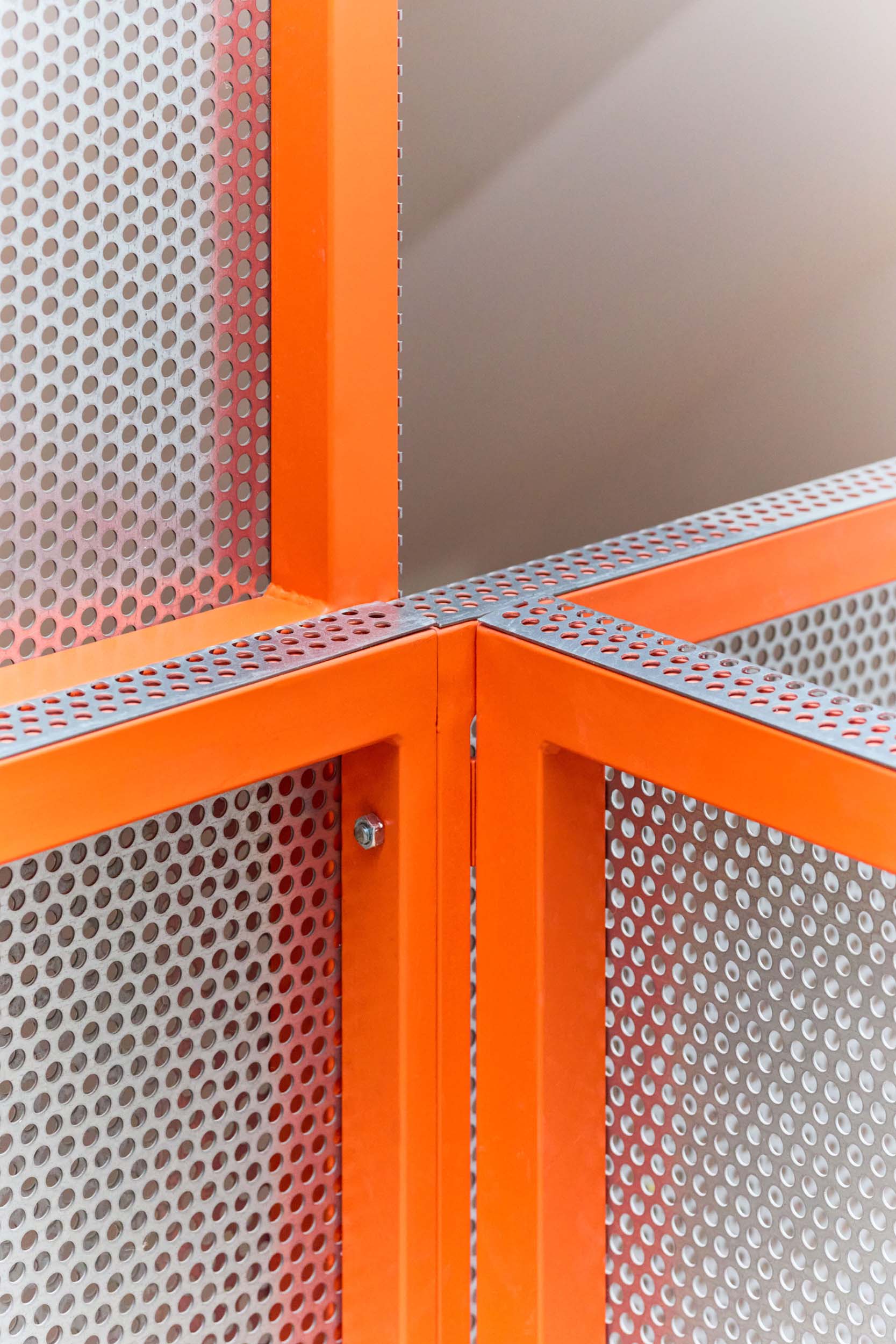
In Paris’s 11th arrondissement, an apartment takes shape through orange-lacquered steel frames and perforated metal sheets. The project, dubbed Gambey, is a collaborative effort between Paris-based architecture and scenography studio, Paf atelier, which led the narrative, and BB architectes, which lended the technical and material expertise. Together the team devised a way to structure this small abode for an artist without limiting space or light. The strategy relies on filtering areas—not partitioning them.
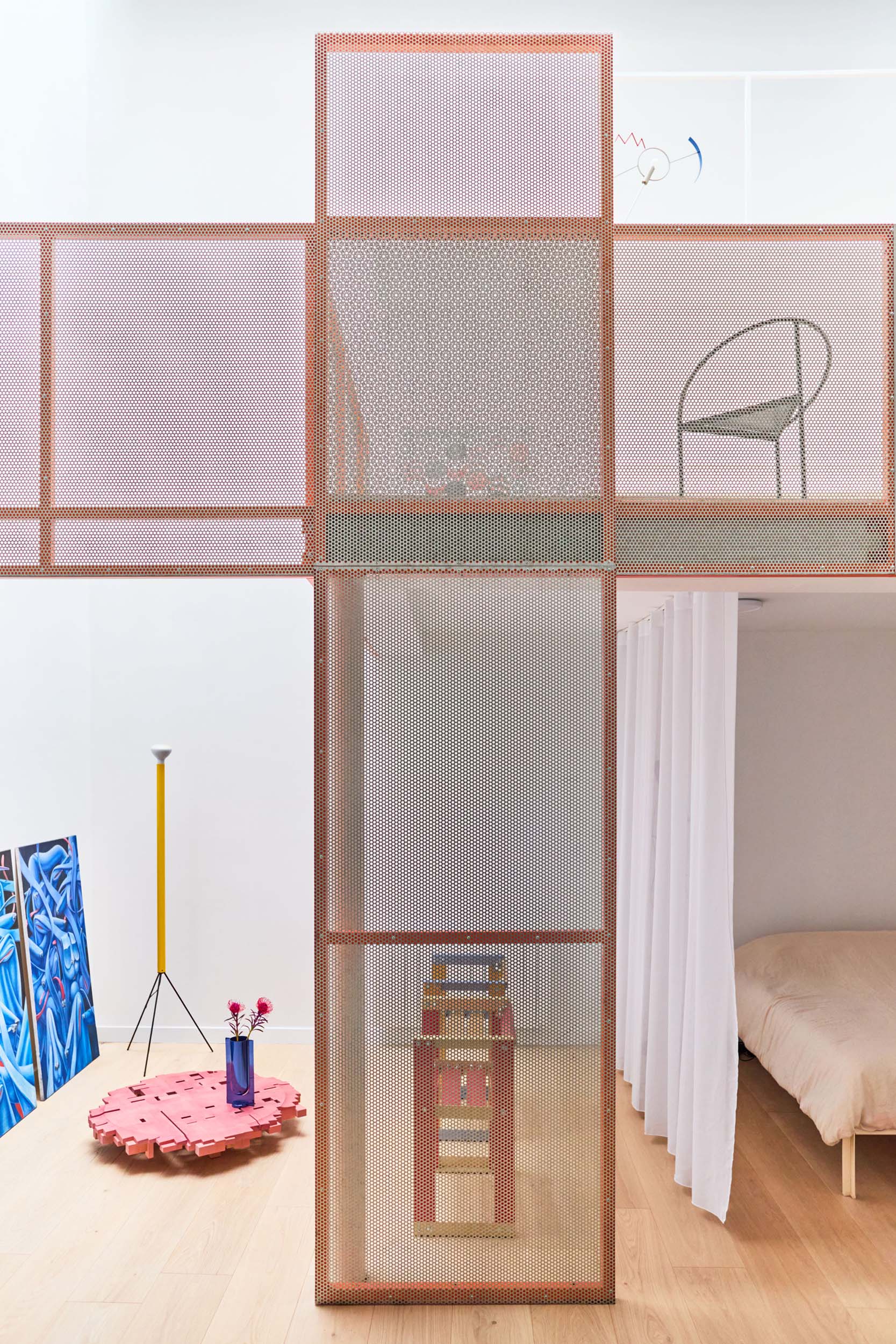
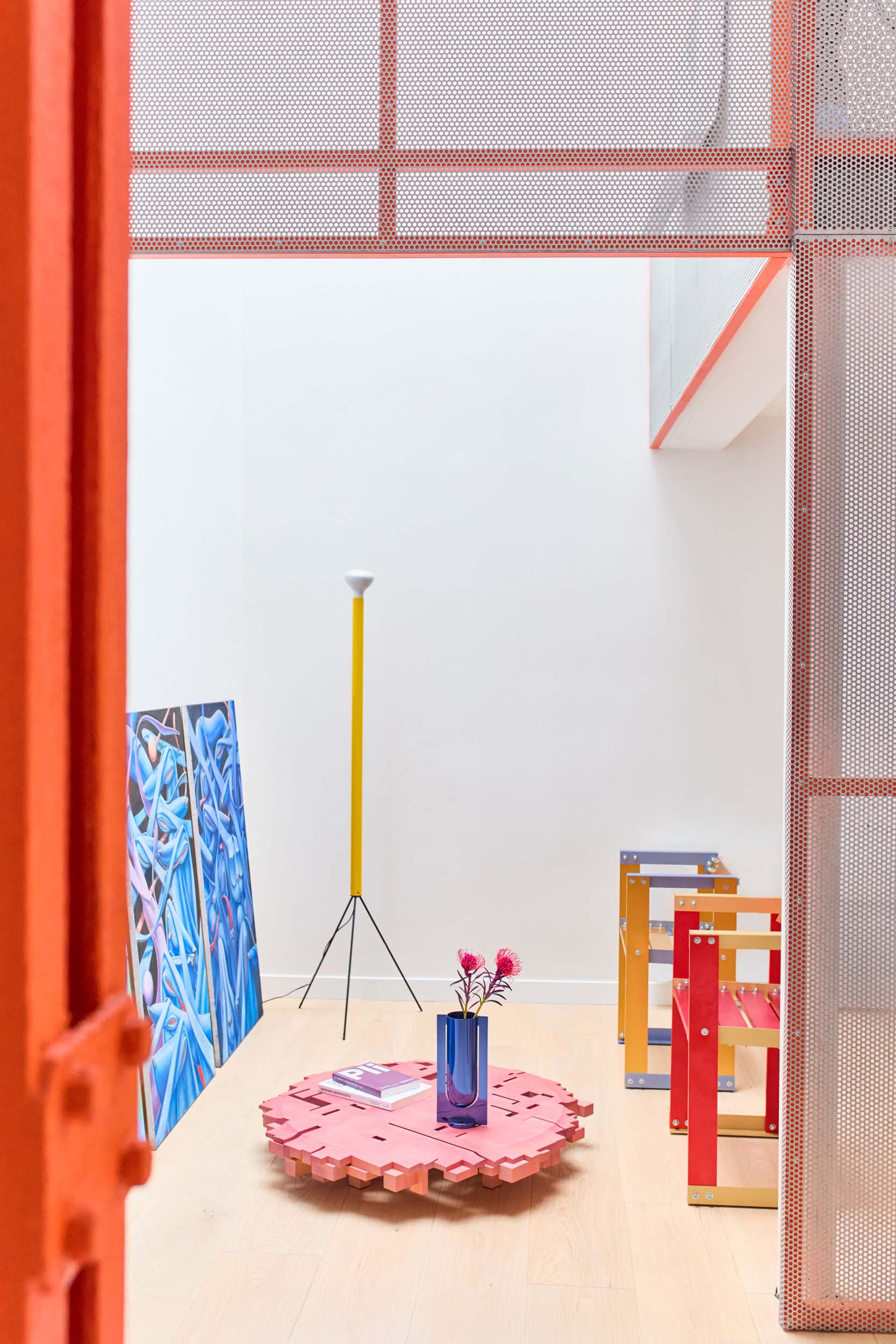
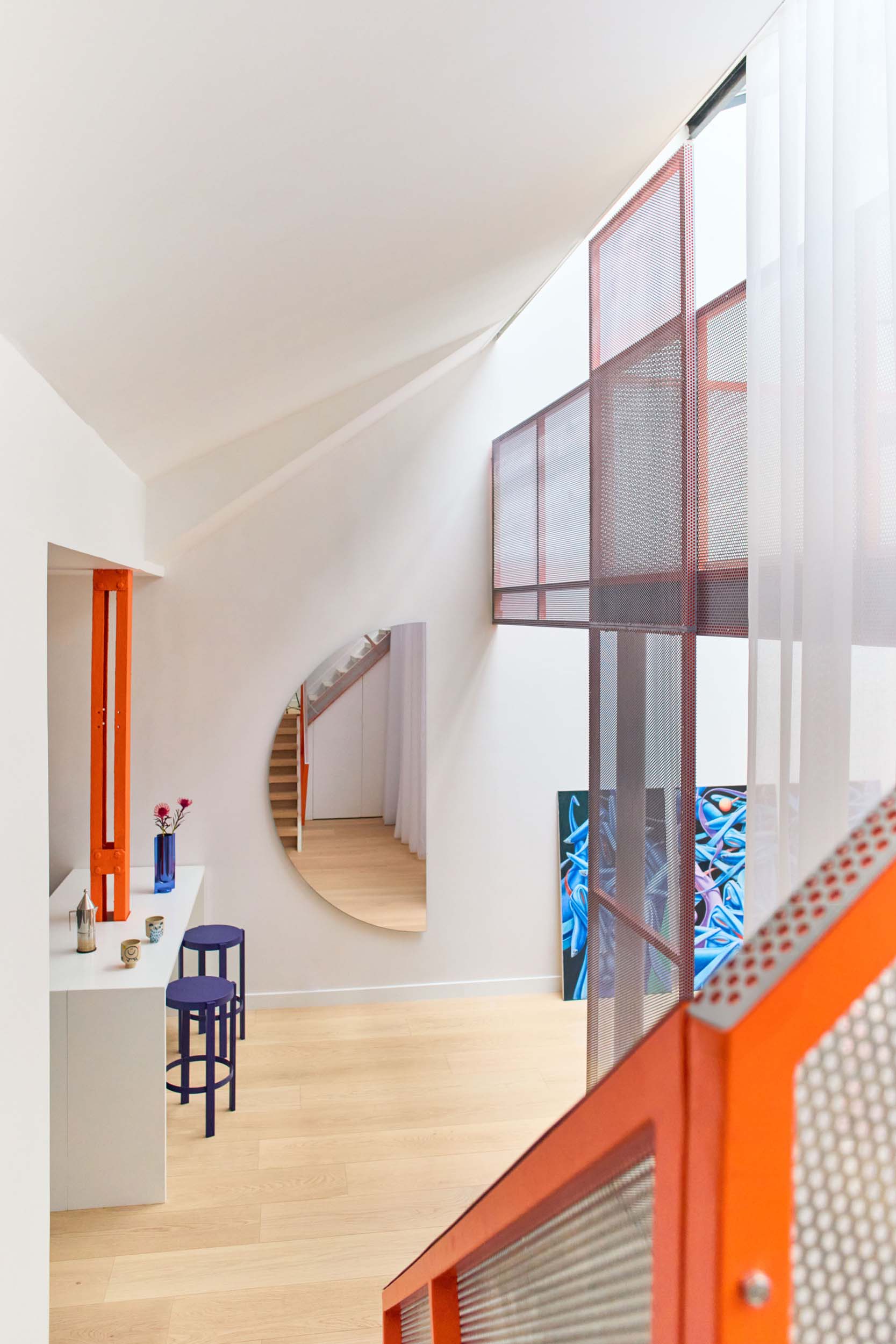
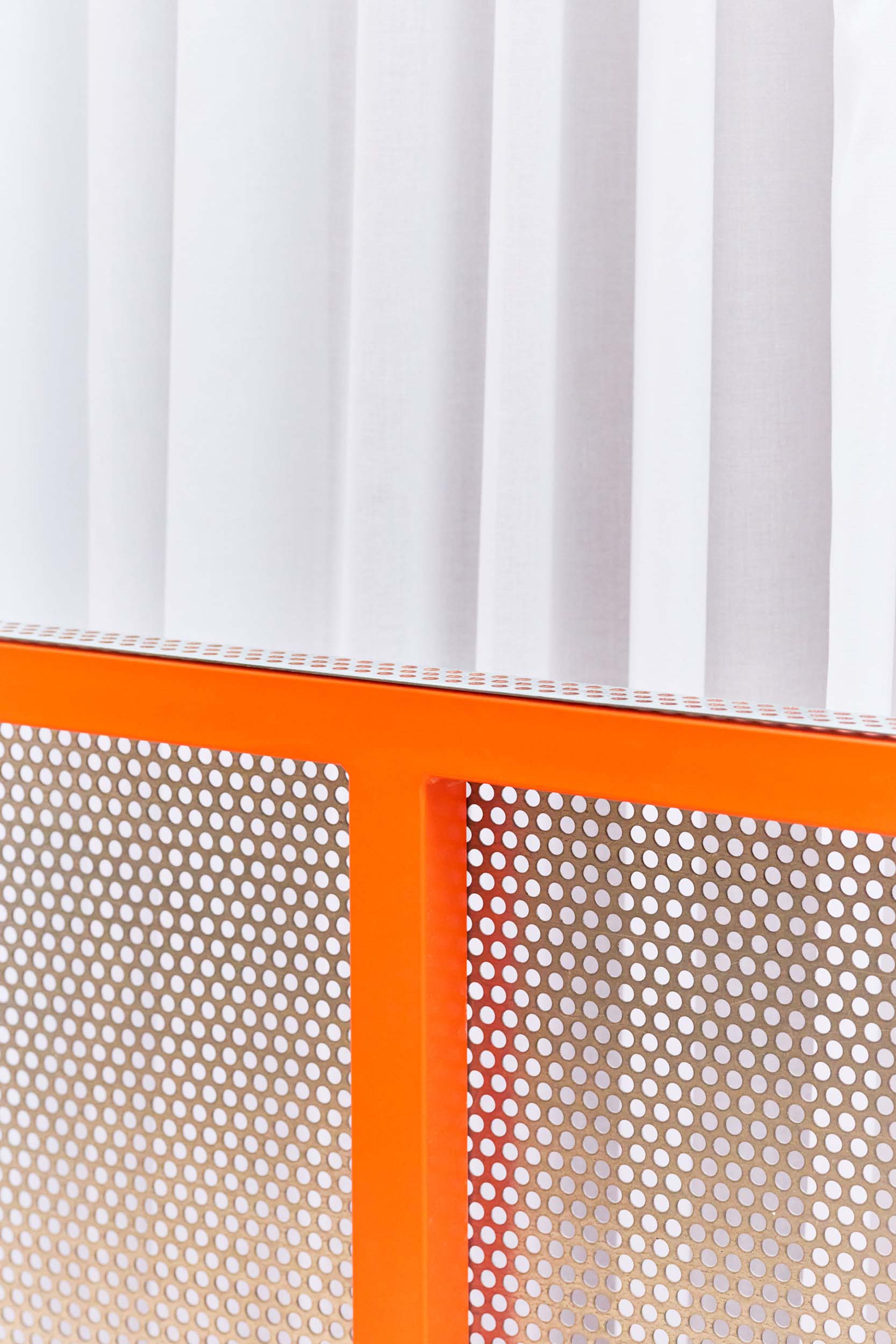
In place of standard walls, the design team erected a structure of orange steel frames, laced with perforated metal that creates a mezzanine office space. The interior architecture forms an orange cross that establishes zones: the office mezzanine above, the bedroom directly below the office, and the living space out in front of it.
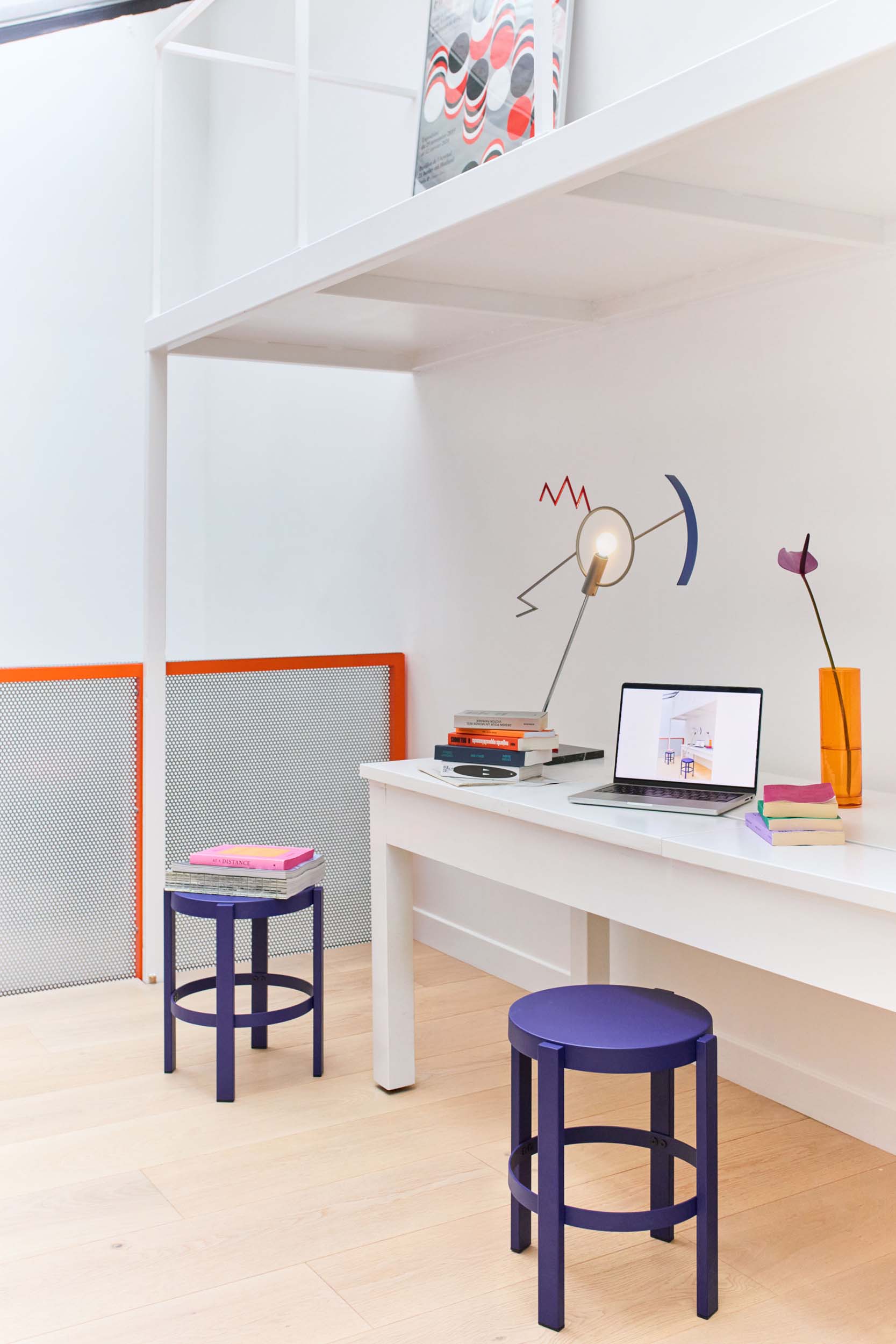
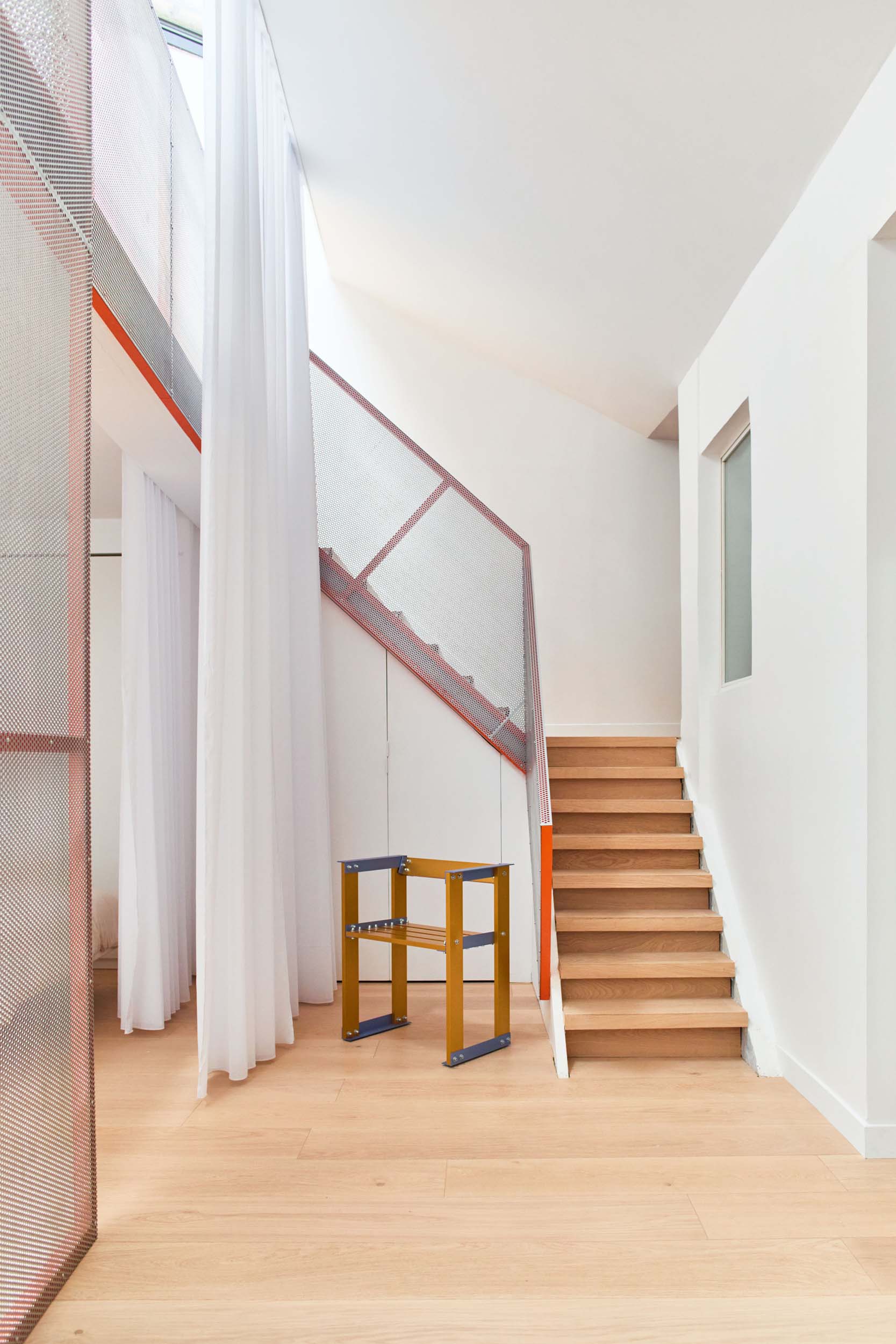
The perforated panels intersect with billowy white curtains to lend the bedroom a greater sense of privacy. Both interventions, however, maintain the sense of light in the space, which falls from the skylights above the office.
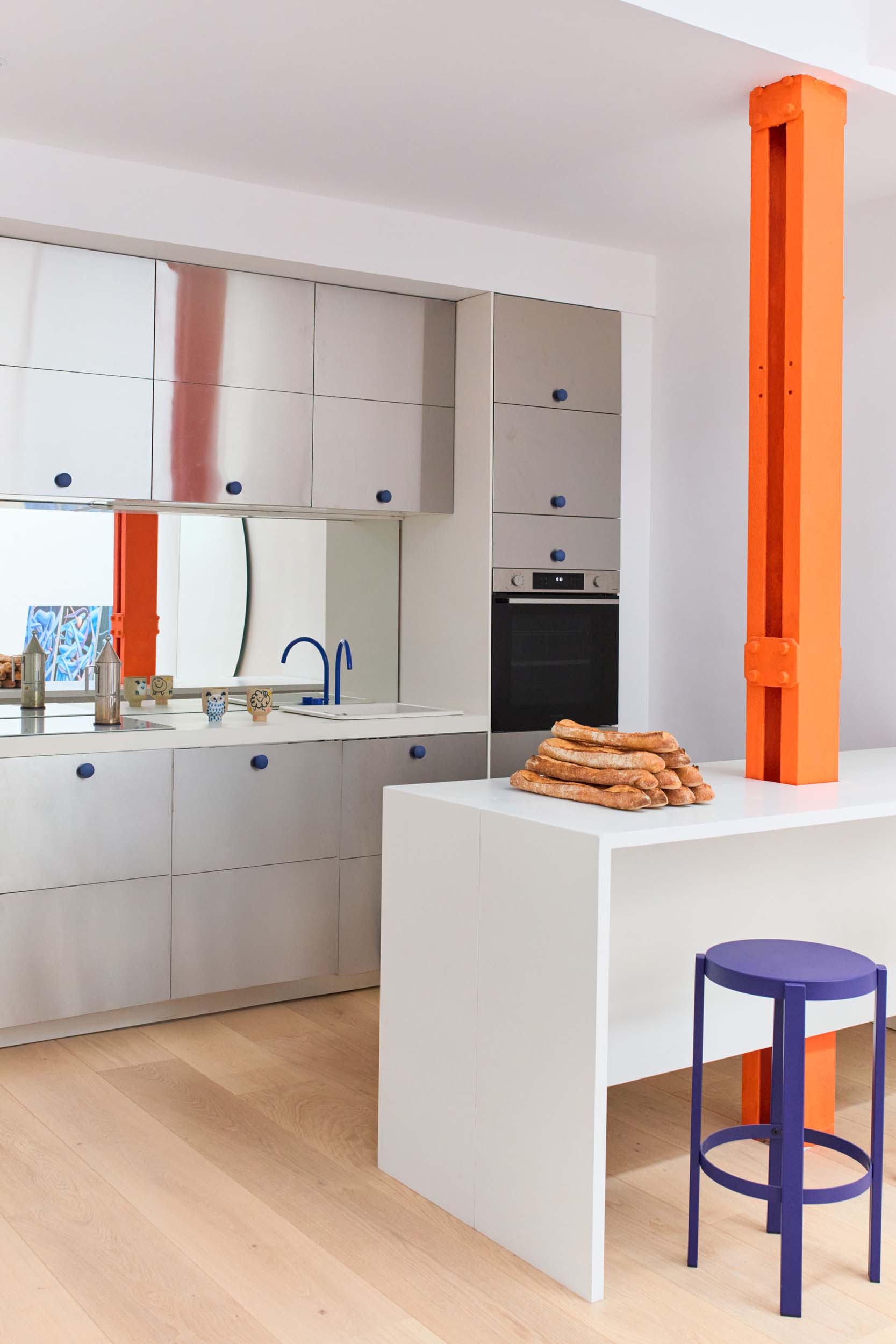
The design’s wise use of intersecting elements lends the space a sense of surprise and reveal, helping the smaller volume feel a touch bigger. At the kitchen, an orange-covered column bisects the island, a bright departure from the white walls, wood floors, and aluminum cabinets. On the mezzanine level, another short staircase offers access to a walkway, lofted above the desk, finding more place for storage and decor.
Furnishings ensure the space is enlivened with color and intrigue to break up the white box. The AL_AN chairs by Julien Carretero offer seating around the Surfaced #19 table by Sho Ota. The low-lying coffee table’s tessellation of Beech wood blocks appears like an artwork when viewed from the mezzanine looking down. The modern pieces are paired with iconic and reissued works, including the Luminator Floor Lamp by Achille & Pier Giacomo Castiglioni for Flos.
Upstairs, a Bermuda Chair by Carlos Miret is well met with more ‘80s designs, namely the 1985 ‘Valencia’ table light by Javier Mariscal.
The objects come together to activate the volume and its new orange structure, imbuing the space with both a domestic and atypical language.