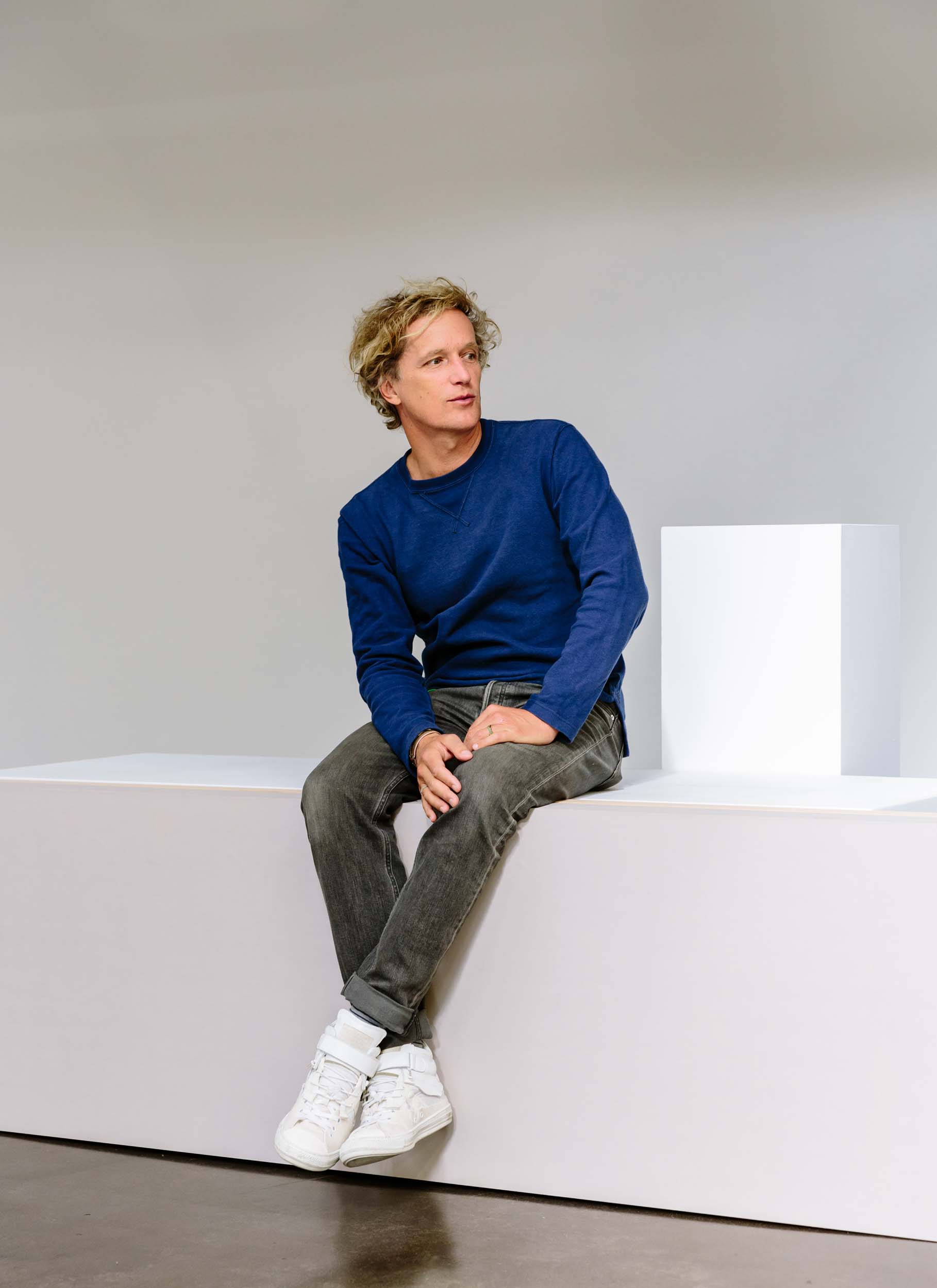
Yves Béhar has seemingly done it all as an industrial designer. With Fuseproject, he has designed laptops, cars, bassinets, and door hardware. His energetic sensibility, honed by decades of work for start-ups, has resulted in a range of award-winning products.
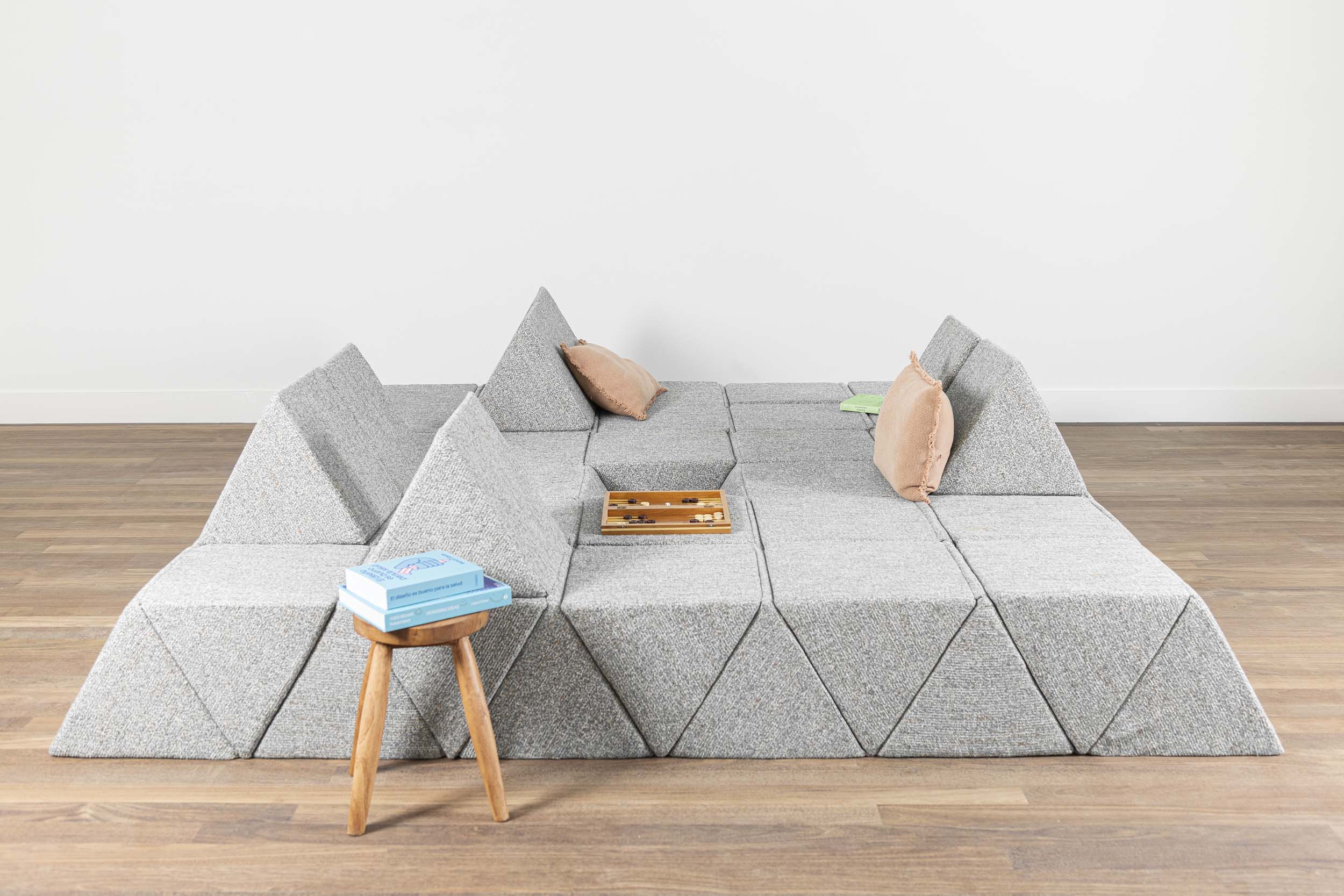
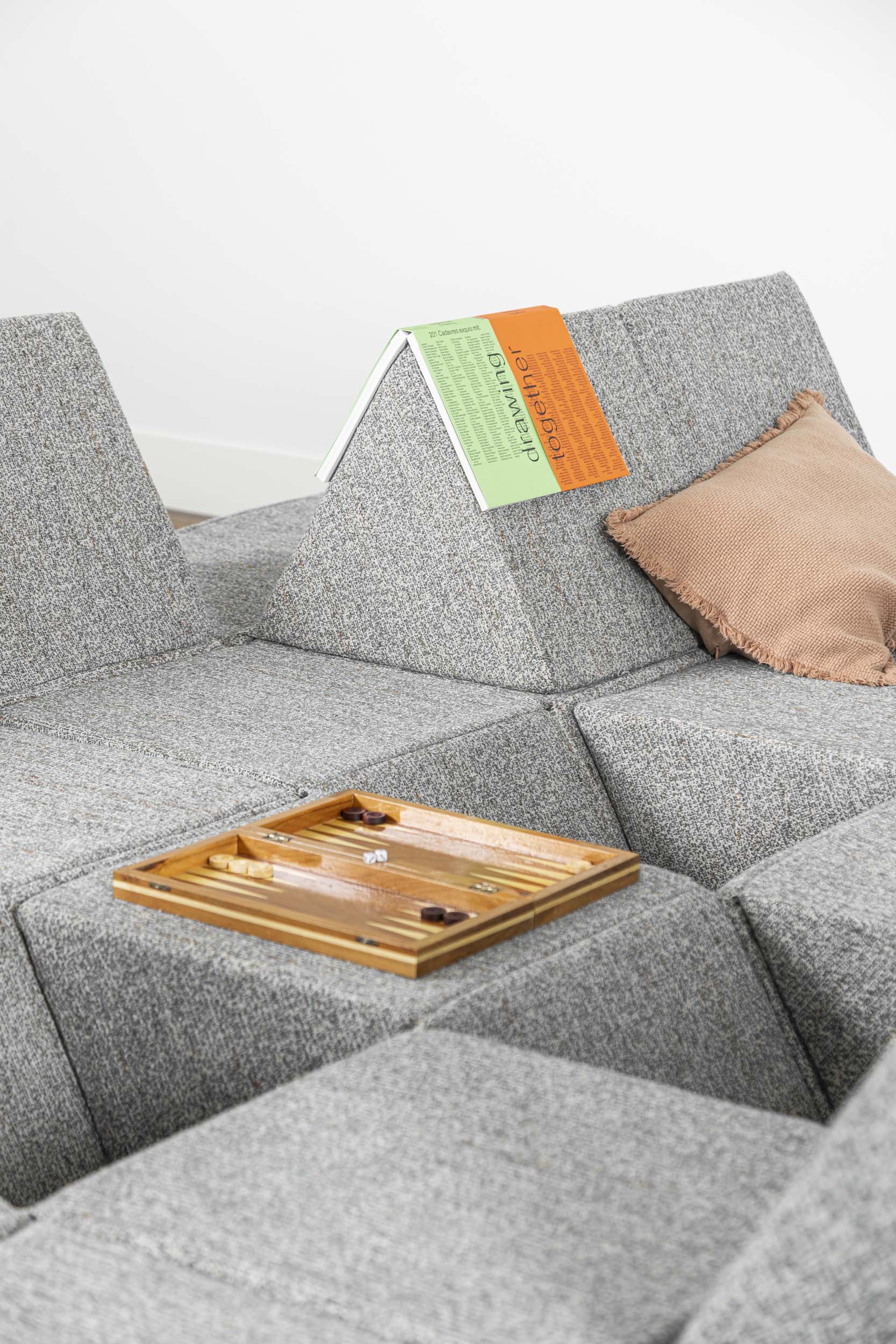
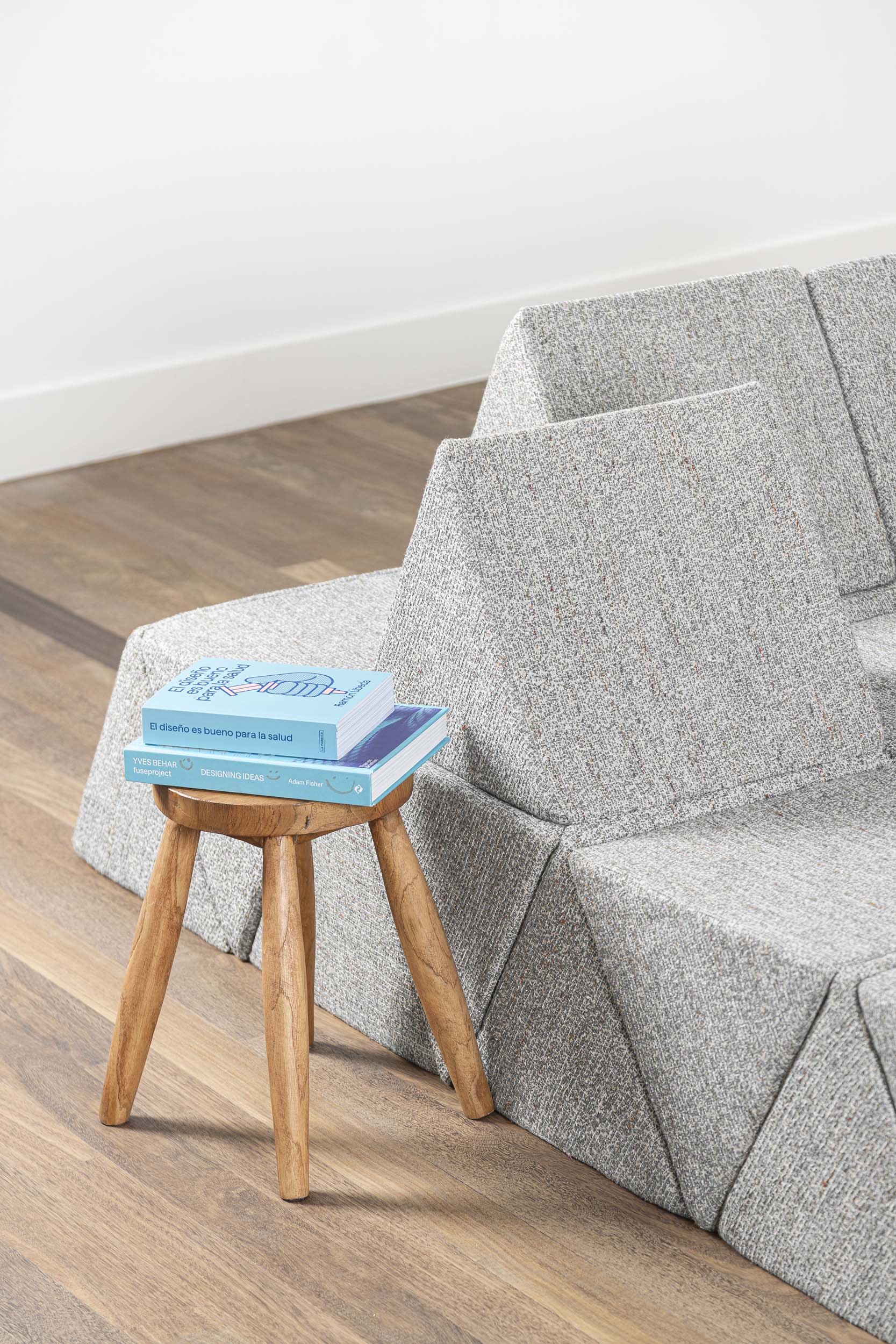
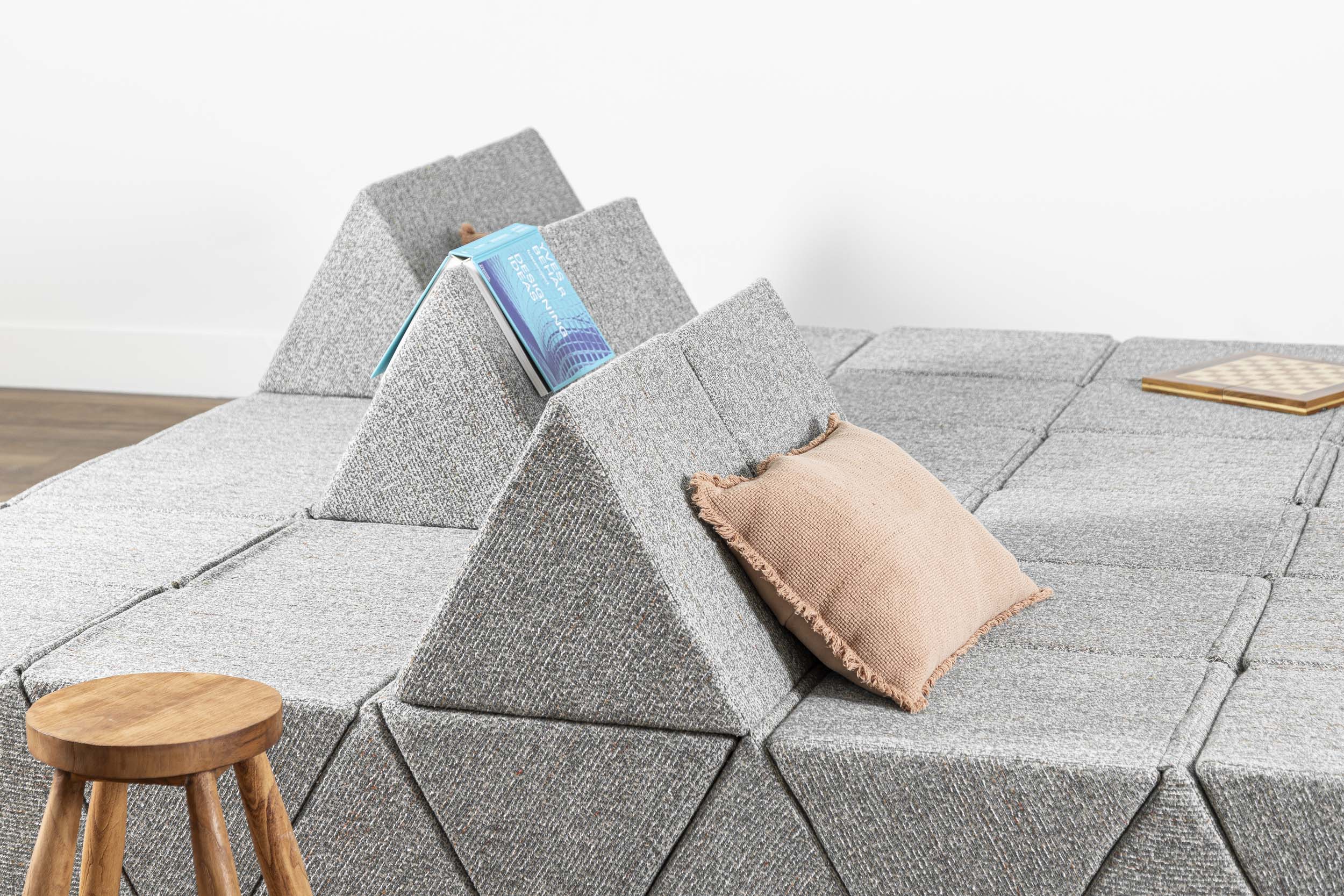
His latest release is Peaks, a modular sofa produced by Moooi. Its triangular hinged foam elements can transform into a range of social terrains. Developed by Béhar in the wake of the pandemic, the system prioritizes adaptability, intimacy and shared presence.
Peaks launched during Salone del Mobile Béhar spoke with AN Interior’s editor in chief Jack Murphy during Fulton Market Design Days in Chicago, where Peaks was on view in Coalesse’s pop-up venue.
Jack Murphy (JM): What are you looking in a brand for a product collaboration? What makes a good partner?
Yves Béhar (YB): I’m looking for a melding of the minds. They need to love the idea, and then we can work together on making it better, commercially viable, and expanding the product’s applications.
I’m excited about Peaks because it works well in the home environment in many different configurations, but it is also good for contract use in public spaces and educational environments. It’s modular, so it adapts to different types of spaces, including outdoor areas.
JM: How did you start work on Peaks?
YB: This project is a different because it wasn’t a commission: I developed it on my own during COVID to bring my family together. Then I made six prototypes for friends. And when I showed it to Marcel Wanders, he said, “This is so different, strange, and unique. We have to make it.”
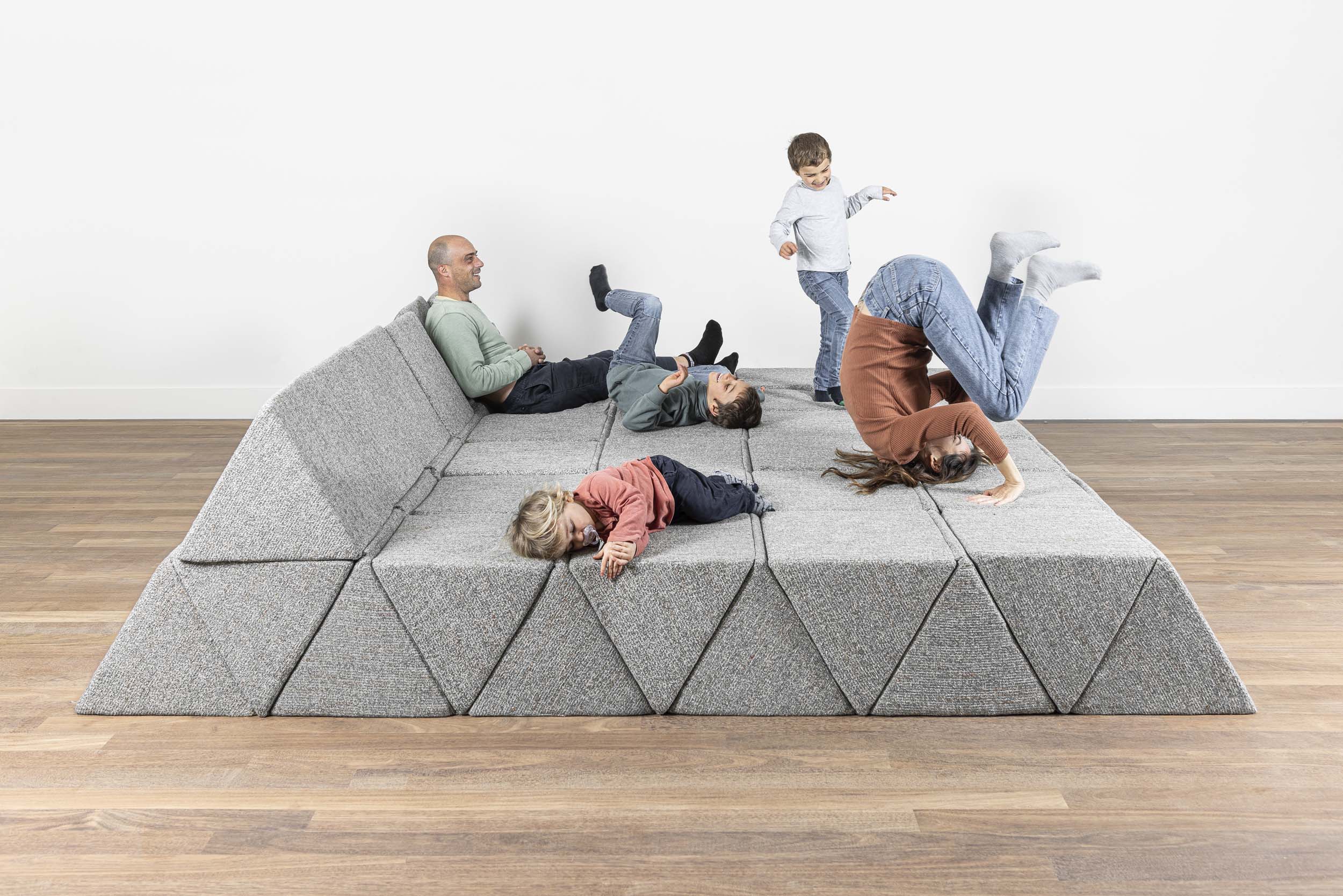
I wanted a space in our home brings all of us together, whether we’re all watching one screen or doing our own thing. In the four-module configuration, the square one, you can sit up to 12 people. It can be a flat platform for hanging out and wrestling with the kids, or you can make it into a pit. The transformation part is what makes it exciting for kids. The formal layout of a living room is not something kids get attracted to, because once you sit in the couch, you’re stuck. They like moving, hiding, and rolling around—and so do adults, by the way. Peaks becomes a popular social environment.
JM: What feedback have you received about Peaks?
YB: It was very popular with my kids! Moooi and Coalesse are excited about potential applications with universities, hospitals, and public spaces. We’re working on several applications for coworking environments, so my guess is that it will do well.
JM: What is your design team like?
YB: We have a team in San Francisco that has been in place for over 20 years. Then I have a team in Lisbon where we do a lot of prototyping. They worked on Peaks, actually. In Portugal we work across a wide array of materials, from textiles to upholstery, wood, cork, stone, and ceramics. The availability of sustainable materials is vast, so it makes for great sourcing. From 2021 to 2024 I was spending half the year in Portugal. Now I go as much as I can.
JM: Can you give me an update about Doma, your smart-door company?
YB: We’re working with manufacturers to launch the company. We don’t make our own doors; instead, it slots in with existing door infrastructure, which is exciting. We’re working on plans to launch with six to ten brands.
The system also works with windows, so you can mitigate indoor/outdoor pollution and do passive heating and cooling. It also means you can be sure you know all your doors and windows or closed.
JM: How do you approach the integration of the latest technologies into your designs?
YB: We have a long portfolio of working in applied technologies. For me, technology is a tool to apply to problems that are needed for humans, like health and healthcare. For example, we worked on an aging companion called ElliQ that is amazing. And we made an AI-powered learning and empathy companion for kids across the ability spectrum called Moxie.
I like applying AI and robotics, to things that are necessary and come from companies with a humanistic point of view. I’m not interested in AI for shopping or social media.
But it has incredible potential in places that are complementary to human needs. Like SNOO, the robotic bassinet that uses AI to calm babies into sleep, which allows parents to sleep more. It has been an incredible global success. It has even been used in NICUs where it allows premature babies to sleep more, which allows them to gain weight faster. I like projects that use technology to achieve incredible human benefits.