
At the corner of 800 Clark Place and 8th Avenue South in downtown Nashville is the curved glass facade of JW Marriott. A red recording studio light dots the corner. The curiously out of place fixture marks the entrance to 888, a new vinyl record bar and sushi restaurant heavily influenced by traditional Japanese notes and designed by Los Angeles–based firm, Commune Design.
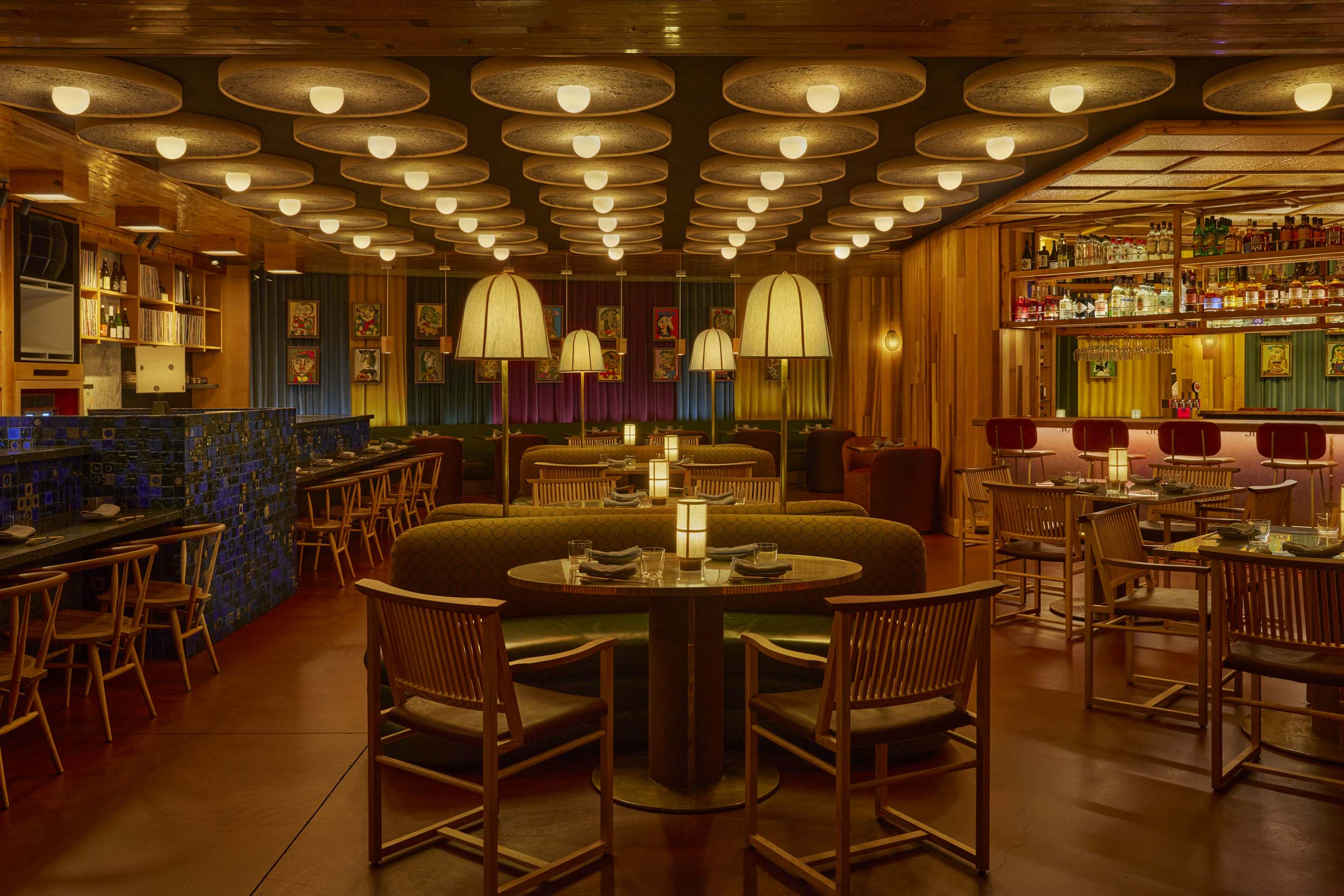
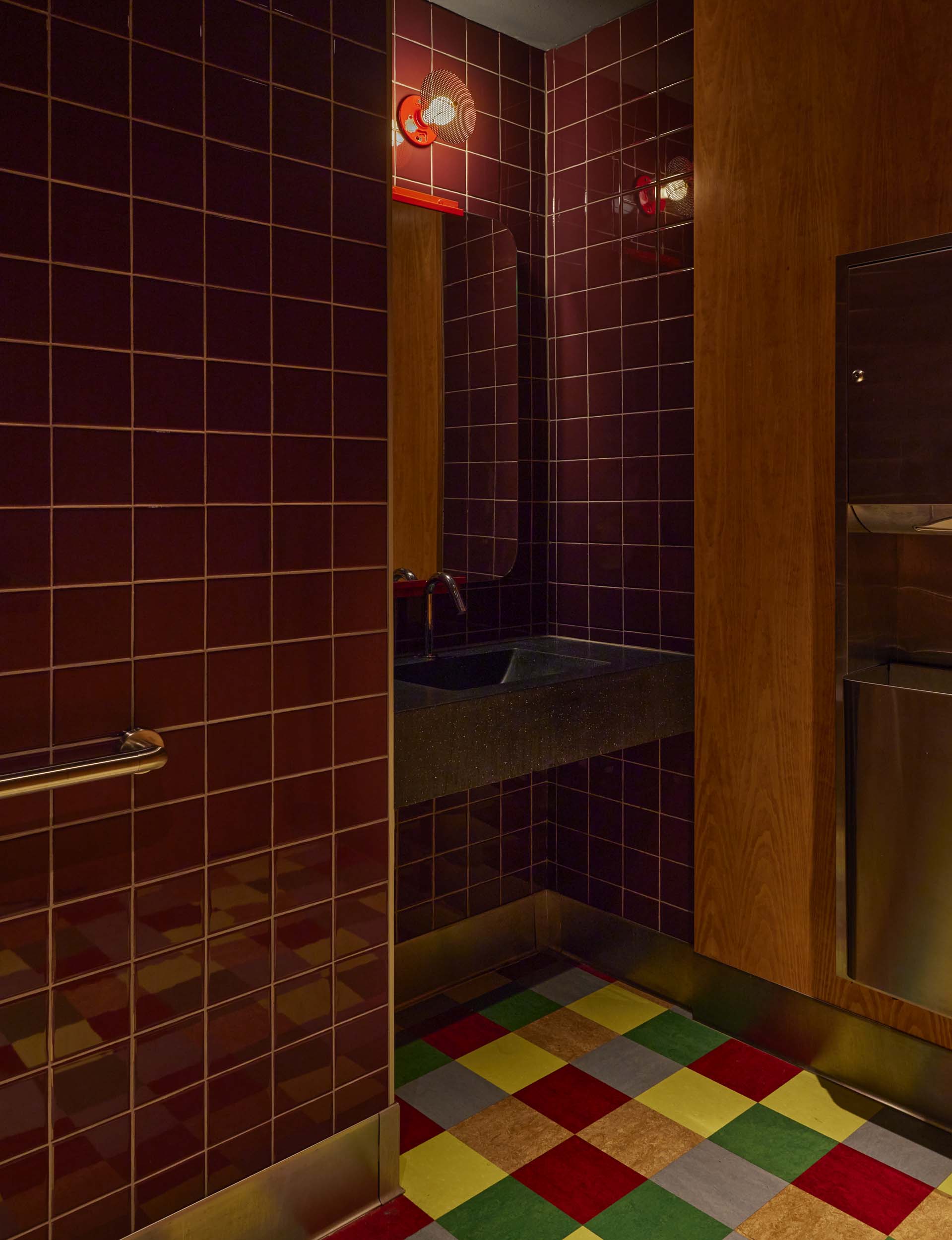
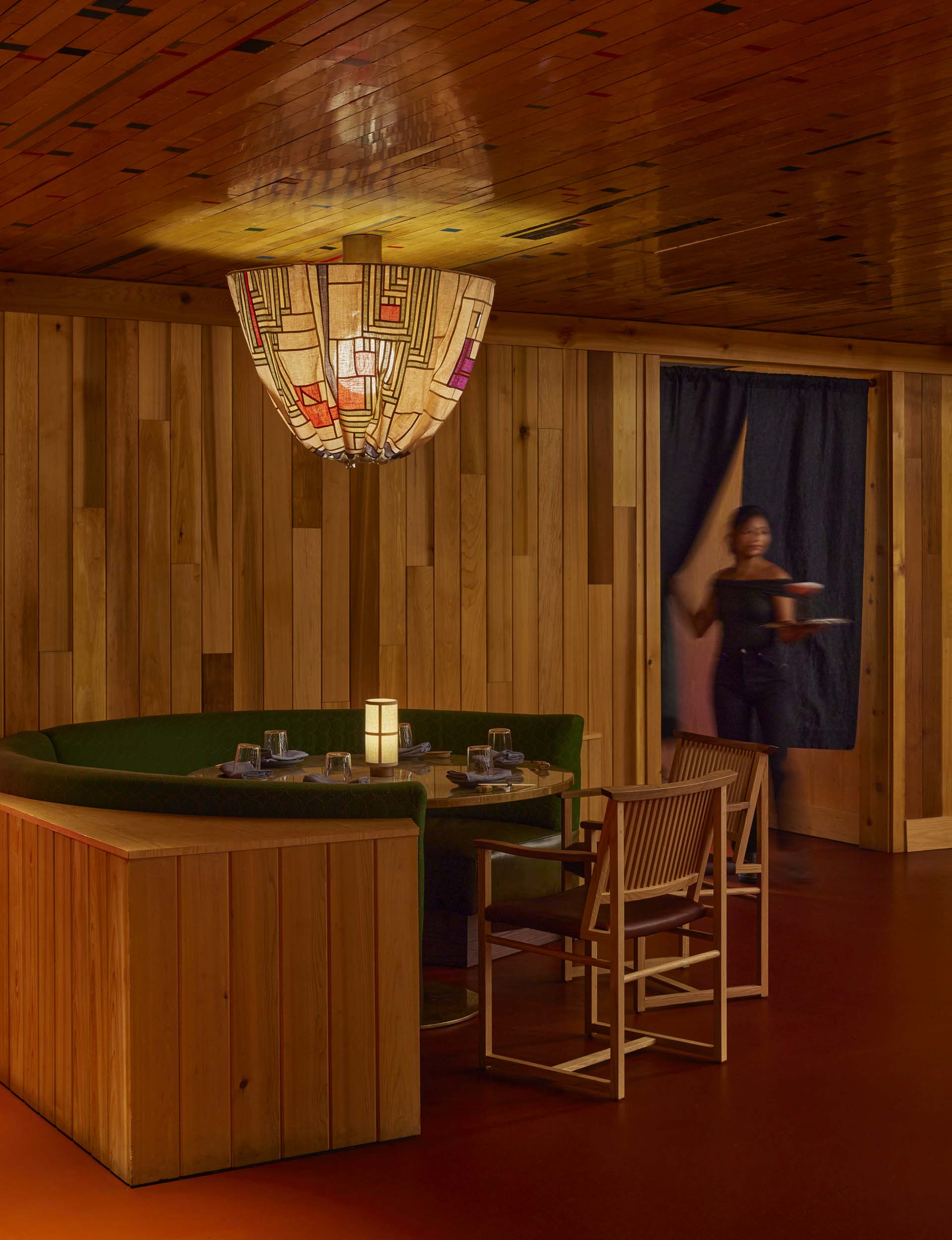
Upon entering through the unmarked door, a sense of comfort wraps the space. This is due largely to the strategic application of warm materials, including wooden furniture and ceilings, linoleum flooring, rich velvet textile walls, colorful art, and soft lights. Commune painted a picture of the atmosphere at 888. The firm told AN Interior collectively, “When you are greeted at the host stand and walk through the space into the main dining area, the ceiling gets lower, the lights are dimmer, and it’s an exploration of texture, color, and music. Upon closer look, you find so many curated elements from both Japanese and American artisans. Even if you don’t know the background or the story behind each thing, you feel the intention and the value it brings to the space.”
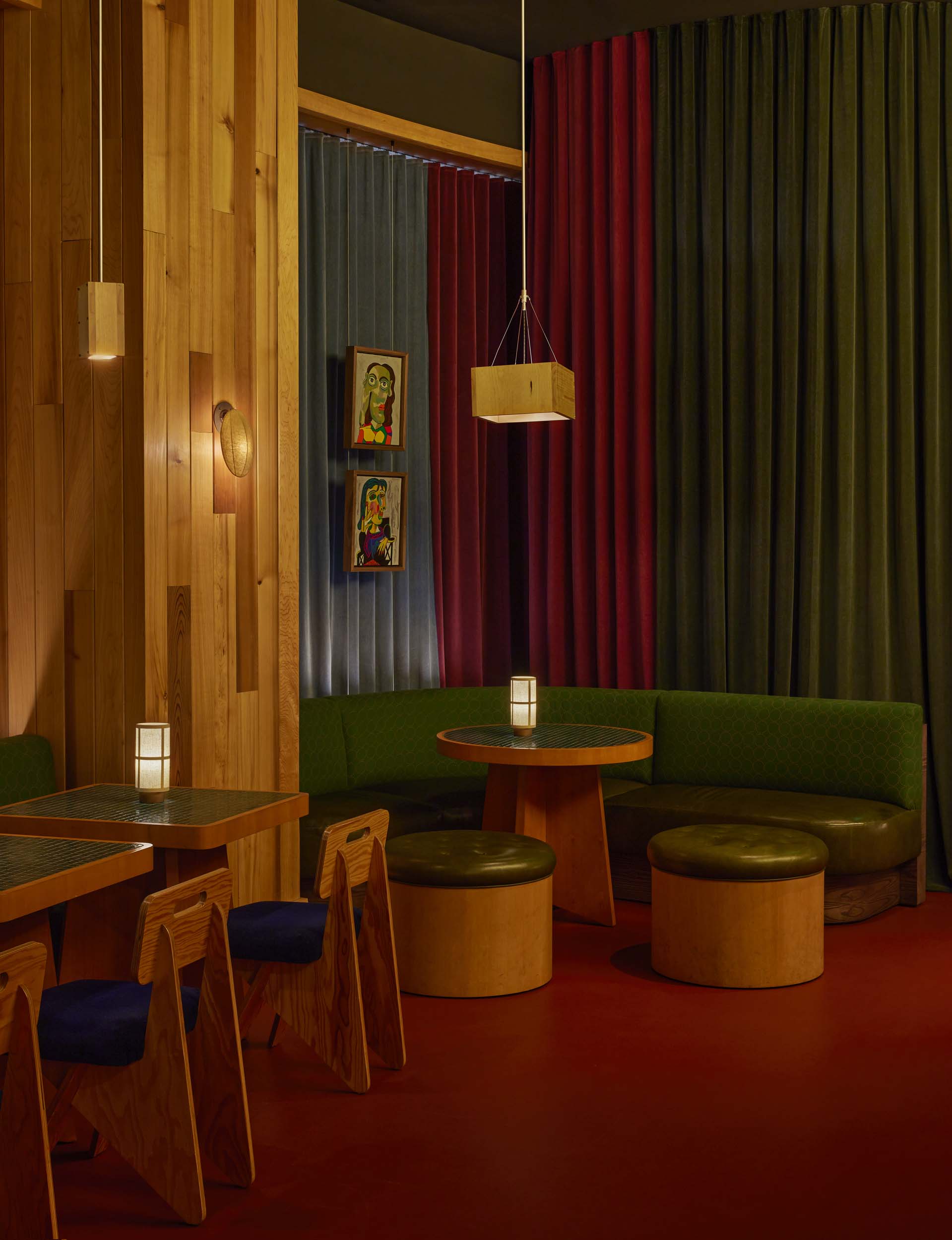
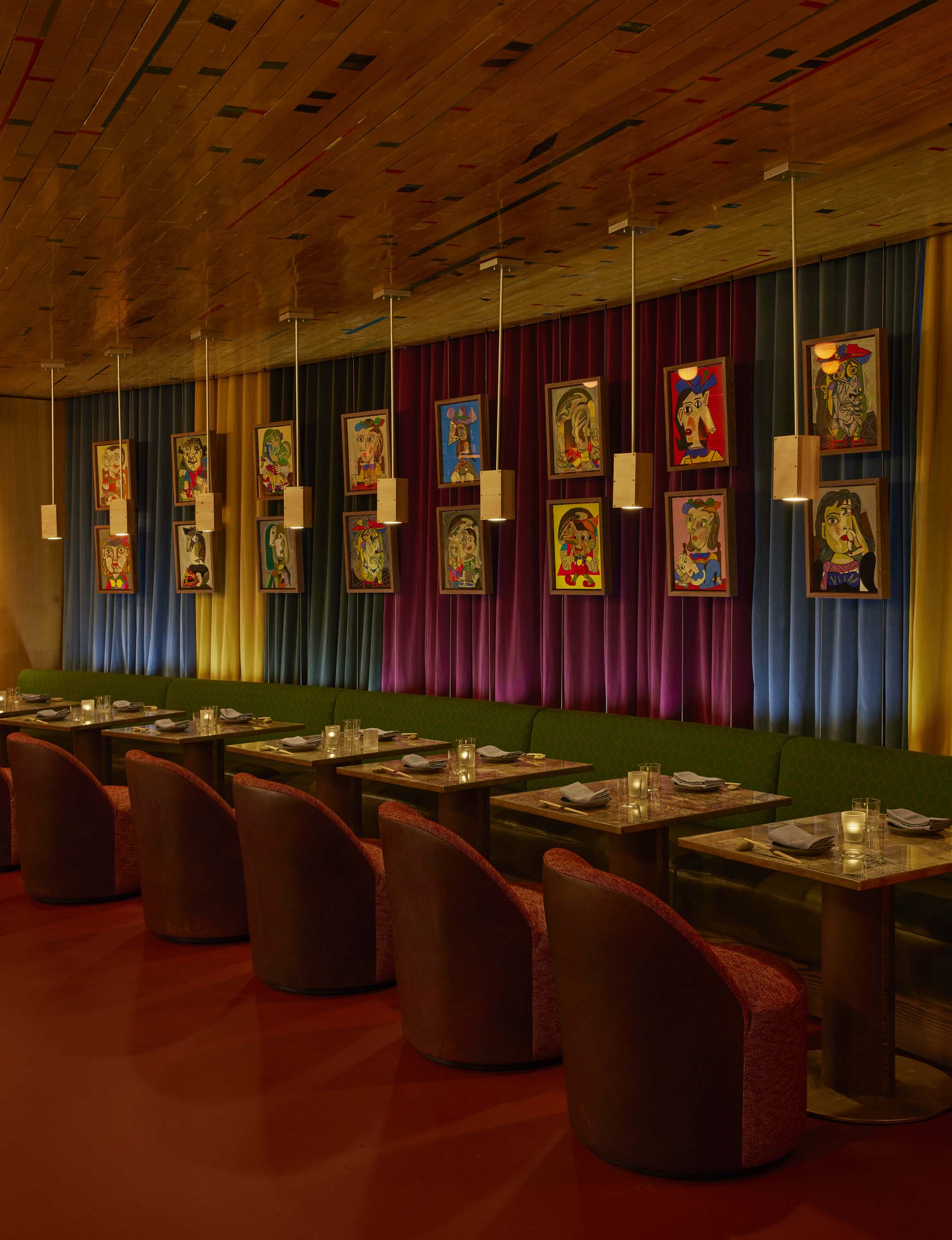
Realizing 888 was a collaborative effort between Commune and real estate development firm Turnberry. Spanning a total of 4,850 square feet, 888’s design brings to light the main inspiration of Japanese kissa—but with a twist. Kissa culture refers to intimate cafes and bars where people gather to drink and to listen to music. Commune commented, “Traditional Japanese kissas have a very layered and patched together feeling. We wanted to express that through the use of materials that you might use in a DIY project but executed in an elevated and curated form.”
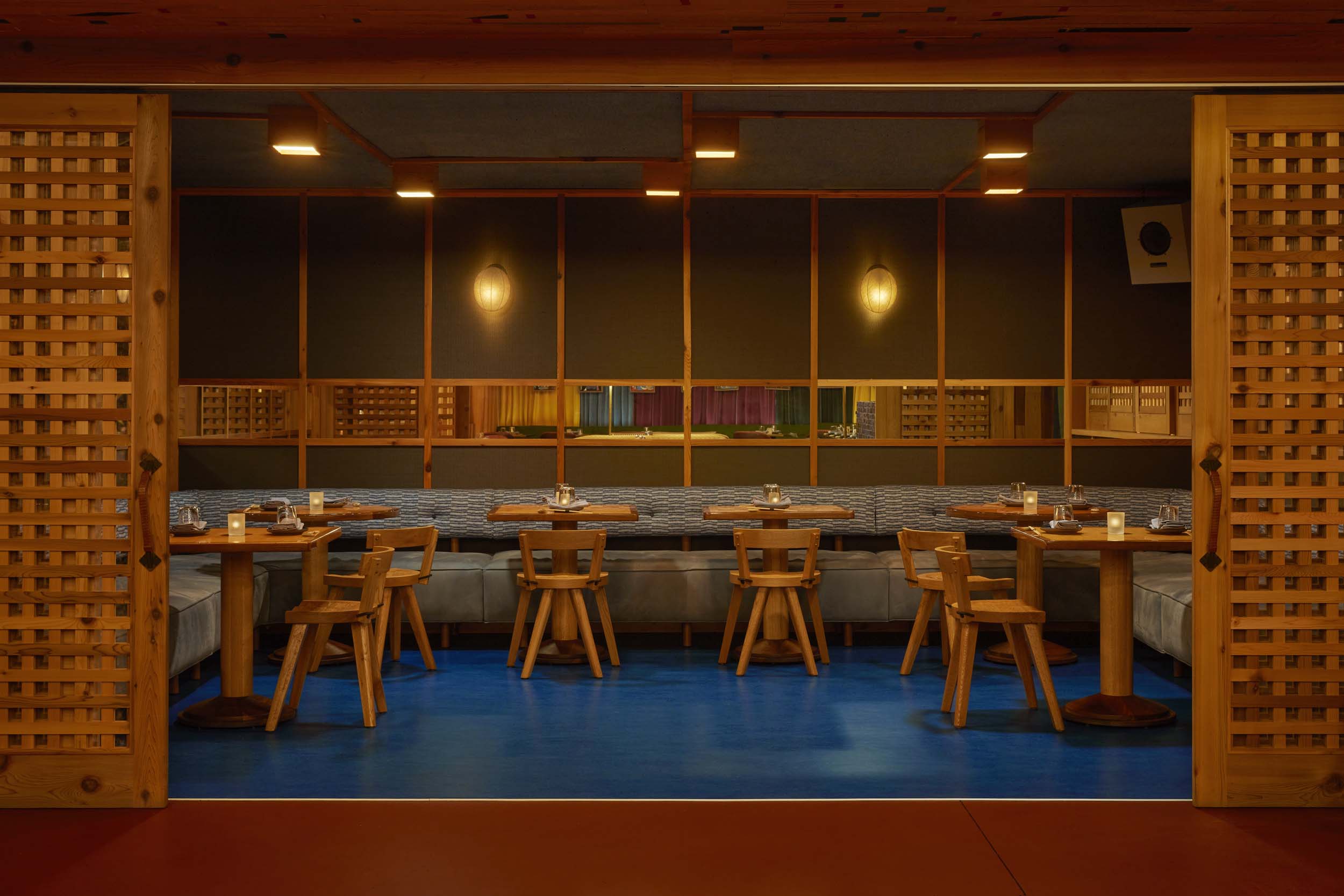
In order to achieve this, Commune devised a plan to creatively reuse materials and design a sound bar to create a cool, comfortable atmosphere. Repeated round acoustic ceiling panels camouflaged as as lights deliver this effect. The panels are made out of recycled denim and framed in individually cut construction grade Sono tubes. The ceiling is made even more unique with the application of glossy, narrow wooden planks, which were salvaged and reused from an old gym and recreation center at the University of Wisconsin.
In 888, Commune finds inventive, new ways to use common and uncommon materials, for instance, the washi paper “lanterns,” were made from the pulp of old Japanese record sleeves. And tabletops were fashioned with vintage dried persimmon paper, a material typically used as construction tarps in Japan.
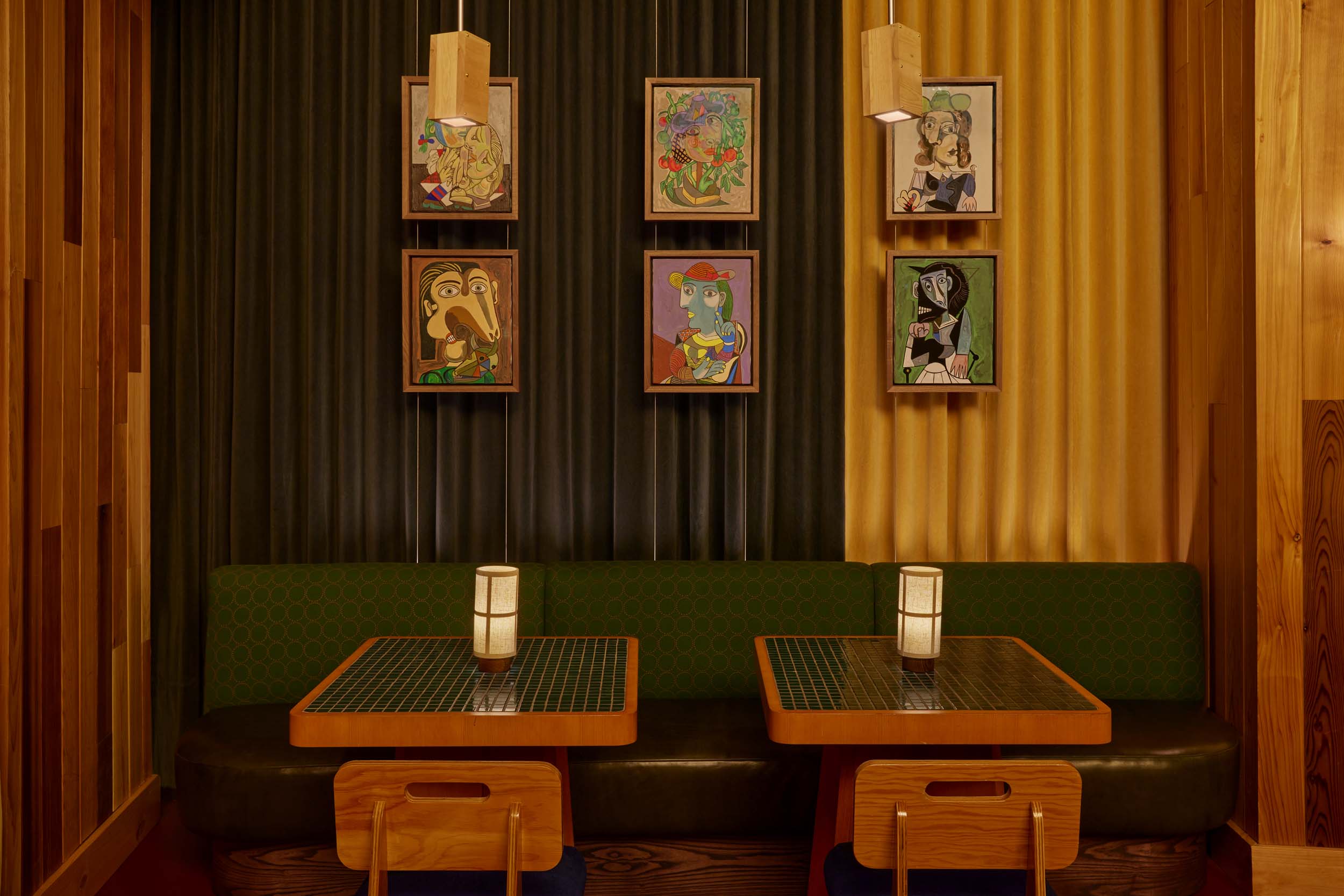
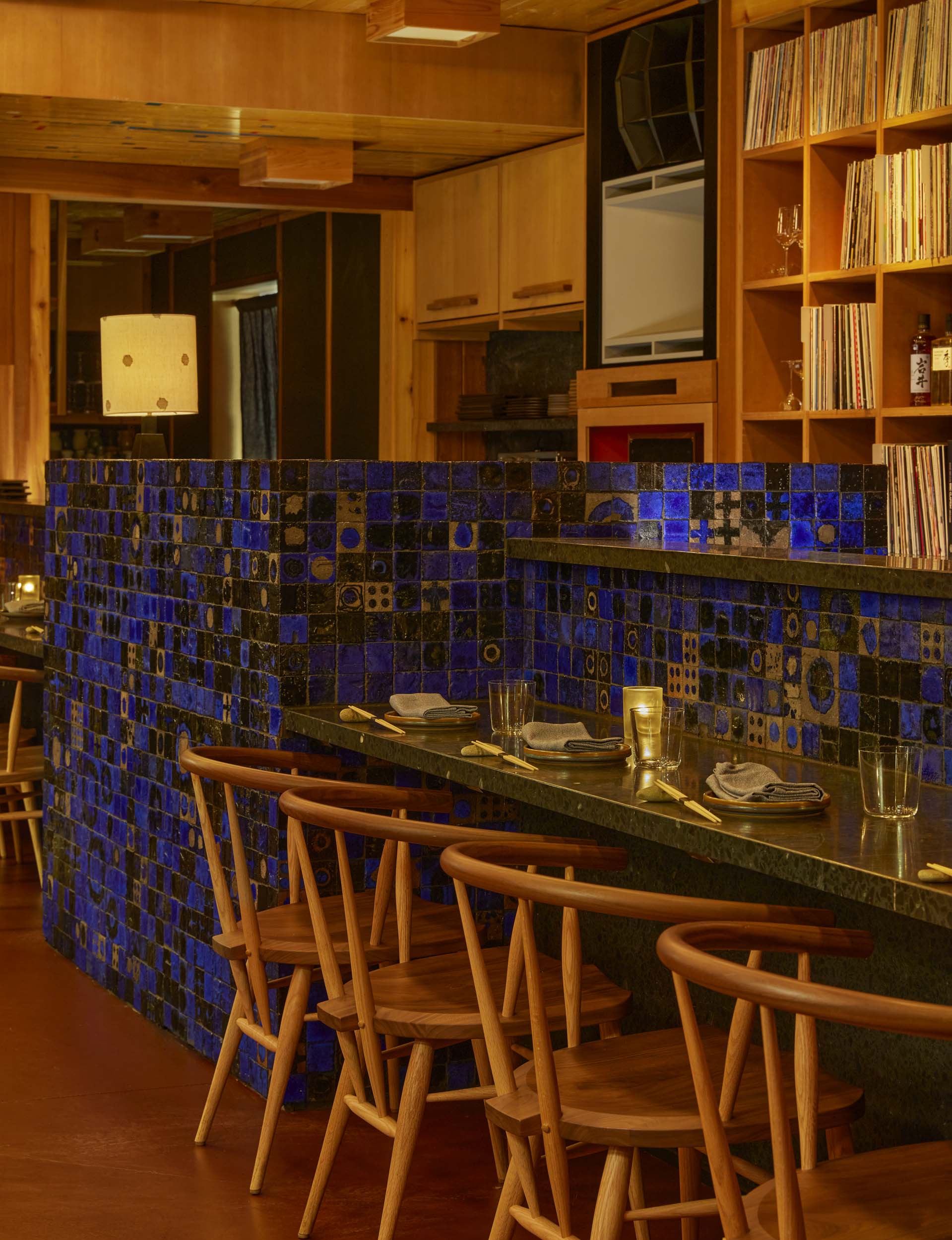
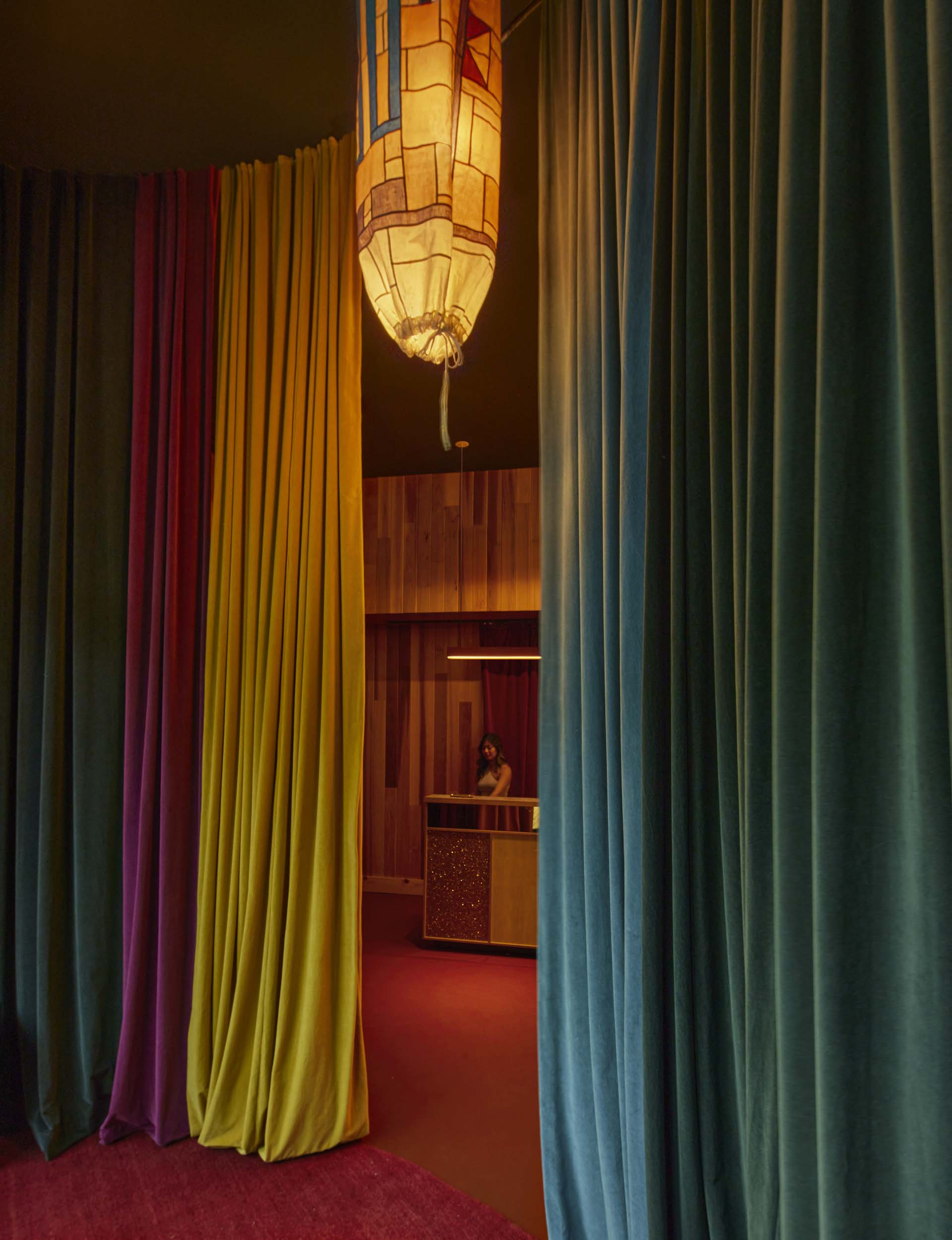
For Commune, the most rewarding aspect of 888 was collaborating with Japanese and American artists on custom pieces. This includes the washi used in the “lantern” above the bar that was fabricated by Senda Takanori and designed by Yusuke Nagai of Vacant Studio. A wall at the back of the restaurant was doused in rich, colorful curtains with a series of playful abstract paintings by Japanese pop artist, Keiichi Tanaami. Bold blue tiles cladding the sushi bar were designed by California-based ceramicist Sofía Londoño. The ceramics surround the hi-fi sound system developed by soundscape artists Devon Turnbull and Steven Durr. Nearby, droopy geometric patchwork pendant lights hang from the ceiling. the fun fixtures were designed by Adam Pogue who used Japanese textiles. These custom touches, although individually very different, come together cohesively.
On 888’s website, is a description of what the restaurant’s name and sound bar signifies: “Hachi! Hachi! Hachi! Our name is derived from the Japanese online slang usage of the number 8 to represent applause.” The design team most certainly deserves a round of applause for cohesively weaving Japanese and American influences and reusing materials in new, creative ways.