Perched atop the highest elevation of Canada’s Keats Island, a sustainable, off-grid home is only reachable by water taxi or foot-passenger ferry. But the journey is worth picturesque views of Pacific Northwest—and playful, geometric architecture. At the tip of the incline lies a residence designed by Daria Sheina Studio which conceives of two geometric volumes rotated against each other. The home, named The Nest by the clients, offers a creative, fun model for remote and light-on-the-land living.

The name drove the concept of the design. “The clients’ choice of the name The Nest felt instantly fitting—it evoked a sense of solitude and belonging. The design naturally evolved from exploring the defining qualities of a nest—a cozy, intimate space shaped by circular movement and a deep connection to place,” said Daria Sheina, founder of Daria Sheina Studio.
These qualities determined the resulting volumes, which define the three levels within. Western red cedar clads the home, chosen for its specificity to the surrounding forest and how it will patina over time to blend into other vegetation. But because the home is so difficult to access, it had to be prefabricated. The team worked with BC Passive House, a full-service prefabrication company. They virtually modeled pieces and components, shipped them via truck and barge, and then airlifted parts by helicopter for the final placement. The construction took two days.
The design team helped lighten the intervention on the land. With The Nest’s 1,063-square-foot floor area, an incinerating toilet, rainwater collection, and filtration system were integrated. Solar panels also lie atop a face on the cubic volume, so that solar energy completely powers the home. The use of mass timber further eliminates the need for structural steel.
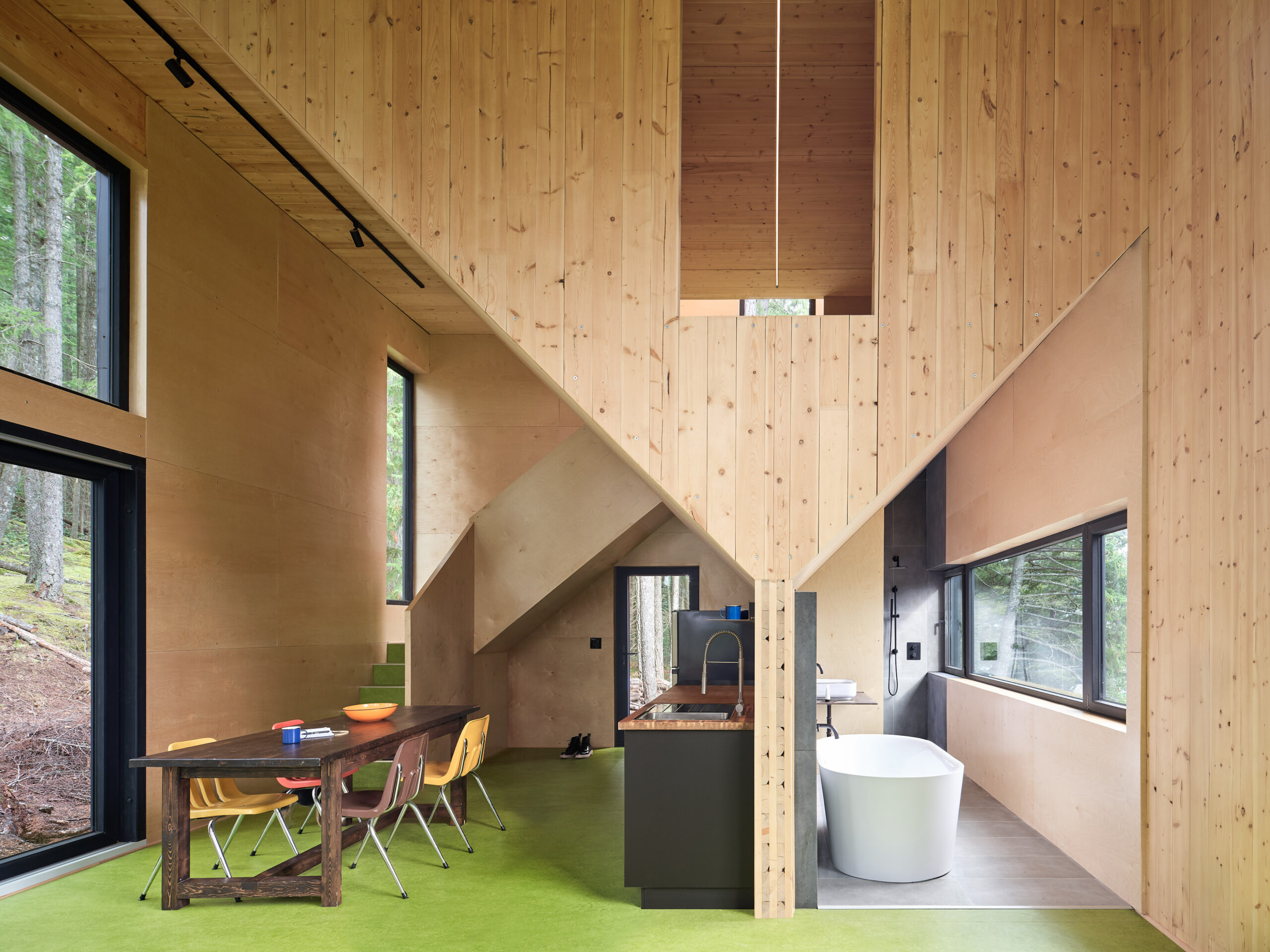
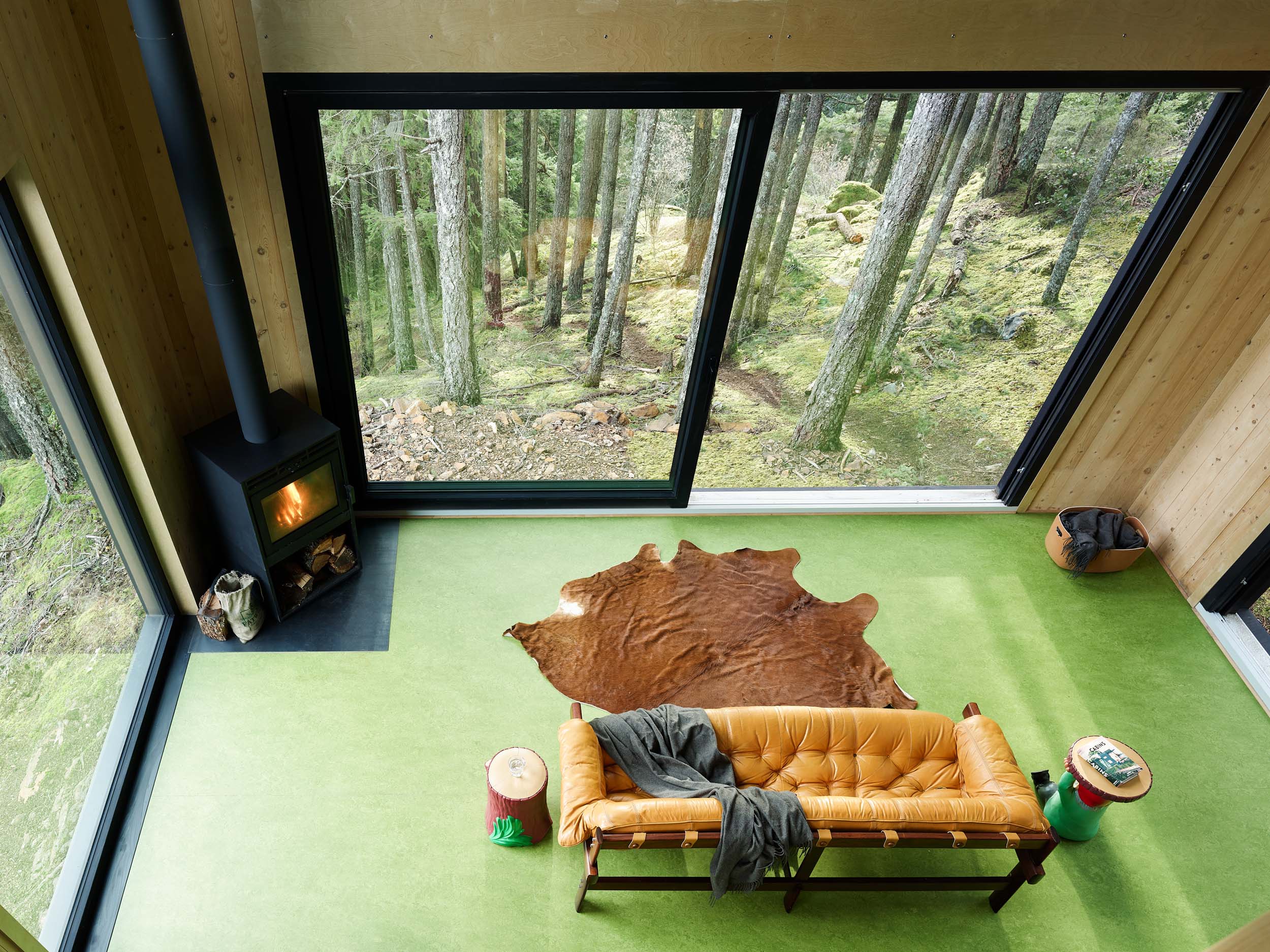
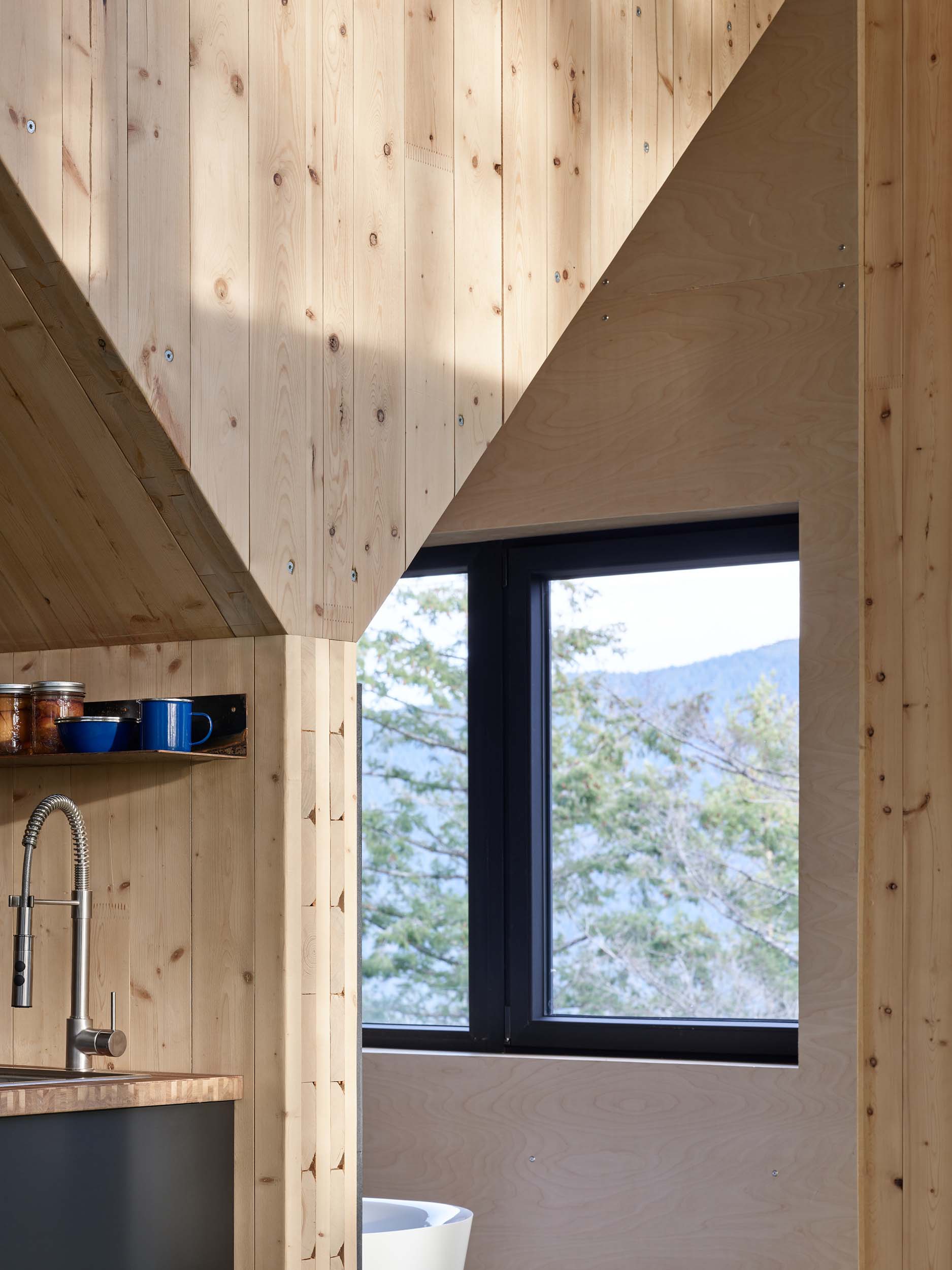
Inside, form and a connection to nature continue to inform the visual language. The cubic volume acts as a way to delineate the interior which continues the exterior language with its wood-clad walls and ceilings. On the first floor, the faces of the cube divide the kitchen from the bathroom. They both open up from under the top-most geometry into the living room. Here a small sitting area, aside a fireplace, has unobstructed views of the nearby Howe Sound via large and abundant windows.

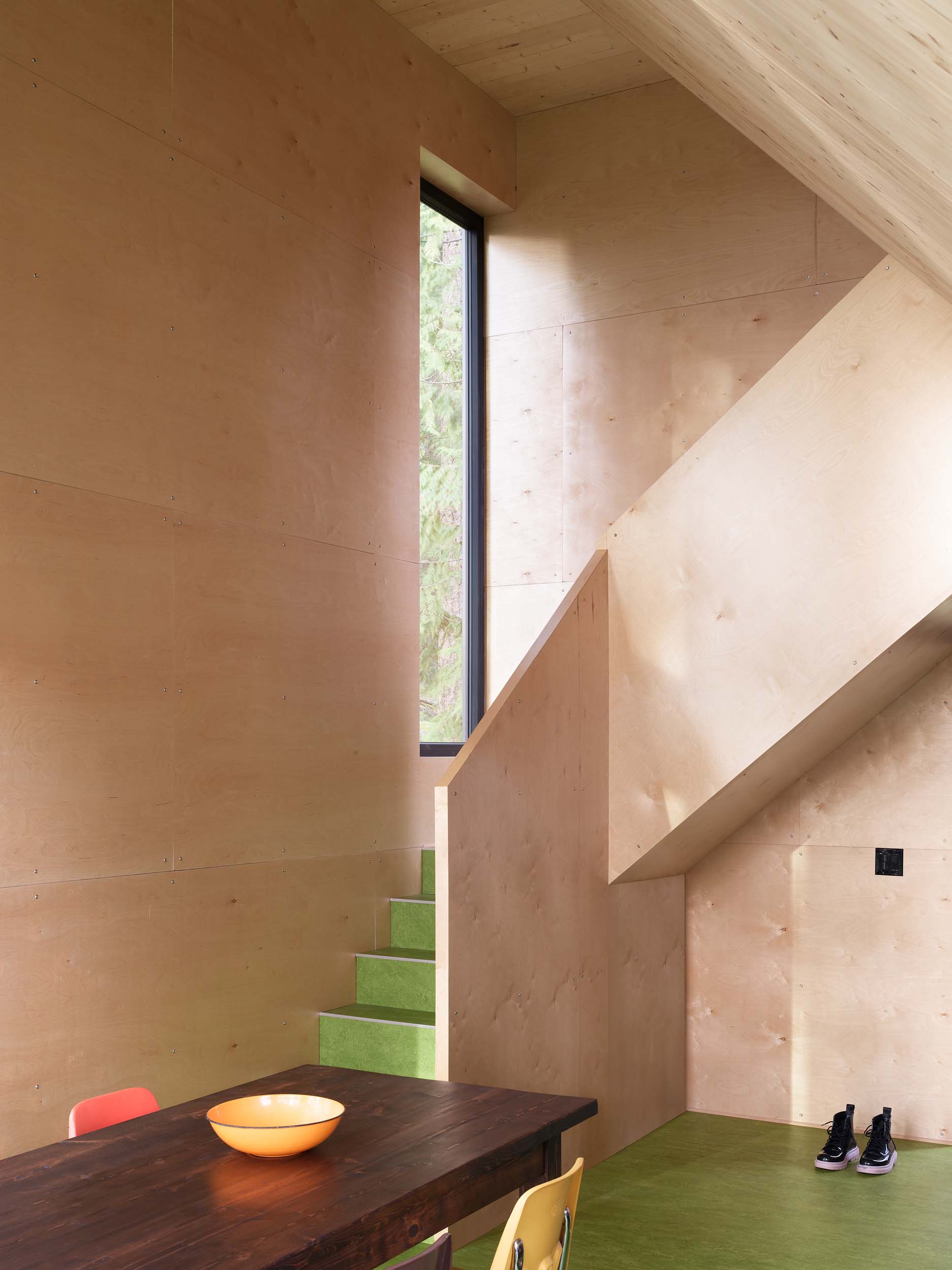
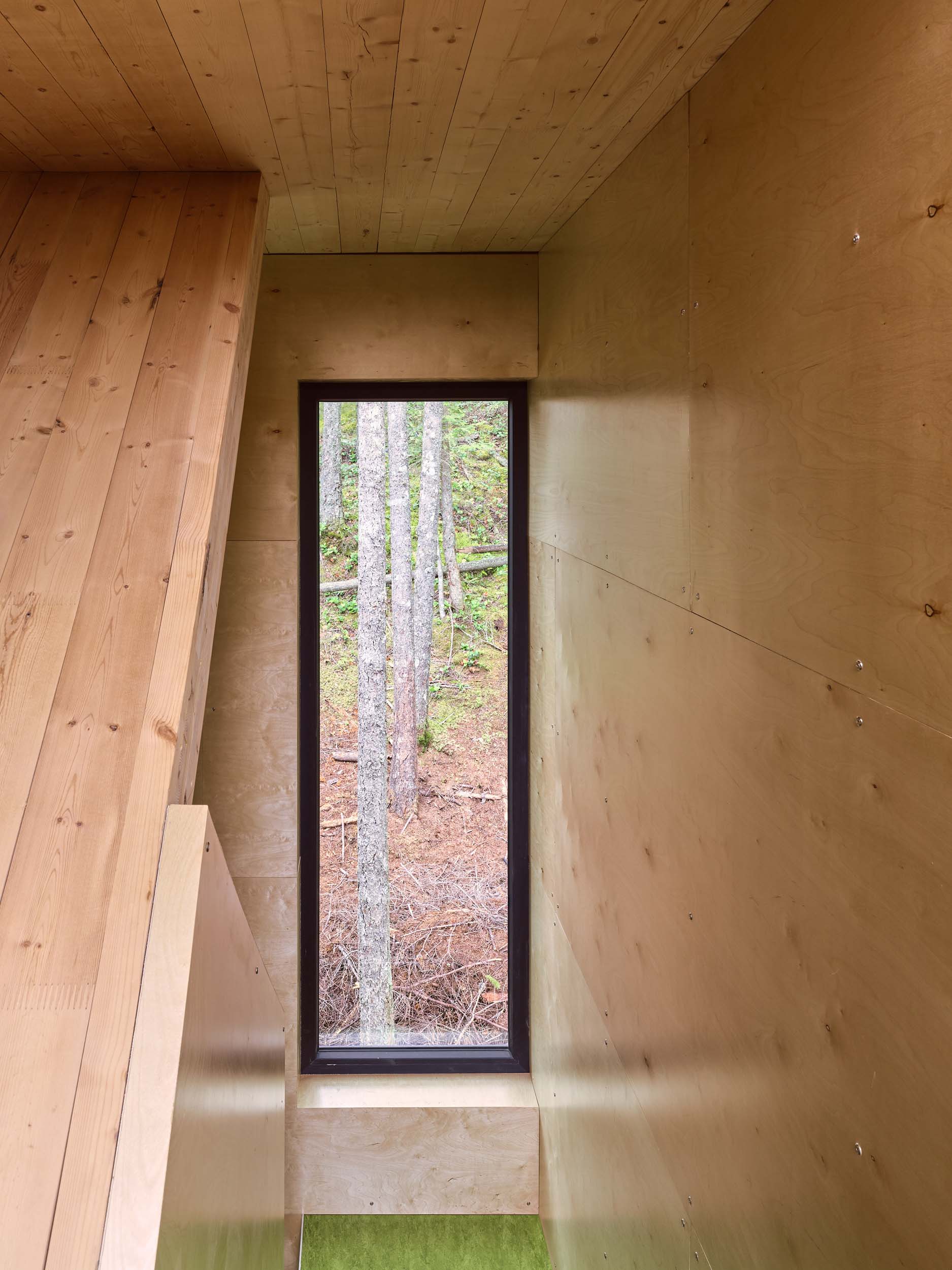
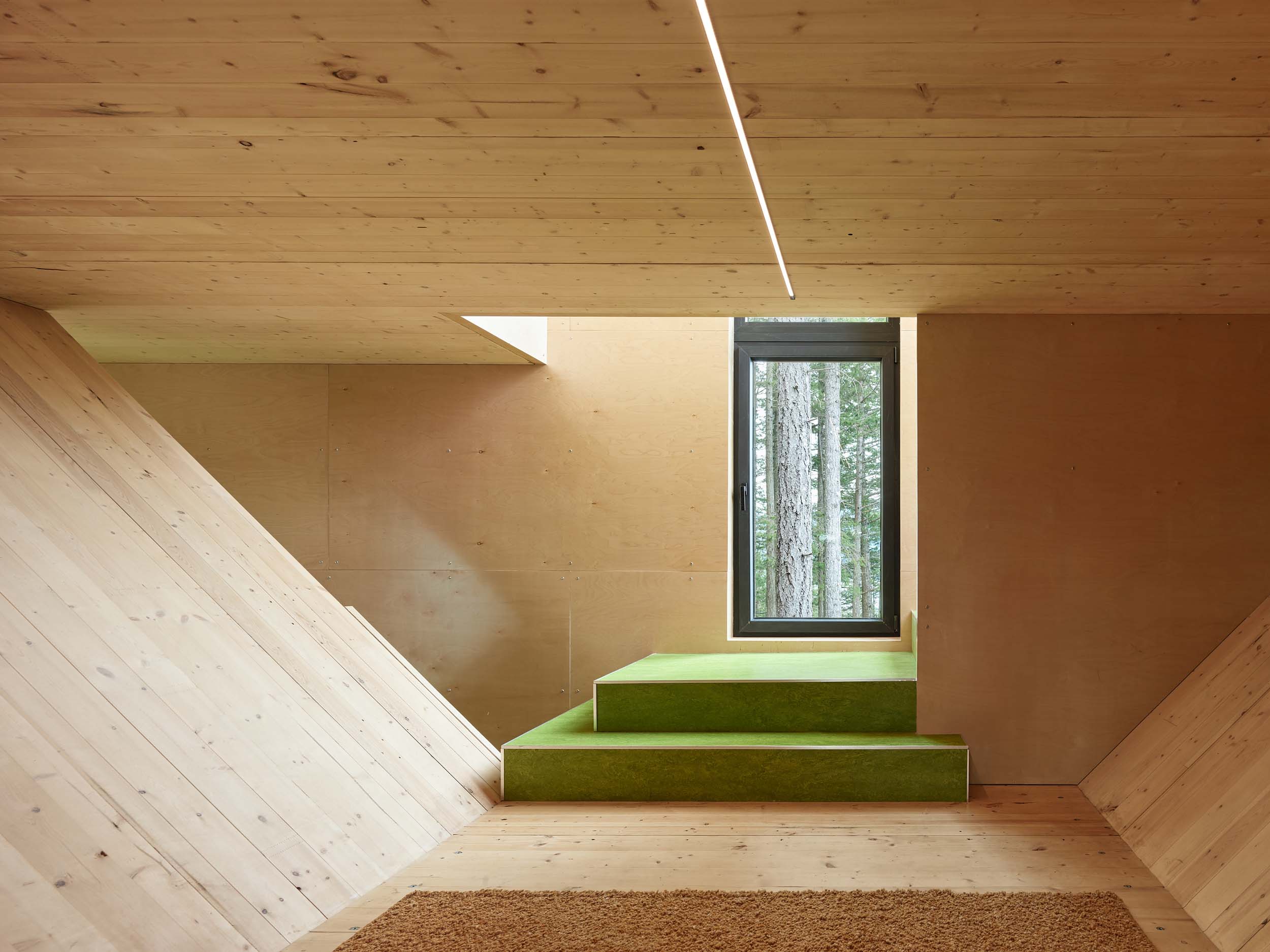
The floors are the only colorful departure, clad in green Marmoleum to evoke the carpet of moss that blankets the outdoors. The green continues up the stairs into a void carved into the above cube. In this second-floor lounge, the angled wall, the same faces of the cube that divvy the first floor zones, and low ceiling height create a cozy, almost liminal space. It’s lit by a window above the stairs, an aperture overlooking the living room, and a single, linear lighting track. The unfussy, minimalist furnishings ensure the experience of the space and its timber-clad surfaces feel expansive despite the small footprint.
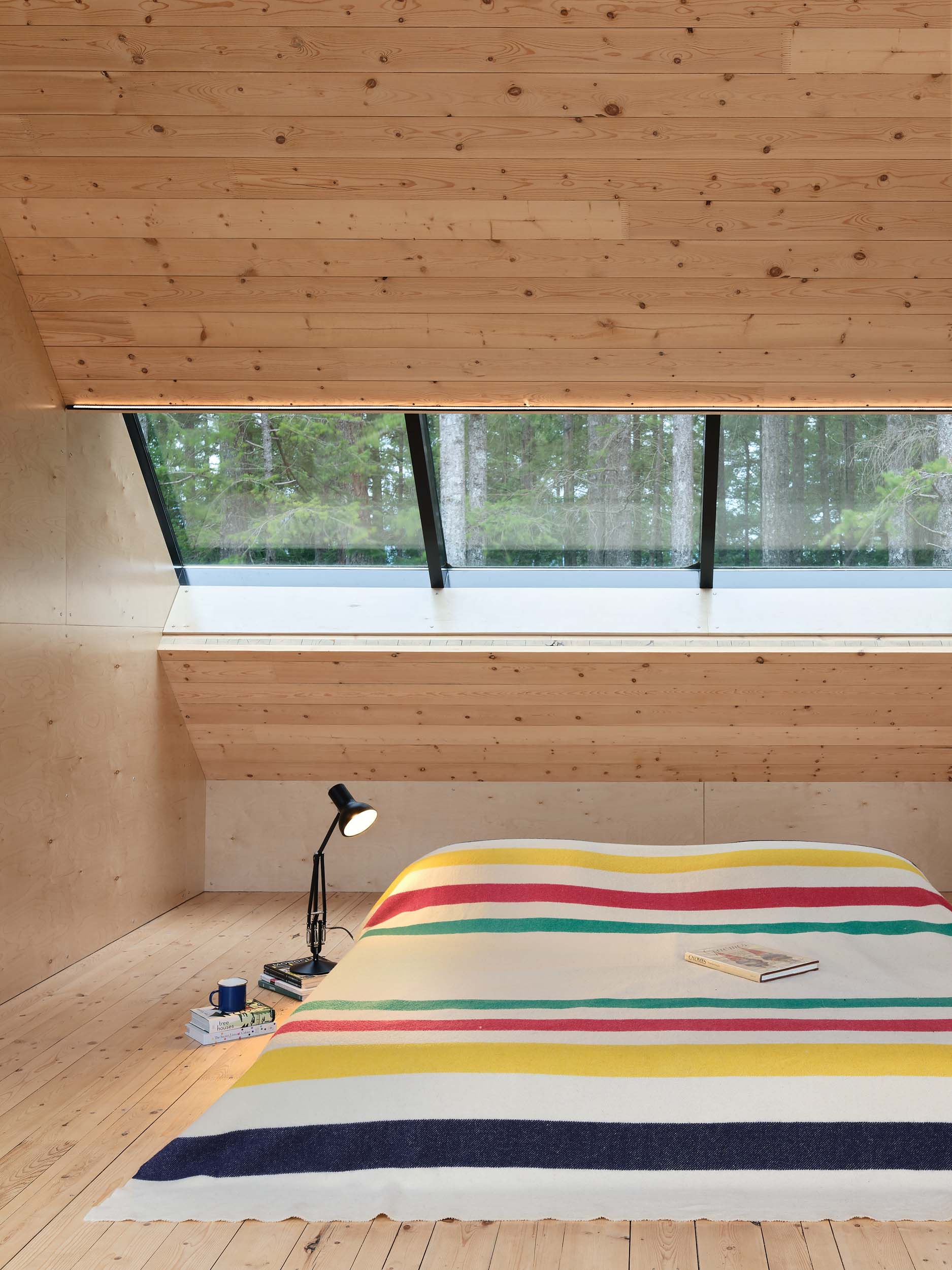
Above the lounge, a single bedroom takes up the nest within the nest. Again, sparse materiality ensures the views from the angled windows create a serene place to hunker down. The bed itself is frame-less, relying on the mat on the floor, alongside a table lamp propped up by a stack of books, and a rocking chair. Like The Nest itself, the bedroom focuses on appreciating the outdoors with minimal distractions in between.