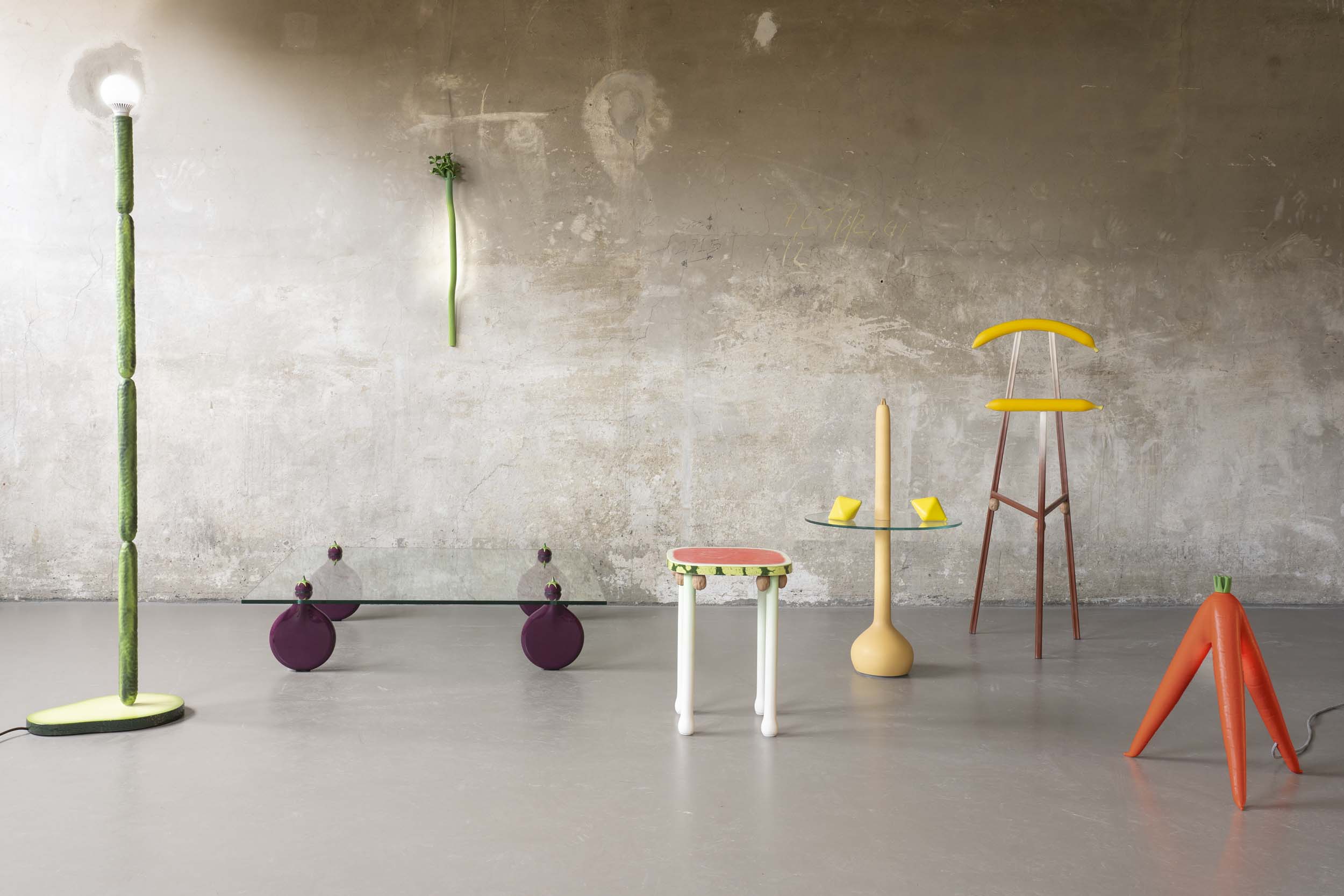
The rising permeability between food and design has forged material innovation, sustainable practices, and even new occupations. Some studios now perform double duty as chefs and designers to create culinary artistry and set design. Increasingly, the design of tablescapes and food-related activations, such as the Family Style exhibition during last year’s NYCxDESIGN or the pop-up restaurant and design activation, VOCLA, at this year’s Milan Design Week. How are designers using food as visual and material inspiration? Below we gathered some creative, edible-looking takes on the trend.


Hatch
Hatch, an eggshell-based floor lamp by Studio Yellowdot, repurposes food waste into parabolic diffusers to create soft, diffused light.

Sweet Art
Sweet Art is a bakery-inspired collection from BoConcept in collaboration with Danish designer Charlotte Høncke.


Lakki
Lakki by Caracara Collective is a fungi-themed lamp crafted from oak, reishi, turkey tail mycelium, and plywood.


Toast
Toast is a coffee table made from travertine by IAMMI with a look befitting its name.

Caesar Salad Chandelier
Caesar Salad Chandelier by Chloe Wise may not be made of food, but the crafty use of paint urethane, plexi, and lighting, makes the case for realism.

Butter Sofa
Butter Sofa by Faye Toogood for Tacchini is aptly modeled after a slab of Cornish butter.


Apple Sconce
Apple Sconce by James Cherry uses real apples, sliced thinly and placed onto sheets, to create lighting.


Kobold Sofa
Kobold Sofa presents the first large-scale furniture integration of Reishi, a mycelium-made biomaterial by MycoWorks, for Ligne Roset.

Caju Lamp
Caju Lamp by designer and chef Fernando Aciar in collaboration with Armando Cabral takes the shape of the caju fruit.


Tip Toe
Tip Toe by Studio Robert Stadler mimics carrots as part of the studio’s work exploring the relation between humans and the natural world, including the exhibition OMG – GMO.