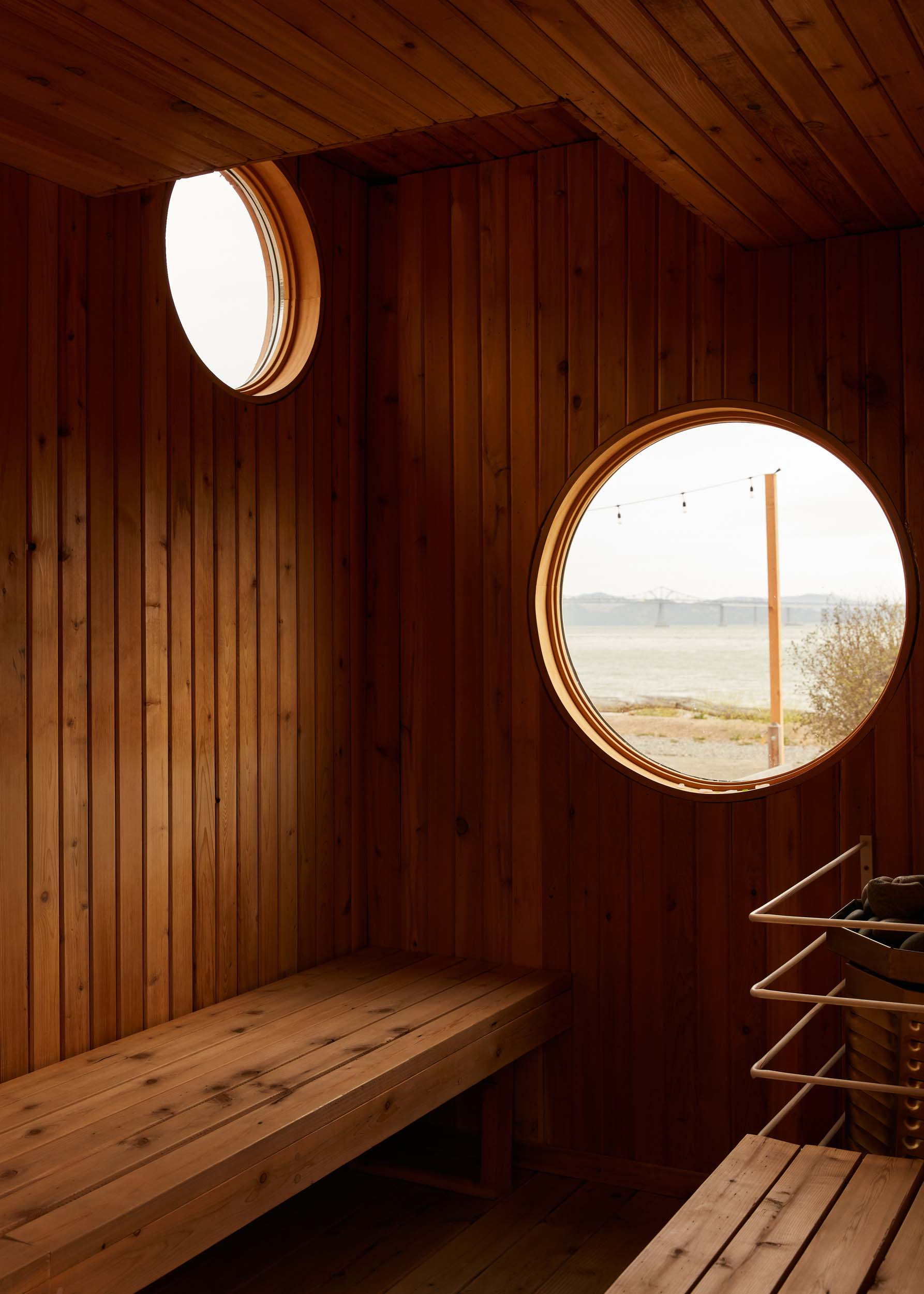
Surely you’ve heard the statistics regarding the dominance of saunas in Finnish culture: There’s more than one for every two people. To wit, I was once informed that the secret to enduring the long, dark, Nordic winter is “drinking alone [kalsarikännit] and sauna with friends.”
But you, reader, likely live in the United States in 2025 and have a smartphone, so you’ve probably been on the receiving end of digital advertising for infrared basement lighting or been evangelized by a health influencer on the benefits of thermal cycling. If you live near San Francisco, as I do, maybe you received these pitches in person, very genuinely, with full eye contact.
So where shall the two wellness ideas—social safety net and marketed lifestyle product—meet? The answer is still sauna.
You can build a freestanding sauna using basic construction techniques. Start with economical, rectangular dimensions, then assemble a wood frame with a conventional exterior envelope, extrainsulated. Locate ventilation in a few strategic places, and add flair with the details: roof, window, heater. Finish the interior in wood, preferably cedar.
But considering a sauna through structure is like assessing a Peter Zumthor chapel for its code compliance. Ultimately, a sauna is a place for ritual, for meditation, for congregation: It’s a simple building for a transformative purpose. And for an architect, designing that experience requires an intentional shift in scale and focus from typical professional practice.
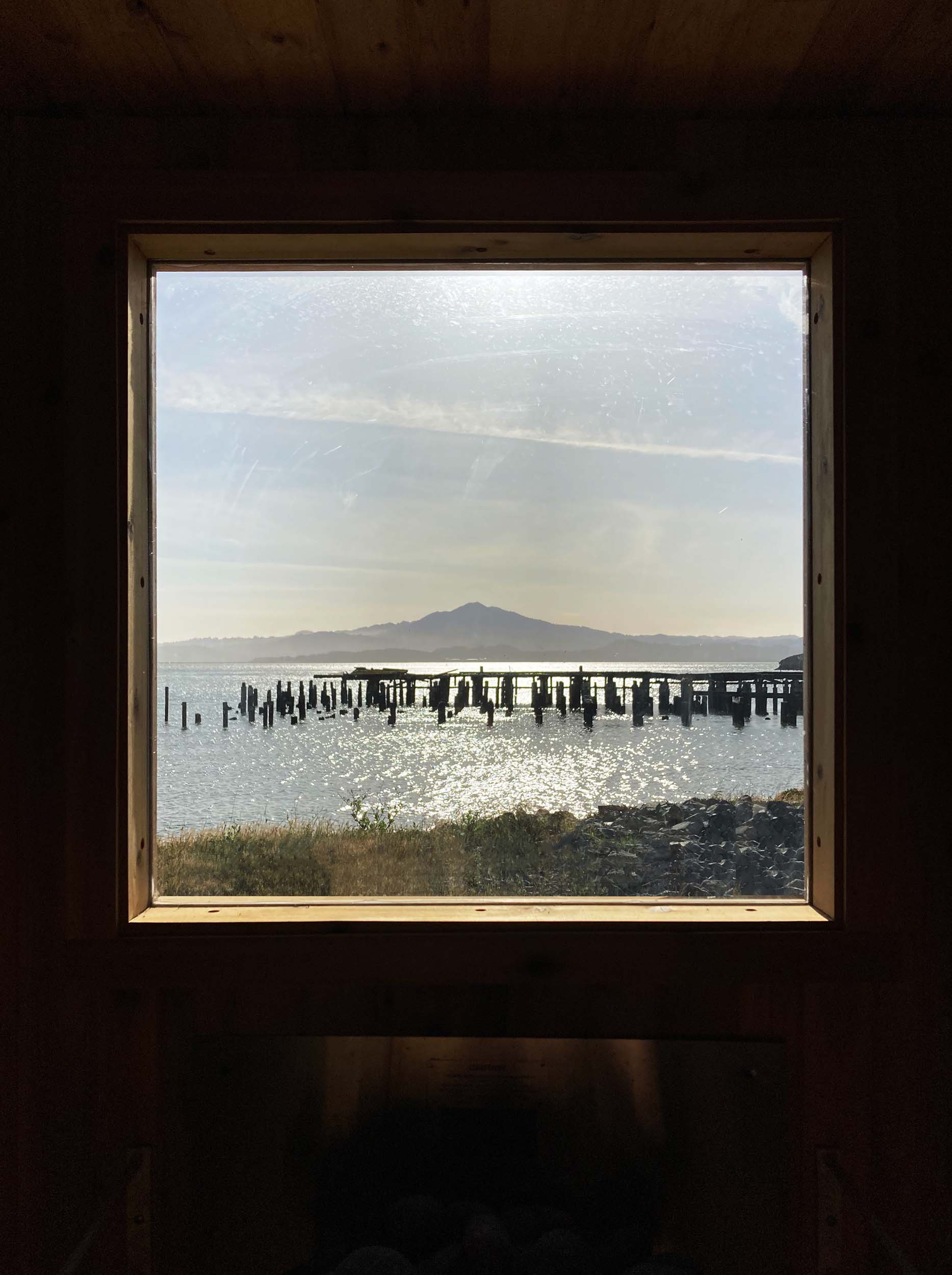
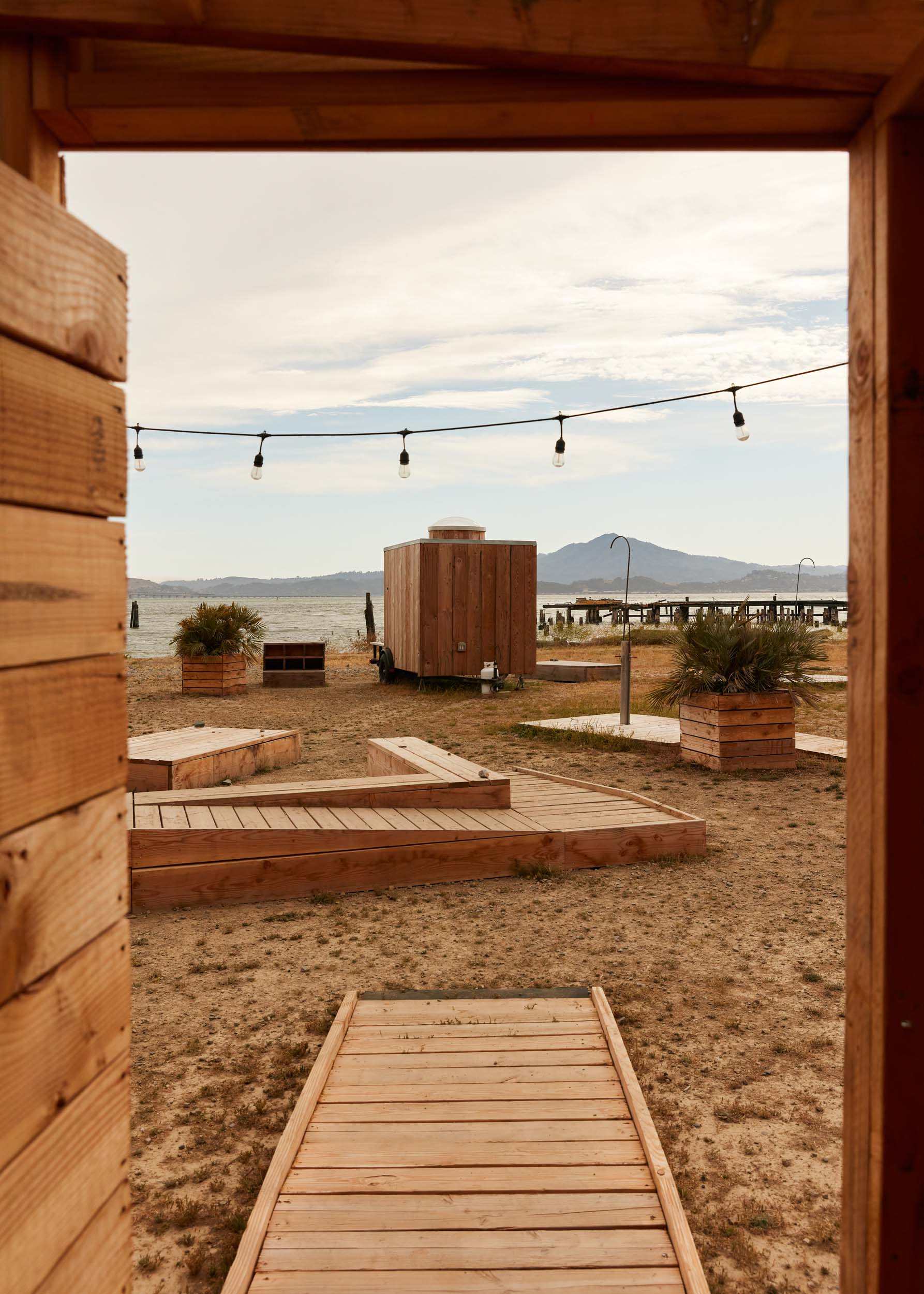
An example of this growth can be seen in the work of Lou Tamiye and Cooper Rogers, who graduated from the UC Berkeley College of Environmental Design MArch program in 2019. During the pandemic, they designed and opened Good Hot, a collection of five outdoor saunas nestled in a semi-industrial corner of Richmond, California. The site supports a deconstructed bathhouse, an unfolding series of saunas, changing cabins, low platforms, benches, outdoor showers, and chaises—a silvering garden of reclaimed wood.
“After school, we wanted to get our hands dirty,” Tamiye said recently. “We were thinking about architecture relating to people, so for us, putting theory in practice meant focusing on considerations like the experience of washing your hands in a certain way or how it feels to open a changing-stall door.”
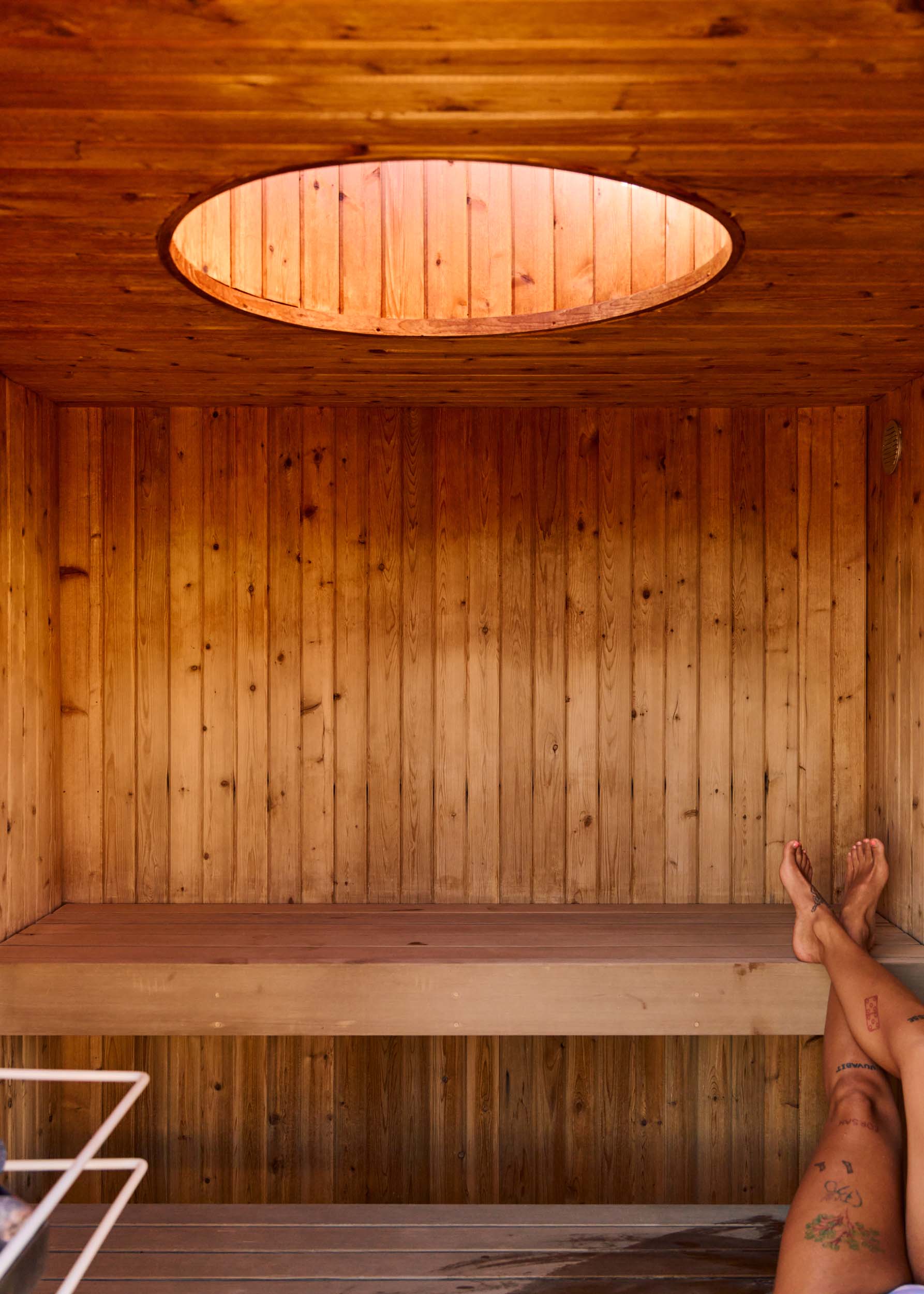
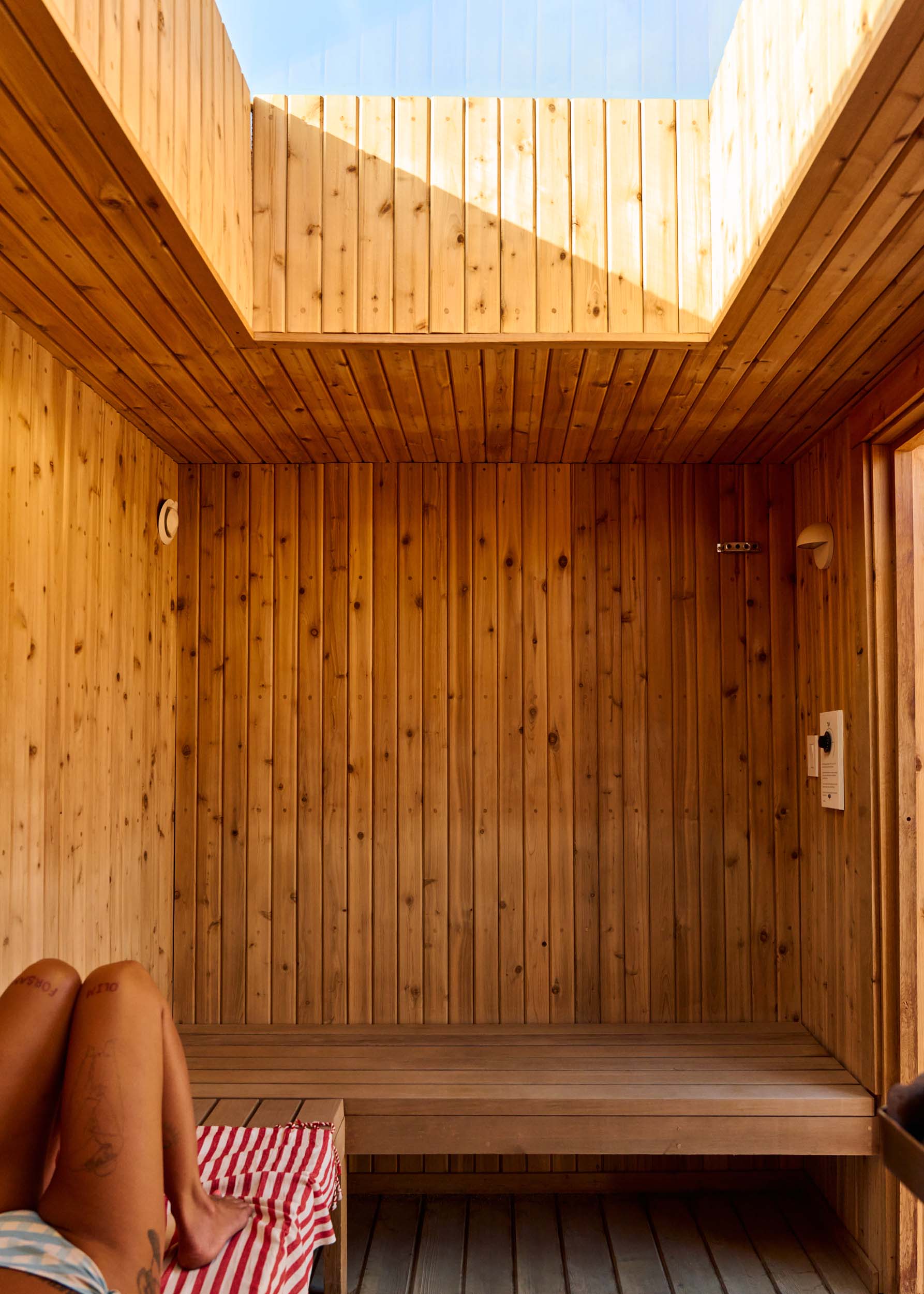
Rogers added, “We wanted to have a longer relationship to buildings than architects usually have—to not just be the creators but the caretakers.” In this milieu, caretaking is much more holistic than your standard punch list: “You’re tending to the architecture, to the cleanliness, the light, the temperature.”
The main draw of Good Hot is its proximity to a relatively docile corner of the San Francisco Bay: in sauna parlance, a cold plunge. “How we relate to nature in Northern California, it’s a little rough, there’s a little bite—but that’s what makes it sublime,” said Rogers. Still, this dip is not for the timid. The Bay is choppy, cold, and, in places, contaminated. “The saunas expand access to the elements, to what would otherwise be an intimidating experience.”
As a space that is equal parts community oriented, at the mercy of nature, and completely analog, Good Hot feels unique to the Bay Area’s culture. Still, there are larger lessons to be drawn from this architectural experiment. Bathing traditions as social practice are not new, but there is a dawning urgency for accessible spaces to get offline. To retreat. To contemplate. Maybe not to drink alone, but certainly to sauna with friends.
With that in mind, Tamiye and Rogers are currently planning Good Hot’s second location at O2AA, a former oxygen factory in West Oakland now shared by craftspeople and artists. It will have saunas, tubs, and pools, and, in contrast to Richmond’s windy shores, is meant as more of an everyday destination.
A daily sauna ritual is also an architectural experience, or at least an observational exercise in inhabiting the built environment. You shiver at a cold draft, appreciate each layer of weatherproofing, absorb all the skylight details—you feel every growth ring in the cedar as you sweat your way to serenity.