
Cofounders of Detroit’s Little Village, Anthony and JJ Curis, came across a small 2,000-square-foot commercial building tucked away on Charlevoix Street within the creative campus. The campus is a new development by the duo dedicated to art and community programming brimming with parks, cultural spaces, housing, and galleries. With the help of local architecture firm M1DTW Architects, the abandoned building was converted into LSC—O, a multipurpose facility that operates as an archive and space to showcase the art from neighboring galleries: Library Street Collective and Louis Buhl & Co.
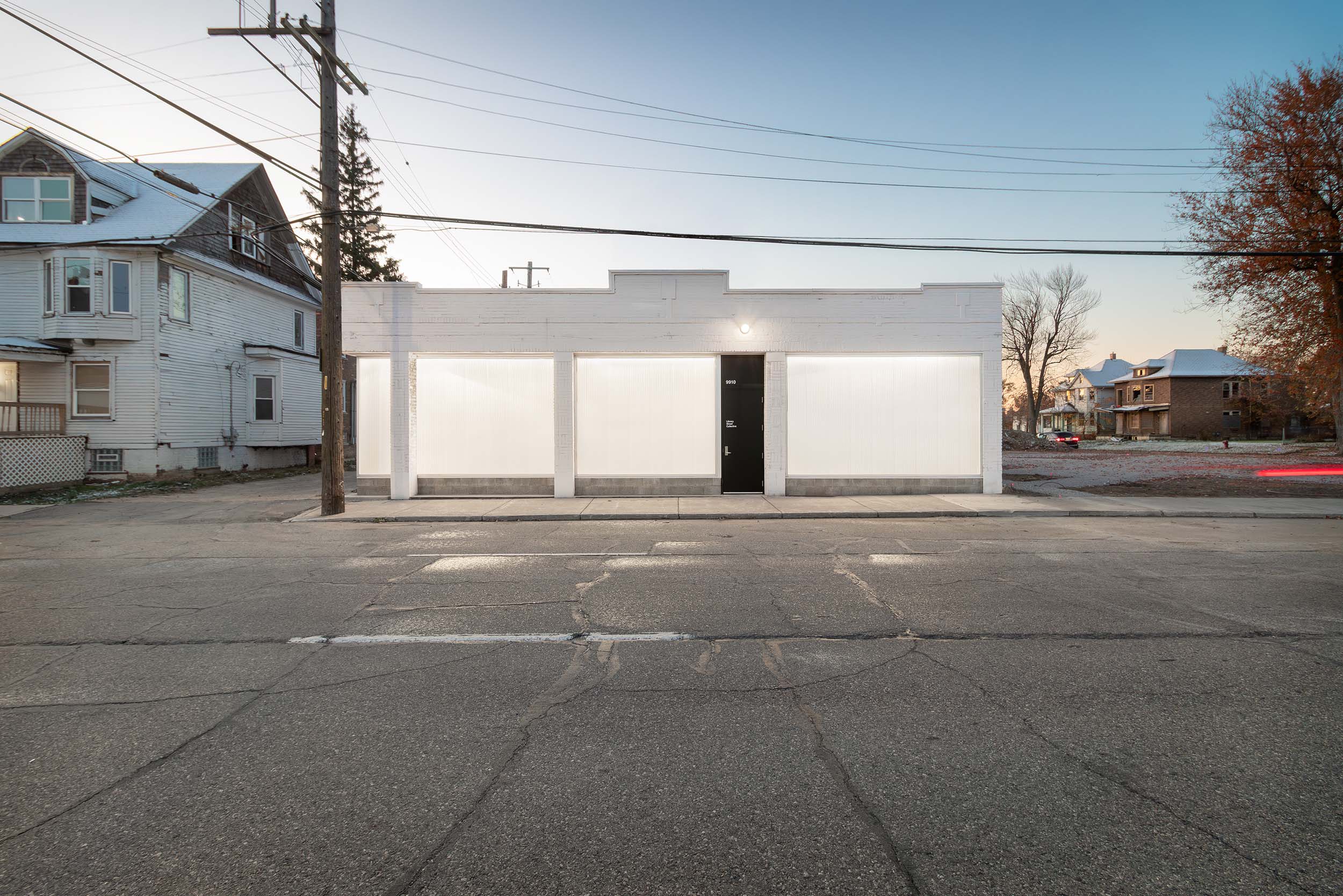
LSC—O is a one-story building covered in crisp white paint, save for the narrow black front door. Large cut-outs where the original windows sat were replaced with nine-foot-tall frosted polycarbonate panels, transforming the small building into a glowing lantern at night and creating a soft natural light filter for the interiors during the day. As M1DTW’s founder Christian Unverzagt shared with AN Interior, “In the end, taking a dark, opaque building and transforming it into an active, light-filled workspace that retained qualities of the original brickwork while adding a new layer—and then being able to share it with you—that’s pretty cool.”
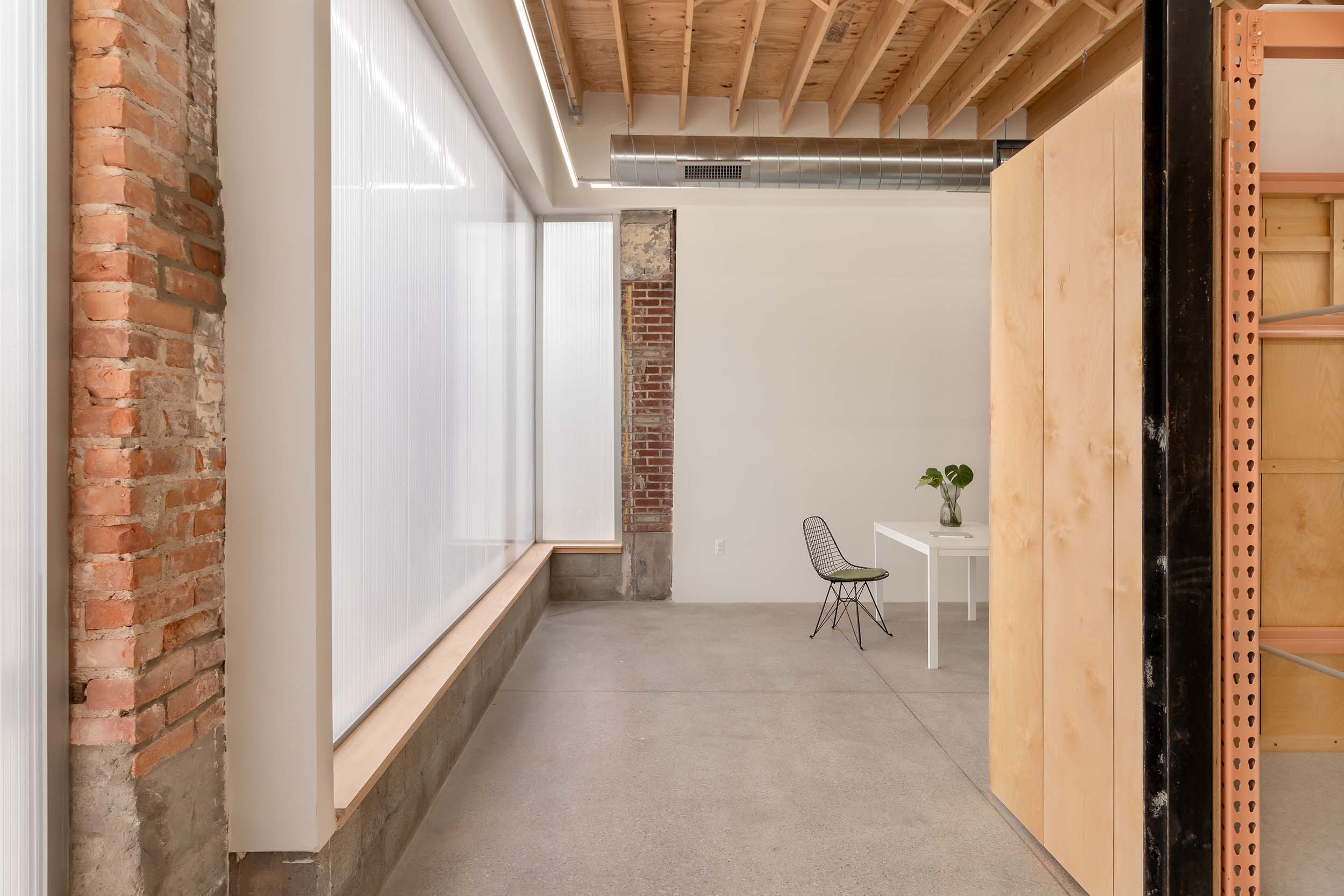
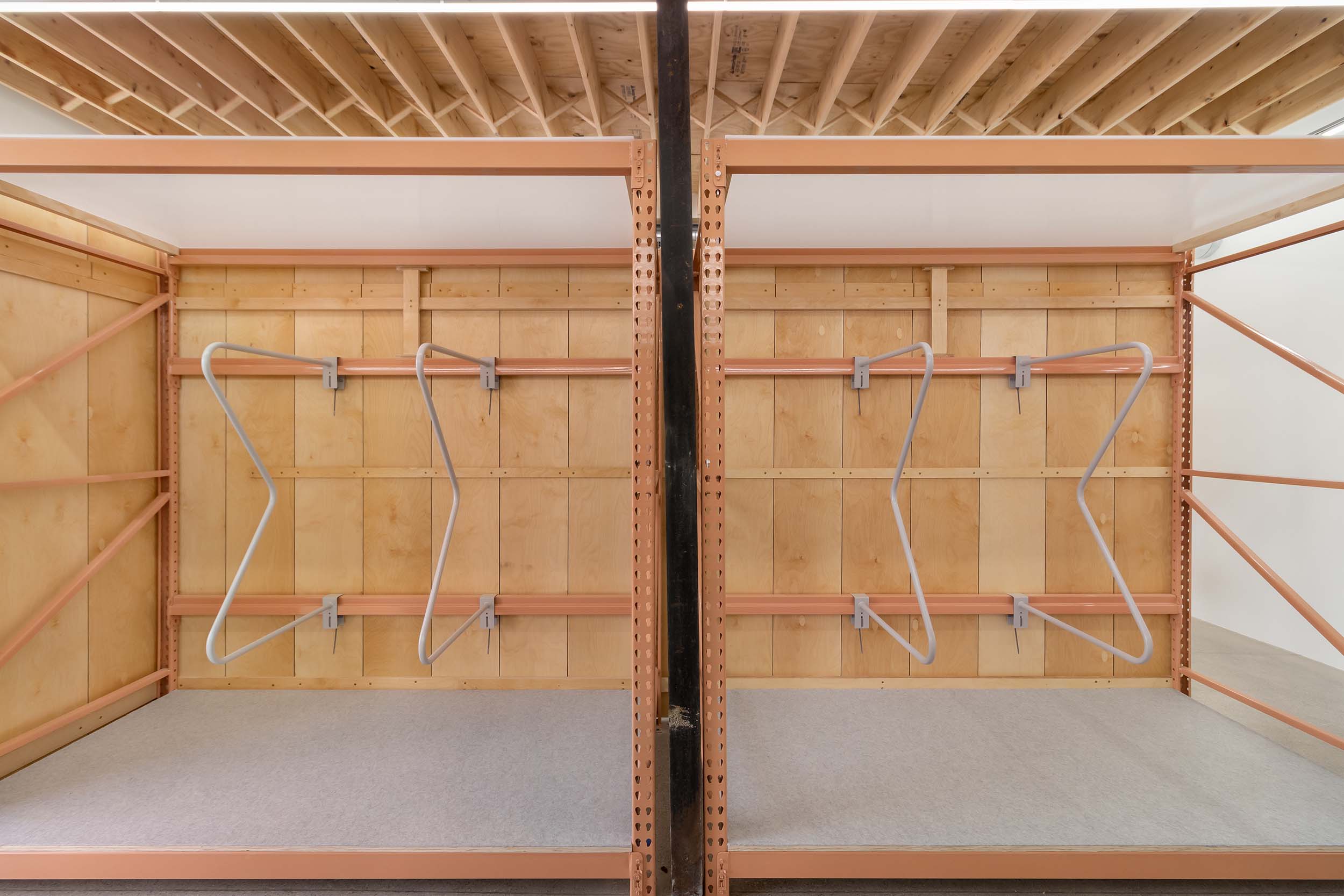
Inside, a smooth concrete floor and ridged wooden ceiling dominate the surfaces. The space is defined by several large pallet racks, adapted to the store, and painted in a custom powder-coated “Beige Red” coat, adding a warm touch to its industrial metal frames. Some of these racks were backed with light plywood boards to carve out some of the open floor plan and create passageways in between one storage unit to the other.
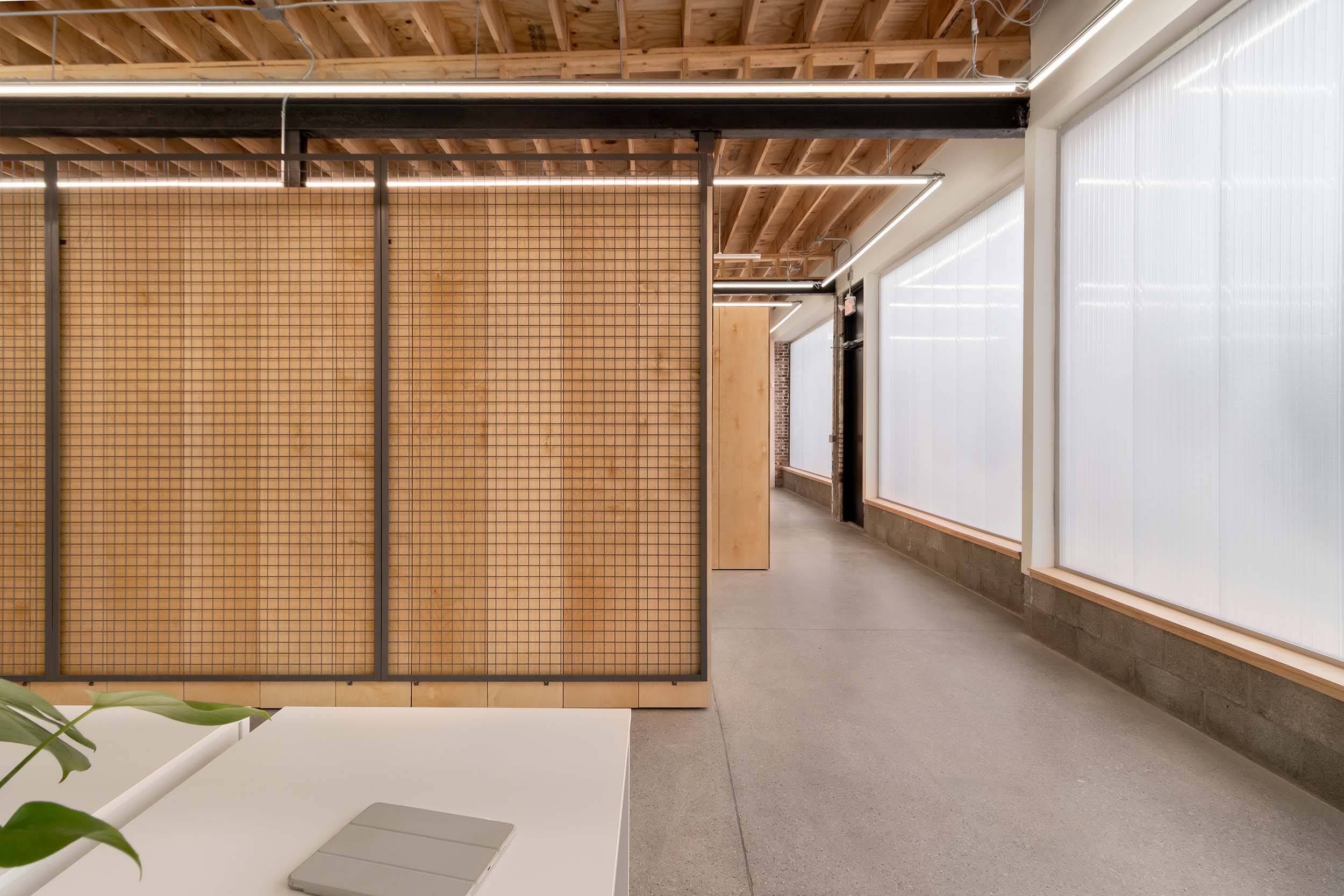
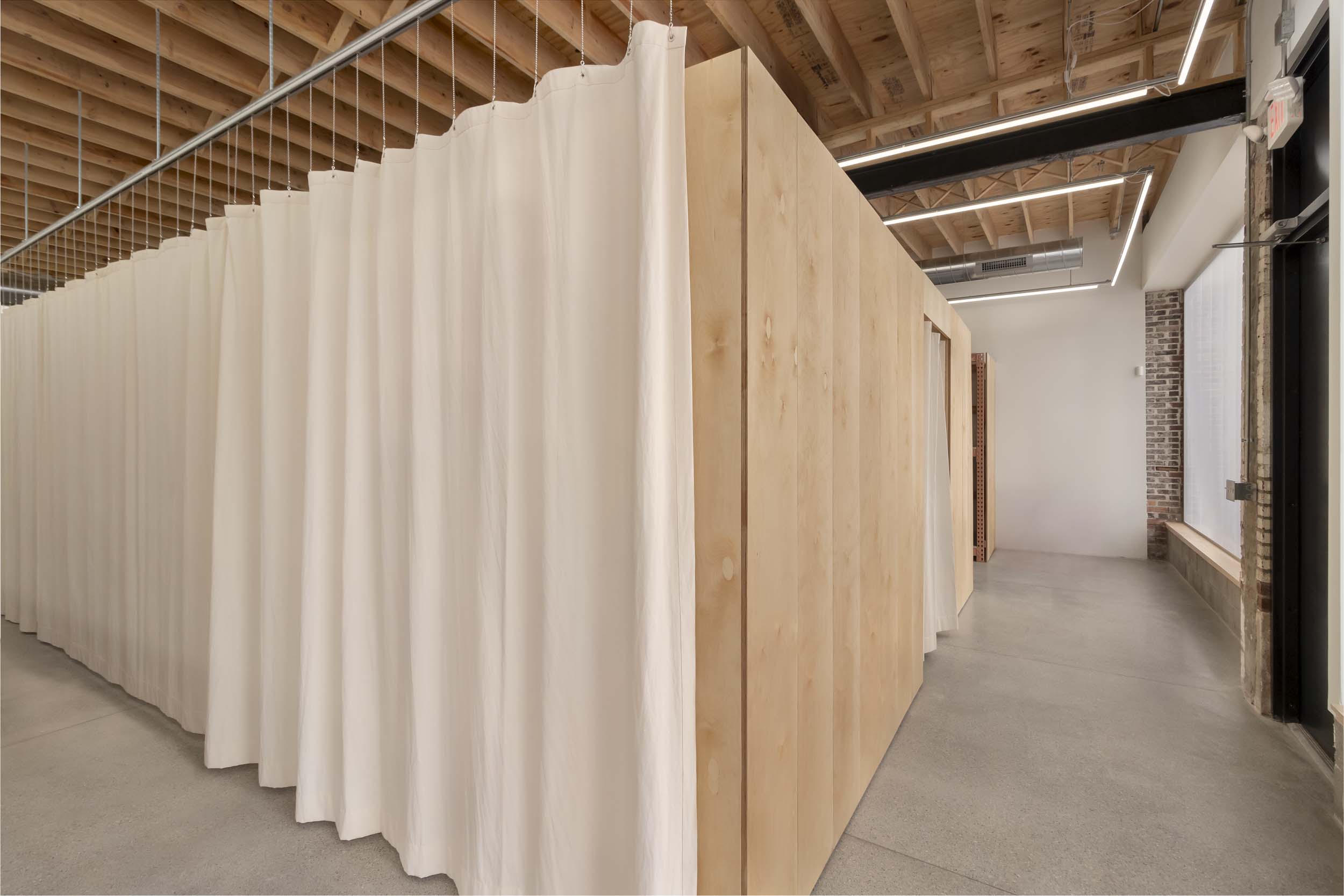
Although these plywood additions are not flexible, they are met with three moveable, unbleached canvas curtains along the steel beams, allowing some of the storage areas to either be open to the public or private and closed off. “The client’s current storage spaces were shoehorned into a number of dark, cramped spaces beneath the storefront galleries, so our main objective was to improve both the access and awareness of the holdings in a space that was as enjoyable to work in as their galleries,” Unverzagt continued. “We sought to help transform the way our client worked—not unlike the way Albert Kahn’s early factories took automobile production from the cramped workshop to an expansive hangar.”
Unverzagt shared with AN Interior that this unique adaptive reuse project could be described as “reborn,” and that, “the building was in pretty rough shape and could have easily been torn down. Anthony and JJ Curis had the foresight to try and save it.” With a limited material palette, M1DTW transformed LSC—O to meet its flexible program with a lean and economic design.