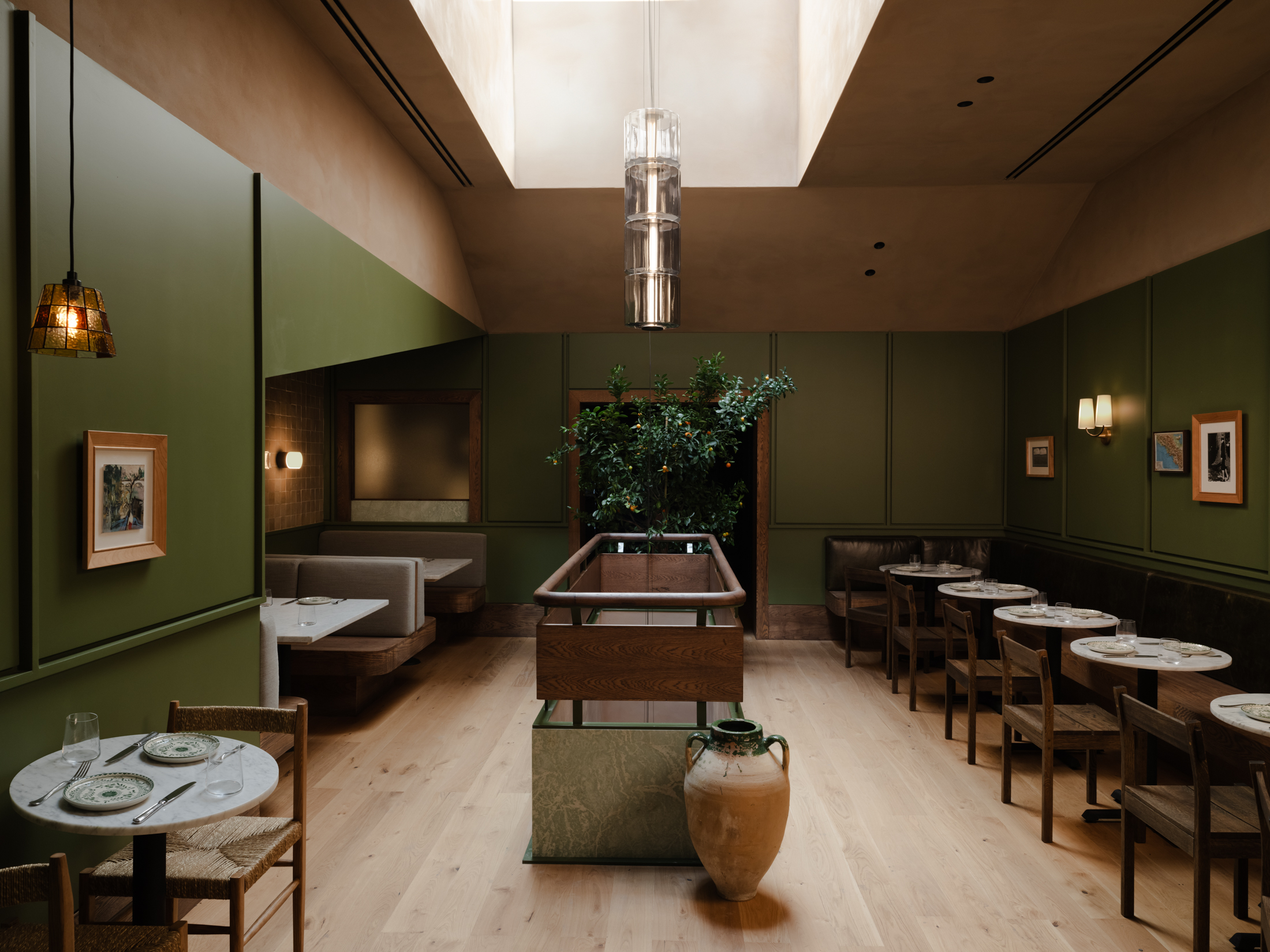
Acclaimed chef Stefano Secchi’s new restaurant, Massara Osteria Campana, is located across two floors of a historic building in New York’s Flatiron district. Brooklyn-based architecture and design firm Sarah Carpenter & Studio outfitted the 6,500-square-foot space by giving each zone—two bars and four different dining areas—a distinct sense of place, yet critically not estranged from one another or the menu’s concept.


The first floor greets guests with an open kitchen, anchored around a pizza oven, clad in green tiles. Above, a 3-story high atrium pours natural light onto the pizza-making and the 15-foot long continuous marble counter. A dining area looks into the action with Artillo Terracotta from Arto running around the walls like a wainscot, falling below the existing brick walls, plastered by Edmundson Studio. White carrara marble tables and brown Eberhart Thibault dining chairs make up the seating, as well as a cozy leather banquette slotted next to a bookshelf.


This floor is also home to the first bar. It’s surrounded by stone, from the floor tiling by Eco Outdoor to the stone wall adjacent to the bar. The studio renders the restaurant’s Italian fare with the country’s materials, sourced whenever possible from Italy.


A sooty green stairwell leads to the second floor. To the right another bar and dining area finds more contemporary sensibilities. The bar is clad in jade tiles from Heath Ceramics, more marble countertops, and vintage Italian lighting. The front dining area continues these earthy tones with a green-painted soffit running the length and more buttery leather upholstery. More rustic plaster on the walls give the interior a warm, inviting feel.

In the back dining room, green submerges the space, enveloping the interior with Farrow & Ball’s Bancha paint. A large skylight lies center of the space, shining down through the second floor and onto the first through a wood and marble opening. A clementine tree sits under the light, while two dining nooks are nestled beneath the sloped staircase. The room is both intimate, distinct from the rest, yet a continuation of Italy’s Campana region.