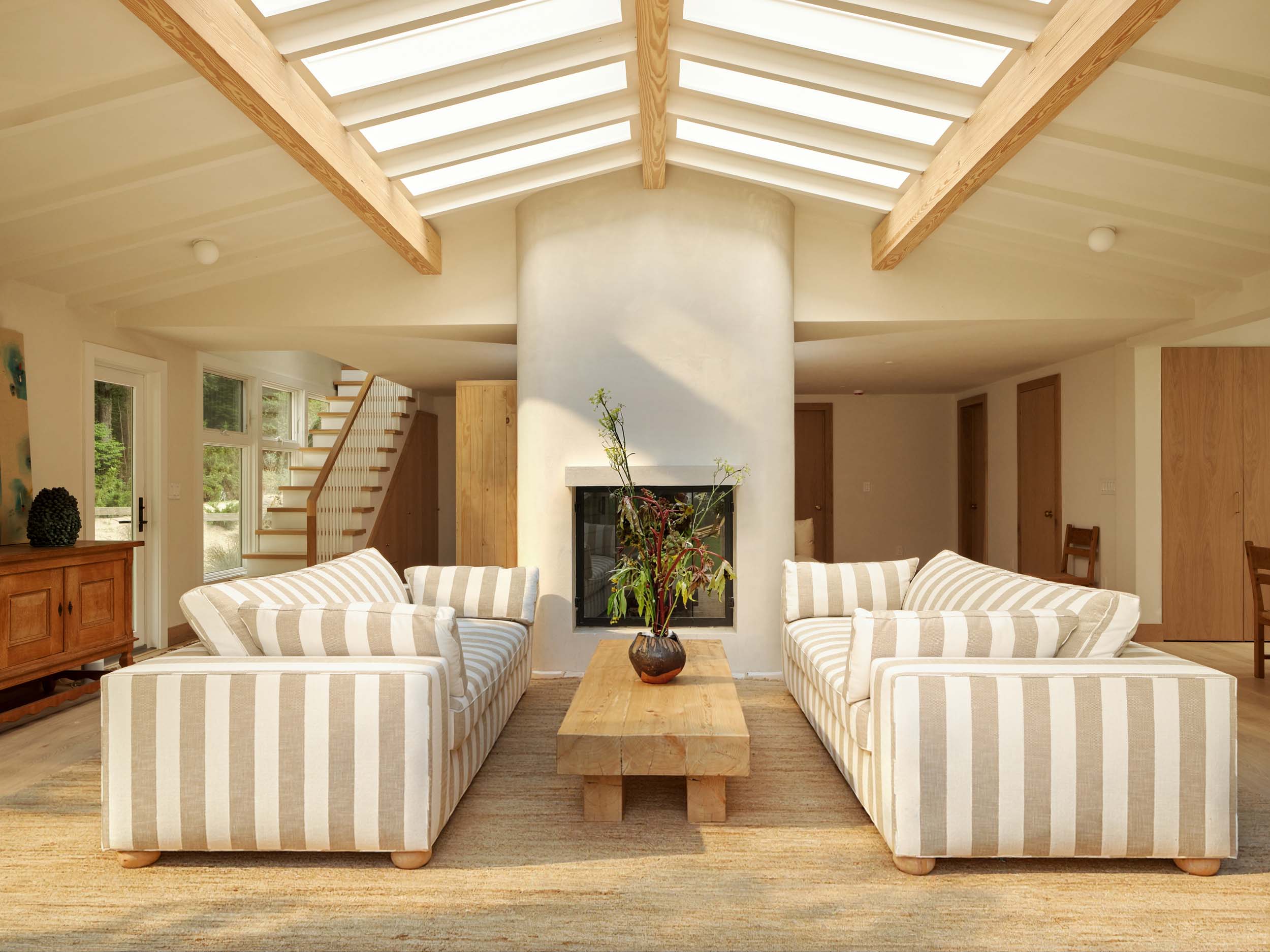
Textile designer and painter Caroline Z. Hurley and clothing designer Alex Crane purchased a family retreat in Springs, New York, tucked along the water’s edge with views of Three Mile Harbor. With its picturesque setting, East Hampton residence became the perfect canvas for the couple and their two children to build a family home as well as creative space for the duo to find inspiration. They looked to their friends at Office of Tangible Space, one of AN Interior’s Top 50 architects and designers of 2025 and the firm that previously worked with the couple on their Altadena home before it was lost to the Eaton fire. Tasked with delivering something sturdy enough for a young family yet soft and gentle to spark creative expression, the firm implemented a series of abundant natural light to, literally and metaphorically, open up the home.
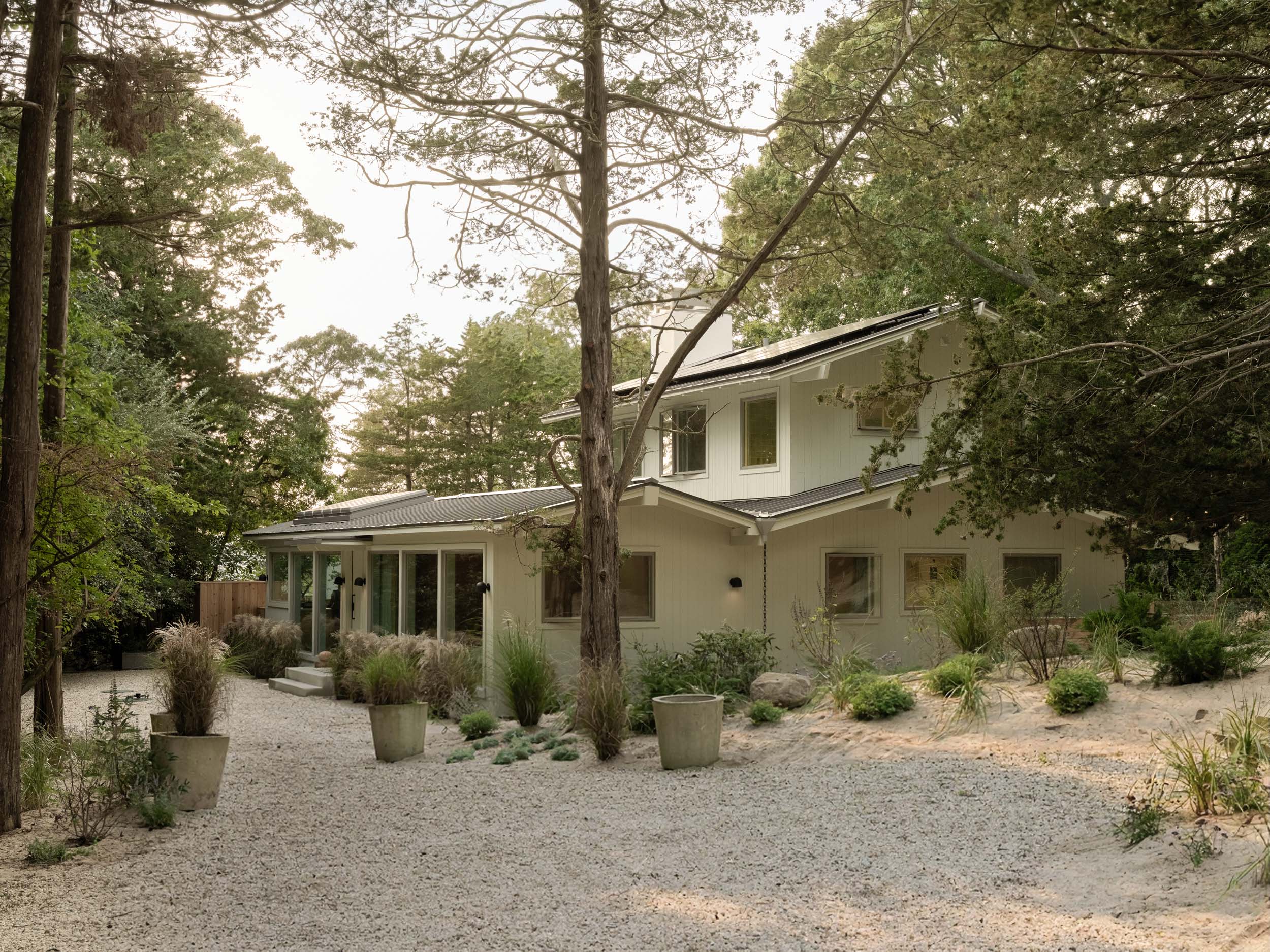
Working with Pebble Studio Design as architect of record, Office of Tangible Space first reconfigured the orientation of the home, beginning with the entry. A new 600-square-foot addition provides a new introduction to the residence, housing the new entry, mudroom, and sunroom which then flows into the living and dining spaces and kitchen. The addition, clad in slats of white wood, also introduces the key language of the home: frames of glazing. Floor-to-ceiling glass frames the entry on either side, washing the home in natural light.
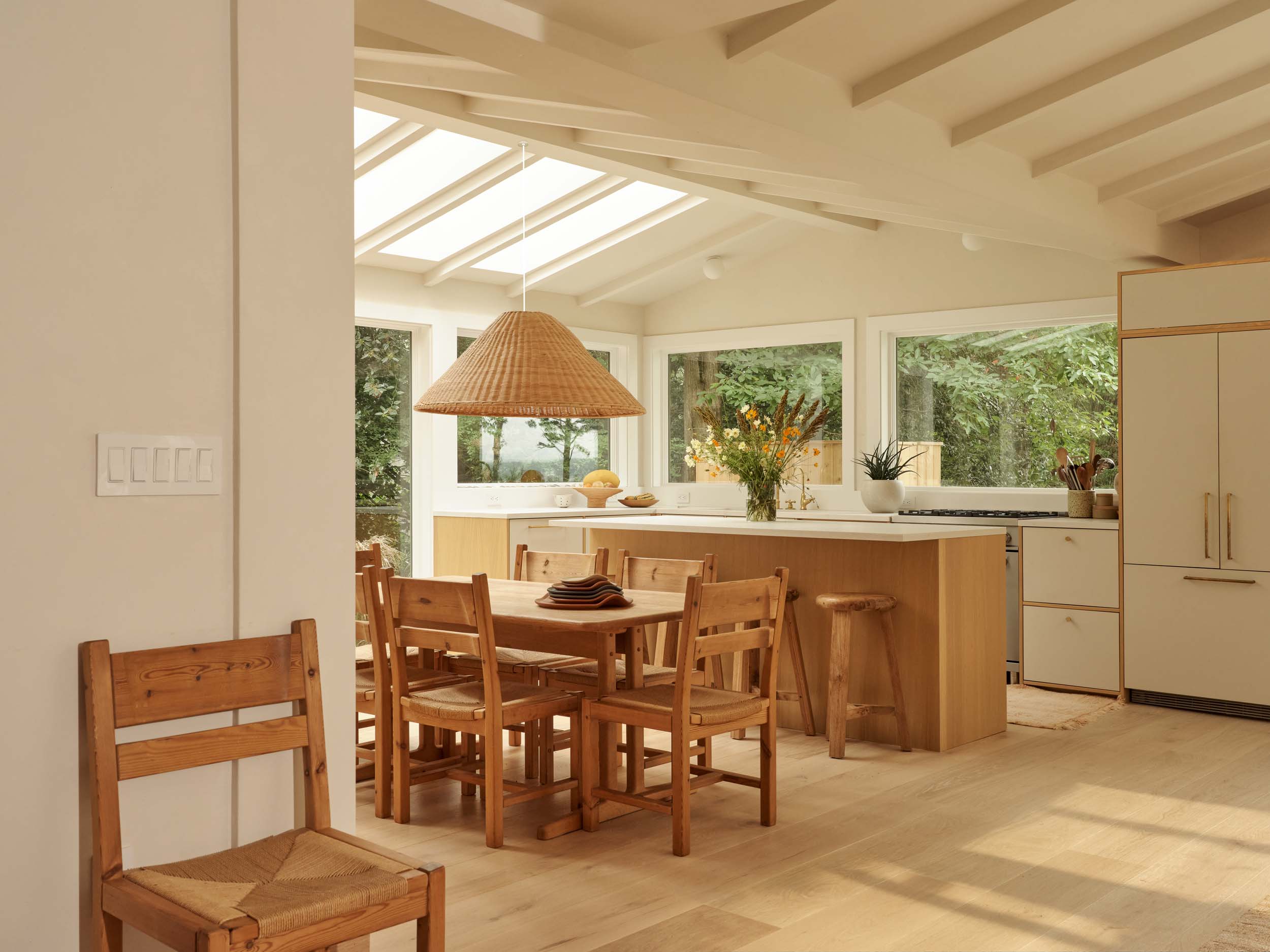
Inside, a series of skylights along the gabled roof’s wooden beams provide even more light from the top. Lit with glass and openings on all sides, the home is intimately connected to the outdoor pool, surrounding greenery and nearby water, feeling always within arms reach.
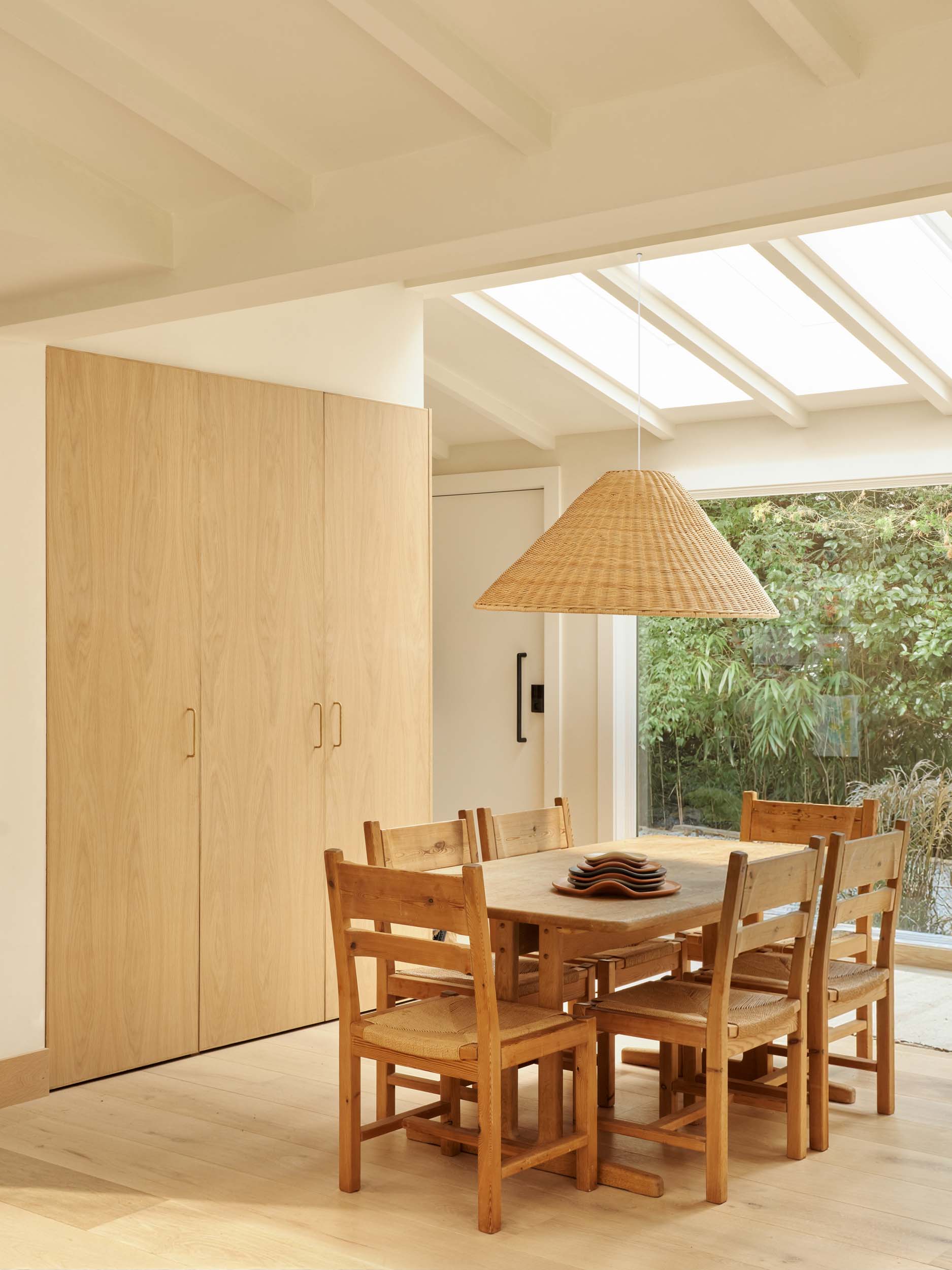
It particularly sets the new kitchen aglow. Here a white and wooden material palette reflects light further, while continuing the natural, warm theme of the home. The kitchen flows into the living room, where a new curved, plaster-wrapped fireplace (which houses plumbing and other technical services) falls just underneath the sequence of skylights.
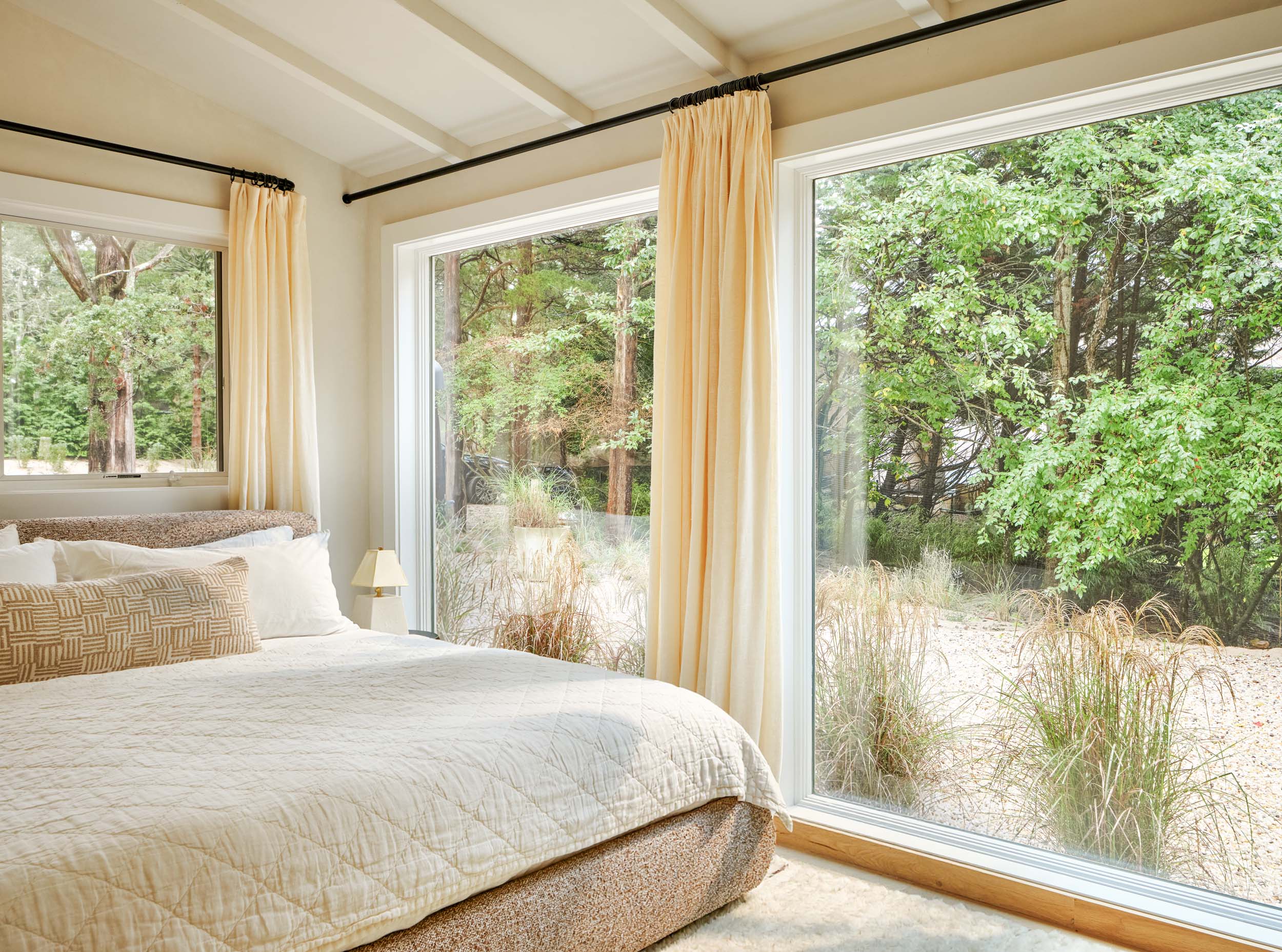
The material palette continues with lime-washed walls, linoleum and unlacquered brass, combined with neutral tones and Hurley’s own designs. Her textiles are woven throughout the home, including her Banana Leaf Cut Out and Desert Wide Stripe made in collaboration with Schumacher.
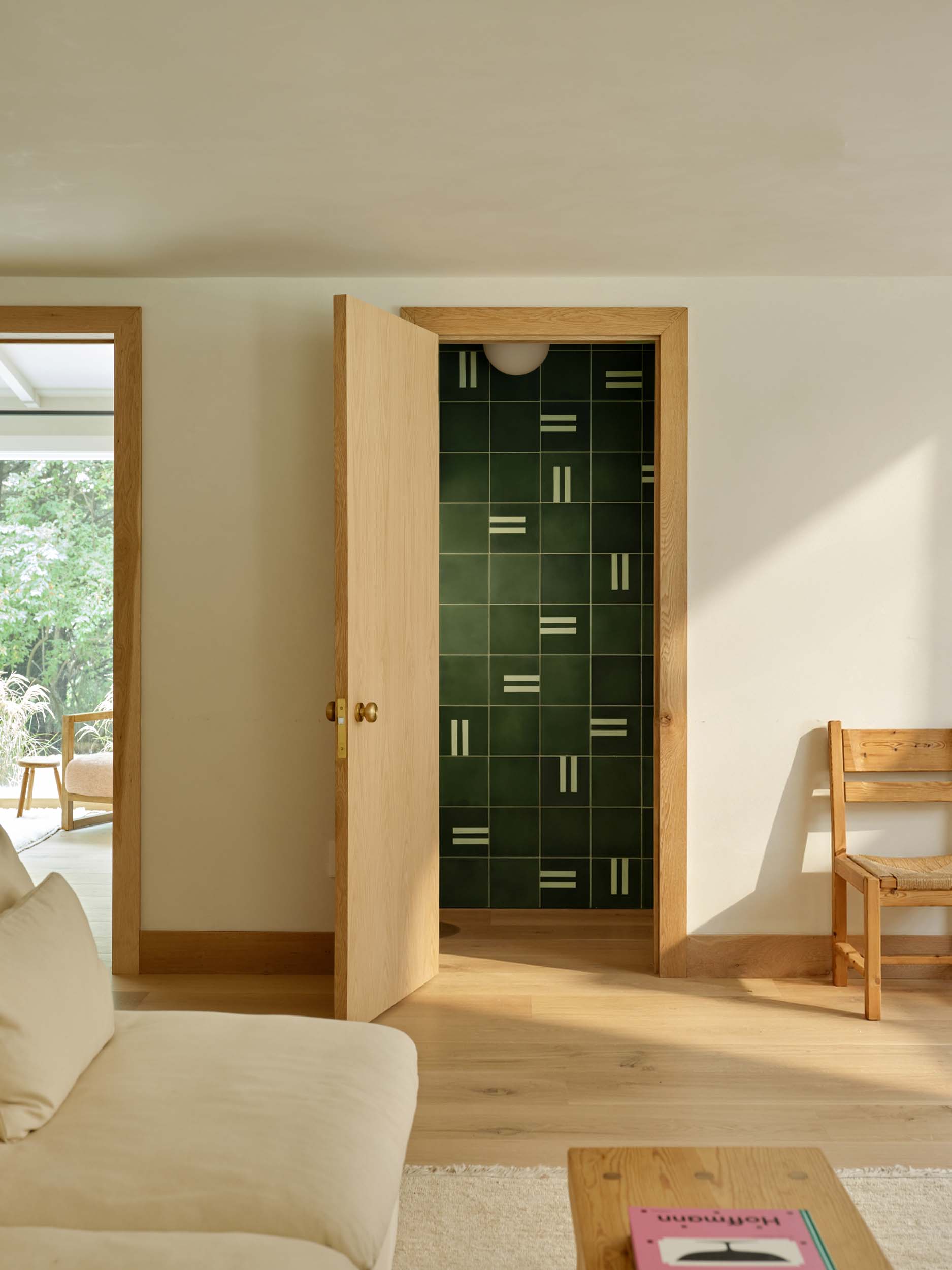
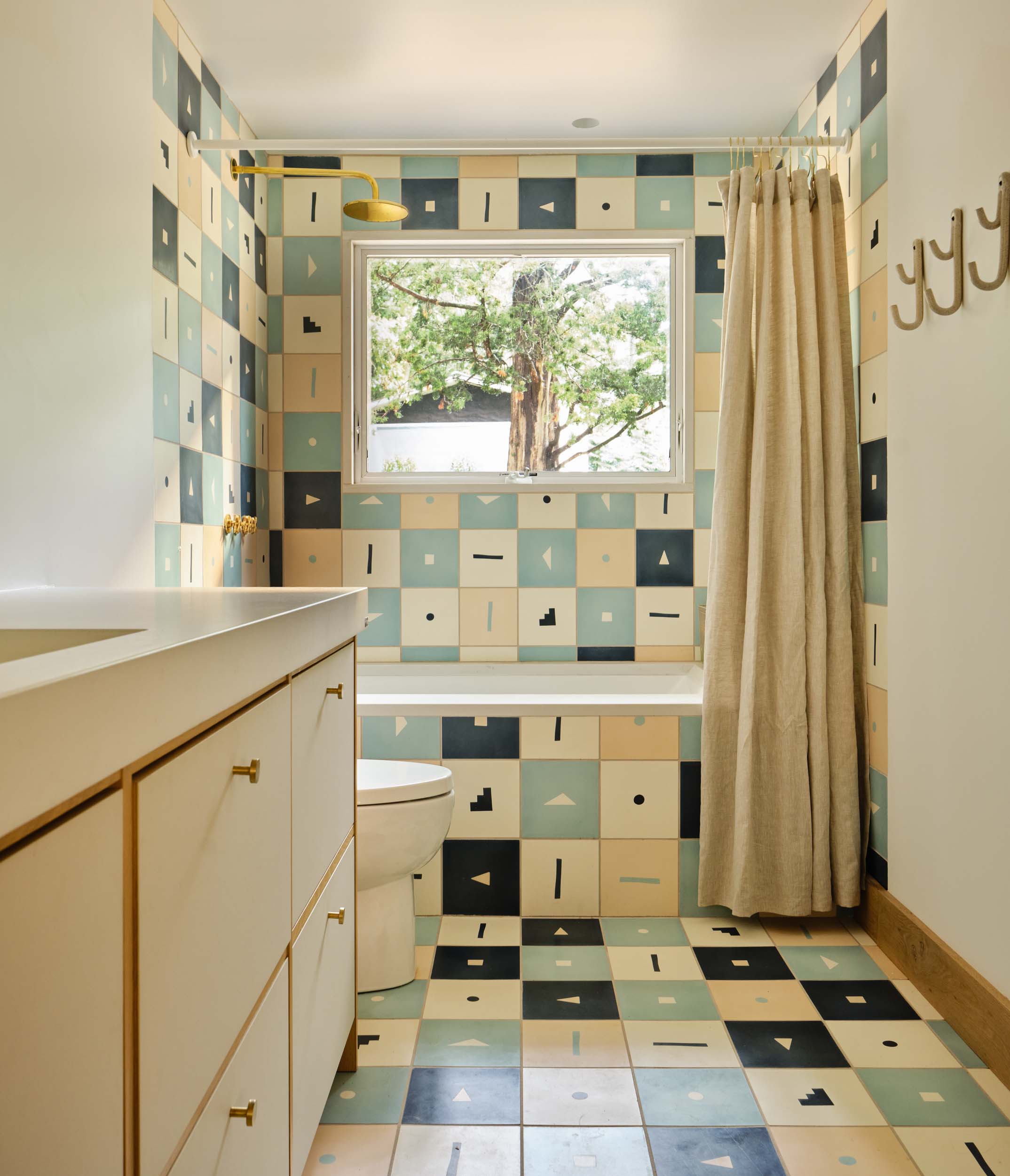
Hurley had also previously designed tiles in collaboration with Concrete Collaborative, now used in the bathrooms. These make for a bright departure from the rest of the home. One washroom is clad in tiles of varying objects: moons, circles, stairs, mini rectangles, rectangles, multi-moons, mini triangles, triangles, and mini squares, while another opts for a deep green tiles with intermittent rectangles.
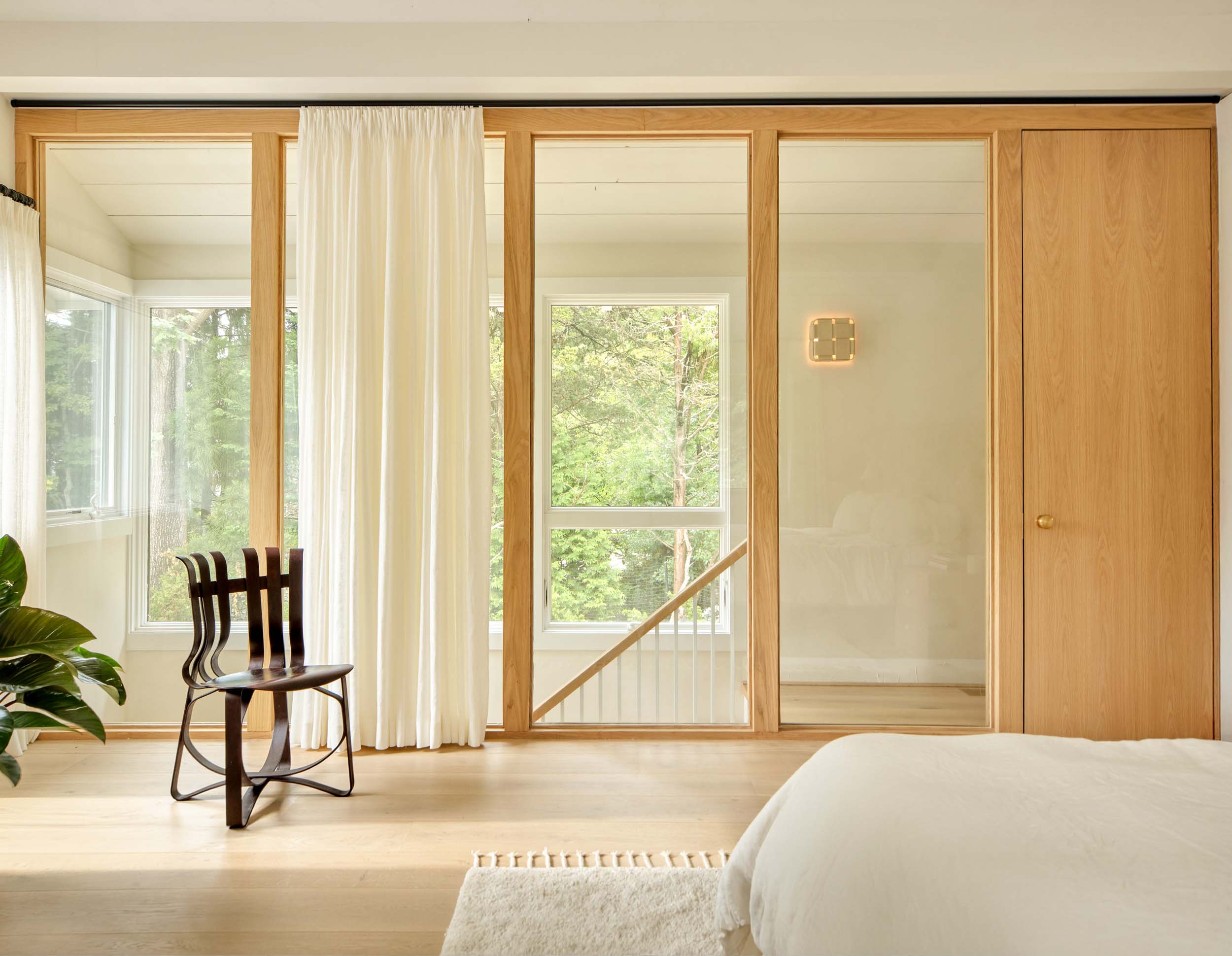
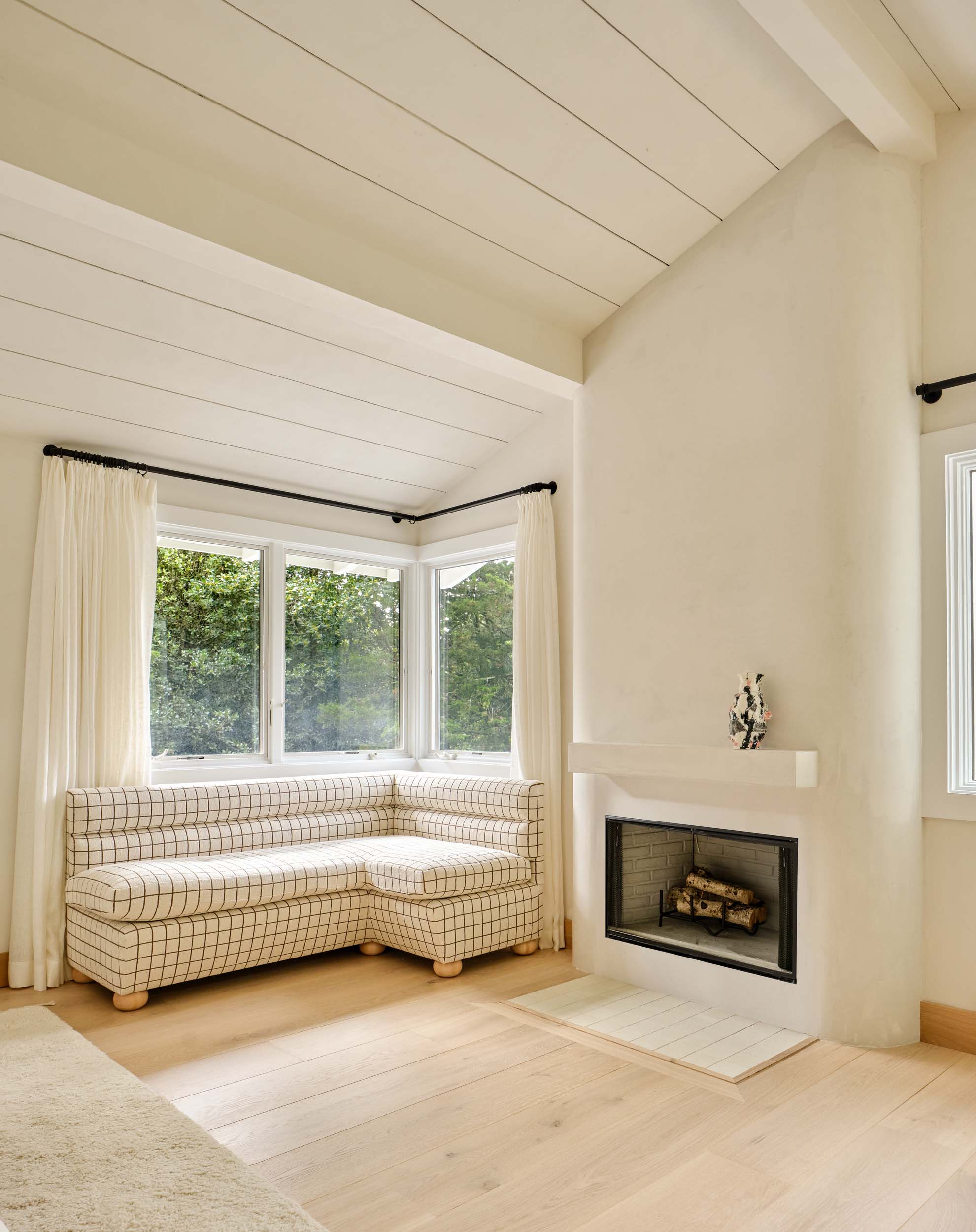
Even the upstairs bedroom isn’t spared its attention to natural light. At the top of the stairs, glass partitions form the entry to the bedroom, letting light from the glazed facade into the room. It illuminates the space with a connection to the idyllic scene outside, as well as the clients’ desire for artistic stimulation.