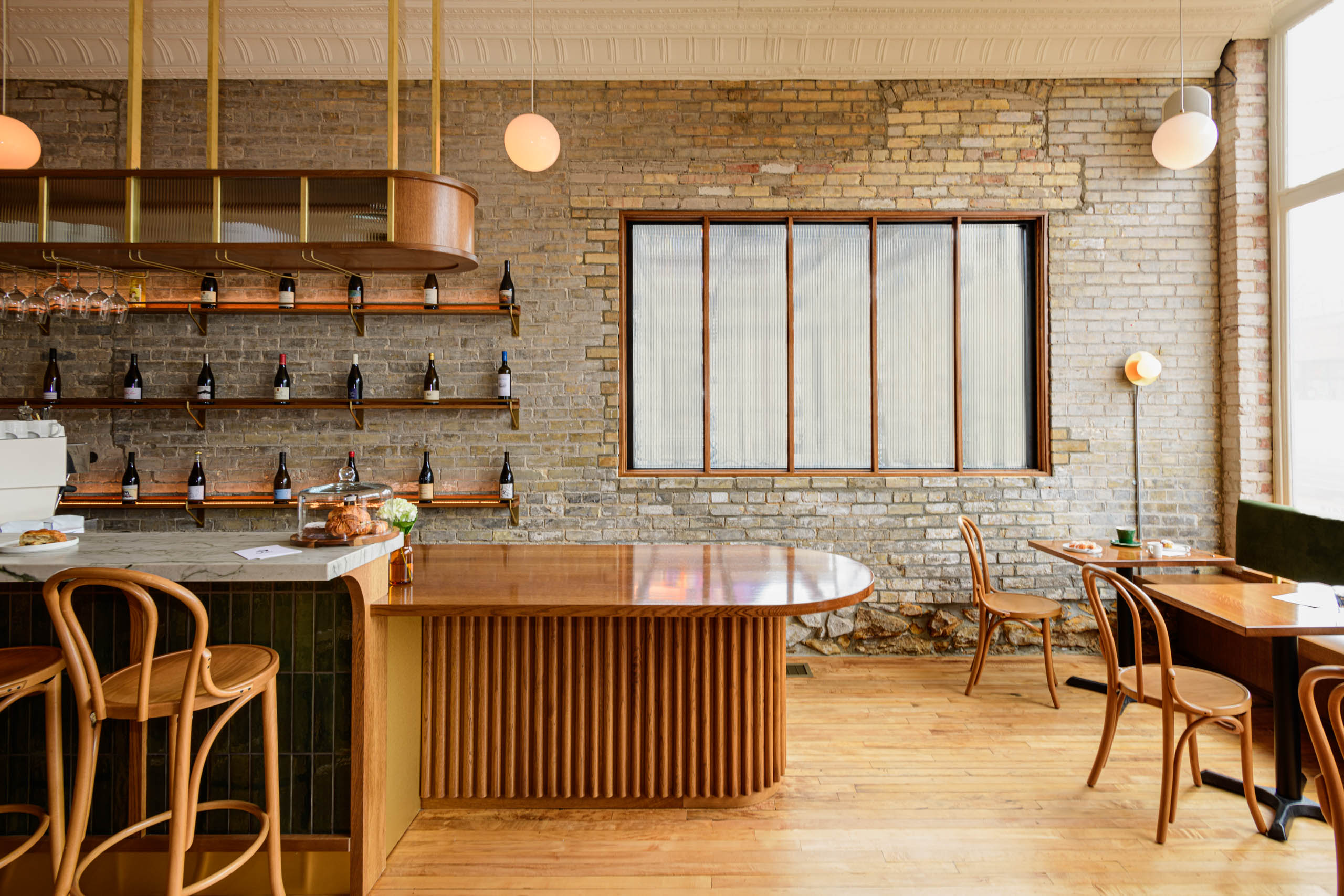
ONO, the San Francisco–based firm short for Obata Noblin Office, tapped into the character of a turn-of-the-century building in the East Hills neighborhood of Grand Rapids, Michigan to craft a cafe by day and wine bar by night. Chris and Allaire Swart, owners of Chateau, wanted a timeless and intimate place to share their favorite brews and bottles. ONO created a harmonious interior by drawing from both French nostalgia and the rustic characteristics of the preexisting building.


For the front half of the 1,100-square-foot space, the architects revealed the unevenly tan, exposed brick walls of the building and its white-painted, gridded tin ceiling. Bentwood chairs, a custom white oak bench, and a wine glass shelf suspended from brass rods emit a soft glow, elevating the building’s charm. The illuminated, fluted glass structure helps elongate the room and elevate the space.


While neutral tones dominate the main dining room, color makes its way through the archway, where a red-hued bathroom and the back lounge, enveloped in green Venetian plaster and painted brick, create a distinct environment. The plaster’s texture brings warmth and old-school charm to the rear space. Once again, the architects made use of what was already there: On the floor, a new terrazzo-like surface was created using the original cement and grinding it down with a new finish. The moody, textured lounge continues the bar’s street-facing main room in using the building’s characteristics to new-meet-old sense of charm.