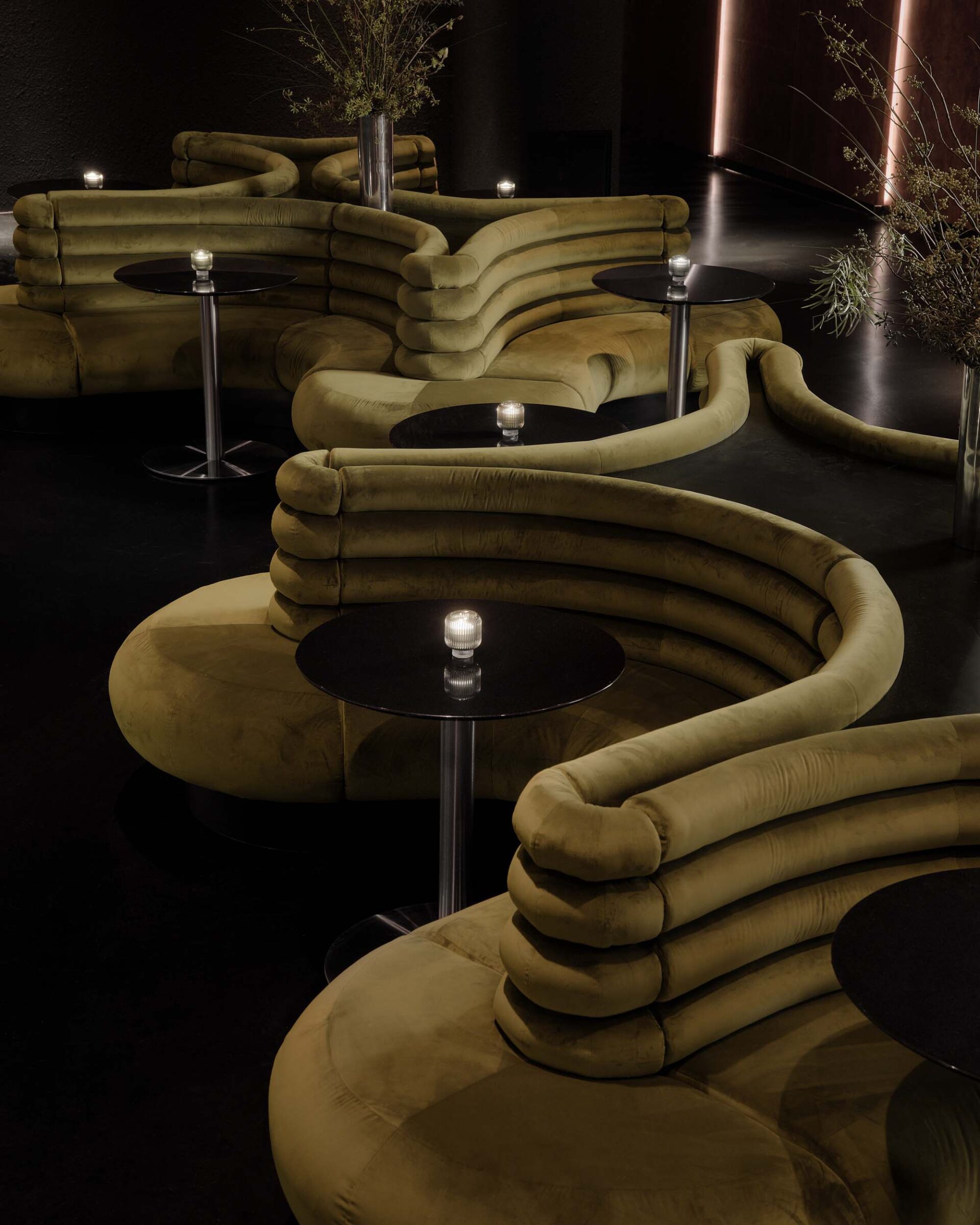
To transform a raw concrete basement beneath Brooklyn’s trendy William Vale Hotel into a new nightclub, designers Maurizio Bianchi Mattioli and Angus McIntosh asked themselves a pivotal question: How do we make a space sexy? Drawing design inspirations from far and wide—from the burl wood interior detailing of a vintage Mercedes-Benz car to mishmash postmodern buildings by Austrian architect Hans Hollein to the plastic quality of designer Gaetano Pesce’s playful resin chairs—they found their answer. Unveiled, which celebrated its public opening in late January, brings together high design and a superior sonic experience. And wrapped in curved burl plywood paneling, dramatic lighting, and reflective surfaces, its interior is certainly sultry.
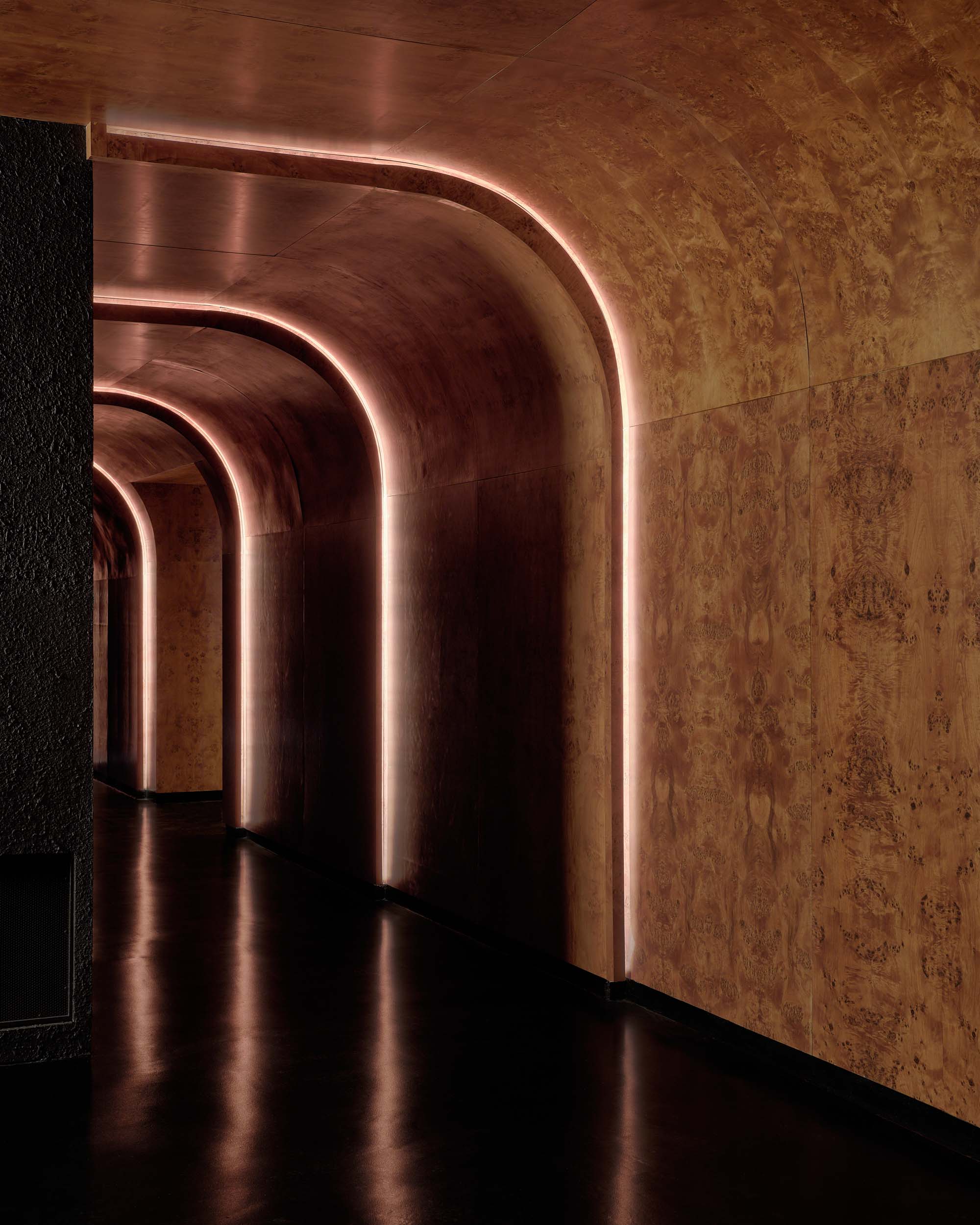
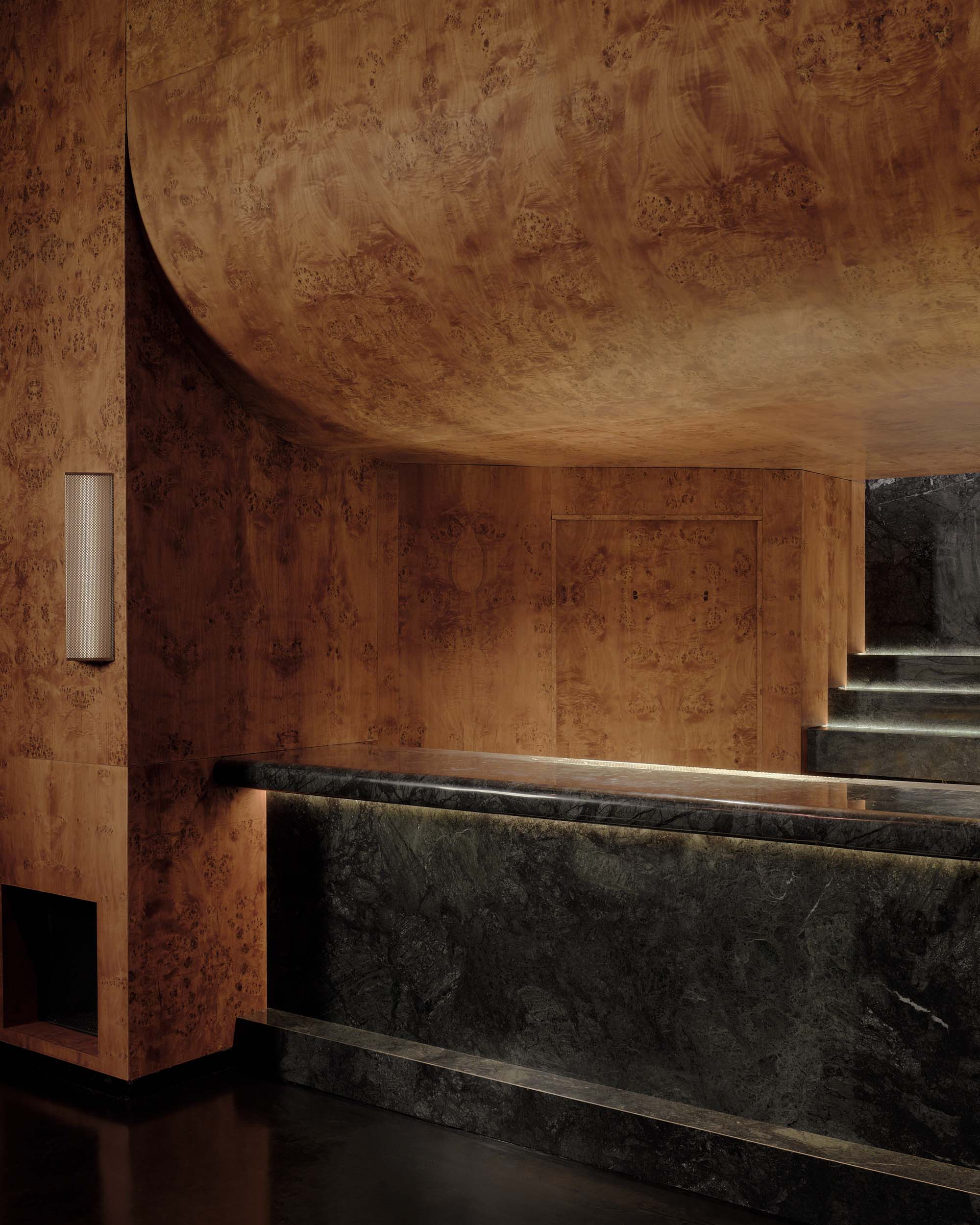
Splitting the 4,950-square-foot space into an L shape, the designers envisioned each linear volume as a different music experience. At the front is a lounge and listening bar, where drinks and conversations can be had while melodies are still appreciated. At the hinge begins the club, where revelers converge around the DJ’s mirrored booth.
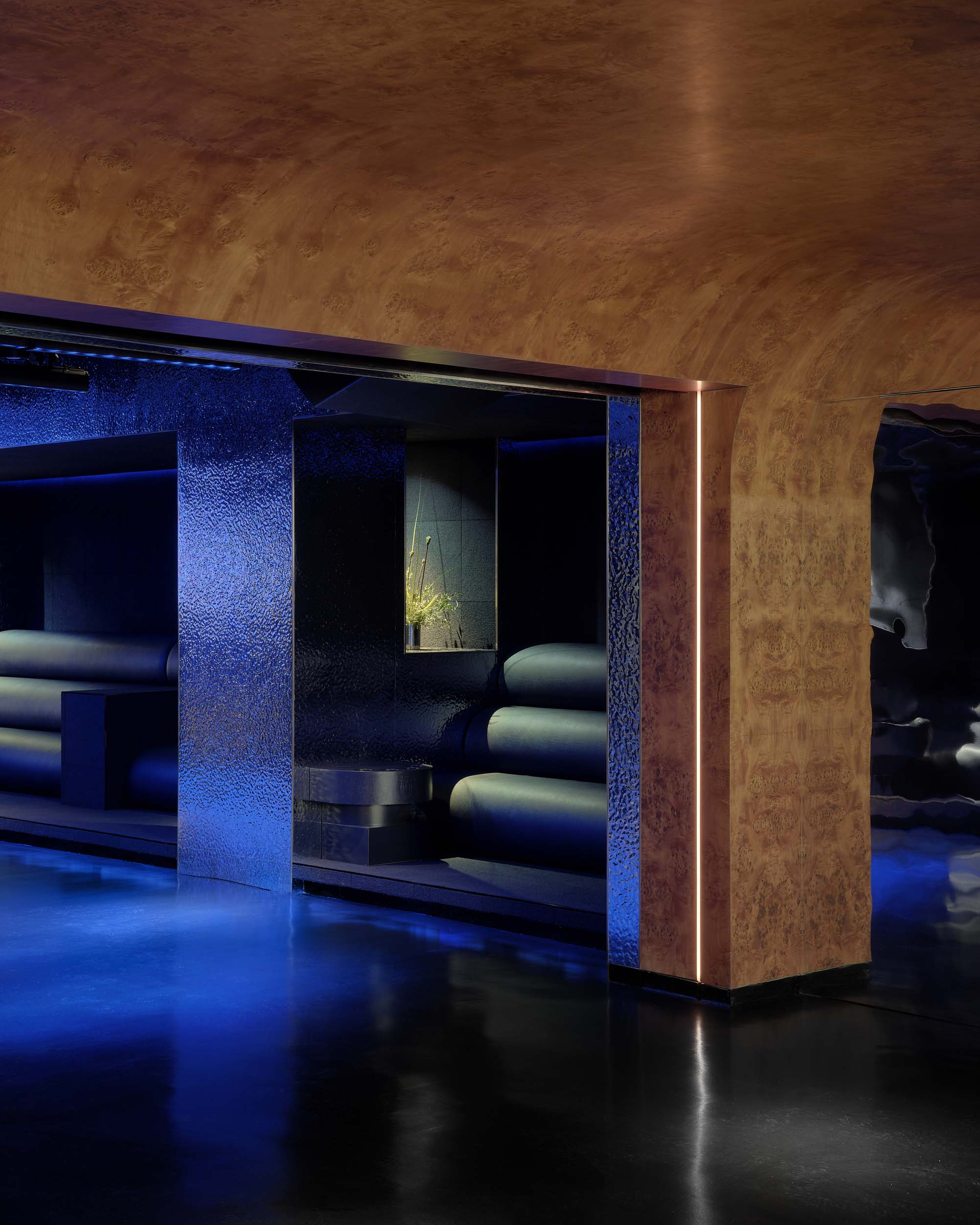

To further distinguish each space, “we started thinking about surfaces and materials, wanting to bring movement and texture to the walls,” explained Bianchi Mattioli, founding principal of Studio MBM. With the French walnut paneling from architect Philip Johnson’s design for the original Four Seasons restaurant in Manhattan in mind, burl plywood now clads Unveiled’s vaulted entry tunnel and lounge, including a dramatically curved soffit over the marble bar, made from slab sourced in Italy. “Dimensional,” “reflective,” and with “a very similar, intense movement like the burl wood,” textured metal covers the club area’s walls, he added. When lit, its shimmer recalls a disco ball.

Despite its party function, this latter space is designed “like a church where the DJ is the priest” and worshippers dance around the altar, described Bianchi Mattioli. In its apse is a curvilinear VIP section, with plush terraced seating and drinks tables with integrated compartments for bottle service. Scaled-down versions of this seating area line the dance floor on either side, but this is the only one that offers a rare and special view from behind the spinning decks.
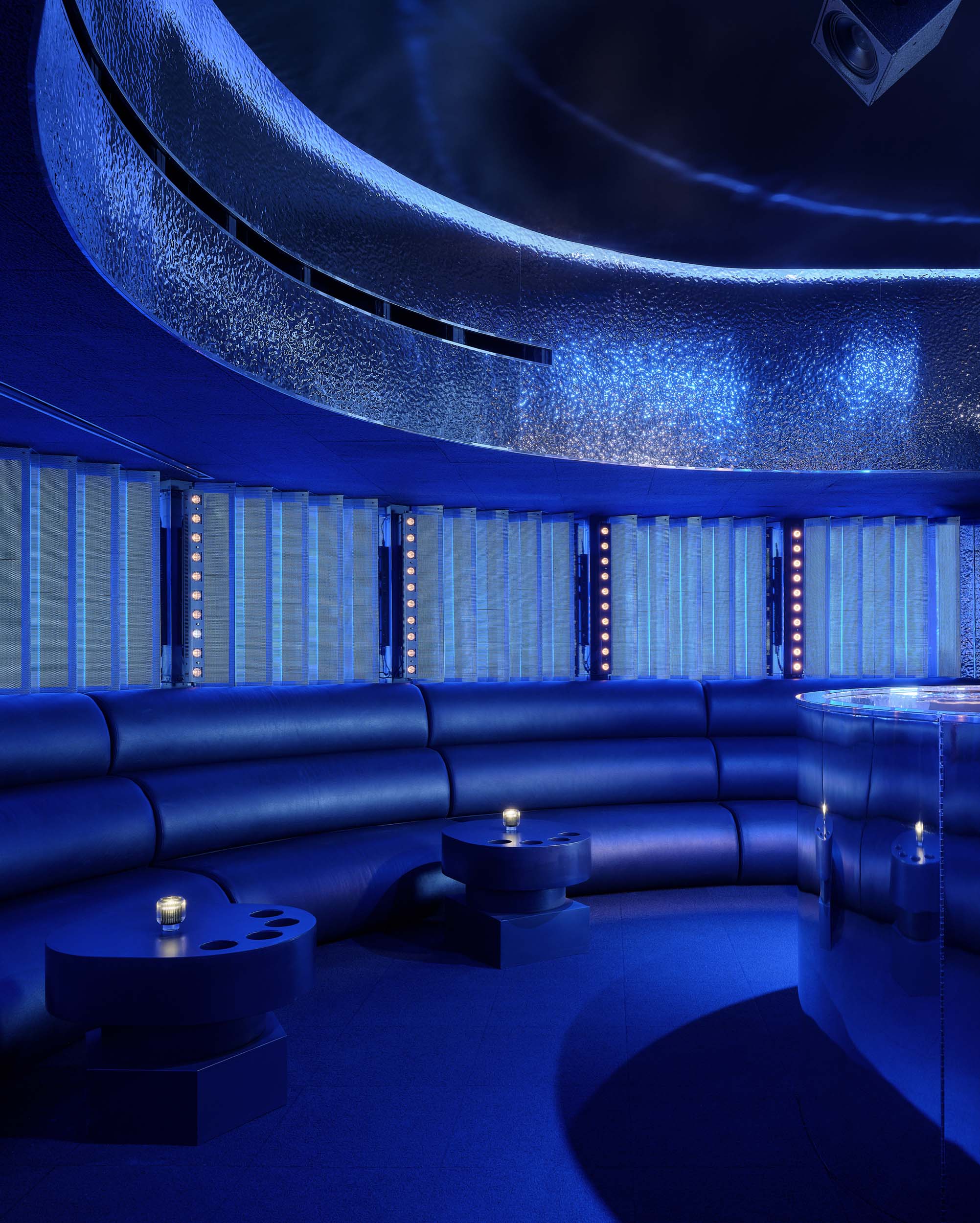
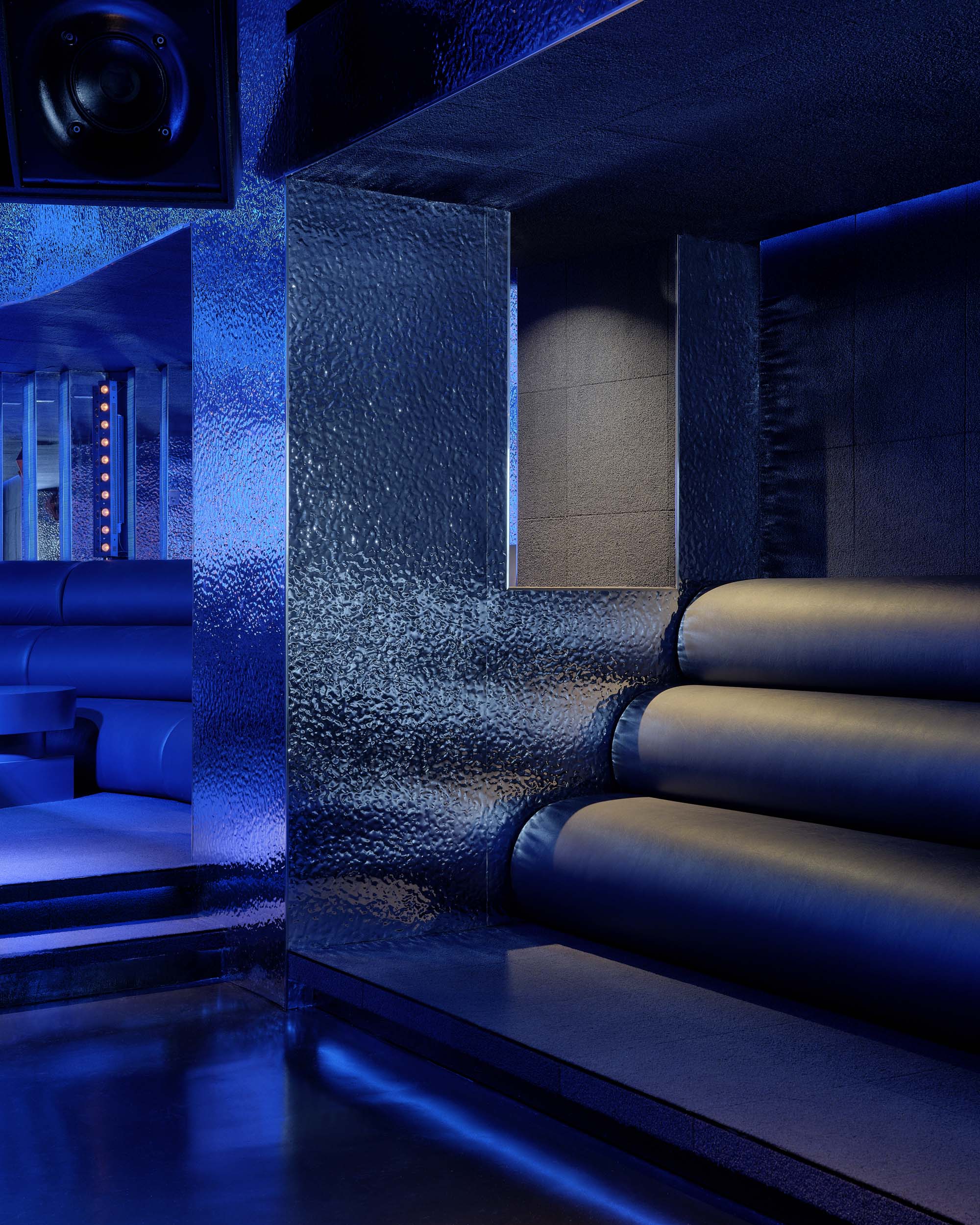
In the adjacent lounge, stacked backrests on moss green curvilinear sofas echo the club’s vertical emphasis, while their amoeba-like forms allow for both intimate gatherings and spontaneous encounters. Throughout the nightclub, bespoke furnishings are strategically placed so as not to disturb the flow of foot traffic between the bar, dance floor, bathrooms, and coat check. Their design, meanwhile, contributes to the mood: a late 1970s Milanese hot spot where bold textures, muted jewel tones, and luxurious materials convey the enduring glamour of nightlife.
At the same time, the space has been optimized for 21st-century sound. New York’s largest Danley Sound System, installed by Phonic Technologies, and the dynamic lighting system by Kawa Lighting help craft a nightclub that is “constantly changing,” said McIntosh, principal of Yakka Studio.

While this project marks the second collaboration between New York–based Bianchi Mattioli and McIntosh, it is their first time designing a nightclub. Both designers joke that they have been researching since their younger party years. “Sometimes when designing for the hospitality world, your first thought is how the operations are going to function. This project was the other way around,” revealed McIntosh. “The concept was so strong, we made the back-of-house work in tandem” Mechanical systems are hidden in plain sight within the playful interior architecture; strip lighting is seamlessly integrated into the bar, entry, and portals between rooms. Here, the design does heavy and light lifting, but the experience is always focused on the music.