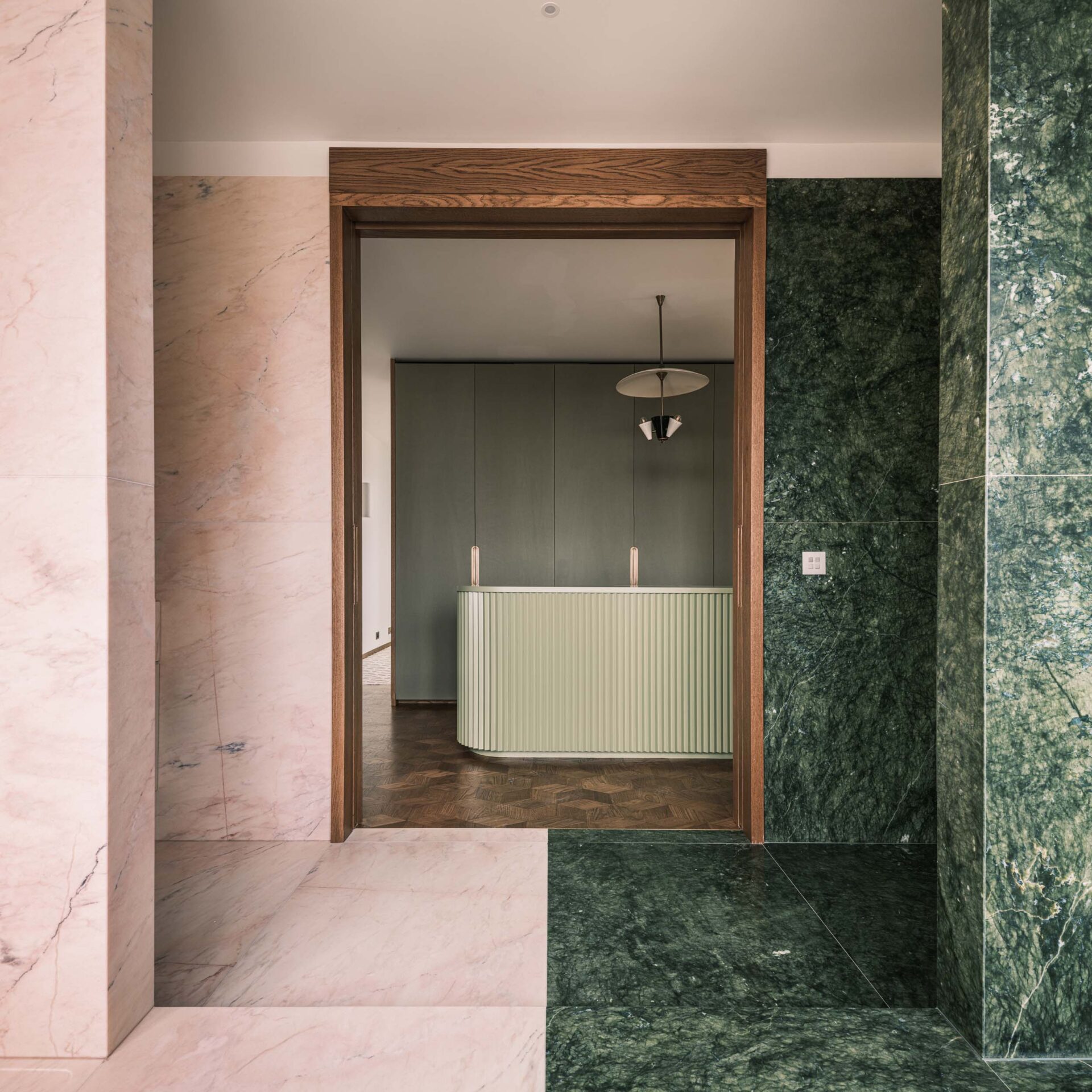
In a 115-year-old art deco building in London’s Marylebone neighborhood, just steps from Regency Park, a newly renovated penthouse apartment applies high-quality materials in varied, but always rich applications. The clients of Portland Place had a challenging brief for local design and development firm Wendover: cohesively combine traditional and contemporary elements.
Wendover started by refining the layout of the 3,767-square-foot residence. Jan-Paul Coelingh, cofounder of Wendover’s architectural department, told AN Interior, “The floorplan still resembles a sequence and arrangement of multiple rooms, but the way the rooms intersect and where openings between the rooms are placed now contributes to a sense of free-flowing space and movement.” He continued, “The central atrium allows for a clear axis of circulation, bedrooms are pushed to the ends of the L-shaped plan, and doors are detailed to allow for hold-open positions, ensuring that corridors and the atrium can ‘expand’ living spaces.”
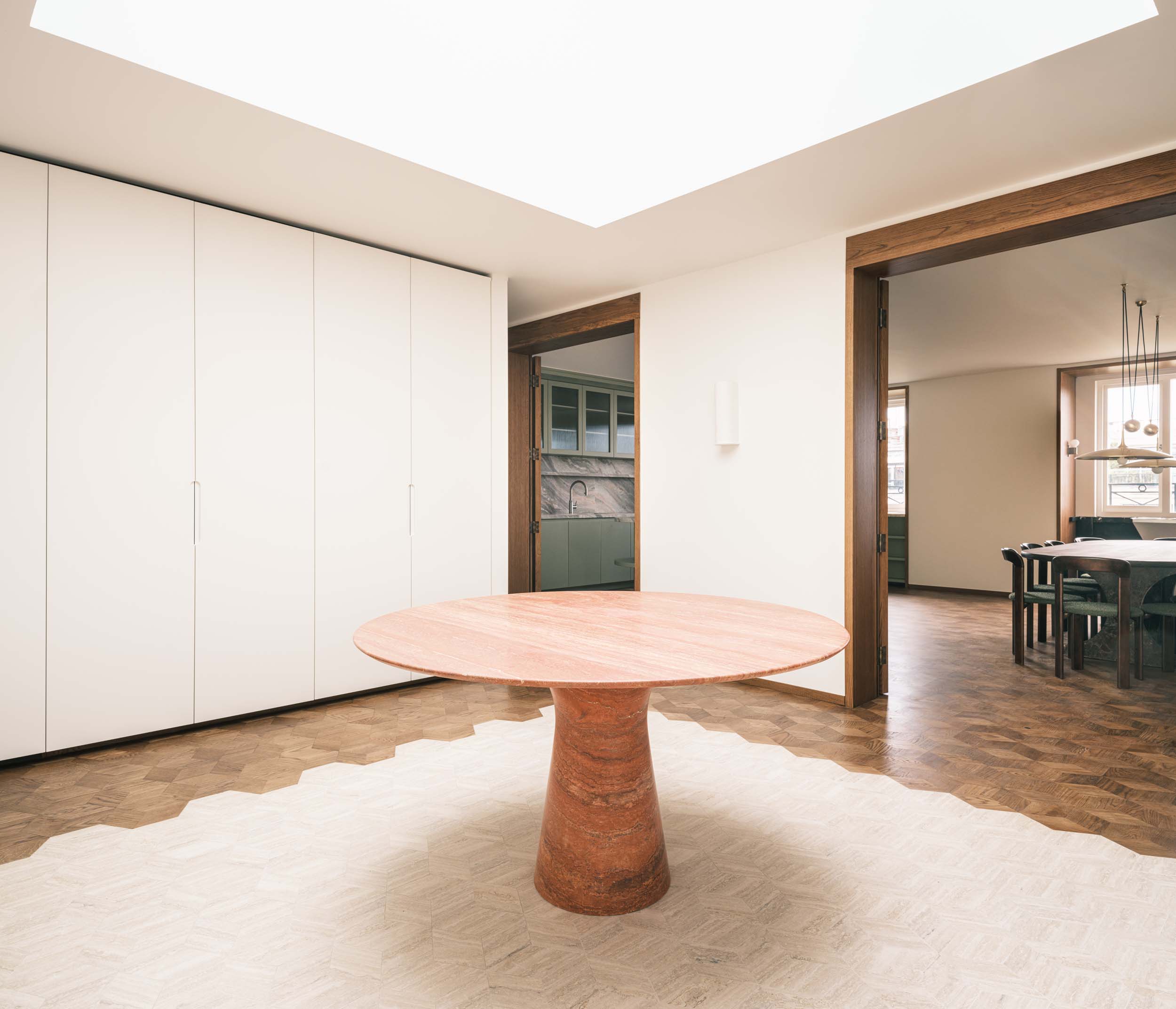
This central atrium acts as the “courtyard” of the residence; the boxy room connects to the kitchen, dining room, living room, and more areas. Already, the courtyard introduces the design’s focus on materials. The floor is composed of white travertine, surrounded by oak floors, arranged in a bespoke cubist pattern. The effect uses travertine like a carpet to anchor a central table, where red travertine from Almería, Spain, is used.
A James Turrell–inspired skylight adds to the entry’s grandiosity. It combines an oversized roof light penetration and single-sheet, low-iron glazing. “Given the depth and lateral aspect of the existing floorplan, and the relatively low ceilings throughout, we inserted new skylights in the heart of the apartment plan to allow for generous daylight,” said Coelingh. “The framing of the skylights is never visible from the interiors, which gives the impression that the openings through the soffit are fully and seamlessly open to the overhead sky.”
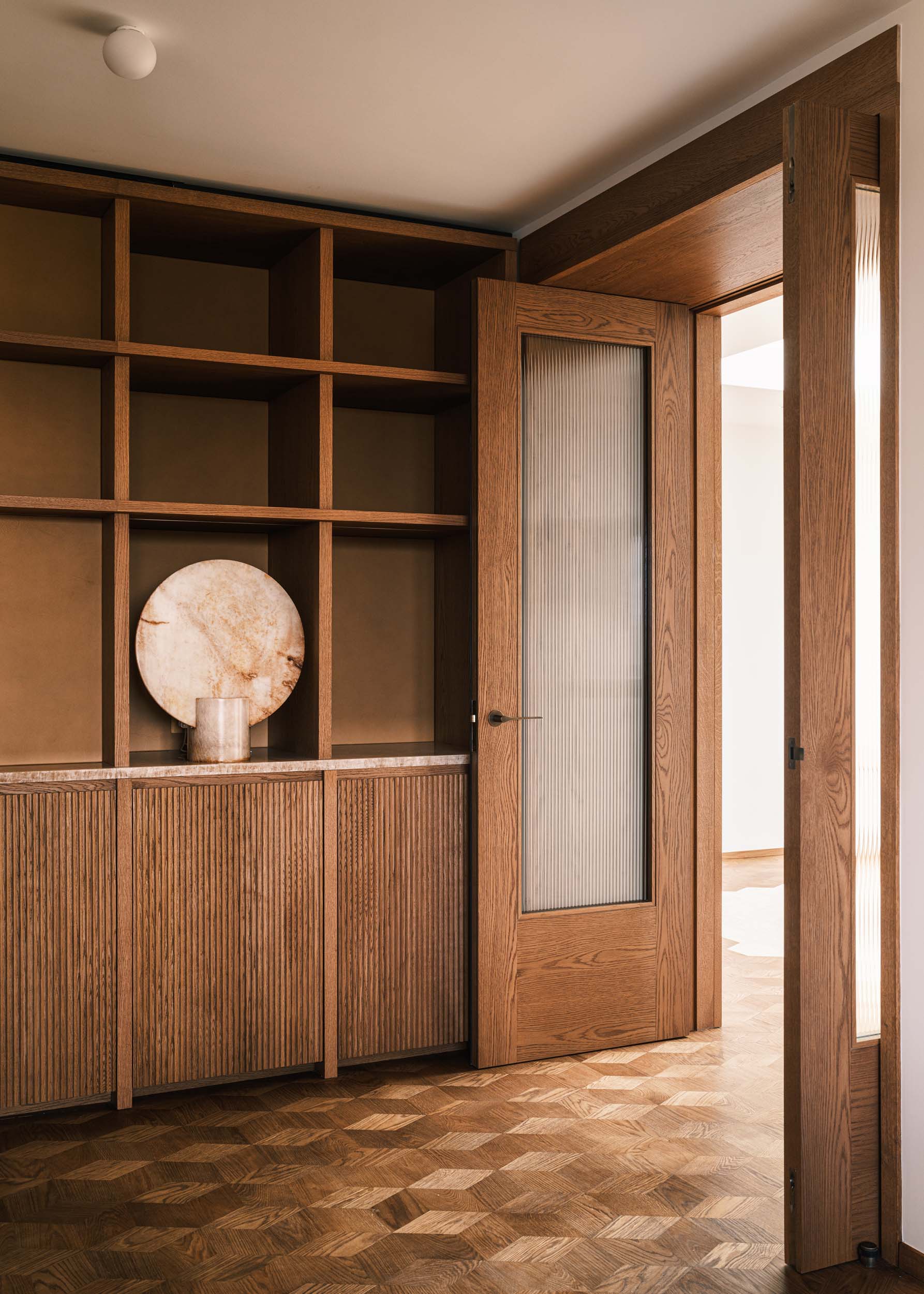
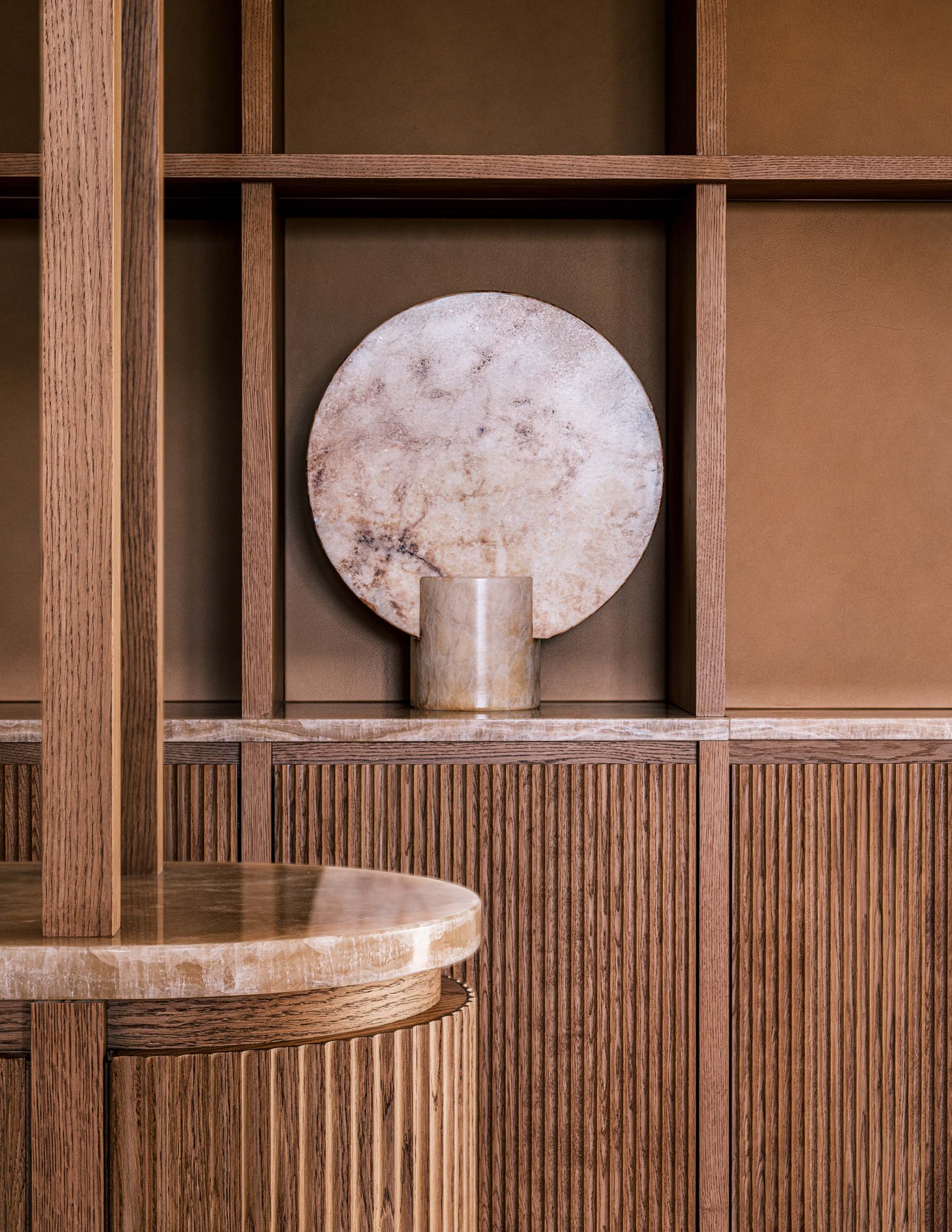
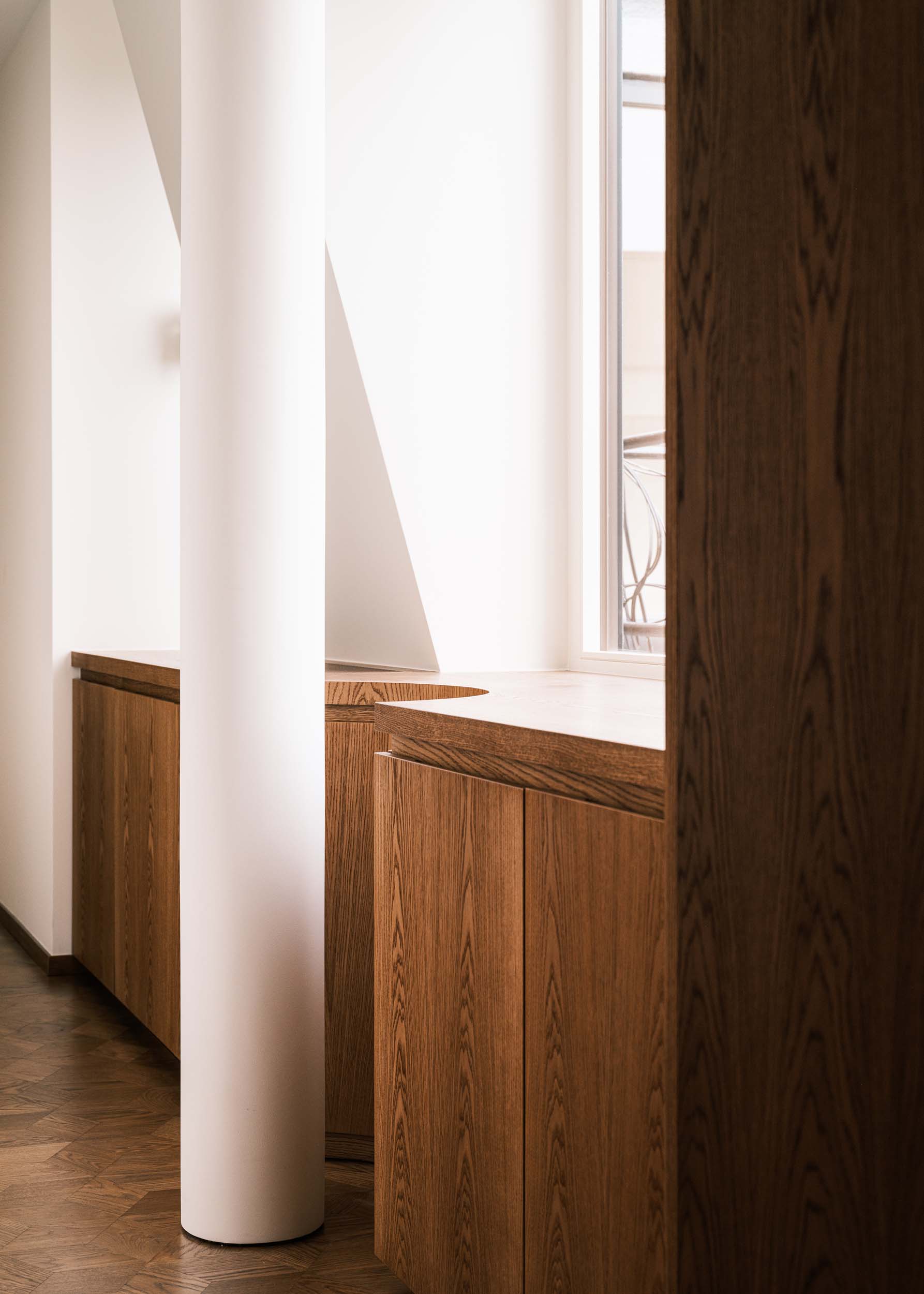
The skylight is one of many creative ways the Wendover team honed the details of Portland Place, while the treatment of wood is another. The living room bar, crafted by artisan joiner Stan Tarver, is constructed from open timber-work and honey onyx. Fluted wood adds texture and richness to the bar counter, while its overall roundedness gently sculpts out a library and gathering space. Elsewhere, a line of cabinets curves around a column in an elegant, custom detail.
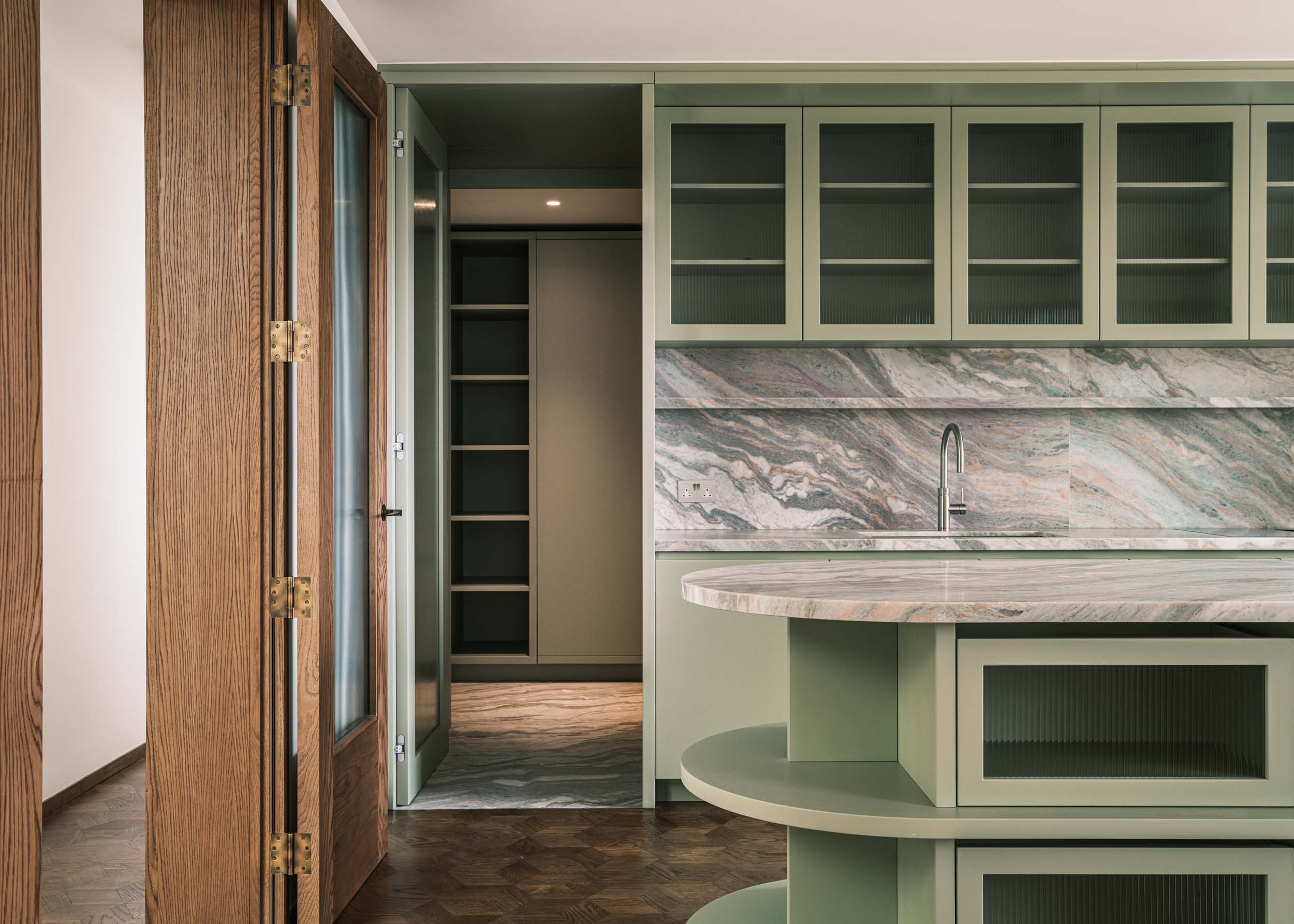
In contrast, the kitchen backsplash, countertop, and oval island were sculpted from Italian marble, made contemporary by green accents on the cabinetry, shelving, and fridge.
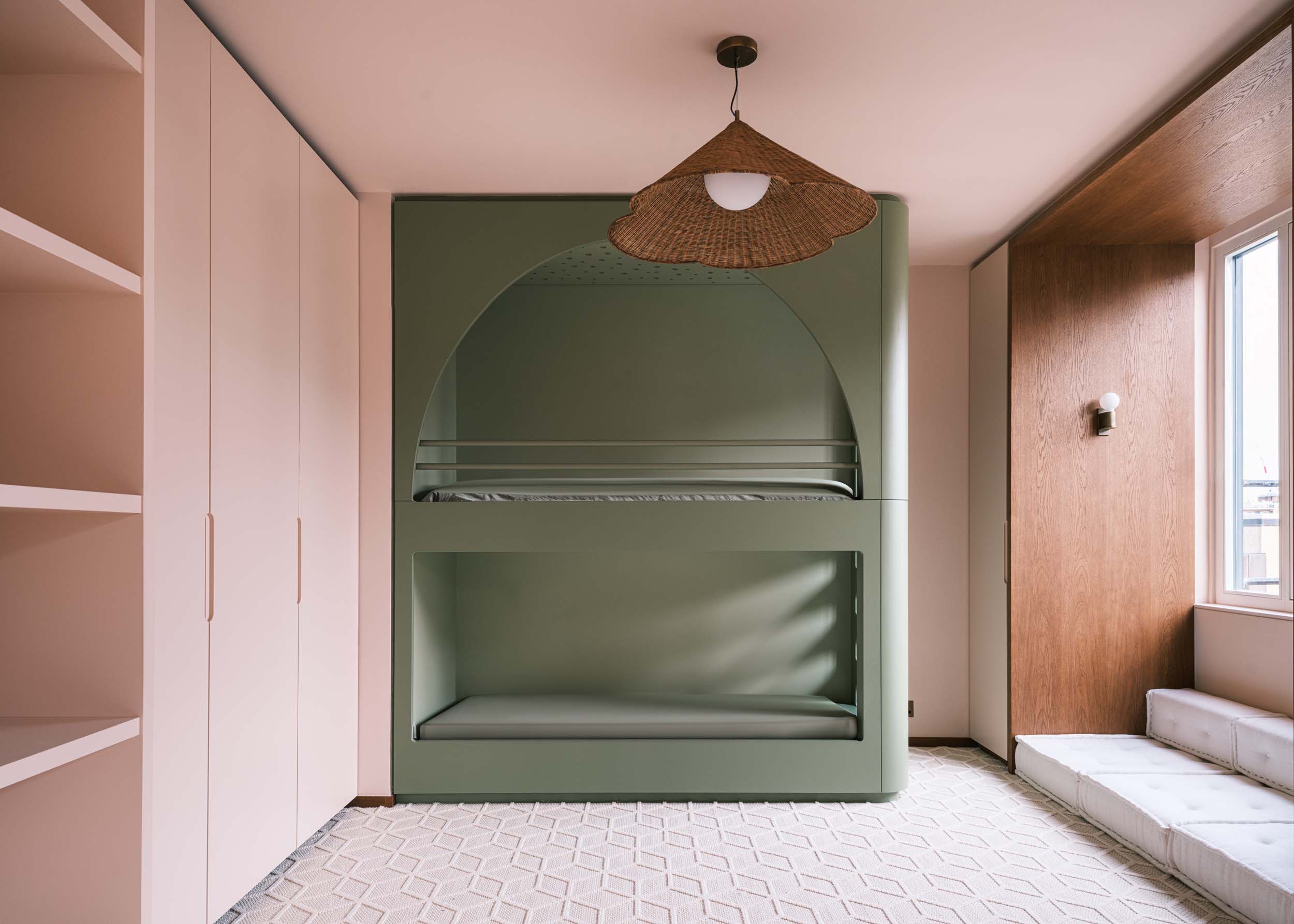
The shade of green used on the kitchen cabinetry appears again in the bedroom, applied to a built-in bunk bed. Here it is paired with pink wardrobes and soft carpeting that covers the wood floor, the contrast brightens the home without clashing with its historic backdrop.
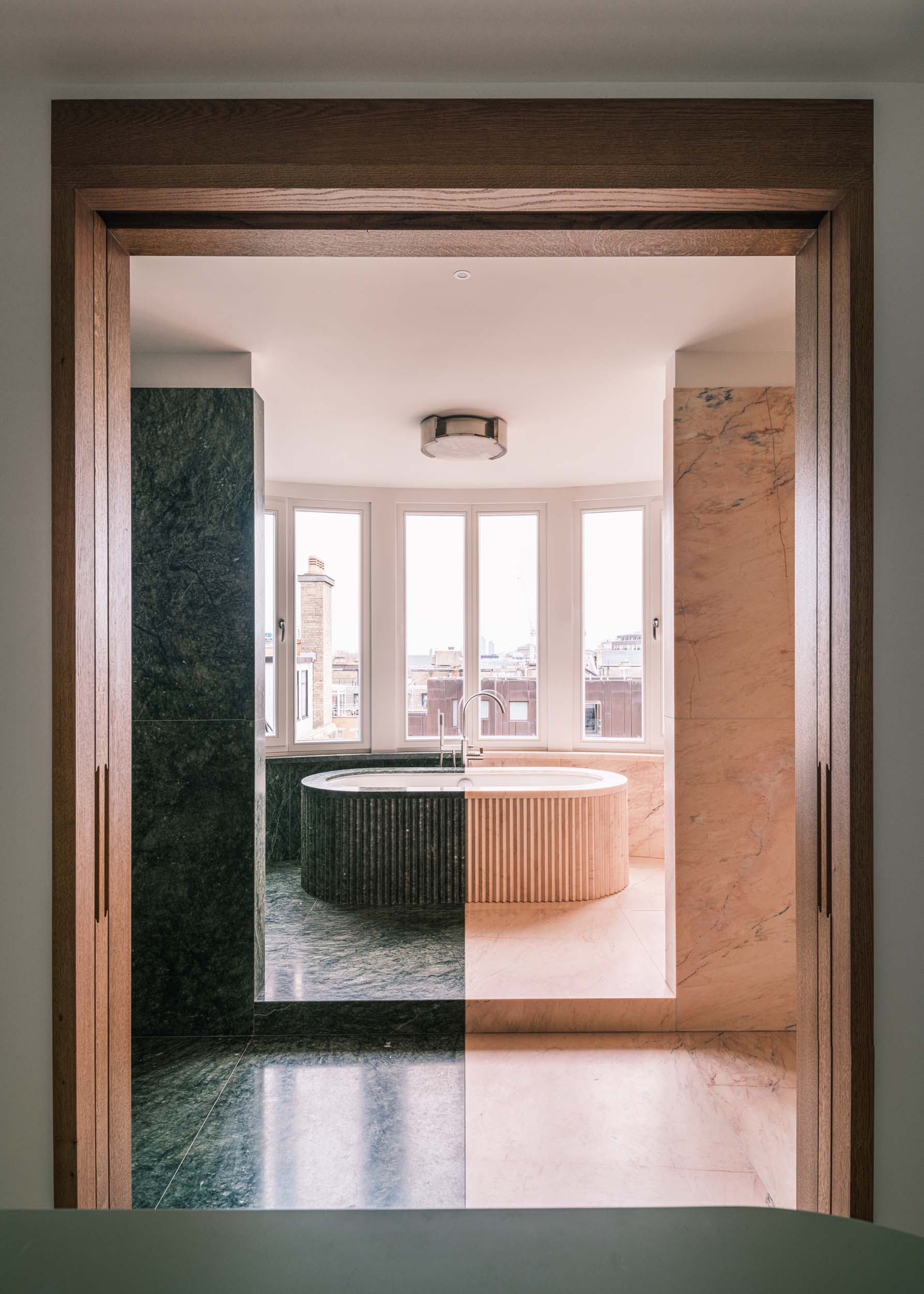
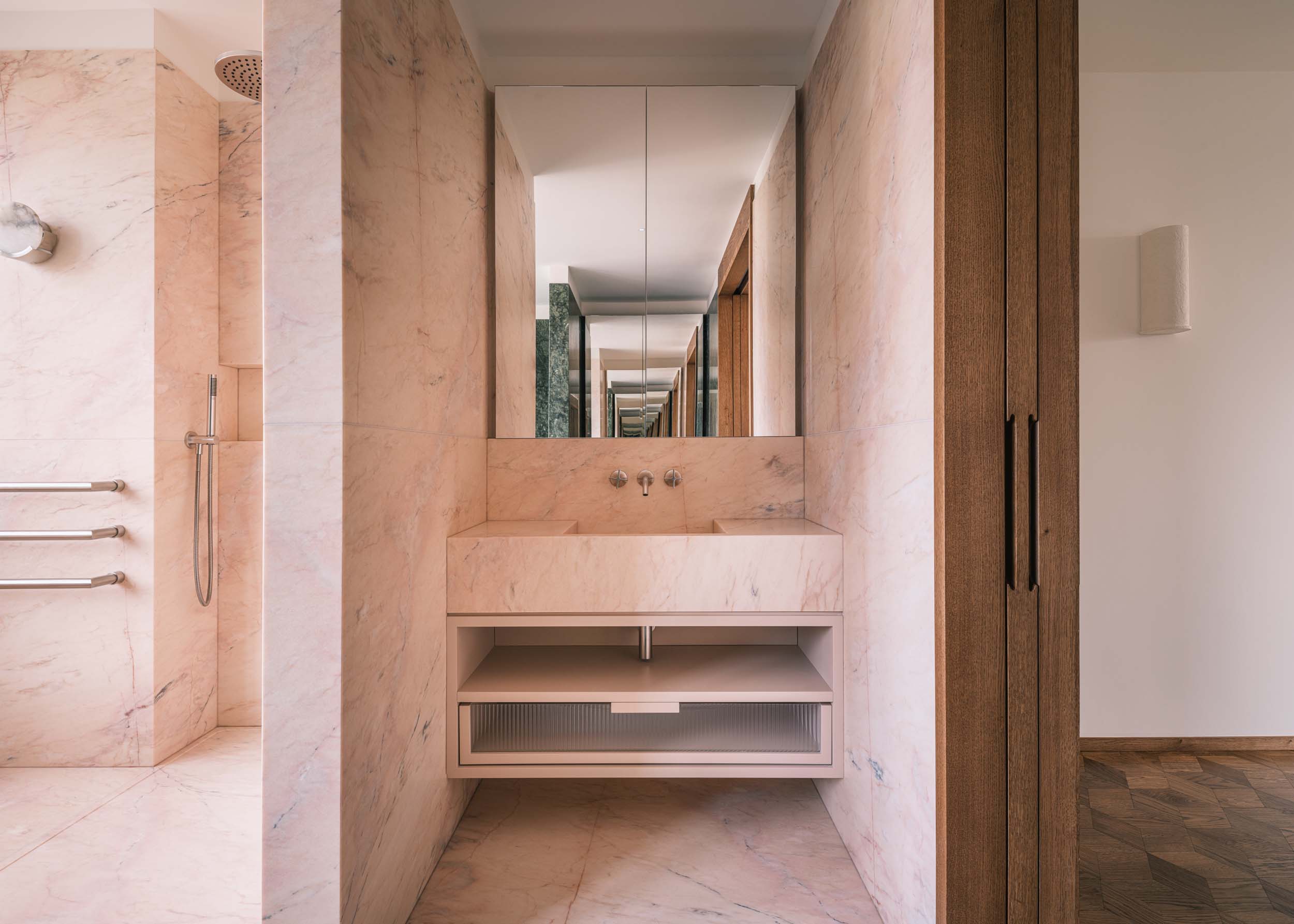
In the “his and her” bathroom a line down the middle partitions one side of the room from the other, with one side drenched in green marble and the other clad in pink. For Wendover this heavy use of stone isn’t unprecedented. “We typically use stone quite boldly in most wet rooms we design,” Gabriel Chipperfield, cofounder of Wendover, told AN Interior. “In this case, an early disagreement as to whether the color palette should be more masculine or feminine led us to propose the dual marble. Our clients were comfortable to be more adventurous here which gave us the confidence to go ahead.”
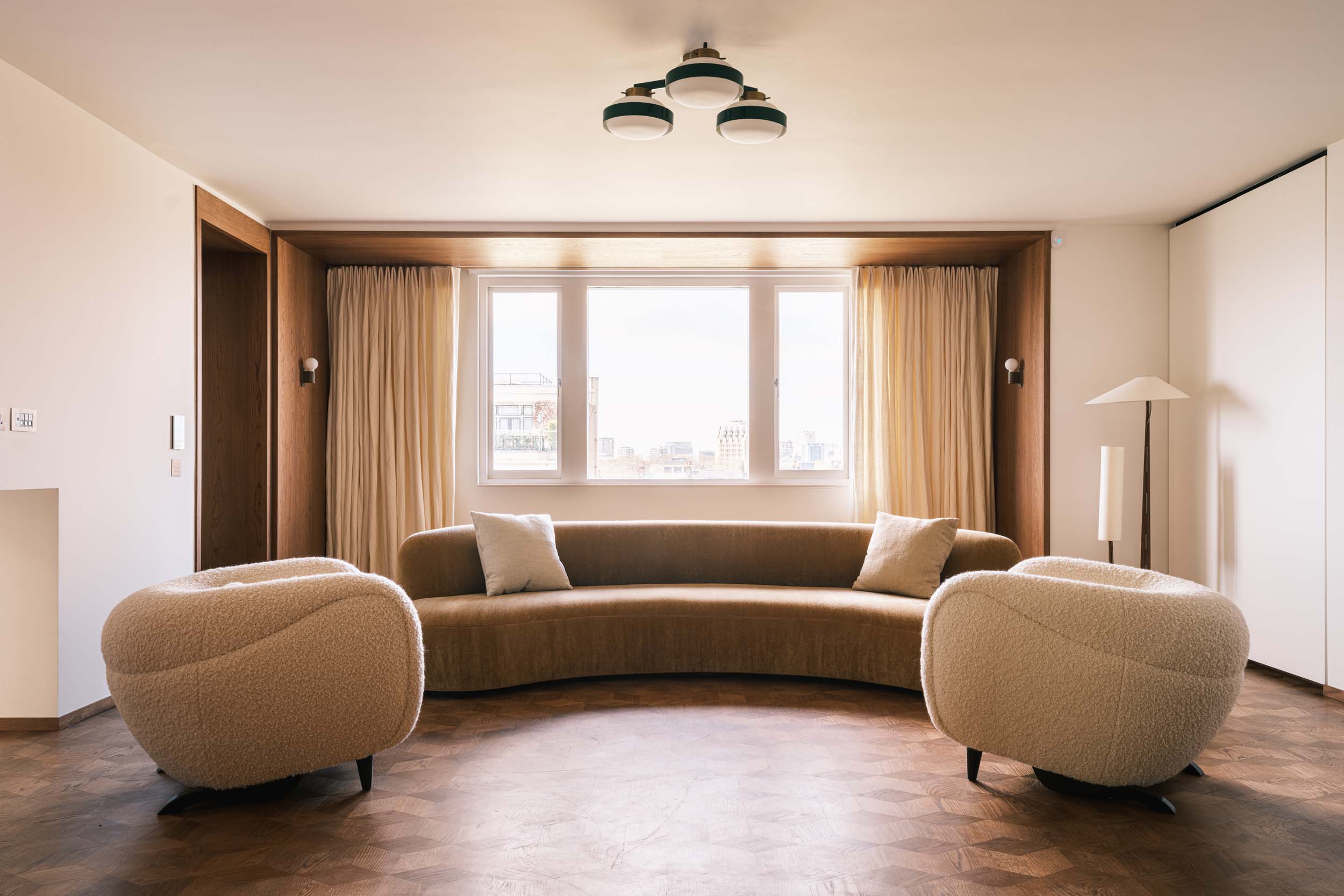
Traditional, high-quality materials were both restrained and let loose within Portland Place. Wendover—which designed, constructed, and staged the home—proved natural materials can be alternatively applied while still maintaining a sophisticated atmosphere.