Two white boxes arise between an overgrown vacant infill and 1980s residence in Regina, Canada. The modern, rectilinear massing is home to a carpenter and emergency room doctor from South Africa. The clients wanted something different from the bungalow-turned-conventional-home that populates the neighborhood. 5468796 Architecture‘s design meets this brief both visually and spatially, sculpting a 2-story home whose monolithic massing disguises the views and outdoor connections that await within.
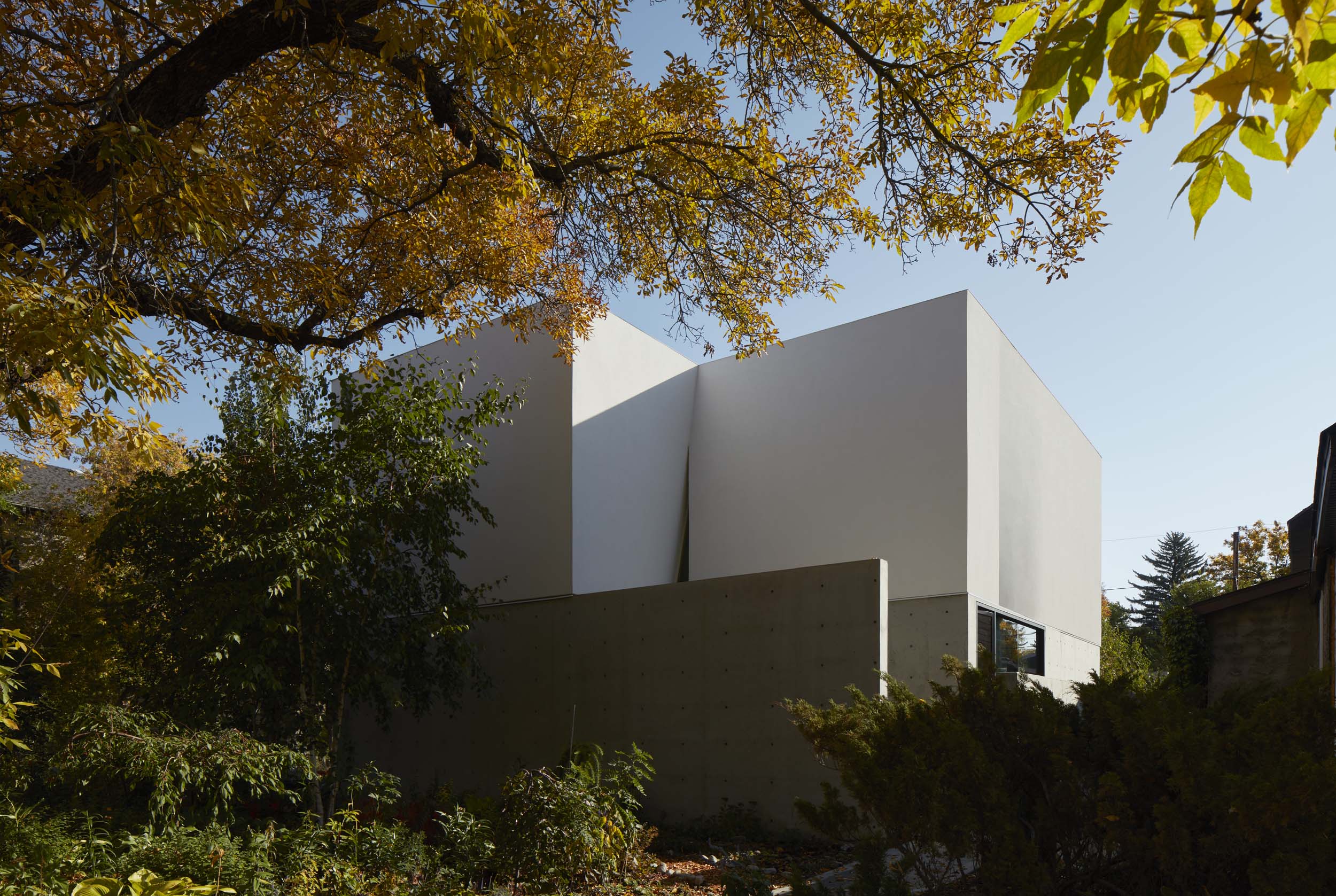
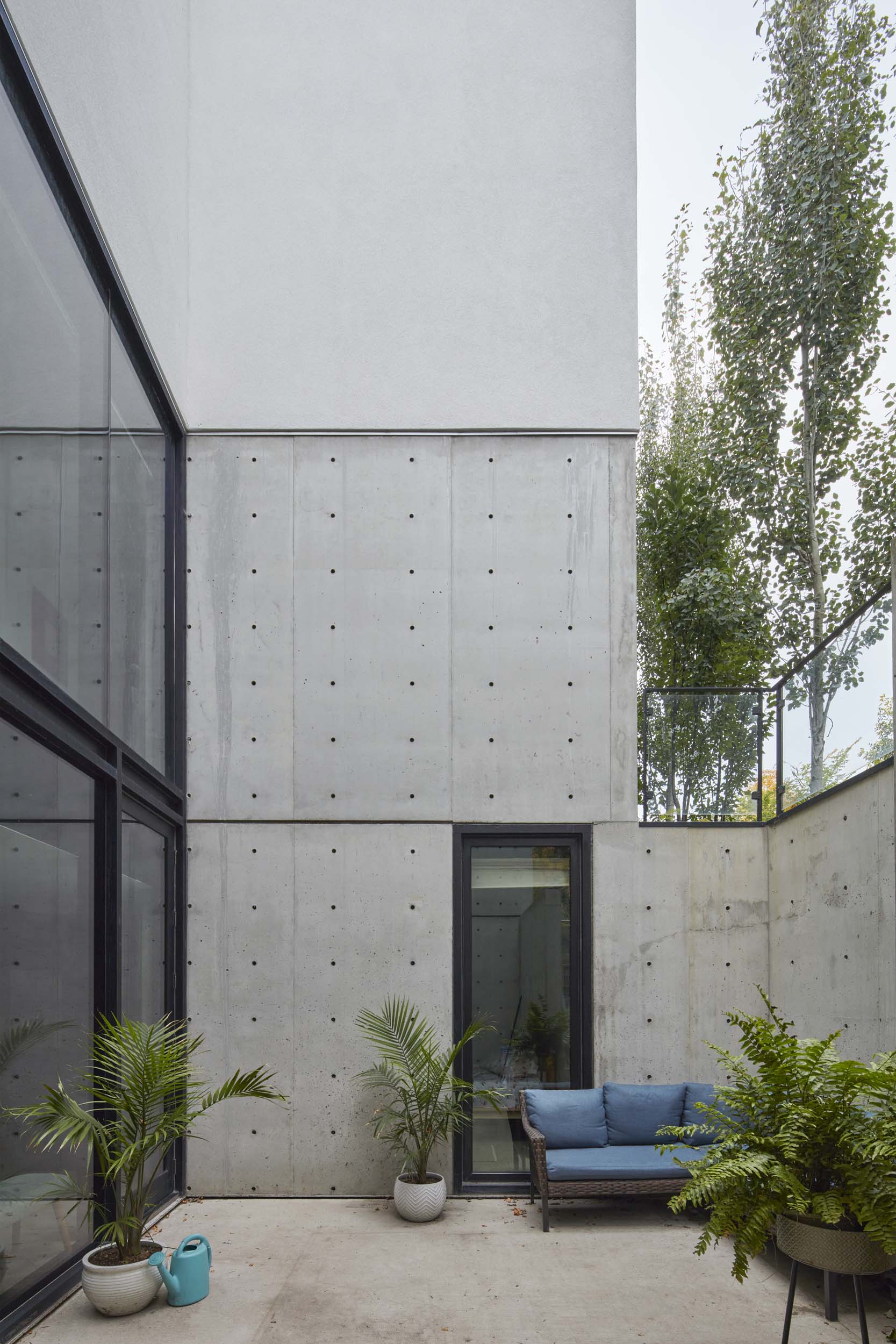
From the street, the residence reads as a solid volume with its white stucco walls resting atop cast-in-place concrete, all enclosed within a concrete fence. However, the residence encompasses many outdoor spaces: an entry courtyard, a sunken patio, a main garden, and smaller pocket gardens through the main floor. 5468796 Architecture niftily uses the whole lot to take advantage of small, awkward spaces, usually left unused or unconsidered due required side yard setbacks. Instead, these areas snake around the main floorplan to create spaces for gardening and outdoor seating.
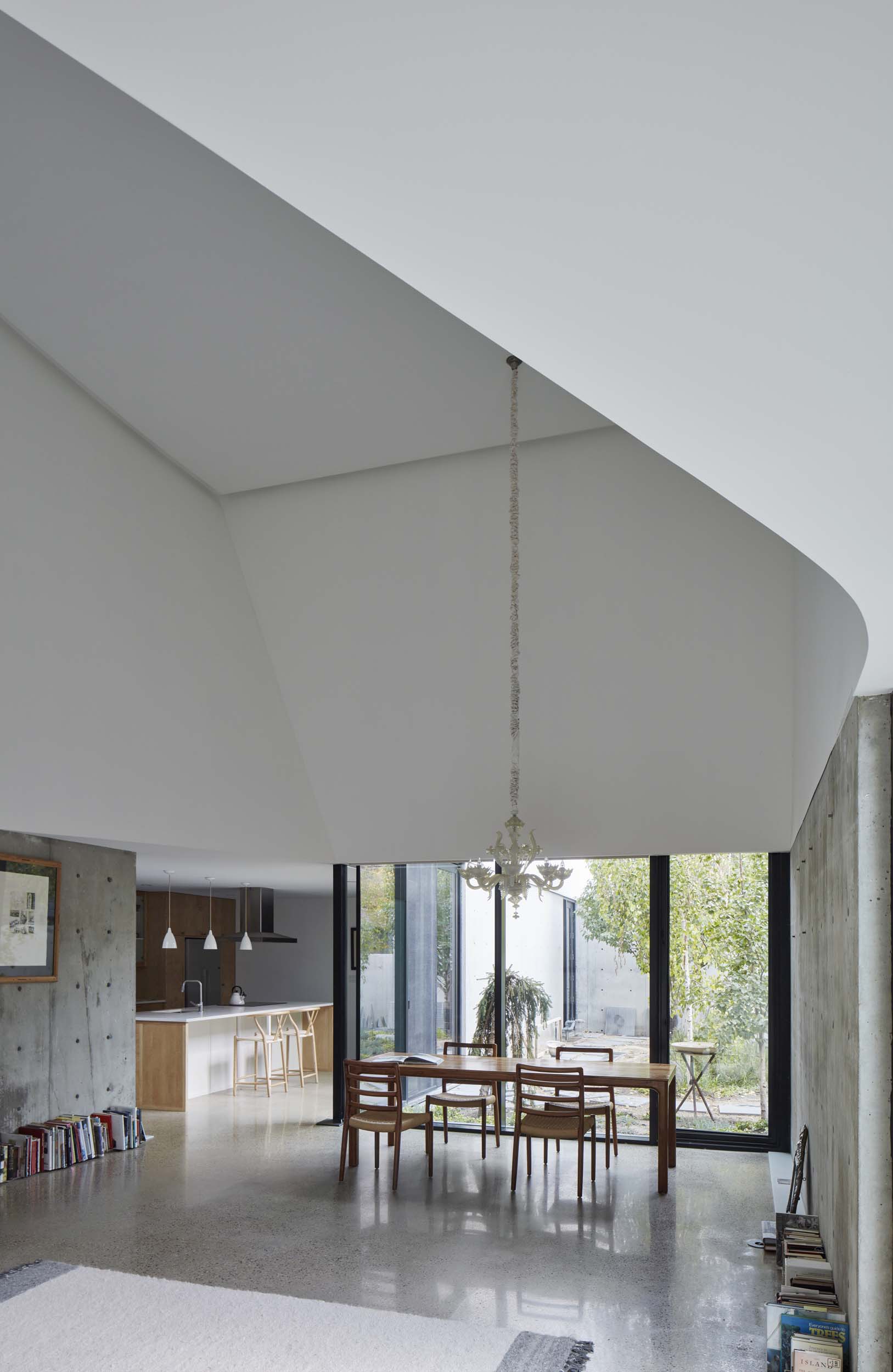
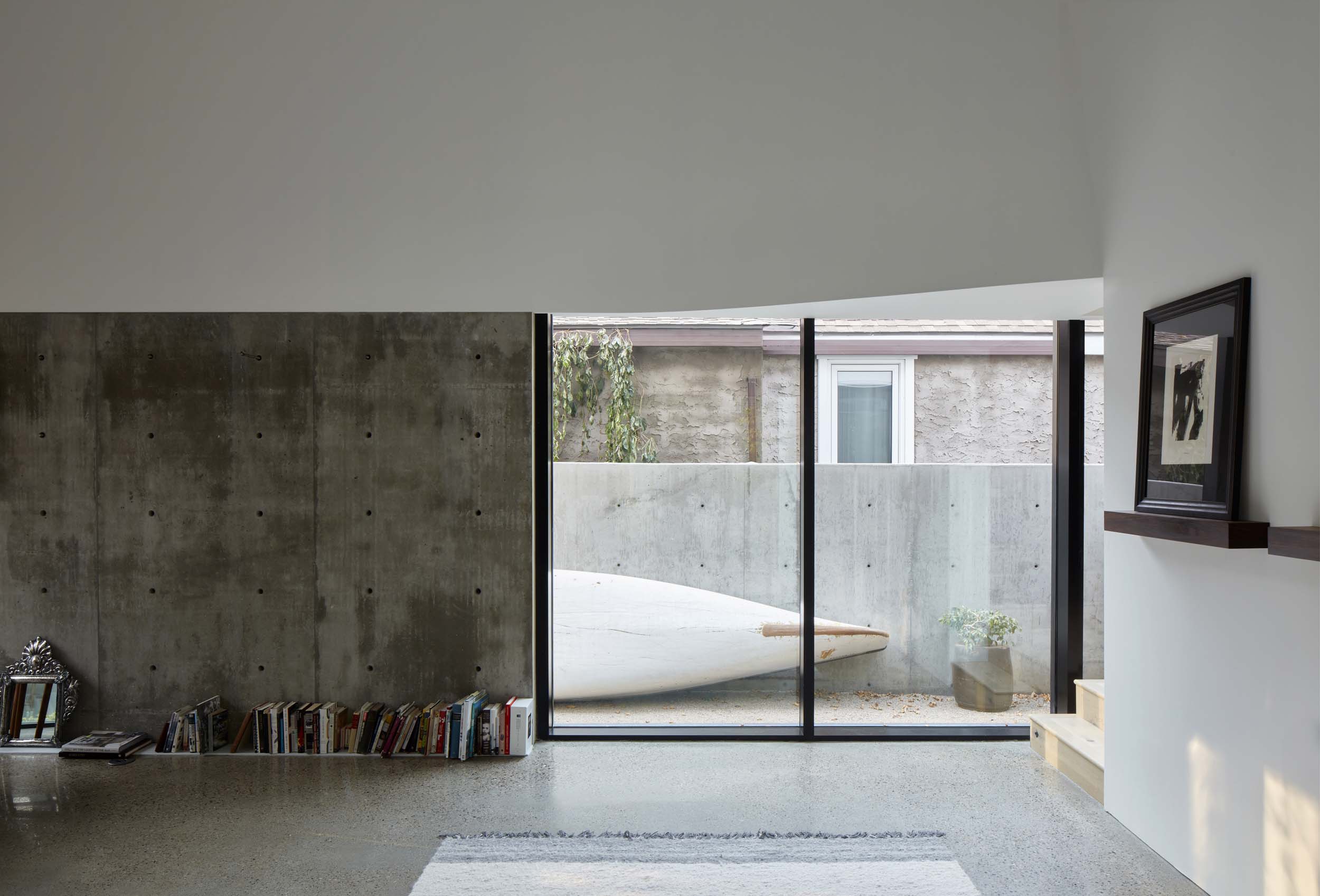
The home is divided into three levels: the upper, second floor where the bedrooms with separate stairs are situated, the main level which integrates the social areas, and a new two-bedroom secondary apartment below grade which can act as a rental unit or space for multigenerational living.
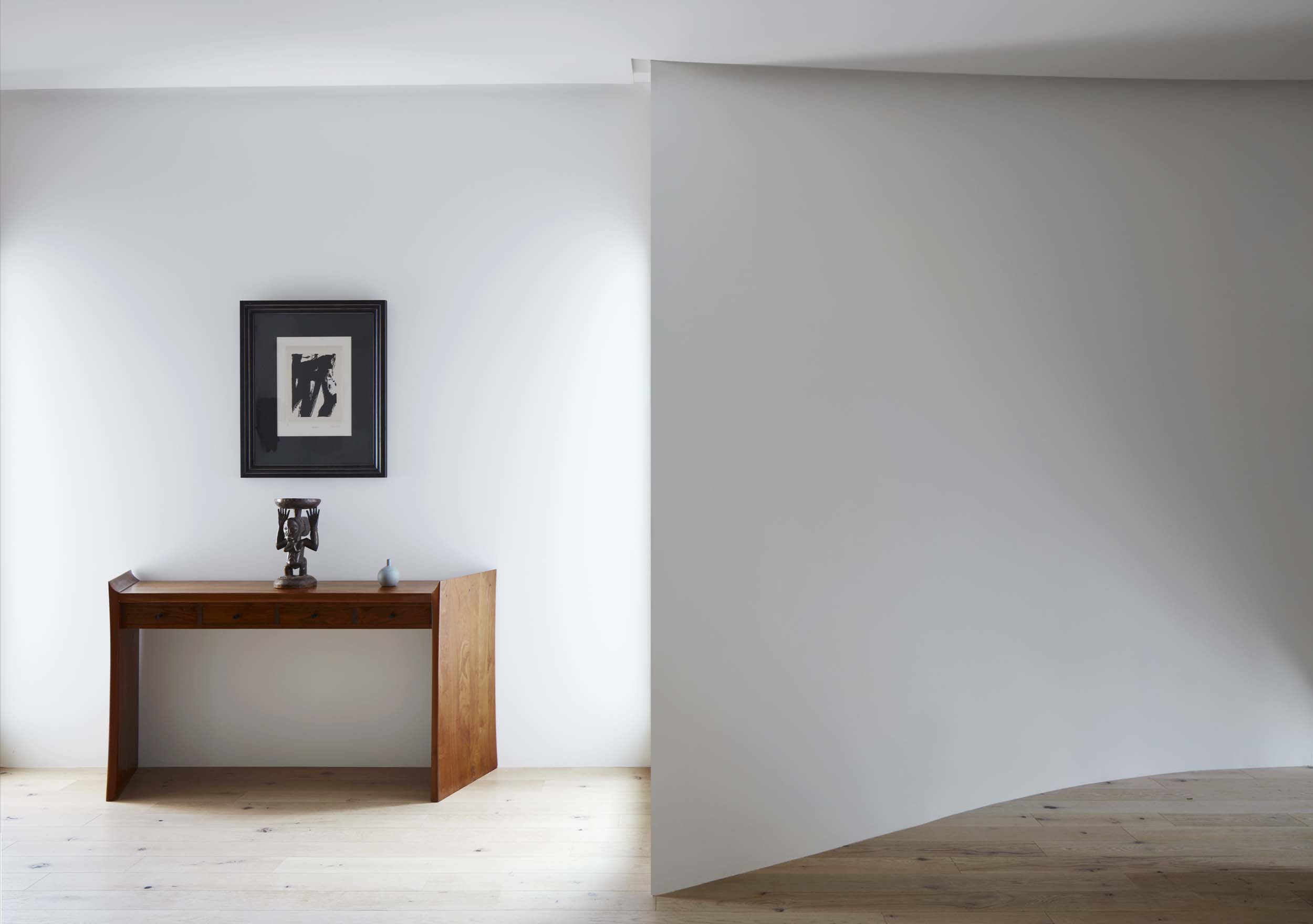
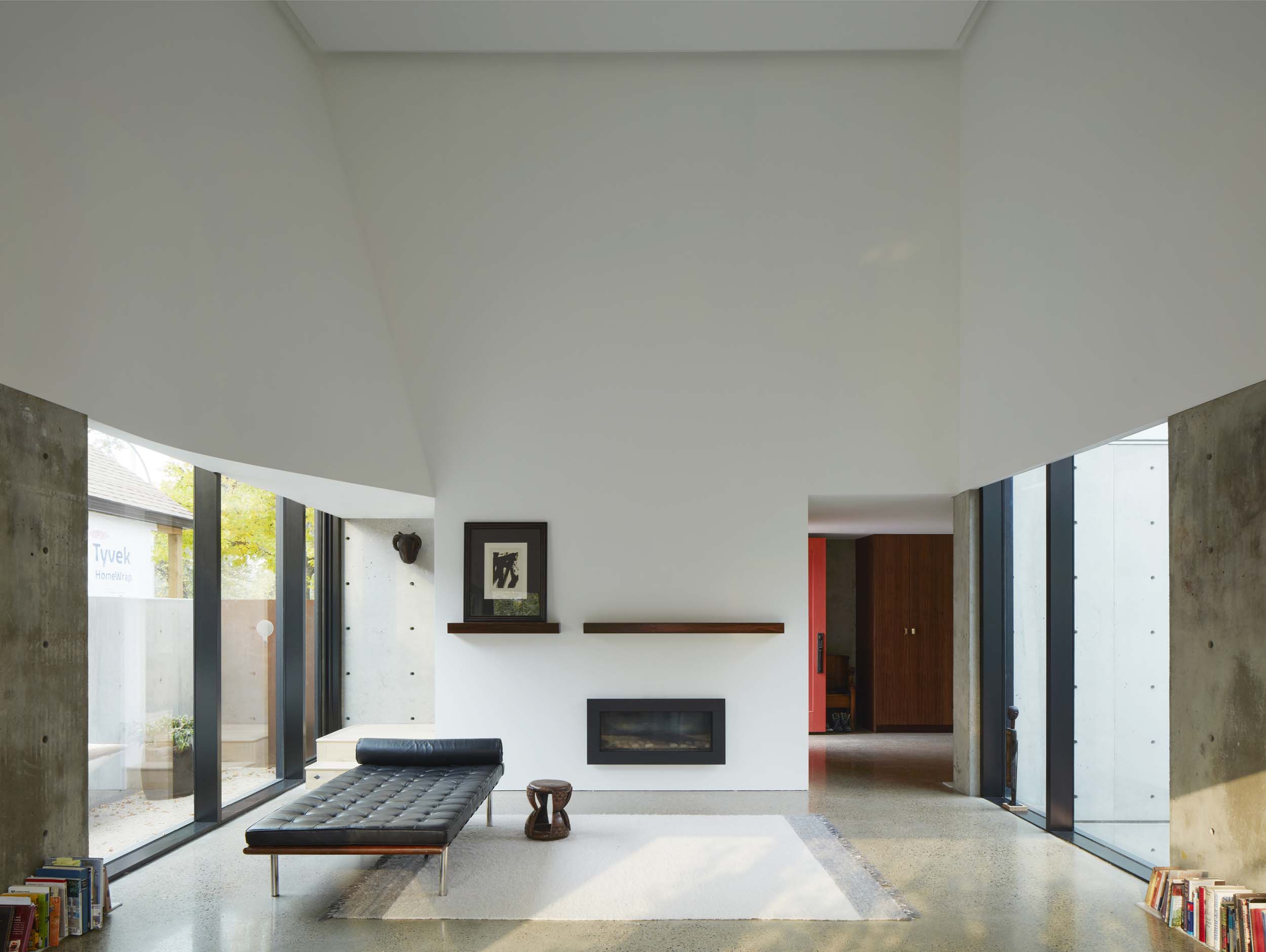
On the main floor, duality drives the design. Here the heaviness of concrete is lightened by abundant floor-to-ceiling windows that frame the pocket gardens. But while the space looks out, it also creates a sense of discreteness and refuge within, as white planar walls break up the double-height ceilings. The same hue continues onto the ceilings, at times emphasizing the expanse of the space, and at other times, injecting a sense of being nested within the building.
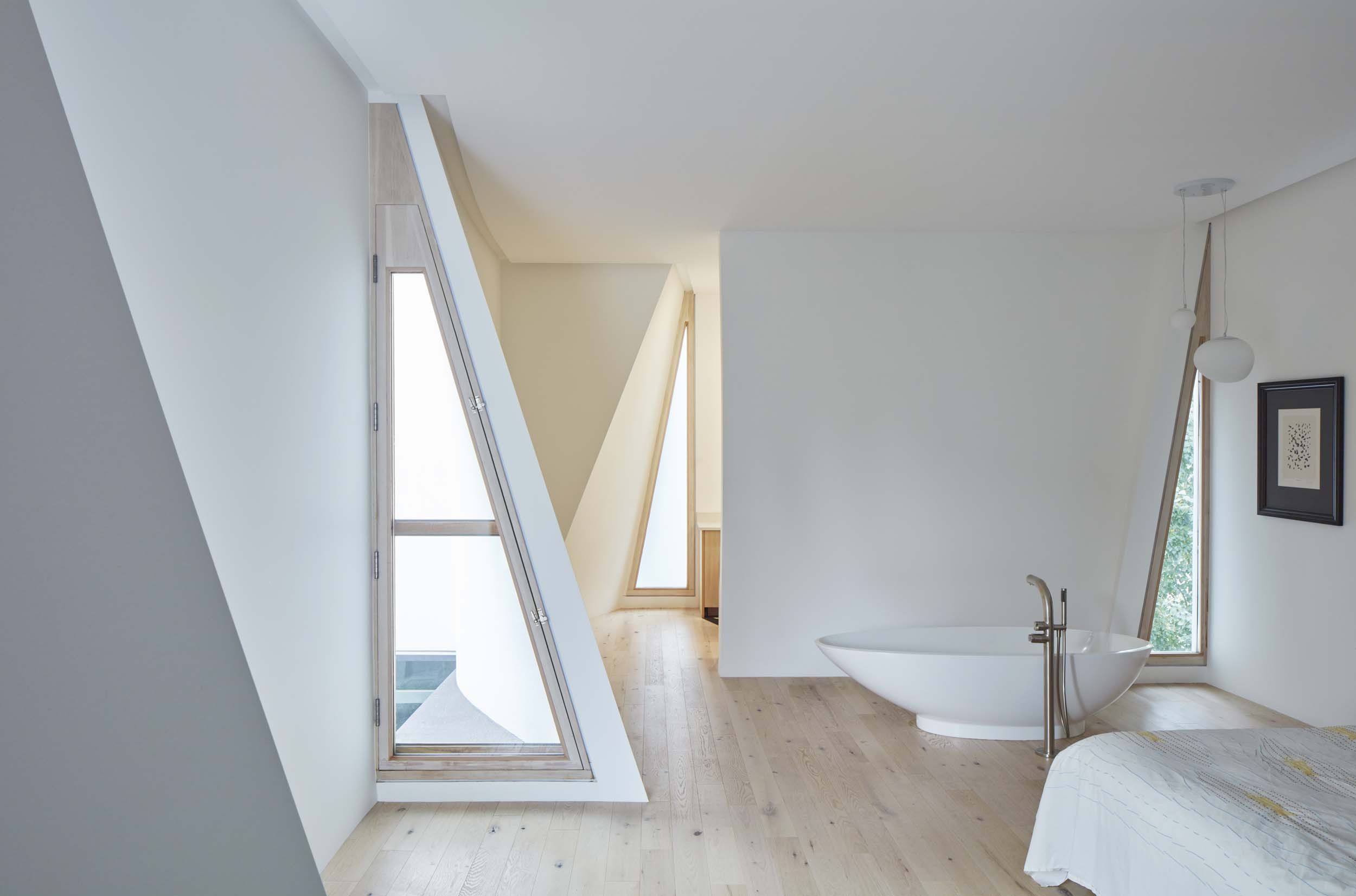
These sculpted elements provide a hint at what’s to come upstairs. On the second floor, stucco and plaster walls create curvature. If the first floor acts as a protective shell and a point for indoor and outdoor communion, the second floor acts as a more private refuge. Neutral color schemes, minimal decor, and increased privacy instill a sense of calm and respite.
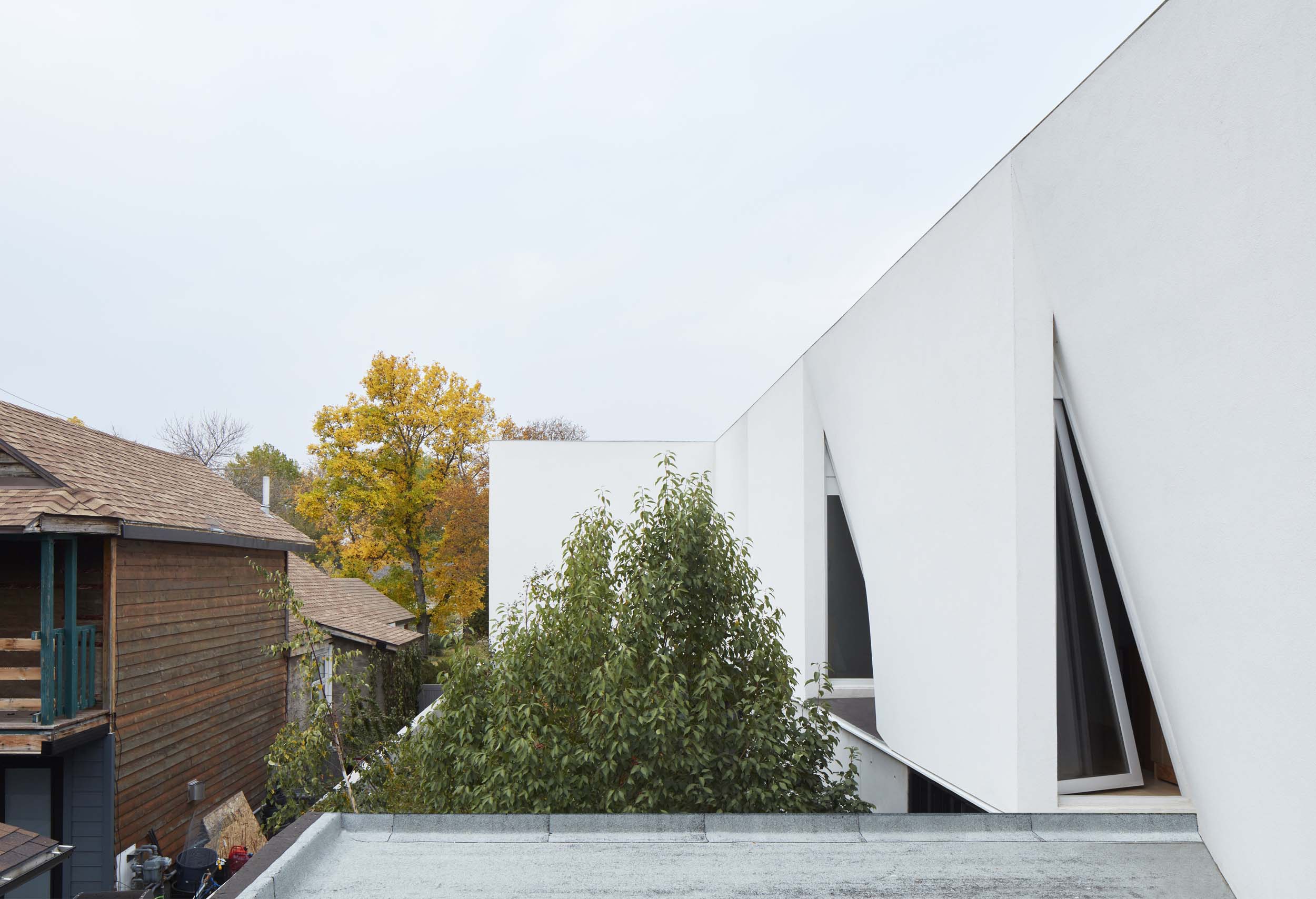
But what truly captures the eyes on the second floor are the triangular voids with operable wood-framed windows, crafted by the homeowner. The voids are created through the recesses of the warped walls with the curvature supported by simple wood studs. The windows softly wash the bedrooms with light. The result adds a sense of gentleness and breathability to the quiet space.