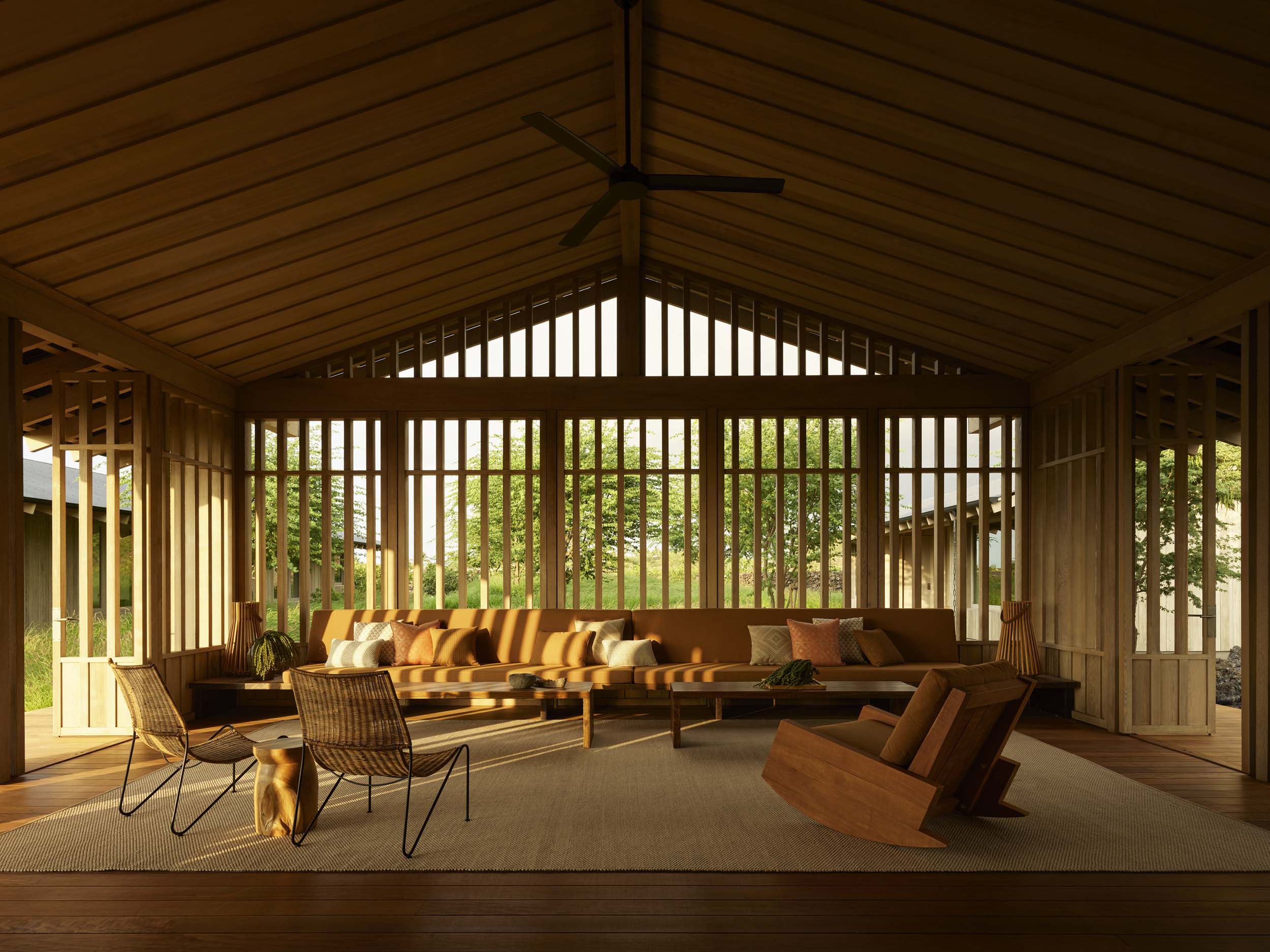
Along the Kona Coast of Hawaii, Hale Kiawe’s clean, rectilinear volumes cut through undulating grass beds, simultaneously contrasting and cohering with the surrounding landscape. San Francisco–based Walker Warner designed the 5,600-square-foot residence to adapt to its environment, hence the collaboration with landscape architects David Y. Tamura Associates who sculpted contours into the previously barren site. The balance between building and environment continues inside, where a sensitive, considerate touch creates a quiet, spiritual home for an evolving family.
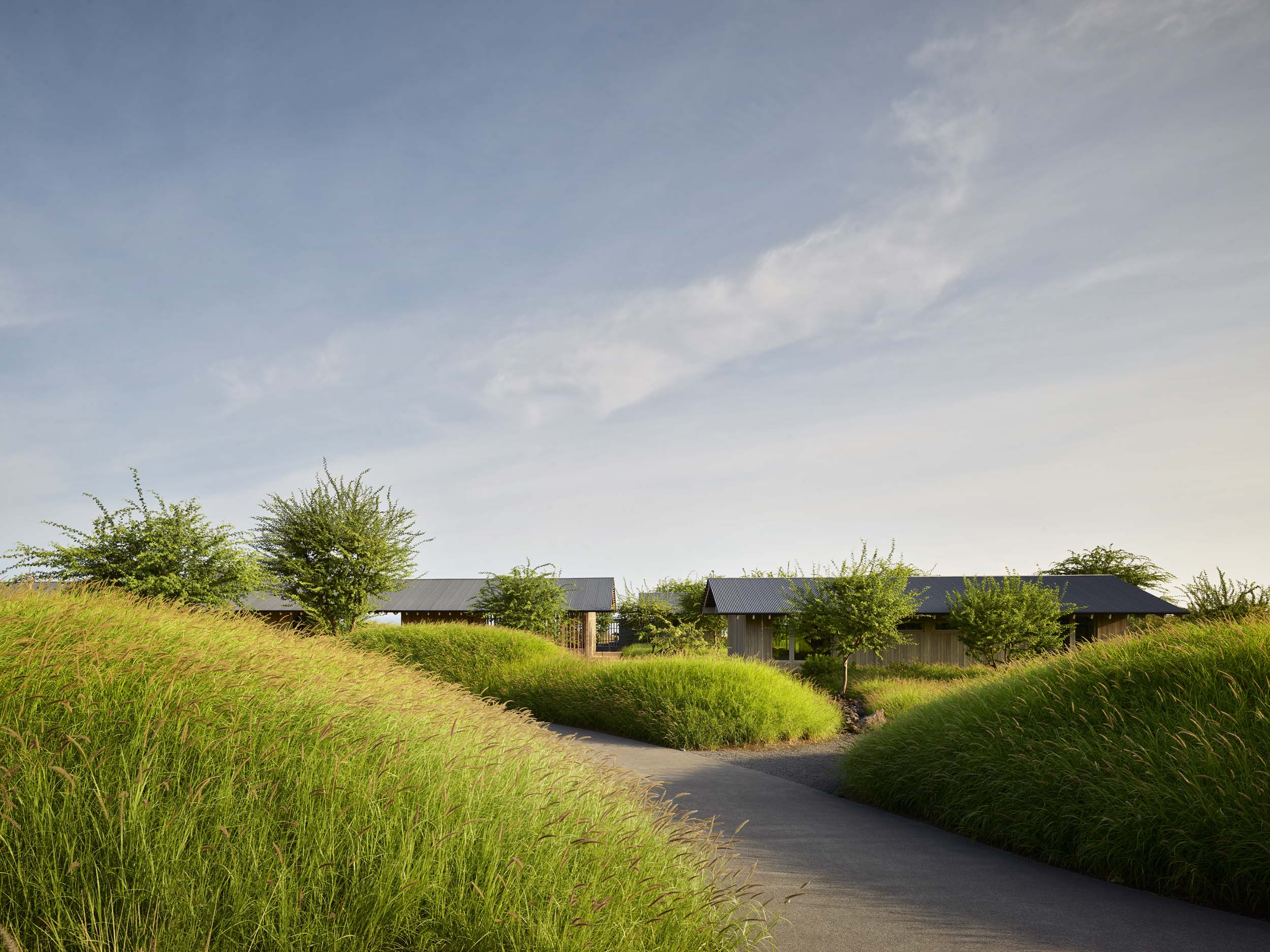
While rhythm and flow run through the bulk of Walker Warner’s portfolio, it’s especially apparent at Hale Kiawe whose clients, in alignment with their Indian heritage, tasked the architects with working with Vastu Shastra, a doctrine on the traditional Hindu system of architecture, emphasizing alignment between the built environment, nature, and the inhabitants’ wellbeing. These principles amounted to a series of lanais—each composed of wood siding and corrugated metal roofs that draw from agrarian buildings—connected by meandering boardwalks. It accommodates a place for the homeowners, space for their two adult children, another guest house, and a pool and detached garage.
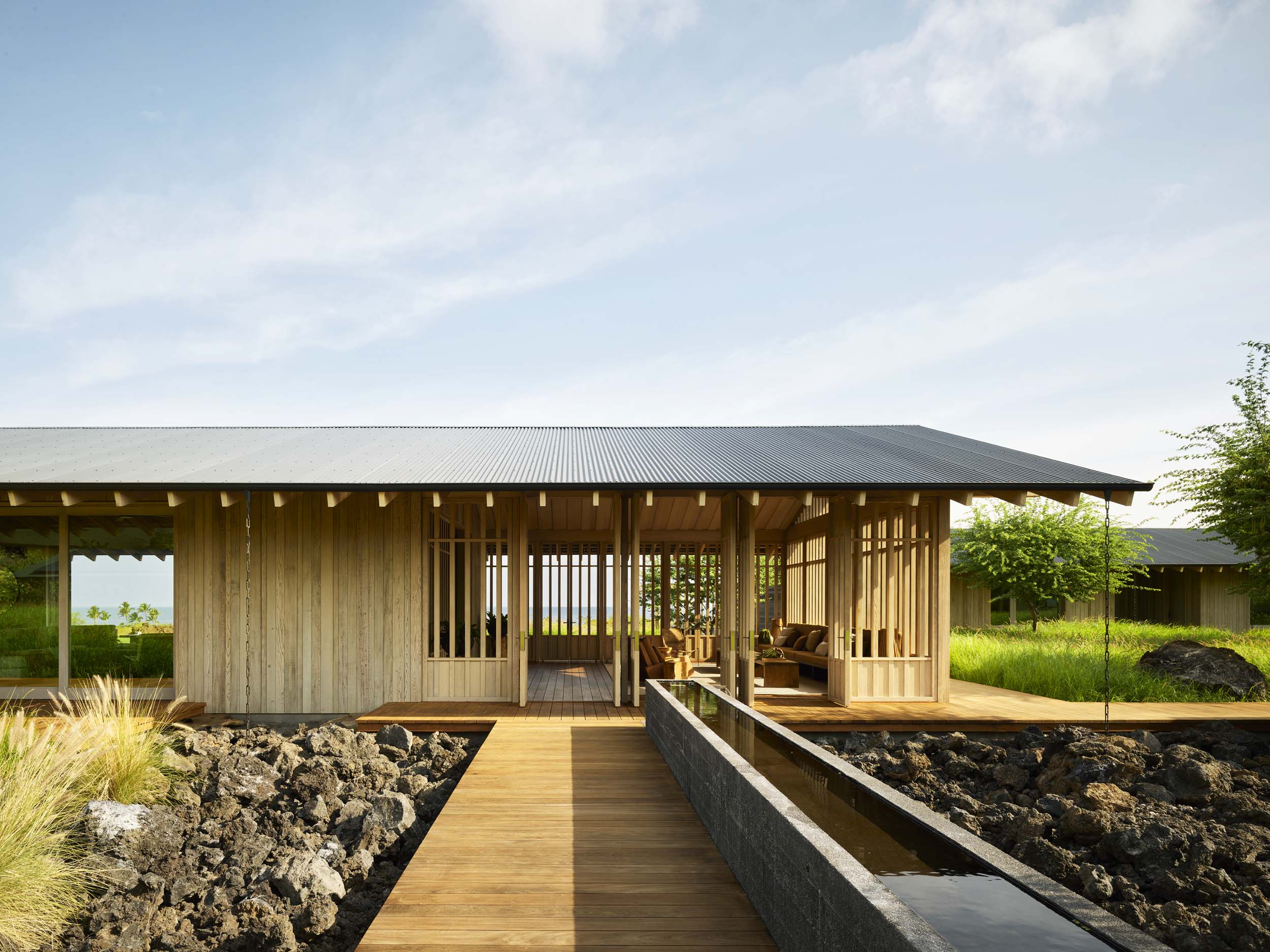
The plan is oriented as dictated by Vastu principles. For instance, the entry faces east in alignment with the doctrine’s recommended cardinal directions. A curving pathway and small pond, hidden from the road, lead to this entry lanai. Surrounded by slatted oak grills that let in the surrounding nature, the lanai takes its cues from Studio Mumbai’s Copper House in India. It’s here in this open-aired pavilion where the Vastu ethos of living with nature, light, and air feels most on display.
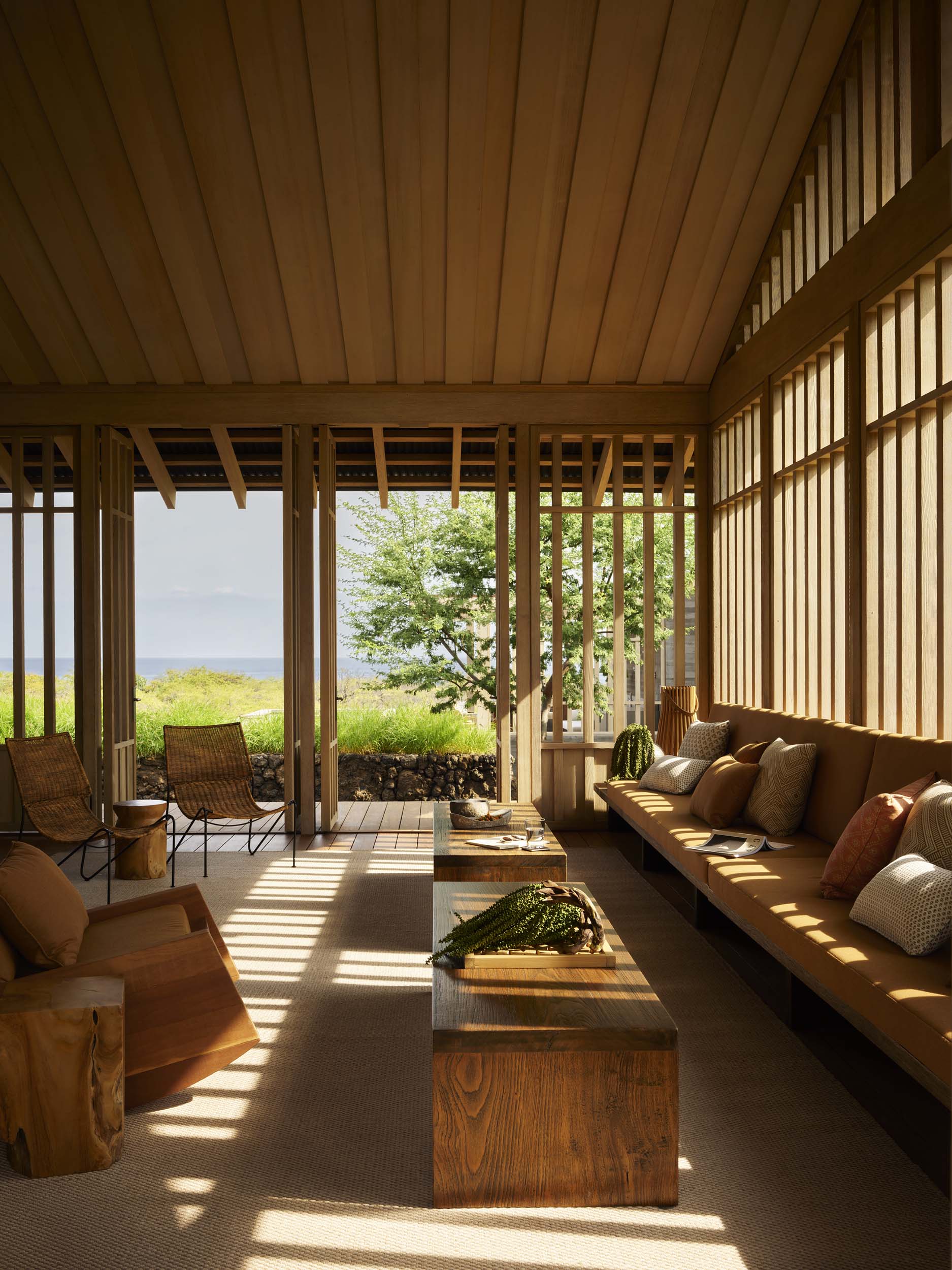
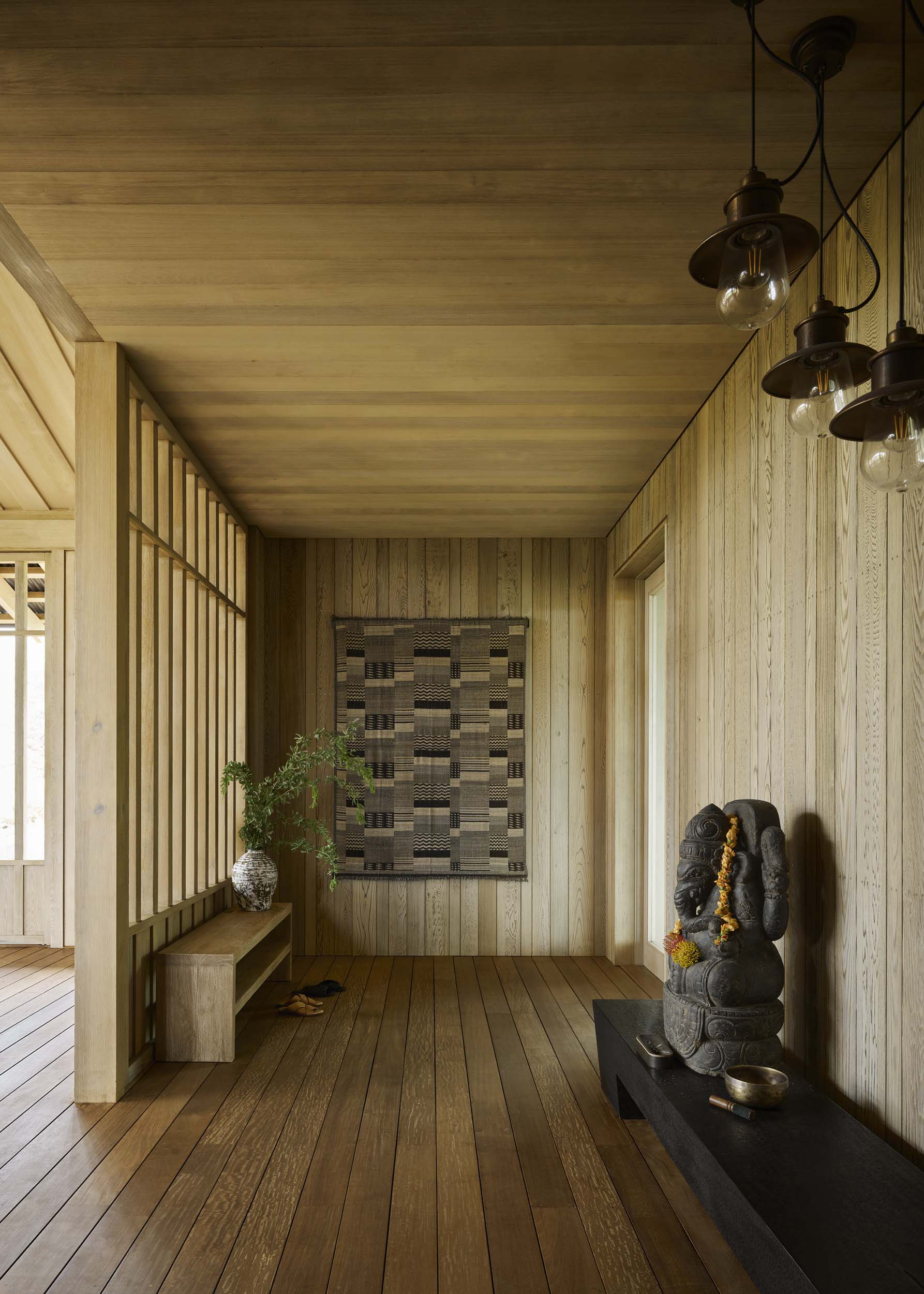

The quiet beauty of nature is further emphasized by the architects choice to under design. They worked with interior designers Philpotts Interiors to keep the furnishings and decor at a minimum as to not distract from the environment. It also helps accentuate each lanai’s spacious interior and clean structure.
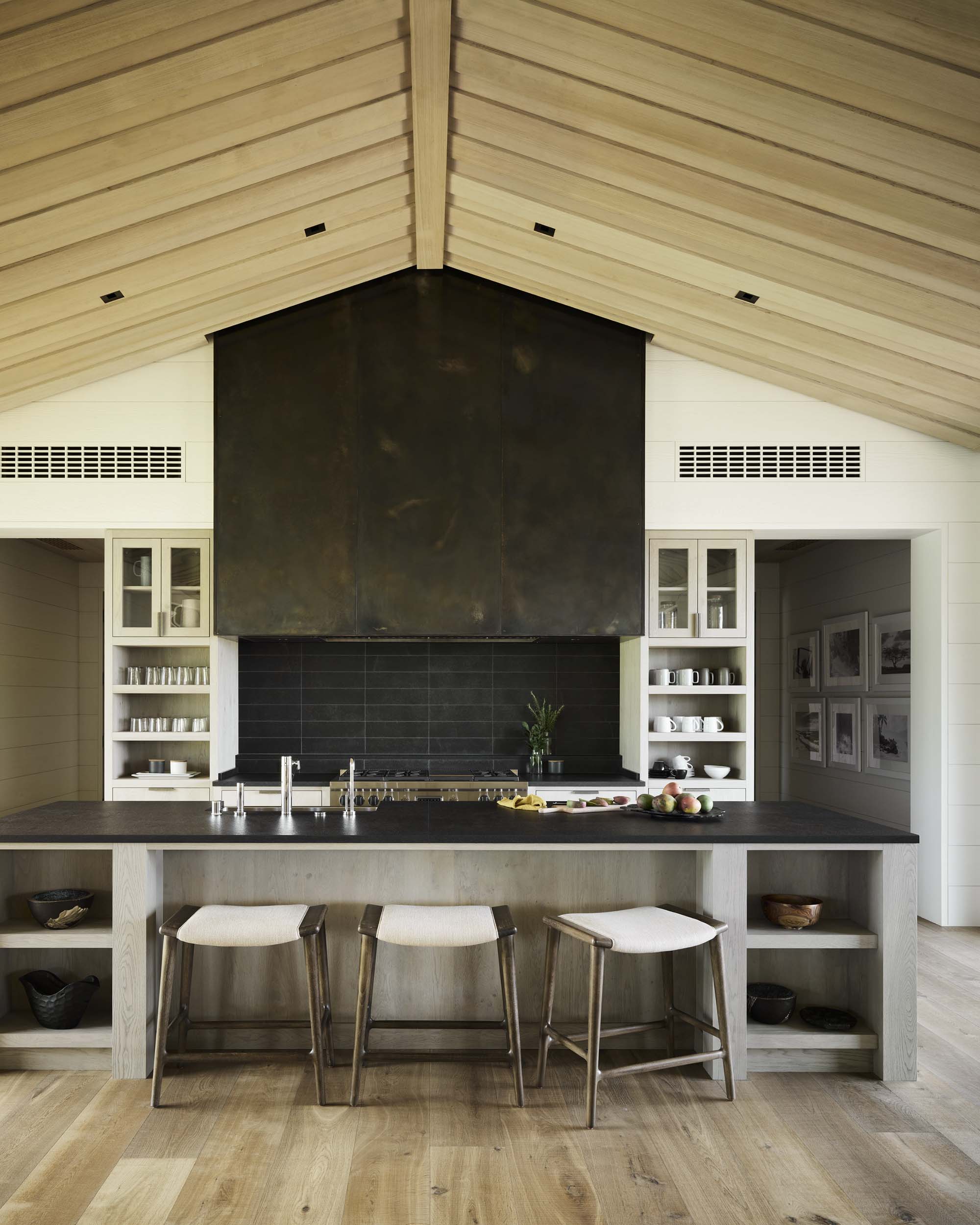
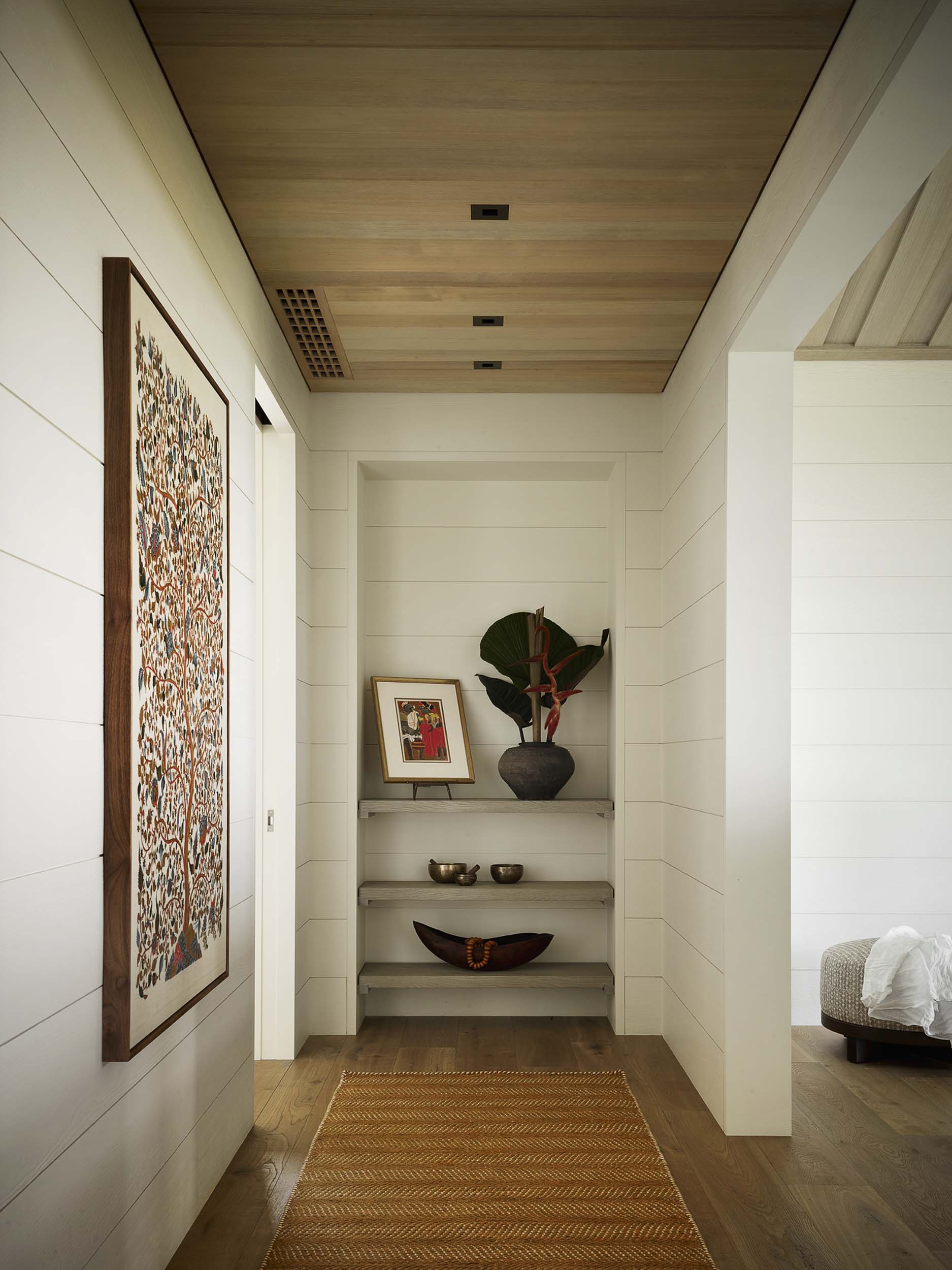
For Hale Kiawe minimalism isn’t just an aesthetic choice—it’s a principle. Keep what’s actually necessary and scrap the superfluous. The architects translated the clients’ belief to the interior where the decor and color palette remain muted. The neutral hues help to blend in among the wooden paneling and reflect colors found in the landscape, like the kiawe trees that surround the property.
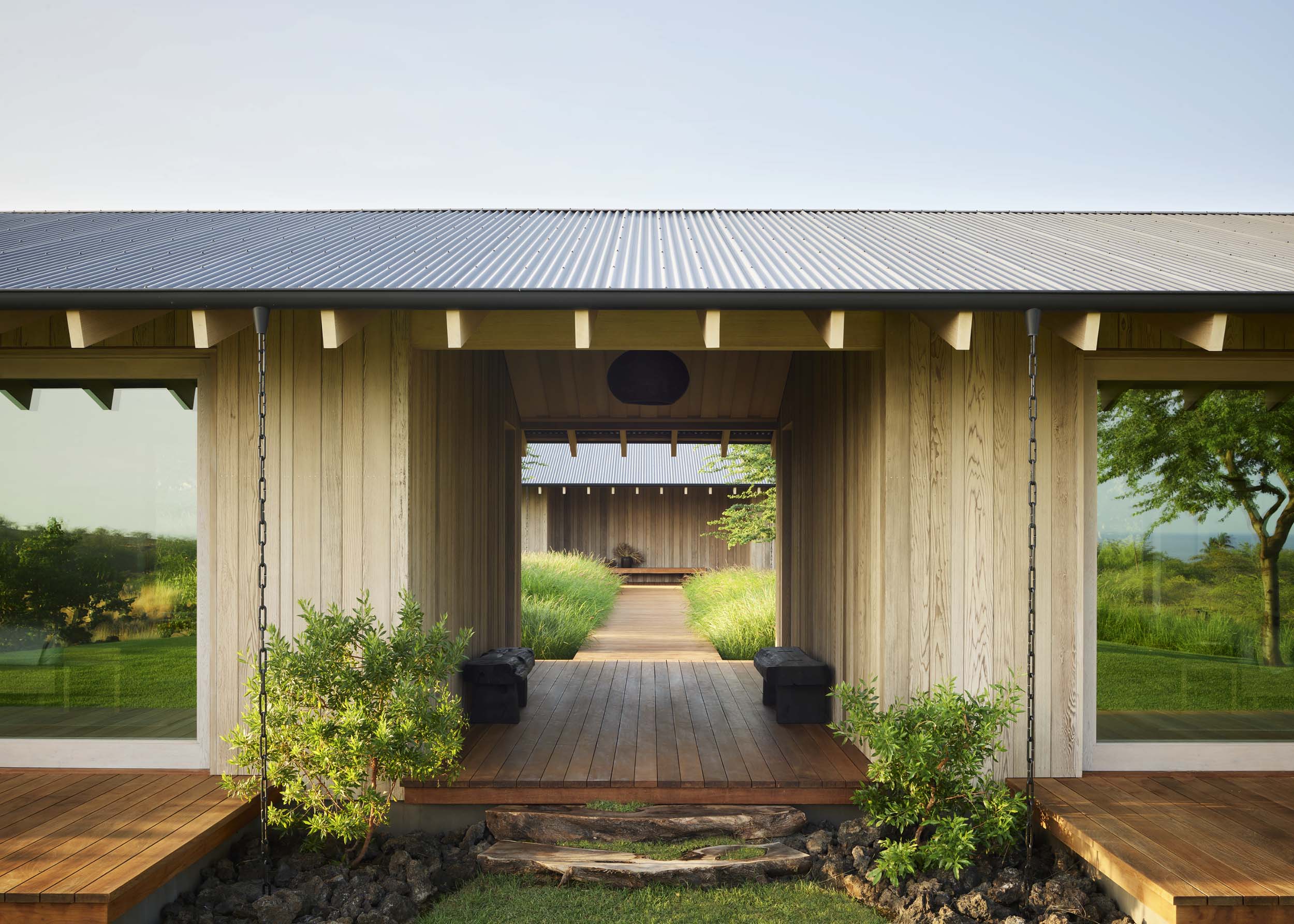
The trees took on symbolic importance during the project. The house’s name is the Hawaiian word for home, hale, and the name of the trees. Trees lead into the home, literally, as one fell nearby during the construction process and was salvaged as steps leading to and from the home. Kiawe makes its way inside where furniture was custom-made in Bali, India, and Mexico using this wood whenever possible. Case in point: In the primary bedroom, kiawe wood is used to craft the desk and side tables. Elsewhere, local materials are still featured like the headboard which is made of Hawaiian ash.
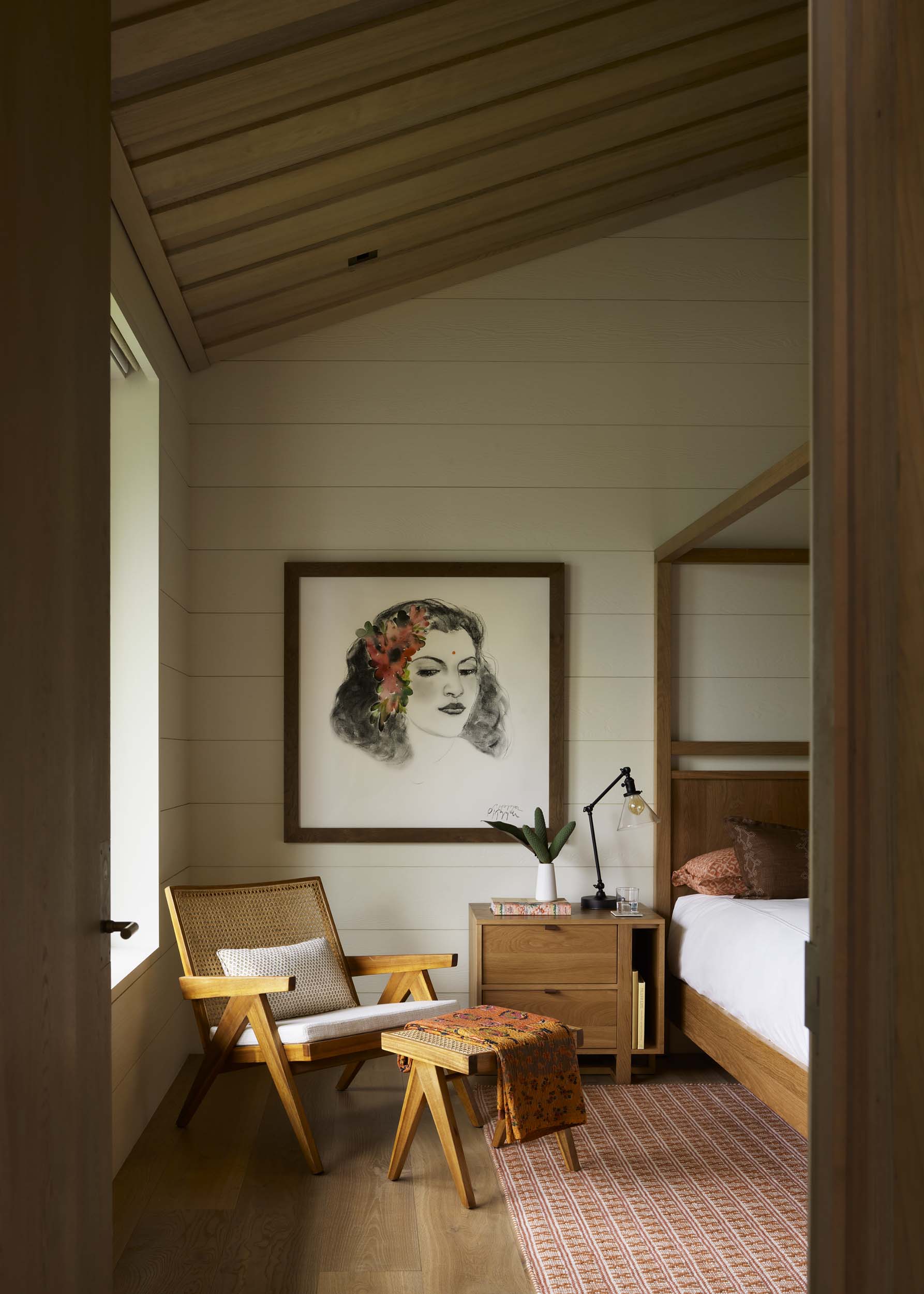
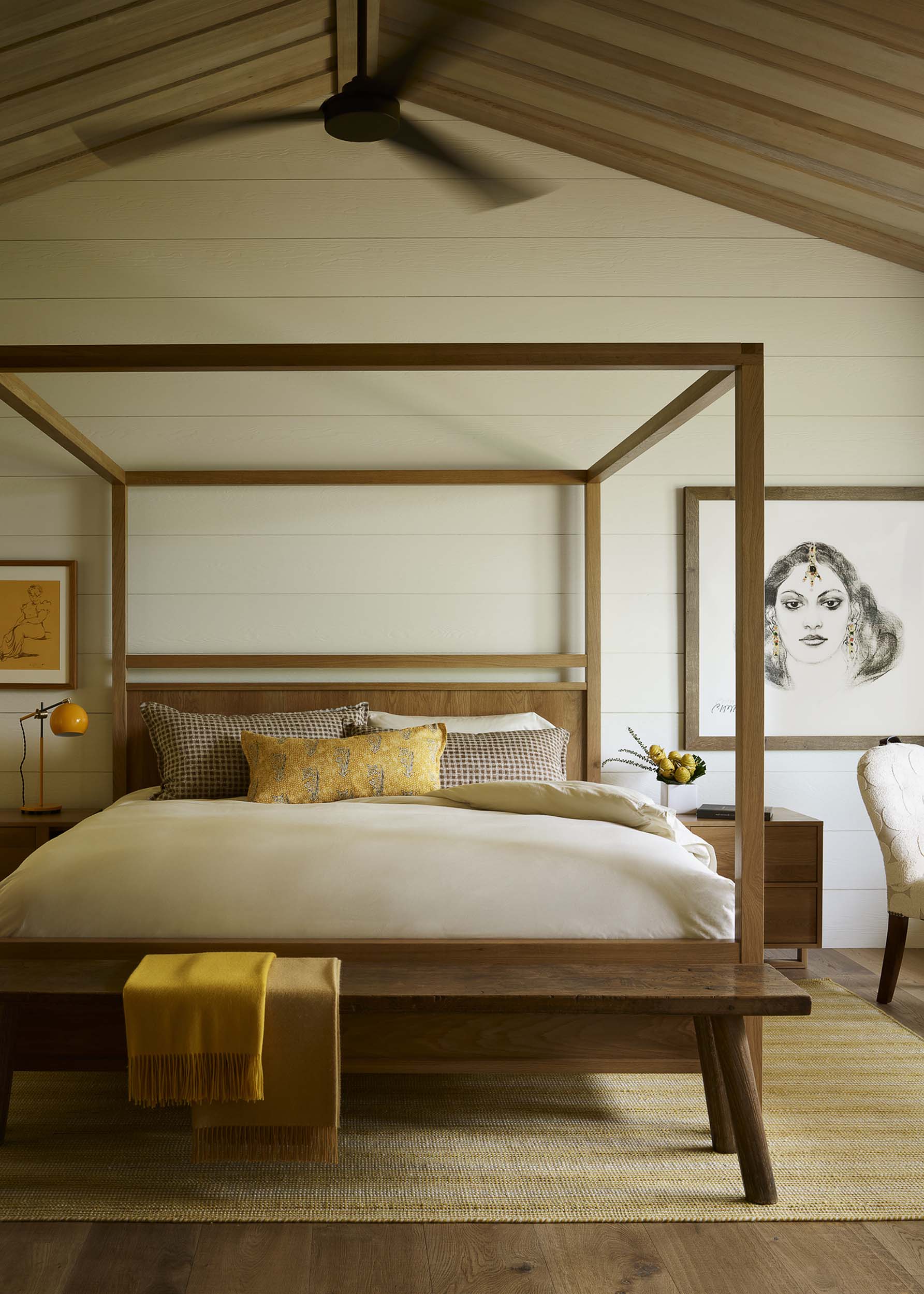
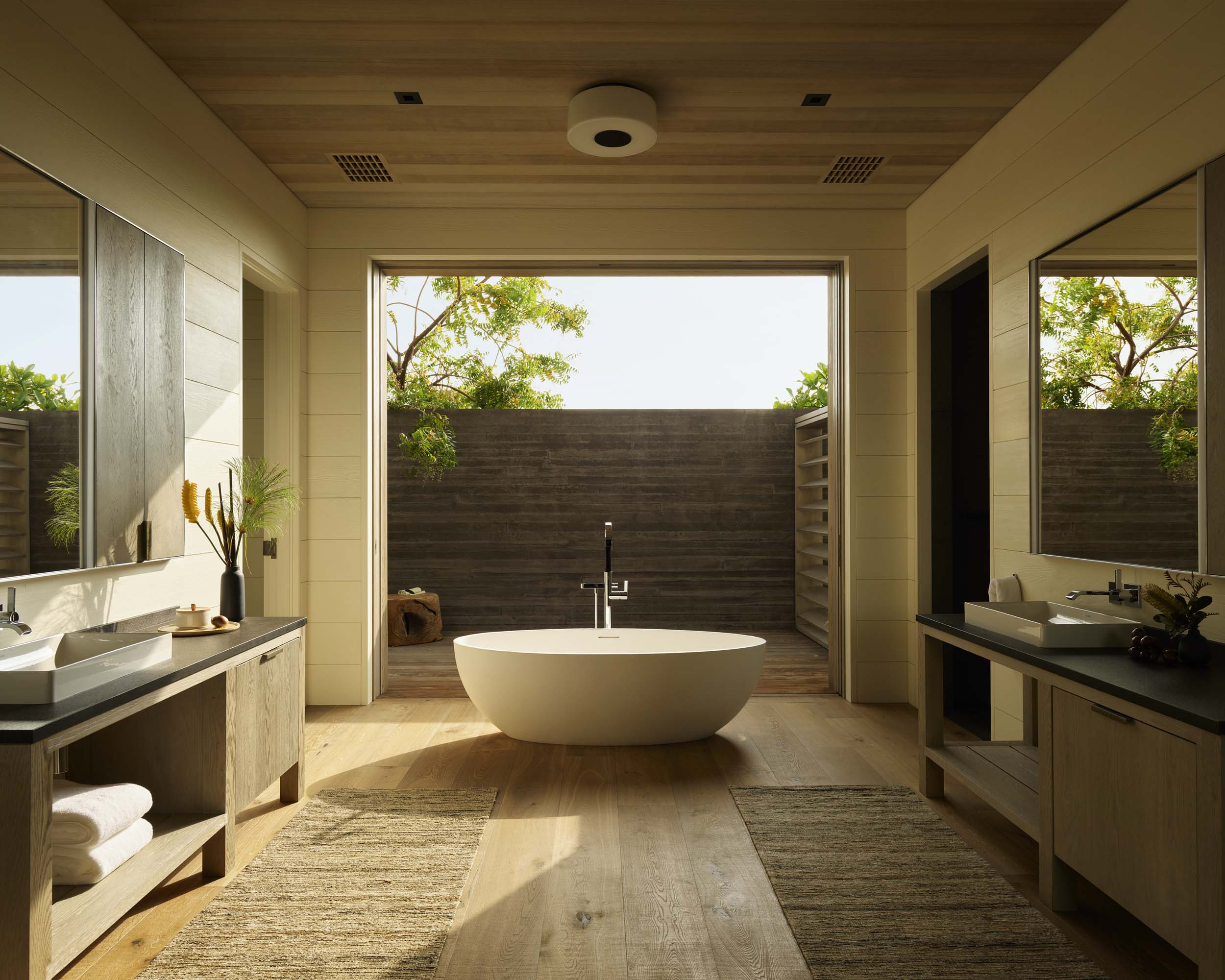
Massive lava boulders were repurposed to serve as elements throughout the grasses and courtyard. They are surrounded by other native plantings and vegetation chosen by Tamura’s team.
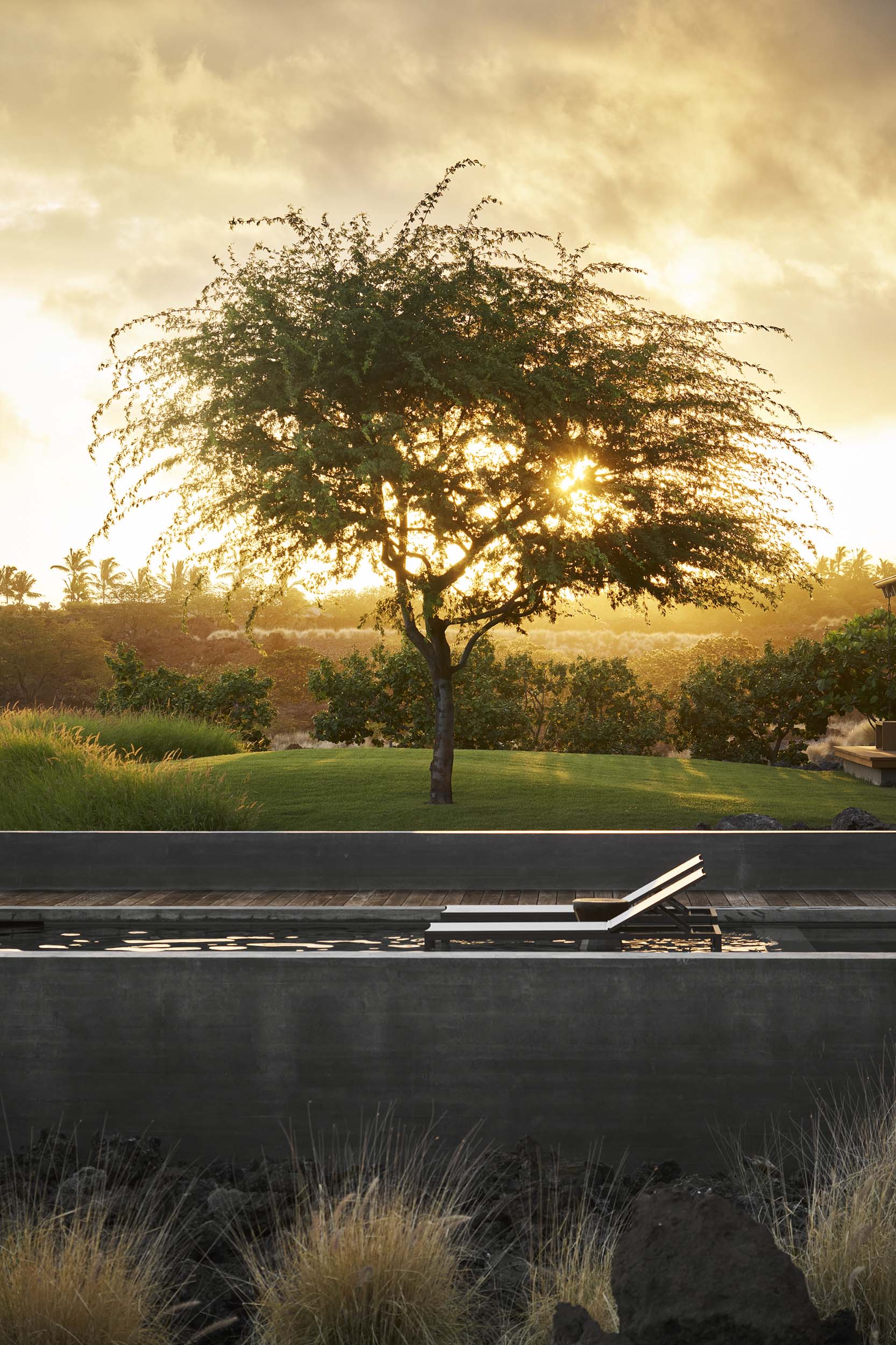
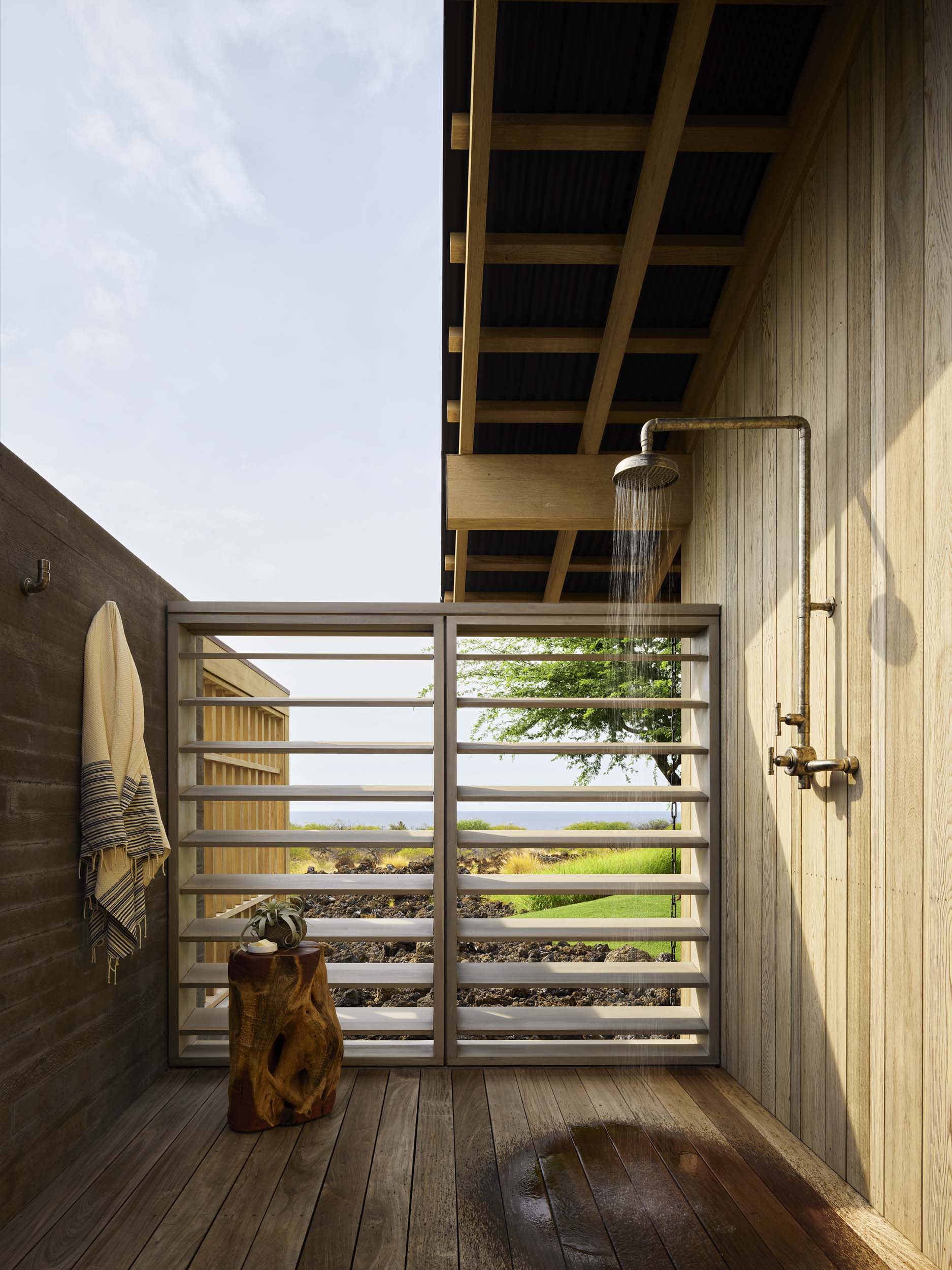
Despite its minimalist ethos, Hale Kiawe still feels abundant with warmth, light, and nature, a testament to the ways the architects responded keenly to the area and the homeowners’ needs. The resulting respite is a reminder of the difficulty yet resounding effect of restraint.