
Turns out New York has an unofficial design week sequel, and it occurs by chance when Fashion Week, The Armory, R & Company’s design triennial, and European design fair COLLECTIBLE all take place. Are we sure brat summer is over?
Suffice it to say, there’s a buzz in the air. For design heads, COLLECTIBLE, the one and only fair dedicated to collectible design, was at the center of it. The 2024 edition marks the highly anticipated New York debut after seven years of being presented in Brussels, Belgium. Coinciding with the fair’s introduction in the States, COLLECTIBLE cofounders Clélie Debehault and Liv Vaisberg opted for more international exhibitors than before. Over 100 exhibitors from around the world participated in this year’s showing.
The show was located in the equally buzzy Water Street Projects (WSA), which is also home to the likes of Luar and Bode. In addition to the Main and Bespoke sections, the fair included a New Garde exhibition for studios founded within the last three years and an Architect⇔Designer section, curated by Studio Ahead, for architects who’ve extended their practice to furniture design. As fashion week was also kicking off, a portion of the fair was devoted to collaborations between the two industries. In fact, on the VIP preview day, fair visitors spilled onto the streets where models queued for a nearby casting. So chic!
But it wasn’t all just luxury for the sake of it. Many showings were thoughtful meditations on cultural exchange, post-post-modernism, life cycles, and materials. There was diversity in visual language and forms. There was a greater freedom for designers to show what they wanted, with less constraint than perhaps other fairs. There were talks and programming for AAPI designers, sustainable design research, and what even is collectible design? Of all the objects on display, the following studios stood out by pursuing a cohesive, engaging perspective and vision.
Manifold
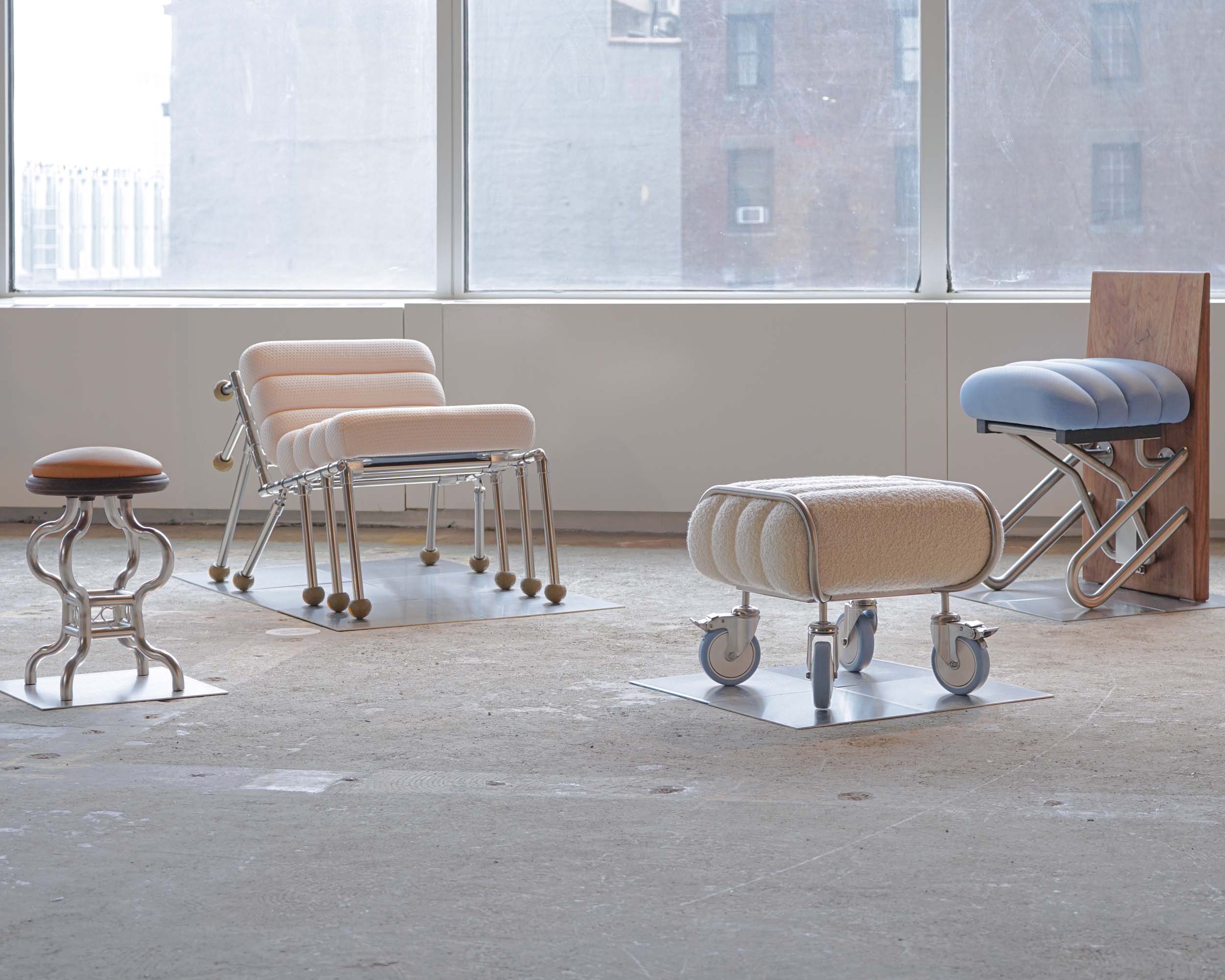
Manifold is a Brooklyn-based studio from Yihan Chen and Fengyi Zhu. When the duo moved from China to New York, they were taken aback by the amount of stainless steel and industrialism throughout the city. Their presentation at the fair utilizes this material by bringing softer, organic elements to it. The Alternative Application chair, for instance, uses the steel found in ADA-compliant seating, taking it off the wall onto a panel of walnut wood. In the caterpillar-like Eruca Chair, spindly stainless steel legs, taken from tools used to move ship parts, create flexible seating. The objects could easily fit into a dystopian hospital as they do a residence, an intriguing blend of cold and warm materials and New York and Chinese influences.
Kiki Goti
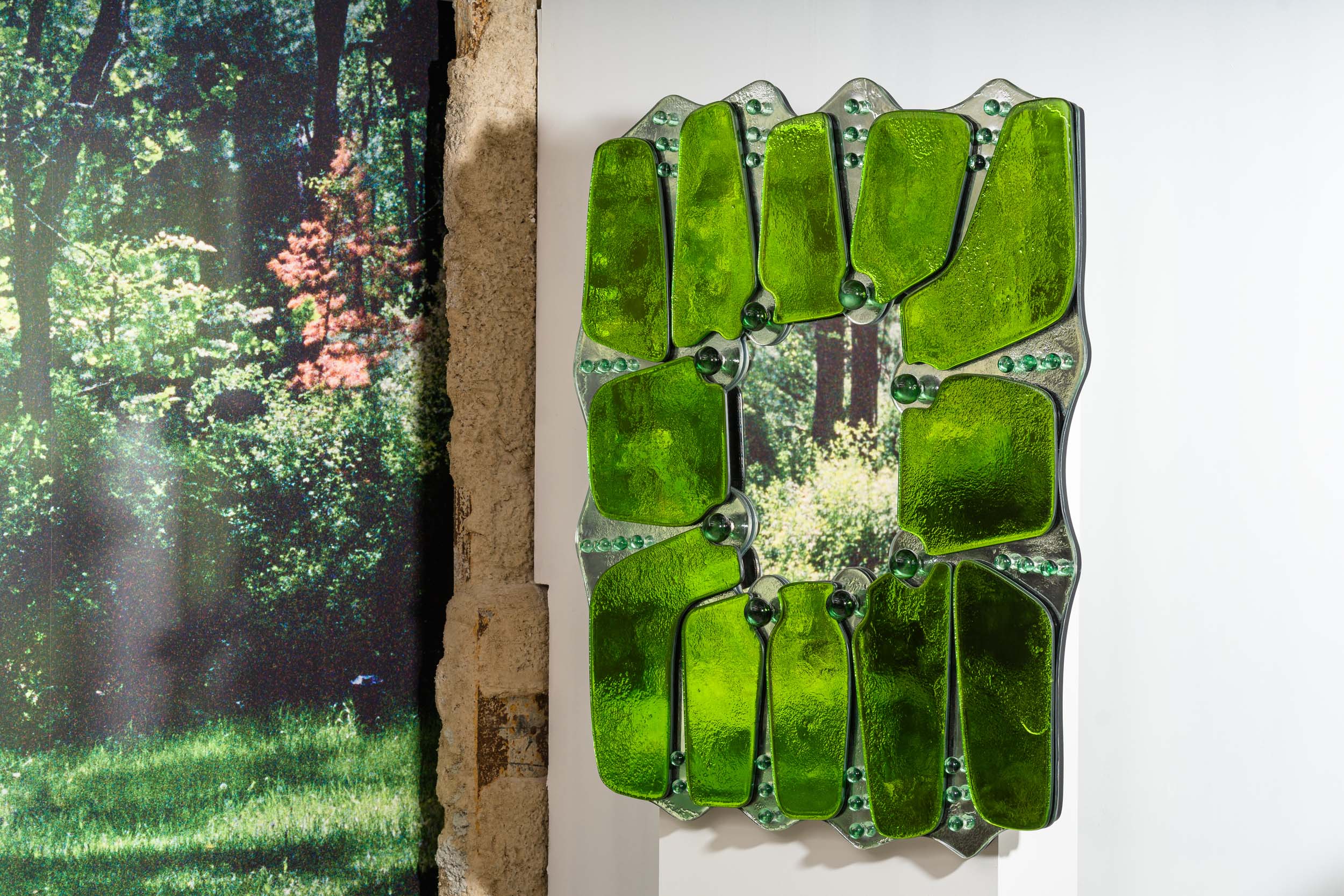
Greek architect, designer, and educator Kiki Goti experiments with materials and fabrication. For the fair, the New York–based designer presented her Nuphar Mirror for the first time in New York. Made of hand-painted glass, the accessory shimmers as if dotted with water droplets. Fittingly, the varying glass panels are informed by the shape of water lilies. The effect celebrates the inherent material qualities of glass: feminine, luminous, and enigmatic.
Yuxuan Huang Studio
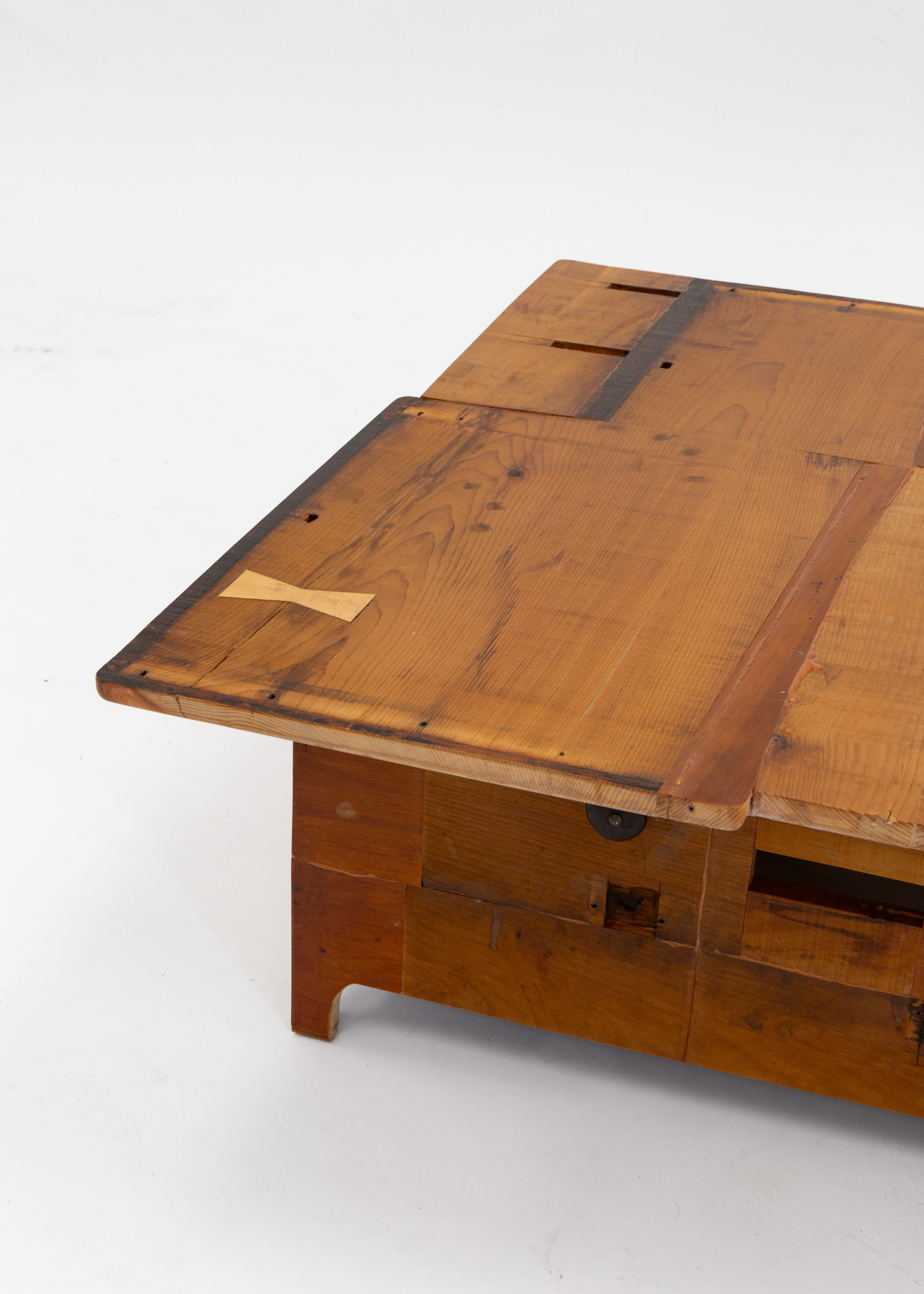
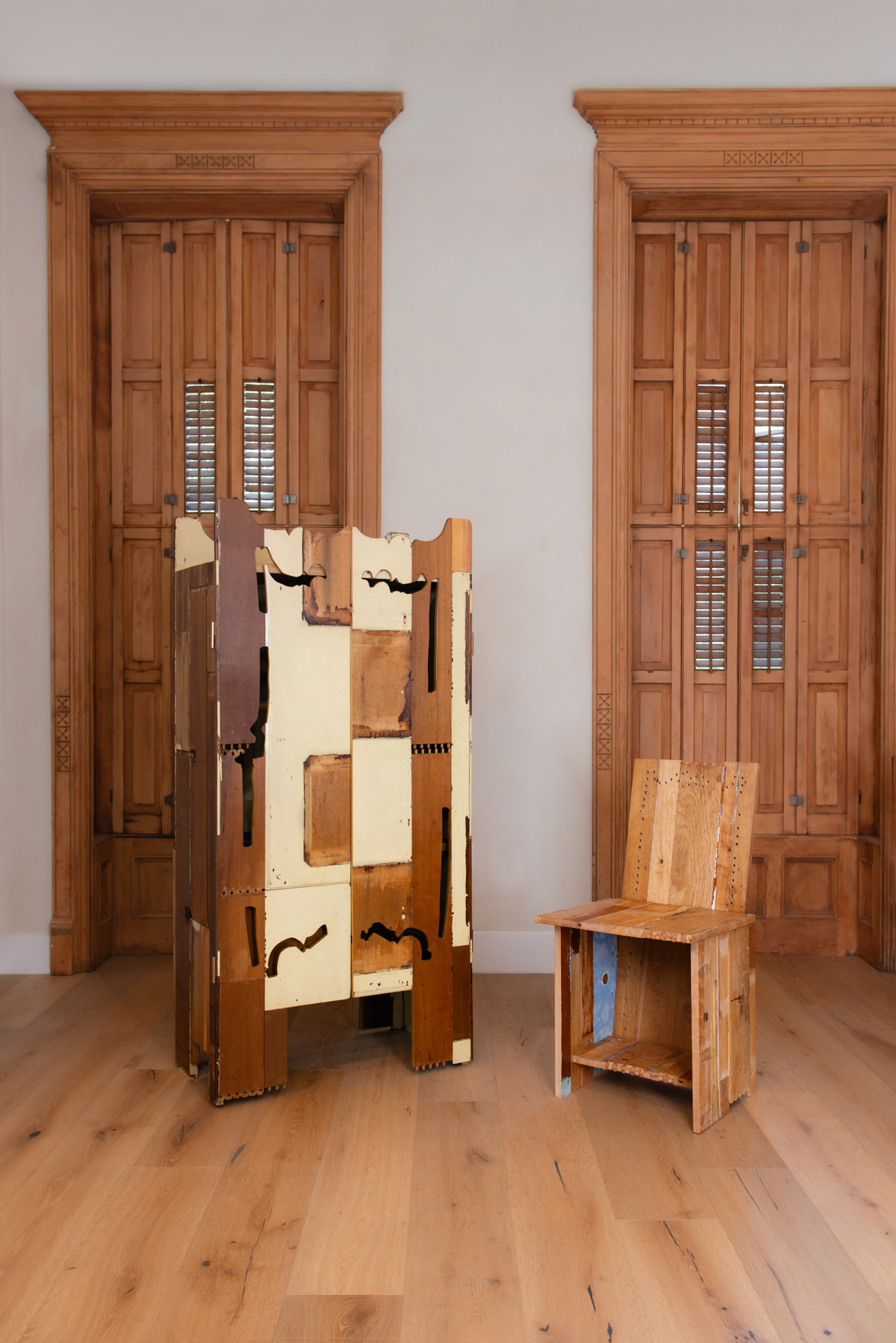
In the fair’s New Garde section, Yuxuan Huang shared the collection of recycled wood taken from antique furniture. The series, titled Lost Stories, is a patchwork of wood grains and panels. It includes both a wardrobe and chair who’s deconstructed and reconstructed process is explicitly expressed through an honesty of materiality and embrace of marks, from scratches, glue, and dust.
M’ama edizoni
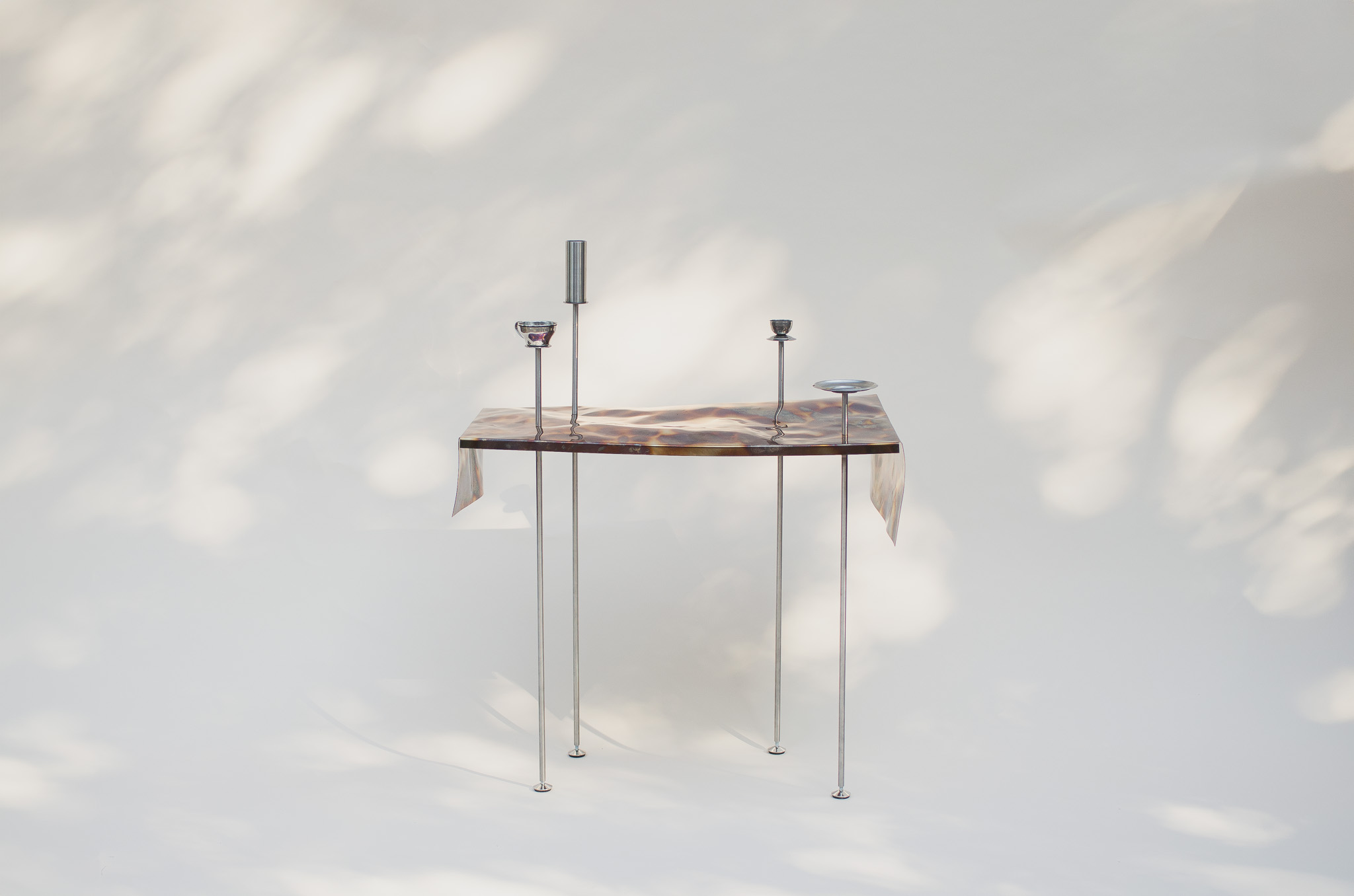
M’ama edizoni, the furniture brand from Federica Zama, continues its exploration of romantic, hybrid kitchen and food elements with Domenica. The breakfast table is made of 1-millimeter-thick stainless steel, which has been deformed through heat, creating an iridescent pattern like a fluttering steel tablecloth. Steel rods pierce through the table to create an egg holder, vase, and saucer. Both romantic and utilitarian, Domenica embraces the ritual of breakfast and the beauty in the quotidian.
Fefostudio and Kamilla Csegzi
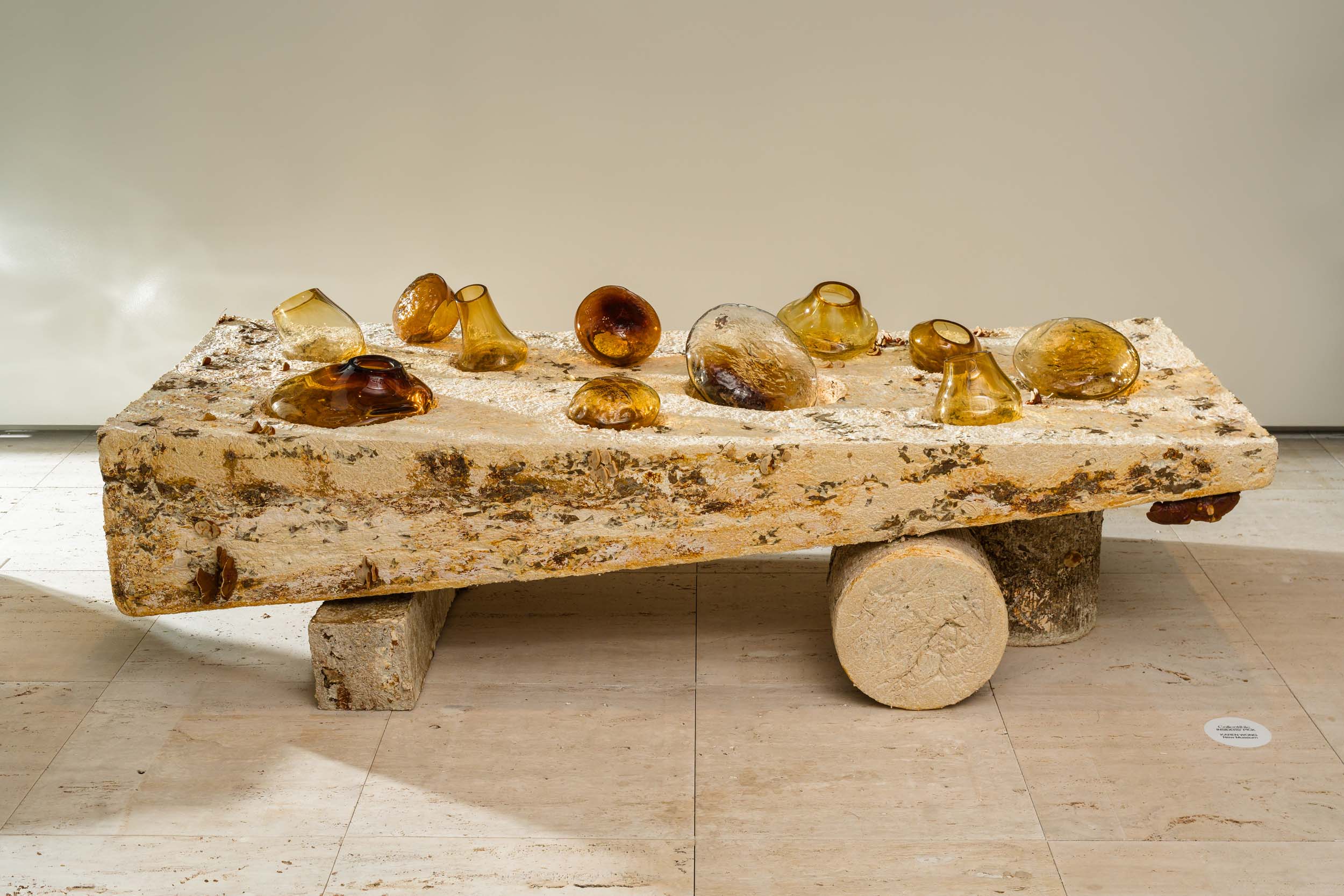
Artist and chef of Fefostudio Fernando Aciar and architect and designer Kamilla Csegzi came together to create The Ephemeral Table, a piece made of mycelium and a substrate composed of upcycled materials like leaves from a garden, corn husks, and cardboard packaging. The table was crafted using molds from the ceramic studio to shape the mycellium, which in turn became a mold for glass pieces. Glass vessels were shaped into the voids of the table and presented within these indentations during the fair as mushrooms sprout around it. As the life cycle of the table is part of its design, the table is planned to decompose in the spring of next year.
Caleb Ferris and NJ Roseti
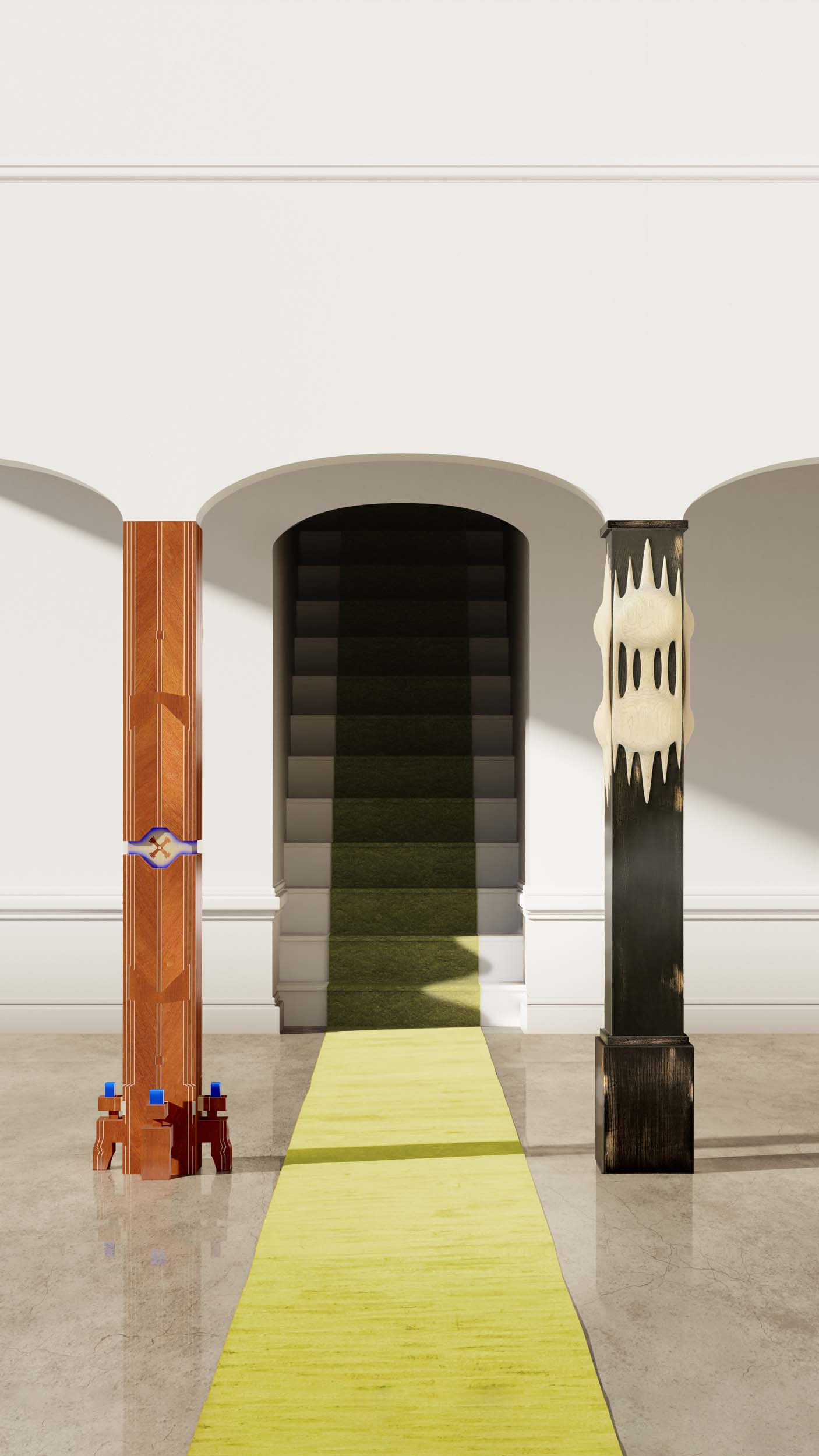
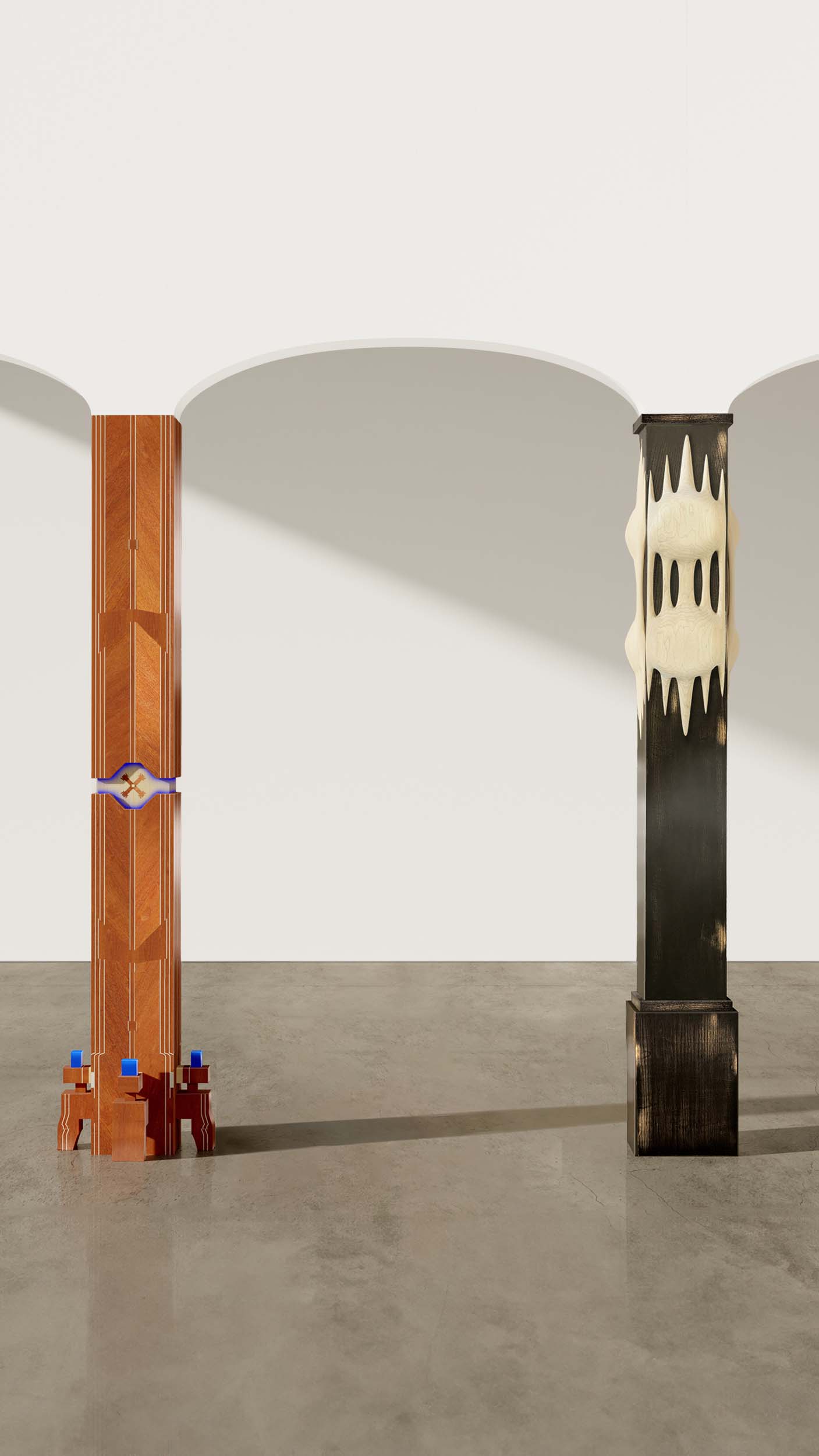
Together NJ Roseti and Caleb Ferris explored interpretations of columns, and through it, the intersection of architecture and furniture design. Roseti’s take, an untitled column, is made of plywood, mahogany veneer, maple veneer, and maple with intricate wooden marquetry to mix traditional and modern elements. It stands next to Ferris’ Don’t Wanna Know, a sculpture of ebonized red oak and carved maple, affixed with curious carvings.