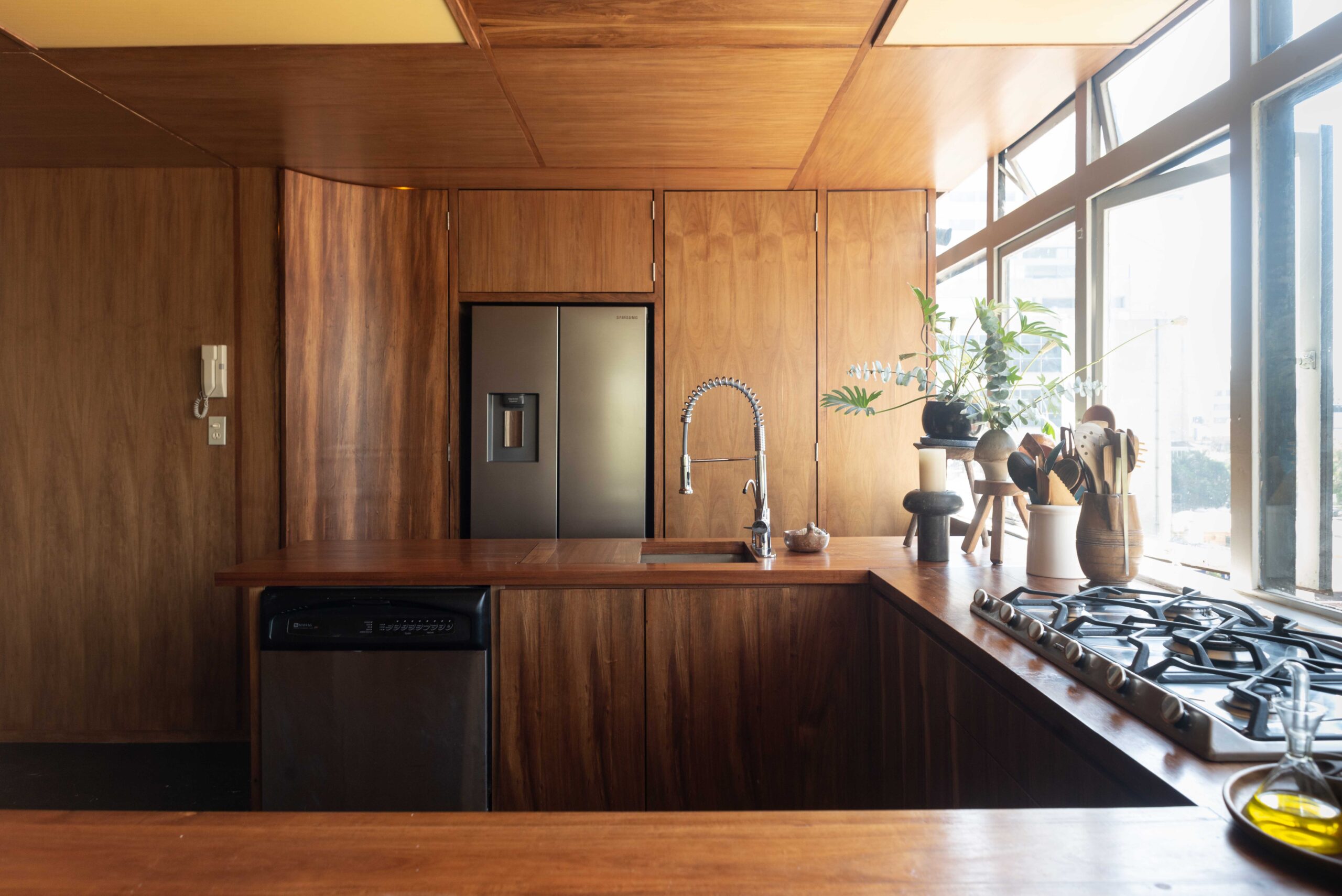
For a kitchen renovation inside one of Mario Pani’s 1954 “twin” towers in Mexico City, local architecture firm LANZA Atelier took inspiration from the midcentury structures. The cooking space designed for an art director and artist client is completely drenched in wood—literally, the countertops, walls, and ceiling are encased in a rich Tzalam plywood. Pol’s Kitchen is a minimalist yet warm and welcoming space for preparing meals.
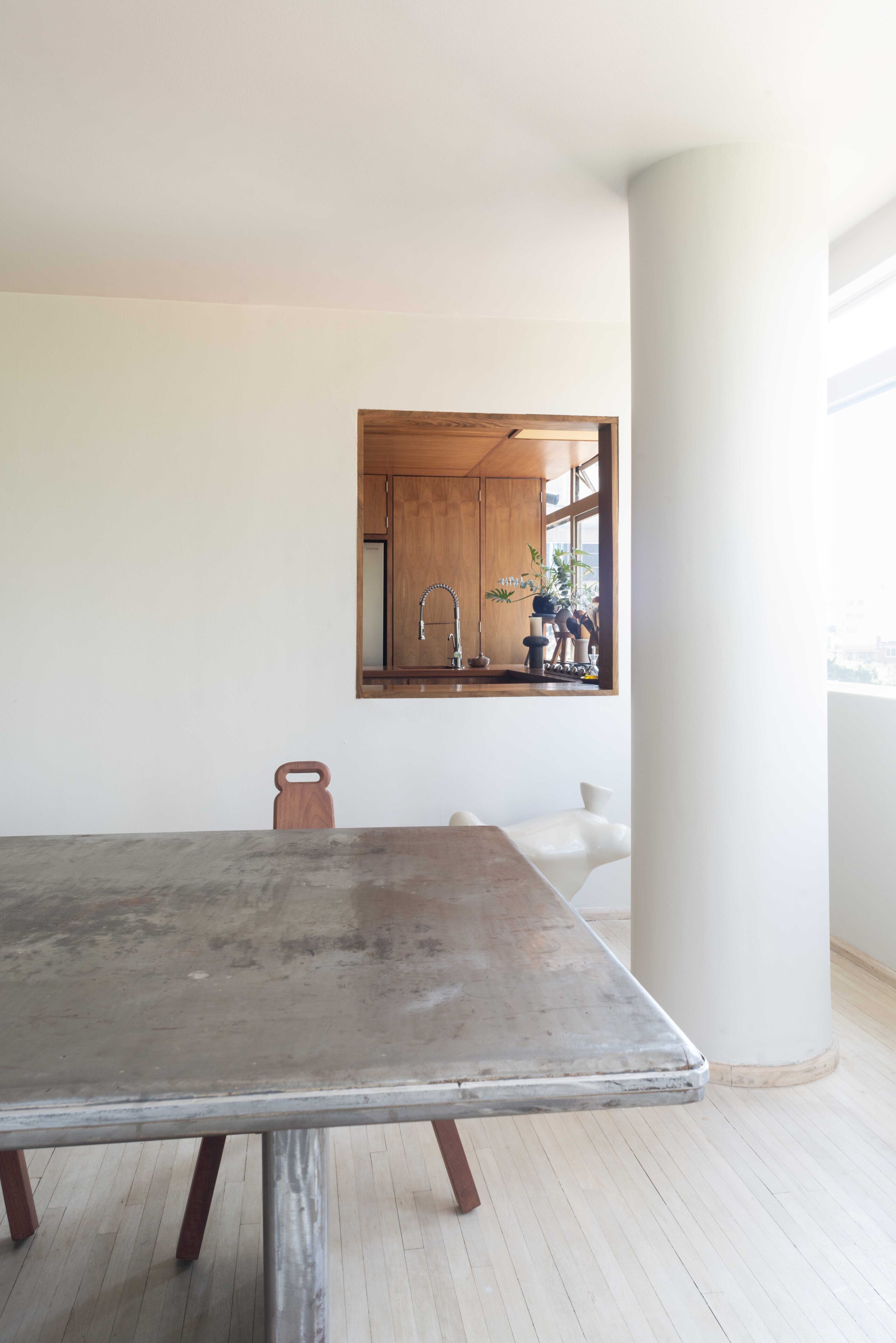
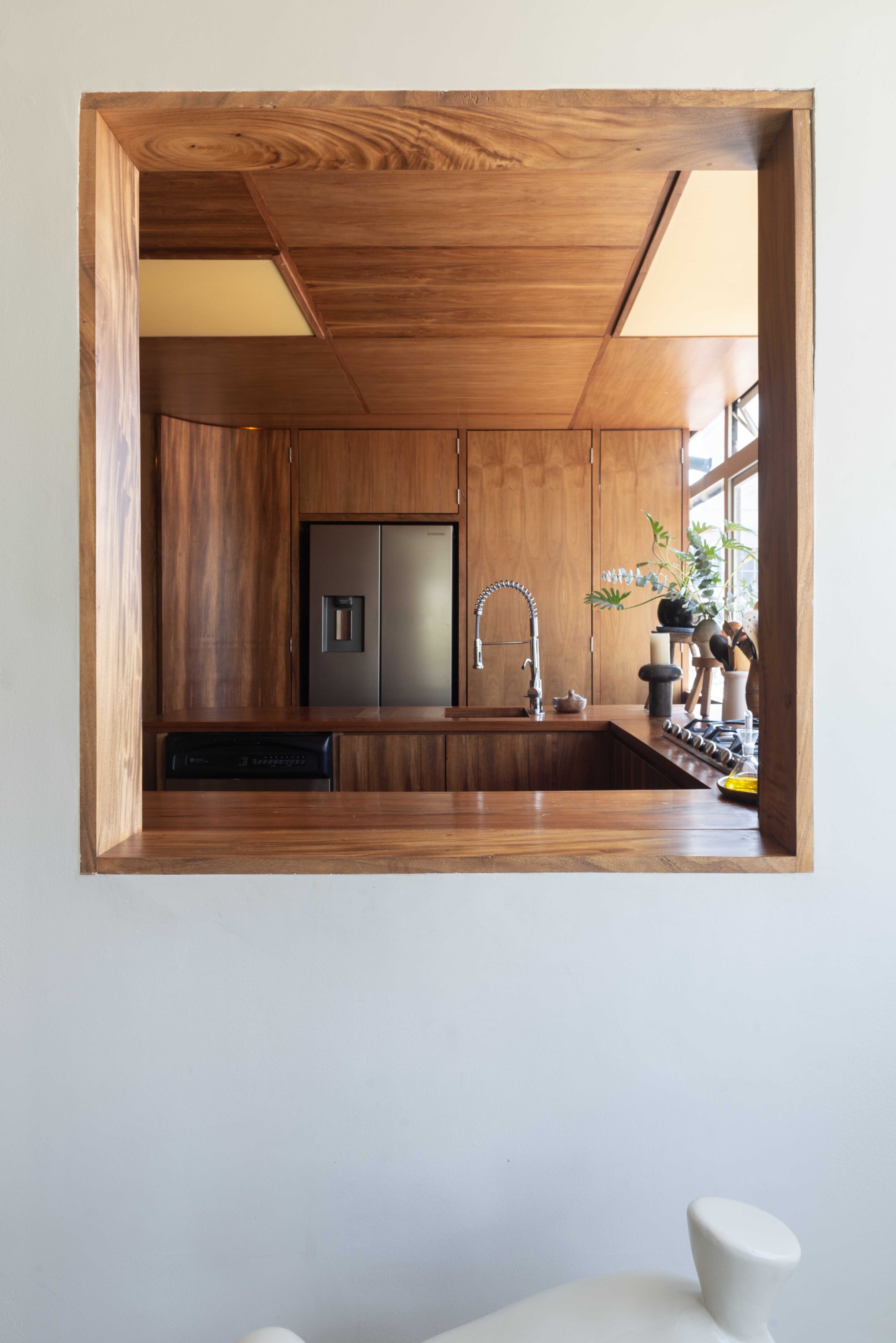
The wood’s warm grain grants visual variation, despite it being the kitchen’s most prevalent material. A grid layout comprised of wood panels was formulated for the kitchen. Walls, cabinets, and drawers were all fabricated with Tzalam wood. The grid continues along the edges of the windows and the shelving—producing a perfectionist’s dream. LANZA Atelier founders Isabel Abascal and Alessandro Arienzo looked to Le Corbusier’s Cababon in Roquebrune-Cap-Martin, France for design cues. Designed in 1951, just a few years before Pani’s towers, the wooden structure is covered in pine bark cladding and evokes the epitome of minimalist design. While Le Corbusier’s wooden interior created a calming, plain base, LANZA Atelier’s more graphic wood offers a sophisticated, immersive interior.
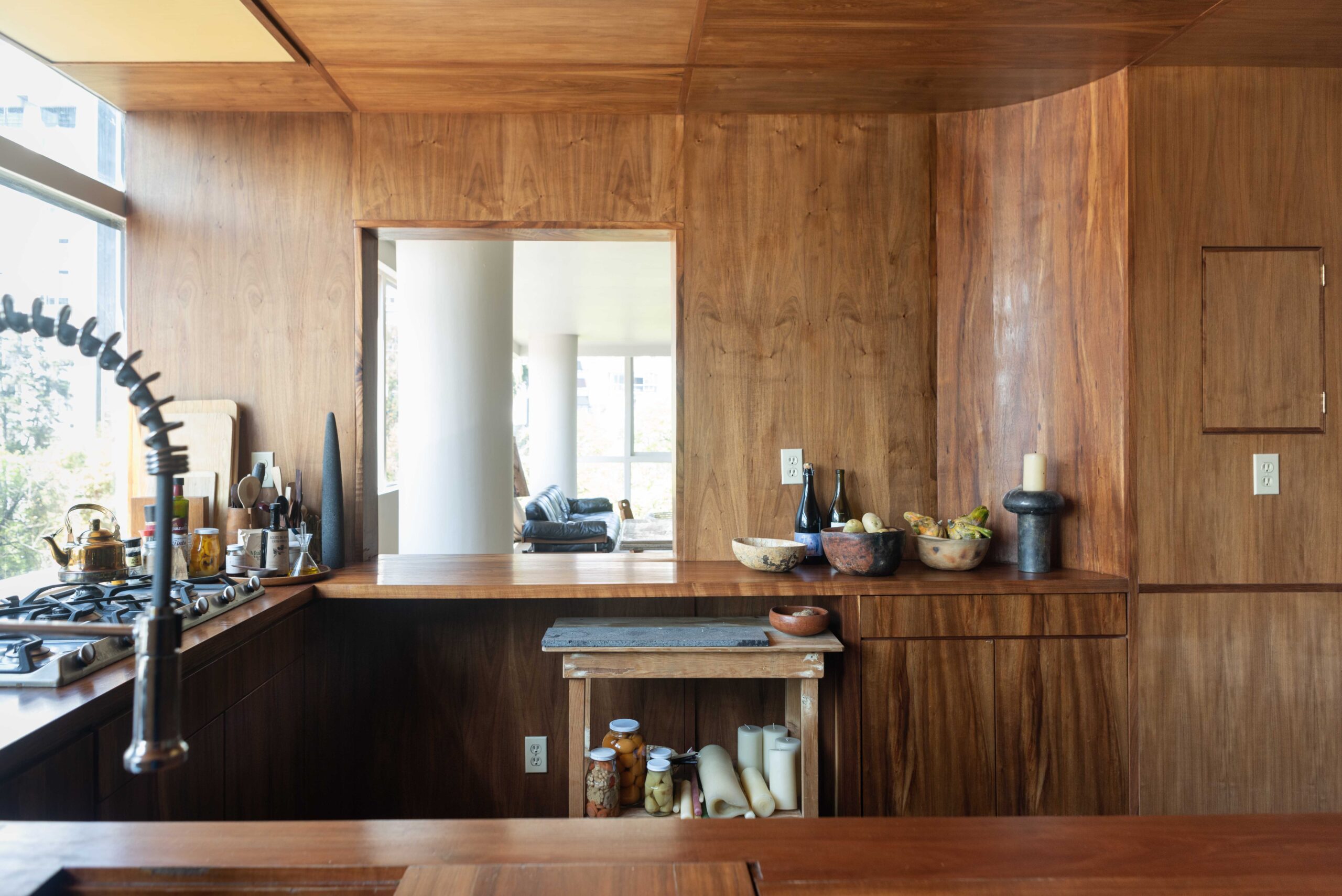
Subtle curves seek to interrupt the linear pattern of the wood application. The rounded forms are a playful touch that instead offer intrigue. Abascal and Arienzo shared that another major influence for the project was German artist Imi Knoebel’s Raum 19 sculpture. Raum 19 is composed of 77 wood parts. It combines boxy volumes with curved forms to create a singular object that exhibits a grid, similar to Cababon’s.
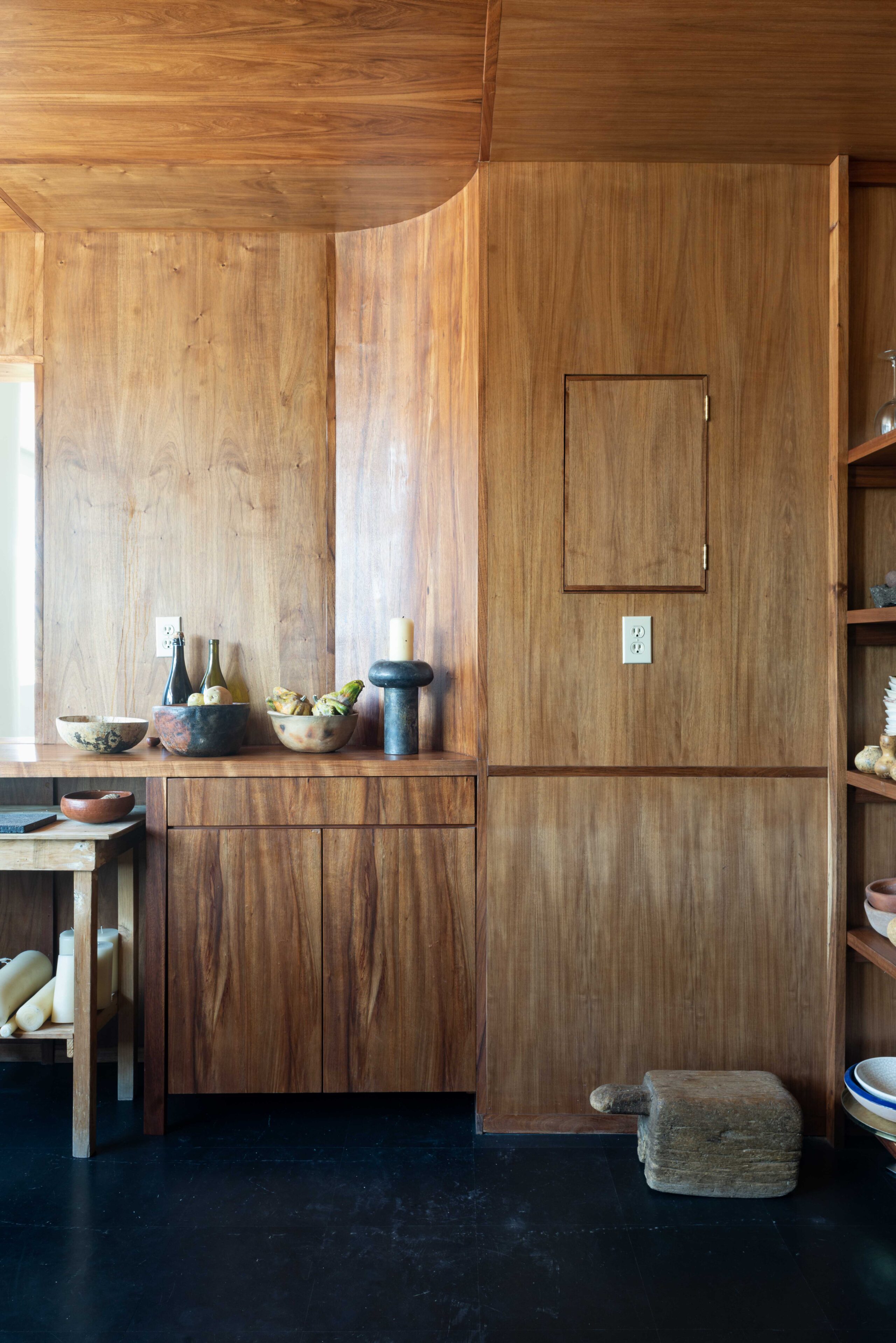
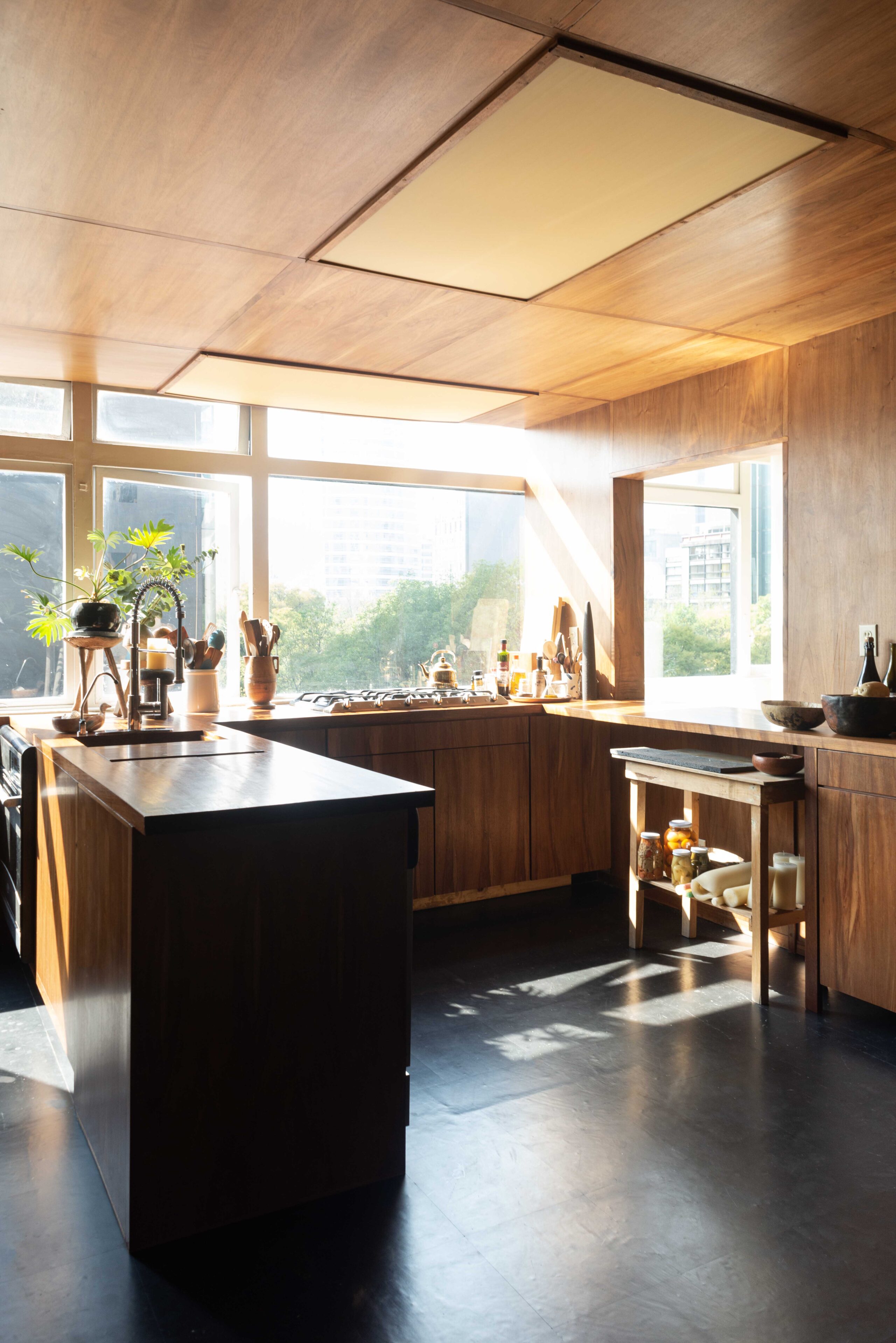
Arienzo shared, “We wanted to achieve a simple wooden kitchen—amost minimal, nothing modern. With the client, we managed to build a vernacular but elegant environment.” He continued, “It had to function as an independent space, almost like a wooden box.”
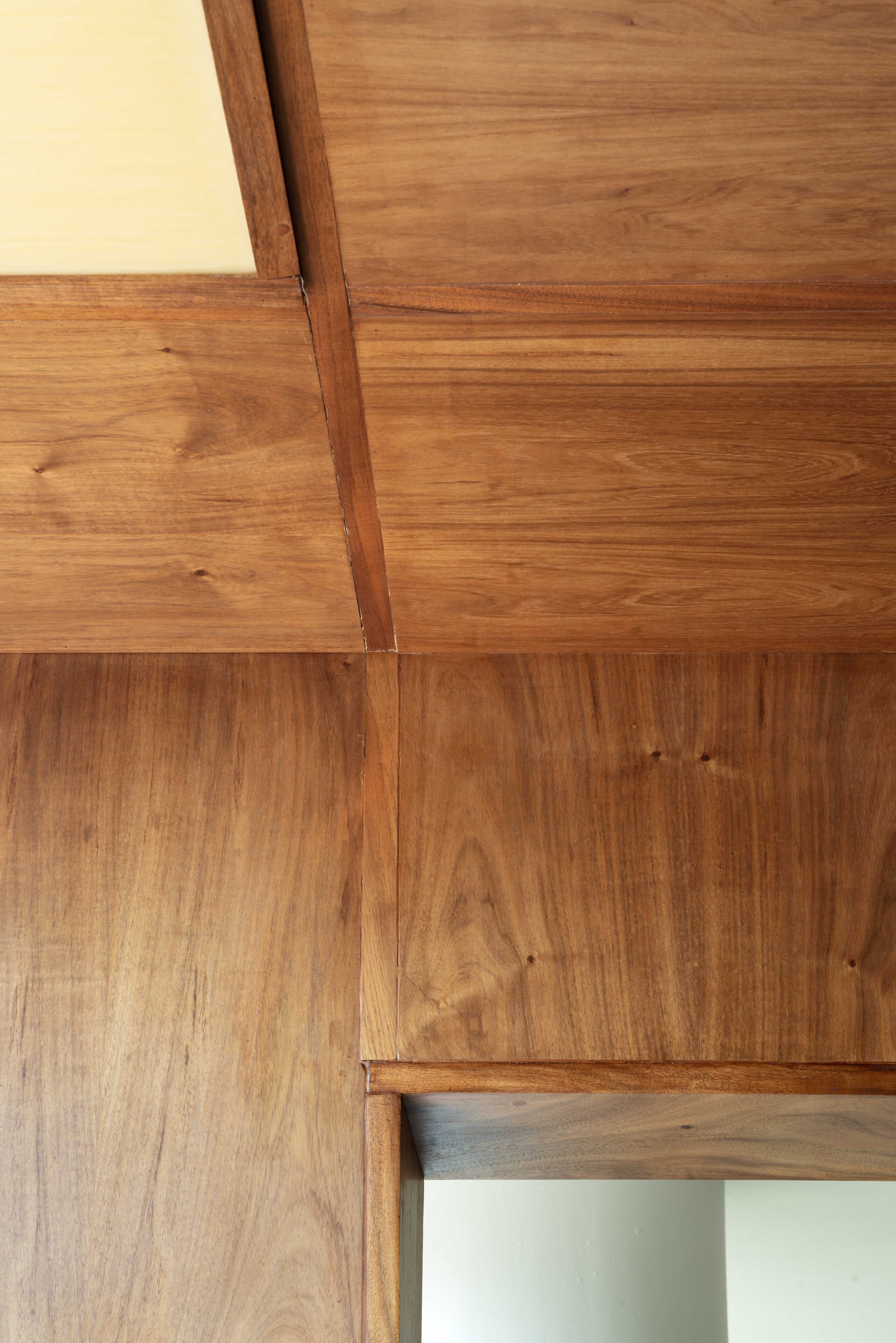
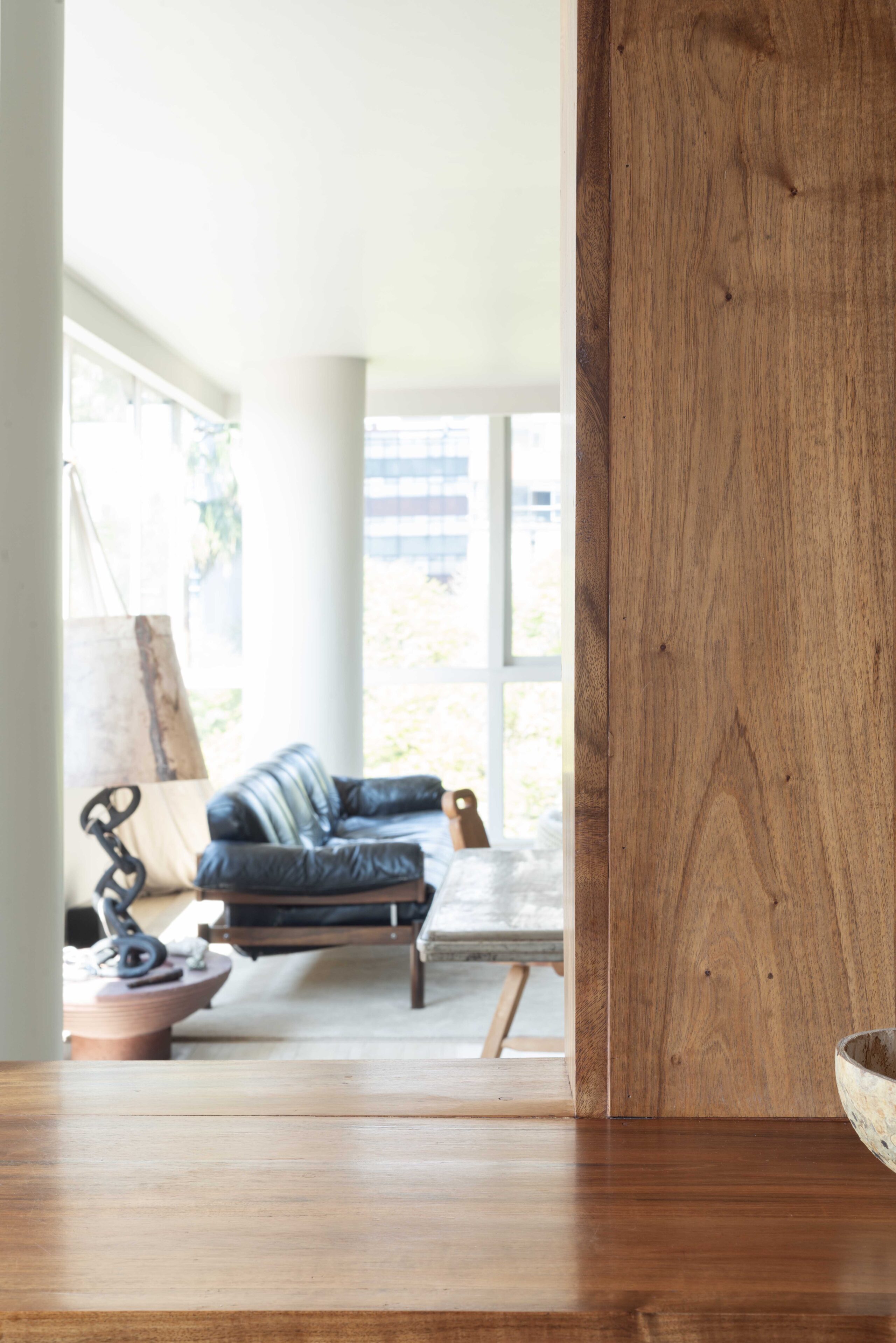
While the architects were working on the project, the client was renovating the rest of his home. The adjacent living room is coated in white paint, so the kitchen contrasts with that cool base.
Pol’s Kitchen offers a prime example of how to creatively apply one material to a space that can still draw people’s attention. Through the influence of midcentury art and architecture, the Pol’s Kitchen is timeless and sophisticated while also maintaining a homey sense of comfort.