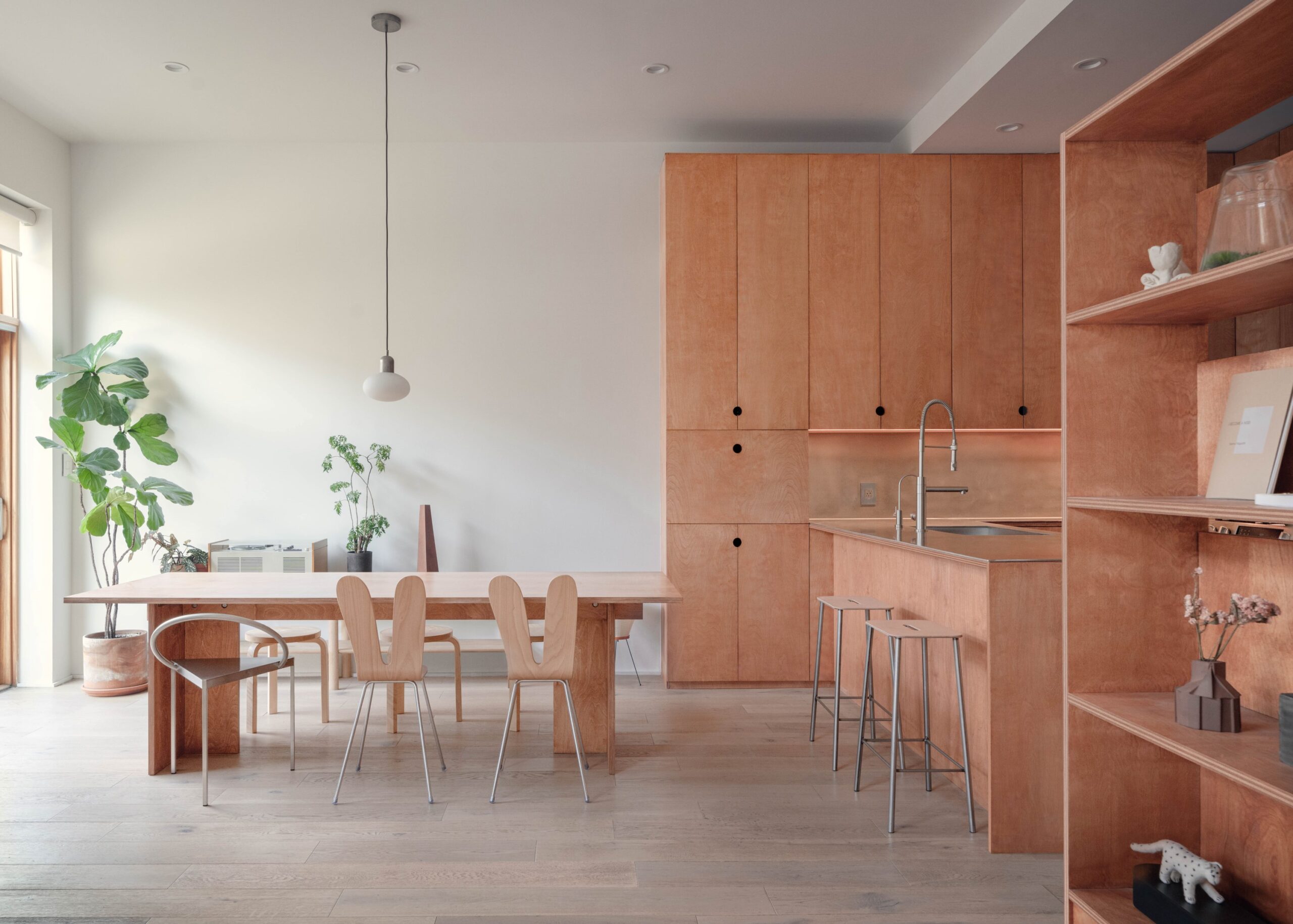
Building a family often requires more space and with more space, more clutter. CC Residence, a spatially and monetarily economic project in Brooklyn, New York, considers how to raise a family with a minimalist approach. On a limited budget, local architecture and design practice, Plan Plan, renovated the apartment for a couple with a young child. The calm, elegant, and flexible interior attests to how a strategically reserved material palette and spatial planning can create accessible and elevated homes for families and other clients.
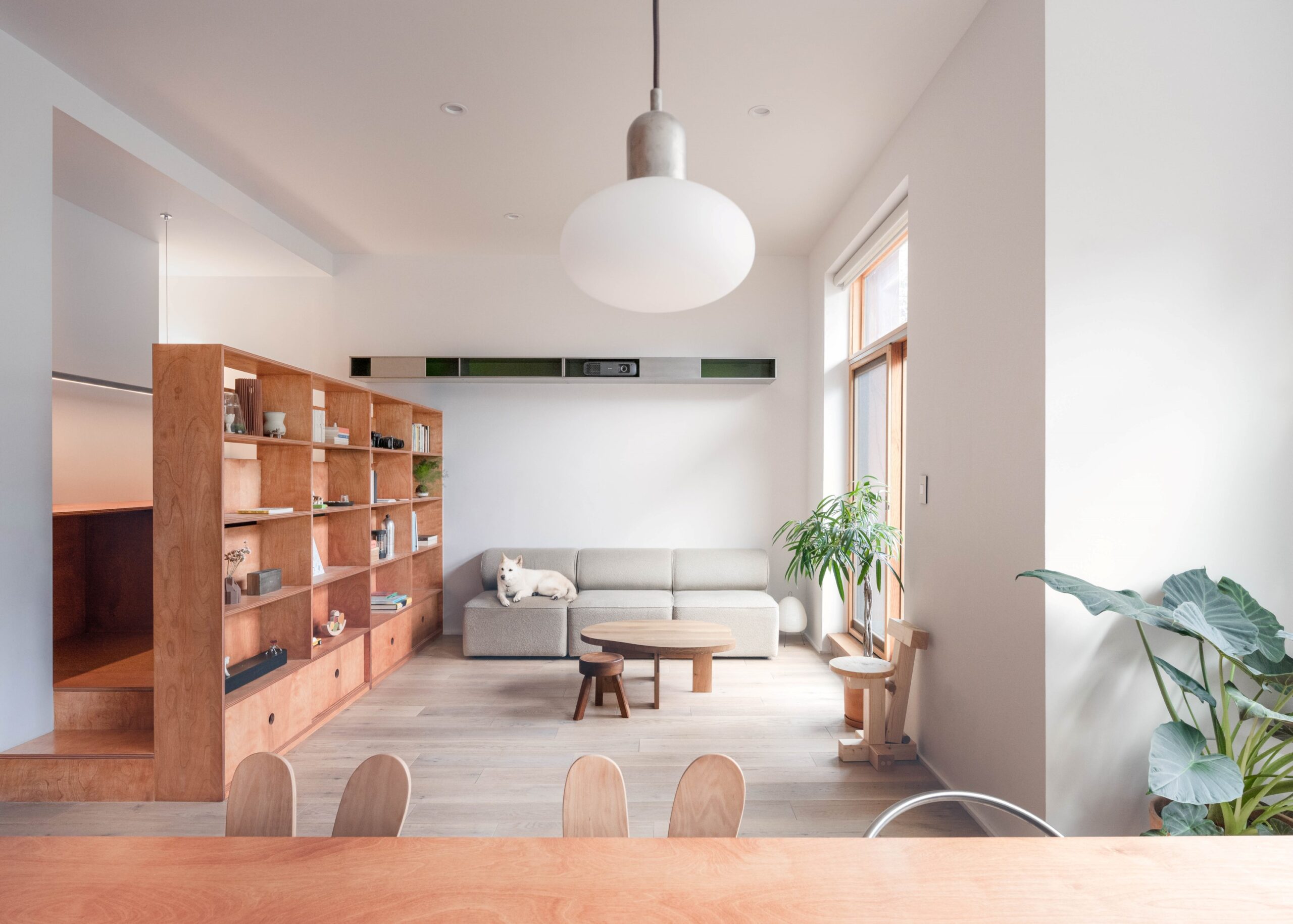
“We began by framing the constraints—budget, existing infrastructure, and spatial limitations—not as obstacles but as design drivers,” the firm told AN Interior collectively. “The goal was to craft a home that feels open, functional, and personal without relying on excess.” To cut down on cost, the design preserves the existing flooring, bathrooms, and plumbing. The materials are equally optimized, relying on stained birch plywood and stainless steel. The two were chosen to easily work with the pre-existing floors to connect with it and provide continuity, while the stainless steel offers a modern edge, functionality, and reflectivity to enhance the lightness of the space.
The materials particularly dominate the kitchen and dining room on the top-most floor. The plywood makes up the kitchen island and cabinets with hardware and countertops finished in stainless steel. Even the design of the cupboards helps cut down on excess materials, using a small circular cutout as handles to open and close the cabinets in place of more hardware.
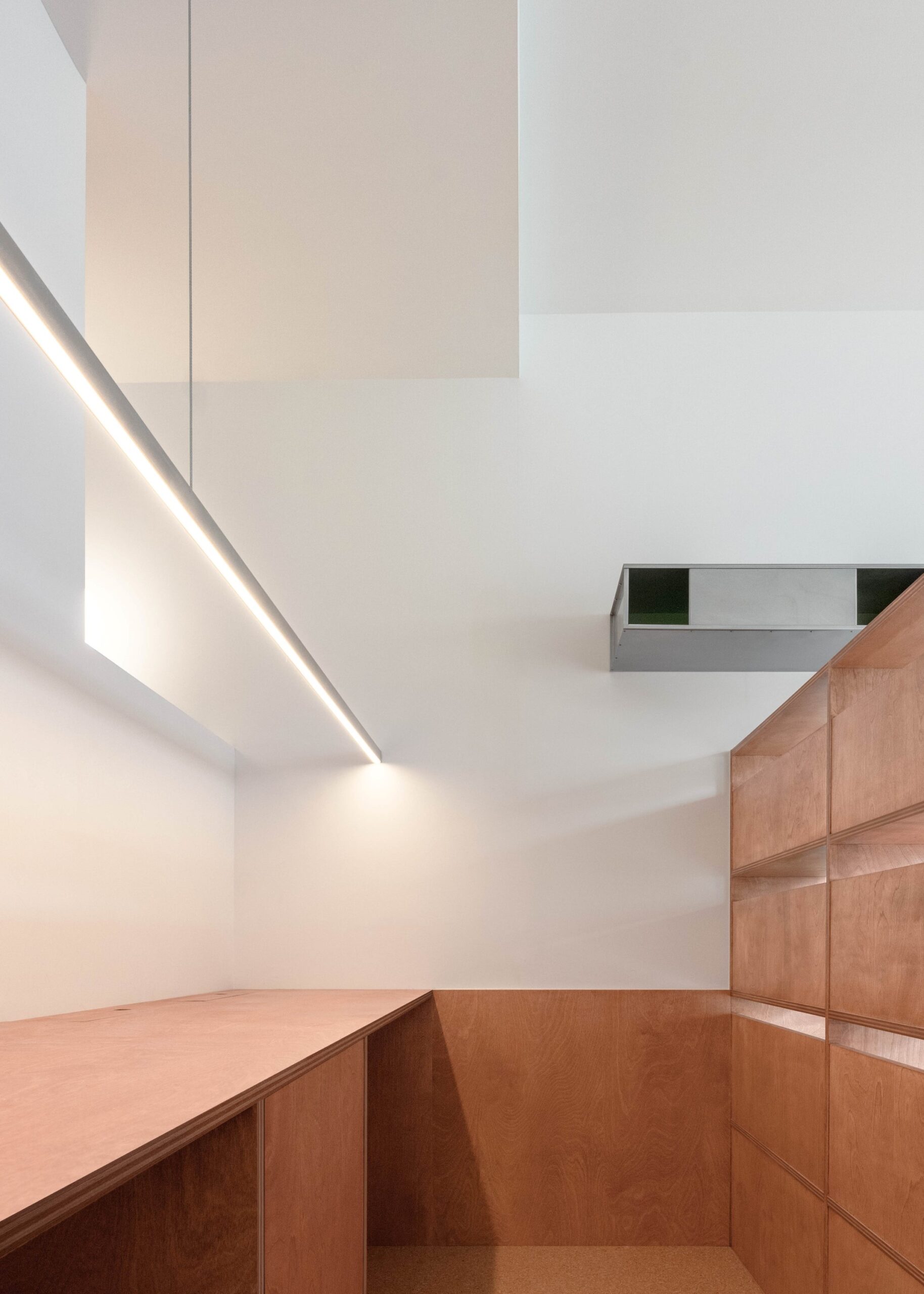
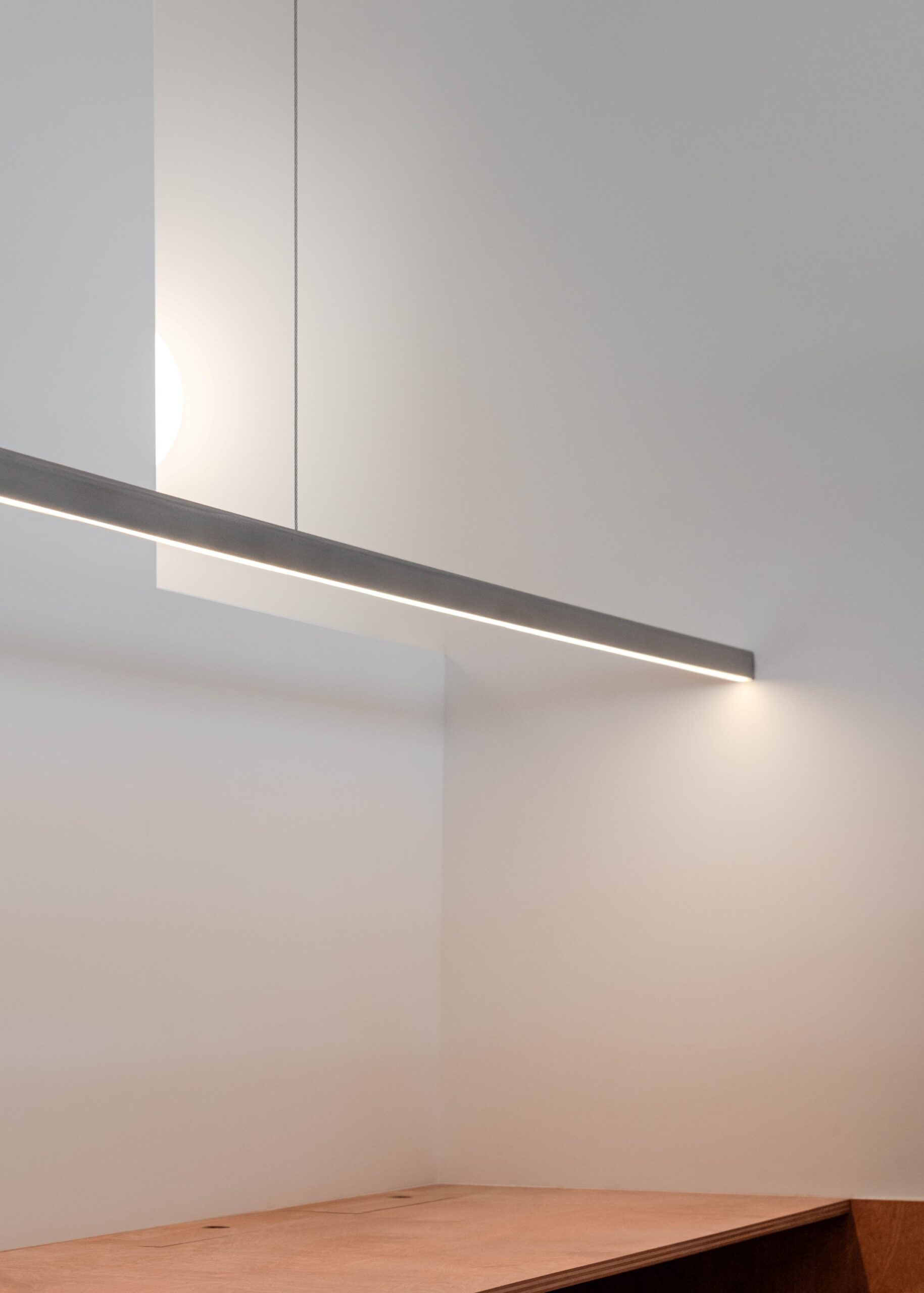
The kitchen opens up into a small dining room, anchored by a table of the same material. It’s surrounded by a mix of stainless steel and plywood seating, from the Per Holland Bastrup–designed Triangolo chair to the playful bunny ear–shaped seating. Across from the dining room, a relaxed seating area is tucked between more custom plywood shelves. A projector affixed above the seating area in a floating steel shelf provides entertainment, projected onto a screen mounted to the ceiling. The set up enables the space to be explicitly activated for social activities and parties. “The living/dining room combination created flexibility for play, learning, and communal events. These layered solutions helped unify the family’s daily rhythms in one cohesive environment,” explained the firm. The plywood shelving, while helping provide critical space for the clients, also acts as a partition for a small home office with the slots for each cubby providing natural light to illuminate the tucked away space.
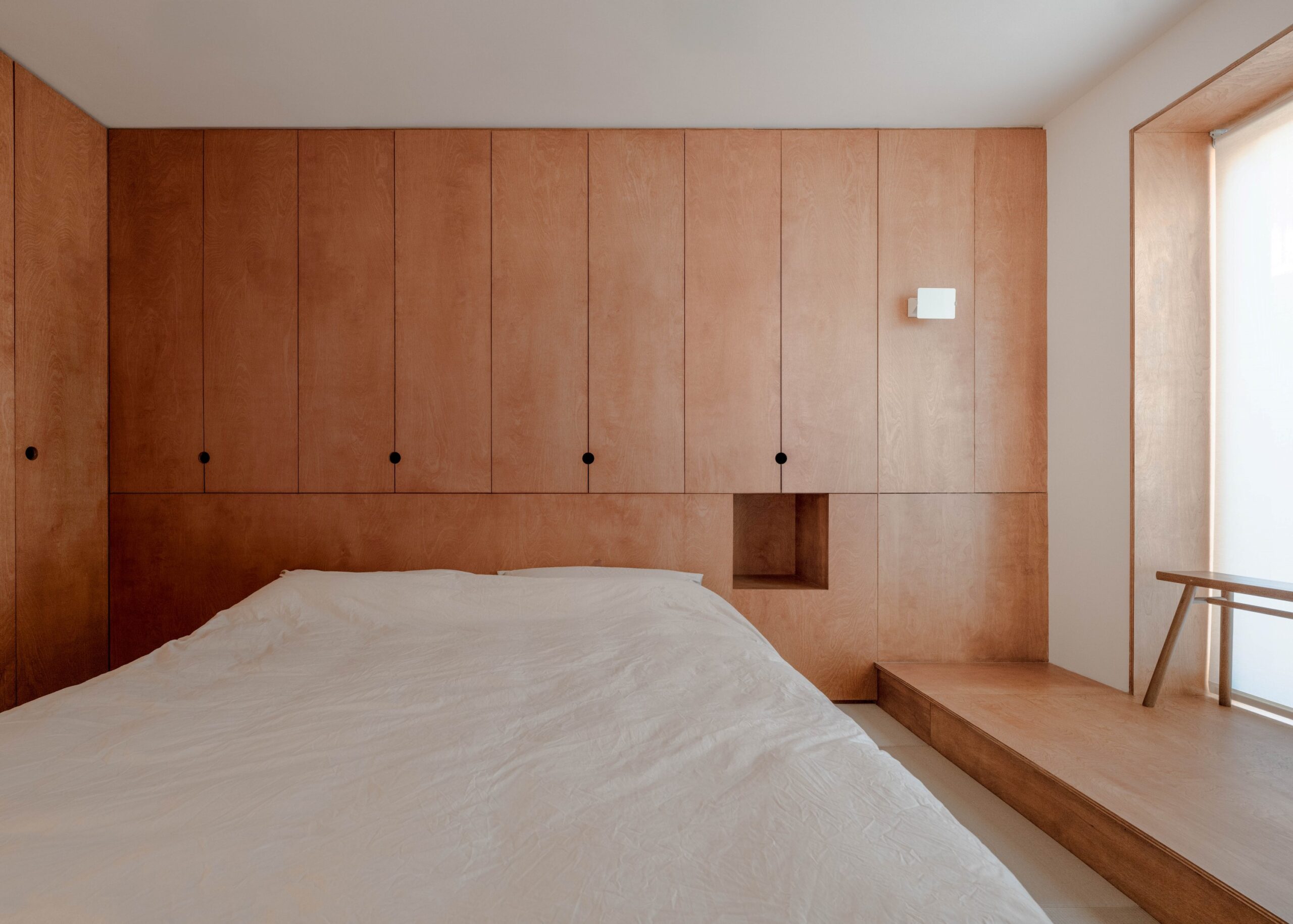
A staircase connects the living room and kitchen to the below level where the private areas are housed. “The top of the staircase was occupied by a storage closet prior to renovation,” continued Plan Plan. “We demolished the storage and partitions to create verticality in the narrow stair, and to connect the stair to the living space to bring the natural lights in. It’s an unusual space in terms of its proportion and scale in an apartment. Since it’s very narrow and tall, the staircase becomes an important transitional space between day and night, dynamic and static, family and personal life.”
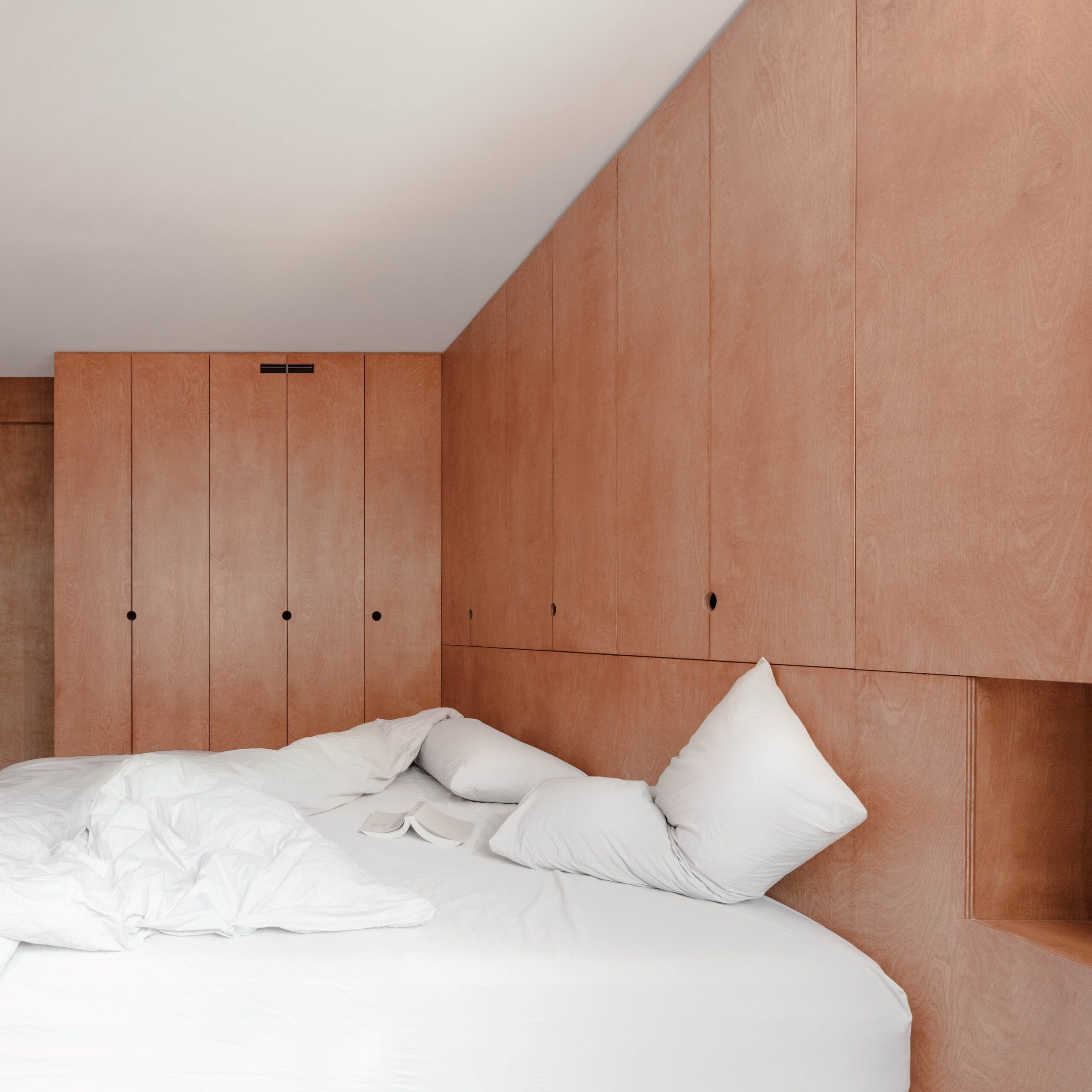
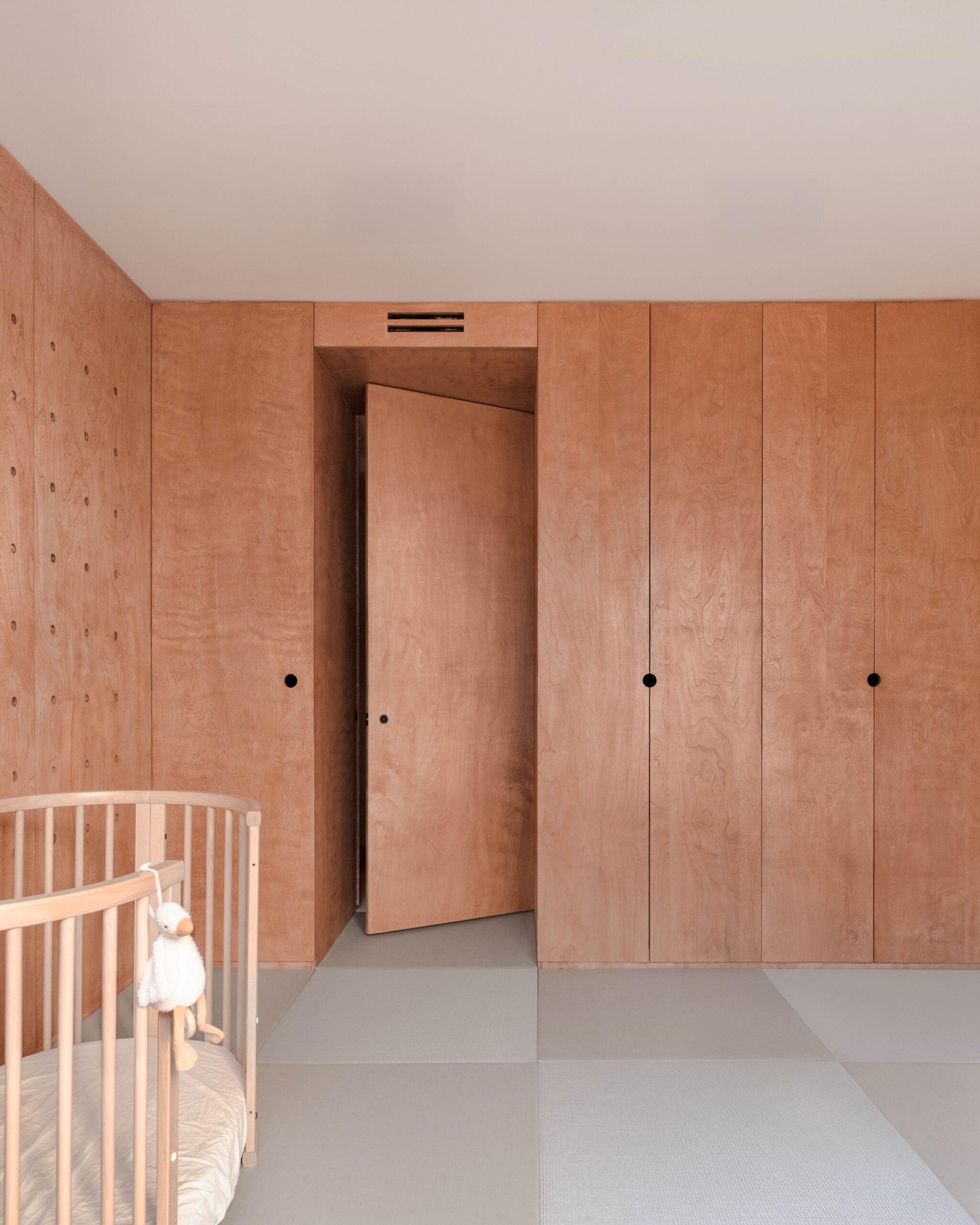
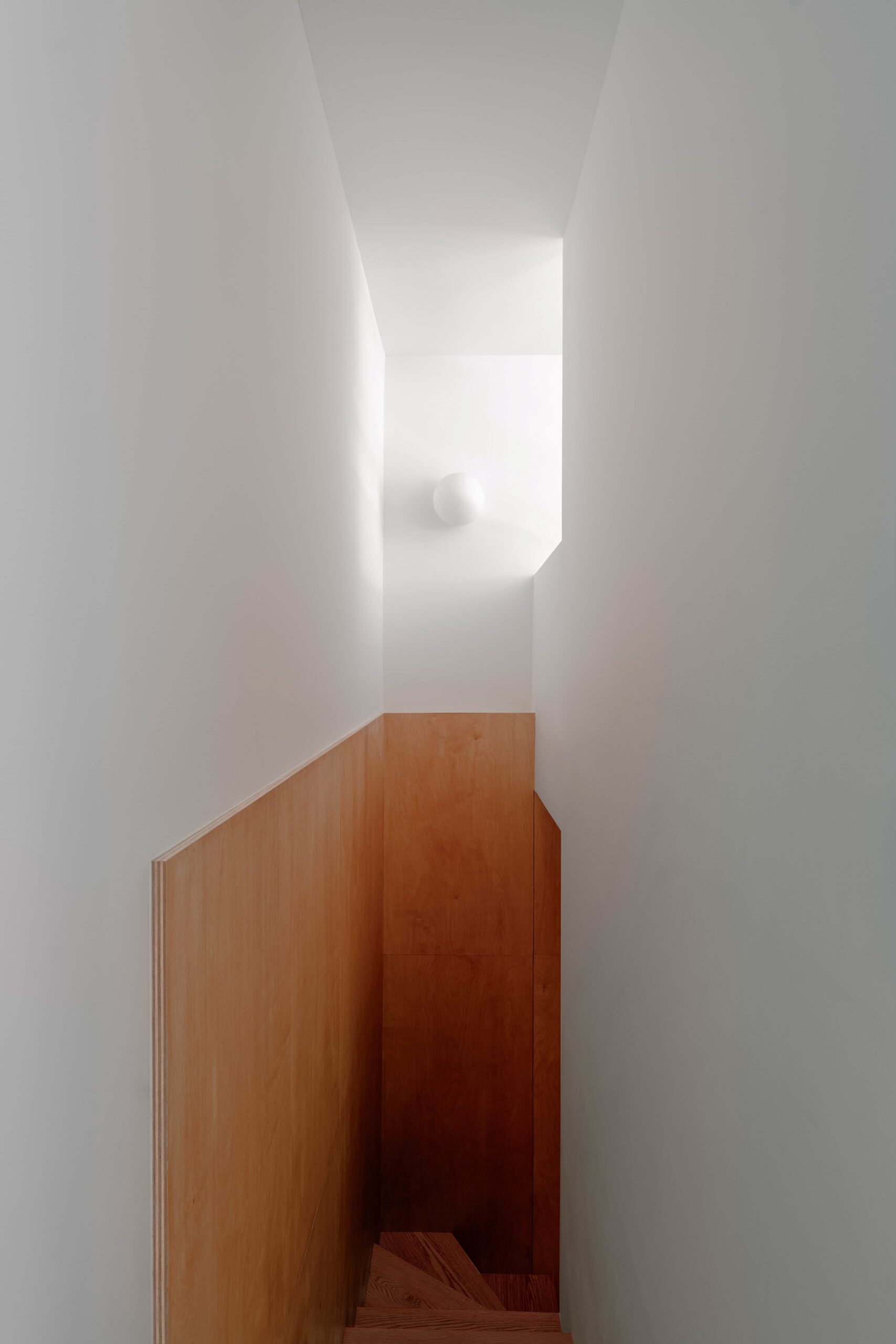
At the bottom of the stairs, the bedroom walls are dominated by plywood cabinets to maximize storage space but conceal clutter. The beds are low-lying, adding to the tranquility of the nearly mono-material interior and warm color palette. The rooms make one material divergence via the introduction of Ryukyu tatami. It “introduced not just softness and comfortability, but also a module that informed everything surrounding it, from room dimensions and closet modules to joinery,” said the architects. This strategic application, like the material and spatial planning of the project overall, cuts back on superfluity to enhance function and elegance.