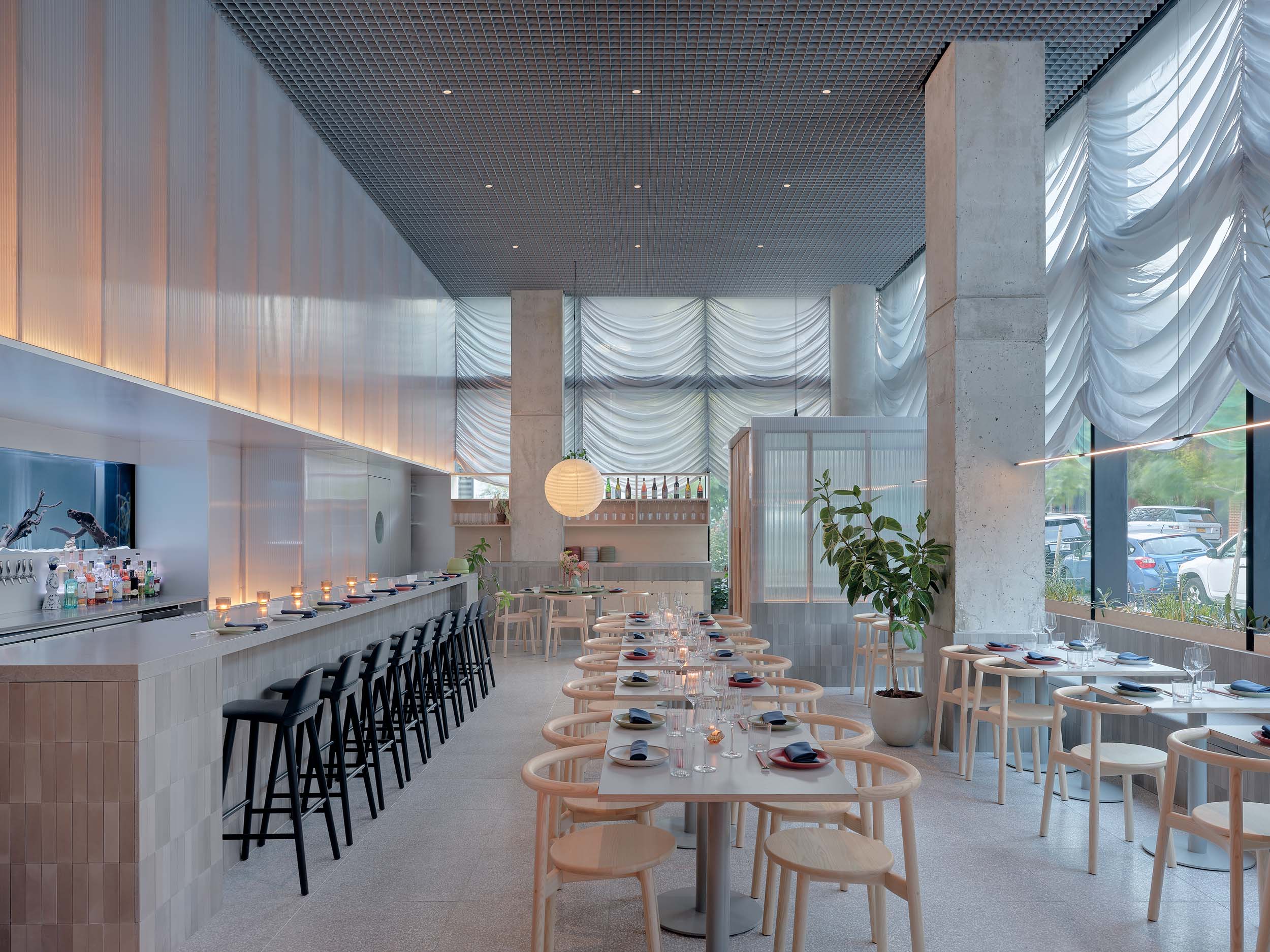
The name of architecture and design firm Plan Plan is simply a repetition of two words—but how to read it? Are they intended as nouns, verbs, or one of each? Elucidating the name and ethos behind the firm, Plan Plan collectively shared, “To us architectural practice is a process of negotiation between different economical, cultural, and social forces.” This holds true for the firm’s recent project, a Fujianese restaurant in New York, Nin Hao. The restaurant as the firm shared, “is a singular space but allows different things to happen at the same time.”
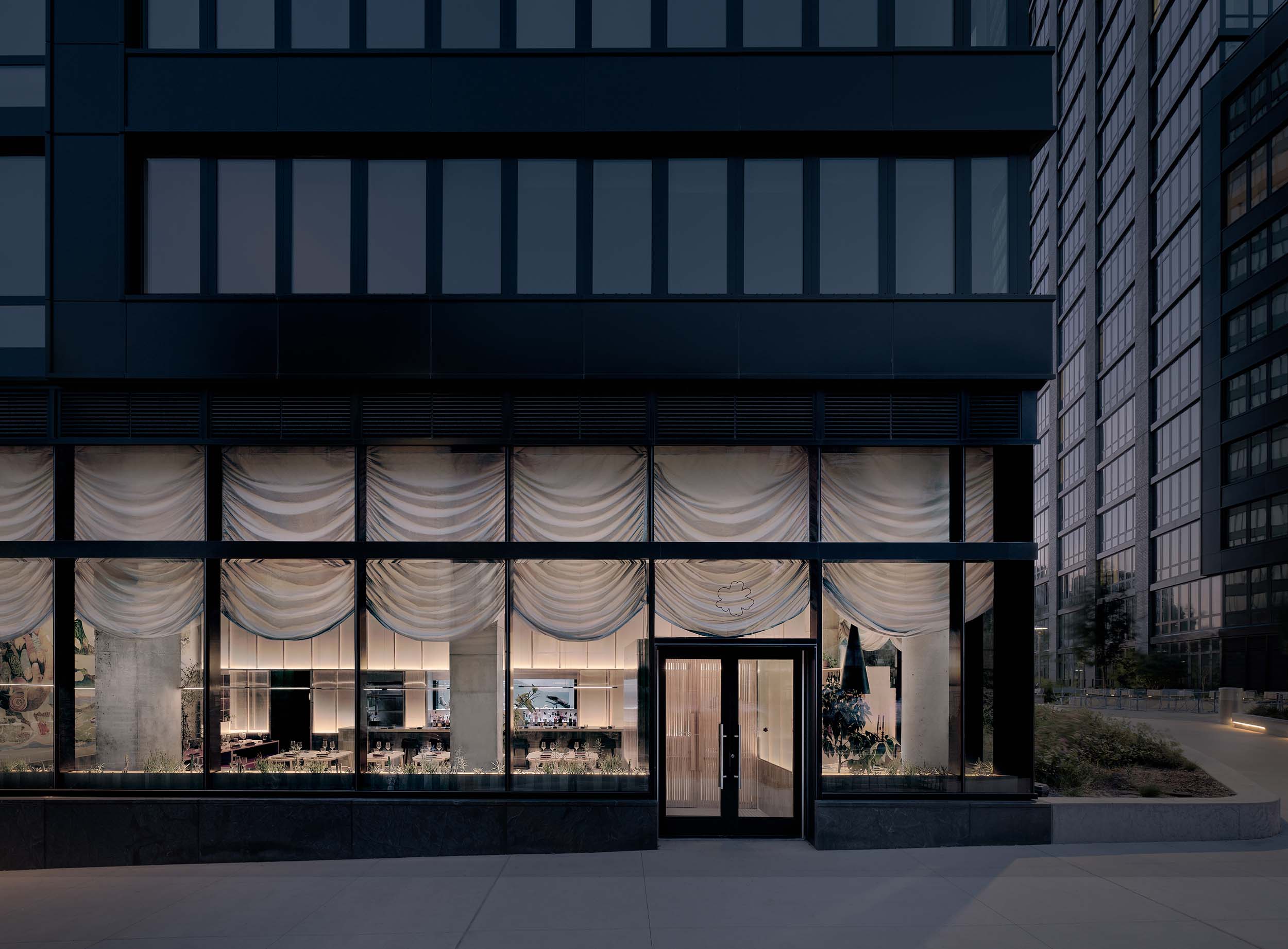
The 1,800-square-foot restaurant is located within a new mixed-use building on Dean Street in Brooklyn’s Prospect Heights. The building’s glass wall wraps around the corner, so the restaurant appears to glow against the structure’s black metal frame. Just behind the glass, a display of sheer Austrian curtains form a scallop pattern across the storefront. Below it, passerby can peek into the bustling restaurant. As the firm told AN Interior, “Rather than being a transparent space understood at a single glance from the storefront, it evolves into a vibrant, dynamic scene—a ‘Sidewalk Ballet’ that engages and invites passersby.”
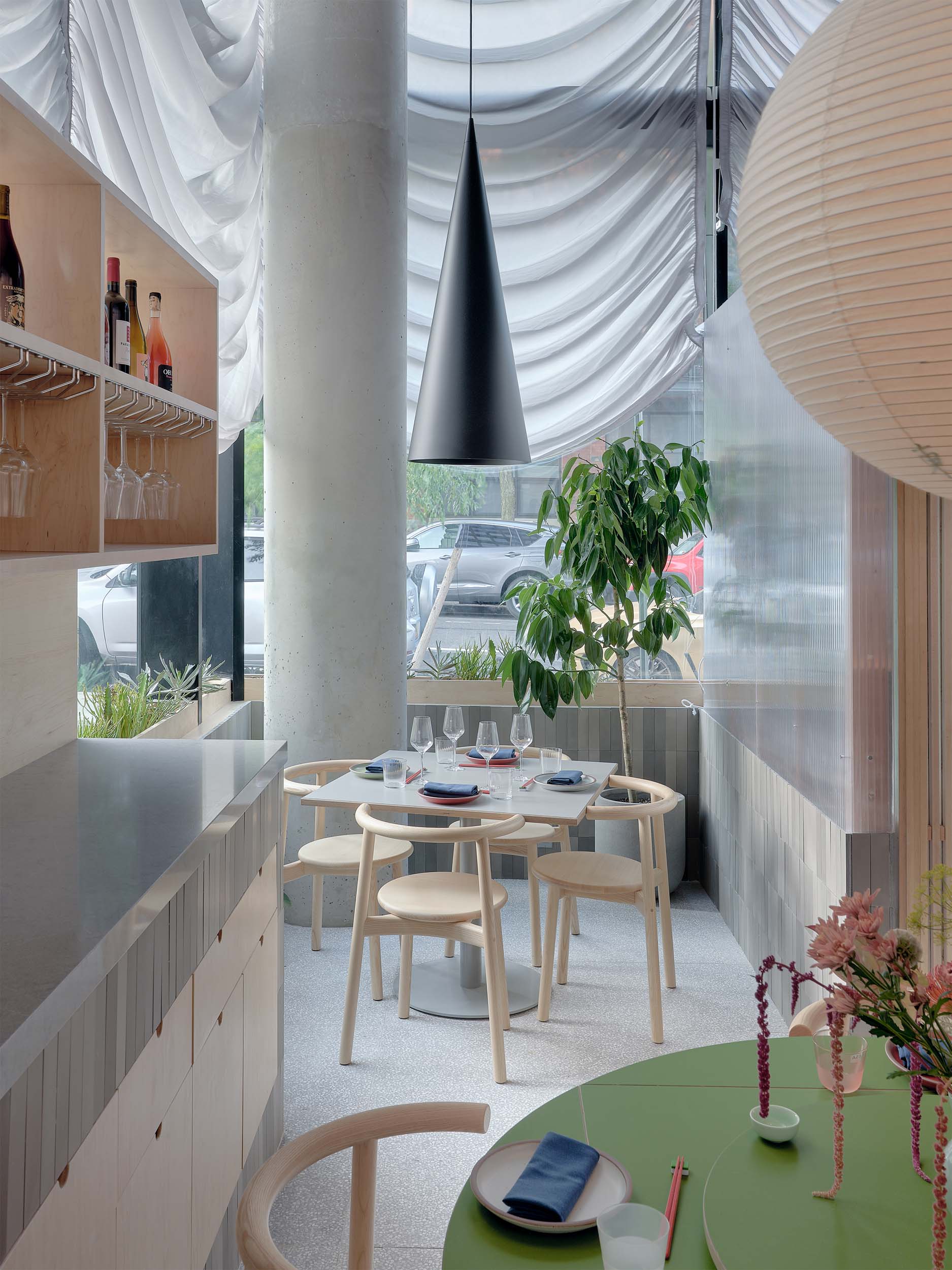
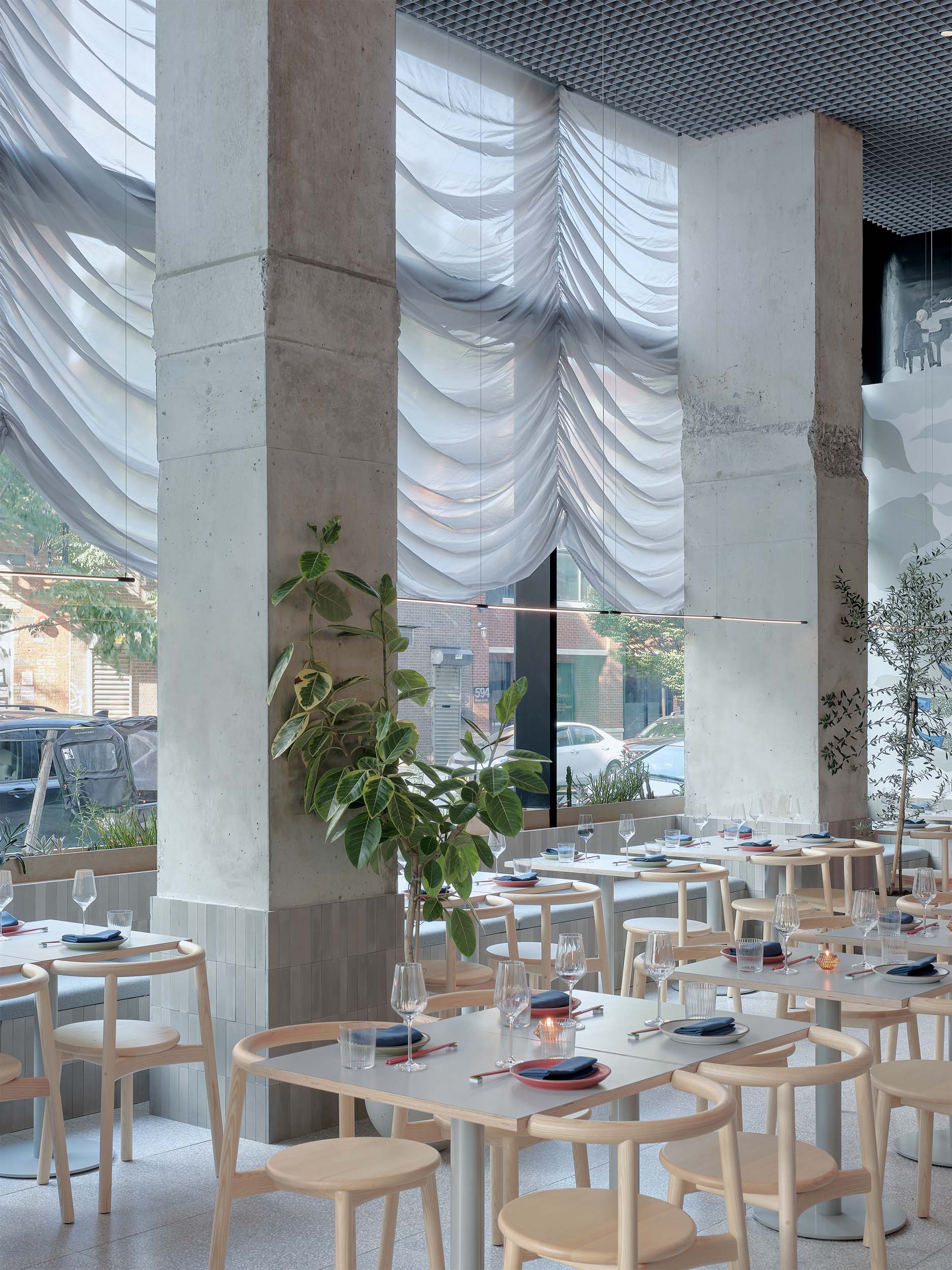
When entering, guests are greeted to an open space with 16-foot ceilings. The intricate Quadra Single Blade Louvre grid ceiling by Durlum is met with textured cement columns—offering an interesting balance between the two vastly different materials. The walls and bar are covered in soft gray cement tiles by clé Tile which are informed by Chinese gray bricks, and the floors are Venice Terrazzo by Concrete Collaborative. These various materials illustrate different shades of gray and white for a monochrome yet varied look.
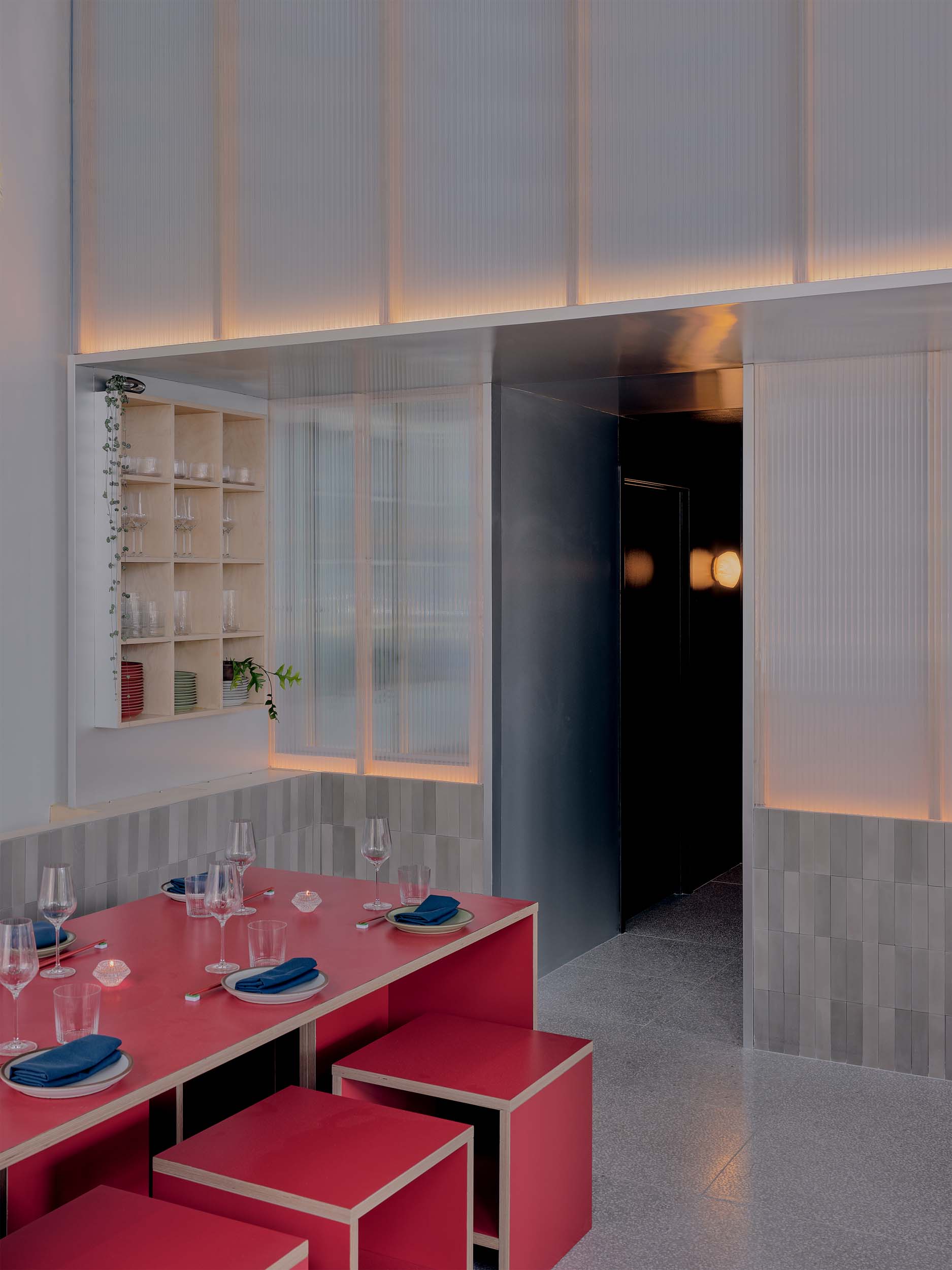
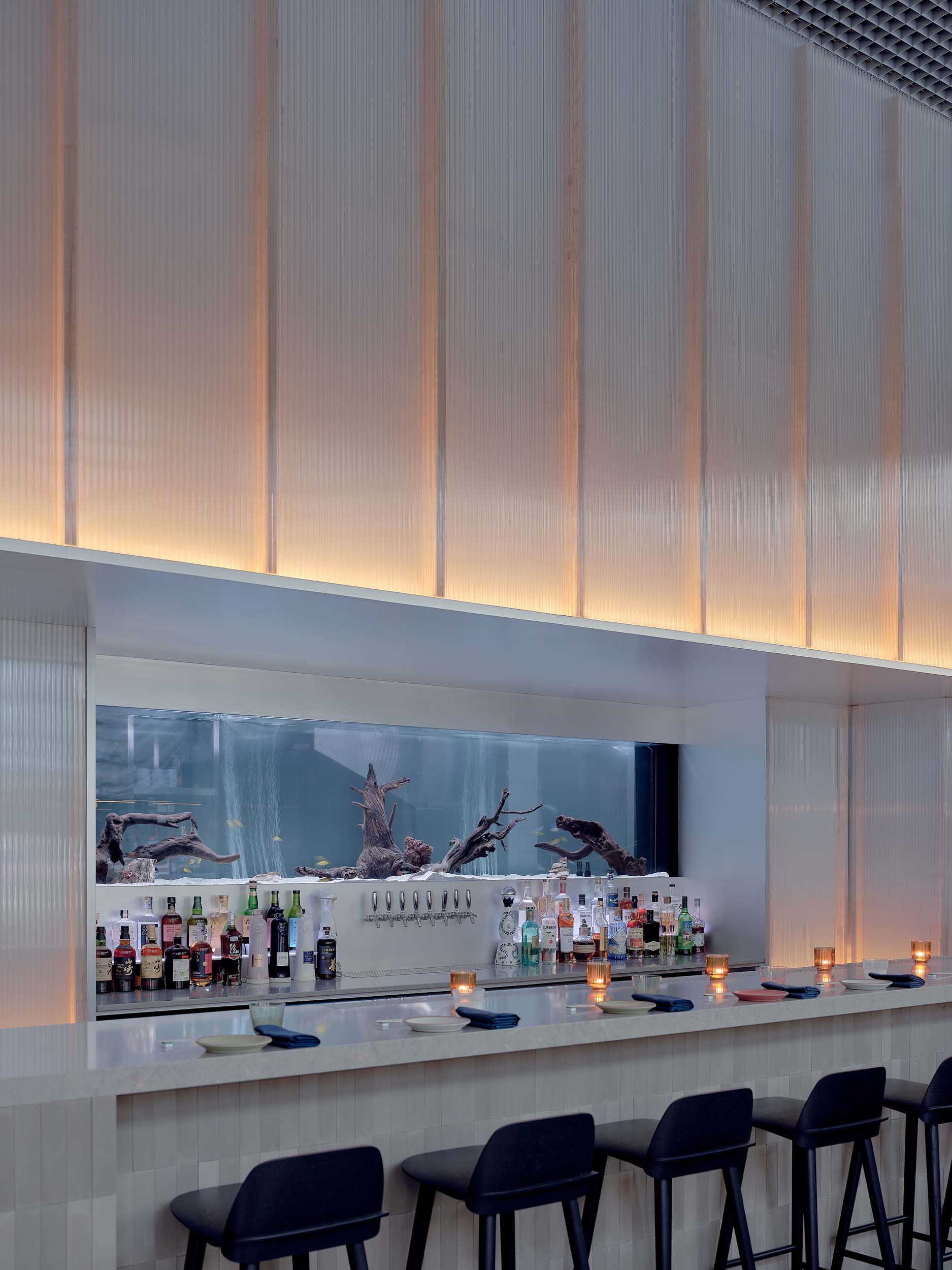
Plan Plan added warmth with minimalist wood furniture and wall dividers located at the front of the restaurant. The design team shared that they specifically chose studs with less wood grain to better coordinate with the polycarbonate panels, also located at the entrance. Quiet white panels can be found above the bar and the walls, offering a softness within the design and a “light box” element that can be seen both inside and outside Nin Hao.
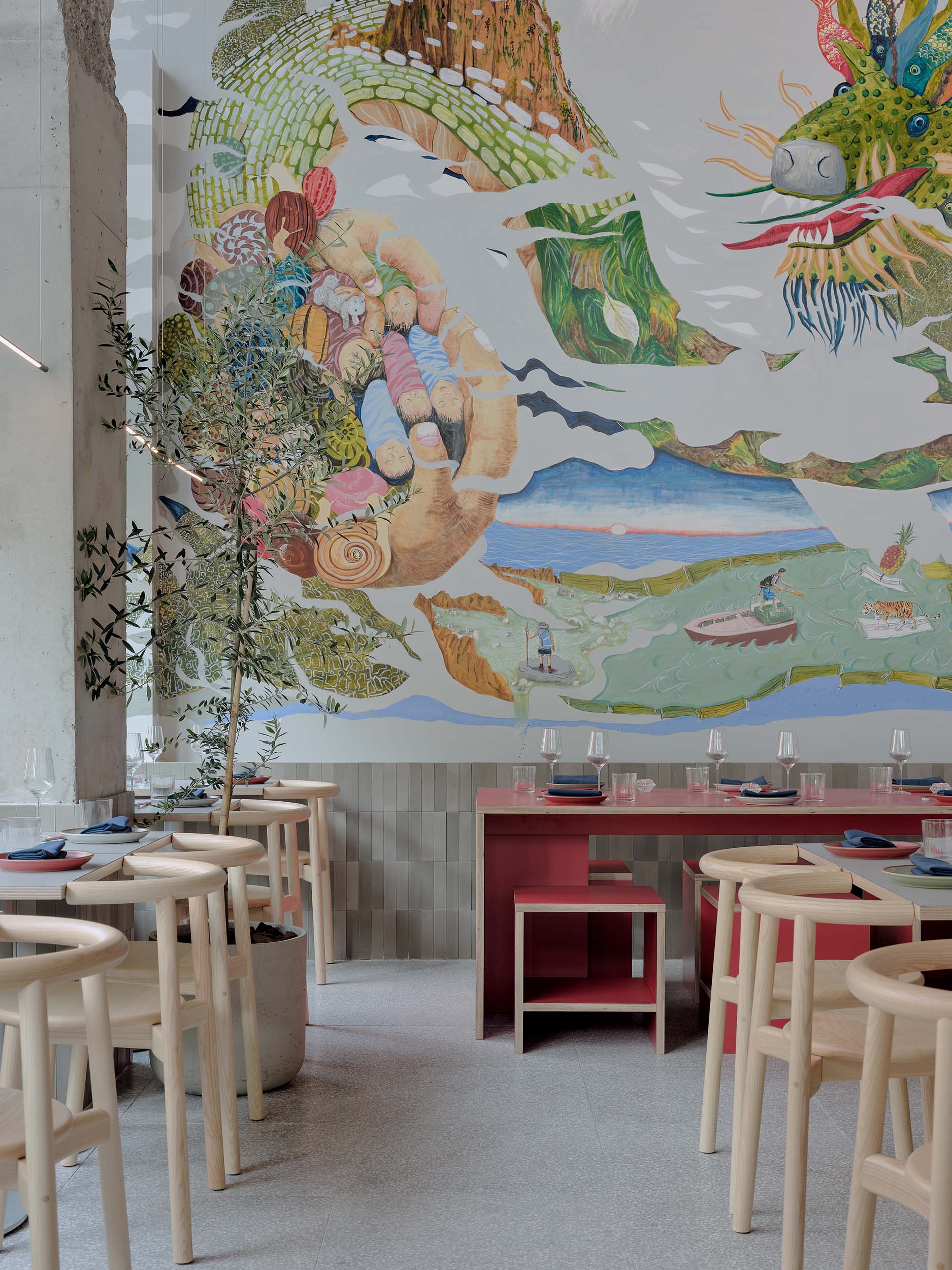
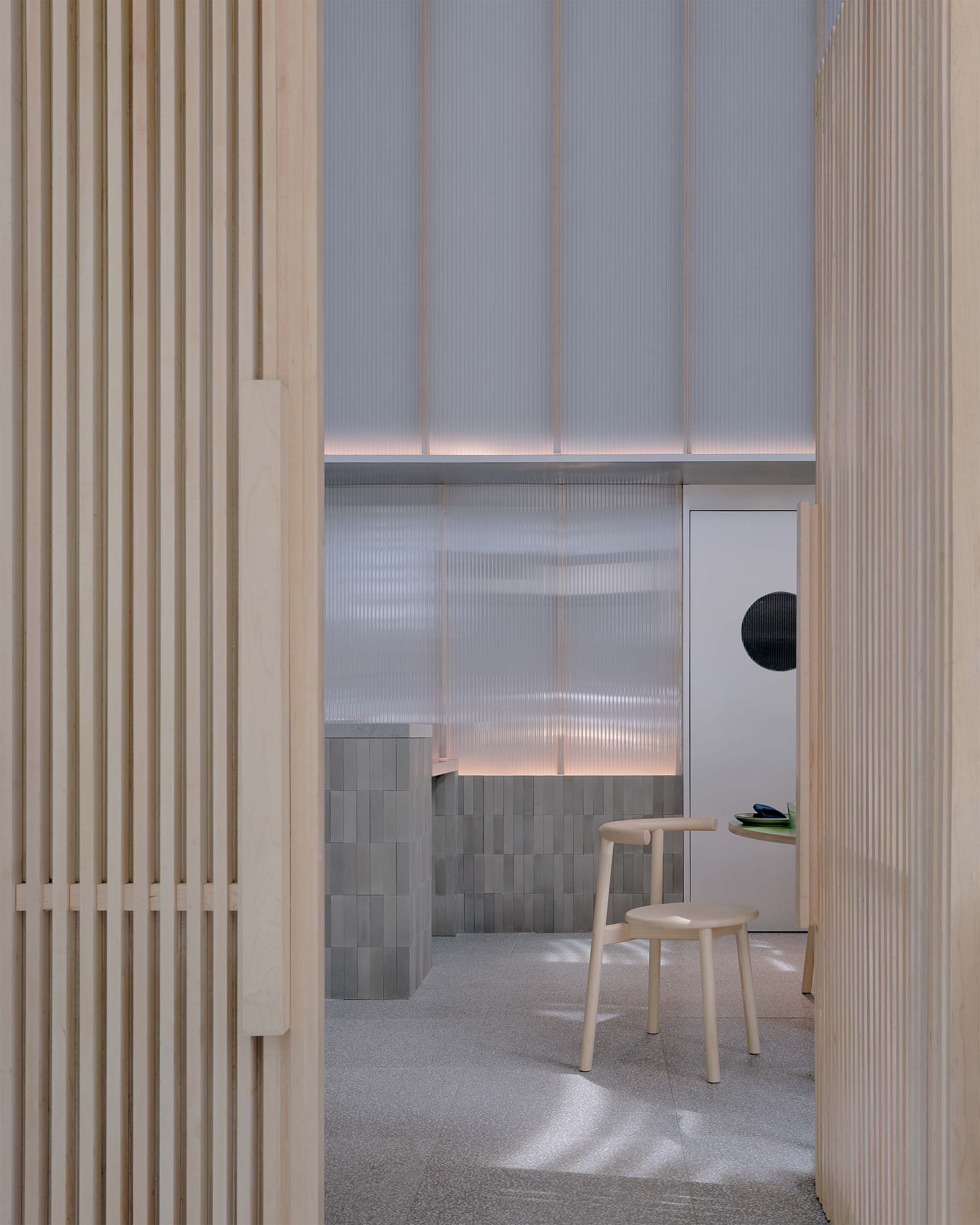
The west wall of Nin Hao dons a colorful dragon mural spanning 17 feet. The art piece was created by local artist Chemin Hsiao. Plan Plan shared, “The owner envisioned this space as more than just a backdrop, aiming to create a dynamic platform that celebrates the creativity and diversity of artists. Each year, the wall will be repainted by a new artist, ensuring that the space continuously evolves. The wall becomes a living canvas that transforms the atmosphere and energy of the space with each new iteration, offering patrons a unique visual and cultural experience every season.”
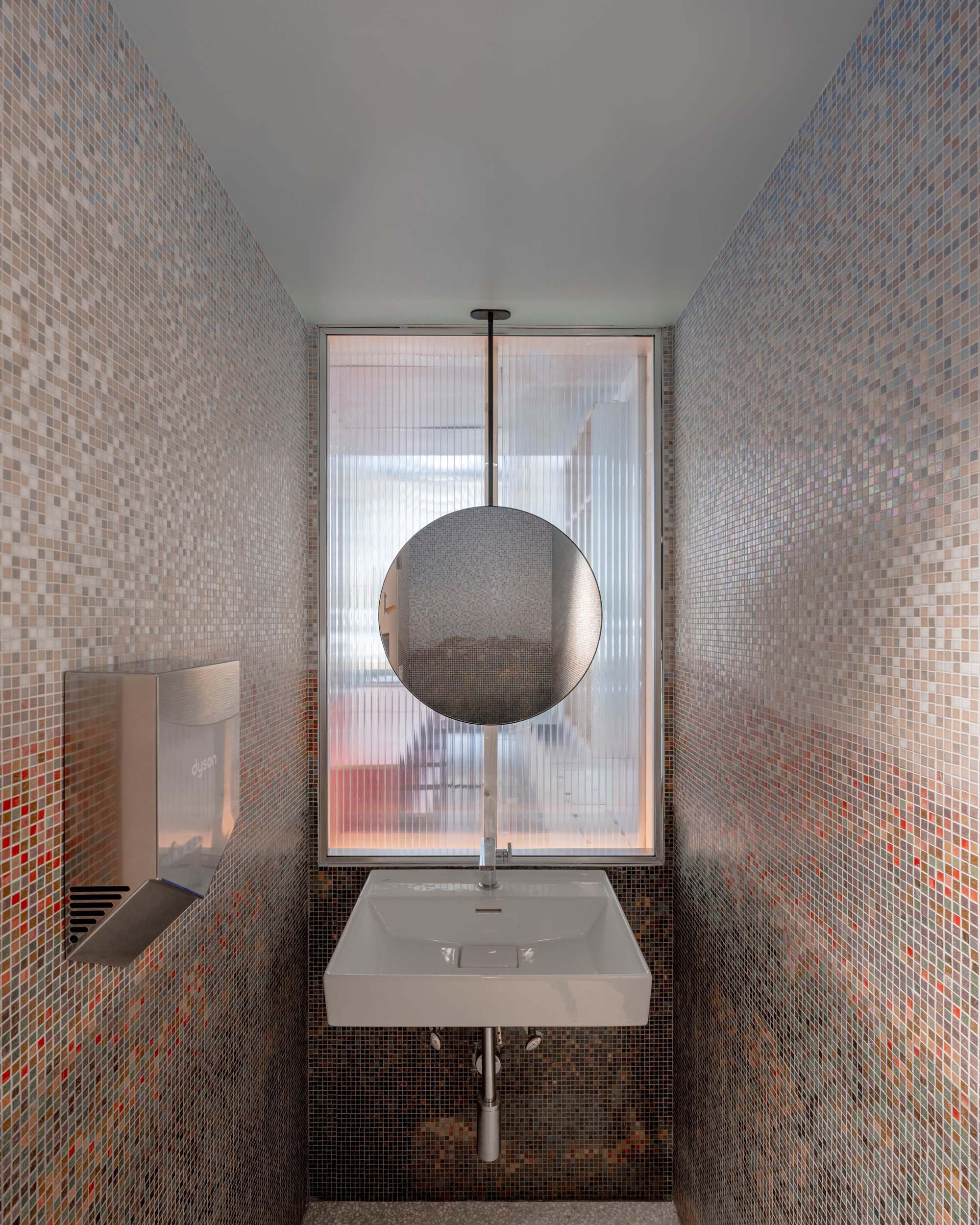
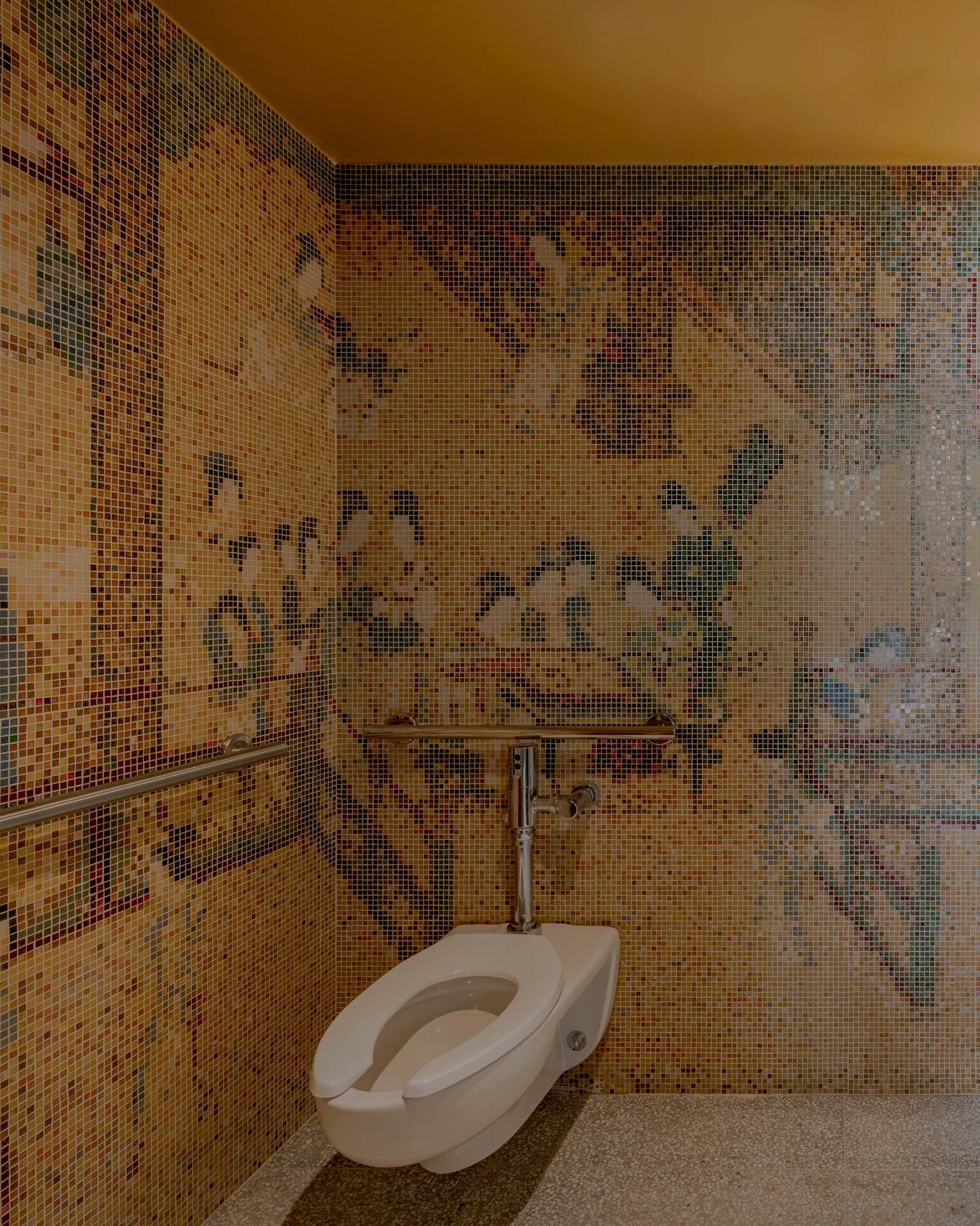
Art is also on view inside the bathrooms. Within the two themed bathrooms, Artaic’s mosaic tiles recreate famous artworks. One of the bathrooms exhibits Spring Morning in the Han Palace (1494–1552) by Qiu Ying, showcasing imperial life during the Han dynasty. The other restroom features Hudson River Valley from Fort Putnam (1855) by George Henry Boughton, showcasing a landscape. The bathroom interior also has an element of surprise: At the sink, a circular mirror hangs in the center, but behind it a transparent two-way mirror wall frames views into the restaurant while hiding visibility from within.
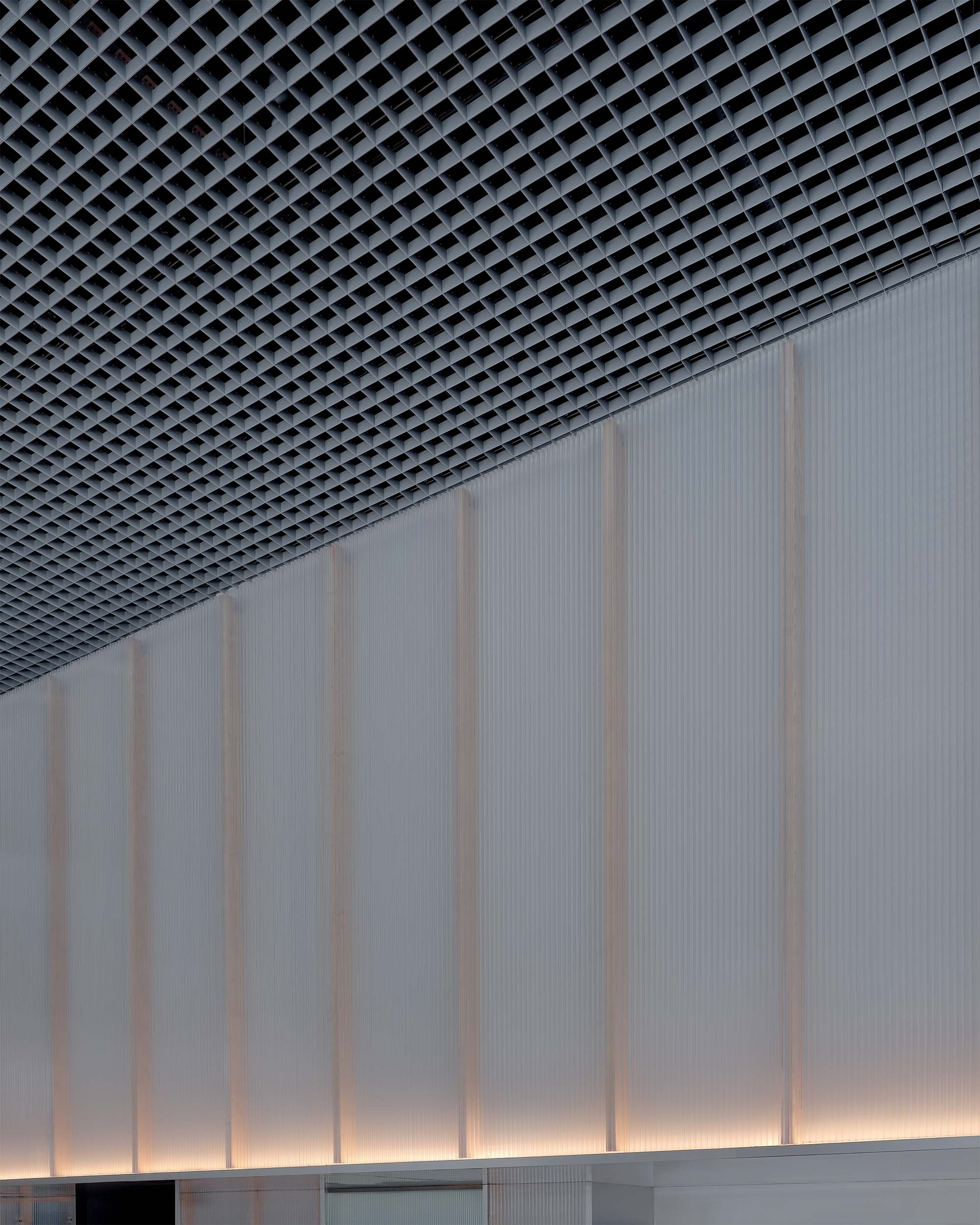
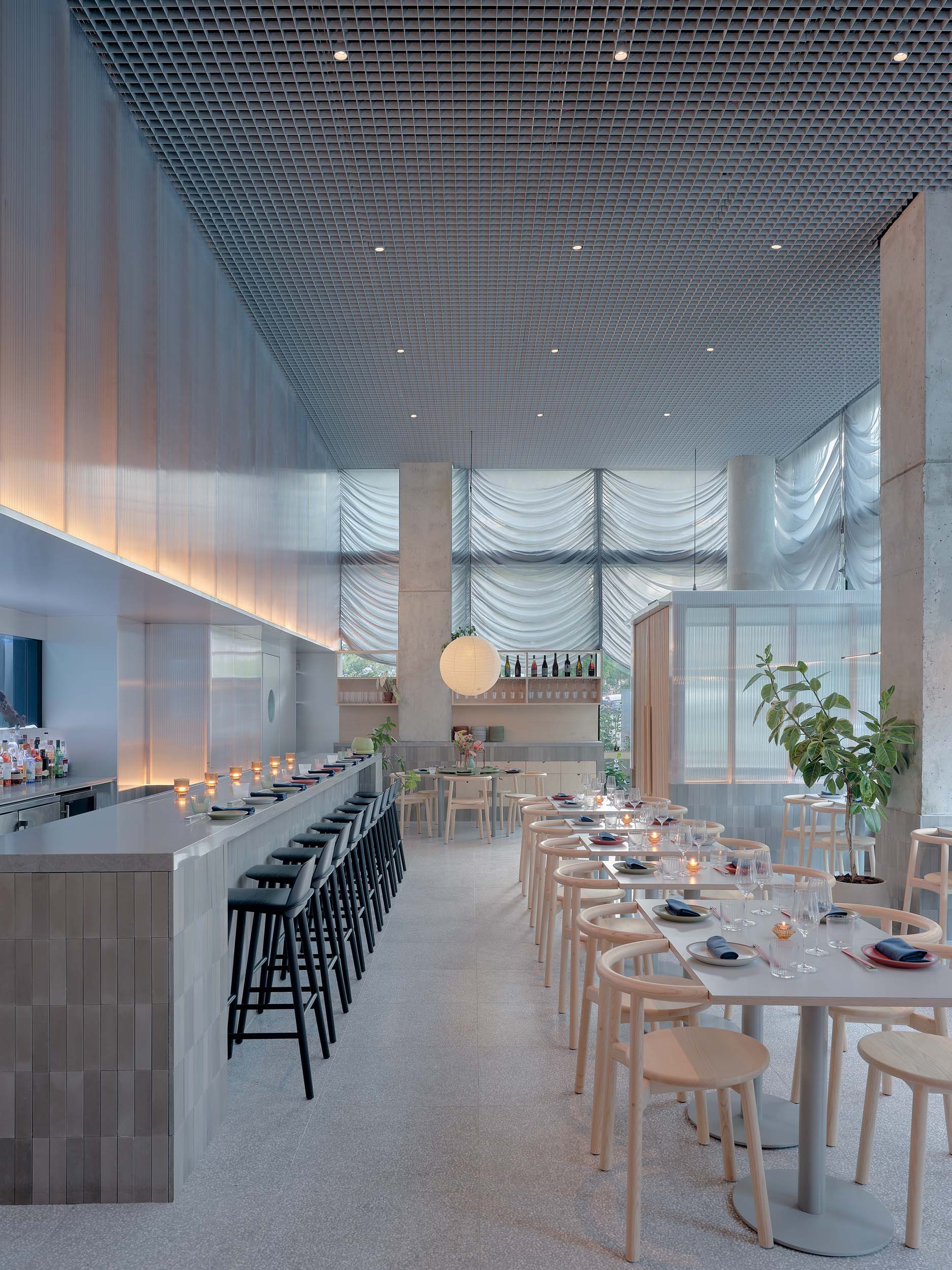
“In this project, we introduced an unconventional combination of materials: translucent curtain textiles, transparent polycarbonate multiwall panels, cement tiles, aluminum panels, and wood. Together, these materials act as a bridge connecting the expansive, light-filled space and the tactile, personal dining experience of each guest,” said the firm. Plan Plan designed Nin Hao to be a unique dining experience that is both playful and comfortable at the same time, allowing contrasting materials and techniques to harmoniously work together.