
Just when you thought European high-speed train travel couldn’t get any cooler, along comes a new version of France’s famed TGV. The just-announced TGV Inoui combines major technical upgrades and cutting-edge design from Japanese studio Nendo (in collaboration with French firm AREP) for a new-look travel experience that is sure to be in-demand when it launches some time in 2026.

SNCF Voyageurs and French mobility company Alstom announced the updates, which read like a wish list for design-obsessed travelers. The TGV Inoui cars are outfitted with advanced wayfinding, reliable Wi-Fi, accessibility friendly features, sustainable materials, bike racks, and a bistro for dining. AREP, a design-focused subsidiary of SNCF, even worked with Nendo to refresh the popular table lamps, originally designed by Ionna Vautrin, that are onboard TGV trains. The lamps are now bright yellow and rounded, perhaps recalling the form of an anime robot character.
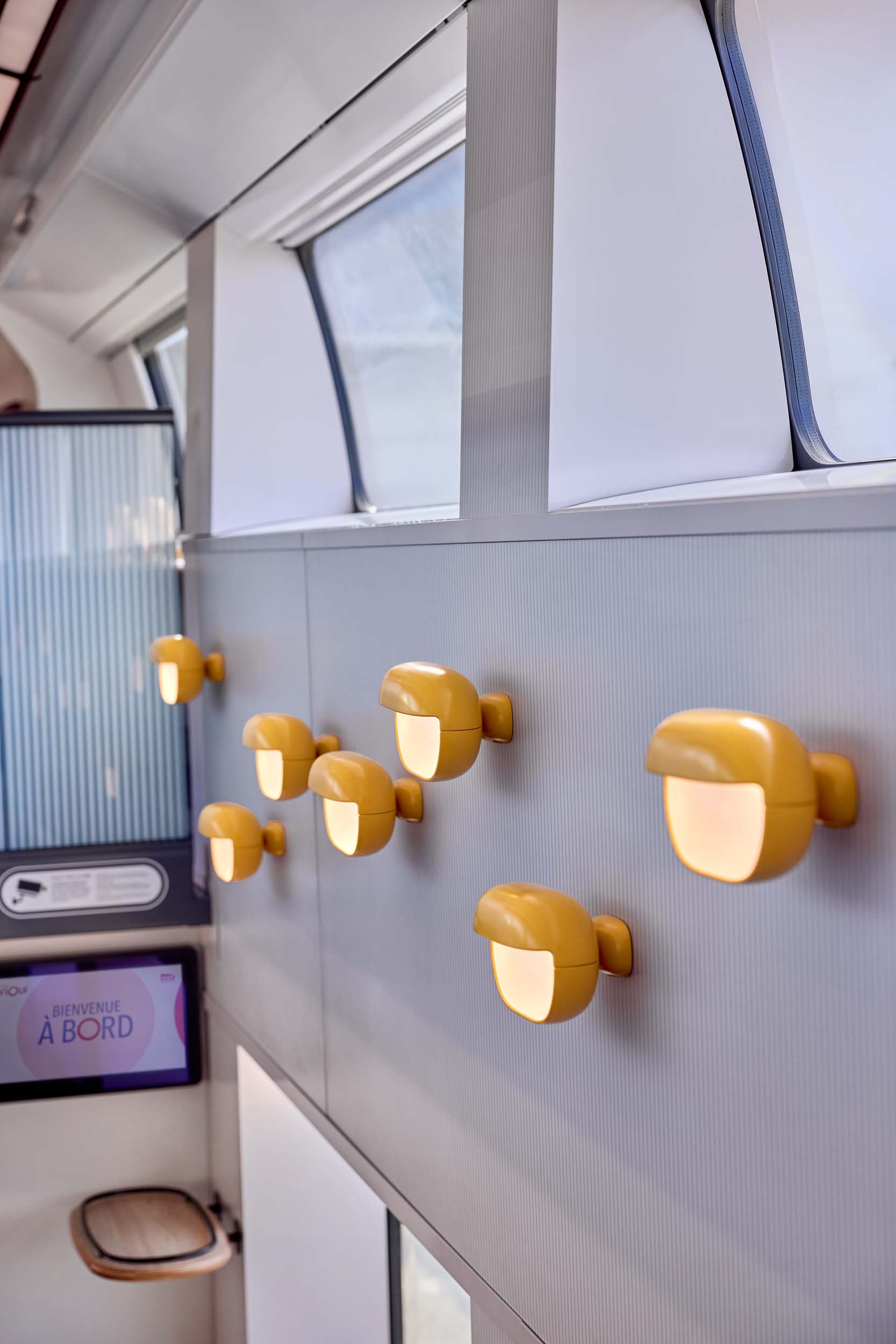
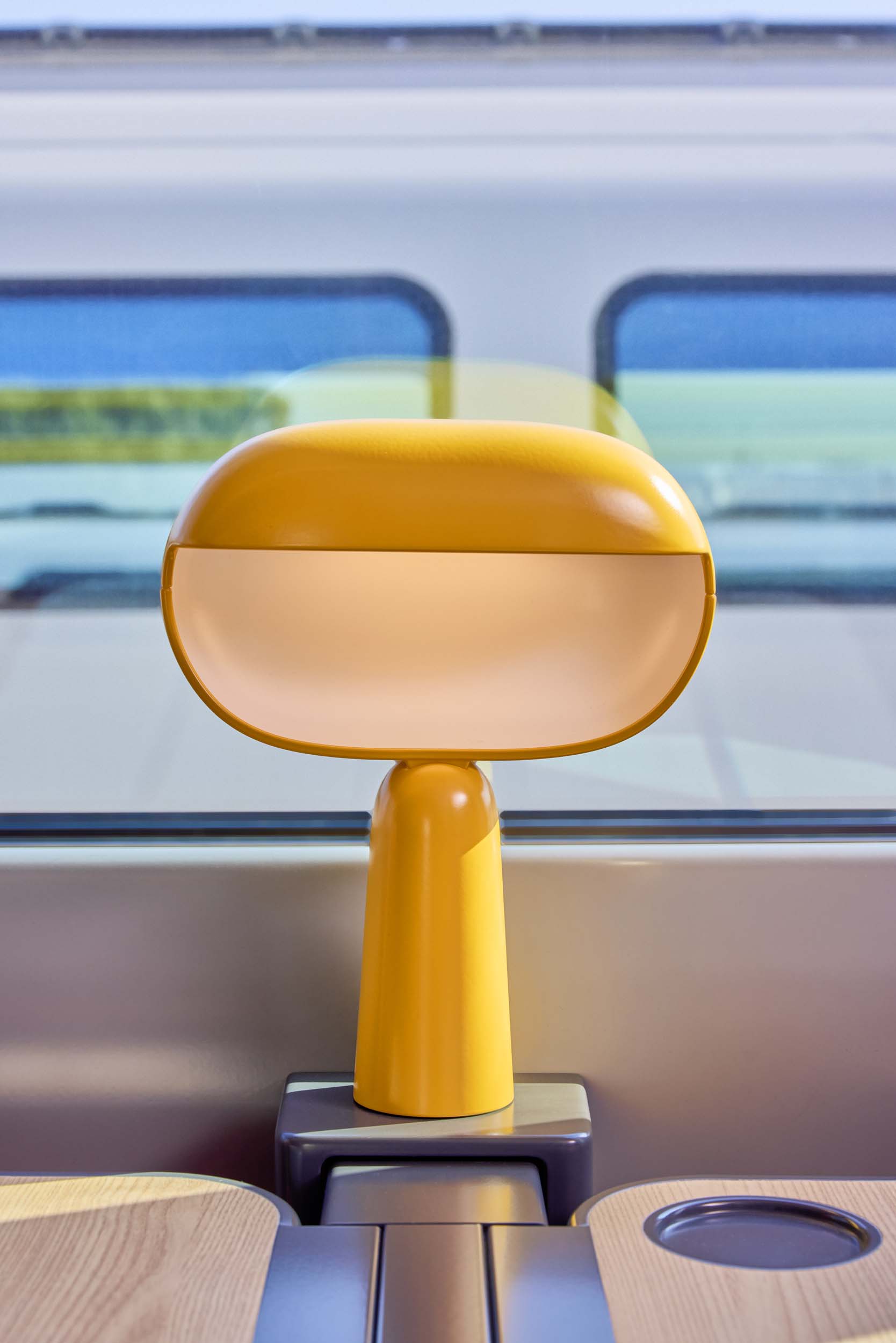
Nendo, with offices in Tokyo and Milan, and known for its work with brands as well as large-scale projects like the Japan Pavilion for Expo 25, brings a sense of whimsy to TGV Inoui not usually found on public transportation. The studio and AREP worked with the loose theme of “flow,” according to press materials, “based on a very simple idea: the train looks like no other means of transport. It makes its way through the landscape, rather like the flow of a river.”

Thus, the designers brought fluidity to the layout of the cars’ interiors, both in first and second class, creating “a strong horizon line running through all the elements and giving the impression of the surface of water.” This translates to the use of darker materials in the bottom-half of the train cars and lighter materials used in the upper-half of the train cars.
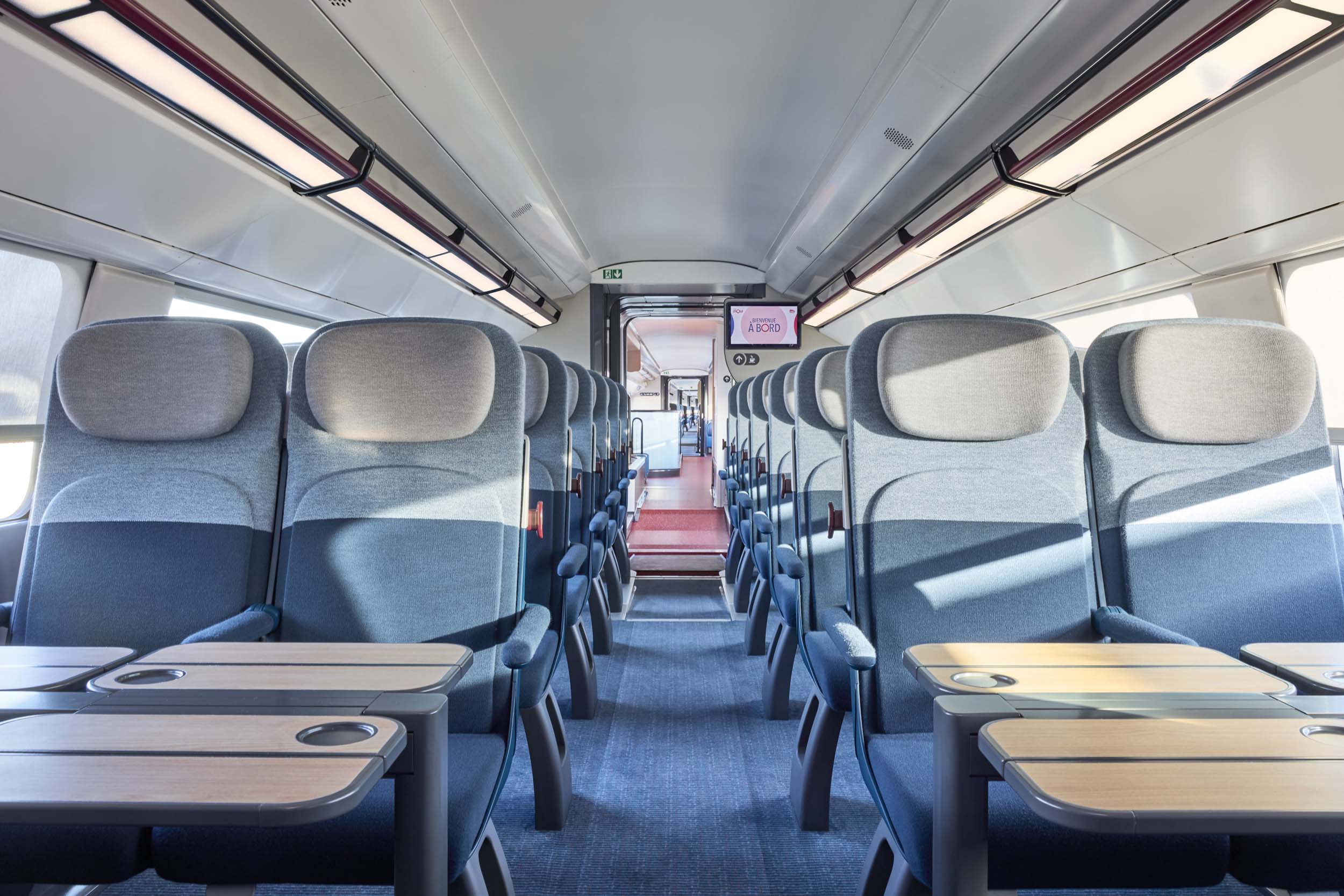
Seating in warm shades of blue also emphasizes the theme, and the seats were designed not just for aesthetics but for comfort. The seat covers are 3D-knitted fabric that adapt to the furniture’s curves, which, along with an innovative foam core, help produce a “hammock effect.” The seats are modular and made up of 90-percent recyclable material. Accessories such as seat-backs and luggage racks are also adaptable, designed to “evolve over time,” according to the release.

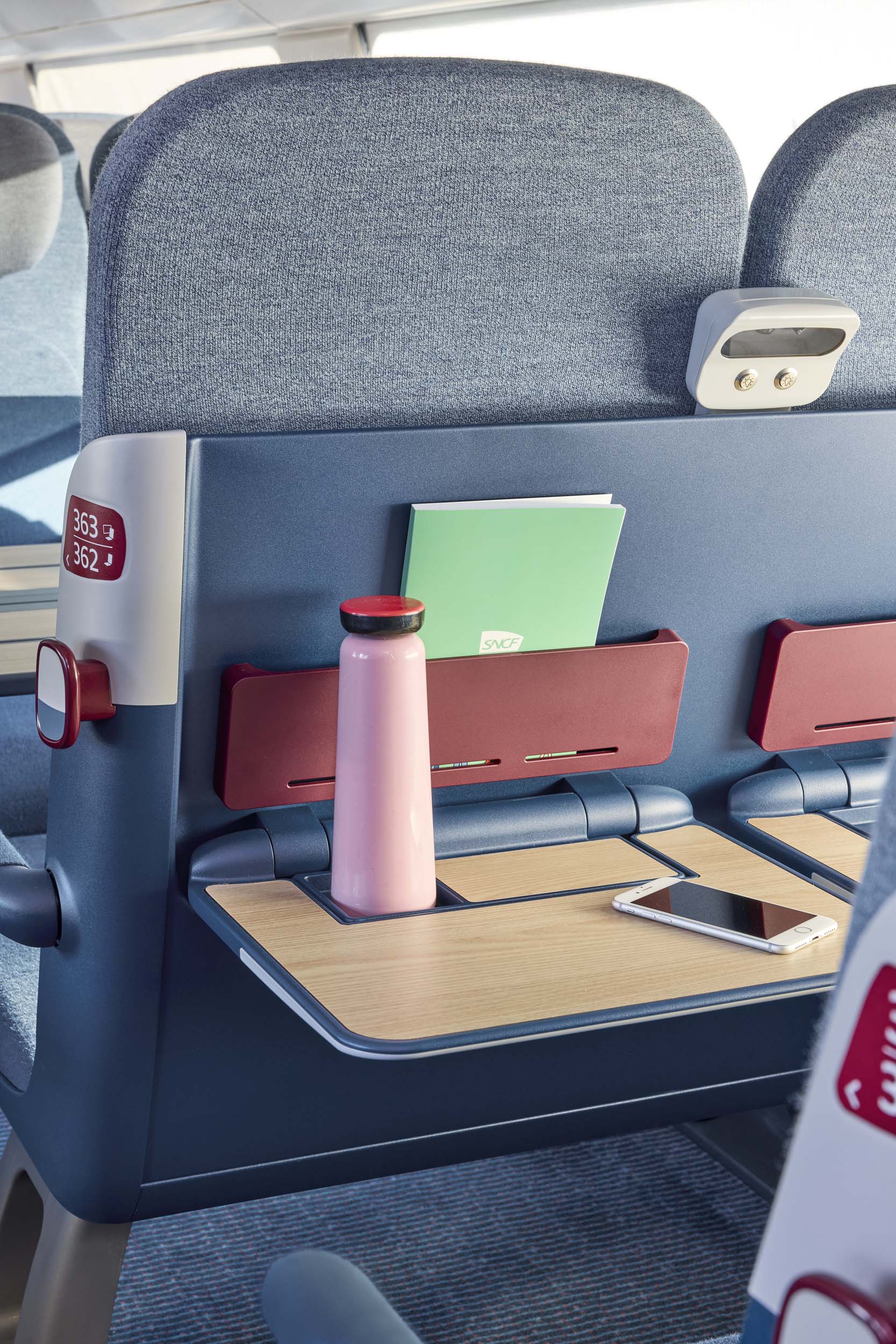
SNCF and Alstom tout major technological advancements inside and out, from sustainability to performance. The trains are made from 25-percent recycled materials and will be 97-percent recyclable. The exterior includes an elongated nose that improves aerodynamics and lowers energy consumption as the trains zoom through the French and European countryside at speeds up to nearly 220 miles per hour.