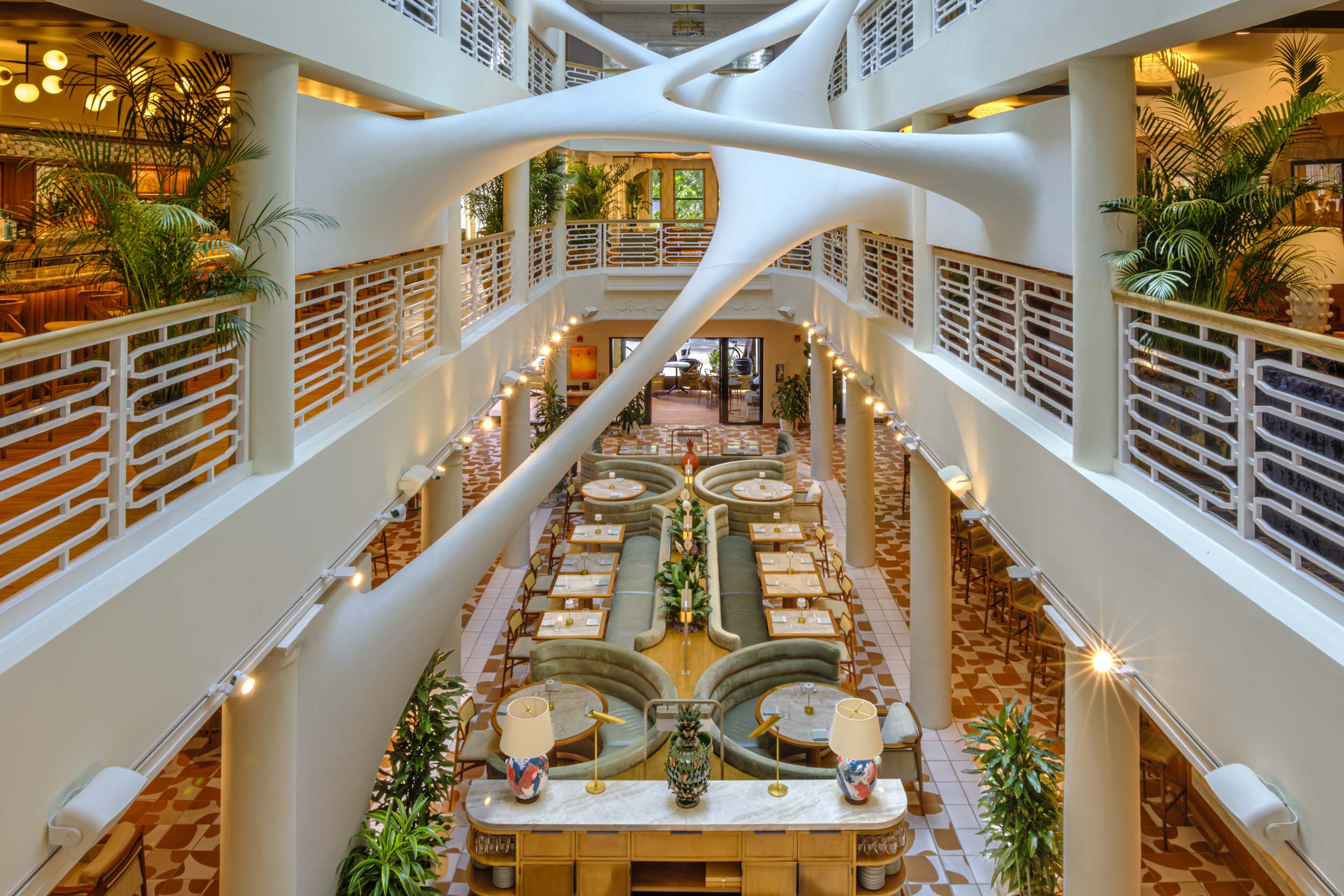
Built in the 1920s as a furniture warehouse and showroom, The Moore’s 90,000-square-feet has anchored Miami’s Design District even as its function and design has shifted over time. The landmark’s latest era integrates new dining, members club, hotel, and workplace. ICRAVE and Studio Collective drew from the heritage of the site, and an existing Zaha Hadid sculpture that stretches the atrium, to usher in The Moore’s modern epoch.


The first floor is a sun-drenched space that falls underneath a 4-story interior arcade. It now houses the restaurant, Elastika, whose name takes after Hadid’s sculpture from 2005. The design complements the sculpture, emphasizing the soaring limbs overhead with low-slung seating and earthy color palette. Intended to feel like a lobby for the Design District, the design concept is airy and open. Latin-influenced decor and tiling complement this sculpture. At the rear, the space is reserved for the members of The Club, a private social club. In this space, the design feels like a continuation of the atrium sculpture with more shapely additions that geometrically curve overhead.
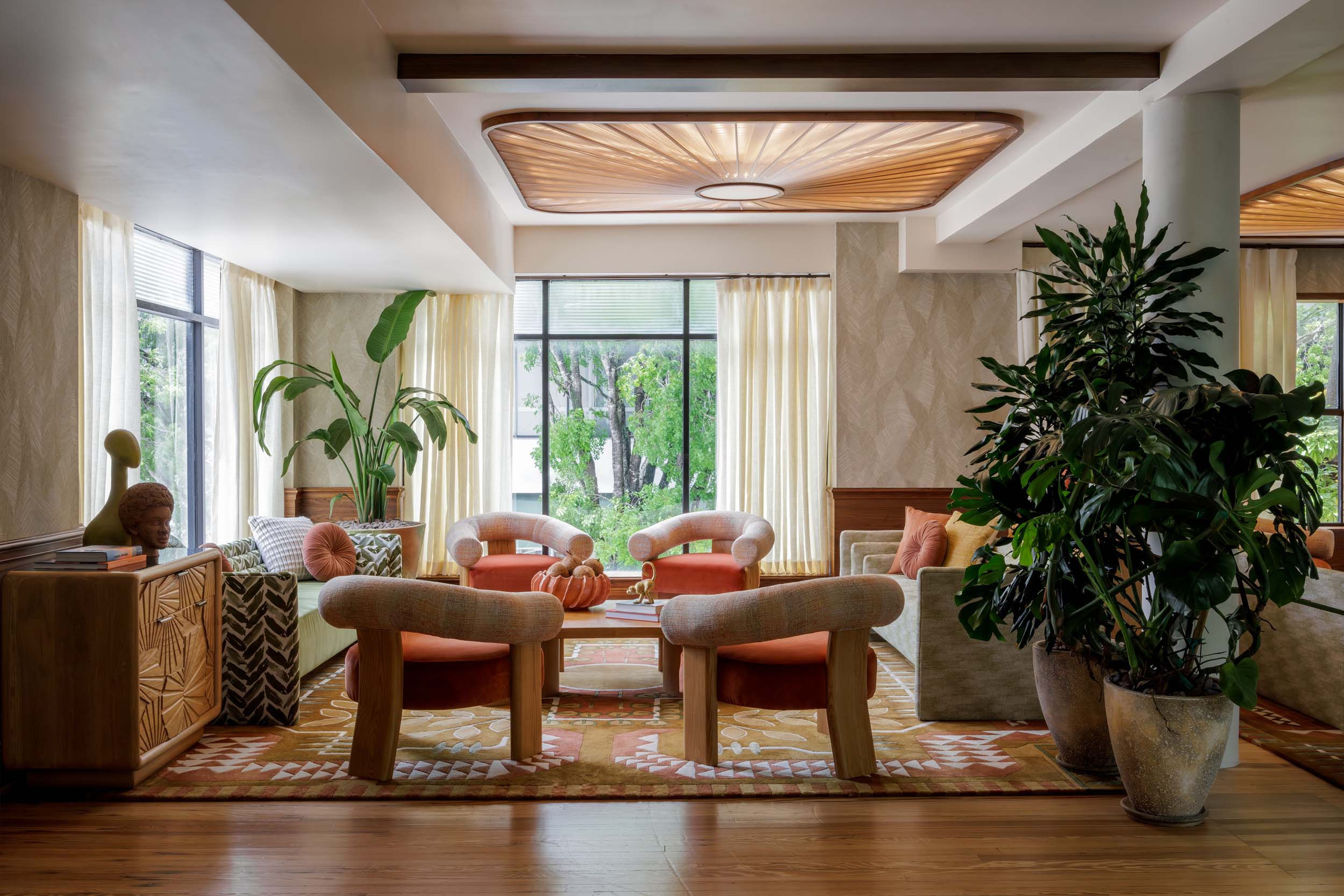
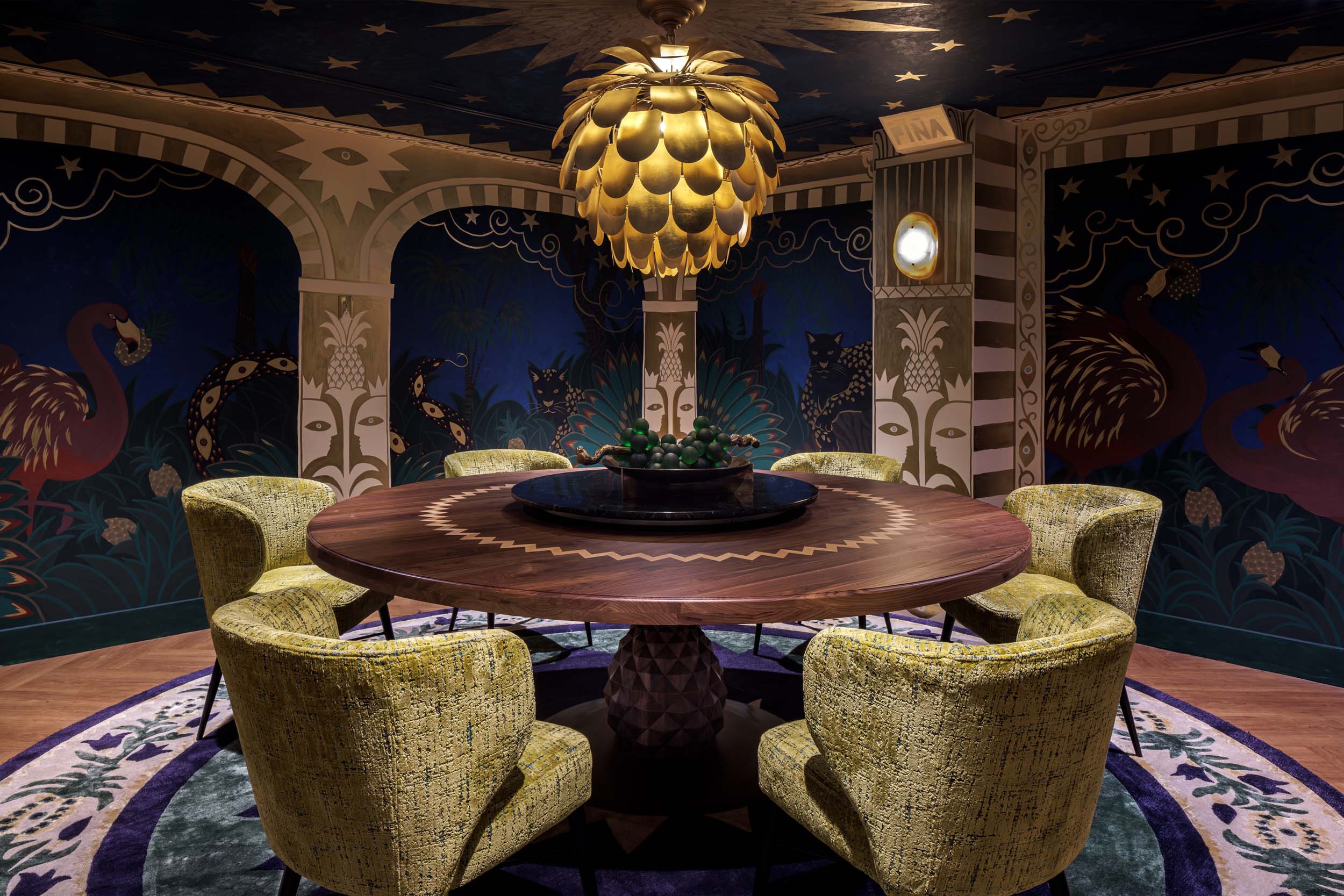
The above floors are also reserved for members, save the top-most fourth level. Flooring shifts from cork to preexisting restored hardwood, and playful tile. Clandestine rooms offering karaoke spaces, bars, and photo booths each bring their own sense of place. For instance, La Piña Room is an intimate room housing one circular table. The design nods to the site’s past as a pineapple plantation. Custom artwork by Brazilian artist Joao Incerti depicts pineapple motifs.
On the annex side of the building on the third floor is The Workplace, a private coworking space. Here the layout shifts from open lounge areas, private zoom rooms, high-end offices, and floating conference rooms. Like the other floors, The Workplace takes inspiration from Latin American styles in reference to the locale of the building. The design leans on bold detailing, featuring a plethora of bright artwork, wallpaper, and rugs alongside the wooden floors and furniture.
The hotel suites begin on the fourth floor, led by a mix of eclecticism and Latin American leanings. Guests arrive to the floor through the lobby in a dedicated hotel atrium. A custom carpet designed by Studio Collective depicting seabirds and cerulean hues mark the hotel entry. Traffic then moves along the bulkhead corridor of undulating guest room facades, sculpted with curves composed of backlit ribbed glass and dark anodized frames.
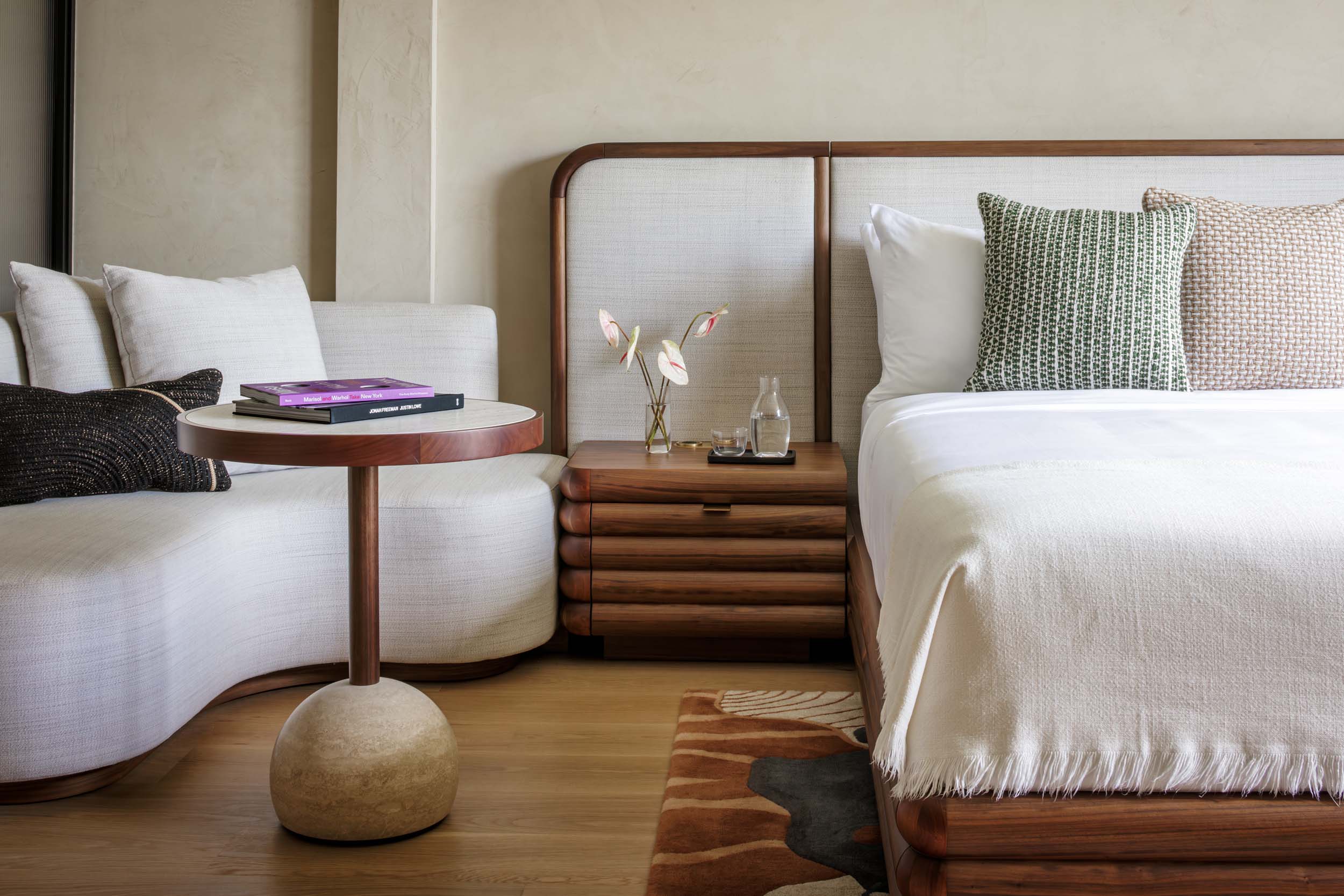
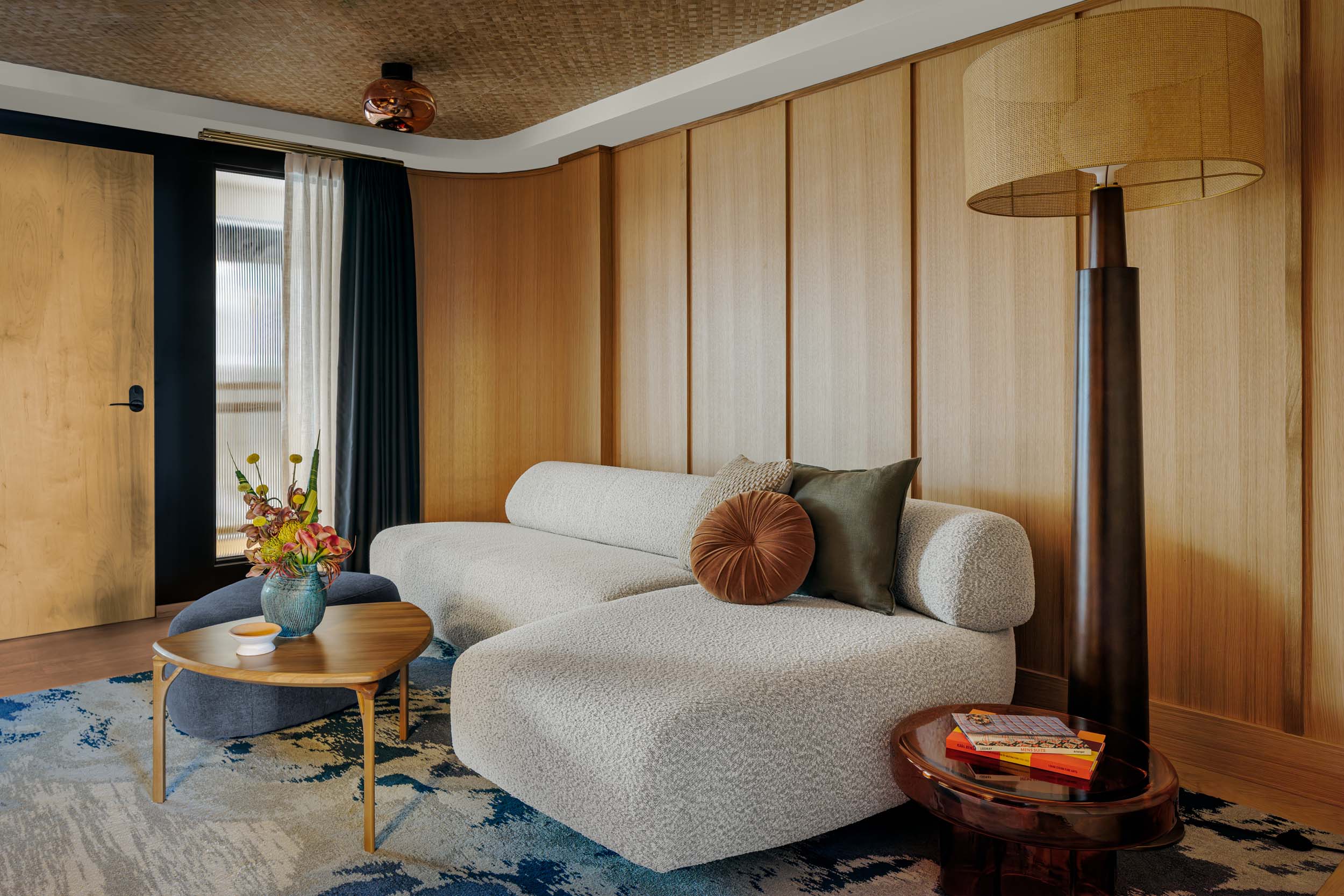
The guest rooms trend toward the residential. Each comes with a separate living room and bedroom, reminiscent of South American porches. Open to both members and non-members, the 15 suites’ entry parlors are completely clad in white oak to create a calming base to provide a sanctuary of respite from the vibrant city.