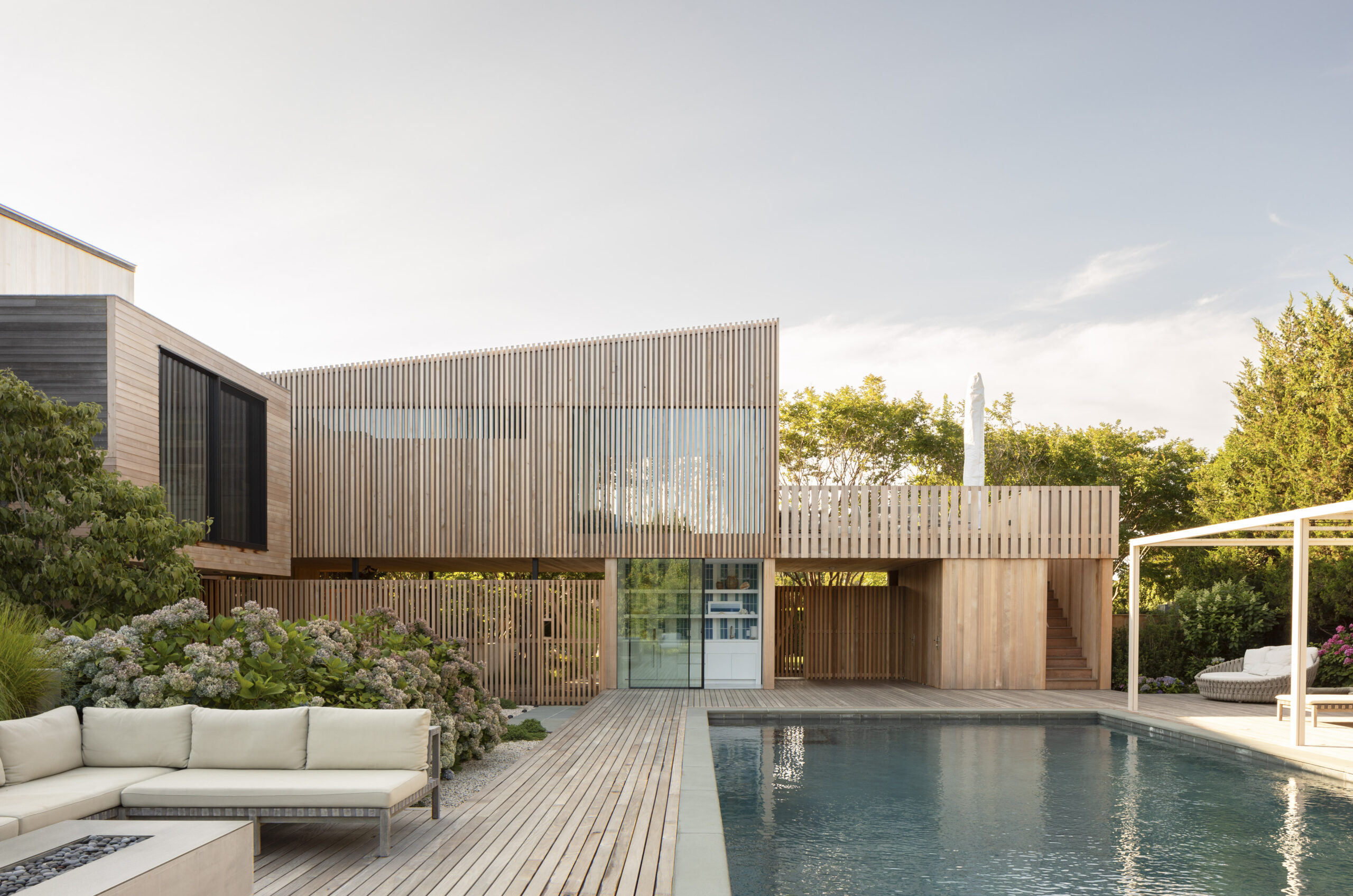
For a revamped pool house in New York’s Bridgehampton, coined Sandpiper, Oza Sabbeth Architects, now Sabbeth Projects and Oza Studio, creatively retooled the existing pool house to incorporate a one-bedroom addition and establish a courtyard—all while getting around the local zoning codes. Oza Sabbeth Architects cohesively connected the new pool house to the original home through minimalism, cedar cladding, and layered design.
In its approach to the design of this Hamptons pool house, the architects valued adaptive reuse. Peter Sabbeth shared, “Older beach houses such as this often get taken down and replaced with new homes. Our clients preferred to keep the old home, update it, and have the pool house added to it, as opposed to starting fresh. This idea of reimagining an older home is perhaps one of the most sustainable moves one can make.”
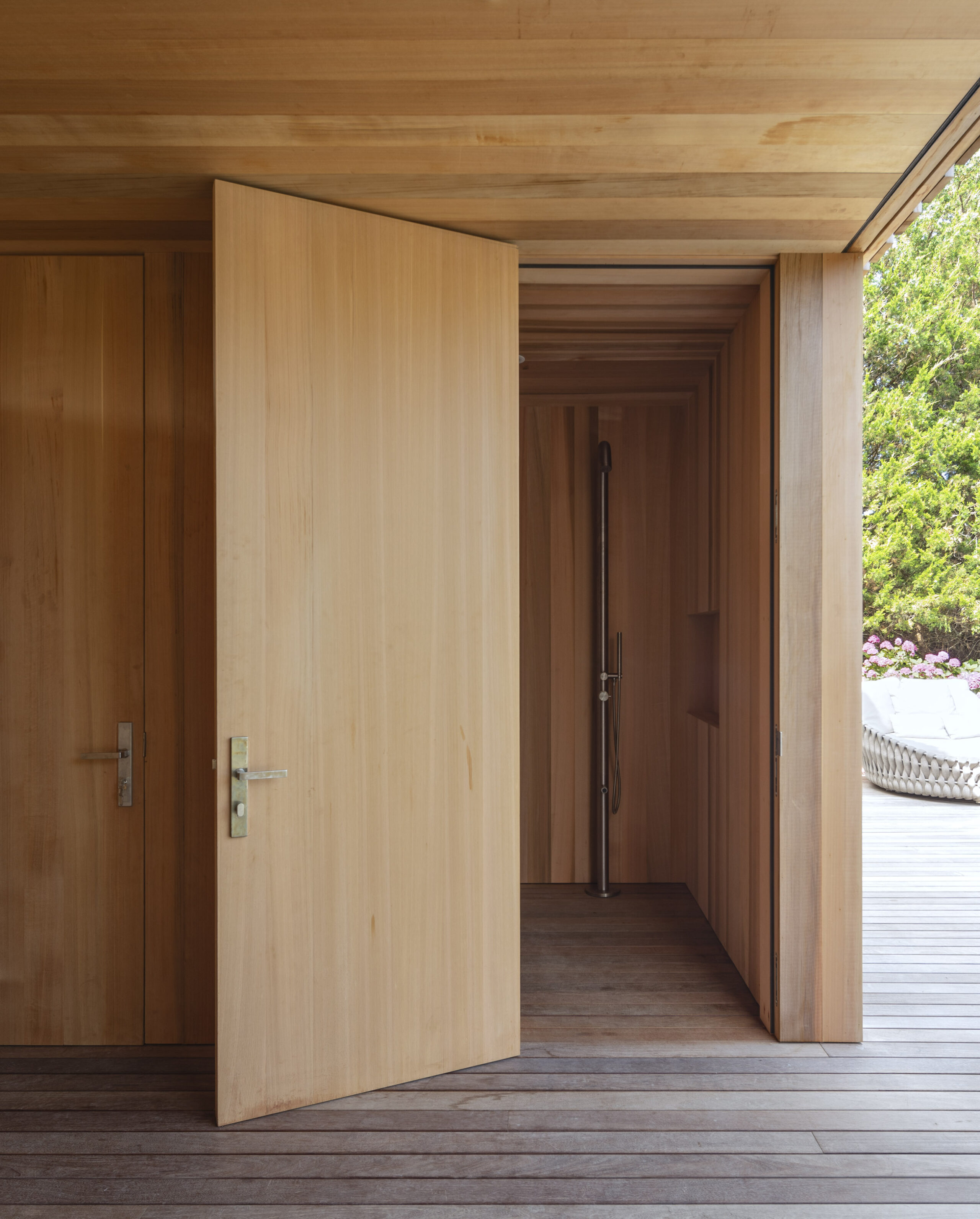
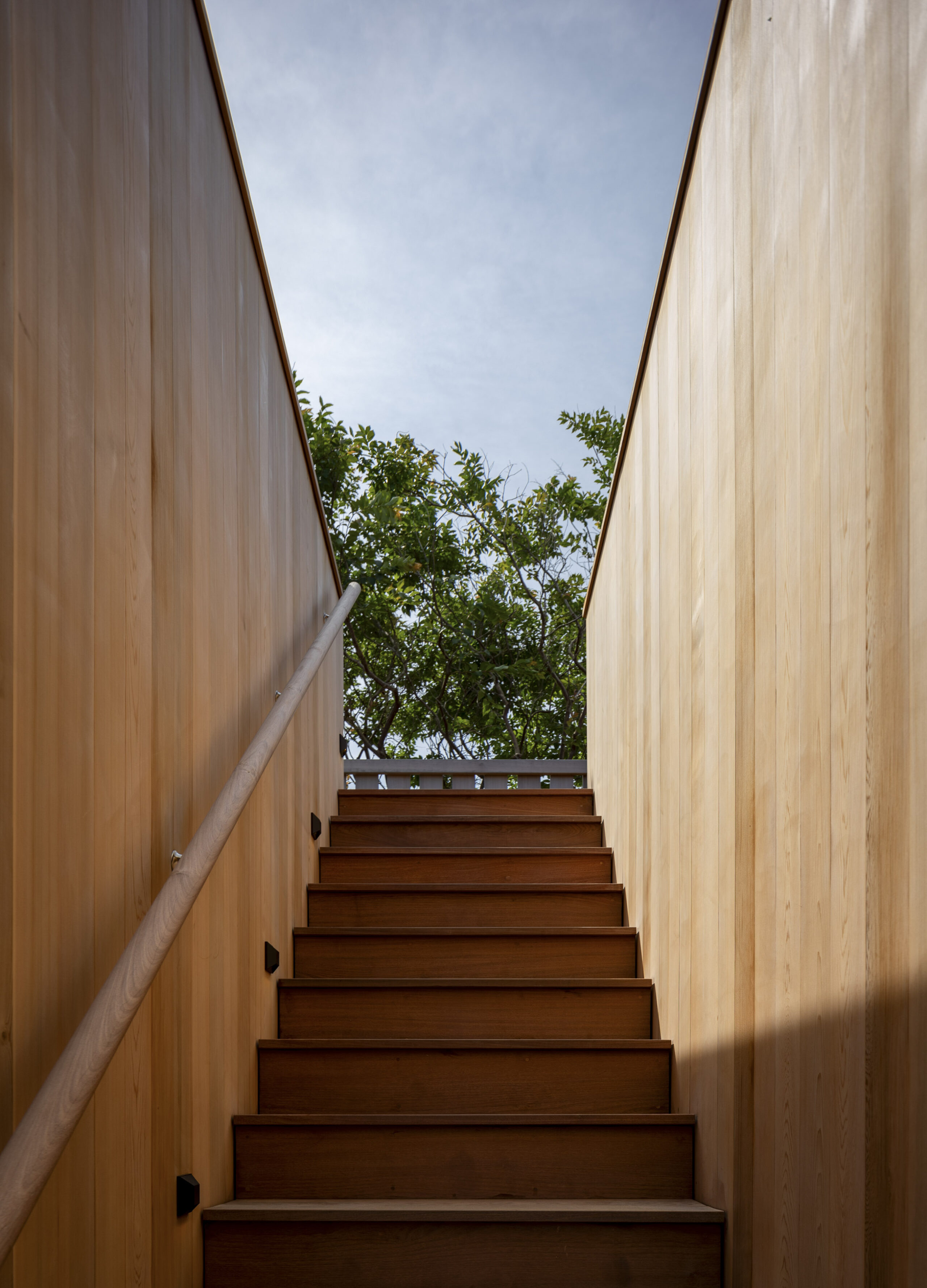
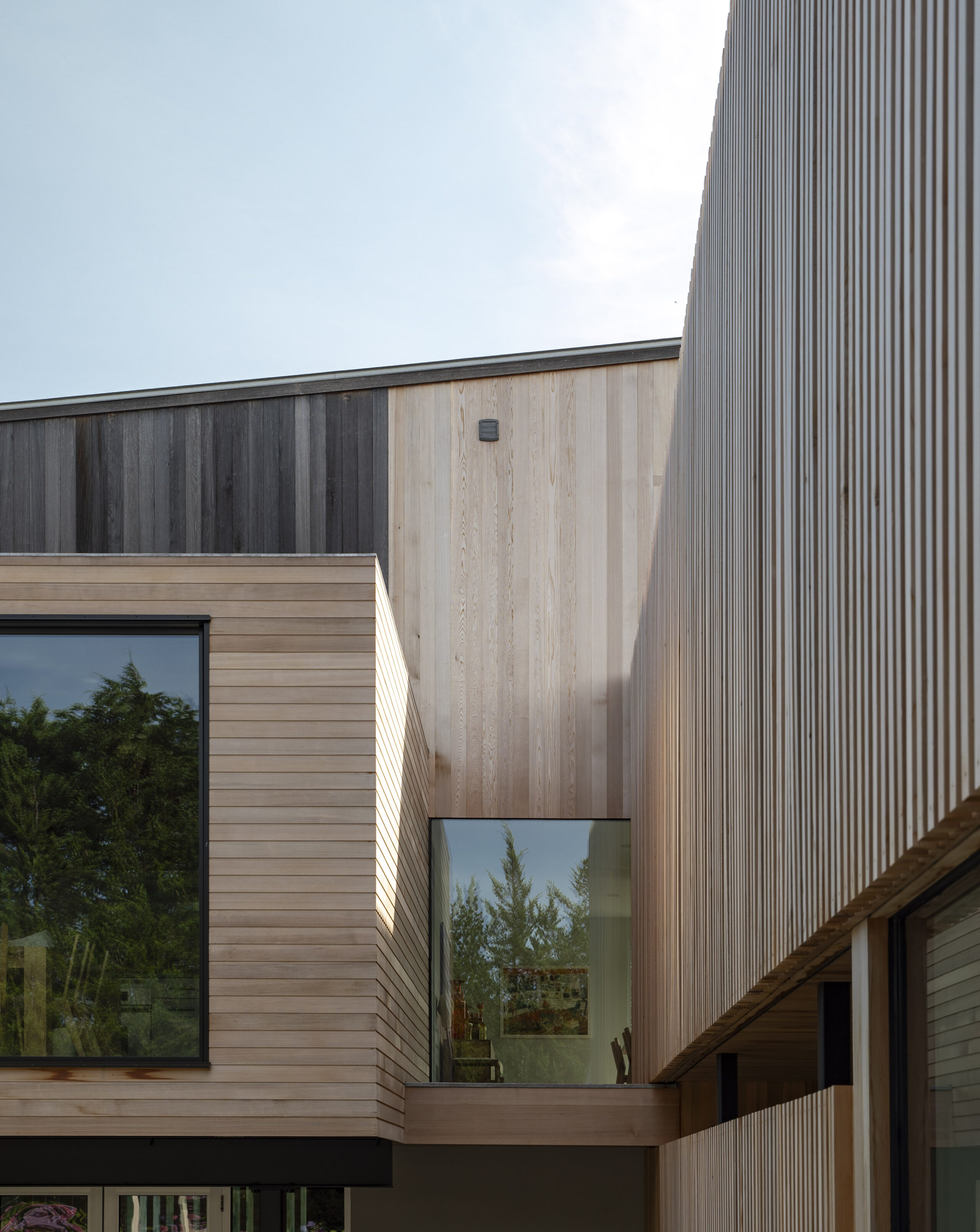
Initially, the clients wanted to add on to the pool house, but setback requirements made this tricky. Instead, the architects connected the pool house to the main house, siting the new apartment on top of the pool house—a clever way to extend the rooftop terrace while merging both structures with a second-story bridge.
The unique bridge connection was a result of local zoning codes. Nilay Oza provided more insight: “A key design challenge lay in navigating the town’s interpretation of how an accessory structure relates to the primary residence. Fortunately, the zoning code allows the two uses to be vertically aligned—so long as they are not connected by an interior stair and each maintains its prescribed setbacks.” He continued, “This provision gave us the architectural freedom to pursue our dual objectives: integrating a compact living suite as an upper-level extension of the house, and positioning a new pool house below, both embedded into the landscape.”
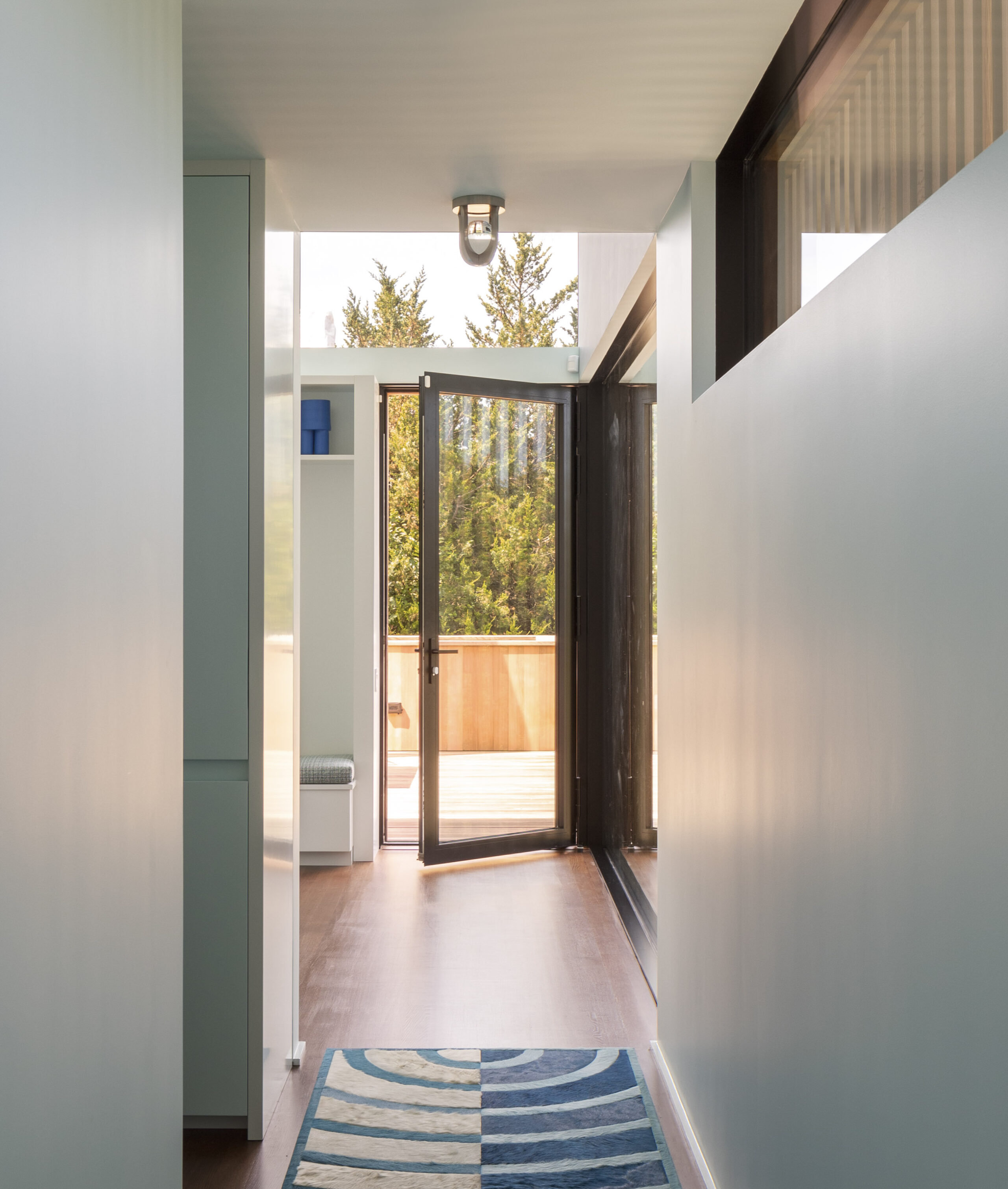
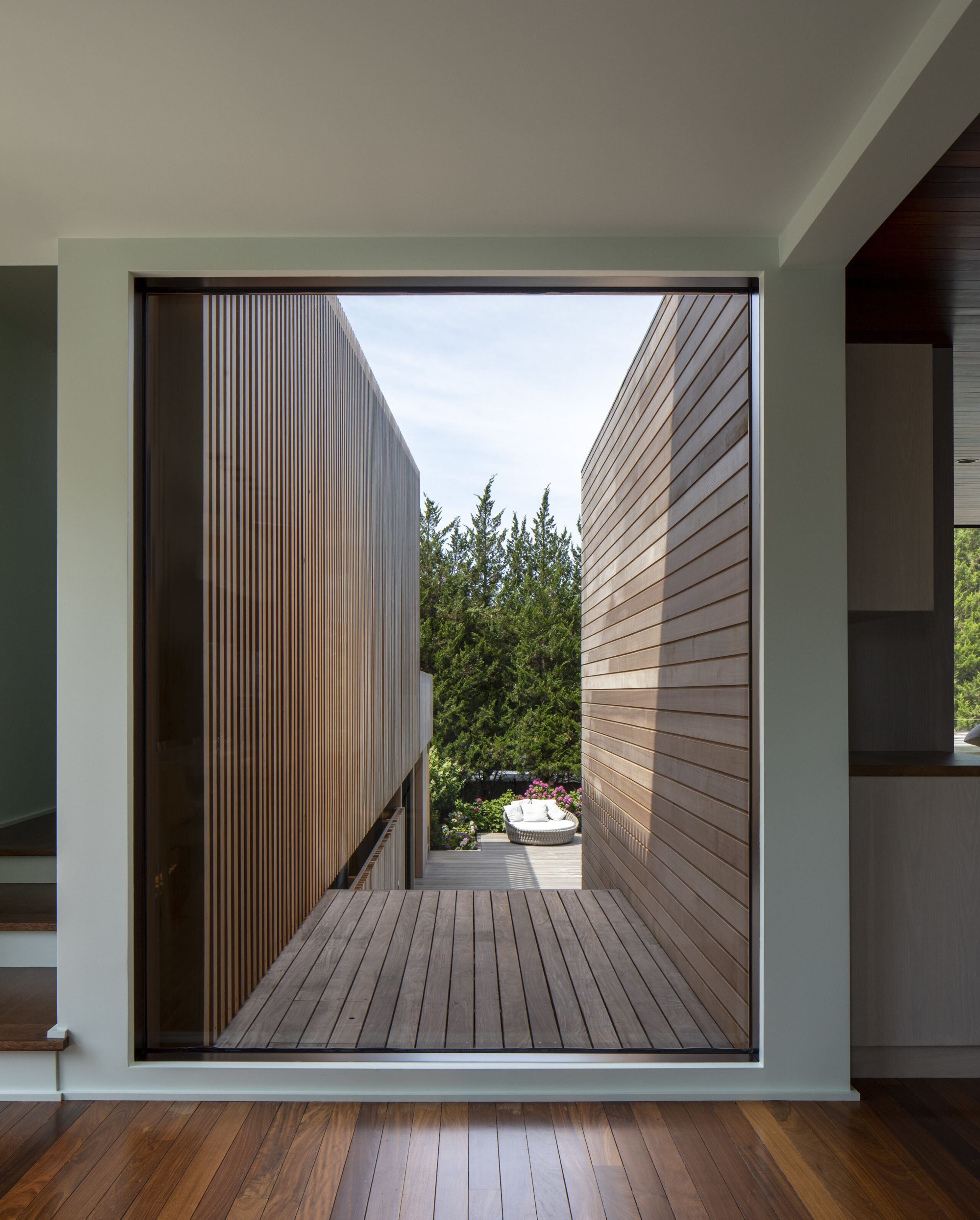
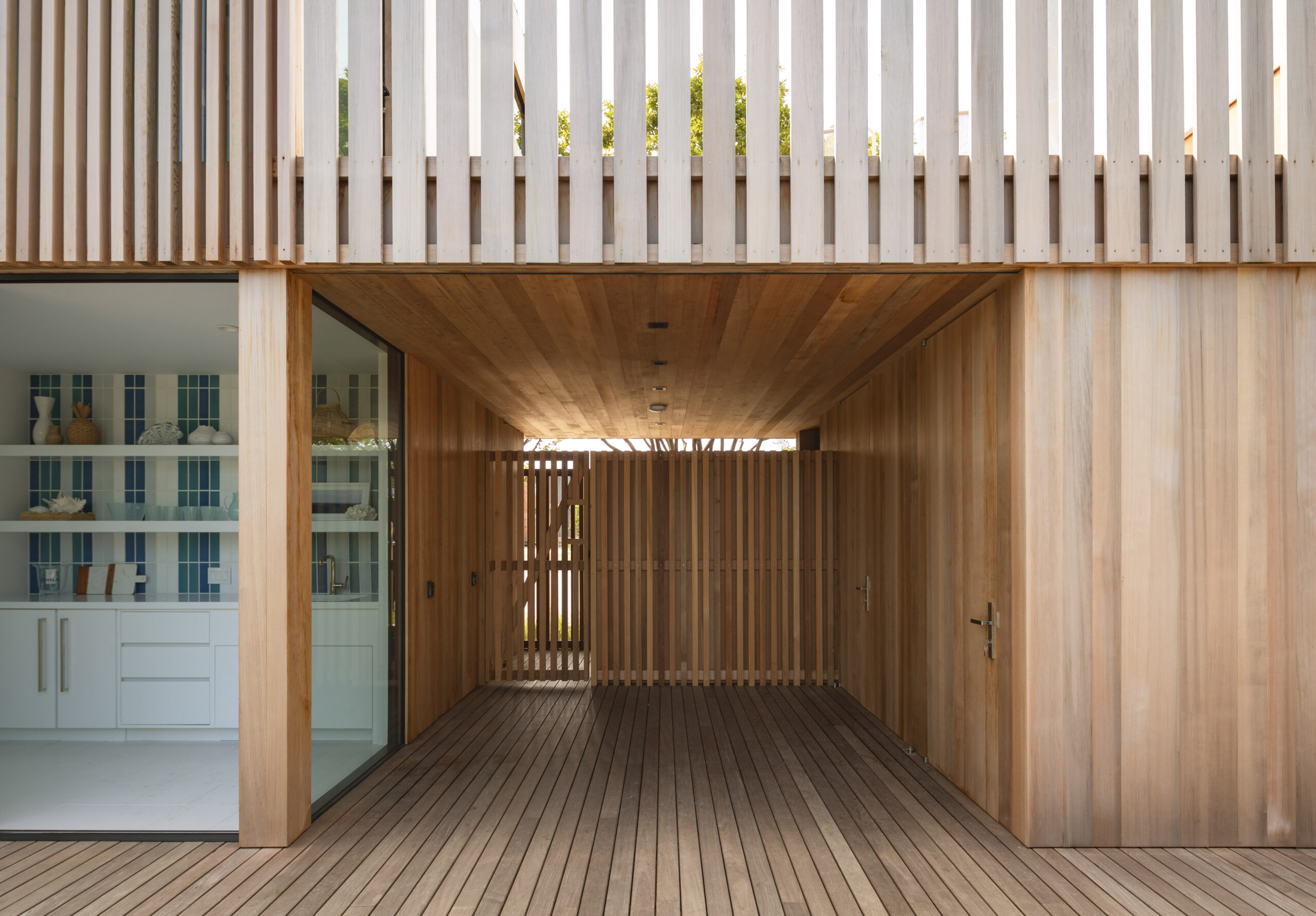
Now, when approaching the property, a gap between the trees directs guests under the bridge where a new gate is located. Like the addition, the gate too is clad with wood slats. It leads thorough to the private backyard and pool area. Although tucked away, the entry doesn’t close off the property, slivers of landscape peep through the vertical wooden panels in the gate and fences.
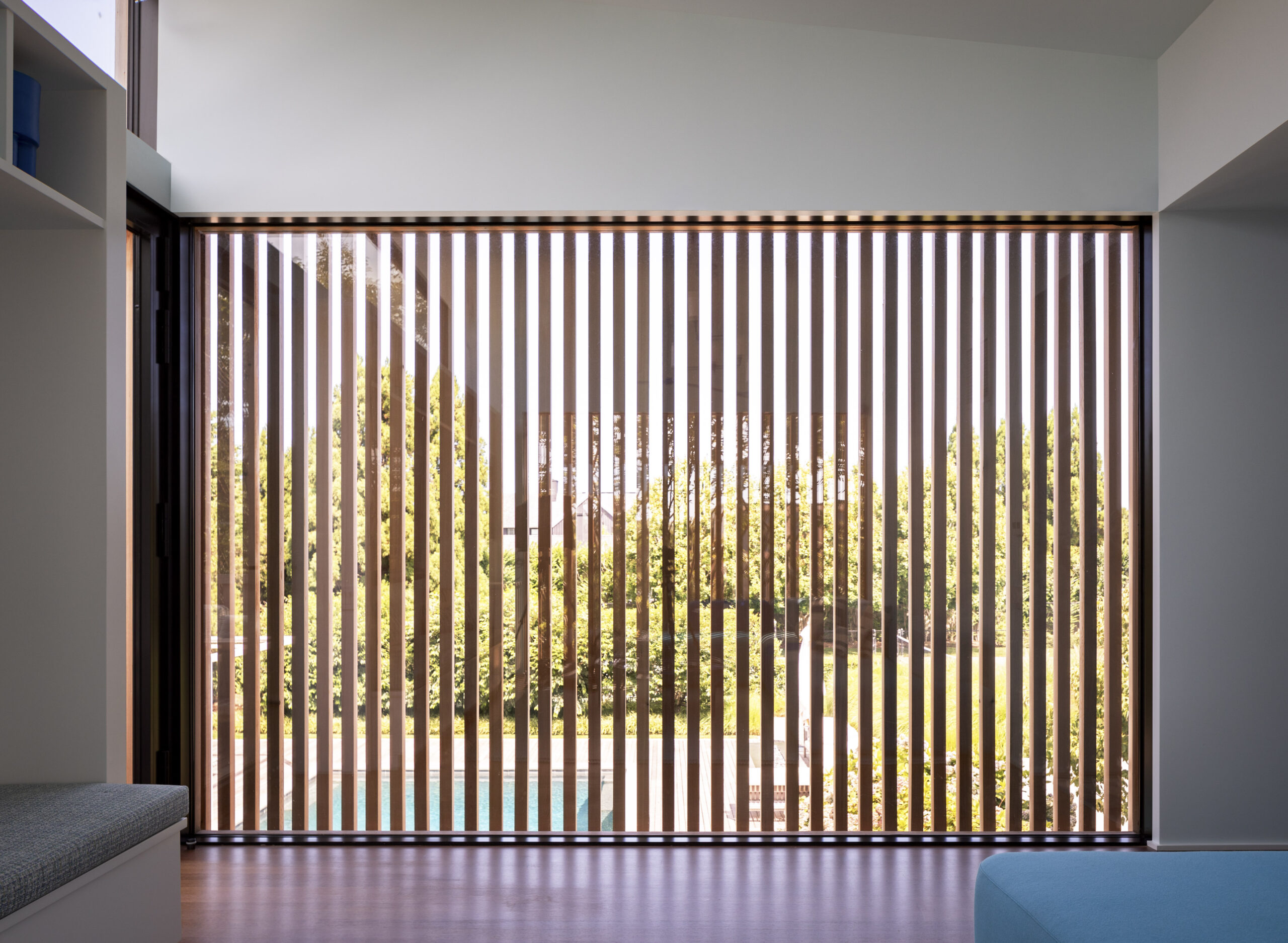
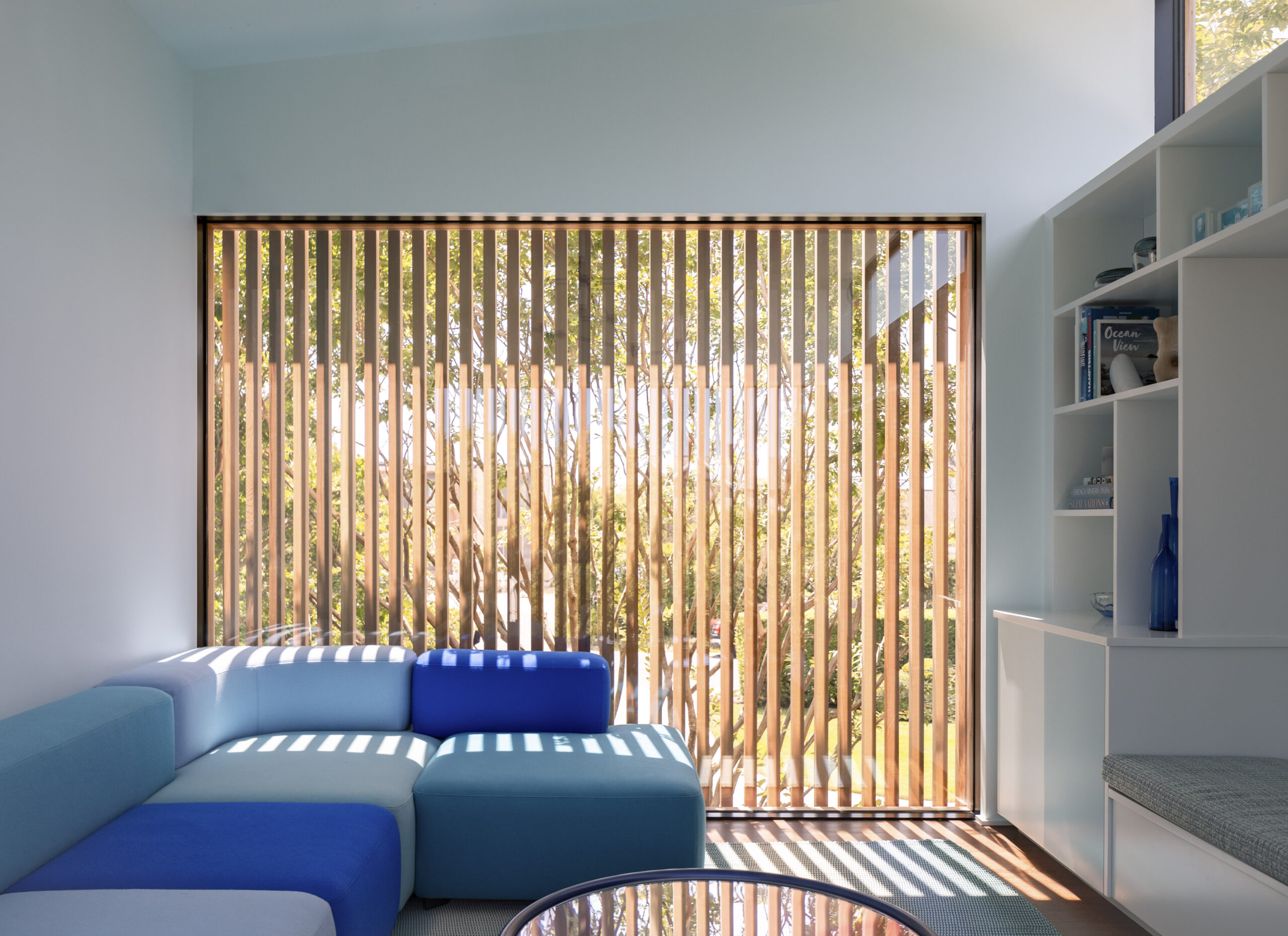
The vertical wood cladding gives texture to the new addition, while also informing the pool house’s programing. Wider panels indicate the outdoor deck on the second floor, while the narrower Brise-soleil covers the interior portions of the structure. The cladding is a unique layering effect that was strategically integrated into the design of Sandpiper. Oza shared, “We value the strategy of layering—using a rainscreen exterior for the management of moisture, overlaid with an architectural screen that extends across full-height windows to the north and south. This approach invites abundant natural light while preserving privacy from both the pool area and the street.”
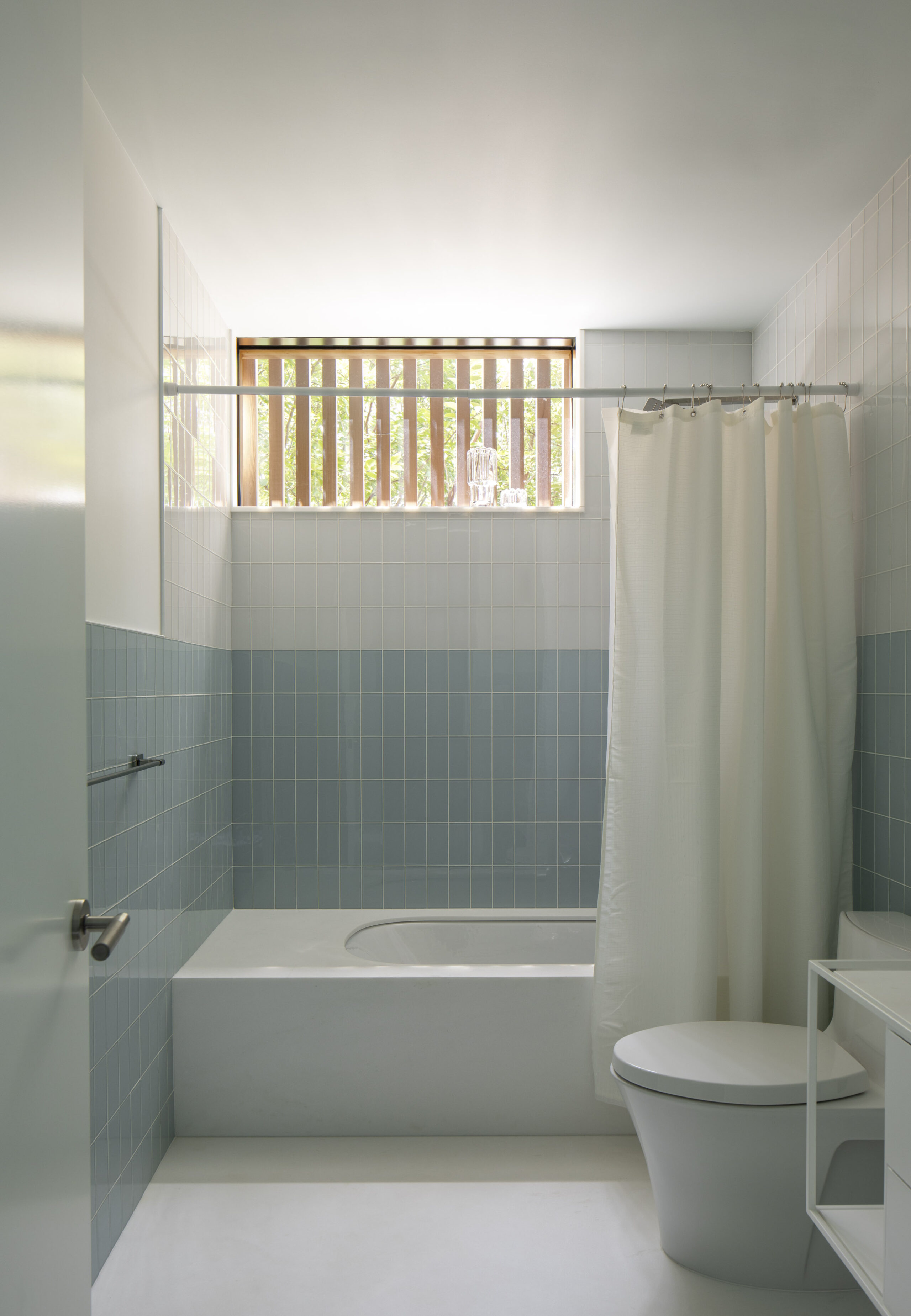
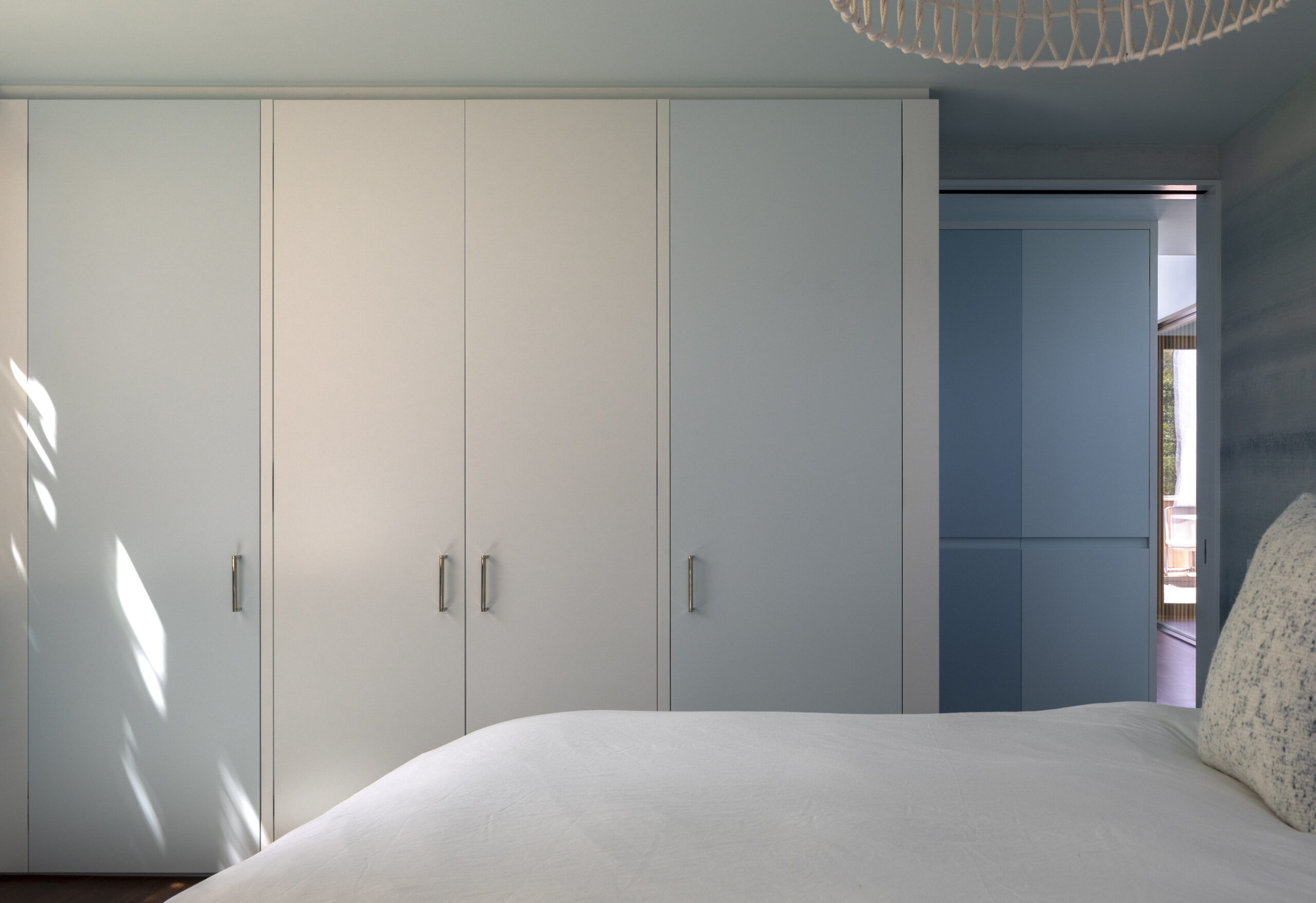
Considering the residence’s close proximity to the ocean, the architects, in collaboration with the late Amy Lau, opted for blue accents, including floor-to-ceiling cabinets in the bedroom and Aegean Sea blue Fireclay narrow subway tiles in the pool kitchenette. In the living room the boxy sofa dons various shades of blue. Throughout the interiors, cool tones are met with warm oak flooring that stretches the renovated structure.
Sandpiper is a perfect escape that combines a sense of welcome and lightness with contemporary style befitting the Hamptons. Both new and old effortlessly blend together while reinventing the bones of the original pool house.