There’s no denying Montreal’s growing influence on contemporary design. The Quebecois metropolis is home to a thriving scene of independent talents and boutique producers making the most of relatively affordable living costs. Practices including Studio Kiff and Éditions 8888, and companies such as Lambert & Fils, have shown themselves to be as bold as they are resourceful.
Featured in AN Interior’s Fall/Winter 2025 issue, Montreal-based designer Lauren Goodman often finds clever ways to implement upcycled materials sourced from local waste streams. Appropriate for this part of the world, broken lobster traps have been her main medium lately.
Undoubtedly, this sentiment of experimentation and irreverent expression carries over to the city’s ever-impactful crop of architects. One has only to look at recent projects by firms like Atelier Zébulon Perron, Atelier Barda, and _naturehumaine. The city’s designers work not only the private sector but also the public space, so it comes as no surprise that Montreal holds a UNESCO Design City designation.
Forming a new historical backdrop for this ever-expanding movement is the recently re-opened Montreal Museum of Fine Arts (MMFA) design and decorative arts collection—the third largest in North America. Three years in the making, the comprehensive showcase, comprising just over 800 objects, was carefully restaged by guest curator, noted historian Rachel Gotlieb. Her aim: open up the display to ensure it’s less stuffy, encyclopedic, or didactic; make it more relatable to a general audience; and highlight Canada’s contributions to the canon.
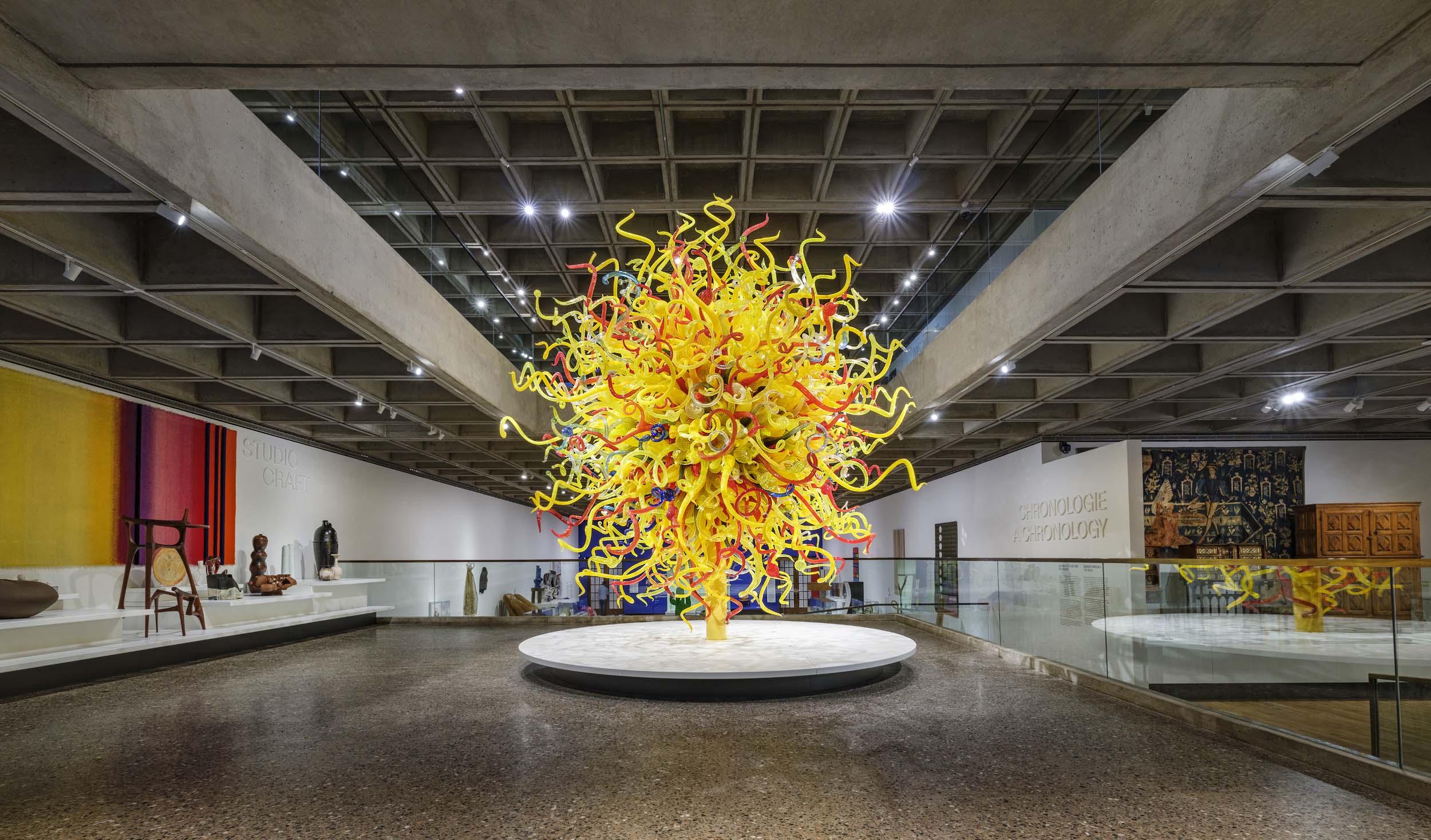
Holding pride of place in the 2-story, 21,000 square-foot gallery—a Brutalist addition designed by Fred David Lebensold in the 1970s—is Dale Chihuly’s 2003 The Sun. Comprising 1,347 rays of blown glass in various shades of yellow and hints of red, the sizable sculpture stands as a metaphor for the significant seasonal shifts that occur here. While perhaps not “design” in the strictest sense, it does serve a purpose in alluding to that site specific condition.
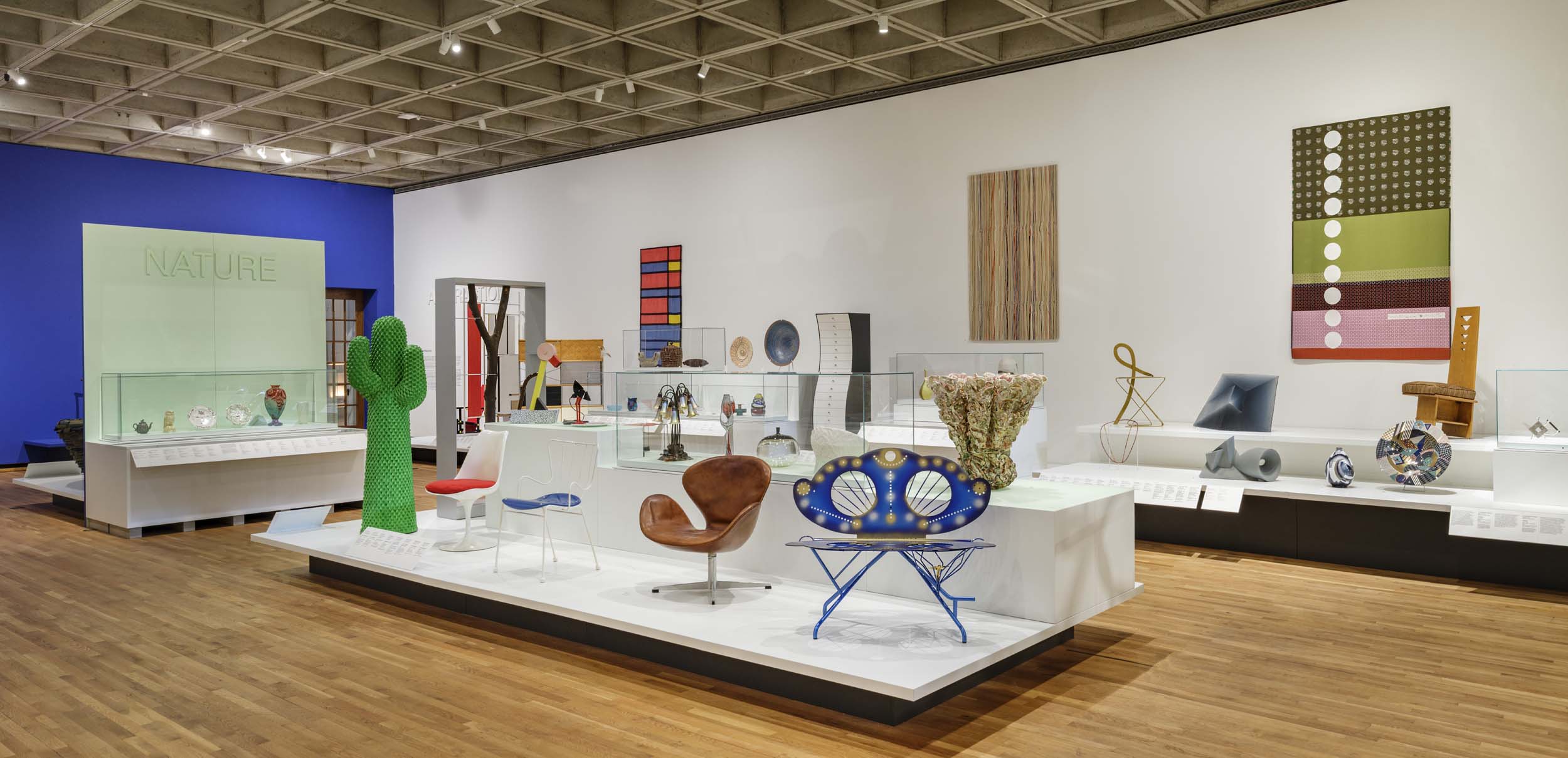
The new showcase takes a broader look at what the discipline actually encompasses: everything from regionally specific and re-interpretive craft to cultural response and limited edition objects that are more artistic in nature. Highlighting how design is actually a fundamental part of our everyday lives, the exhibition places a strong focus on mass produced items or provocational concepts thereof.
“There’s so many ways to tell the story of design,” Gotlieb said. “You could do it by region or media but I wanted to show the strengths of this collection and how it’s all encompassing. It’s obviously about culture and expression but also style, a word I’m not afraid to use.”
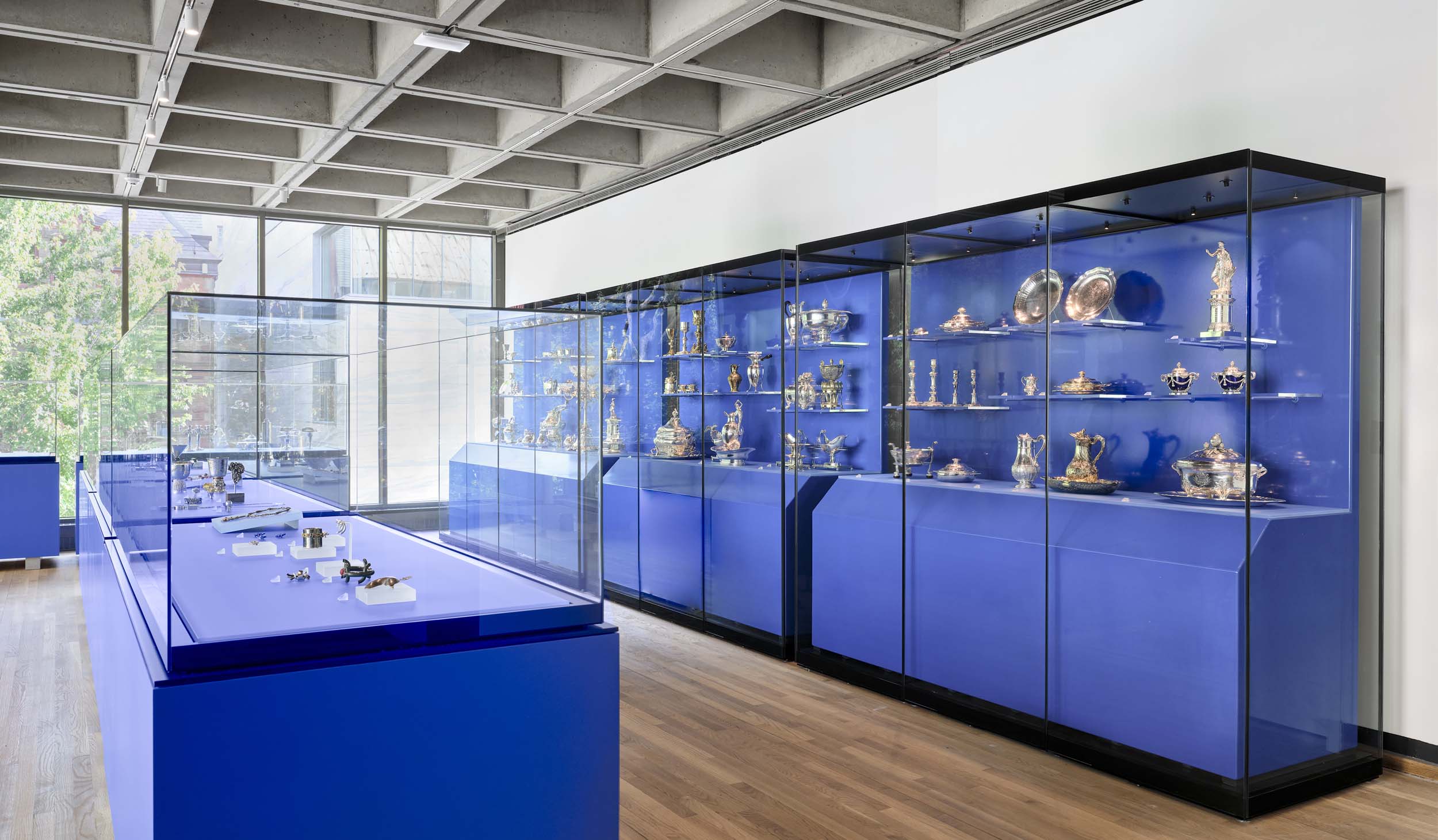
Other than the prerequisite midcentury modern staples—William Morris’s floral prints, Gaetano Pesce’s inflatable Up chairs, and Dutch Design (Droog) bottle pendant lamps—the collection includes the unusual: intricate silverware safe-guarded from the French Revolution, a collection of perfume vessels from pre-historic times up to present day, and Buckminster Fuller’s “radically” prefabricated Dymaxion Bathroom.
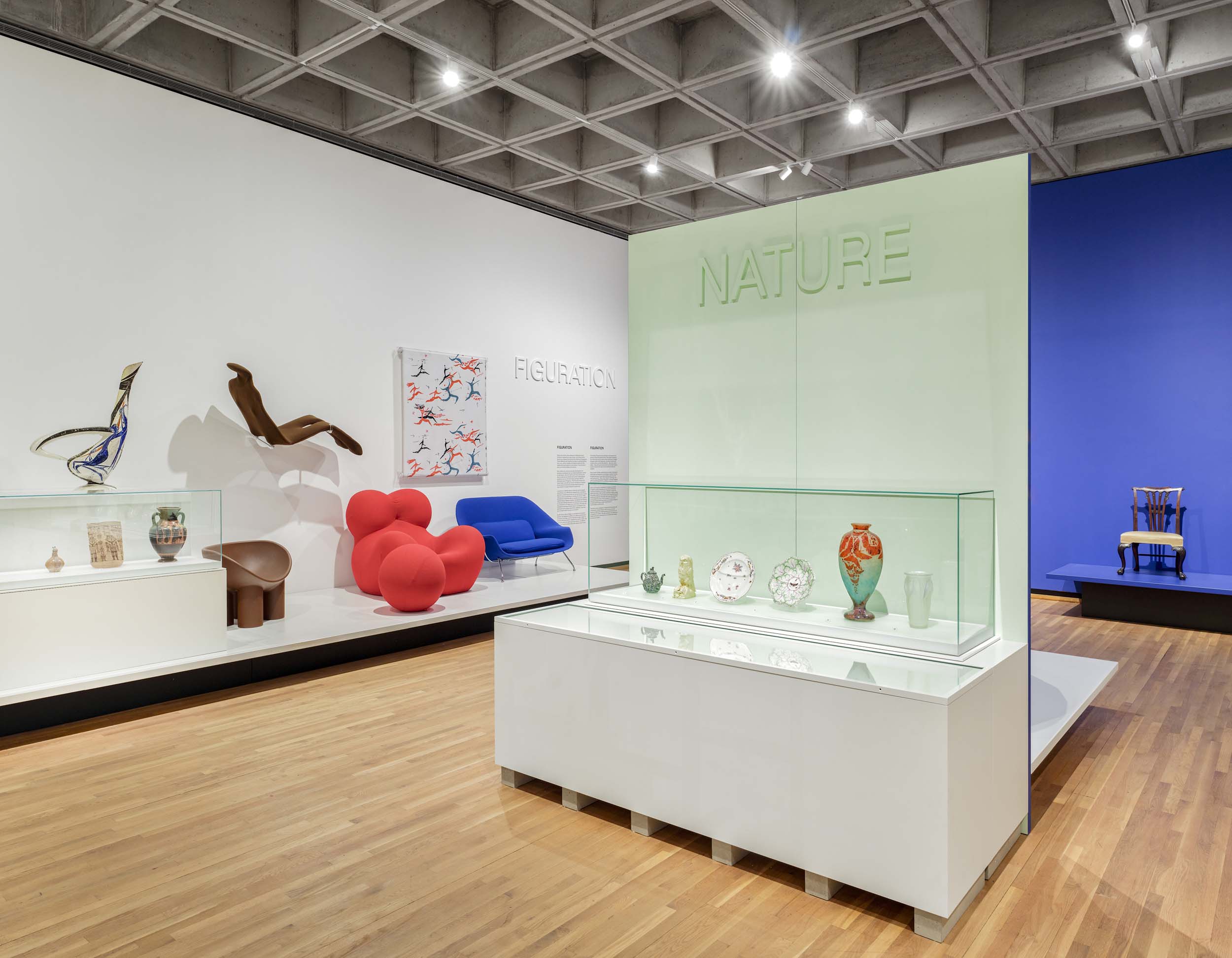
The latter two are presented as part of a section curated around the theme of Well-being. For Gotlieb, this topic is particularly relevant given how closely linked it is with the idea of hygiene. “We’re all concerned with the body and so, also how design relates to it,” she said. With a fully integrated toilet and sink, the 1938 Fuller concept features rounded corners for ultimate sanitization.
Other sections focus on the evolution of Work, Domestic Tools, and Cultural Appropriation, a theme with deep significance given Canada’s complex history with its indigenous populations. While the top floor focuses on these functional considerations, the ground floor addresses design as a form of expression, including the many tongue-and-check postmodern movements of the late 20th and early 21st centuries. Gone are the chronological displays that presented a limited euro-centric historiography.
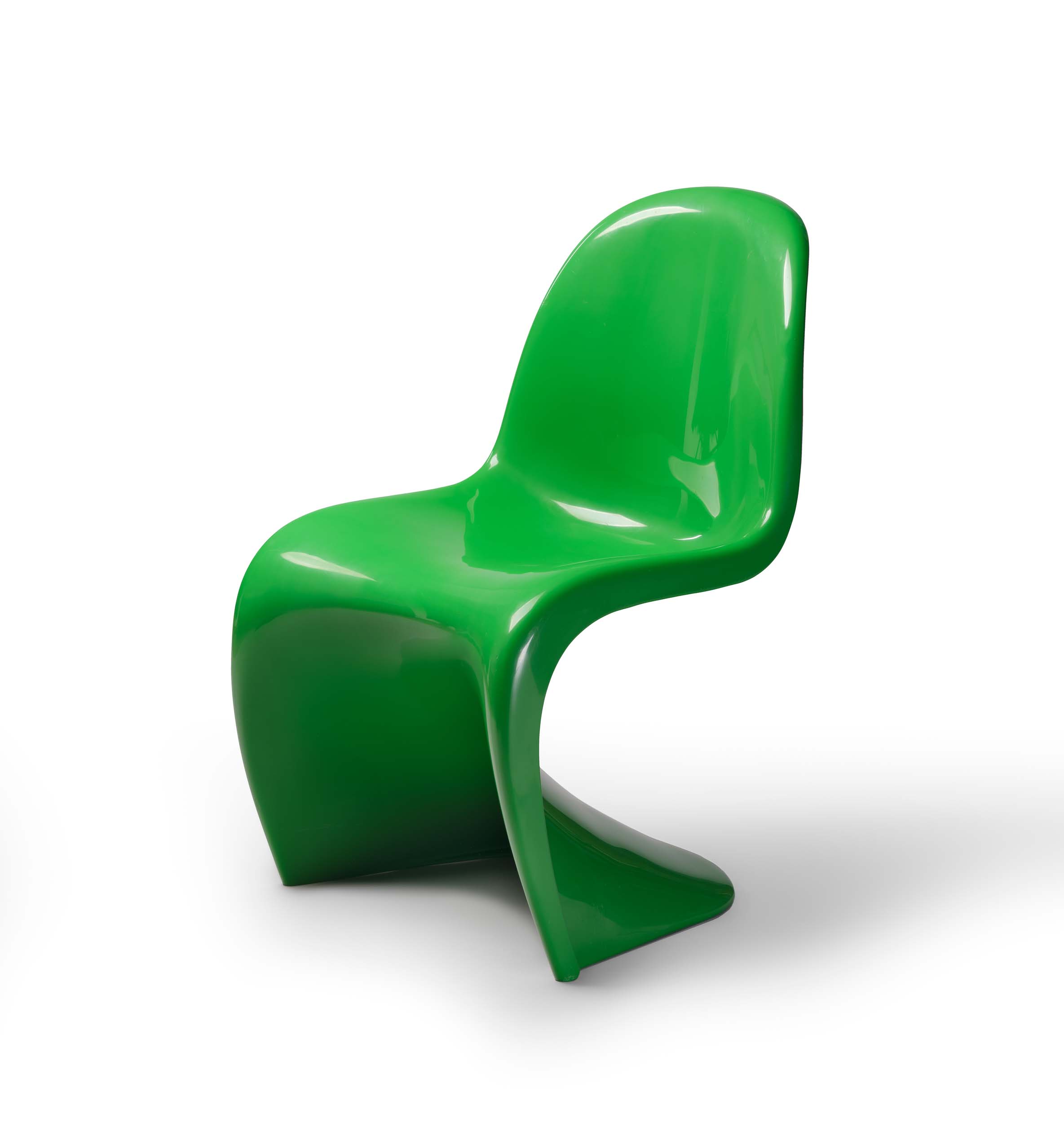
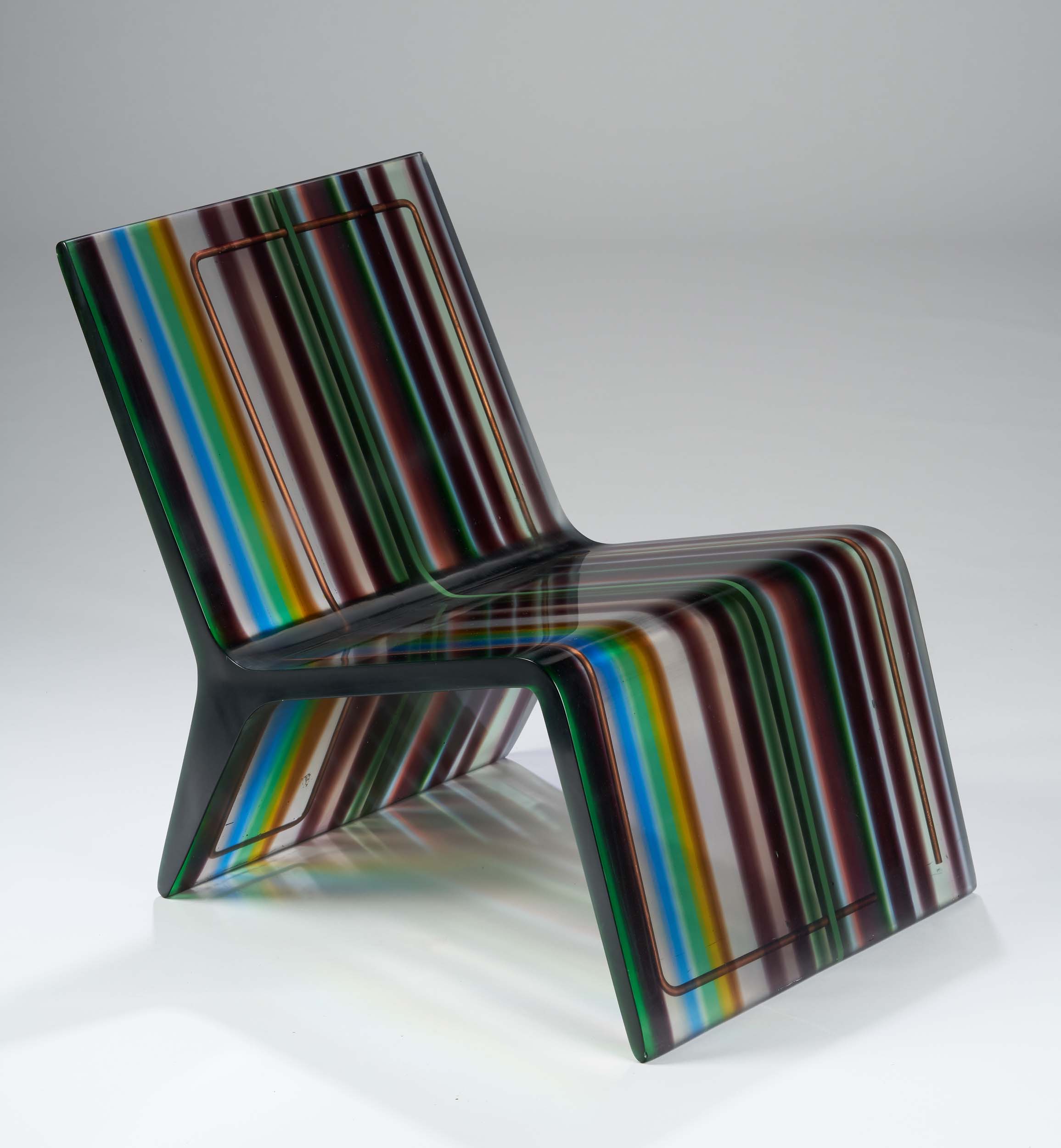
“With the reinstall, we really wanted to tell a trans-historical, cross-cultural story, allowing for greater connections between time and space,” said Mary-Dailey Desmarais, MMFA’s Director of the Curatorial Division. “We want to create something in which everyone could relate; revealing the ways design has an impact on our daily lives, which is why we’ve included all kinds of more ordinary objects, but that have over time, revolutionized the way we do things.”
Contemporary talents are also on view, including Hella Jongerius, Faye Toogood and Ionna Vautrin, as well as Indigenous designers such as Michael Massie, Audie Murray, and Caroline Monnet. Many of these works are new acquisitions.
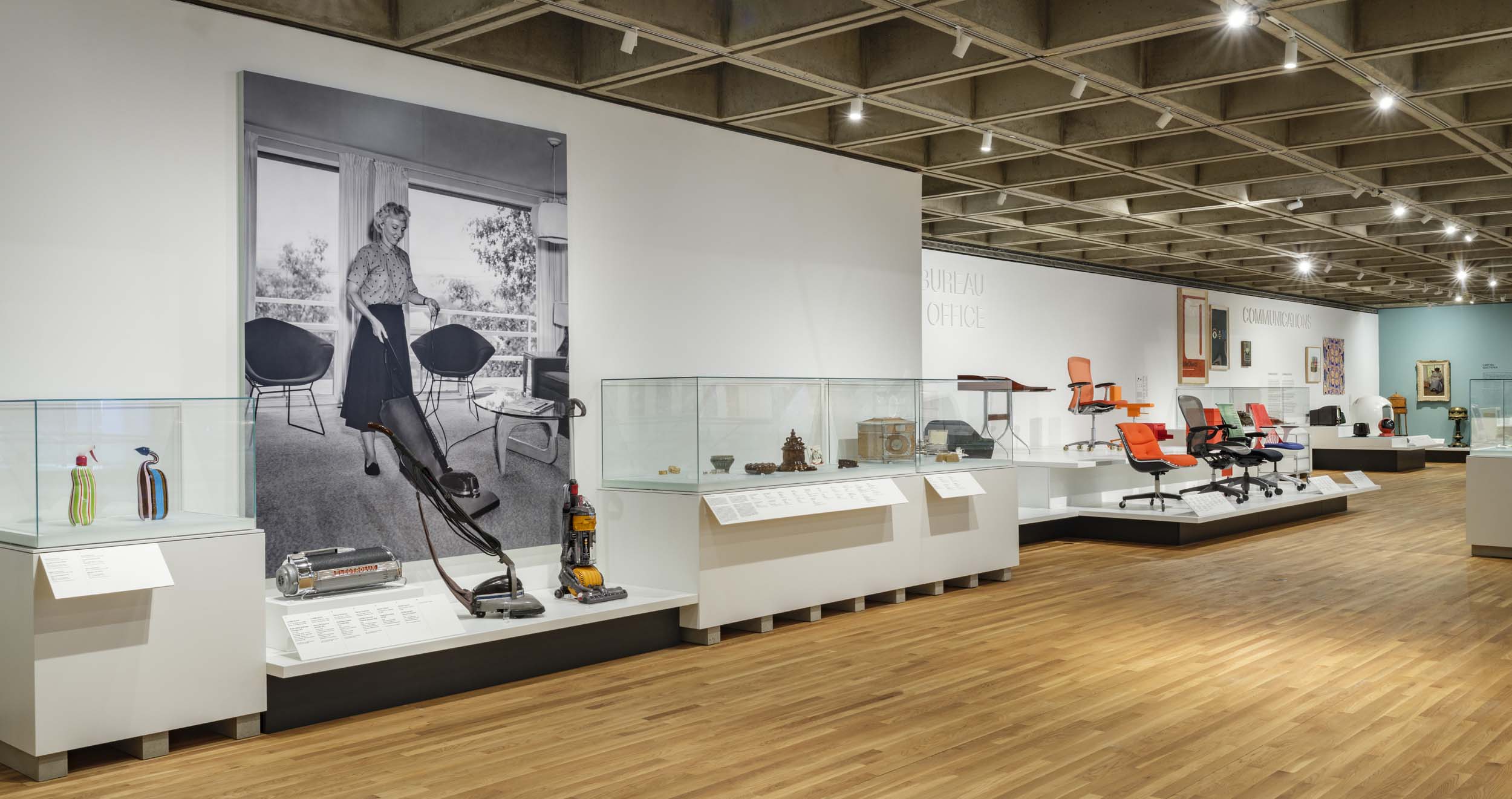
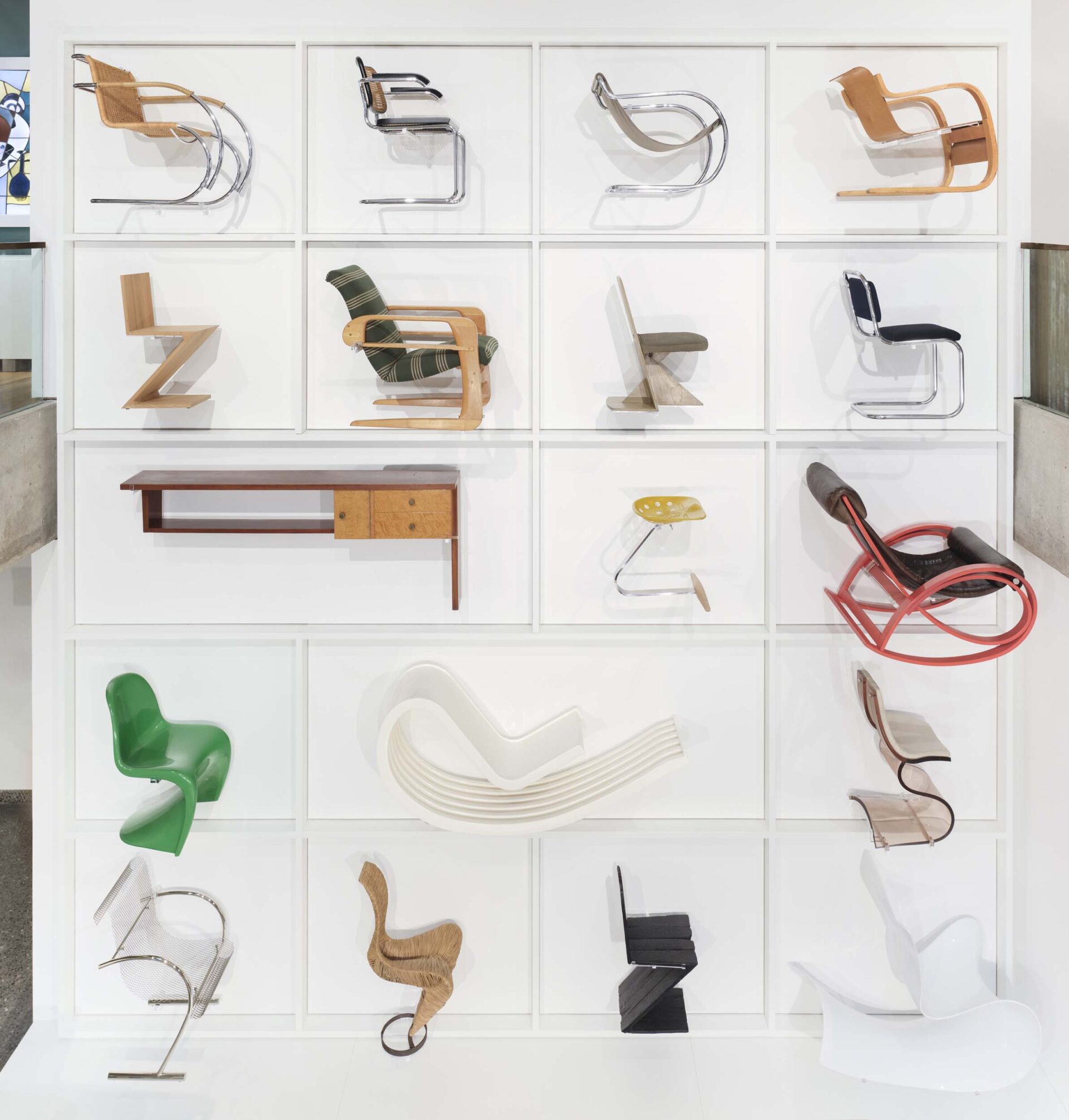
One effective strategy Gotlieb and Desmarais implemented was staging typological corollaries, showing the clear historical connections between the use of certain materials, processes, and aesthetic preoccupations. These include Phillipe Starck’s controversial W.W. stool presented with Andrea Branzi’s equally streamlined Furniture Ornament series developed two decades prior. A quintessential Art Nouveau Subway grill by Hector Guimard from 1900 is placed in front of an equally sinuous Hiawatha Meteor Chief Bicycle from 1950.
Perhaps the most striking vignette is the showcase of overly decorative, near unfunctional armchairs. Radical Italian designer Alessandro Mendini’s iconic Proust design, a semiotic riff on on elaborate historicist settees of the Victorian era, is placed next to a piece from that era: an elaborate Carlo Bugatti armchair of wood, parchment, brass, metal, and silk, circa 1895.
What these corollaries do as well—other than dismantle the hierarchies that often exist in design history—is bring lesser known Canadian designers into the fold. Quebecois designer Jacques S. Guillon’s Cord Chair is put in direct dialogue with Marcel Wander’s Knotted Chair, both developed based on the same inherent concept of harnessing the tensile strength of rope as an ergonomic element.
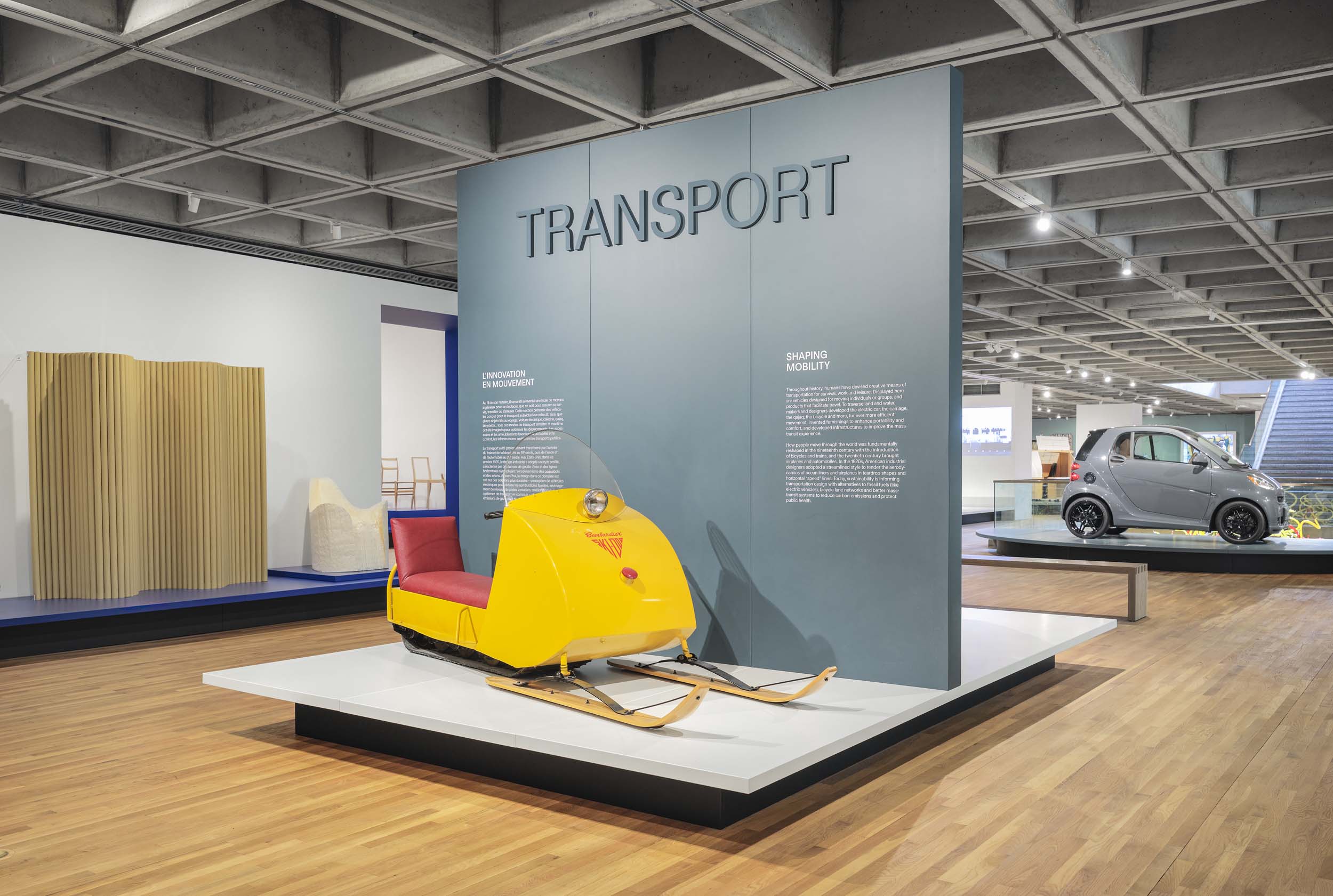
Canadian design is the star of the show in the Transportation section. Of note is Montreal-based Bombardier Transportation’s prototypical Ski-Doo snowmobile for 1961, the first of its kind. Gotlieb notes that it was initially developed as an emergency transport, reaching parts of the Canadian north inaccessible by car, but in the following decades became a recreational vehicle, spawning an entirely new sport. It’s situated alongside a 2021 reconstituted Inuit Qajaq “kayak” created by a group of students re-learning and implementing Indigenous craft traditions specific to the region.
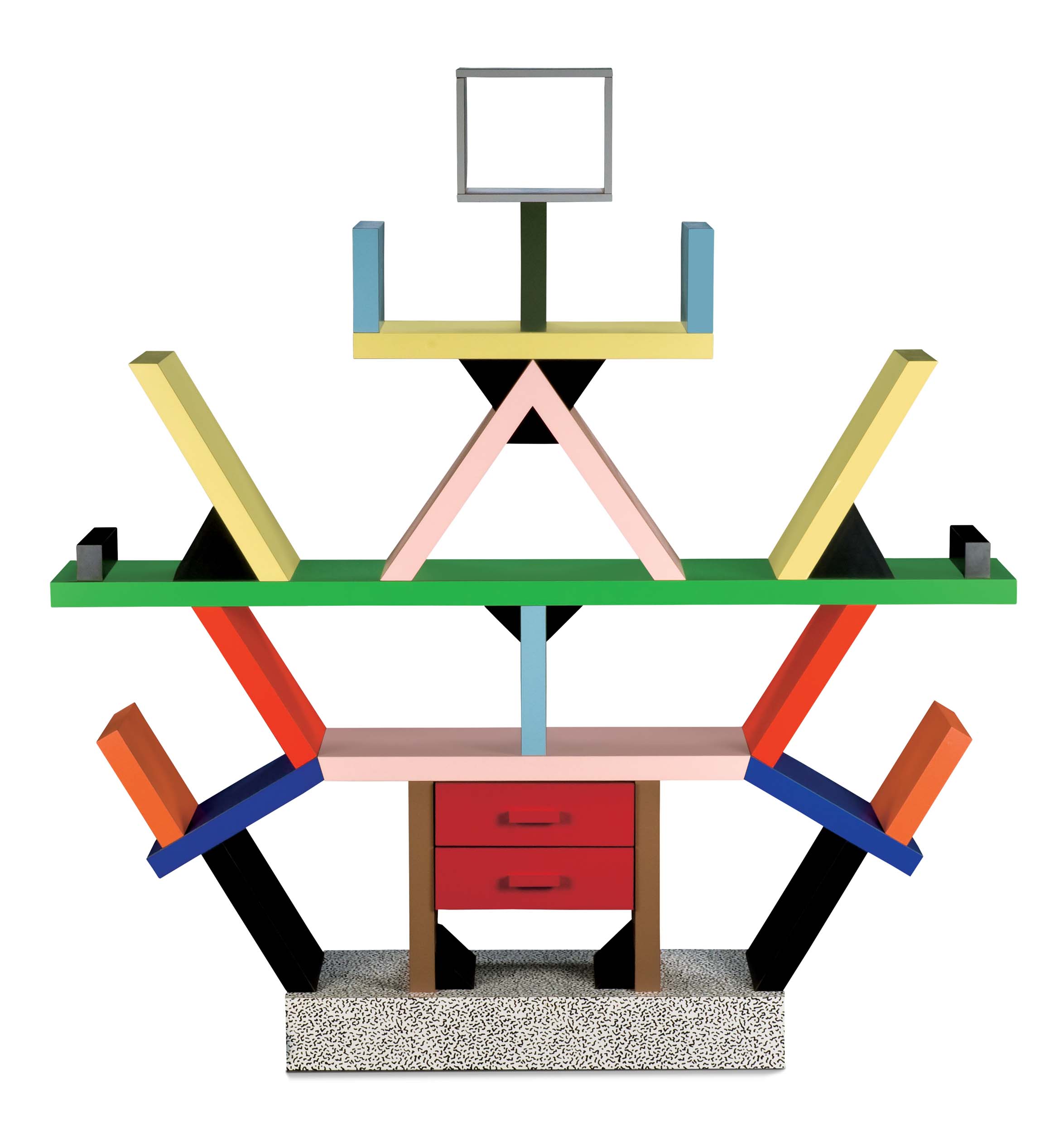
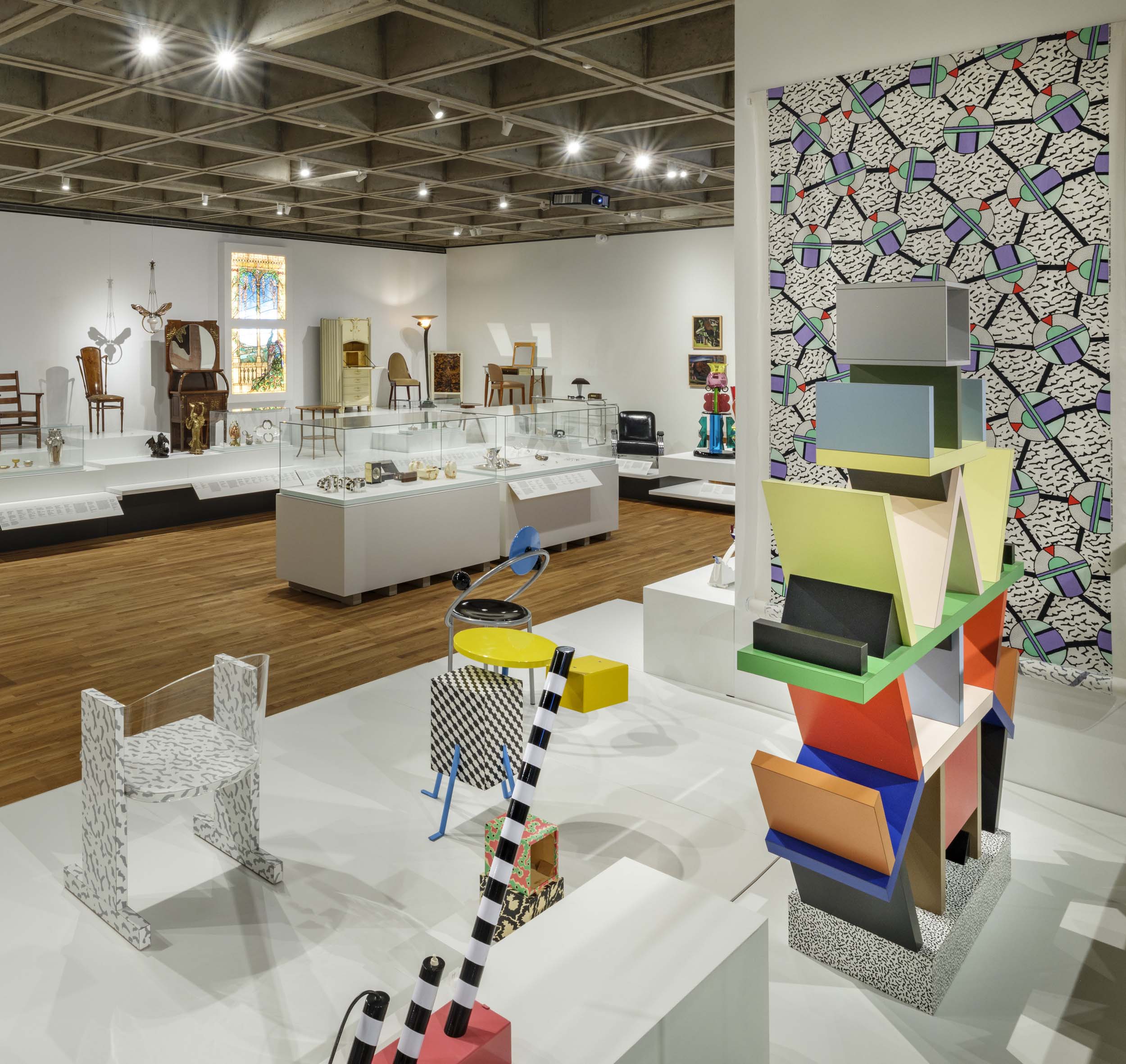
The collection strongly spotlights Montreal’s crop of contemporary, independent talents, and is also informed by them. Zoë Mowat, a multifaceted designer and DJ who cut her teeth here, is featured in the collection, particularly her 3D-printed porcelain Bol Trestle collection. She also sits on the MMFA’s acquisitions committee, one of the 400 designers and artists represented in this vast collection.