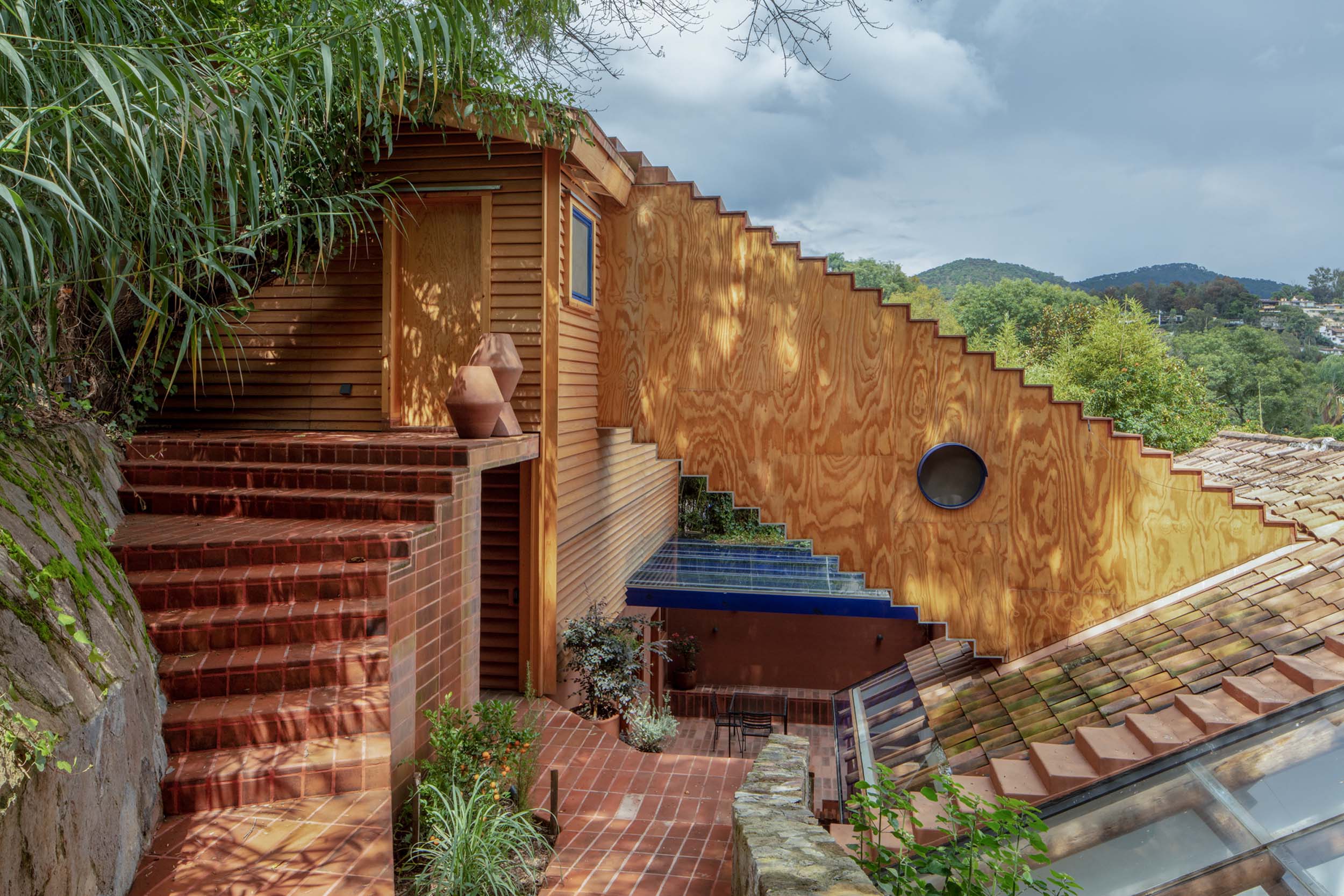
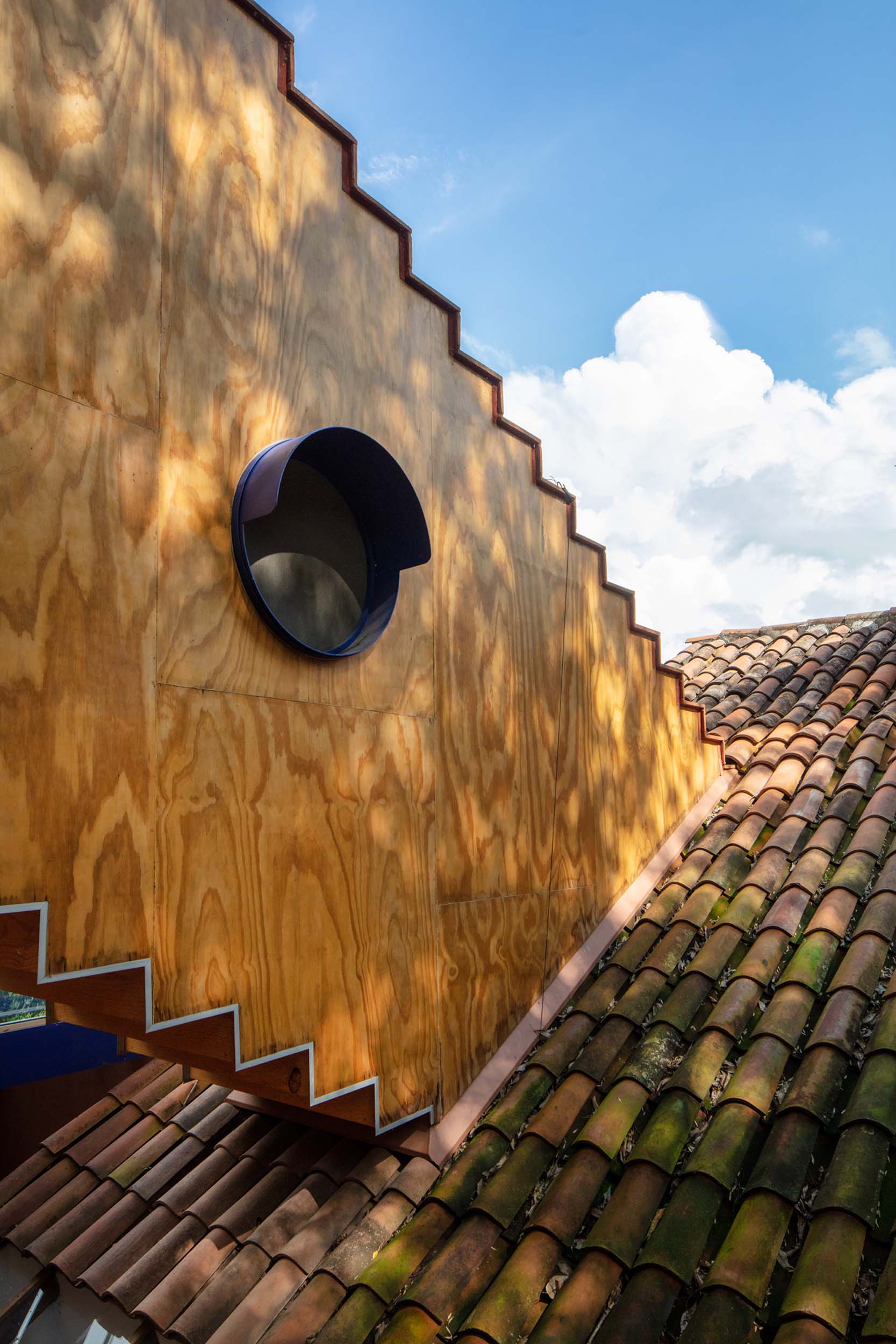
Along the edge of lake Valle de Bravo in Mexico, a staircase emerges from a sloped, terra-cotta roof of a home, extending upward to a nearby structure. The stairs, enclosed in wood and perforated with a porthole, paint a playful picture amidst the mountainous backdrop. Mexico City–based firm Pedro&Juana, run by Mecky Reuss and Ana Paula Ruiz Galindo, added the staircase and rear addition for a client in need of more space. The design both coheres a plan that engages the old and new structure and pushes for the use of more wood construction in Mexico.
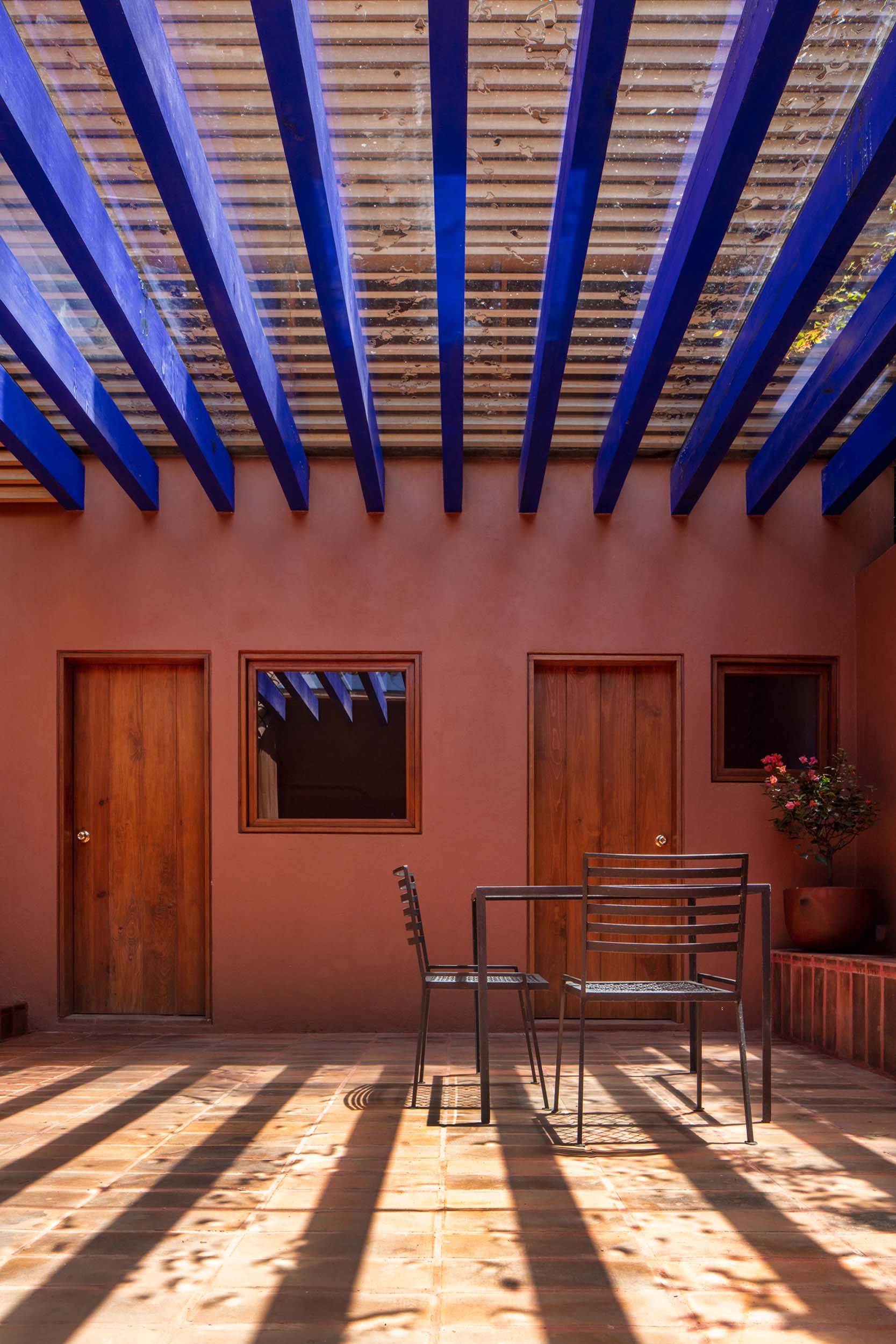
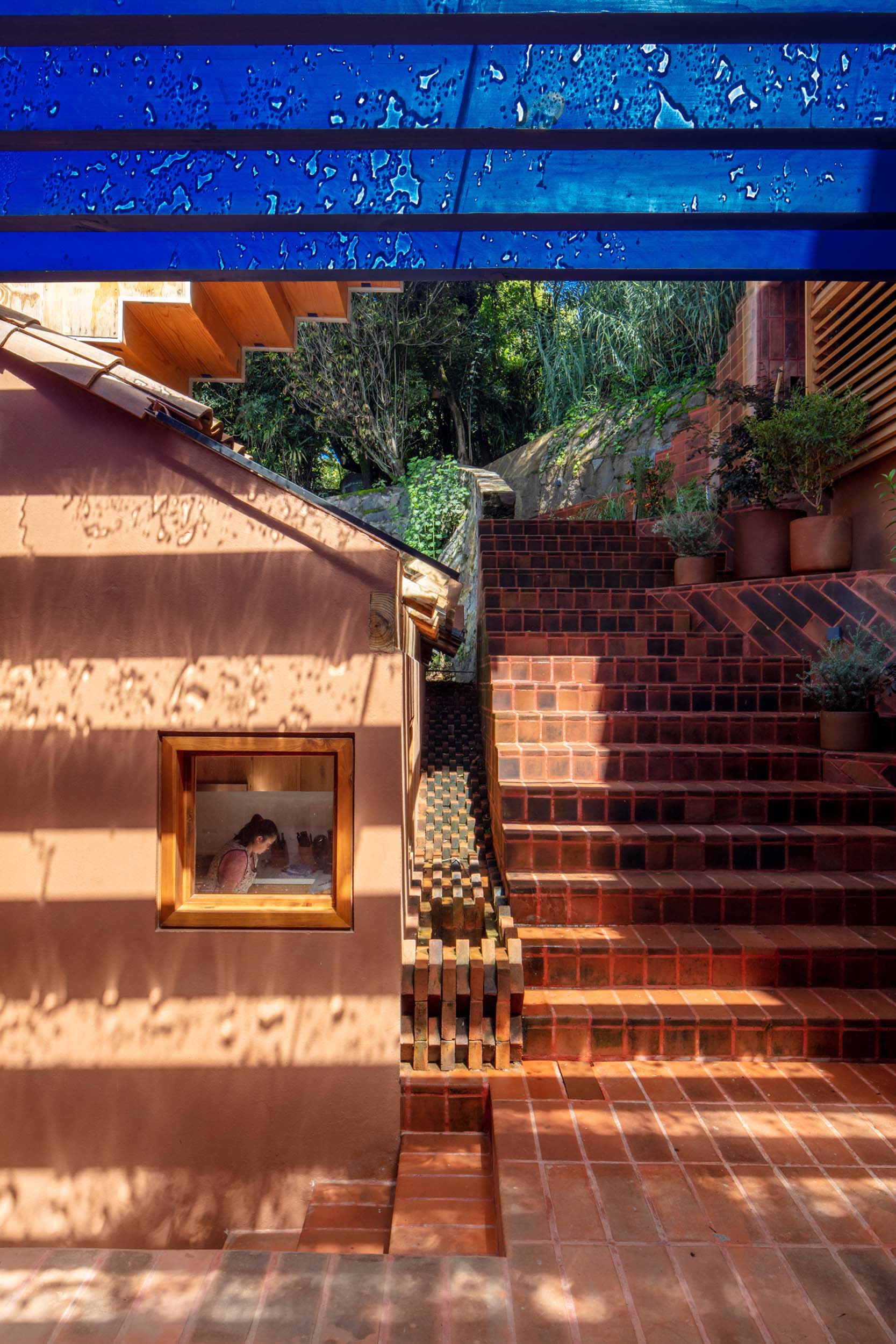
In the original home, designed by José Iturbe, the stairs were a prominent feature due to its location on a slope that rises up from the waterline of the mountains. Pedro&Juana took up this motif of the pre-existing structure to create access to the new 2-story addition, which is located behind the home and takes advantage of the overlooked, empty space. The stairs and tunnel extend the original elements of the home while physically expanding the space, and helping to orient a new courtyard between the structures.
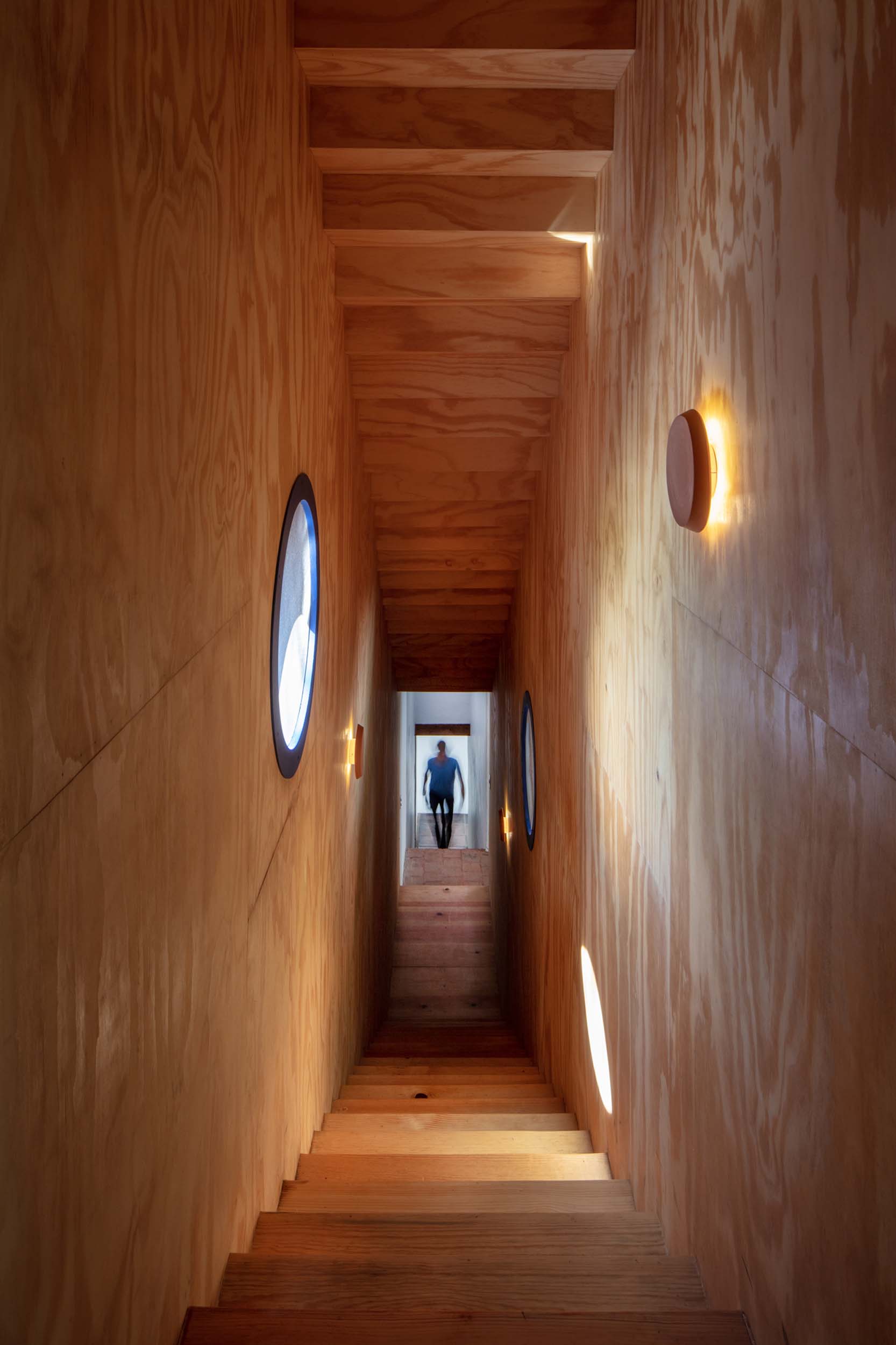
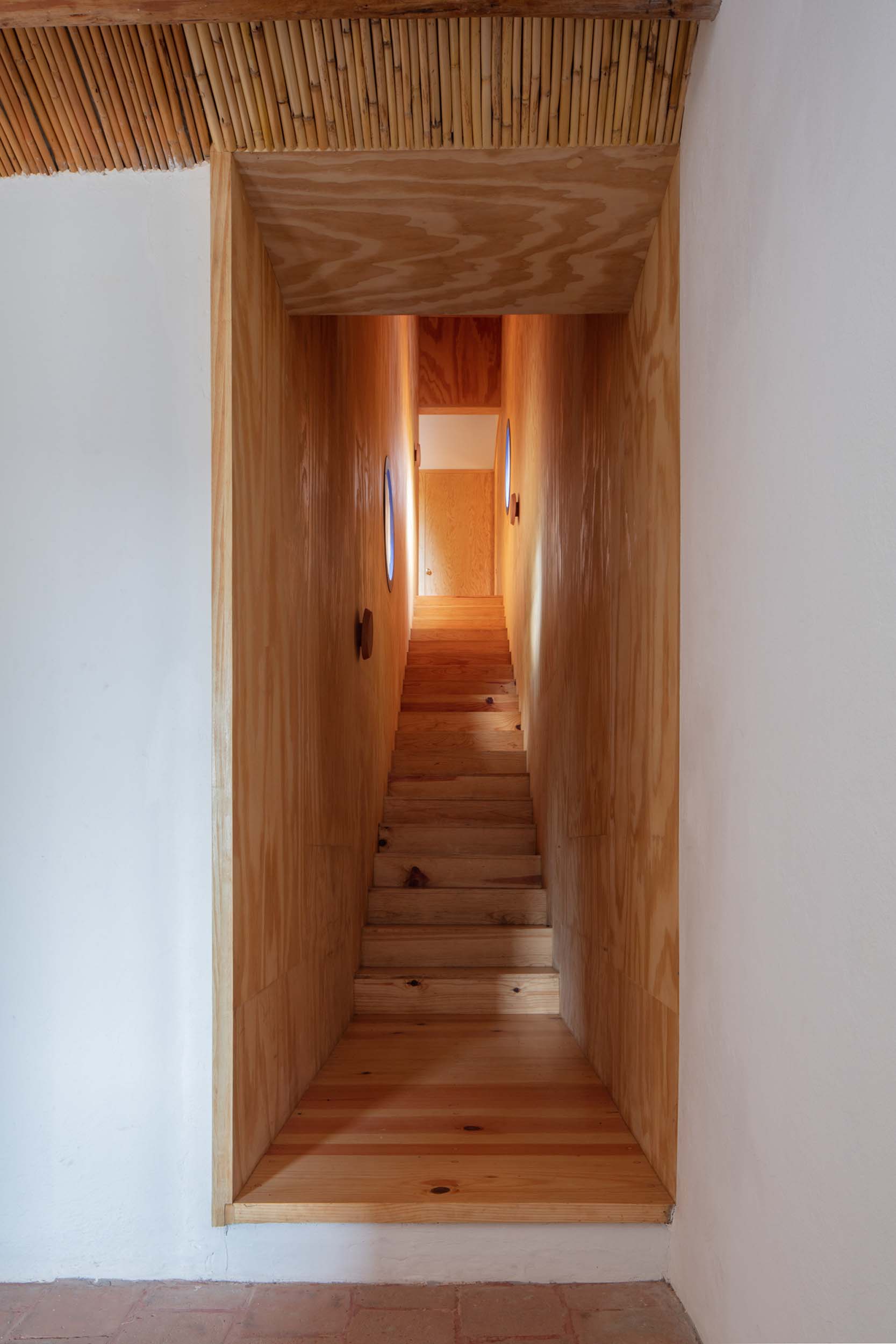
The new structure itself houses a bedroom, two bathrooms, and a versatile kitchen-slash-studio-slash-bedroom. For the interiors, the architects once again looked to wood. The firm is part of La Liga de la Madera, an initiative created by architects to promote more wood construction in Mexico in place of the more dominantly used concrete.
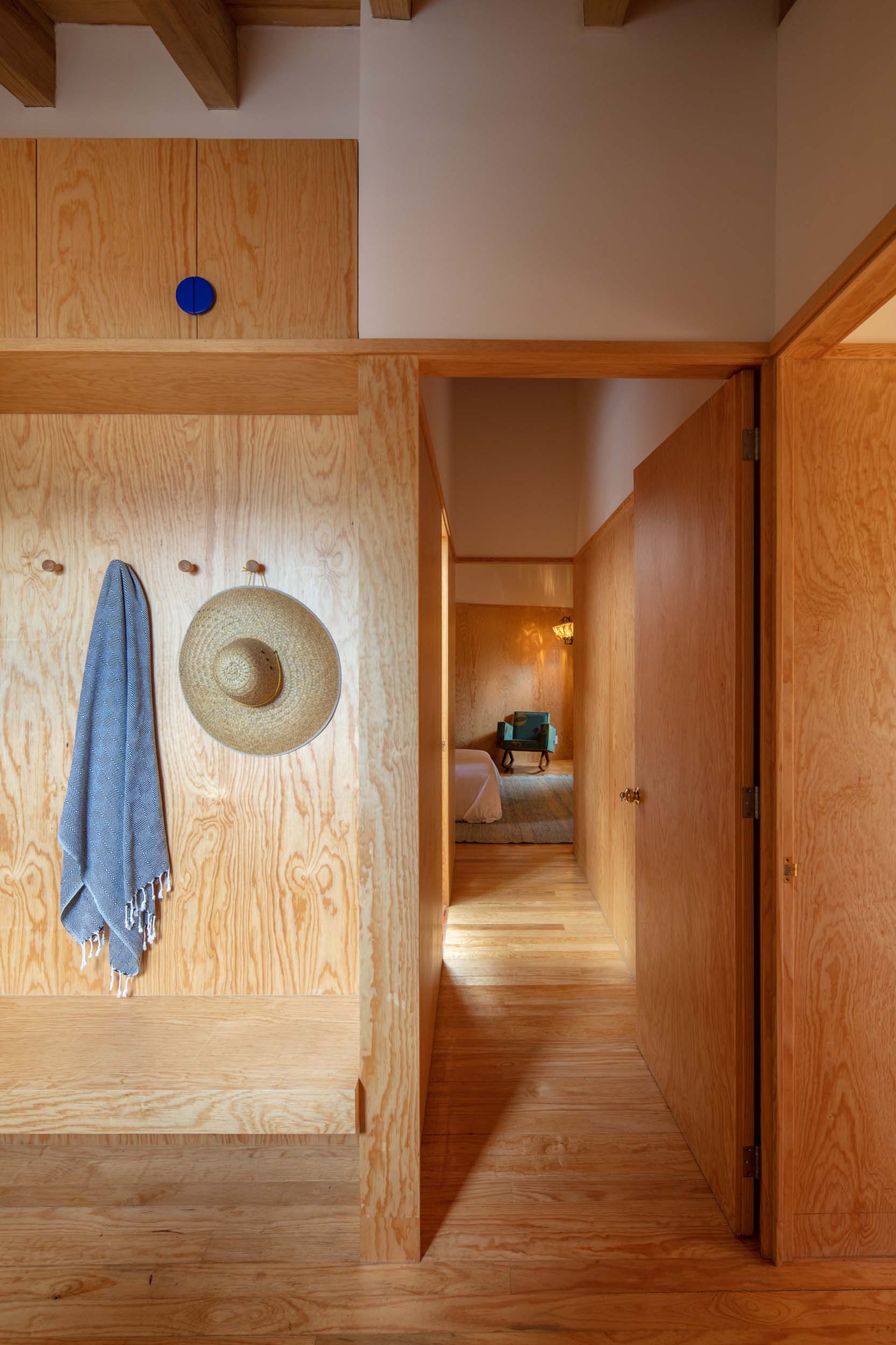
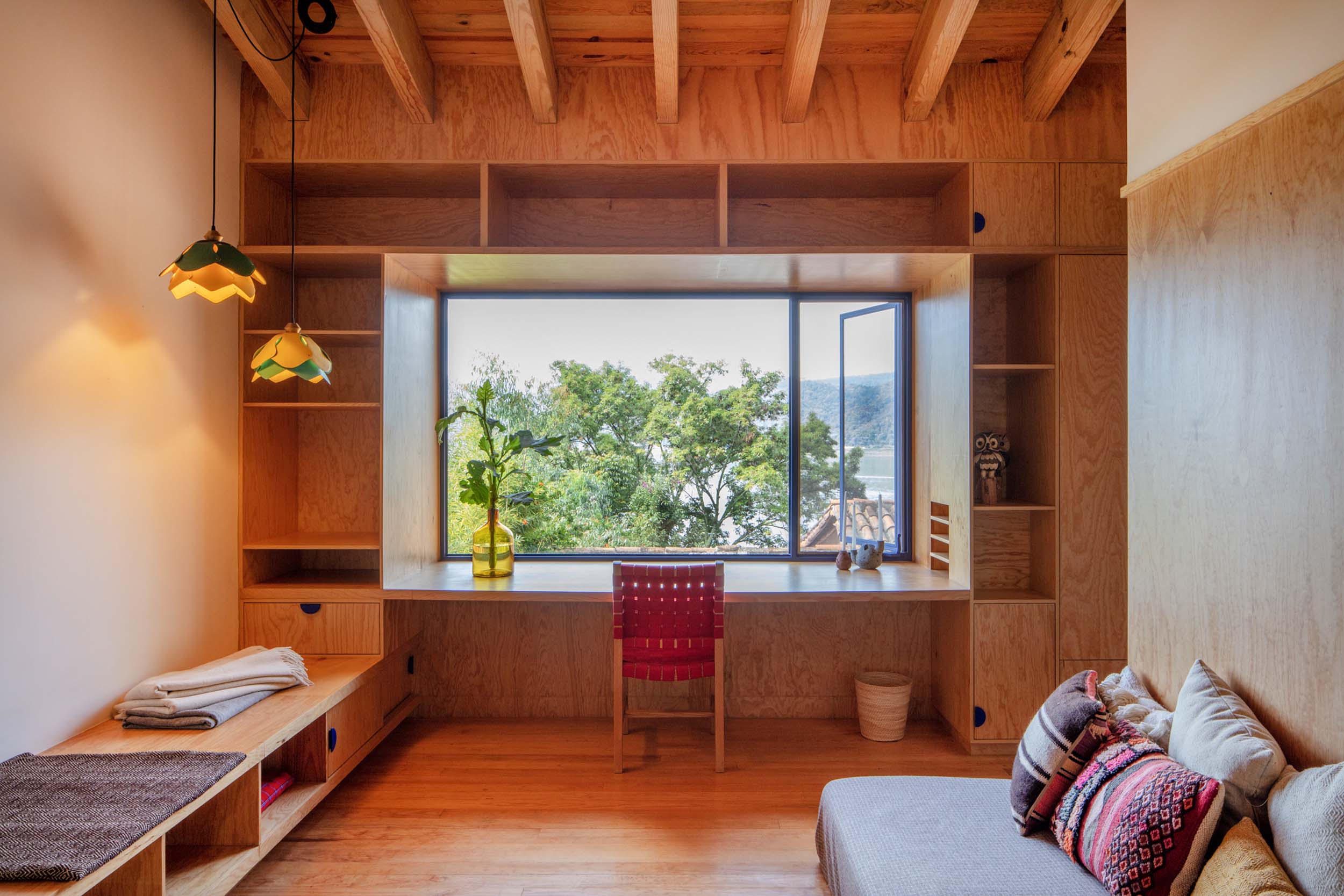
Most of the living spaces are contained to the upper floor of the annex. A small kitchen continues the wood material palette, as the counter extends to a bench that joins up with floor-to-ceiling millwork. The millwork creates shelves as well as integrates a built-in desk to overlook the picture window. Blue accents from doorframes to hardware brighten the space. The color was taken from the blue rafters in the pre-existing home. The space extends out onto a small terrace.
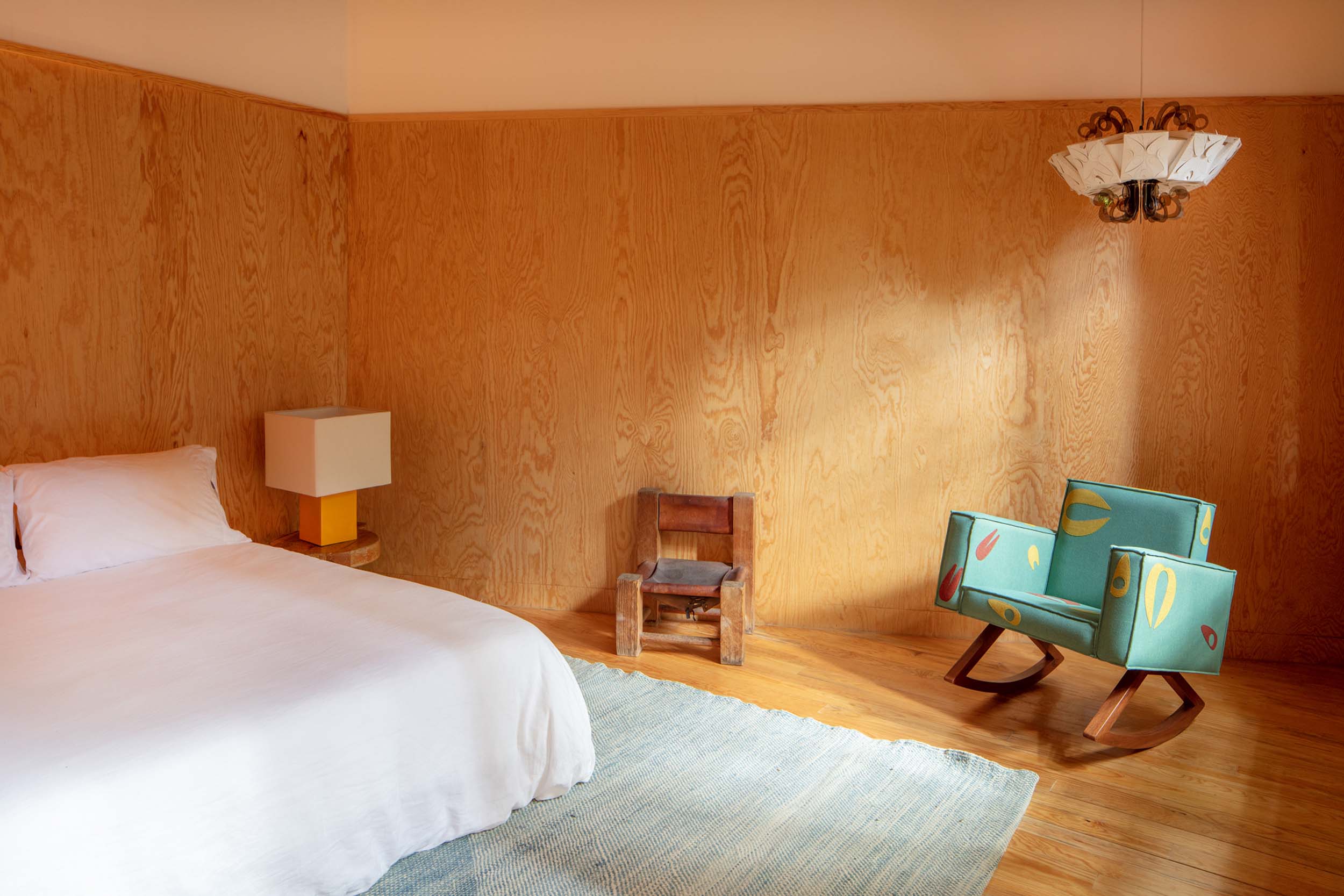
In the bedroom, the same wood lines the walls providing a neutral yet warm backdrop for the funky furnishings and fixtures. The architects designed much of the furniture, landscape, and tiles in the project, including in the bathroom.
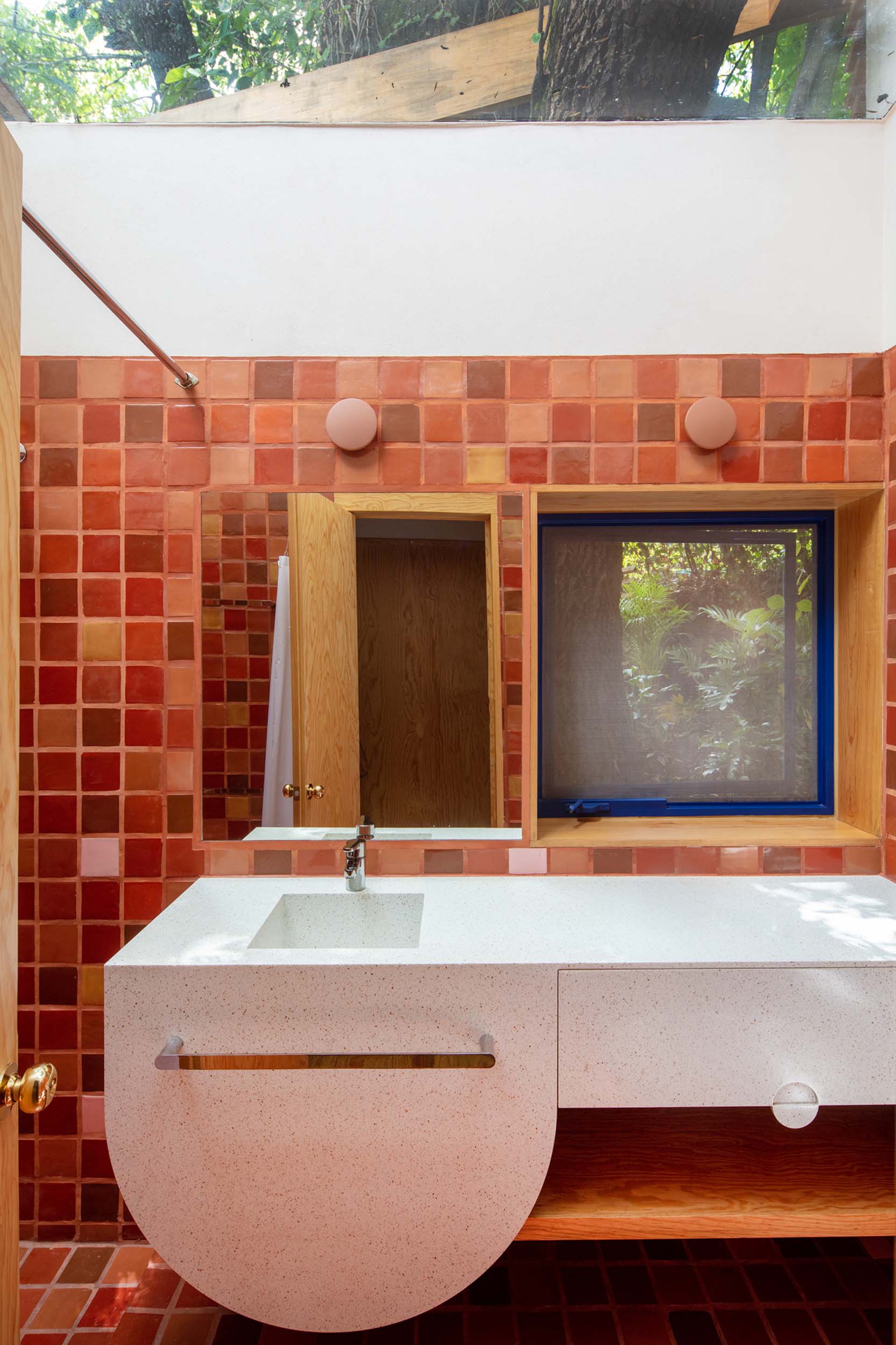
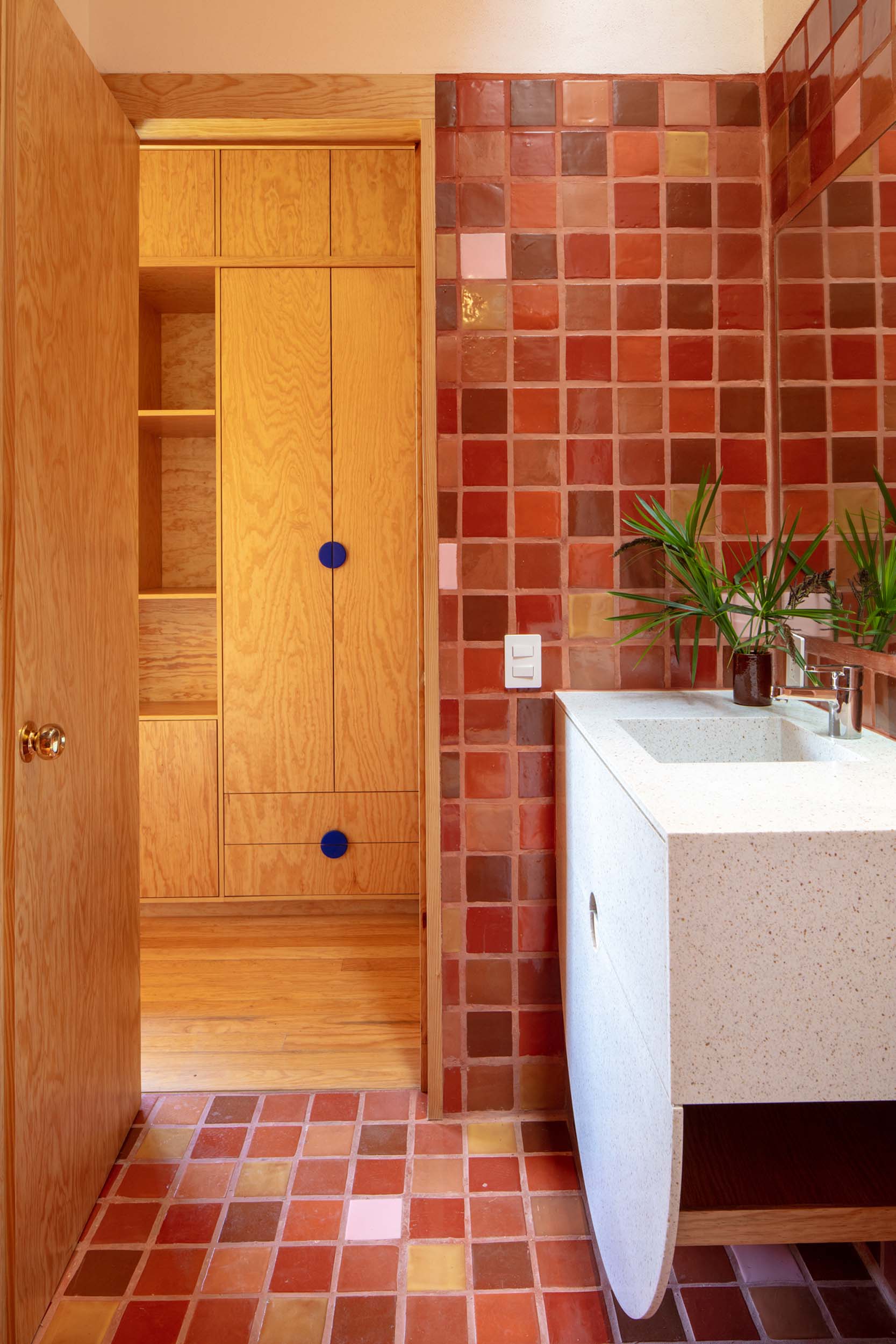
Here the architects designed custom tiles whose terra-cotta and brown hues recall the exterior bricks and roofing. The warm base is paired with playful features, a curving vanity, more bright blue frames, and glazing that take advantage of the annex’s perch higher up among the trees.
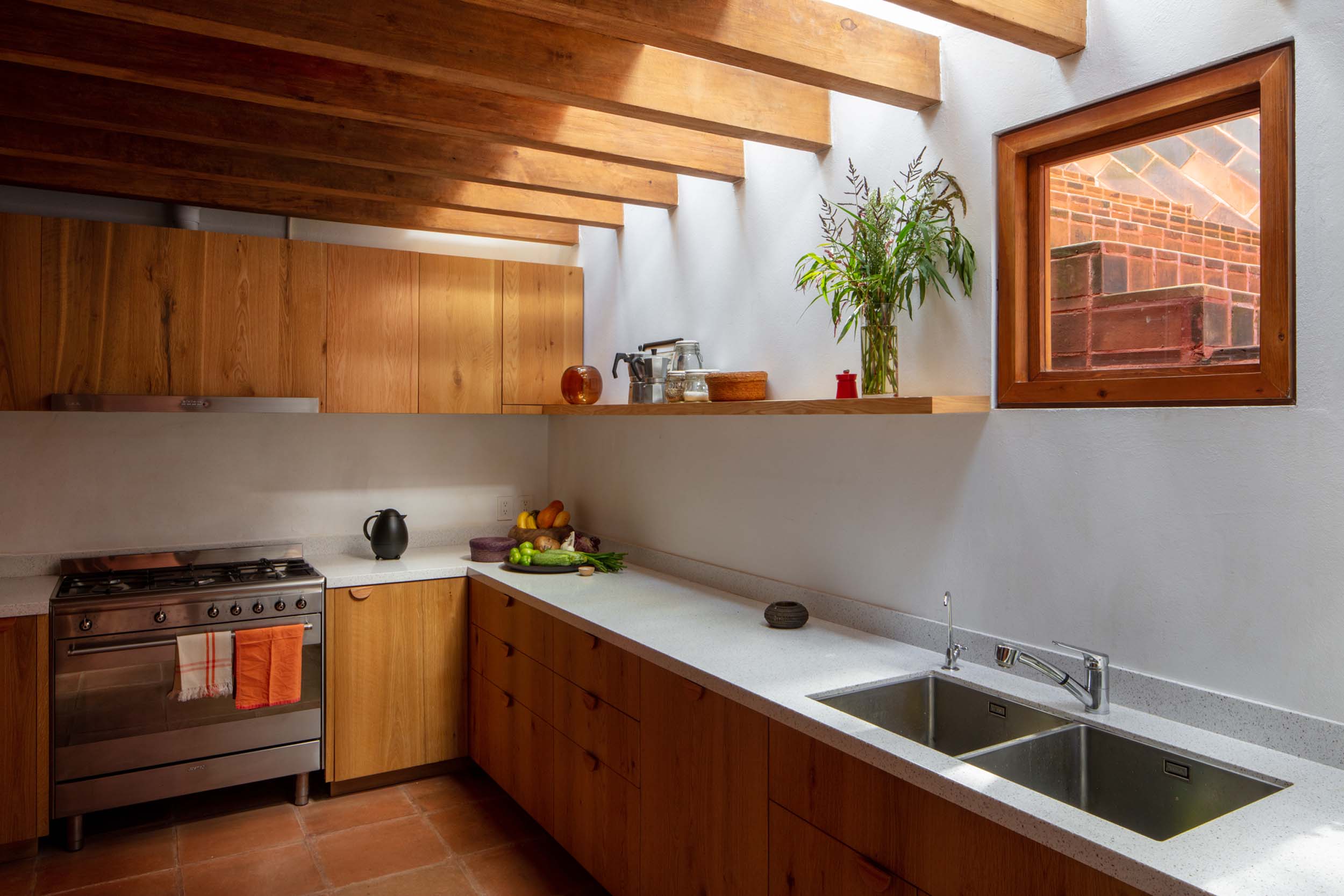
While the architects largely left the original structure untouched, the firm did redesign the kitchen. Minimal decor and a restrained palette dominate the new space, given texture thanks to a series of wooden rafters, another motif that runs across both new and old structures. It stitches the builds together, much like the use of wood, the tunneled staircase, and careful weaving of sloping planes.