
House of Creation is an architecture and design studio run by Oda Olafsrud out of Oslo, Norway. Studio Tenev is an architecture firm operated by Daniel Tenev seven hours outside of Oslo in Bergen. Each are distinct, independent offices, united by an aesthetic vision for calm, sensible spaces. But they occasionally tackle projects together when the task is large enough. When Laserlab, a skincare clinic in Oslo, needed a new 508-square-foot space within four months, the two teams decided two is better than one.
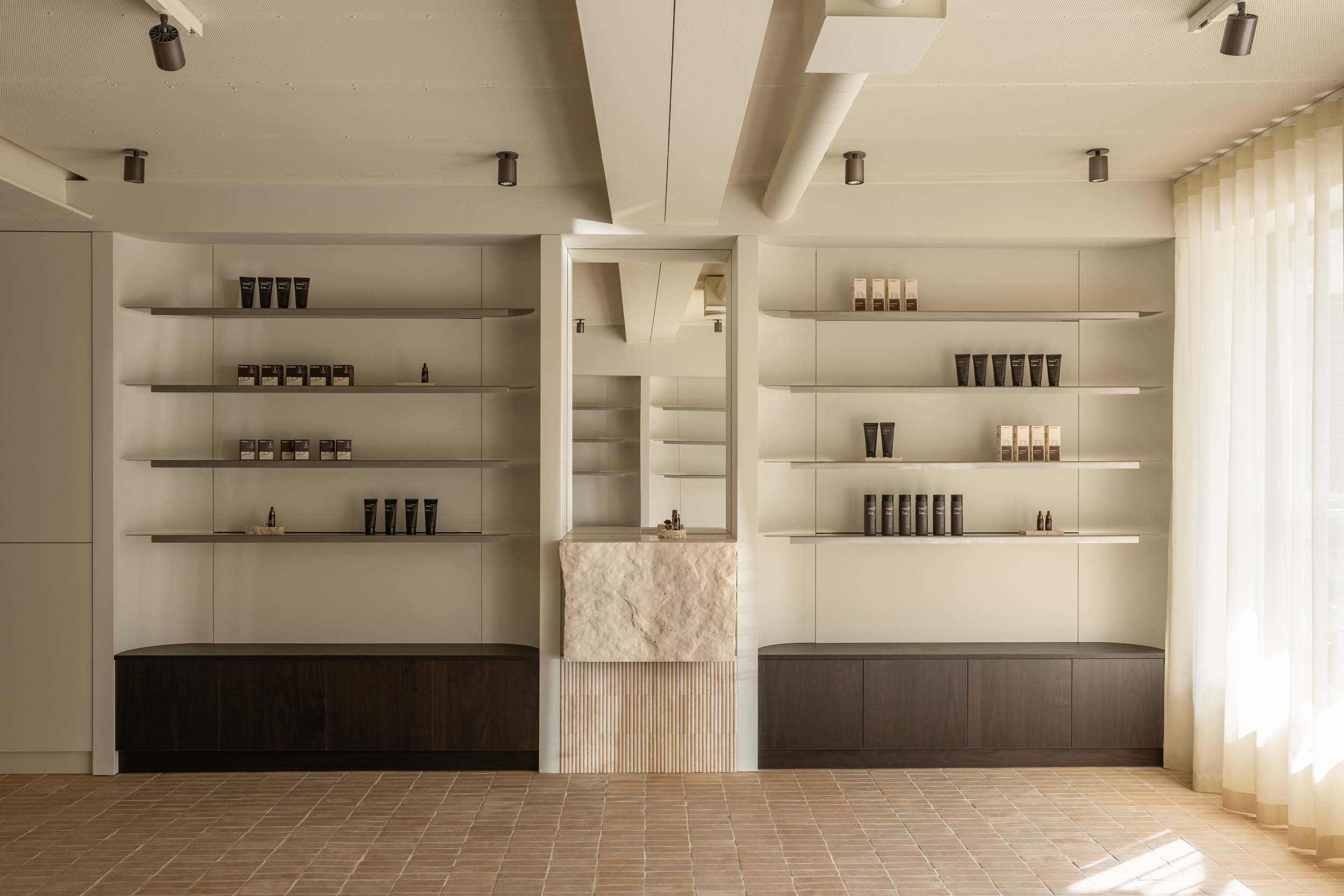
Laserlab is a skincare clinic looking to do things differently. The process doesn’t use any needles, favoring lasers as a way to rejuvenate the skin. In other words, they’re attempting to “make a new way forward for beauty,” Olafsrud told AN Interior. “It’s more affordable, a lower threshold to step into and has a drop-in type of mentality instead of being a very rigid white, and sterile space.”

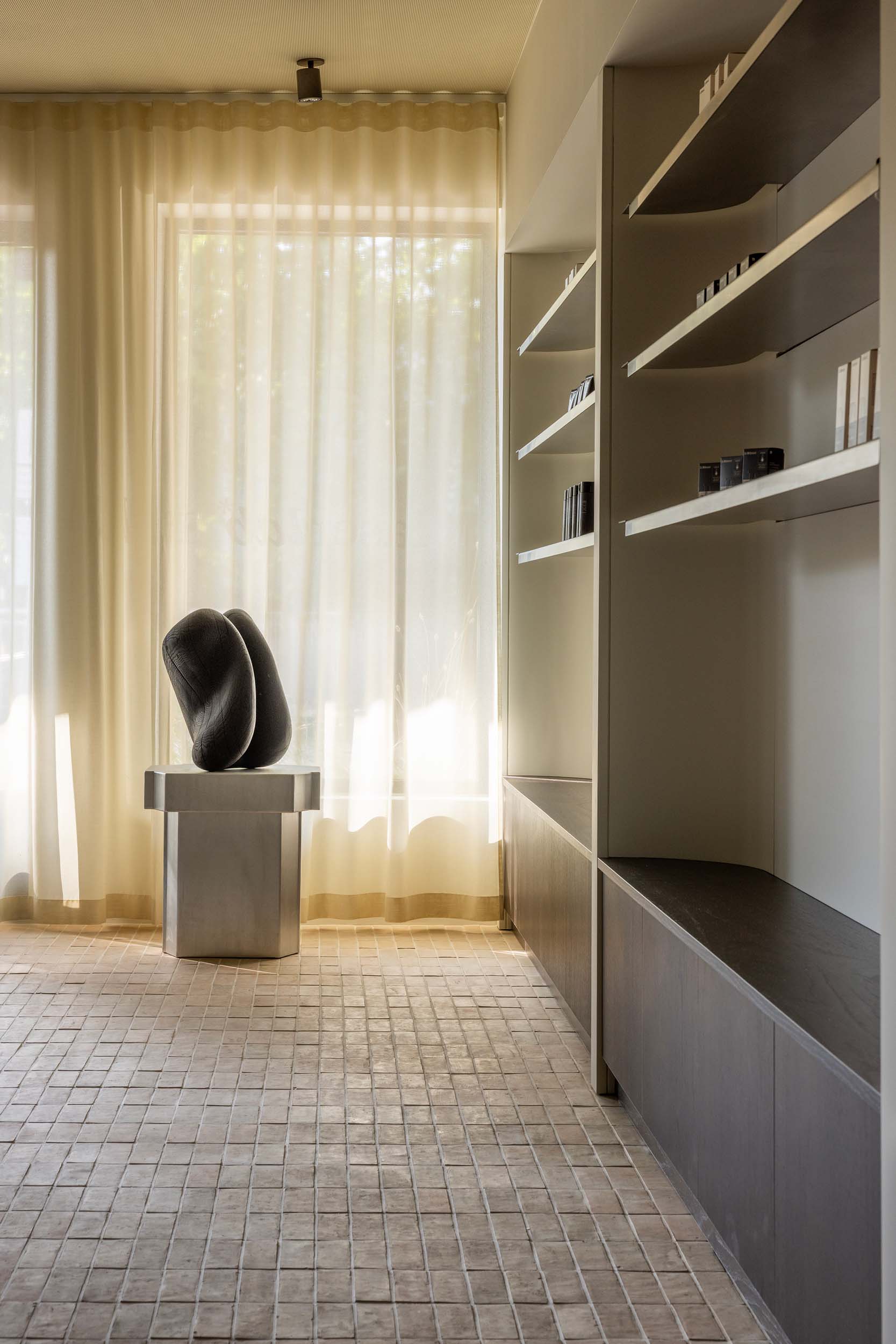
It follows that the design for the more accessible clinic should be open and inviting. The teams followed in Laserlab’s footsteps and did away with conventional clinic typologies that are cold or closed off an upper floor. Instead, the space, located on a lively street in the city, takes advantage of its public presence. The design organizes the entry as a showroom of sorts, where it operates as the reception and display of skincare products, opening the space up as part of the city’s urban fabric.
The architects opted for natural materials to extend a gesture of invitation. Terra-cotta makes up the flooring. Walls, shelving, and fixtures complement it with wood, stone, and steel. The color palette is thus a neutral yet soft spin on clinic interiors. Cream walls take the place of stark white.
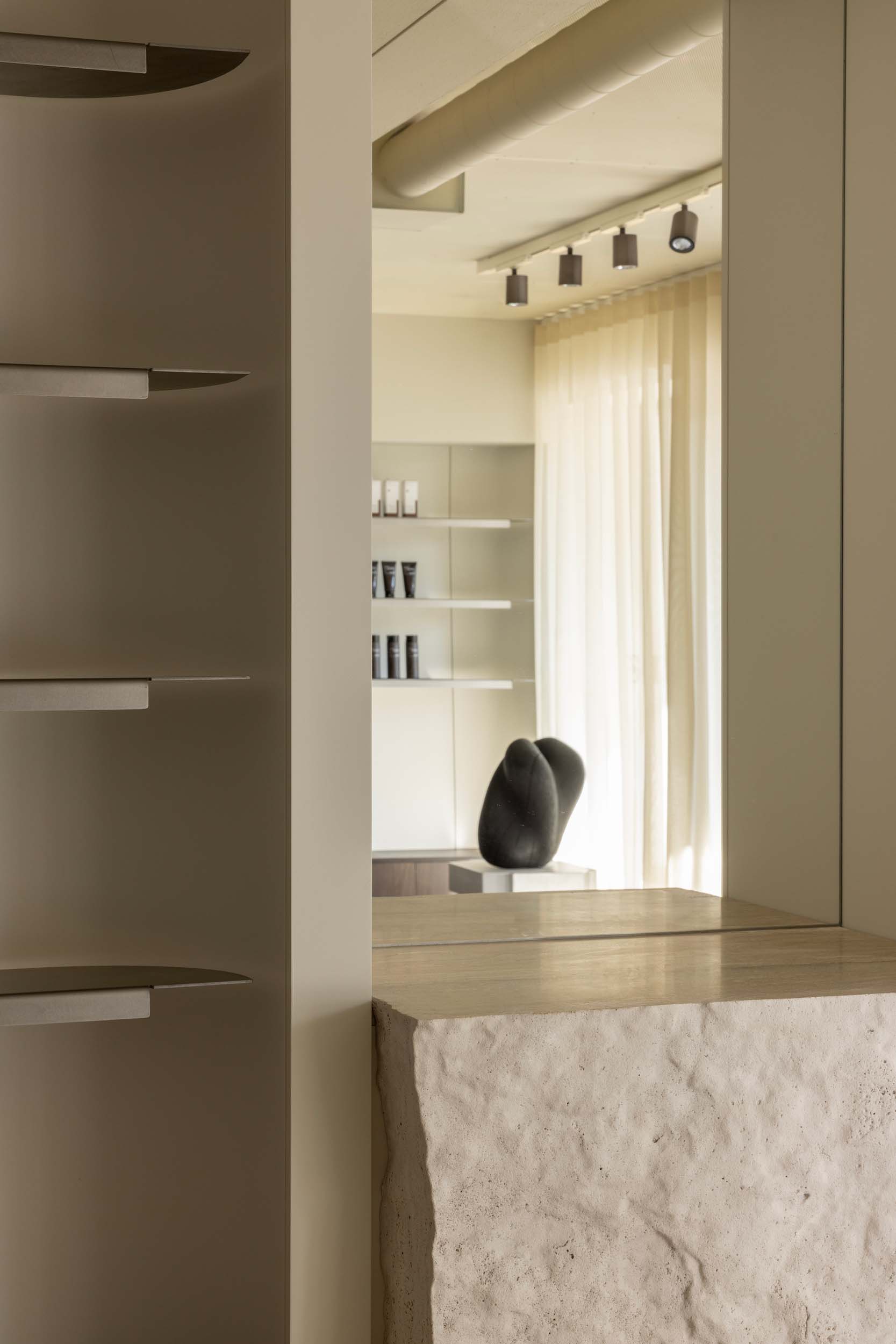
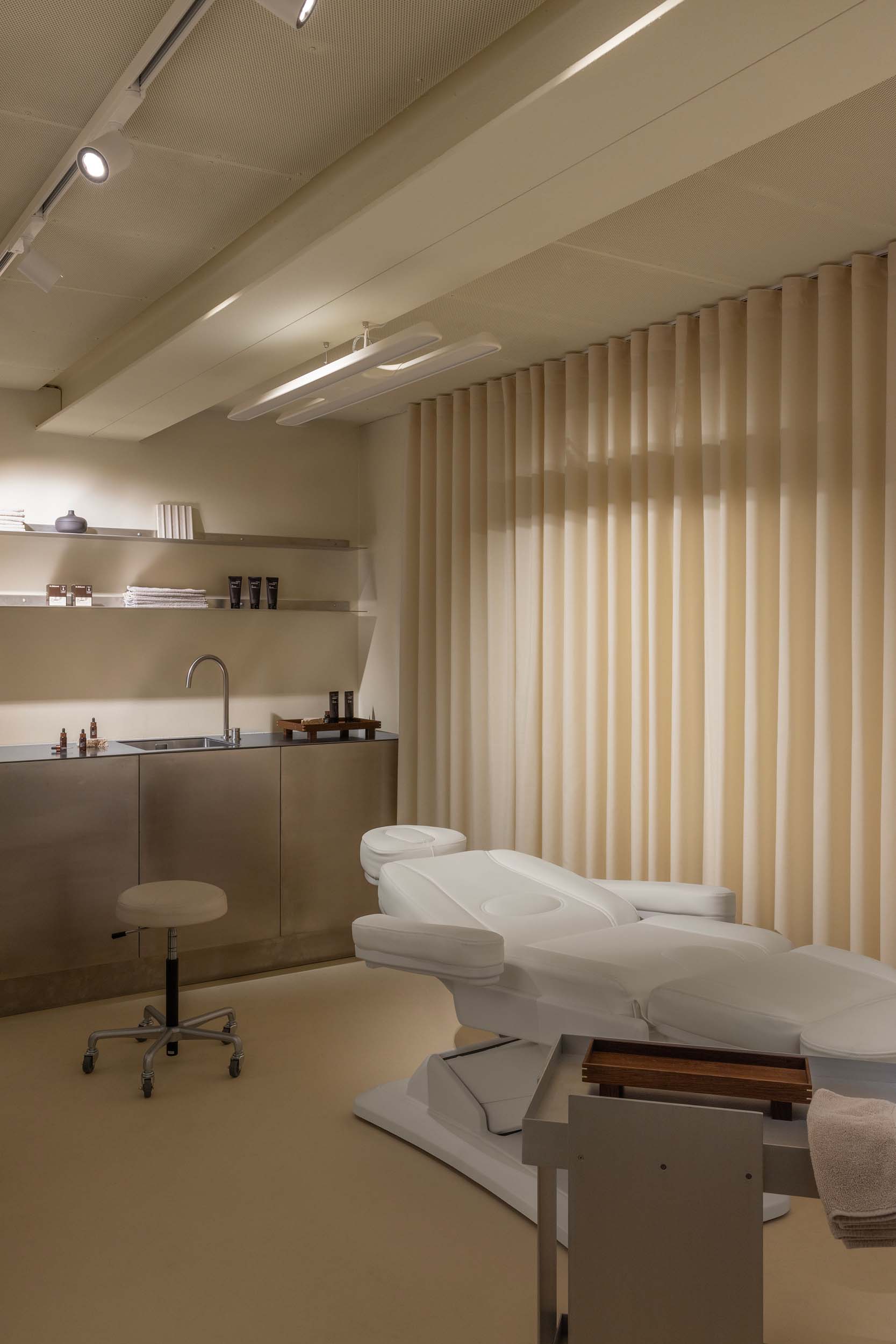
To round out the accessible space, the duo also eliminated sharp angles. “Early on in the design concept we introduced inverted curves,” said Tenev. “It brings softness to the space. We didn’t want to have a lot of angles, because it’s a small space. We wanted light to smooth out and create soft edges.”
The curves make up the many bespoke elements of the project, including the reception stone counter. Heavy and sculptural, the counter is clad on its sides with fluted tiles, broken up by irregular curves that defy its rectilinear volume. The counter’s inverted curves help create flow within the space as well as store items and integrate safety measures for handling money.
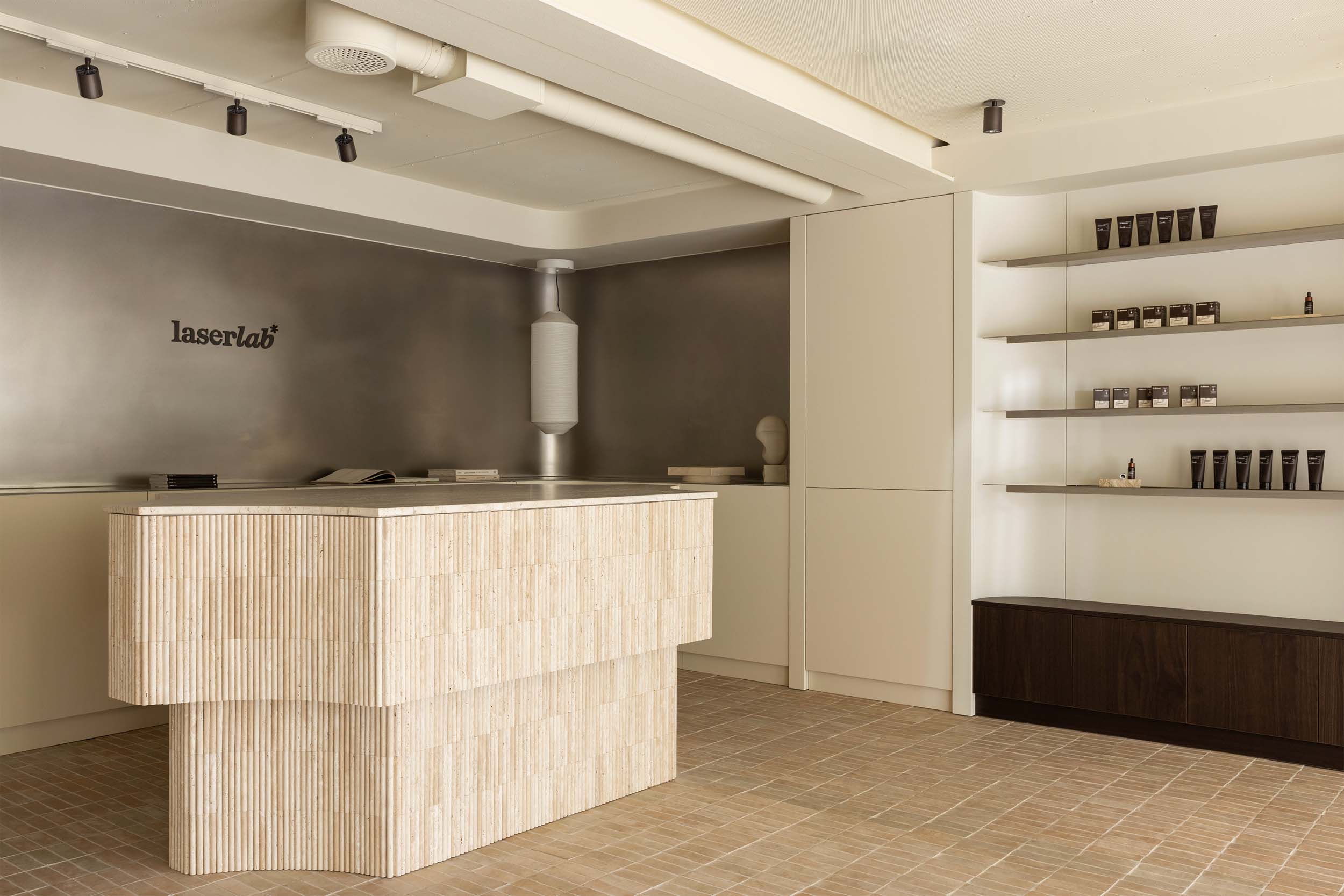
More curves are found along the walls where the team designed precise product displays. The niches that hold shelving softly round around benches with more built-in storage and mirrors and scones take up circular and squiggly forms.
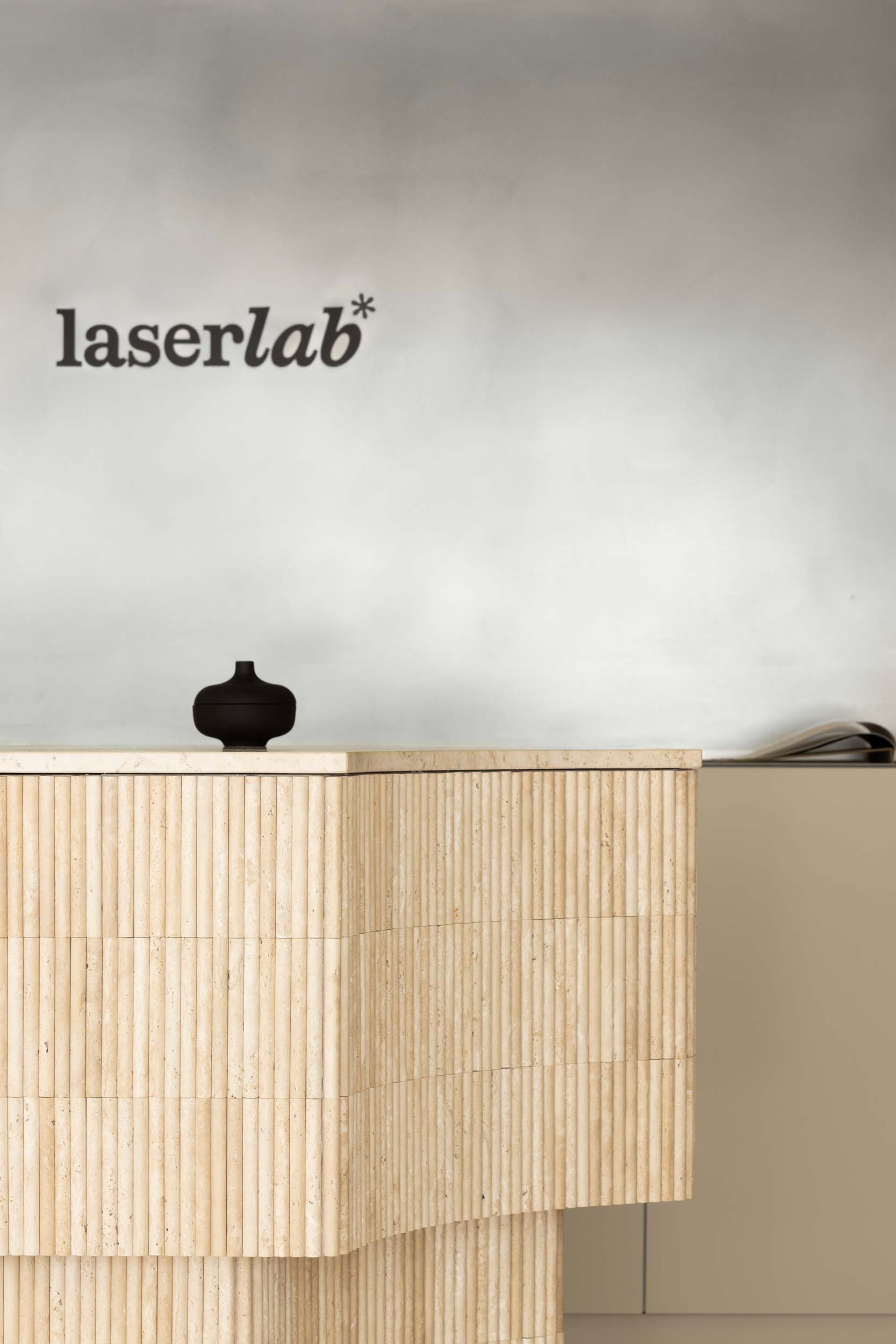
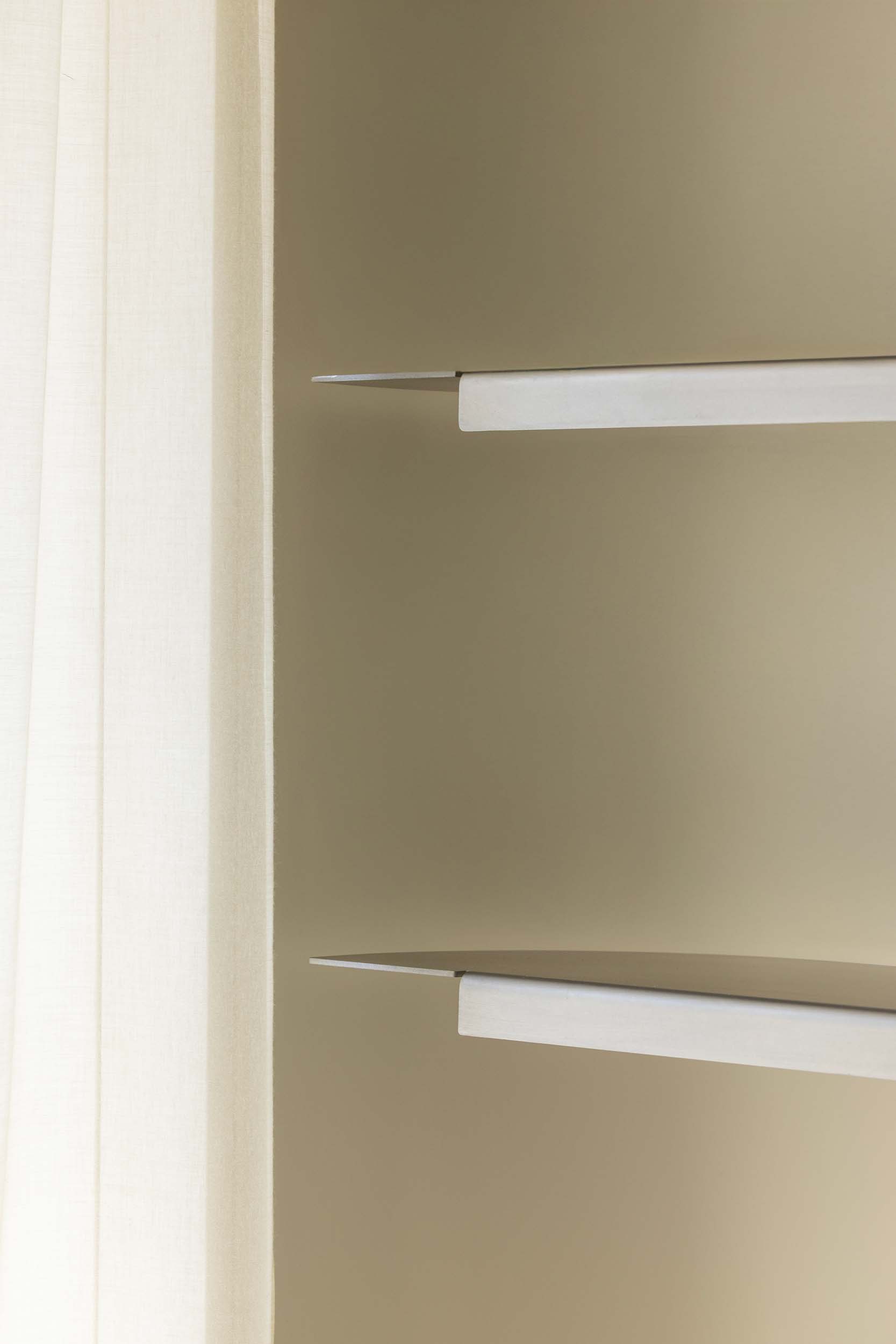
“Each piece is studied individually quite a lot, I would say,” continued Tenev. “Working from two cities and two offices, we can study each thing in the project at the same time and discuss it.” Highly detailed, materially exacting design is owed to the collaborative approach—and it’s all the better for it.