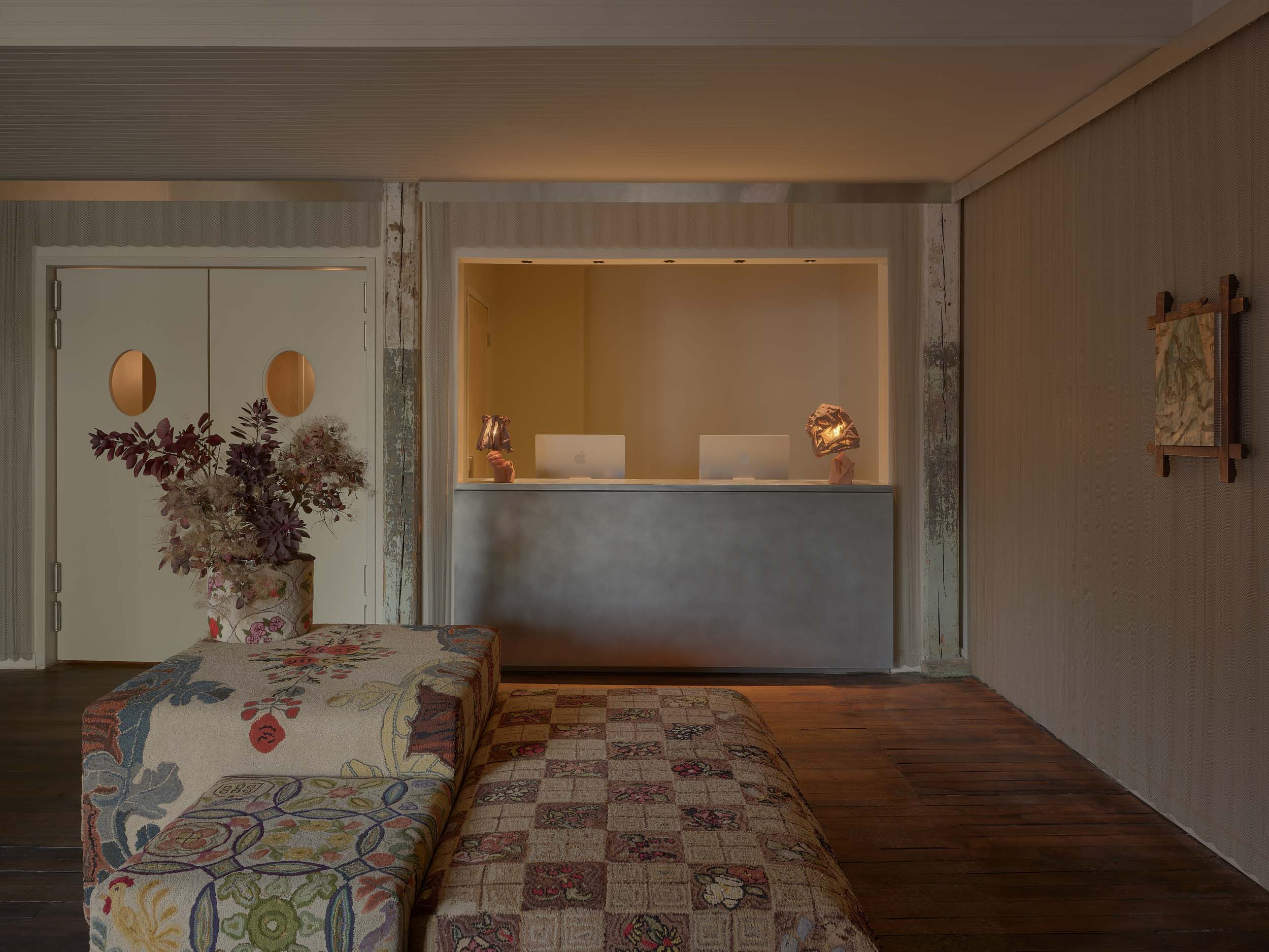
At Pocketbook Hudson, a hotel that opened last November in Hudson, New York, subversion is everything. A bed is also a bath. Curtains are made of metal. An antique hooked rug is an ottoman—and also, improbably, a vase.
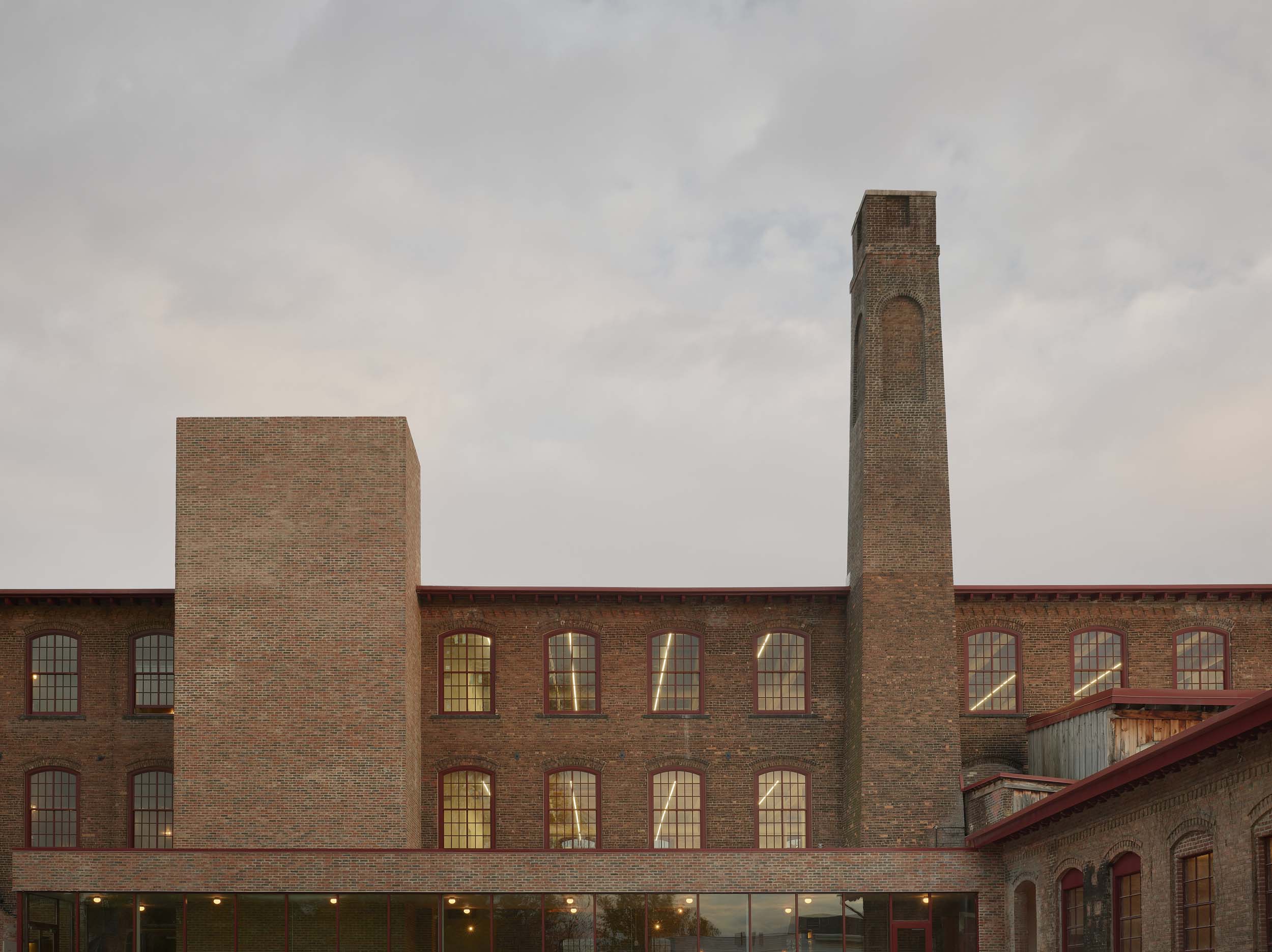
Nothing at Pocketbook is quite what you expect, starting with its program. Realized within an 1880s textile mill, Pocketbook is a hotel first, but it’s also, like the furnishings inside of it, many things at once. Among them: three levels of retail, ranging from vintage resale on the ground floor to high-end fashion upstairs; a marketplace for interior designers (Show: Room, its well-curated platform for furniture and home goods, on the building’s fourth floor); and a restaurant (Ambos), club (Ether), daytime hangout space (the sprawling hotel lobby). Oh, and early this year, it will open a spa.
Charlap Hyman & Herrero, longstanding members of AN Interior’s Top 50 Architects and Designers list, designed it all. Navigating this complex mélange of functions was the first order of business when the designers began collaborating on the 70,000-square-foot project four years ago with the development team, led by cofounder Sean Roland along with Nancy Kim and Gabriel Katz of MacArthur Holdings and Jeremy Selman and Vipin Nambiar of HN Capital Partners. The project emerged out of Roland’s earlier Hudson endeavor, ZÉZÉ Hotel, which he developed a decade ago with artist and business partner WangShui as a space for hospitality and queer makers.
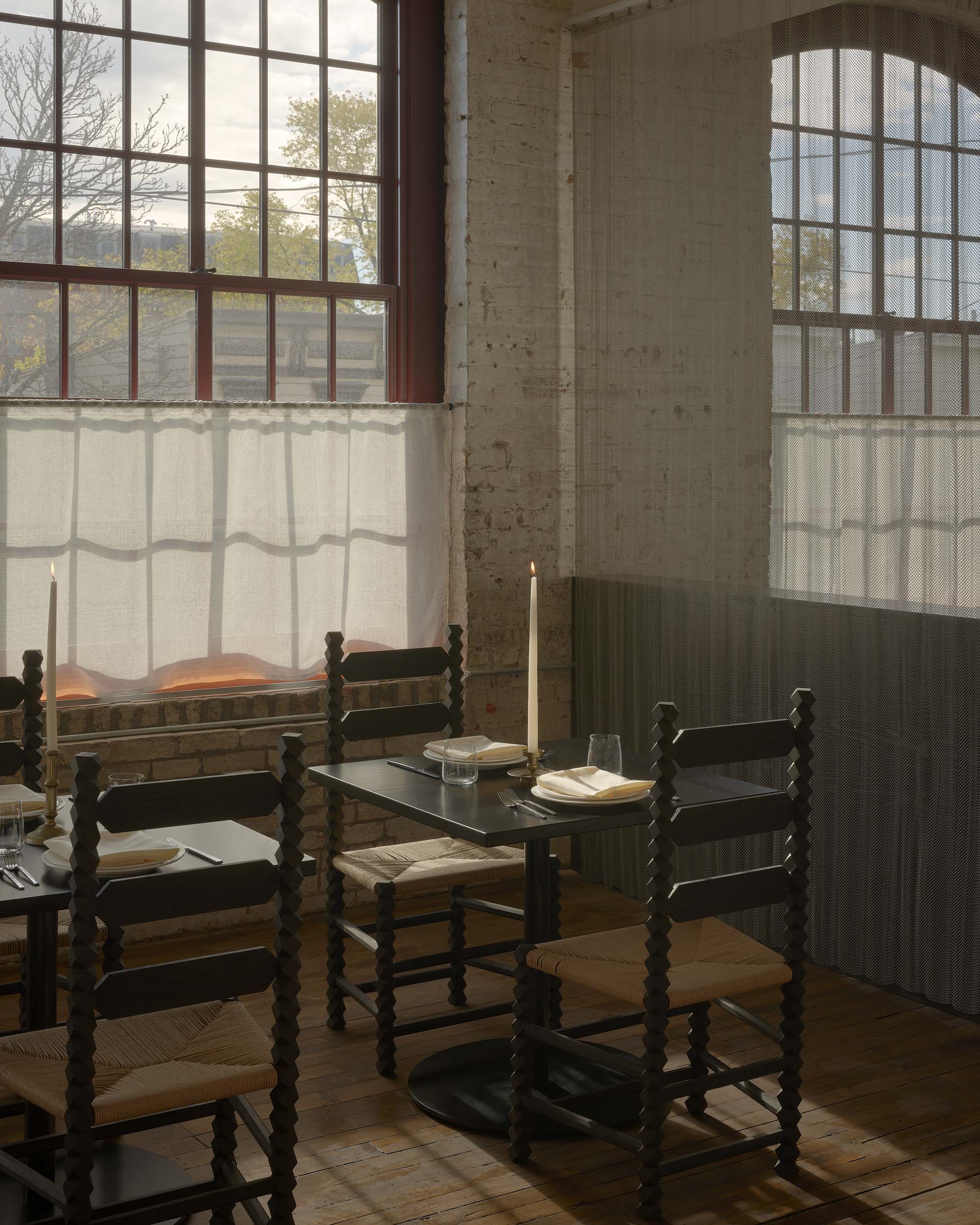
Working within the erstwhile factory’s column grid, the designers devised a porous sequence of spaces on the main level. There, Ambos—named for the building’s former longtime owner, Eleanor Ambos—meets an open lounge. A Tetris grid of modular red leather seating anchors the room, alongside Shaker-inspired furniture by Hardwares and contemporary cocktail tables made by Misha Kahn out of the building’s own timber.
“We were looking at a lot of different ways that people in other contexts have worked with old buildings that have been abandoned in interesting, compelling ways,” Adam Charlap Hyman, cofounder and principal at Charlap Hyman & Herrero, told AN Interior. “We wanted it to be something that was a little bit haunted,” he added, citing the hotel’s location in the Hudson Valley, “a place that contains dark and light in equal parts” as a contextual jumping-off point.
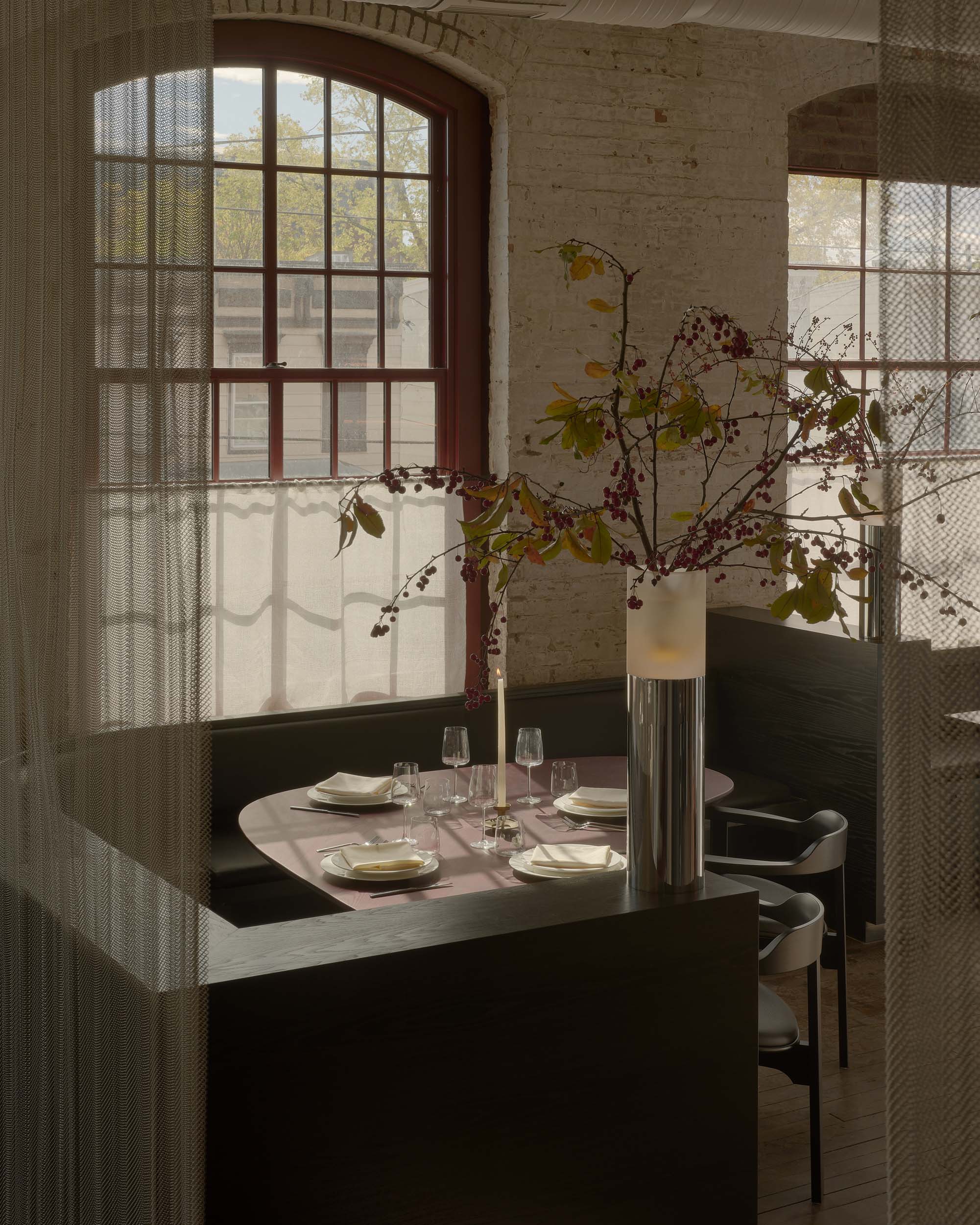
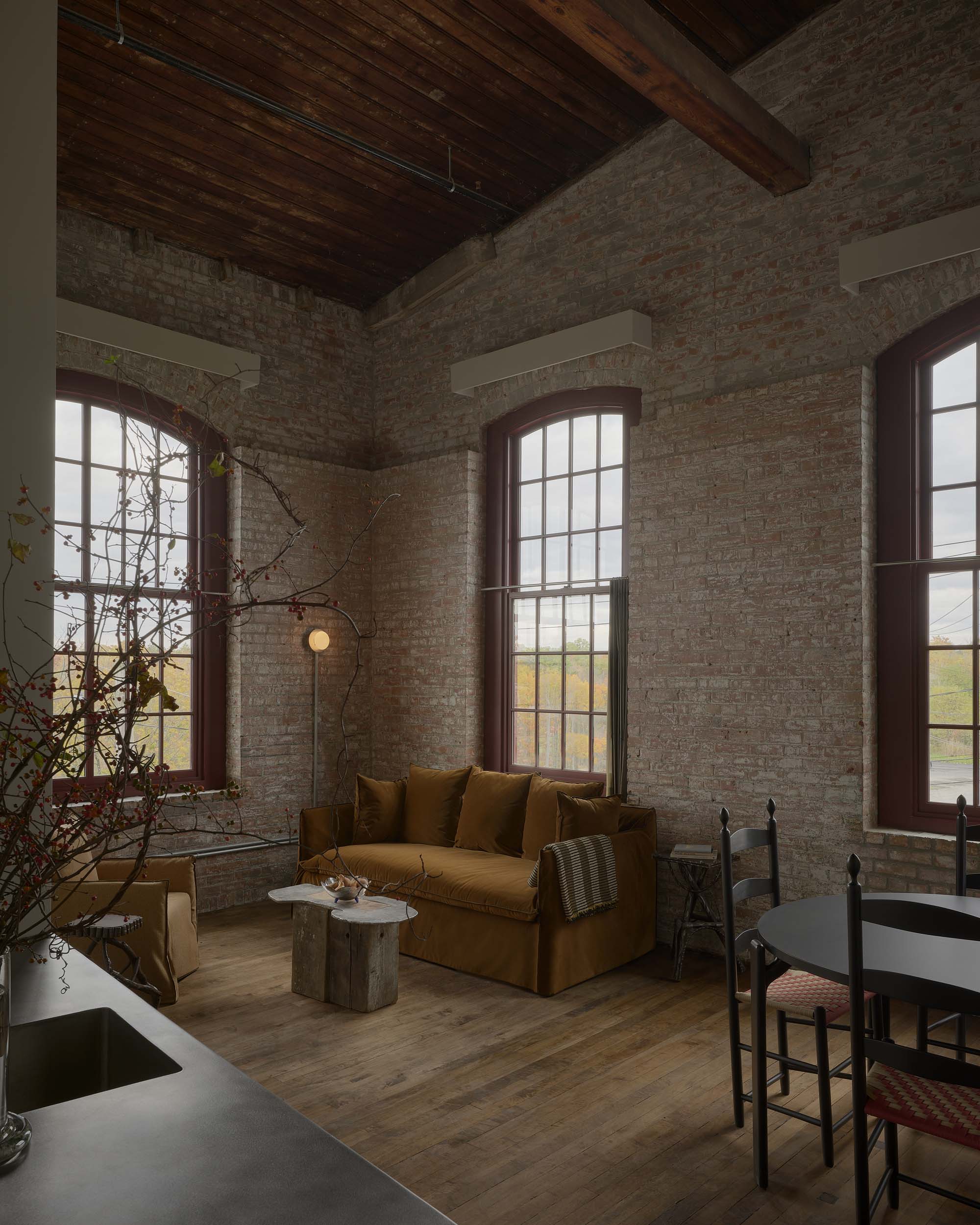
To that end, the specter of the 19th-century building remains close at hand. “First visiting the project, it was just like, ‘This place is amazing as is—how can we continue this feeling?’” Andre Herrero recalled, recounting ways the team looked to “create space with minimal hard intervention.” Overhead, beams remain exposed, as does the patinated brick of the factory walls—though now, guests encounter it through the veil of a chain-link curtain.
The presence of the original structure will be felt particularly in the hotel’s spa, which will open soon. Within its glass-and-tile concept, Charlap Hyman noted, “tile has been deployed to create a dynamic landscape in a way inside that is suggestive of ruins or an excavation site.”
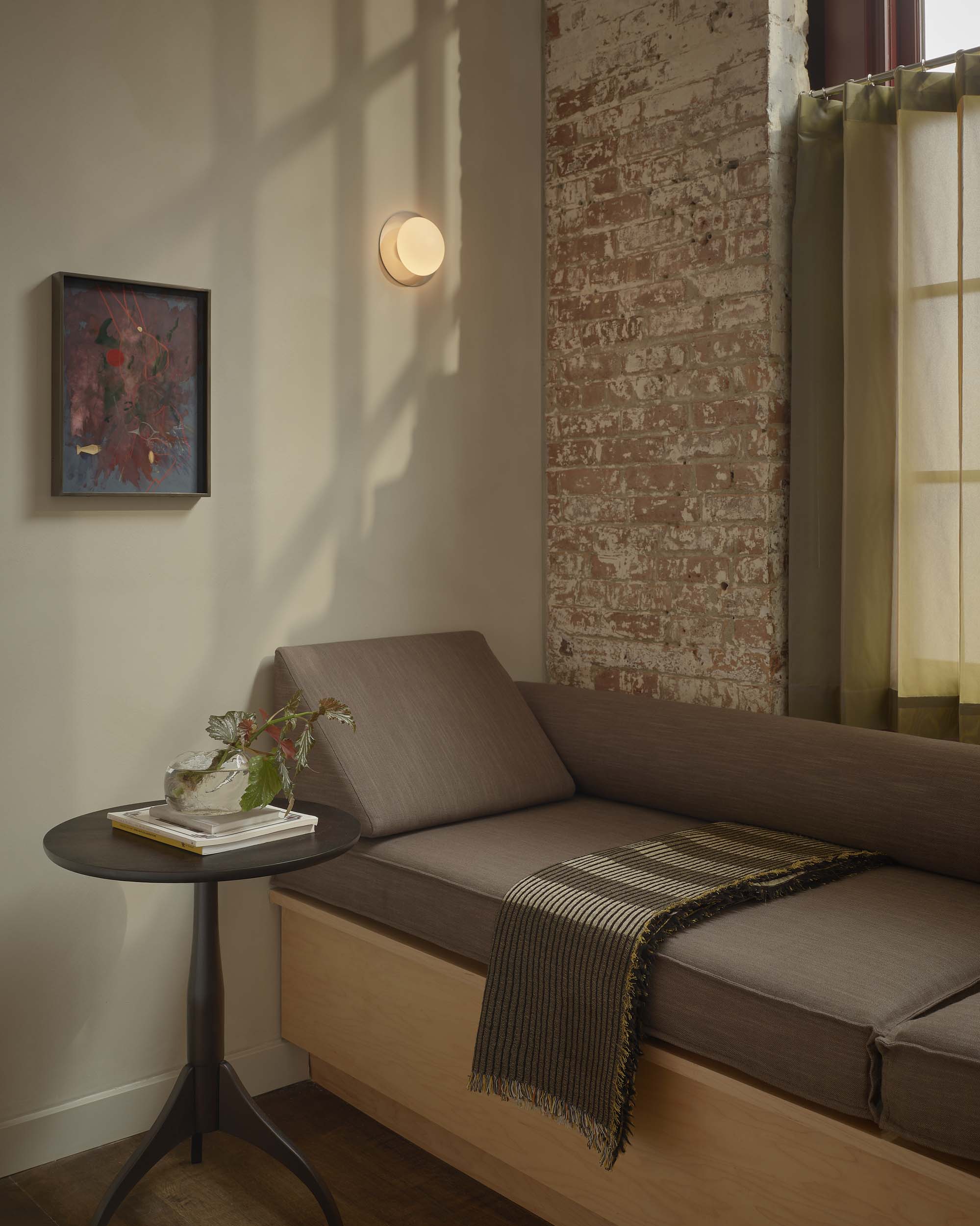
Though history is palpable in Pocketbook, an eclectic layering of art, custom furniture, and contemporary accessories cuts through any sense of solemnity. Acting as artistic director for the interiors, WangShui introduced an impressive array of paintings by Tschabalala Self and Maryam Hoseini, as well as photography by Martine Gutierrez.
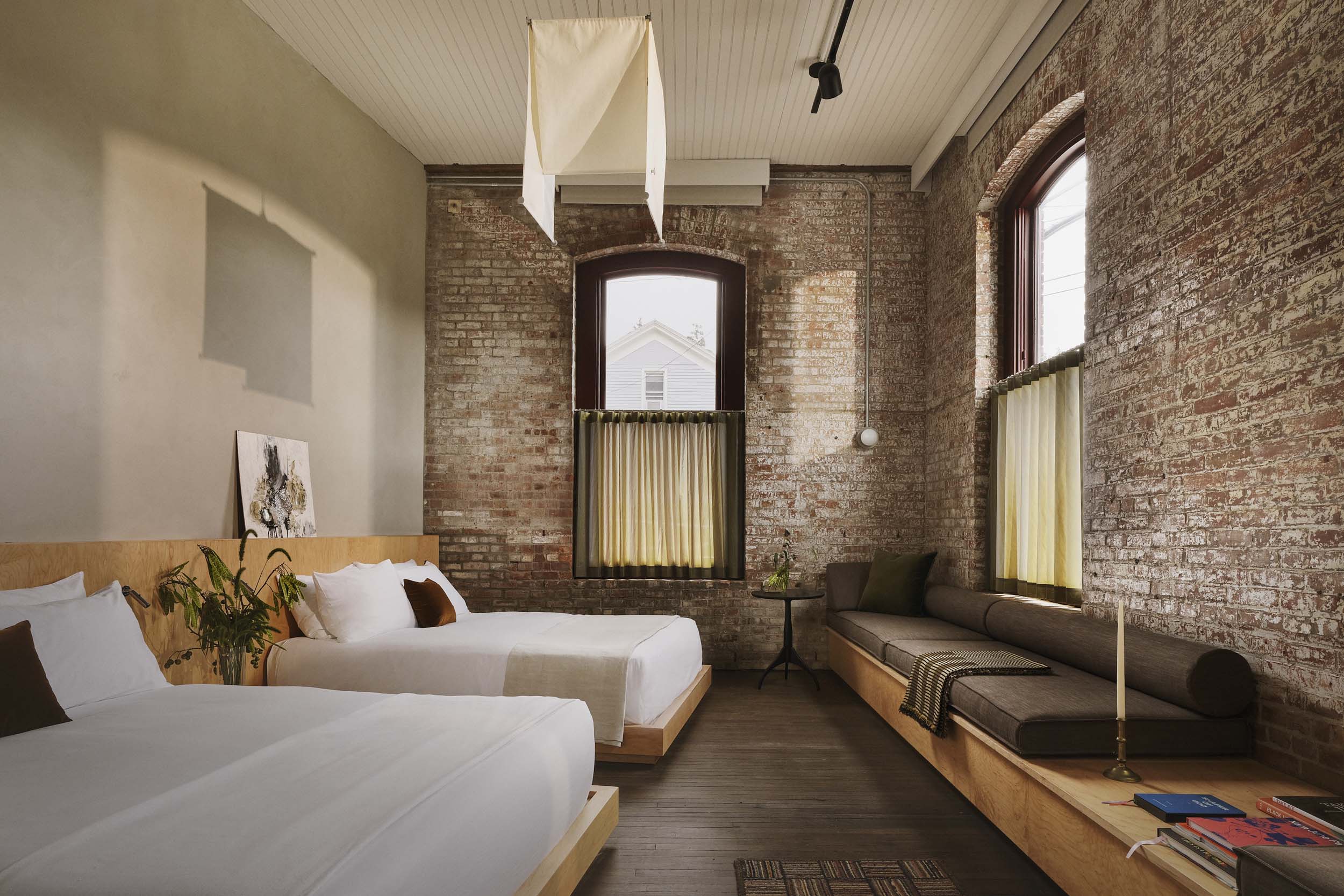
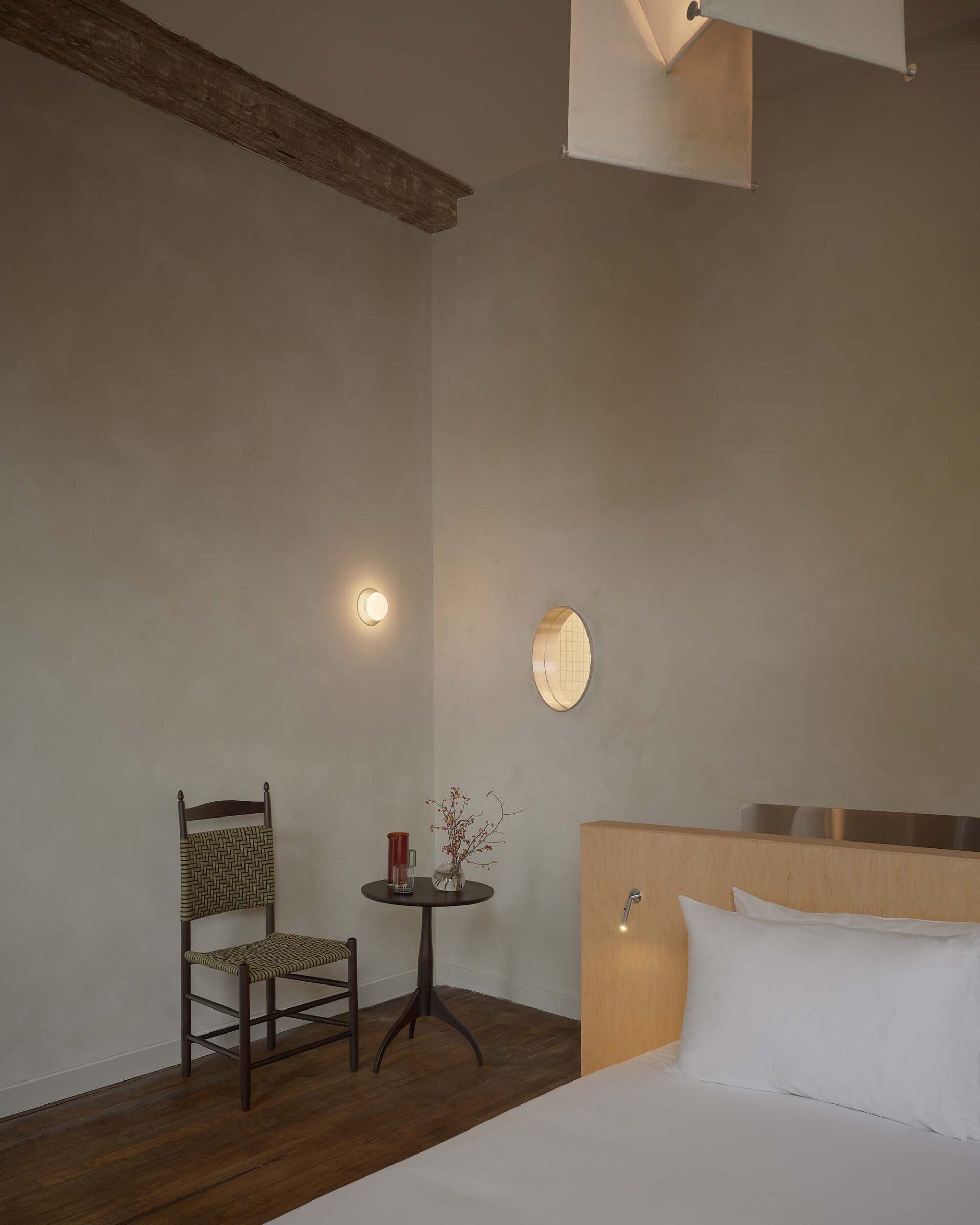
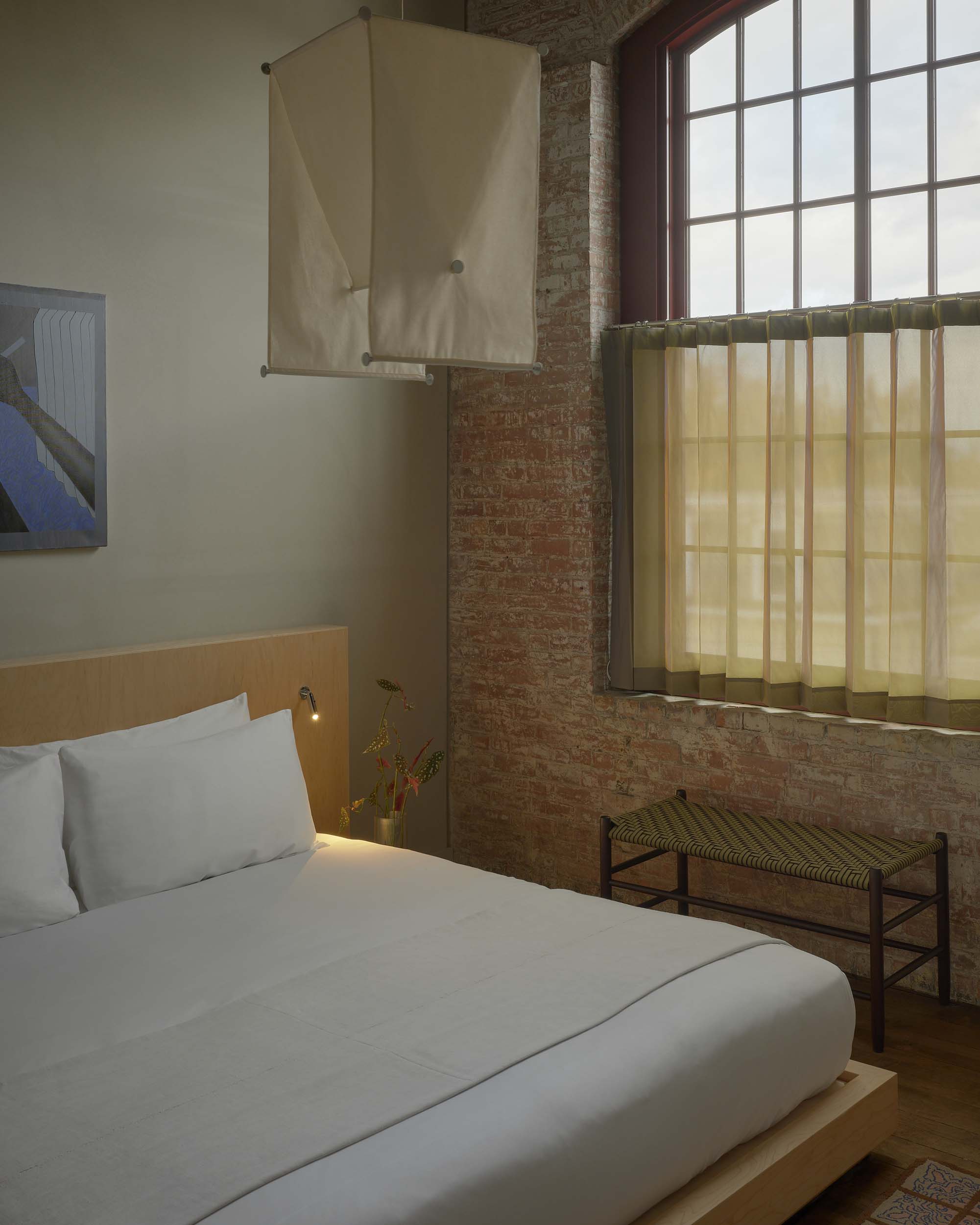
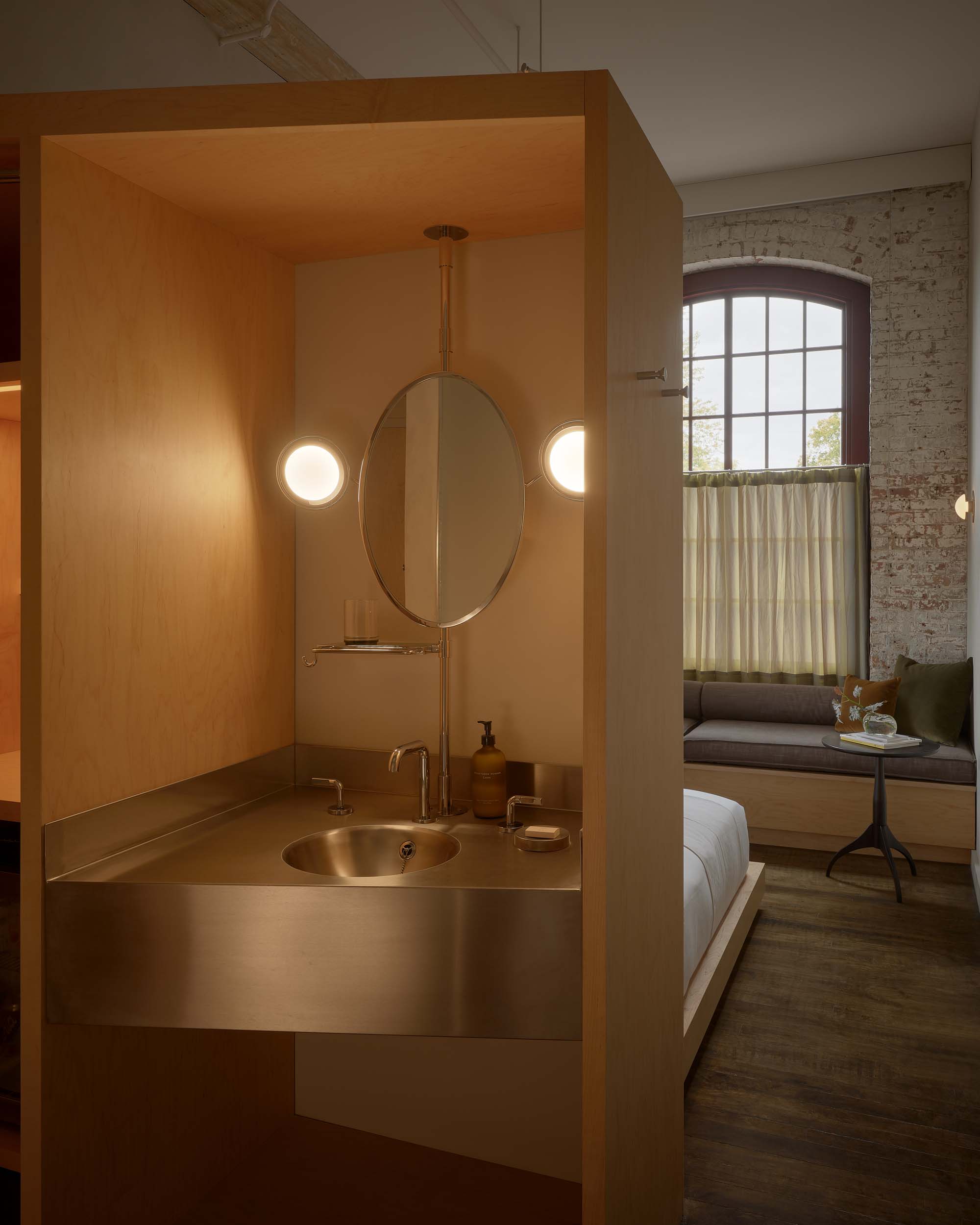
Overnighters at Pocketbook have their pick of seven options across the hotel’s 46 rooms and loft suites. Local woodworker Primary Visual fabricated the rooms’ all-in-one maple inserts, which collapse side tables, bed headboard, and chrome lighting into a single unit. “There was a lot of translucency and slippage of function and form, rigidity and softness,” Charlap Hyman remarked.
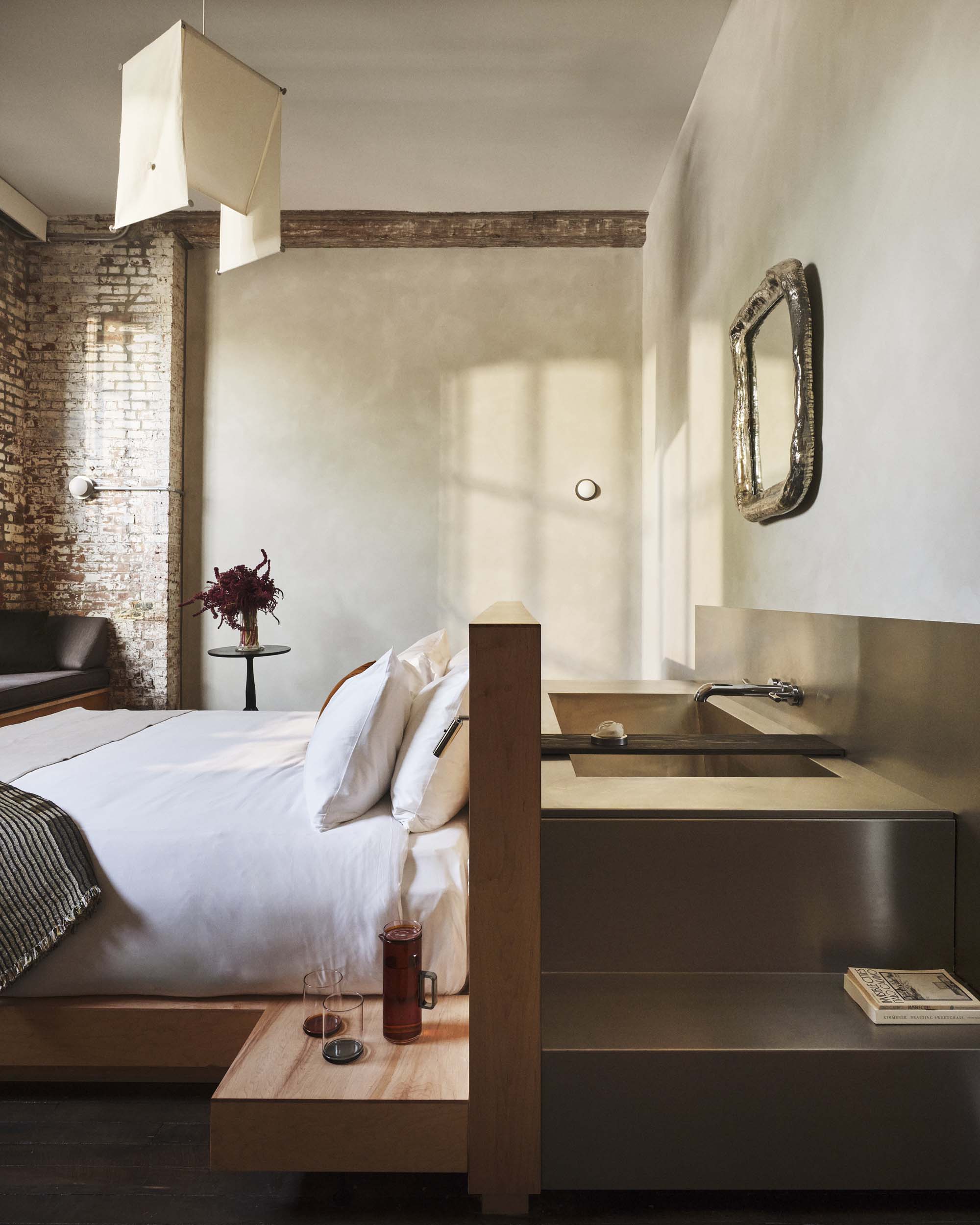
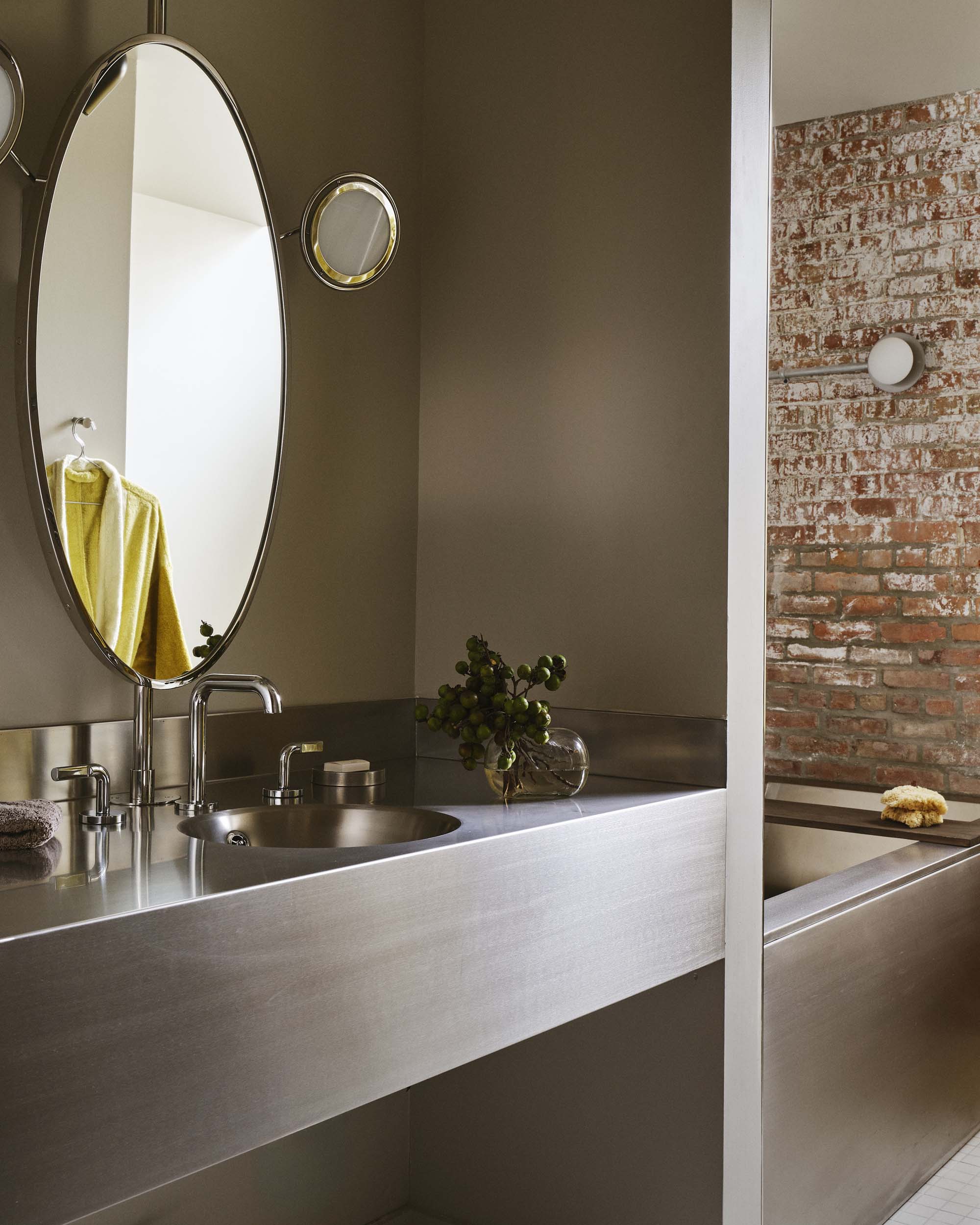
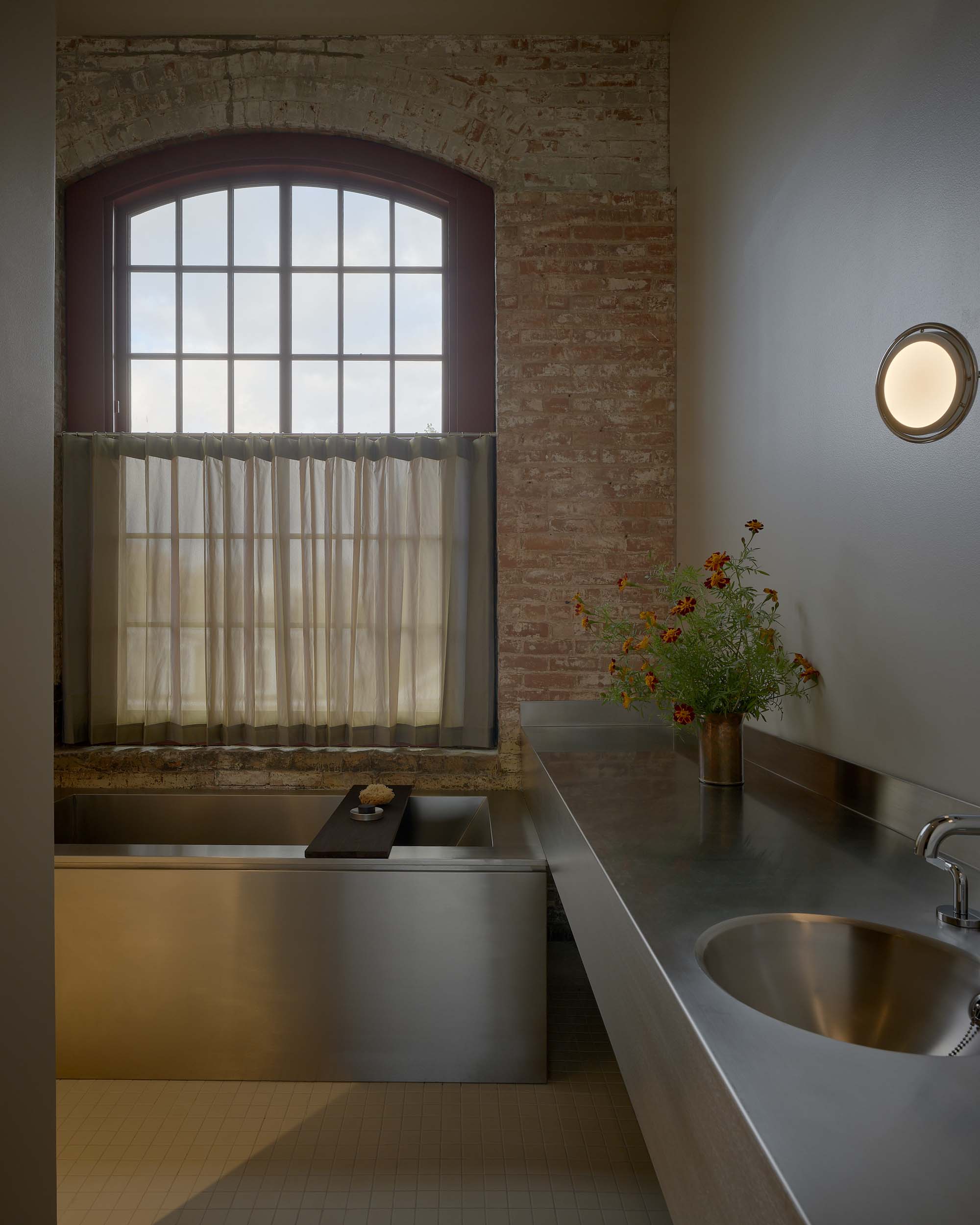
In the bathing suites, the bed is paired against slick stainless-steel tubs, marking another subversion of function that reflects what Charlap Hyman described as “alternate ways of thinking about the role of bathing in daily ritual, or in the ritual of being at a hotel.” So, yes: A bedroom can be a mini-spa. Because what is Pocketbook—and its guests—if not many things, all at once?