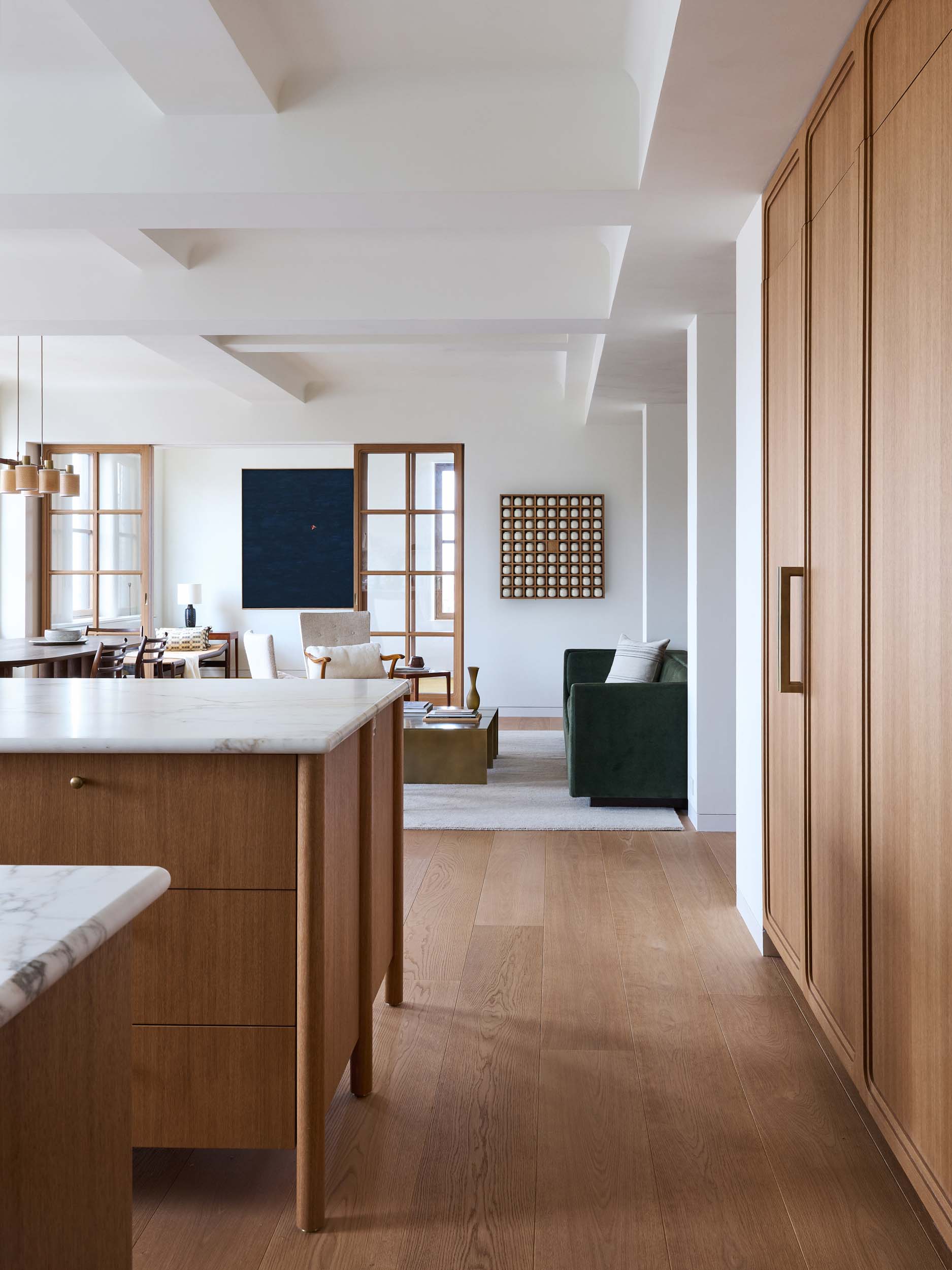
As a family residing in New York City’s East Village neighborhood grew, so did its need for square footage. Expanding into an adjoining unit in its prewar midrise required a renovation—one that would better unify the space and serve different functions. It was also a chance to bring the mechanical systems up to standard and gently call back the 1920s building’s oh-so-subtle deco style. With a stated mission of “creating generational sustainability through connected design,” Lang Architecture was the right partner to carry out the task. And with the homeowners closely involved in every step of the “deep and broad” process, the prolific New York City and Hudson Valley practice was truly a partner. So were general contractor Ravi Arps and Brooklyn furniture fabrication studio Elephants.
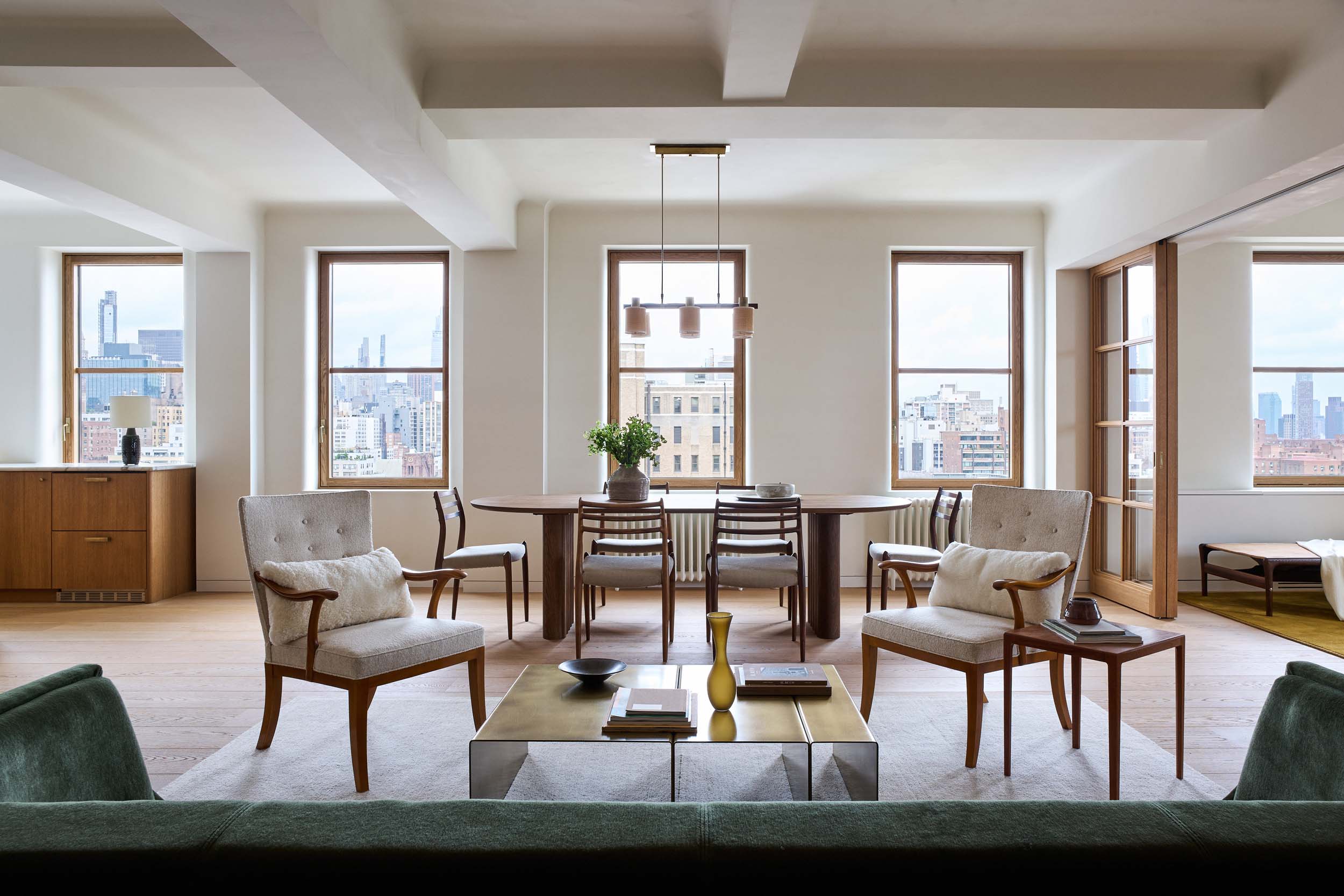
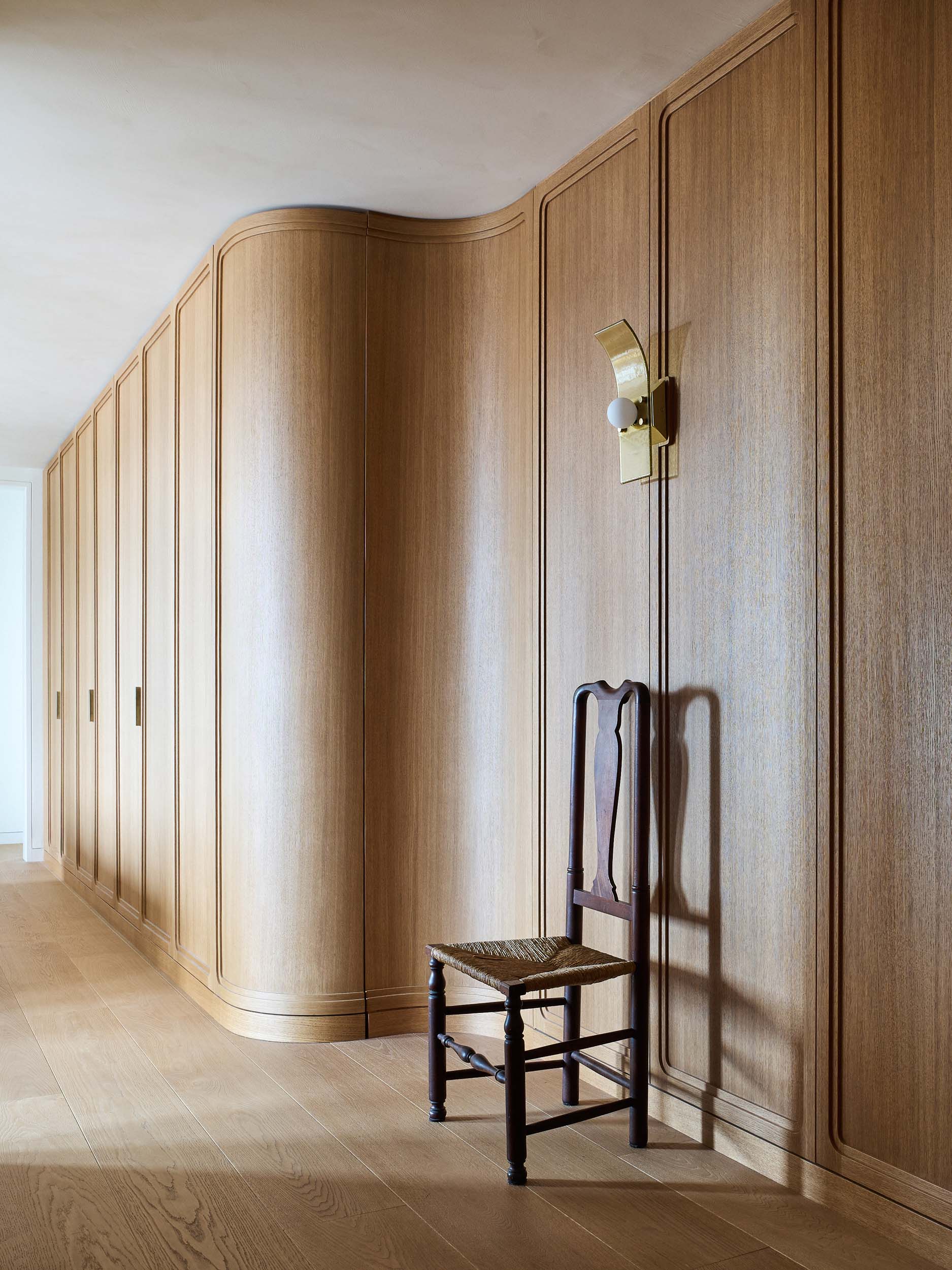
The cohesive result is defined by the deft deployment of limited natural materials and the introduction of a curved motif that carries across from architectural features to built-in furnishings. The space is infused with an implicit sense of longevity—something hard to come by in this city. This was largely due to the clients’ willingness to do things the right way. “They knew what they wanted but also gave us a degree of autonomy to realize their ambition,” said Drew Lang, Lang Architecture principal.
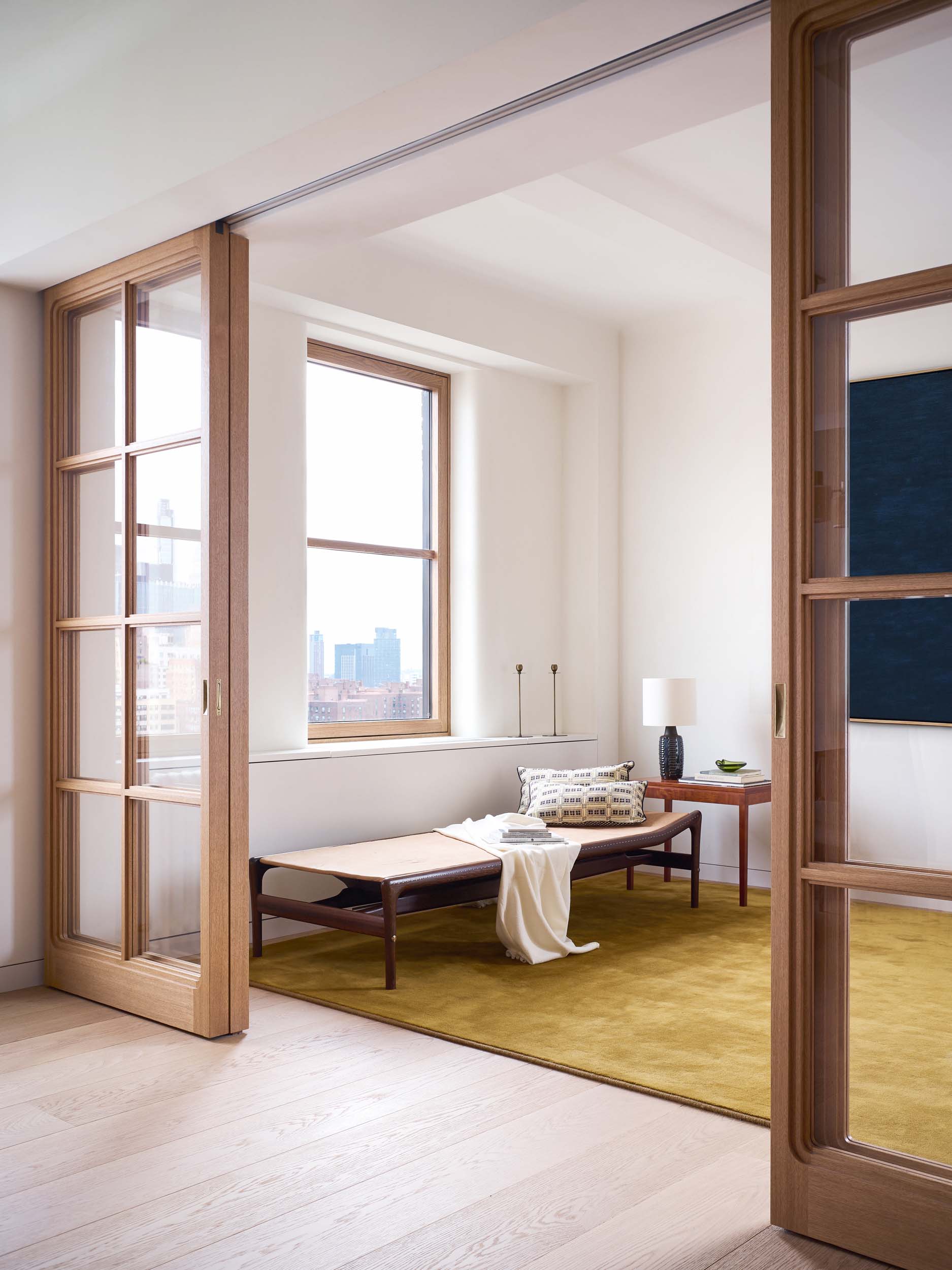
“They were interested in marrying the redesign of the apartment with its history,” he added. “They also wanted the space to become a borderline loft with lots of natural light.” The 16th-floor unit has large windows framing unencumbered views of Midtown Manhattan’s tiered skyline. “Completely tearing things apart and carefully building them back was tricky at times,” he explained. This is especially true considering Lang and his team had to reroute the electrical service and introduce surprisingly nonexistent window lintels to hold the existing brickwork facade in place.
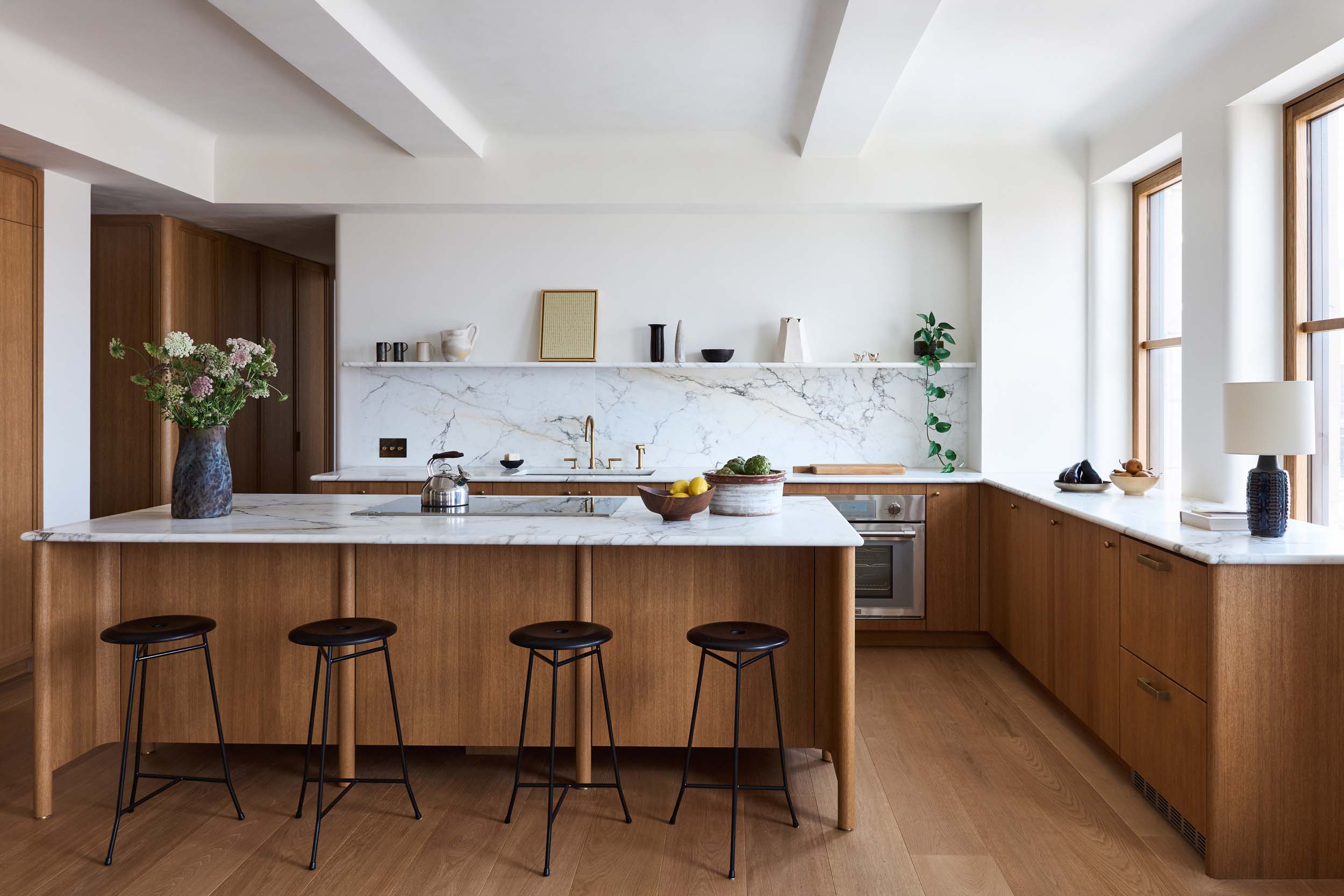
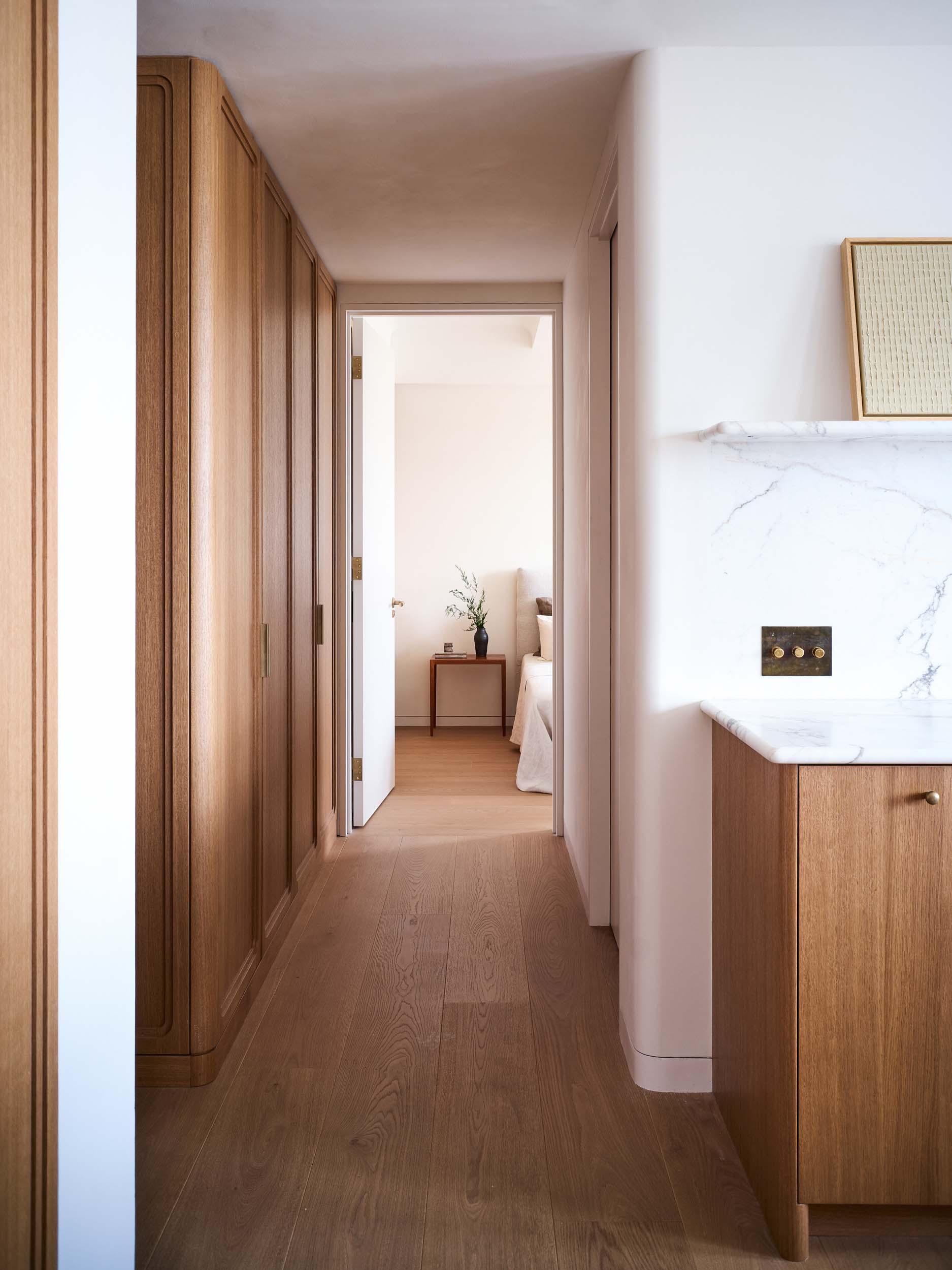
Mid-toned white oak extends throughout the space, from the floorboards of the now open-plan kitchen and great room to custom floor-to-ceiling built-in armoires that contain concealed elements like a wet bar. It was also used in kitchen cabinets, newly installed window frames, and mirror-proportioned French doors, which segment off an adjoining den. Contrasting this sober consistency—whose only distinguishing point is slight variations in grain pattern—are the softening qualities of limewashed walls and Calacatta Paonazzo marble, used in the near-seamless kitchen countertop and backsplash. Brass taps and other fixtures introduce a worn-in quality that achieves the pre-engineered sense of longevity mentioned before. “There’s nice tension between things [that are] new and [things] meant to age,” said Lang.
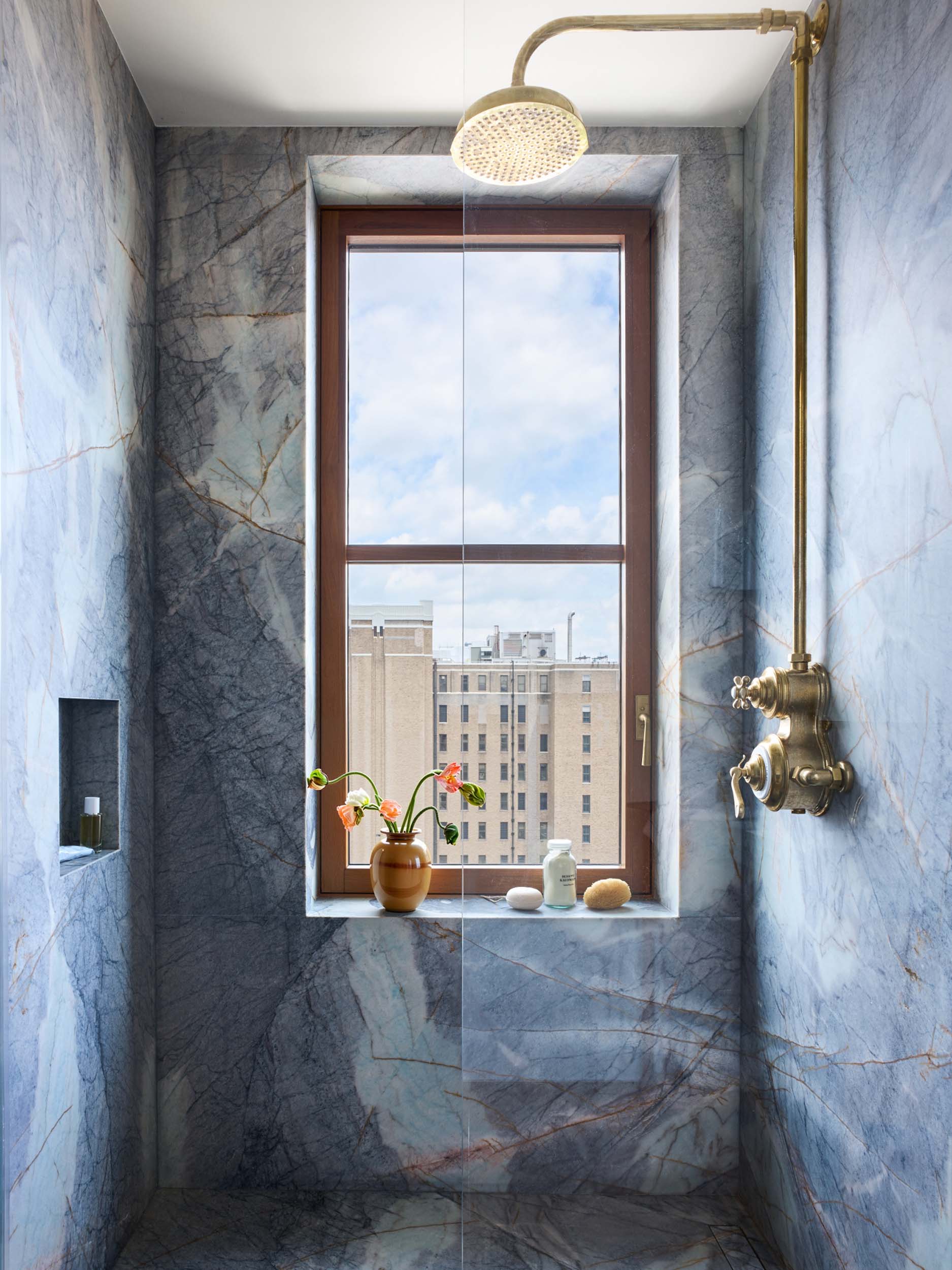
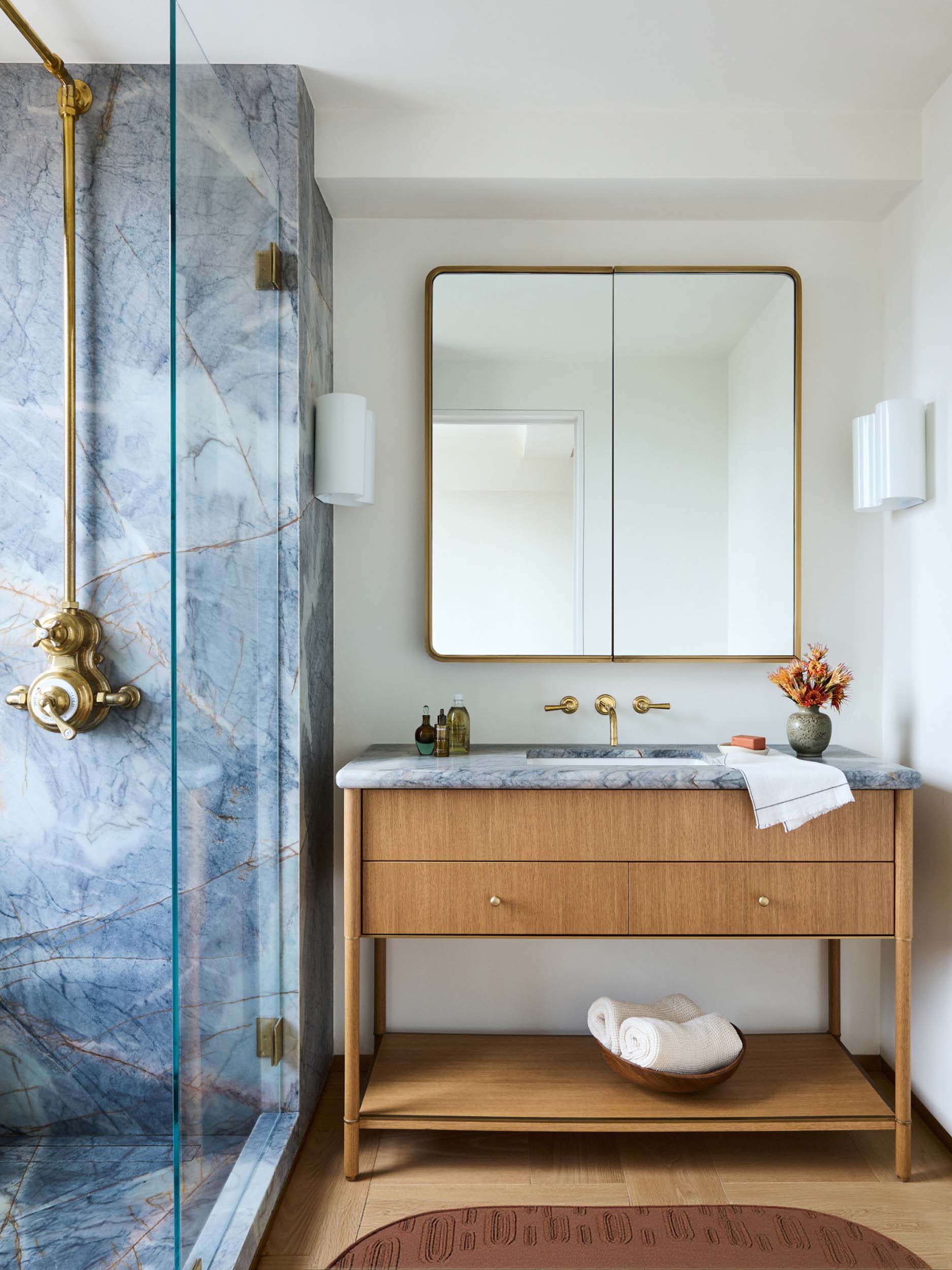
What ties everything together is precision-rendered cove detailing—that deco nod—found in everything from window bay recesses to the contour of the built-in armoires and the credenza-like kitchen island. Its formal articulation is repeated in bathroom vanities joined by rounded-edge medicine cabinets. It’s here where things take a bold if controlled turn. In one walk-in shower, checkerboard pattern baby-blue and white tiles play off a complementary toned marble. In the other en suite, it’s a more ultramarine International Klein Blue.
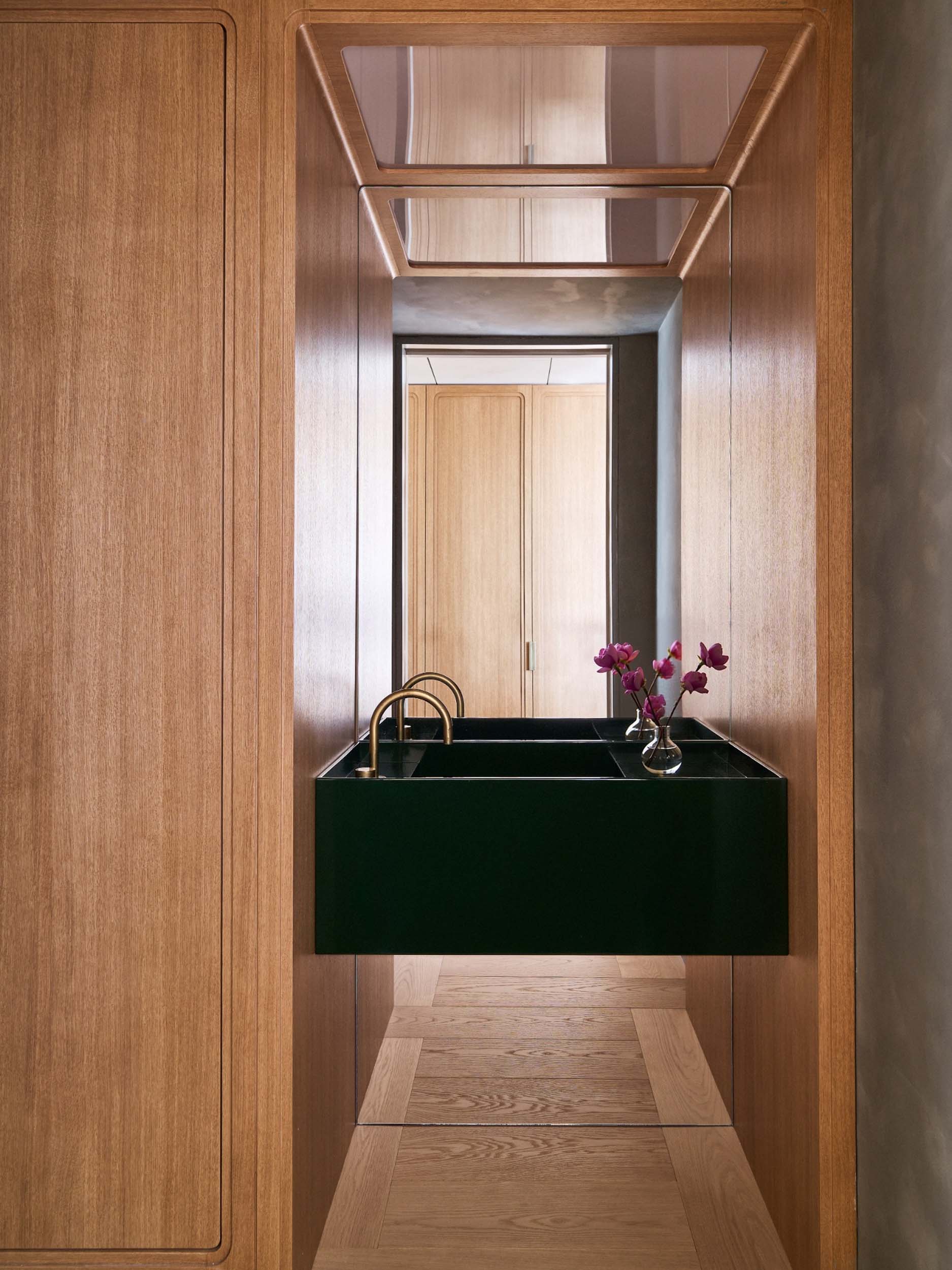
This renovation project stands testament to the power of close client collaboration but also to the unifying potential of carefully deployed natural materials and nuanced detailing. This is how longevity is achieved.