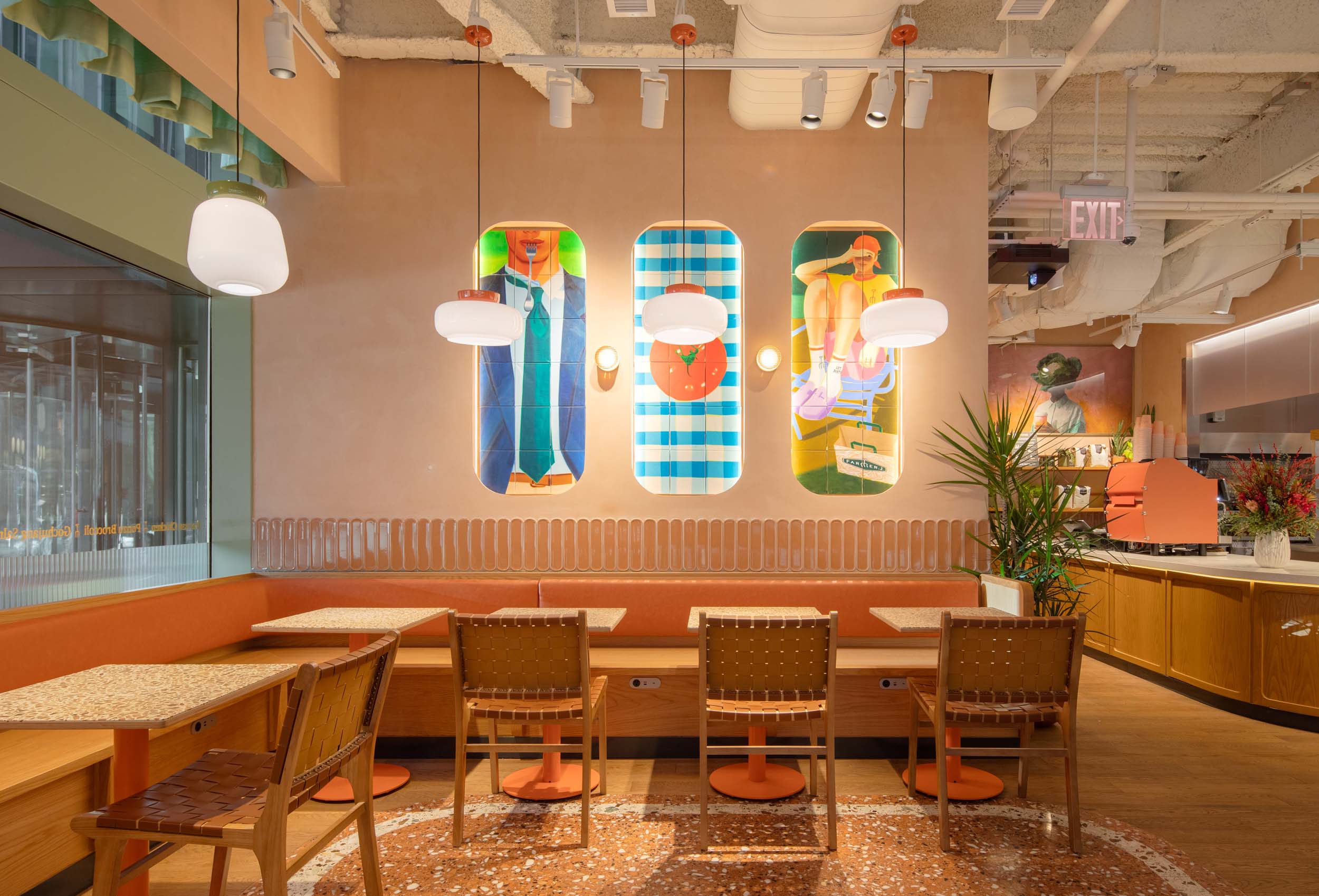
A new go-to work lunch spot has arrived, and this time it’s co-signed by Harry Styles. Farmer J, a London-based chain for healthy, sustainably sourced food in a fast-casual environment, has made its U.S. debut in Midtown Manhattan. The 3,000-square-foot space was designed by longtime collaborator with the brand, London-based architecture firm Holland Harvey, also making its U.S. debut with this project. The interior reflects how the brand is not only talk but also action: their packaging is 95 percent biodegradable; the food is sourced from American farmers. It’s only fitting that Farmer J’s new abode is a recipe of circular, transparent materials.
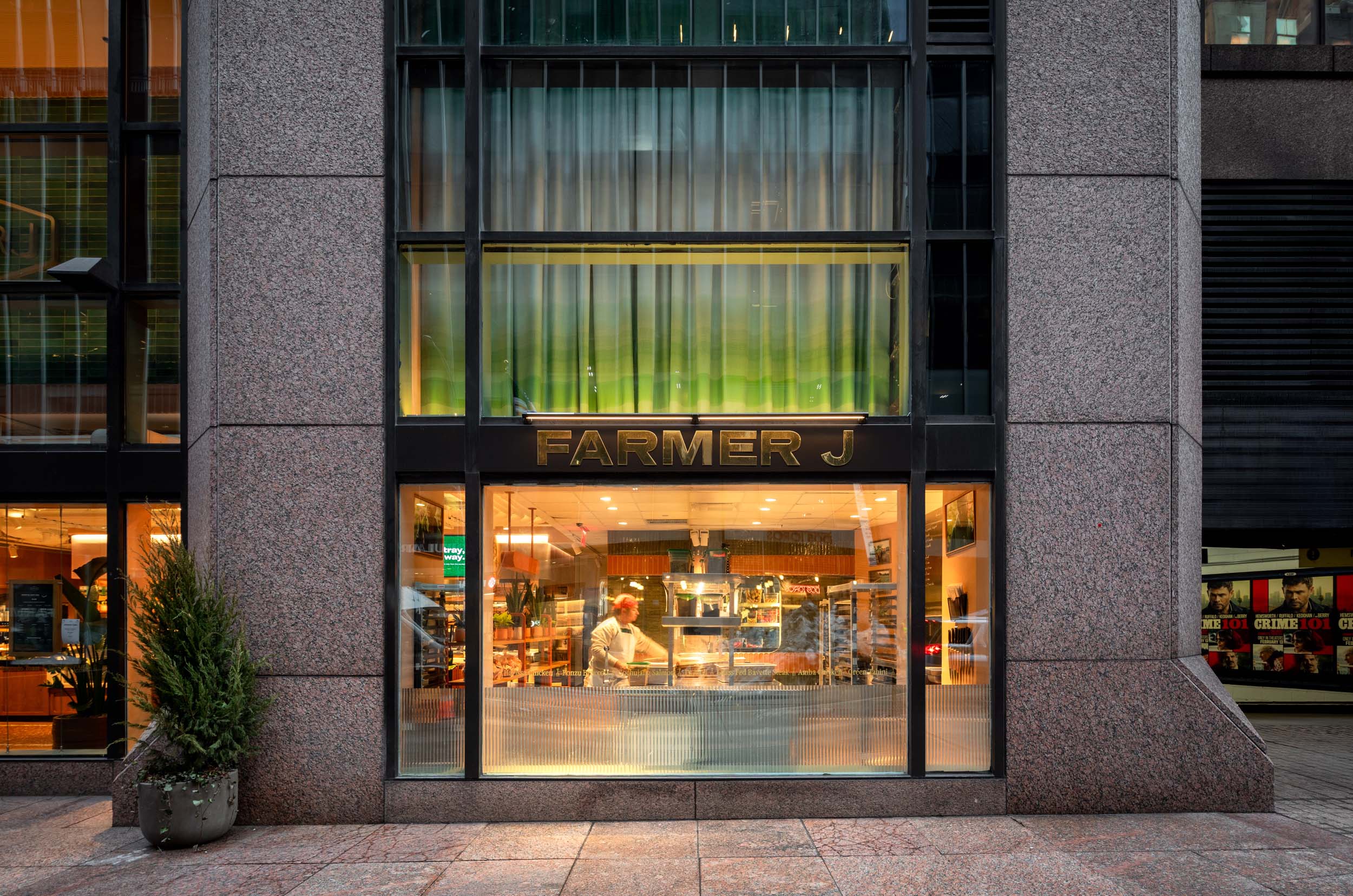
Make no mistake: The New York flagship is a departure from the corporate inflection of sweetgreen and Dig Inn. The architects did away with the “assembly line” organization for casual eateries. Instead, transparency sequences the space. The prep kitchen is positioned directly against the storefront glazing, topped with green drapery and bronze signage to call attention to the kitchen’s fresh work. Inside, a walk-in fridge with an expansive viewing window further reinforces the idea of Farmer J’s food transparency. From within the main floor, a row of shelving separates kitchen and customer, offering more glimpses into the kitchen while also providing a place to pick orders and deliveries.
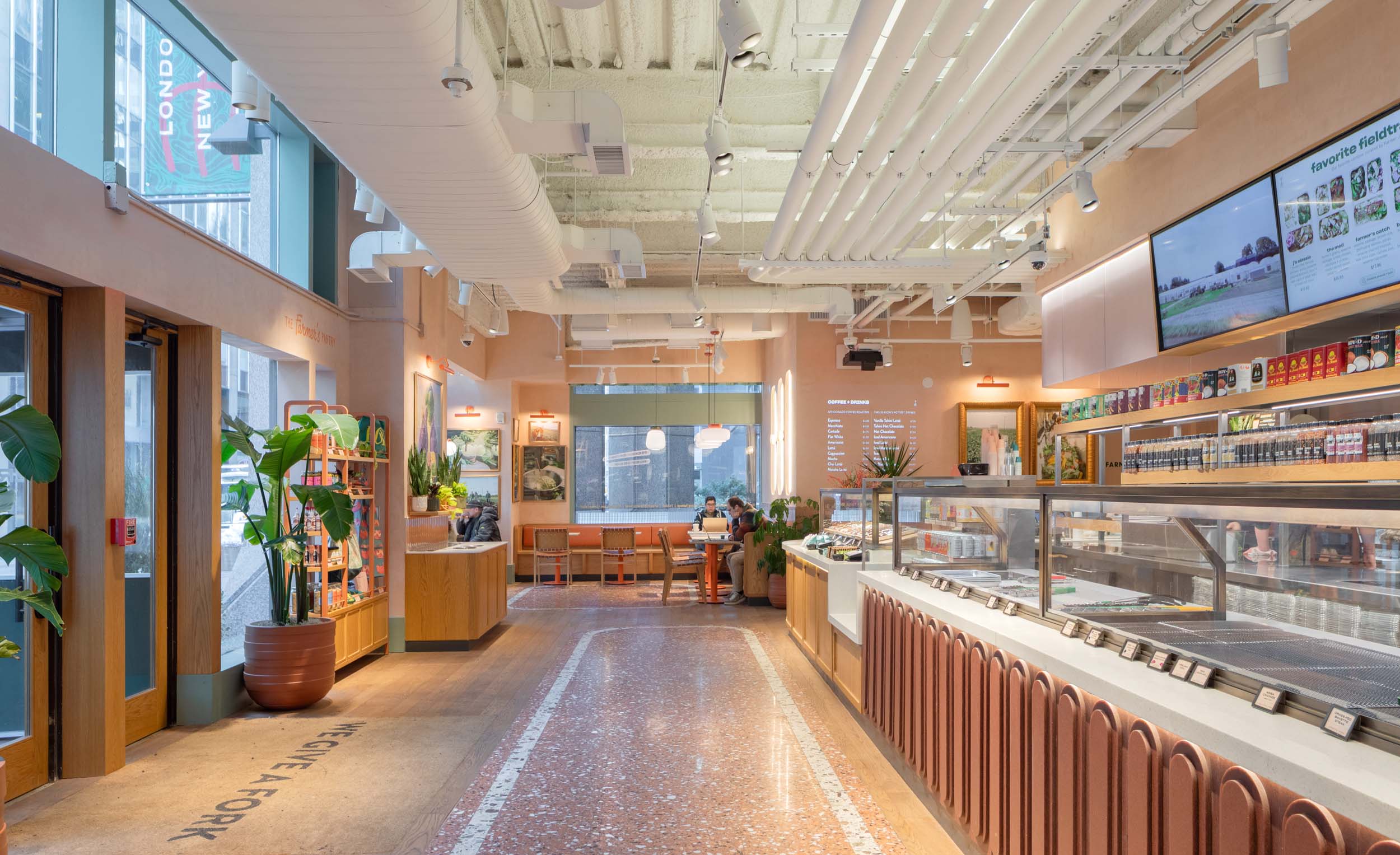
Beyond the kitchen, the interior is organized by the service counter, clad in panels from Smile Plastics made from recycled post-consumer waste. It’s met with oak joinery and radiused profiles to soften harsh edges and invite a sense of welcome. Behind it, a digital menu screen is integrated into a curtain. Holland Harvey transformed a code-required smoke curtain into the curved, backlit element, made from recycled translucent plastic.
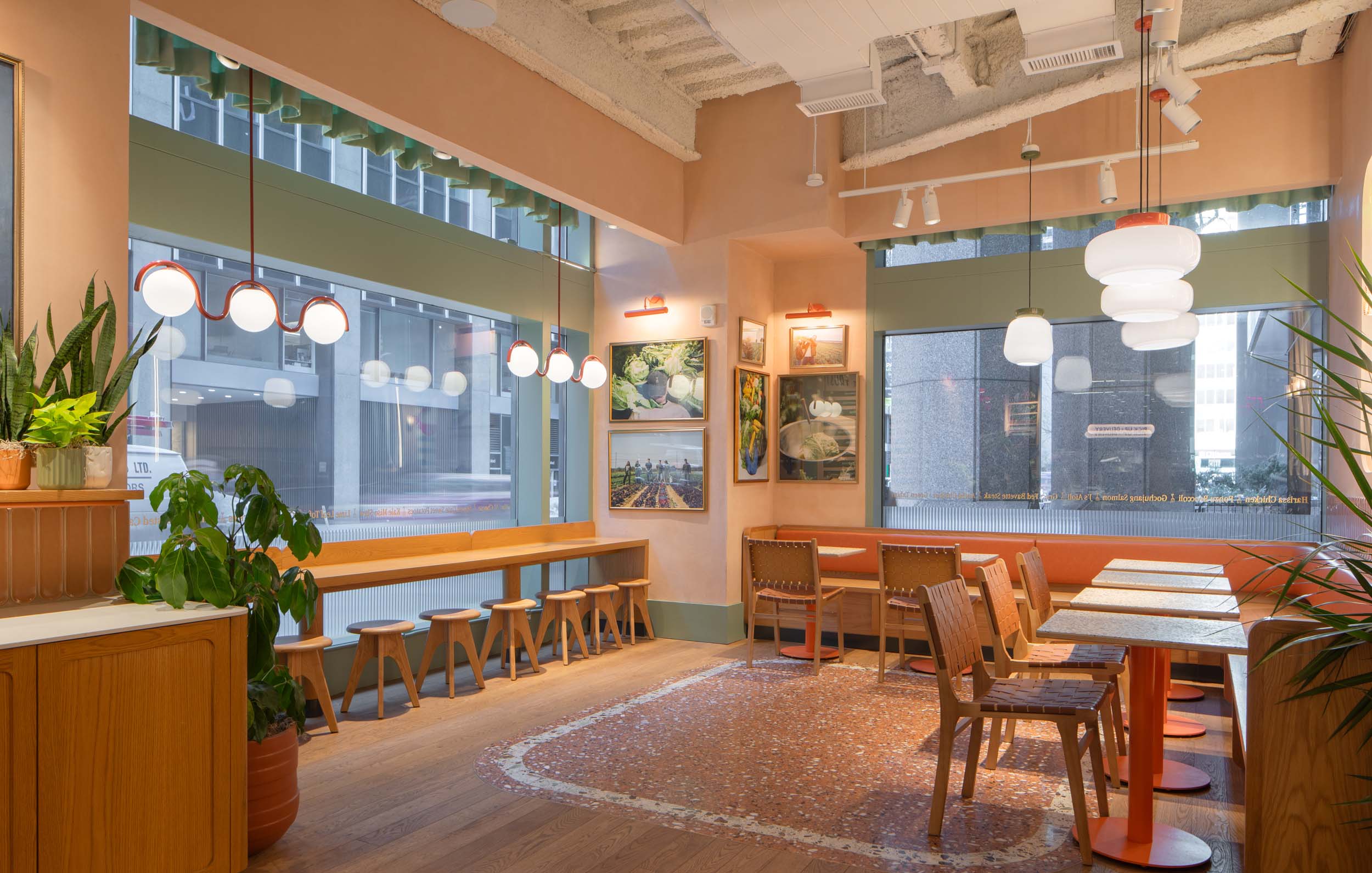
A red terrazzo floor with white banding guides foot traffic from the station to the seating areas. The undulating Lenox Linear Ball Pendant Lamp provides playful illumination, housed within earthy color and material choices: salmon-colored walls detailed with terra-cotta and green tiles.
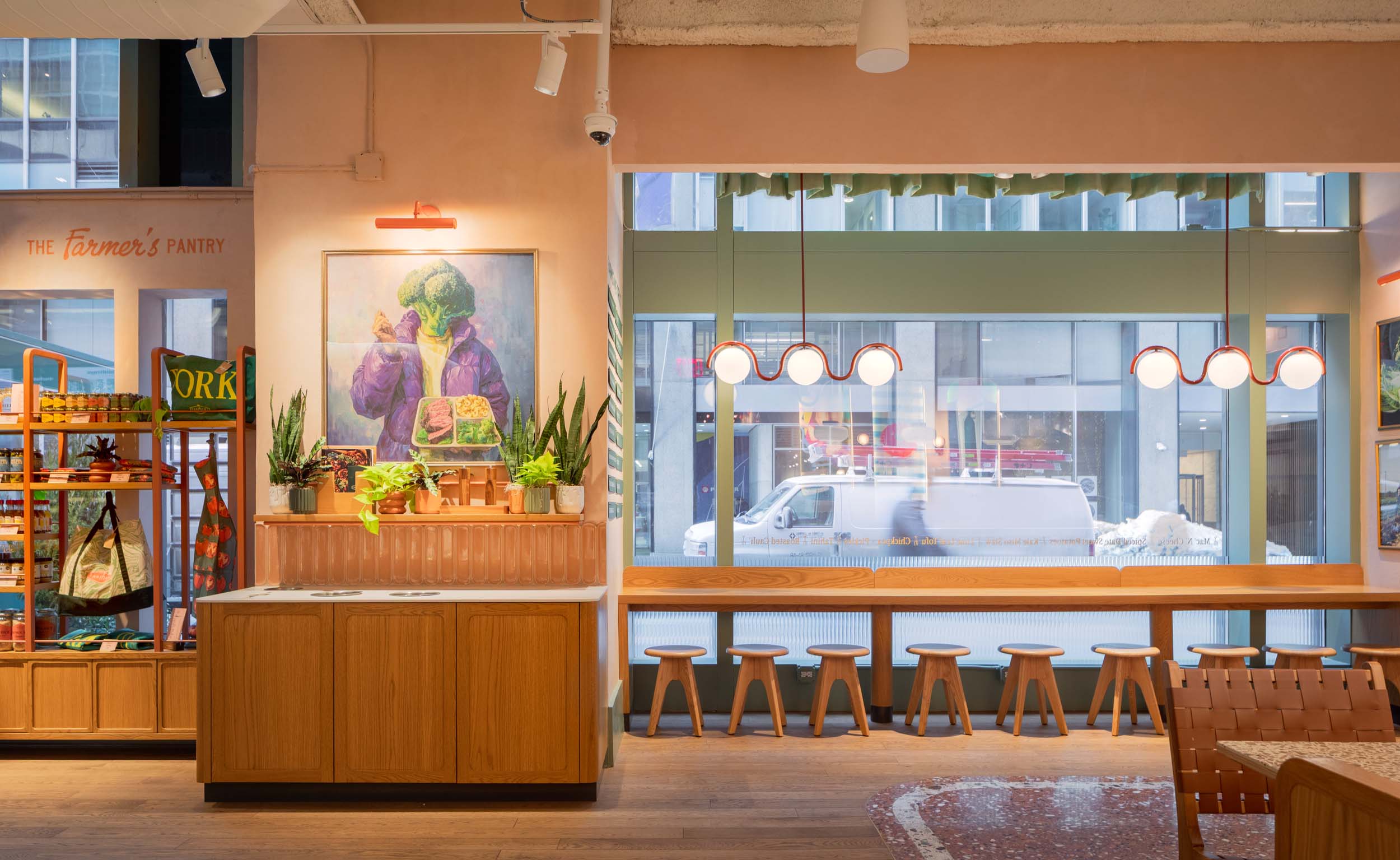
The result is warm and welcoming, a softer, sustainable spin on typical fast-casual eateries.