Sandwiched in between two streets on a prominent corner in Slovakia’s Bratislava, the capital city’s landmark Metropol building stands out as a notable example of early 20th-century functionalist architecture. Designed by Slovak architect Juraj Tvarožka in 1927, the distinctive structure—comprised of a facade that rounds out at its corner—originally functioned as housing with a café on the ground floor, and most notably, a cinema in the basement. Now, the historic building makes a return to its residential, as well as social, function as a co-living residence, transformed by local architectural studio BEEF.

“Exploring and developing various housing concepts has been a major focus of our work for many years,” said BEEF cofounder, Rado Buzinkay. “This is the first co-living concept in Bratislava.”


Spread across an entire section of the building on four floors, the co-living residence includes 19 apartments, and shared space on the first floor including a large communal kitchen, lounge space, and a laundry room. “To encourage the use of common areas, we minimized the kitchen facilities within individual apartments to just the essentials,” said Buzinkay. “Additionally, we located the laundry room directly adjacent to the shared living space, providing easy access and creating an opportunity for residents to connect and socialize while doing their laundry.”


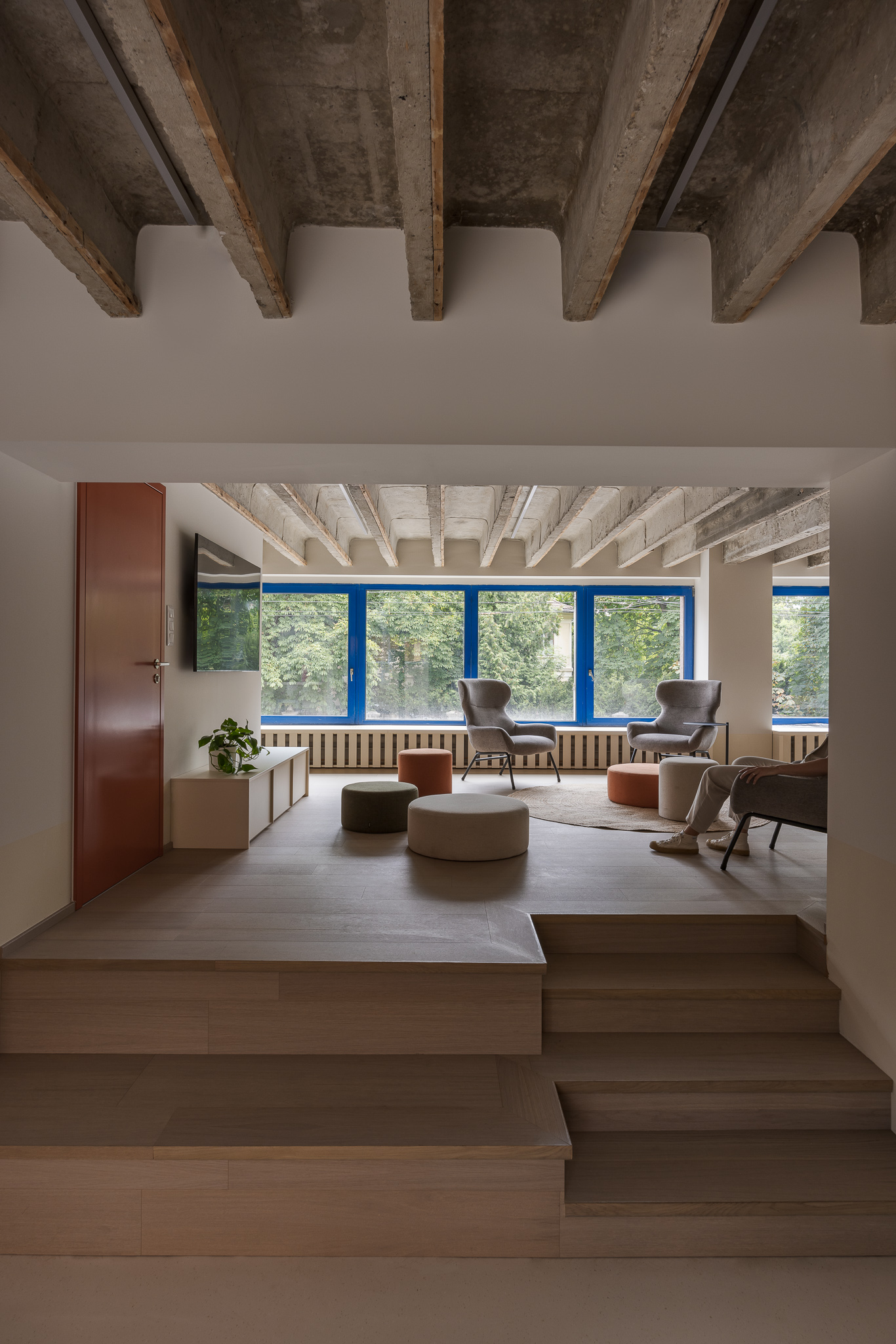
Including pale wood floors and a color palette grounded in neutral tones, the residence’s pared-back look was designed to let the distinctive atmosphere shine through. “Our goal was to highlight the original character of the building,” said Buzinkay. “From a design perspective, we chose not to add any dominant visual elements, but instead focused on reduction—stripping back the space to reveal the true structural beauty of the interior. This approach allows the building’s authentic architectural expression to take center stage.”


The architects uncovered the ceilings to reveal the original ribbed structure, which, in addition to adding texture and timelessness, has become a defining feature of the space along with glass block. This brings natural light into the tiled bathrooms and contributes to the airy feel of the open-concept apartments. “The rest of the design features mostly standalone elements, such as the kitchen box,” Buzinkay continued, “to maintain an open and spacious feel.”


Finely detailed, the apartments are of various sizes “to cater to different lifestyles and living situations,” Buzinkay said. The calming color palette allows residents to personalize their apartments while allowing pleasing pops of color, via furniture and tiled bathrooms, to stand out. The open-concept layout enhances the sense of space while promoting a seamless and practical flow between living, dining, and kitchen areas. Buzinkay noted, this “mak[es] everyday living more convenient and enjoyable.”


BEEF is currently in the design phase for an extension that will add two additional floors across the full footprint of the historic building. The preserved blue exterior windows will continue to be maintained to help to further the Metropol’s original character and offer a warm welcome.