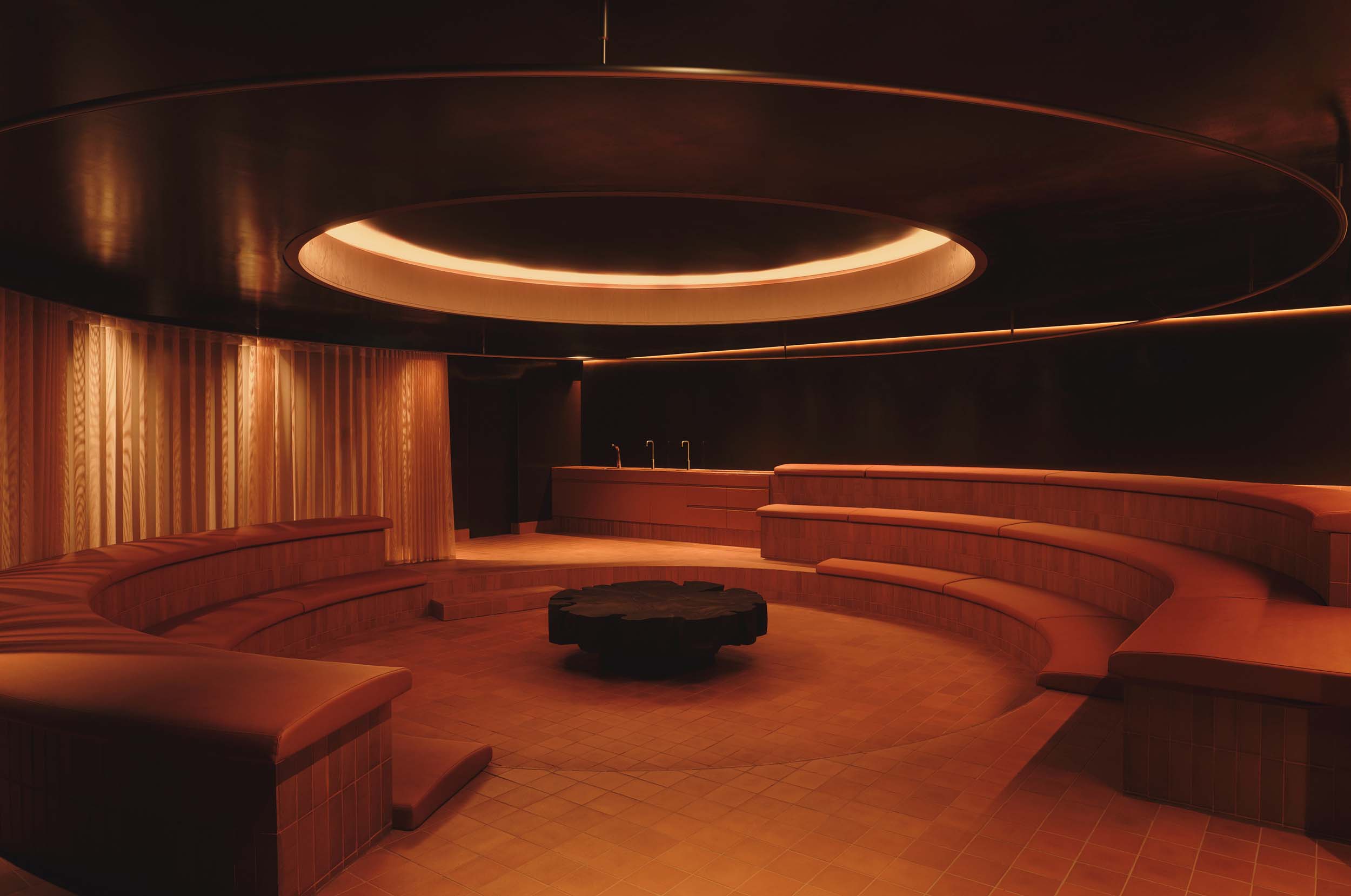
Saunas are now in Vogue. The publication reported on the rise of the wellness trend sweeping the nation, from the Bathhouse in New York designed by Rockwell Group to the Good Hot in the Bay area designed and operated by disillusioned architecture graduates Cooper Rogers and Amy Louie. London’s Canary Wharf is getting its own spin on the trend with new wellness space, ARC. Operated by White Rabbit Projects, ARC focuses on contrast therapy and the benefits between moving from hot saunas to cold plunges. As wellness spaces continue to act as the new hot spot for socializing and an alternative to standard nightlife, CAKE Architecture brings this to life for ARC. Here club aesthetics riff on this burgeoning movement and ARC’s focus on contrast-based wellness.
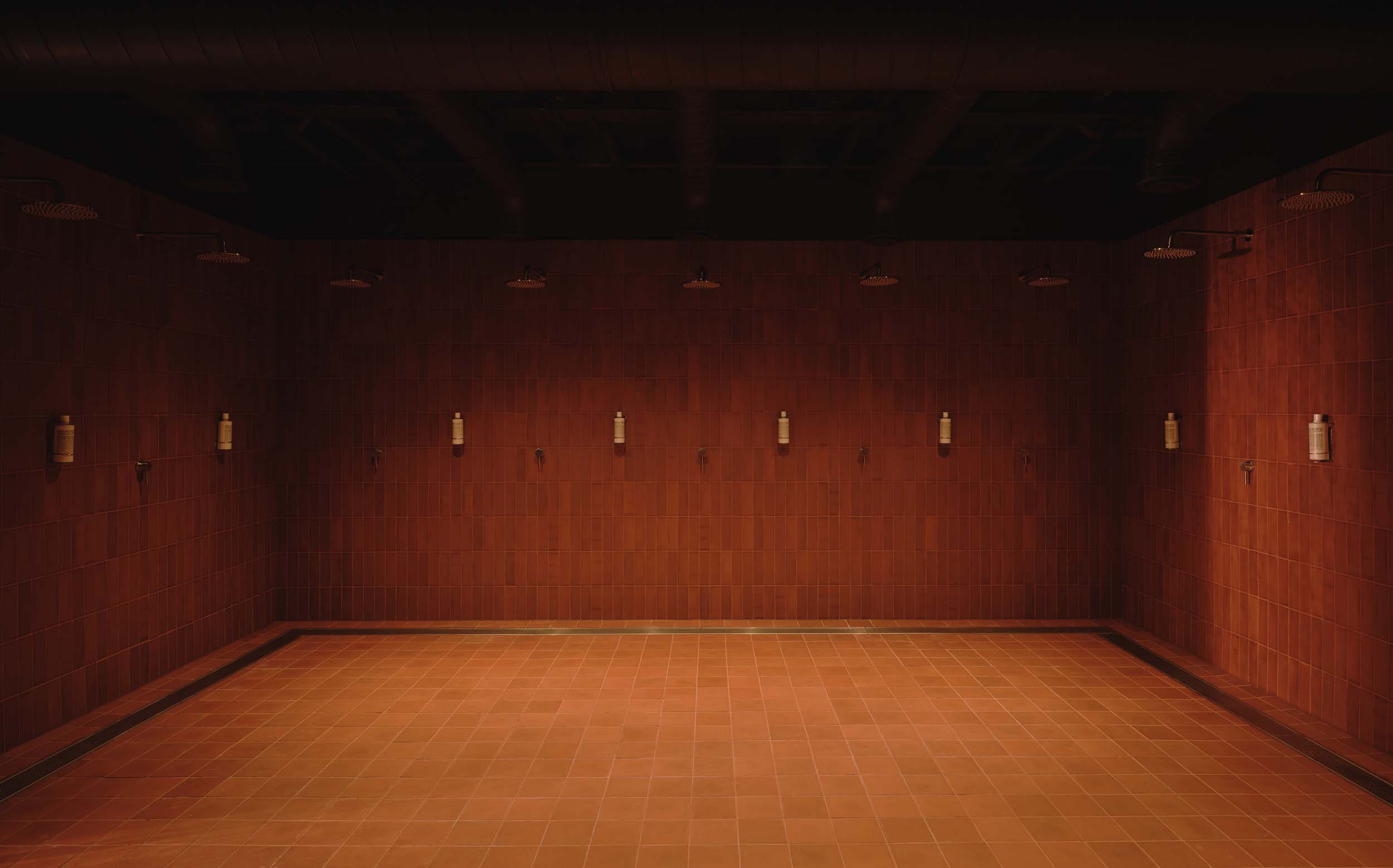
“As a practice we’ve worked a lot on nightlife projects, so that’s a bit in our DNA,” said Hugh Scott Moncrieff, cofounder of the firm. Programmatically the facility required a communal area and change rooms, a 65-person sauna, and cold plunges. CAKE laid out the floorplan so each had its own distinct space within the linear footprint. Thus the facility, located below grade, opens with the almost courtyard-like communal area (which leaves space for a DJ to play) before giving way to the sauna and then the ice baths.
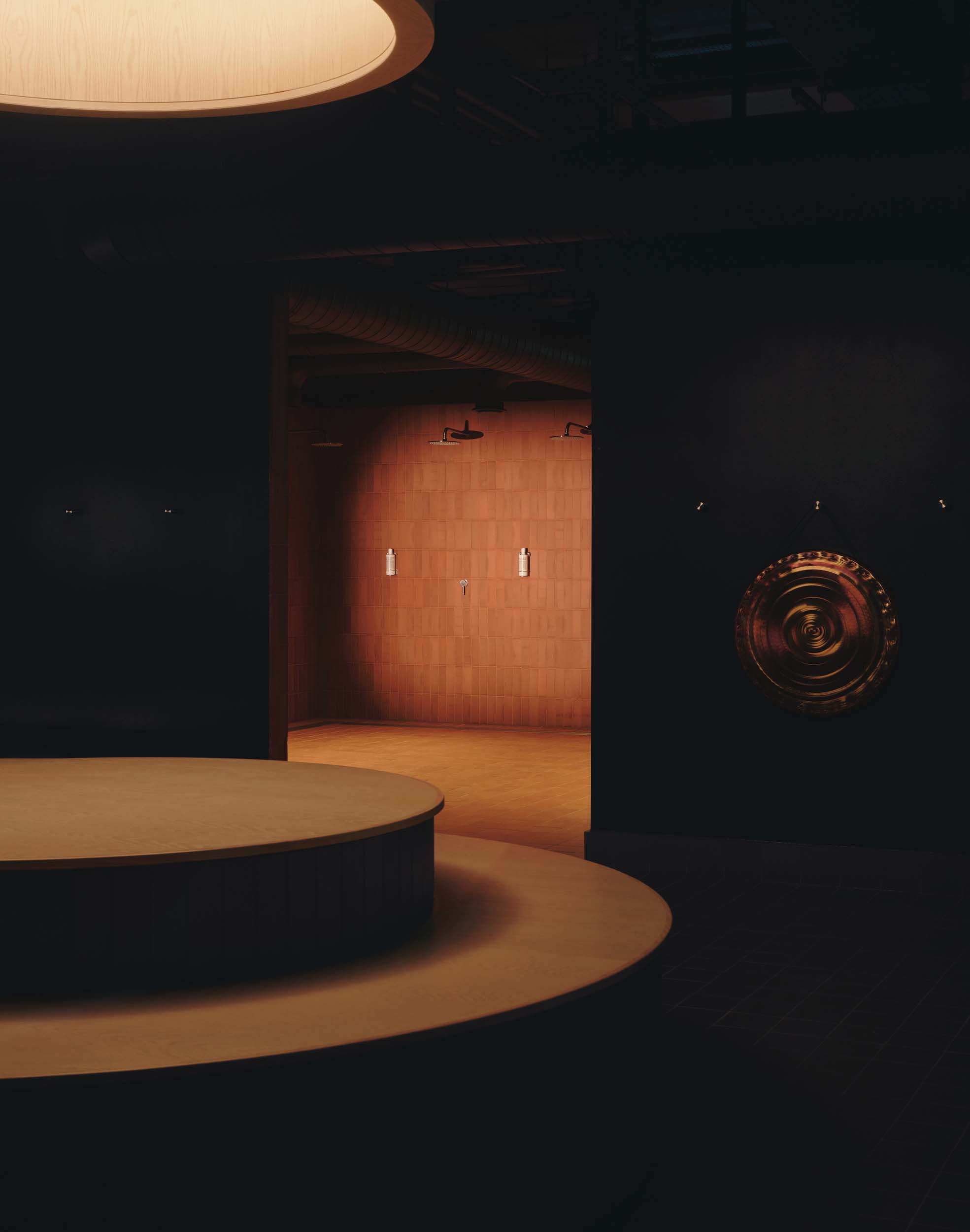
The team approached the venture by interpreting the idea of opposition within the facility’s therapy philosophy, beginning with the research that informed the project. The ancient Roman baths of Caracalla as well as modern 20th-century architecture from the likes of Andrea Branzi and Archizoom provided inspiration, mixing ancient and contemporary references. The change rooms and entry communal space recall older traditions of bathhouses as primary social settings. As such, this social space is designed as a mini amphitheater where the stacked benches surround a cedar table by sculptor Simon Gaiger. “A lot of what we’re trying to do is create a sculptural form that feels somehow massive and has a sense of permanence and grounding,” continued Moncrieff. With all the stacked curves in both the seating and ceiling it’s no surprise that Shiro Kuramata form-driven 1994 Issey Miyake boutique was also an inspiration.
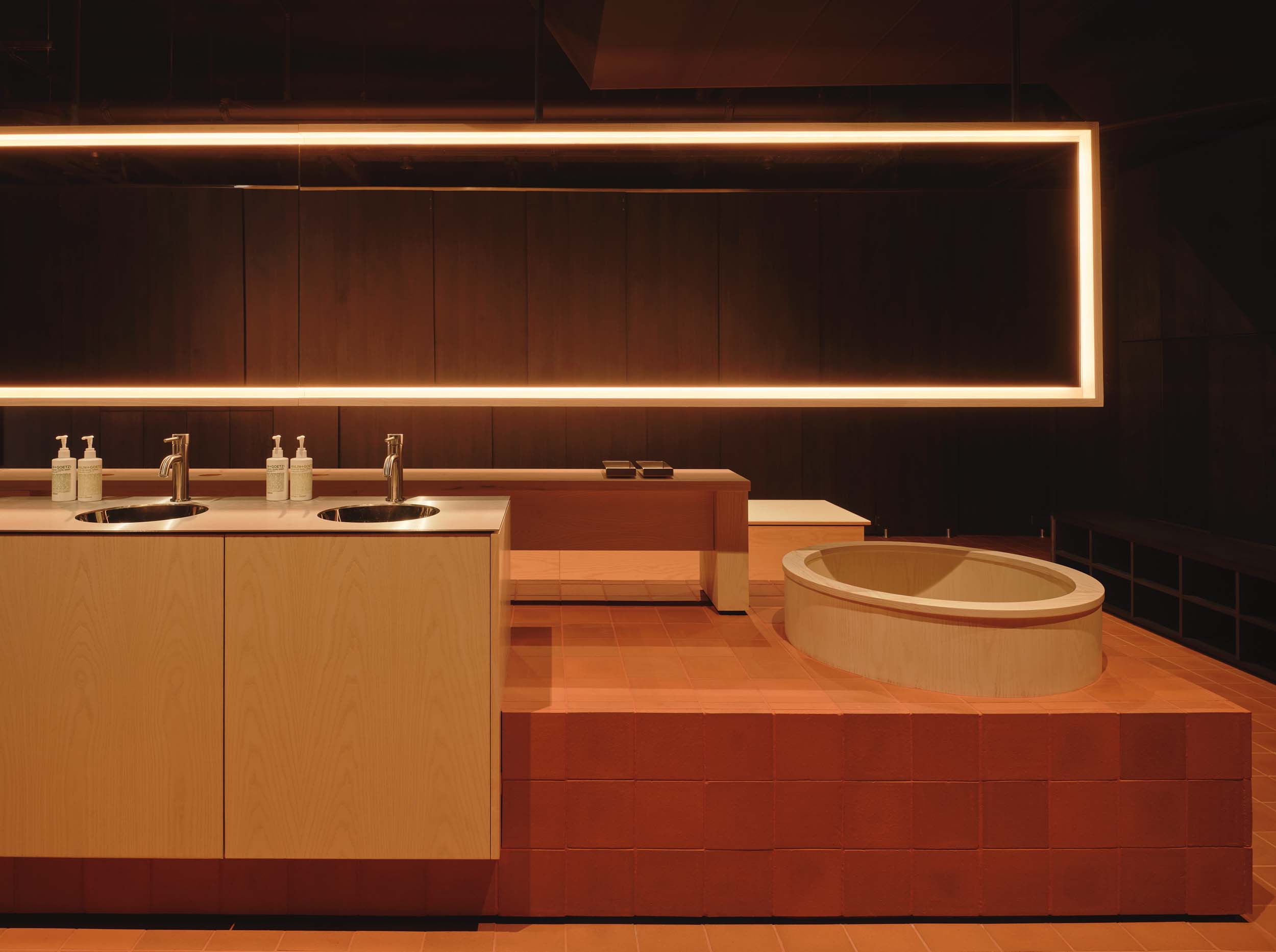
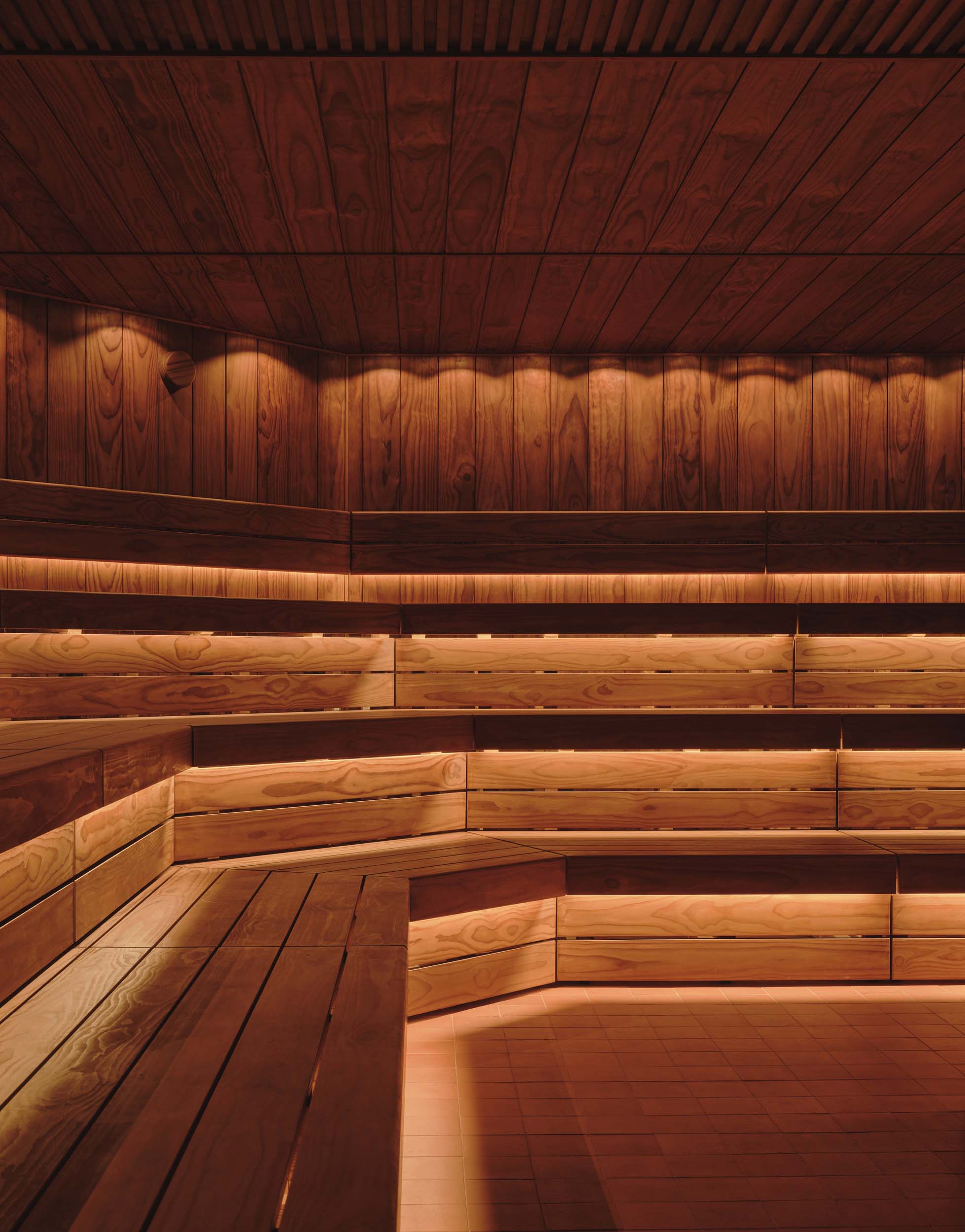
Beyond the lounge lies the sauna and cold plunges. CAKE designed each in contrast to the other, a direct reference to the hot and cold concept of ARC. The sauna, a place for warmth and grounding, aptly relies on red terra-cotta with moments of stained timber for lighting and furniture. But in the next room, where the ice baths lie, dark blue translates the cold temperatures of the cold plunge—and the transcendent effect they’re meant to have. Throughout, a restrained, natural material palette puts the emphasis on sensory experiences.
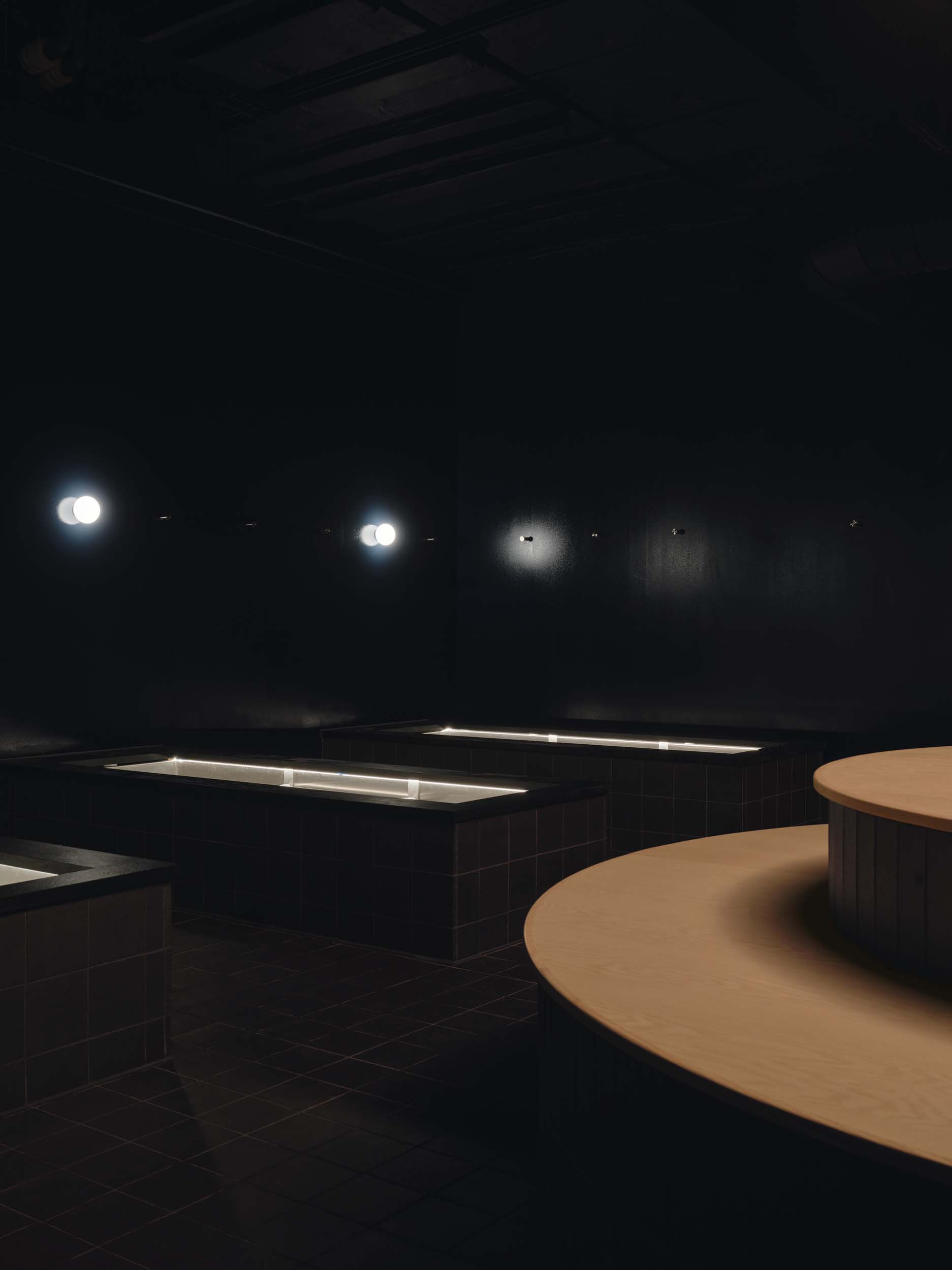
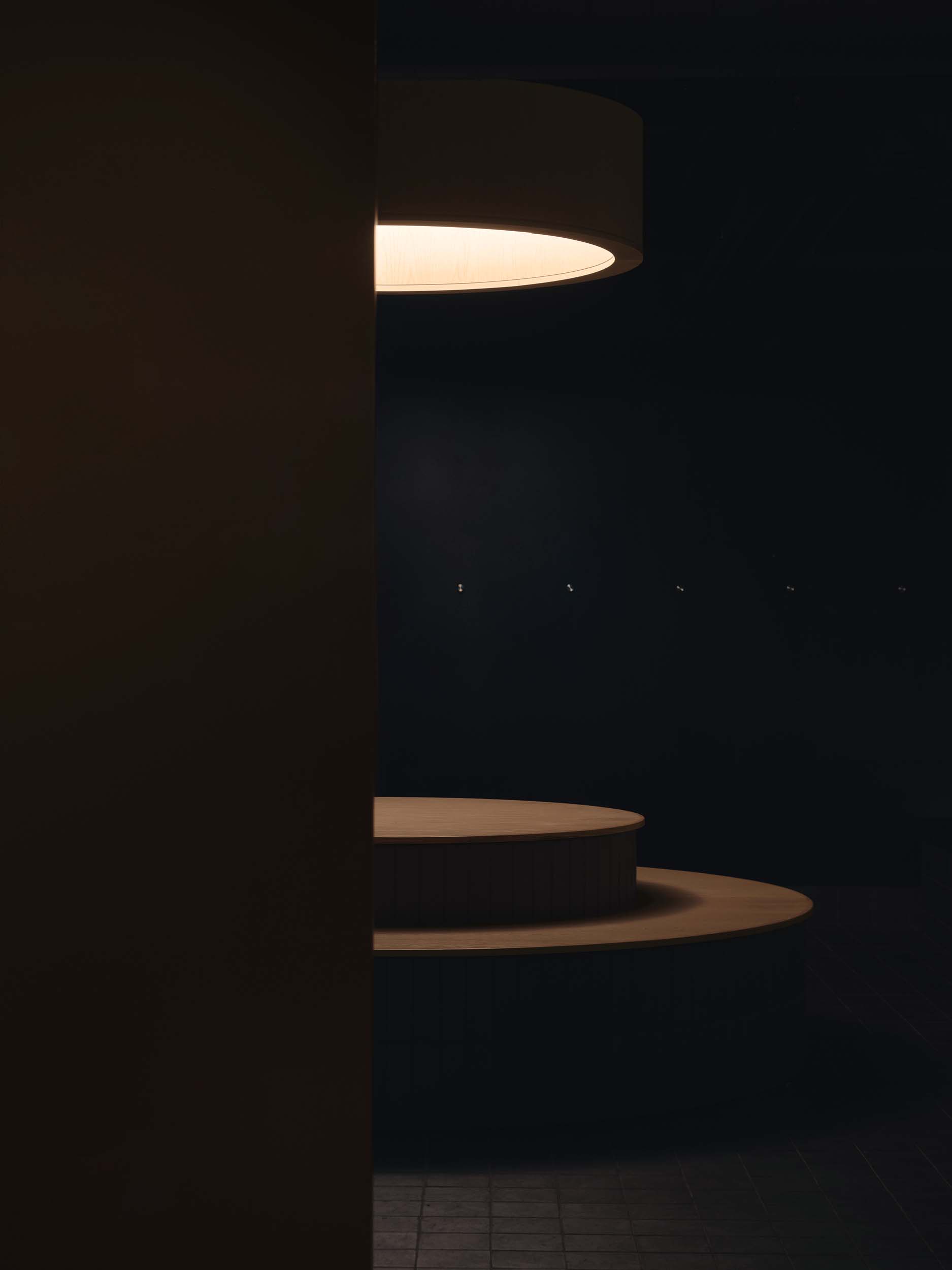
Lighting ties each space together so that while the zones remain opposing, they feel tied to the same visual language. This also provides yet another contrast for the project; this time between exterior and interior. ARC is located in a predominantly business district, so the interior “shifts from the neon glare of the commercial real estate world into this kind of soft, tactile world of earthy materials, wood, clay and low level warm lighting,” said Moncrieff.
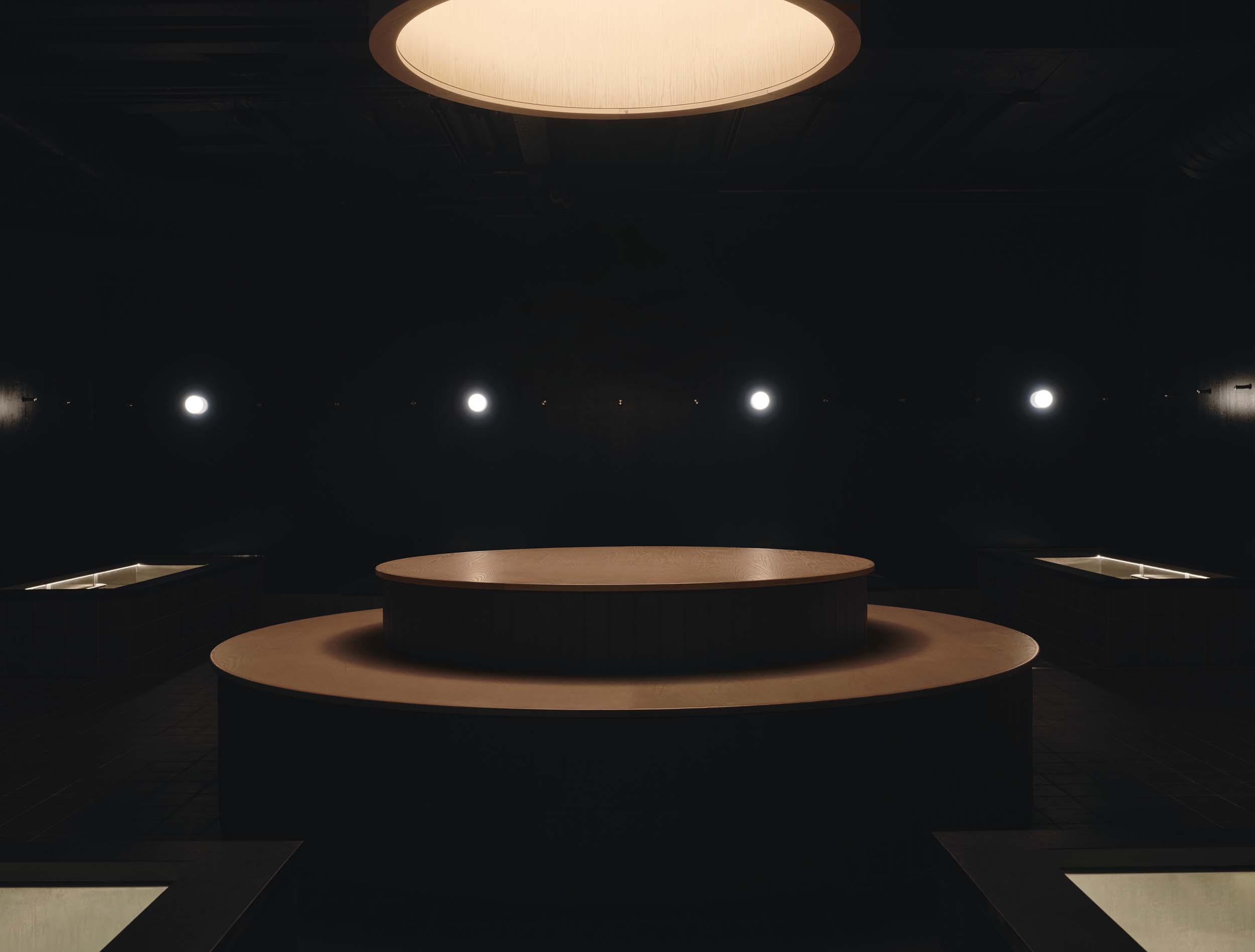
Targeted lighting is used throughout the spaces to create specific moments and, at times, sculpts shadows. In the sauna, the reflection of light placed seems to create a scalloped effect along the walls. In other places, circular light features on the ceiling create specific zones. This is used in the lounge above the centerpiece table, emphasizing how it anchors the space. Other times this is used above the plunge pools, creating a halo-like effect that ties into the out-of-body experience. Just as the dance floor is meant to create a transcendent moment, ARC encourages guests to find euphoria. CAKE’s design visually unites these similarities.