The 41st edition of Cersaie, the international exhibition for ceramic tile and bathroom furnishings, brought the porcelain, large slabs, and mortadella. Held the last week of September in Bologna, Italy, the fair had a total of 606 exhibitors, selling out the complete exhibition floor space. The halls weren’t the only packed rooms; 2024 Pritzker Prize laureate, Riken Yamamoto, was also in attendance as the show’s keynote speaker. During his packed lecture, Yamamoto remarked on Bologna’s many courtyards, whose open squares encourage spontaneity and connection. This, he said, was a key design in cities and buildings that strengthens democracy.
Perhaps it’s no coincidence then that the many tiles on display at the fair focused on human-forward design. Many exhibitors emphasized earthy tones: terra-cotta colors, sage greens, coral shades, and sandy beiges and neutrals. A sense of the imperfect was present: tiles sported finishes made to look as if they were painted by hand. Subtle texture also dominated with many offerings featuring quiet grooves that call to the uniquely human sense of touch. It all adds up to a distinctly grounded, spirited design. Is it that manufacturers and clients are thinking about connection as Yamamoto was? Or is this rise in human-forward design a response to an increasingly AI and machine-dominated world? Whatever the cause may be, it’s fair to say comforting styles are here to stay for a while longer.
Of all the new offerings from the show floor, a few stood out for its unique finish, craft, and visual language. The following are highlights that stood out at Cersaie 2024.


Decoratori Bassanesi | Wă
Designed by Federica Biasi for Decoratori Bassanesi, Wă is informed by the uneven terra-cotta roofing of rural village homes in China. The layered, interlocking system of the roofs is translated to the tiled curved shape and textured ridges. When placed together in a mosaic, the tiles, each 9.5 by 18.5 centimeters, look continuous, where one curve of the tile blends into the void of the other. As its full body porcelain, the decorative collection can even be used for flooring.


Marca Corona | Arialuce
Marca Corona’s extruded terra-cotta volumes are made into grid structures for indoor and outdoor use. They are shaped into three forms—Curve, Pertuse, and Asole—which provides different combinations of voids and solids, adding dimensionality in the space while letting air and light through.


41zero42 | Dandy
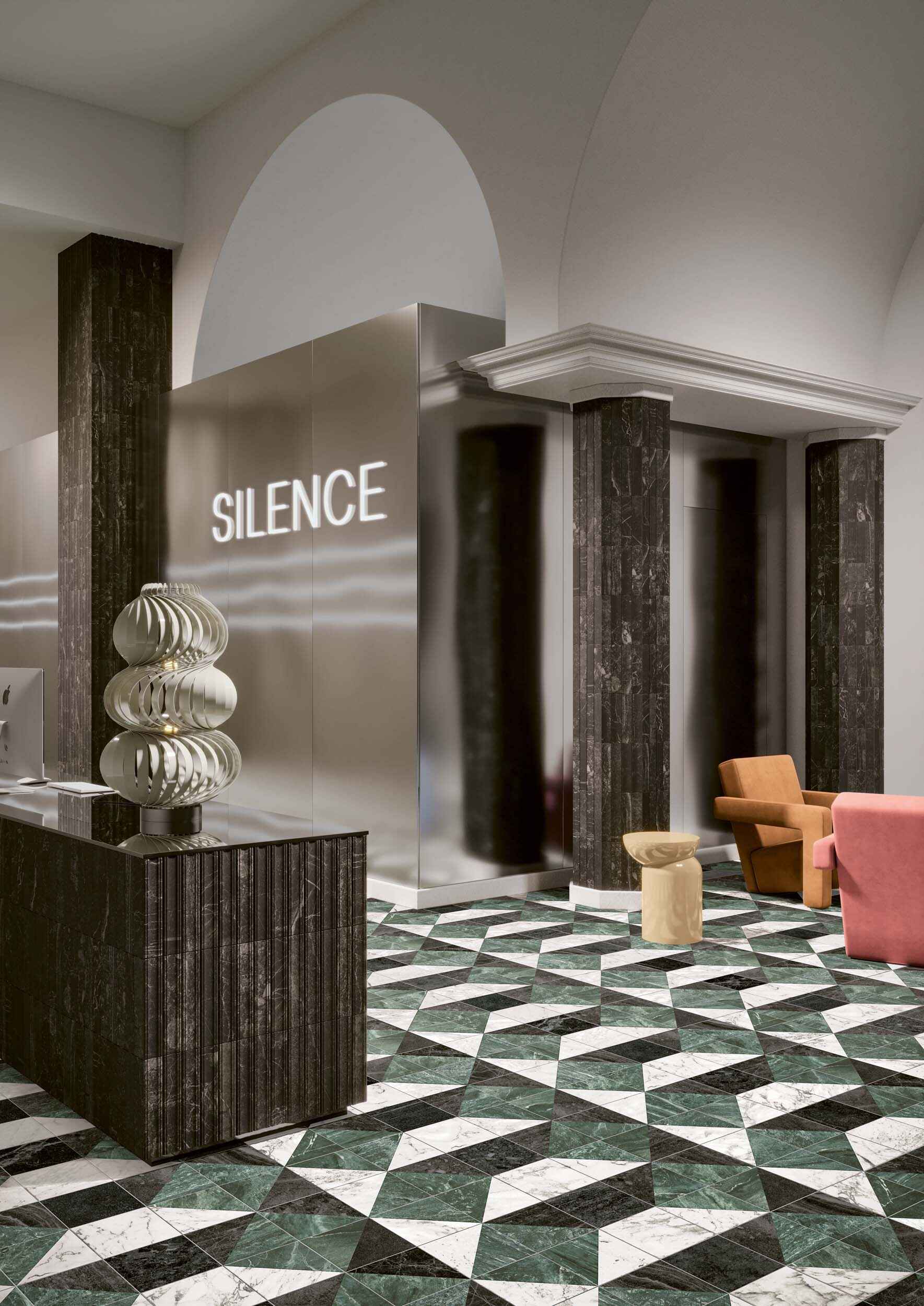
Named after the area code for Bologna, 41zero42 put on a buzzy lounge-like booth at the fair. Dandy, the new collection, exemplified the brand’s elegant and exclusive air. The series features green, white, and black marble patterns with dual-toned tile combinations, and combinations incorporating funky zig-zags and ribbons—a fresh take on a classic style.

Antiche Fornaci D’agostino | Capri
Many go for the look of hand-painted tiles, few actually do. Antiche Fornaci D’Agostino is one of the few. The glossy and glazed Capri collection is inspired by the Mediterranean and available in white, light blue, dark blue, green, brown, and black, each featuring the hand-painted brush strokes that give the design subtle texture.


Sōdai | Rad
Sōdai embraces decorativism like a hedonistic ethos. The brand’s lush, art deco vision travels to the ‘70s in their new release, Rad. The design is almost a burlwood but interpreted through super-bright and glazed porcelain stoneware slabs which takes after moldings in cars and midcentury furniture. Cladding interior walls, Rad almost doesn’t look like a tile, and it certainly doesn’t look like any other offering in the show, either.


Quintessenza Ceramiche | Färgblock
Color could be found at Quintessenza Ceramiche, where designer Tekla Evelina Severin developed the Färgblock collection, a bold and graphic stoneware collection. It includes square, square with a semi-circle void, and semi-circle tiles. The new Cirkel series takes inspiration from the sun disappearing at sunset, and it extends to the entire Färgblock palette for multiple mix and match configurations.