In northern Italy, Paesana is a commune with a population of about 3,000. Among its tall apartment blocks and clumsy detached houses, Casa BM deceptively blends into its surroundings. ErranteArchitetture, a Savigliano-based firm led by Sarah Becchio and Paolo Borghino, recovered and extended the 1960s, 2-story home, adding a new 1-story pavilion and completely reworking the interior configuration into an interlocking composition of exposed elements.

The new addition is slotted onto the east side of the original structure, creating room for a new entrance, living room, and a small study with independent access. This new orientation creates an L-shaped plan that strategically reconfigures the main facade to open up to the landscape and garden for better privacy.

The architects maintained the majority of the exterior shell while introducing new corrugated metal awnings, extensive glazing, and new timber-framed roofs. The owners of the building helped construct some of the project themselves.

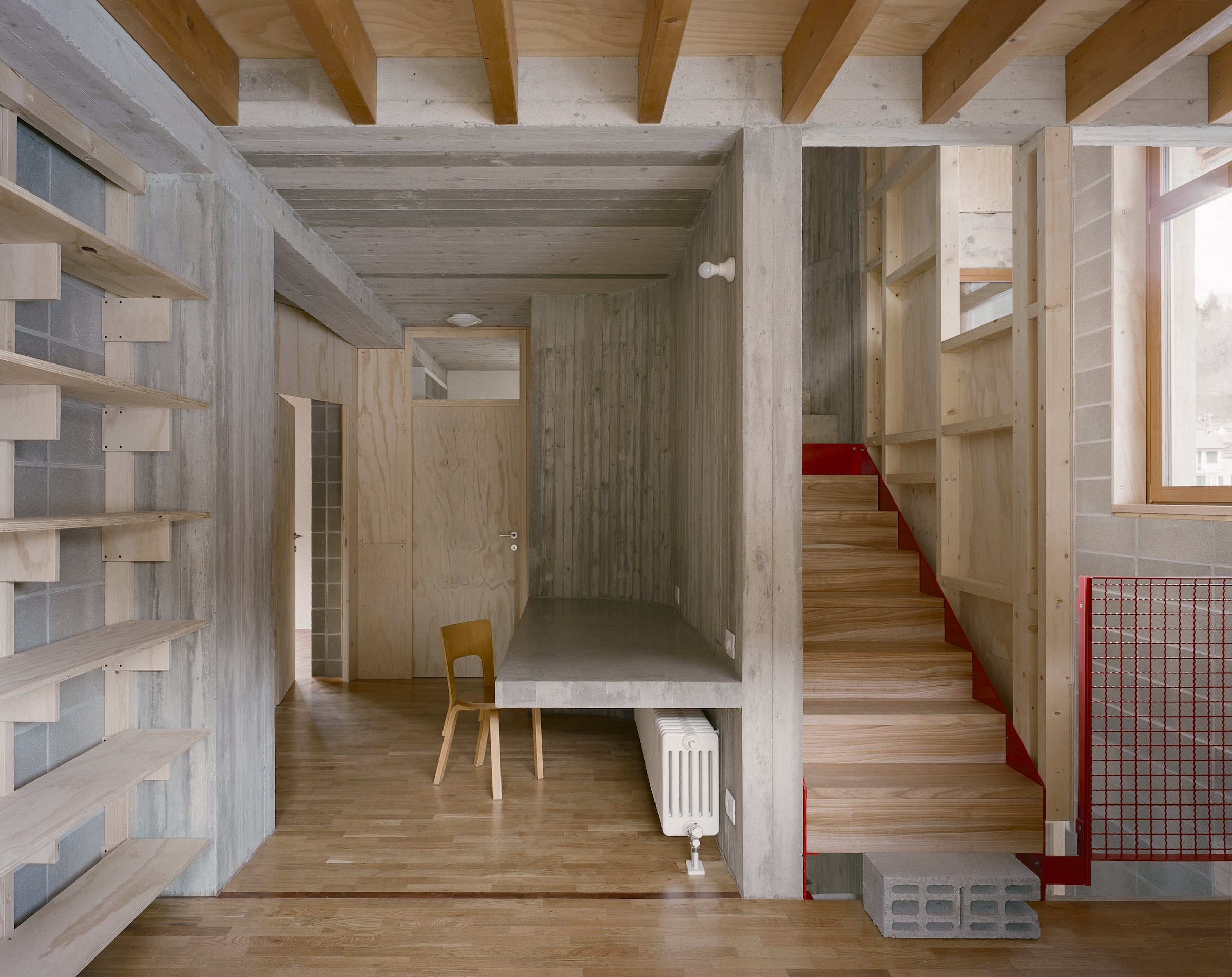
The interior continues the material palette of the exterior. Concrete blocks and pine plywood panels make up the raw and exposed design language. ErranteArchitetture arrived at the palette through focusing on the use of salvaged materials, standard semi-finished components, and sourcing high-quality materials at a low cost such that local builders, the clients, or even the architects themselves could feasibly implement them.

The materials are woven together with unexpected articulations. New partition walls, particularly on the upper floors where the bedrooms are housed, cut through the volume in defiance of the original frame. “The spatial sequences are governed by diagonal and curved lines that, starting from the property’s outer edge, define level changes in the garden and guide movements in and out of the house, amplifying the sense of continuity between interior and exterior, between the ground floor and the various levels of the dwelling,” said the cofounders in a statement.

The exposed elements ensure depth and texture decorate every room without taking away from the view of the ample openings. Pops of red highlight exposed elements that are custom designed, including the stair, railings, and kitchen hood. The roof bracings, gutters, and downpipes are also left exposed to elegant effect.


A suite of built-ins ensure incorporated benches, shelving, desks, and other furniture that enhances the perception of continuity and unexpectedness. The architects described Casa BM, as a subtle deviation: It completely reworks what’s typical in Italy’s suburban fabrics and yet is conceived with local resources and studios in mind.