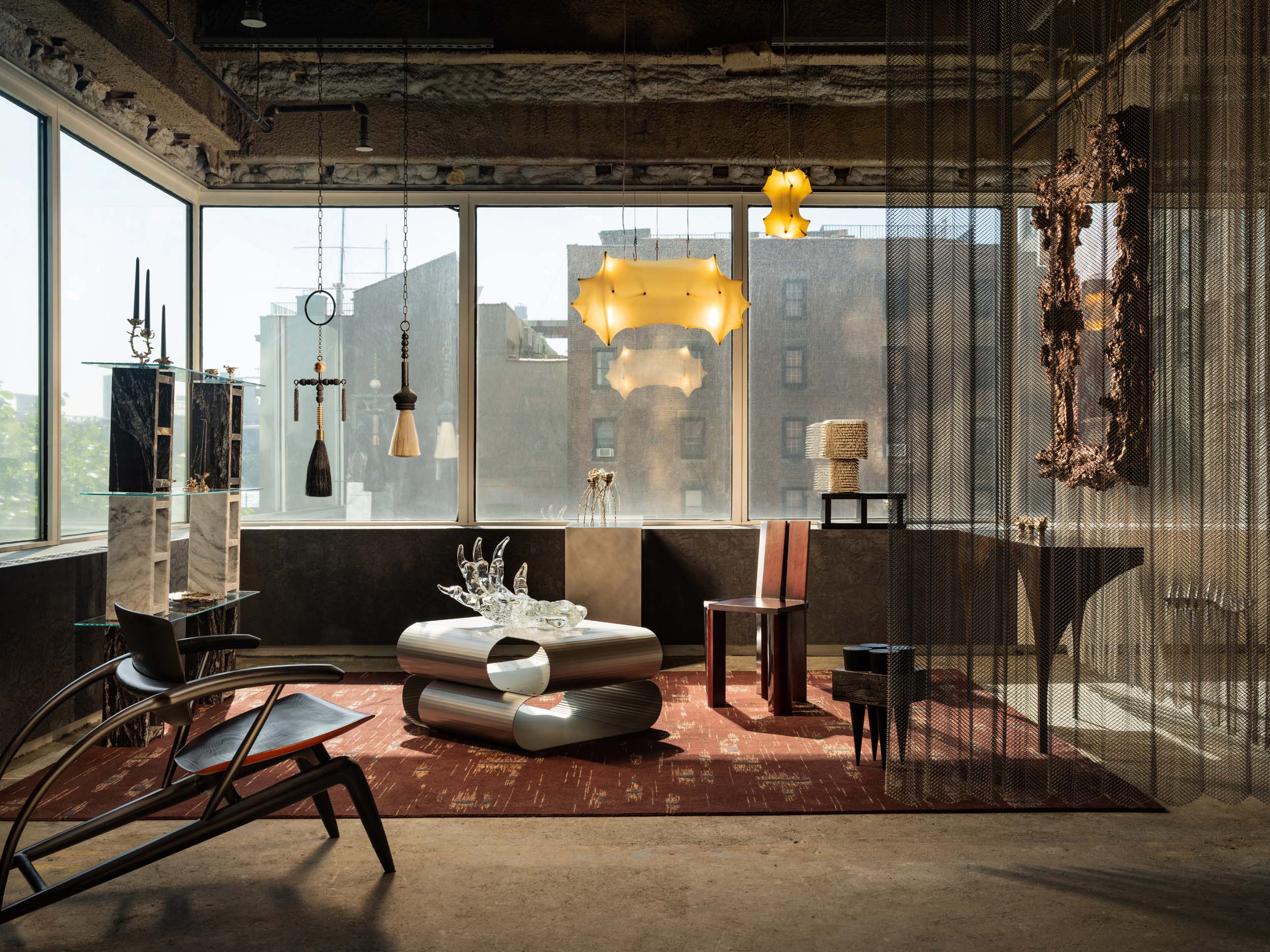
As the world of interiors continues to evolve, so too do its practitioners. Following the new kids on the block not only acts as a good pulse check for the direction the industry is trending toward, but it also becomes a source of inspiration. Emerging design and architecture studios continue to impress in the scale and breadth of work for a small, new team. The following practices are run in twos or threes, hone a unique visual language, commit to an ethos that underscores the practice, and still find ways to give back or work with their communities. Here are four emerging studios that AN Interior is keeping on the radar.
Jumbo
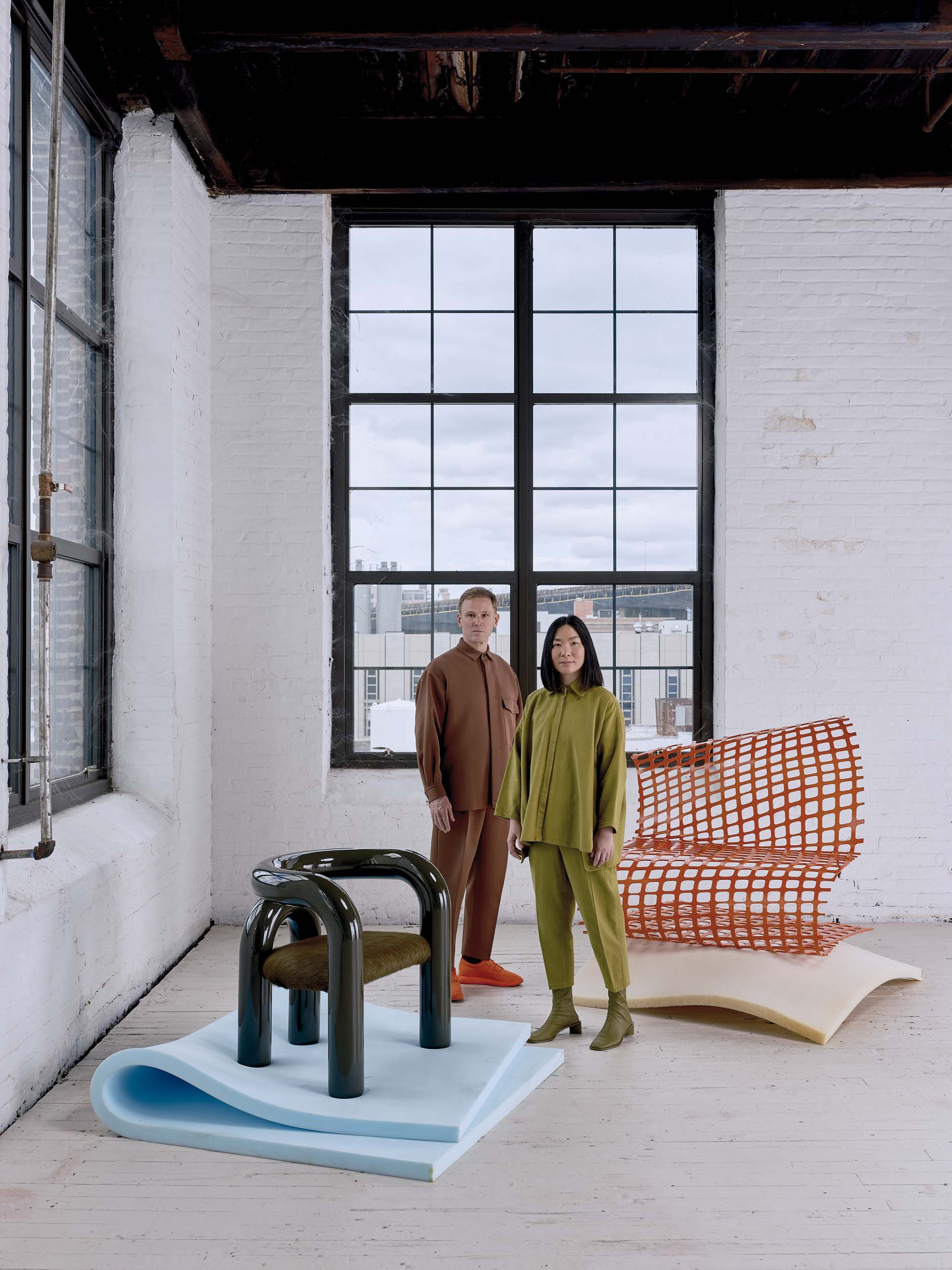
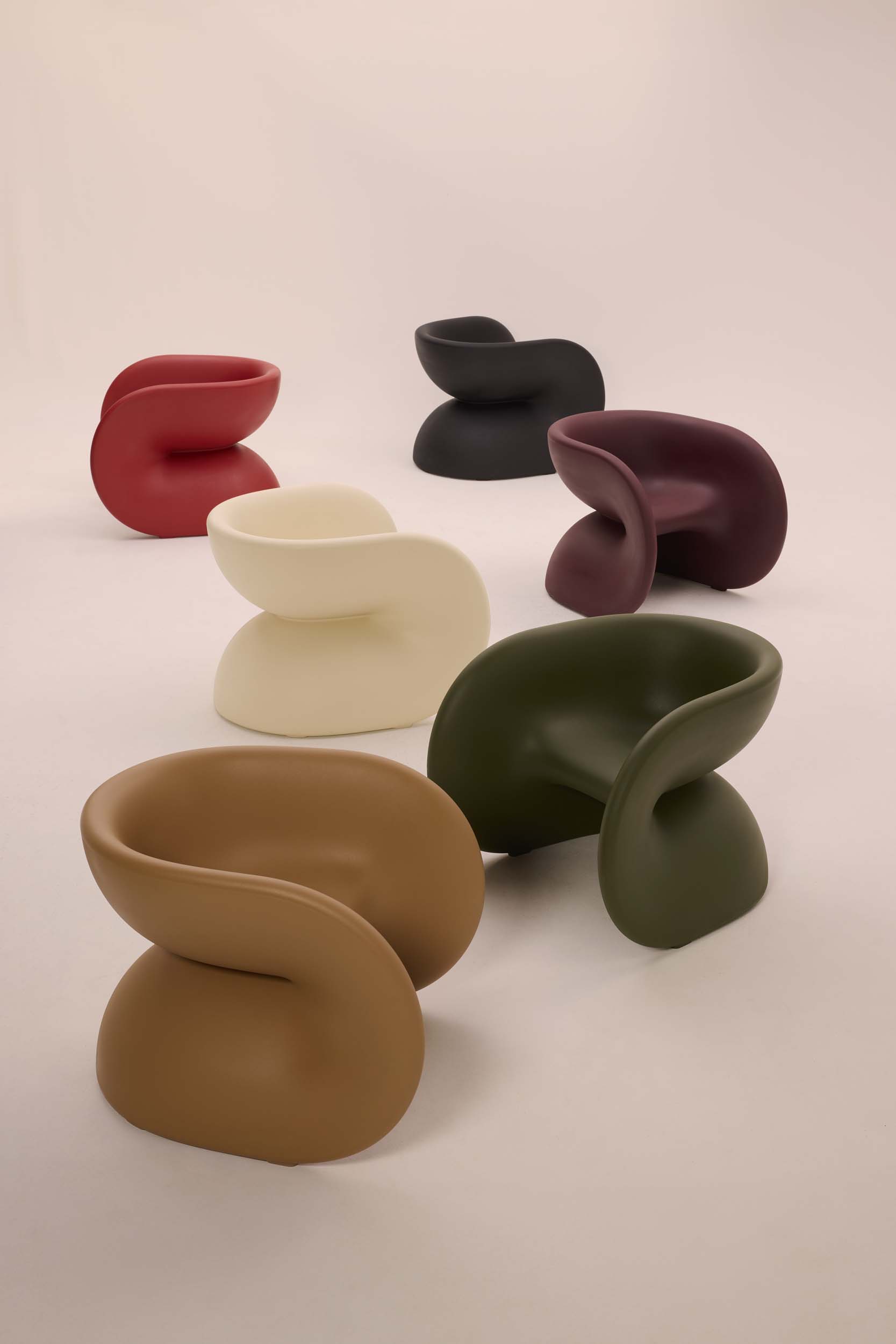
Based in Brooklyn, New York, Jumbo is a design practice founded by Justin Donnelly and Monling Lee. Chubby, curvy, and childlike, the studio’s furniture and objects are guided by an ongoing interest in reductivism and whimsy. At times, the duo takes cues from food: Fortune, put into production by Heller, is a chair inspired by fortune cookies. Other times, industrialism and politics are front of mind, as is the case with the Snow Fence Chair, a reimagining of a flexible polypropylene membrane, commonly found on construction sites, into a static loveseat. This piece was inspired by the materials used in outdoor dining spaces during the pandemic. Jumbo researches the science of affect—how physical objects make people feel.
Studio S II
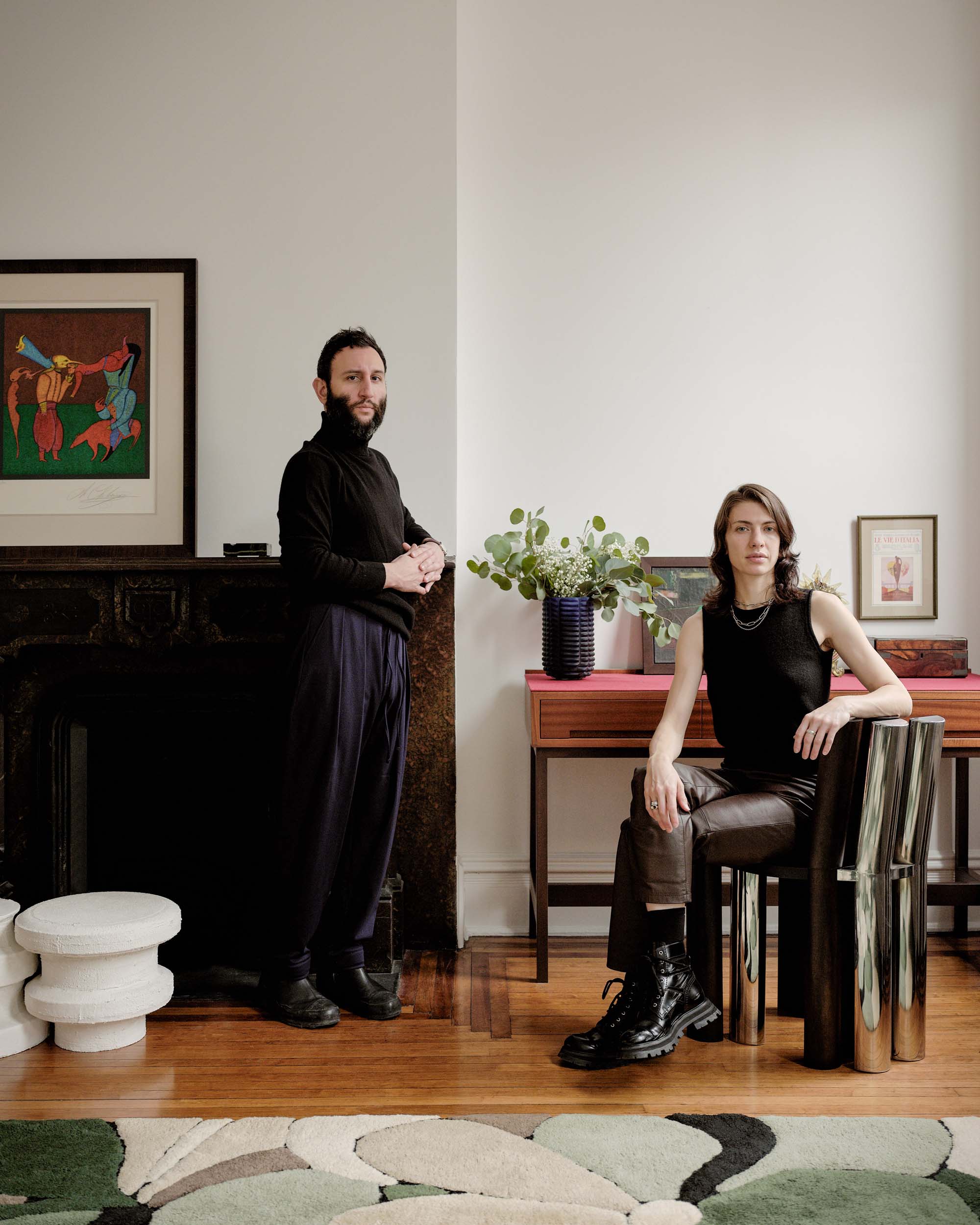
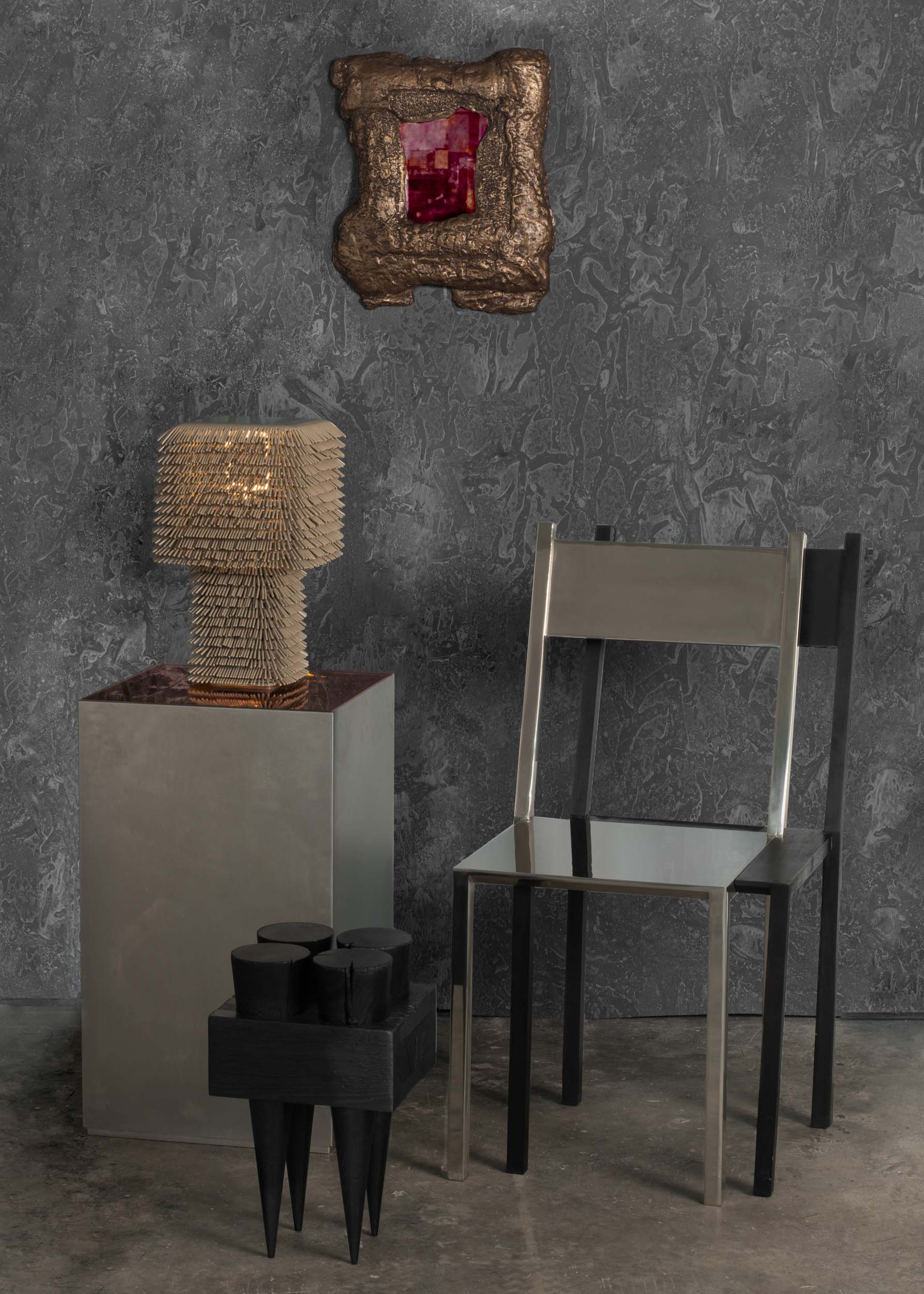
Expect the unexpected. Studio S II, founded by Erica Sellers and Jeremy Silberberg, designs interiors and furniture and curates exhibitions. The through line is subversiveness. For instance, a sconce that mimics the back of someone’s head, long locks and all. Or a chair with two overlapping seats to mimic the vision of a person coming home after a drunk night out. Elsewhere, variation is the only constant, ranging from the studio’s maximal and layered Greenpoint apartment project to the Scandinavian minimalist interior of a Clinton Hill kitchen. Silberberg and Sellers utilize contradiction and corporeality to explore materials and form. Since its inception in 2020, the studio has quickly grown an audience through often sensual and proudly queer visual languages.
A+A+A
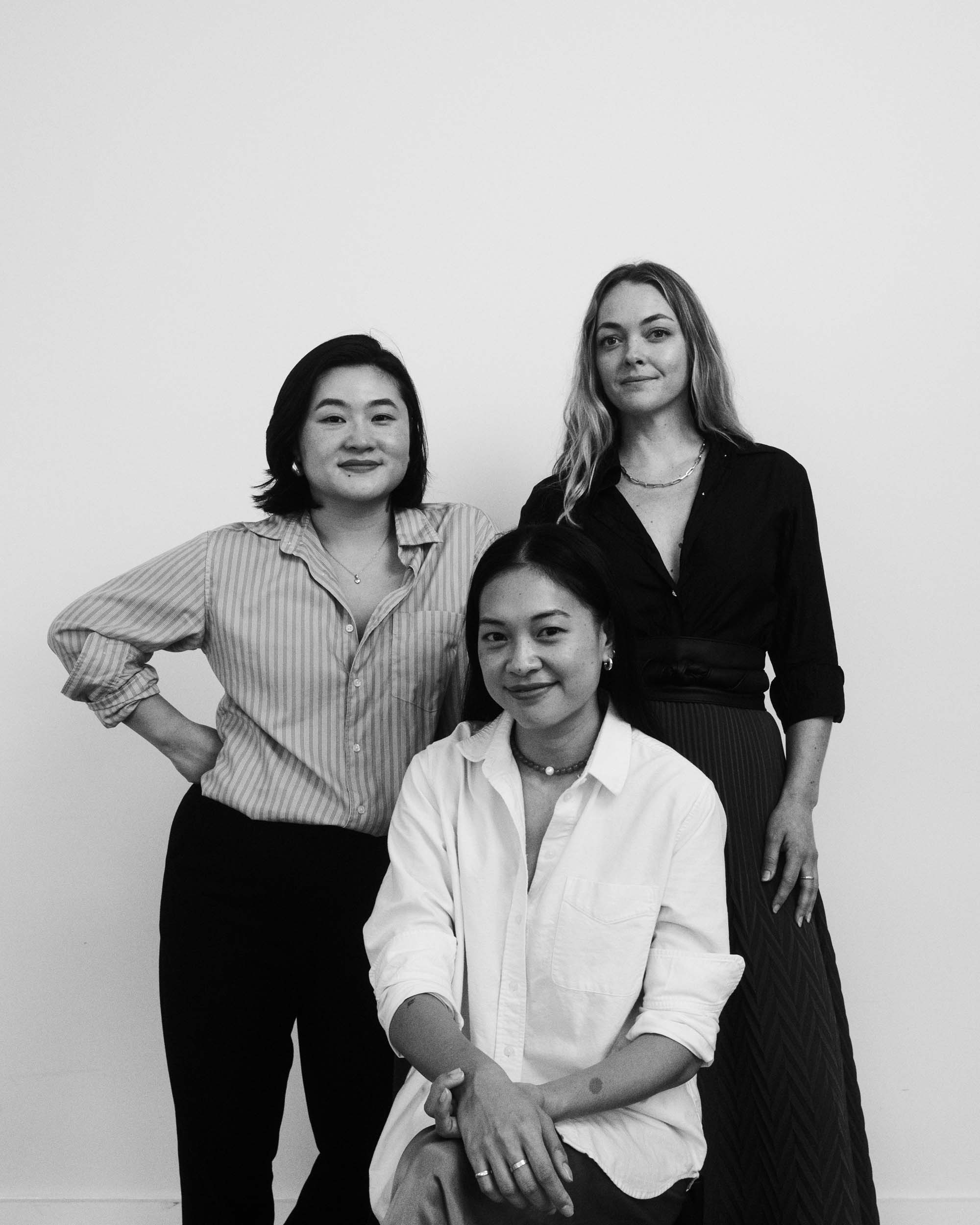
Andrea Chiney, Arianna Deane, and Ashely Ku founded A+A+A in 2018. The New York–based studio emphasizes inclusivity. It’s evident in the people who make up the firm; design work like the Tompkinsville Afro-Caribbean and Latin Market in Staten Island; and in the Design Clinic, a consultation service that seeks to help demystify the renovation process by offering a streamlined road map for each project. The studio deals in interiors and architecture as well as mobile and public spaces, installations, and research. A+A+A even designed an architecture studio curriculum, Food Futures, that uses urban acupuncture methodology to examine the relationship between urban spaces and food systems.

ONO
ONO, or Obata Noblin Office, approaches everything it does—from its handcrafted models to its designs—with a thoughtful attention to detail. The San Francisco–based architecture firm is led by Tyler Noblin and Max Obata, who cofounded ONO in 2020. Continuity with site history is paramount to the studio’s design process, coupled with incorporating a sense of playfulness whenever possible. Such was the case in the Crane Cove Warehouse, a renovation of a warehouse into a workshop that preserves original industrial materials while introducing bright, contemporary texture. For Pennyroyal, a 1970s ski house in California, the original cedar board-and-batten facade informed the wood-clad interior within. ONO follows a technical and precise method: The goal is not to reinvent the wheel, but rather to arrive at something familiar yet fresh.