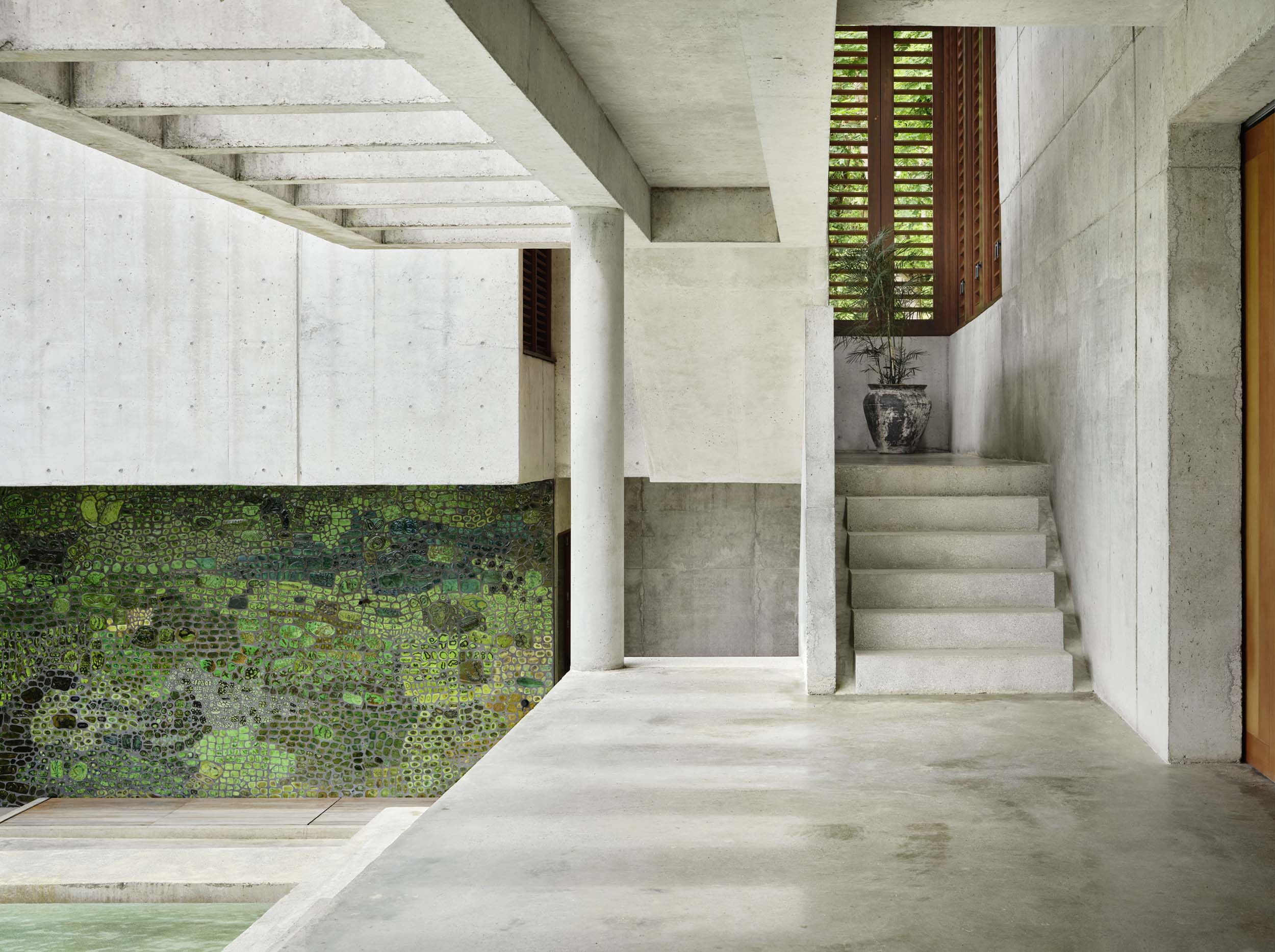
Jamaica’s Portland Parish ranges from tropical jungles, lagoons, and mountains, all teeming with endemic fauna, endangered species, a bird sanctuary, and untouched land. It’s only natural then that the town is home to…a concrete monolith for American DJ and producer Diplo. The artist conceived of his 50-acre space, dubbed Pompey Jamaica, as a place that offers respite from the hustle and bustle but also productive inspiration for it. The sanctuary had to be as grandiose as its surroundings. Brooklyn-based firm FREECELL ARCHITECTURE and Gia Wolff met the drama required of the brief using cast concrete to cut a striking figure against the tropical foliage—while communing with it.
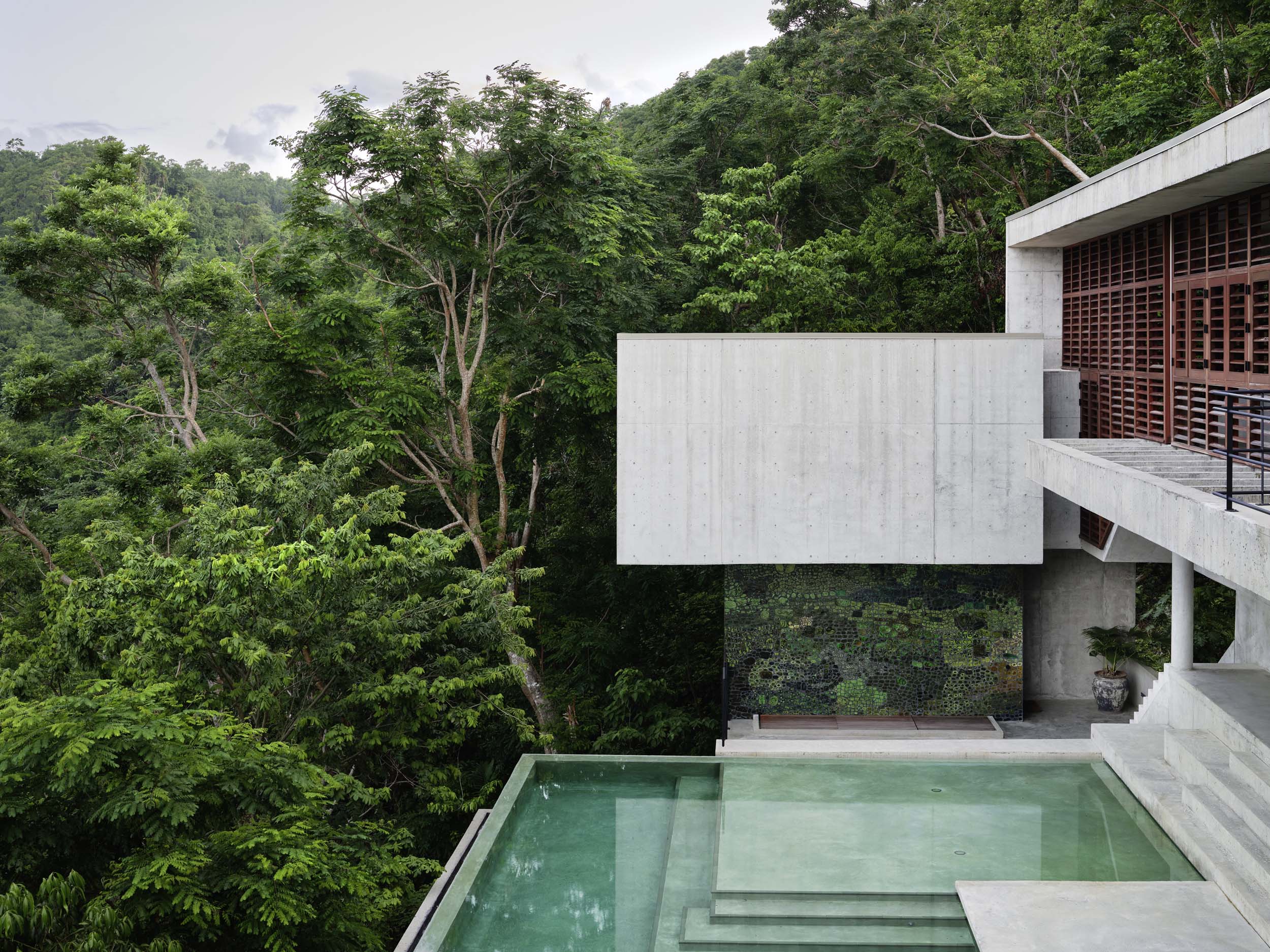
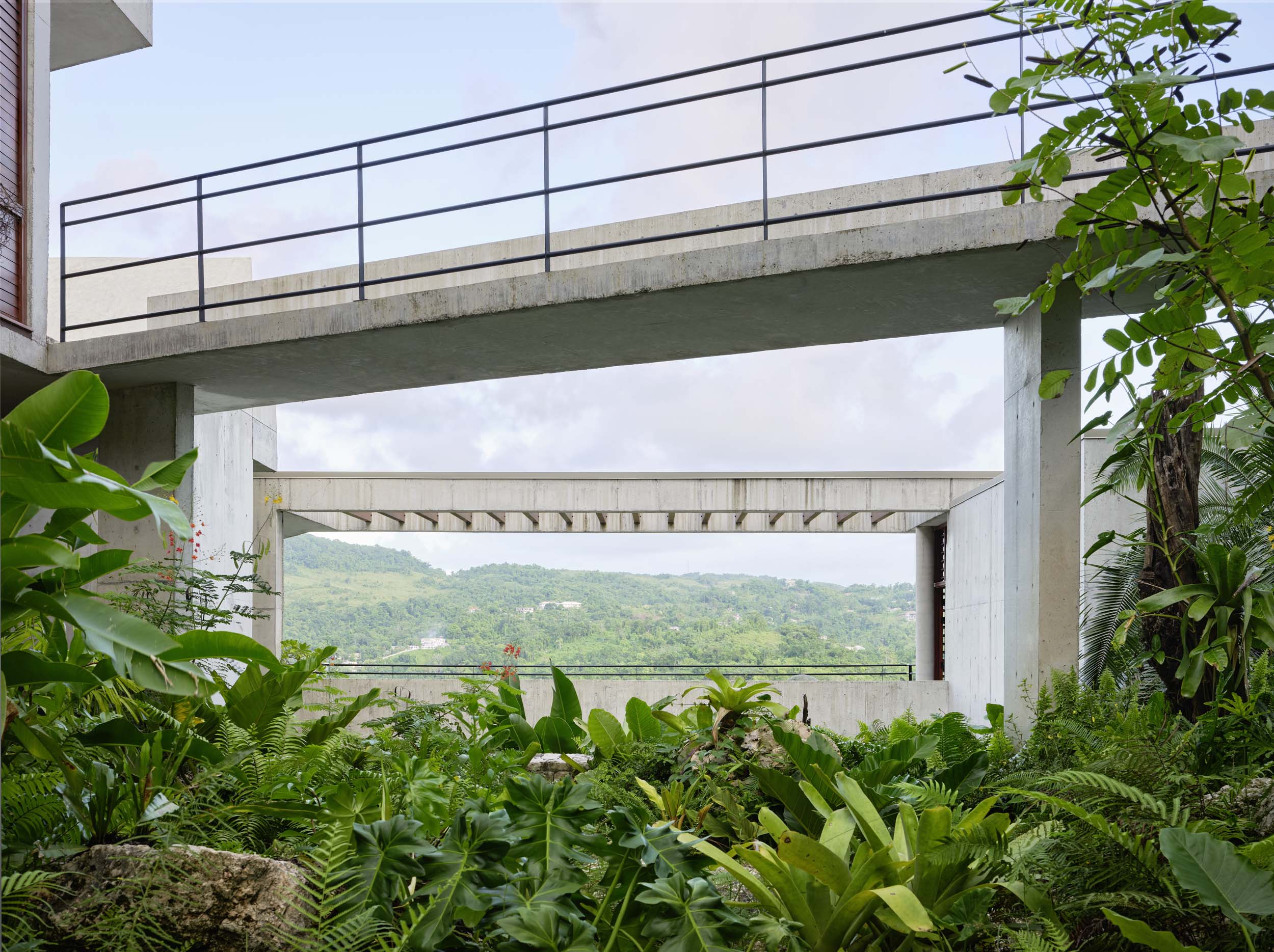
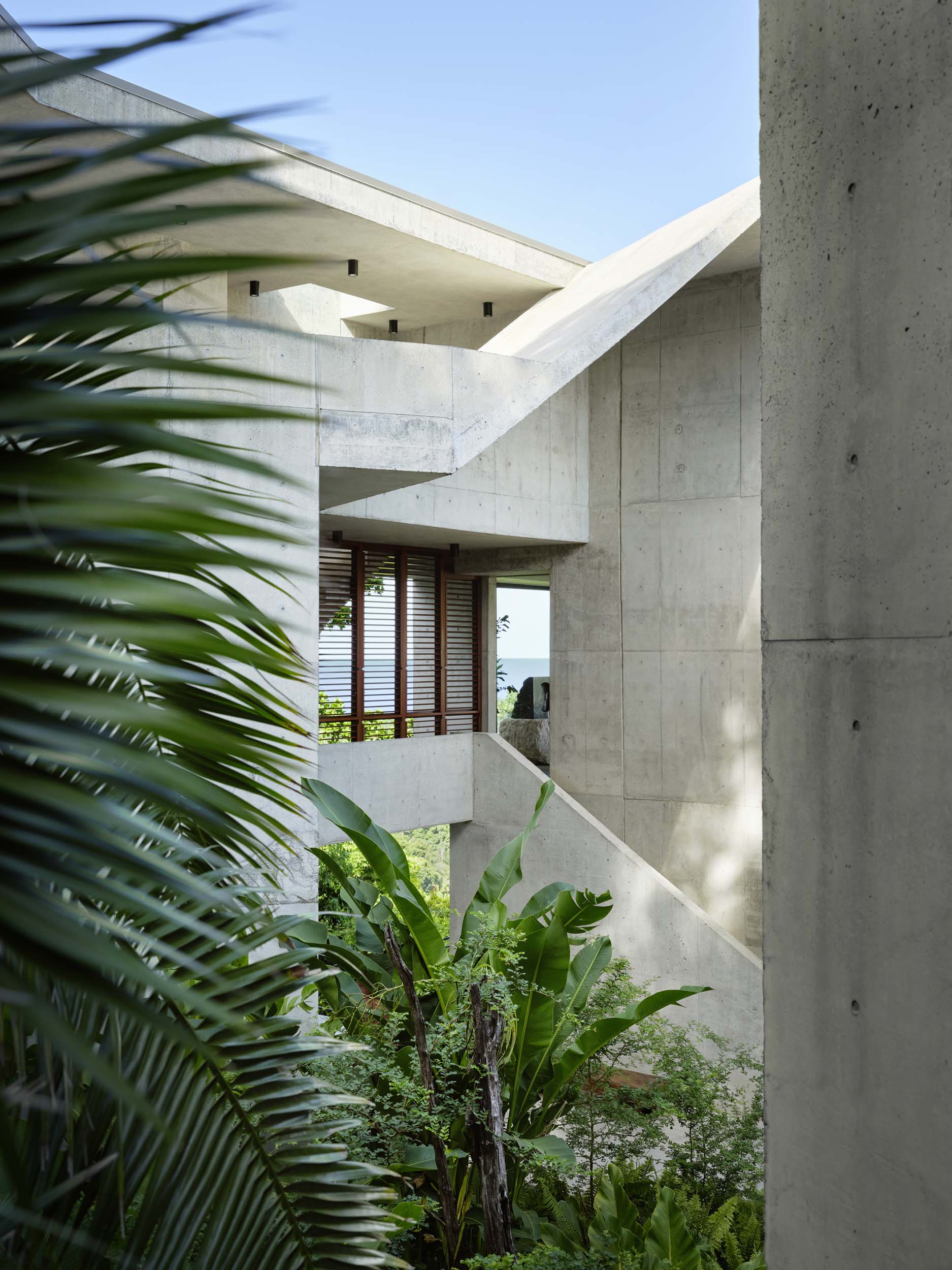
Composed as a series of concrete boxes stacked atop and intertwined with one another, Pompey is a symphony of different architectural inspirations: Le Corbusier’s pilotis can be seen in the structure’s many open floors balanced upon columns; dramatic and grand forms draw from elements of Brazilian modernism; while the composition, a plethora of cutouts to strategically frame an outward look upon the land, references the biophilic work of Geoffrey Bawa. Indeed, this deference to the land is further applied to the estate’s efficiency. It uses solar power for heating and electricity, and rainwater catchment systems and organic farming practices make the property more self-sufficient.
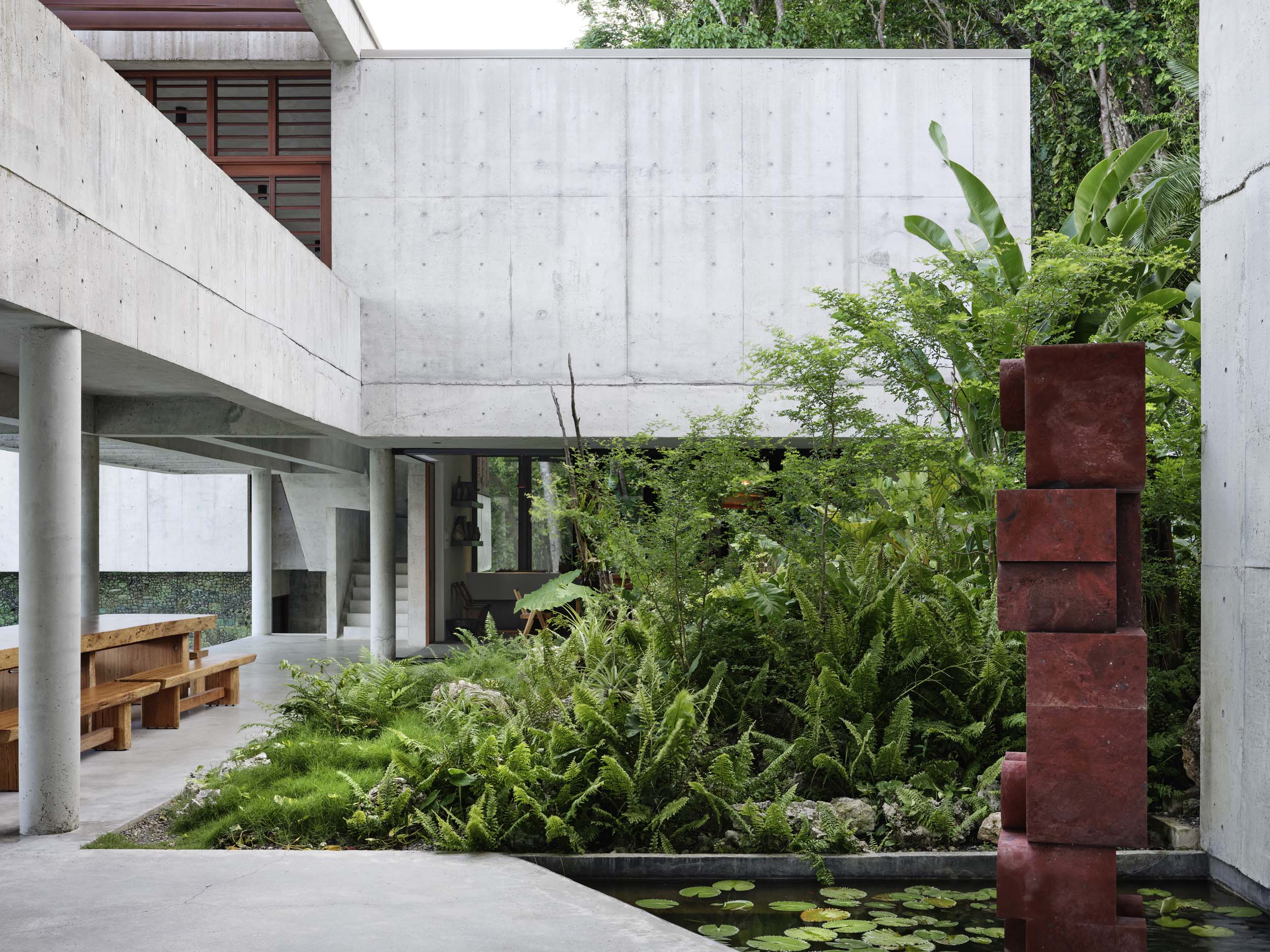
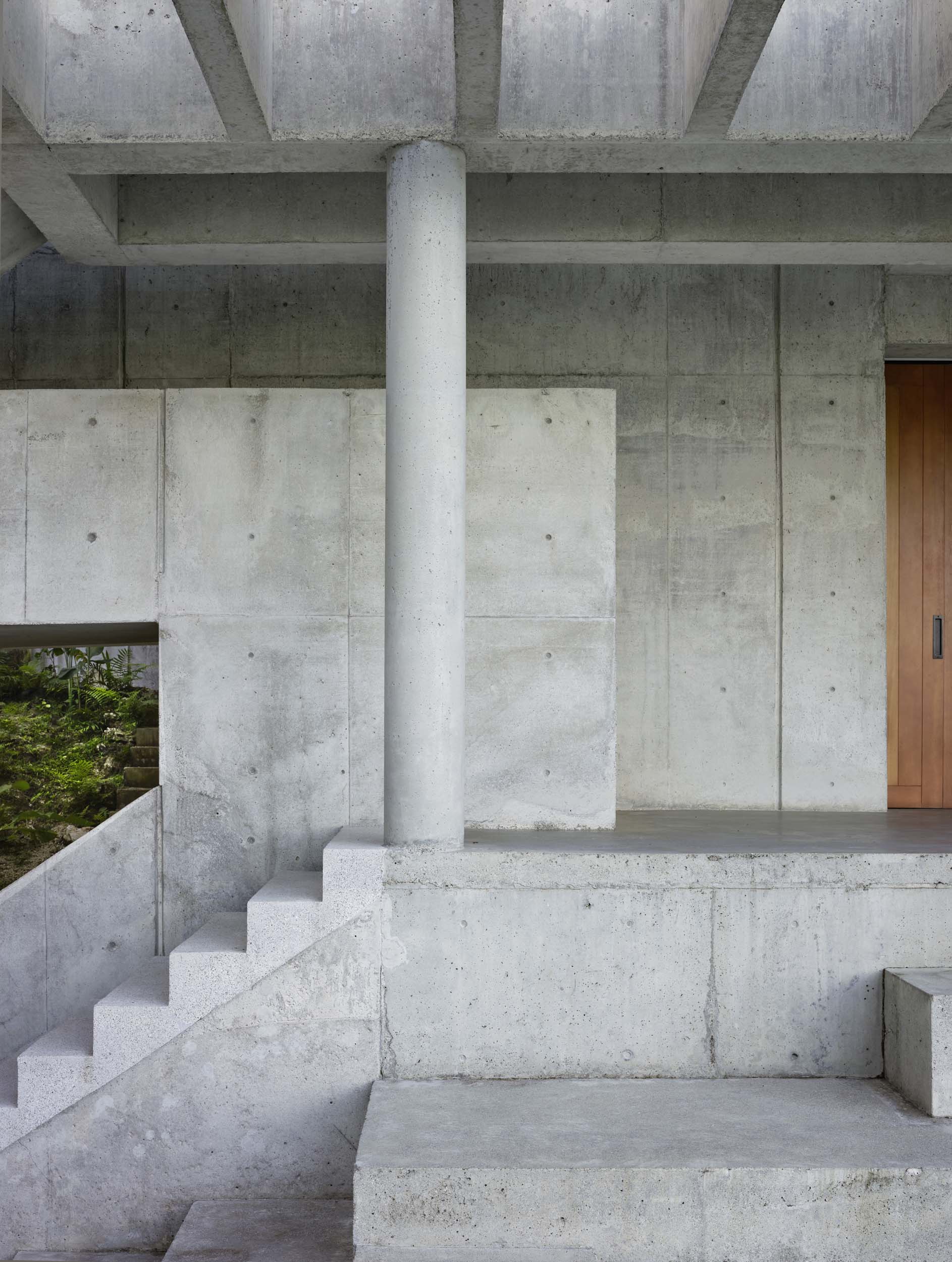
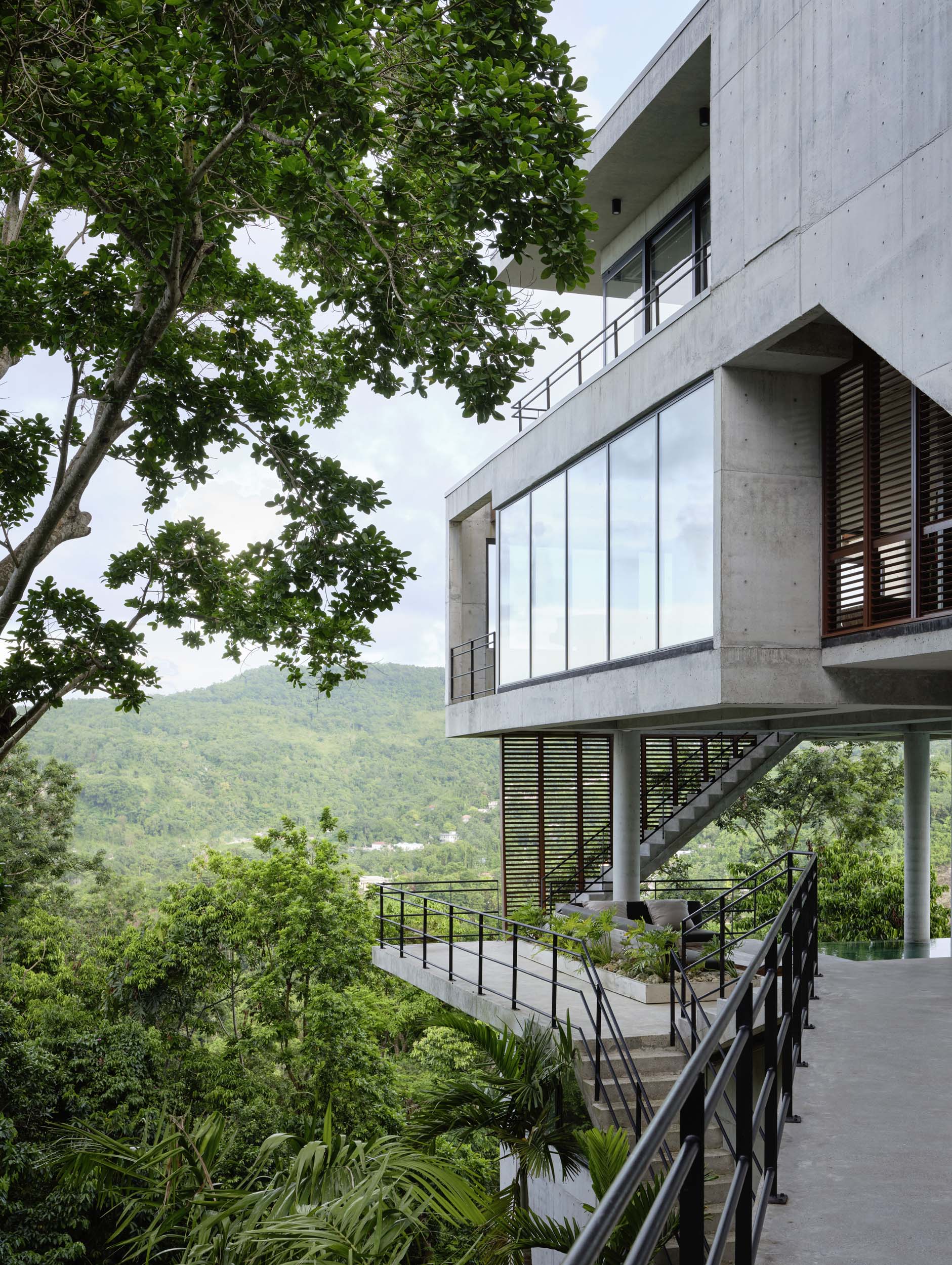
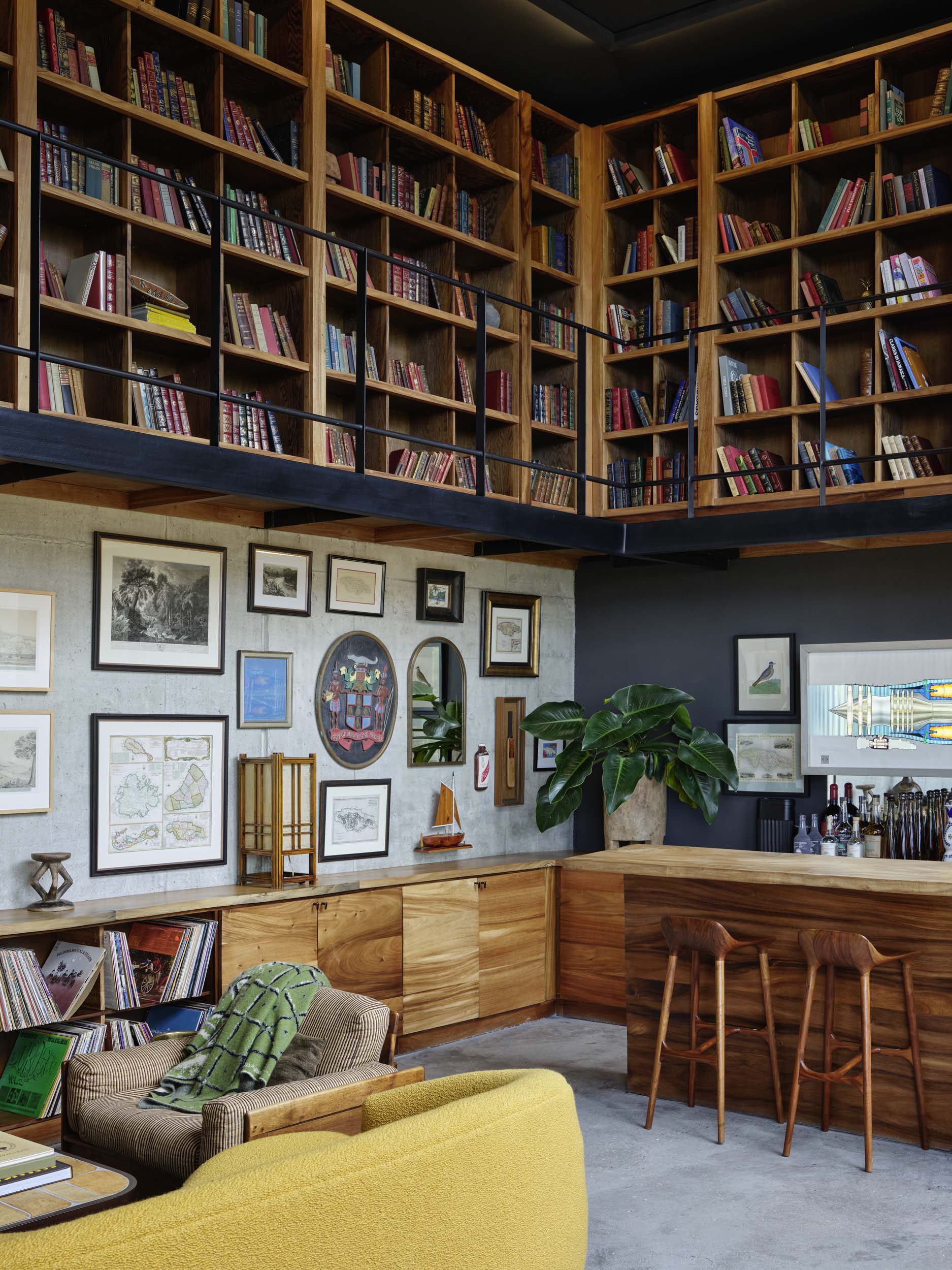
These references come together to house five rooms, six beds, four baths, and a host of amenities. It’s likely quicker to describe what Pompey doesn’t include versus what it does, which is to say a pool, standalone bunker that acts as a recording studio, gym, sauna, horse stable, vinyl library, yoga pavilions and a climbing wall. There’s even a hyperbaric chamber.

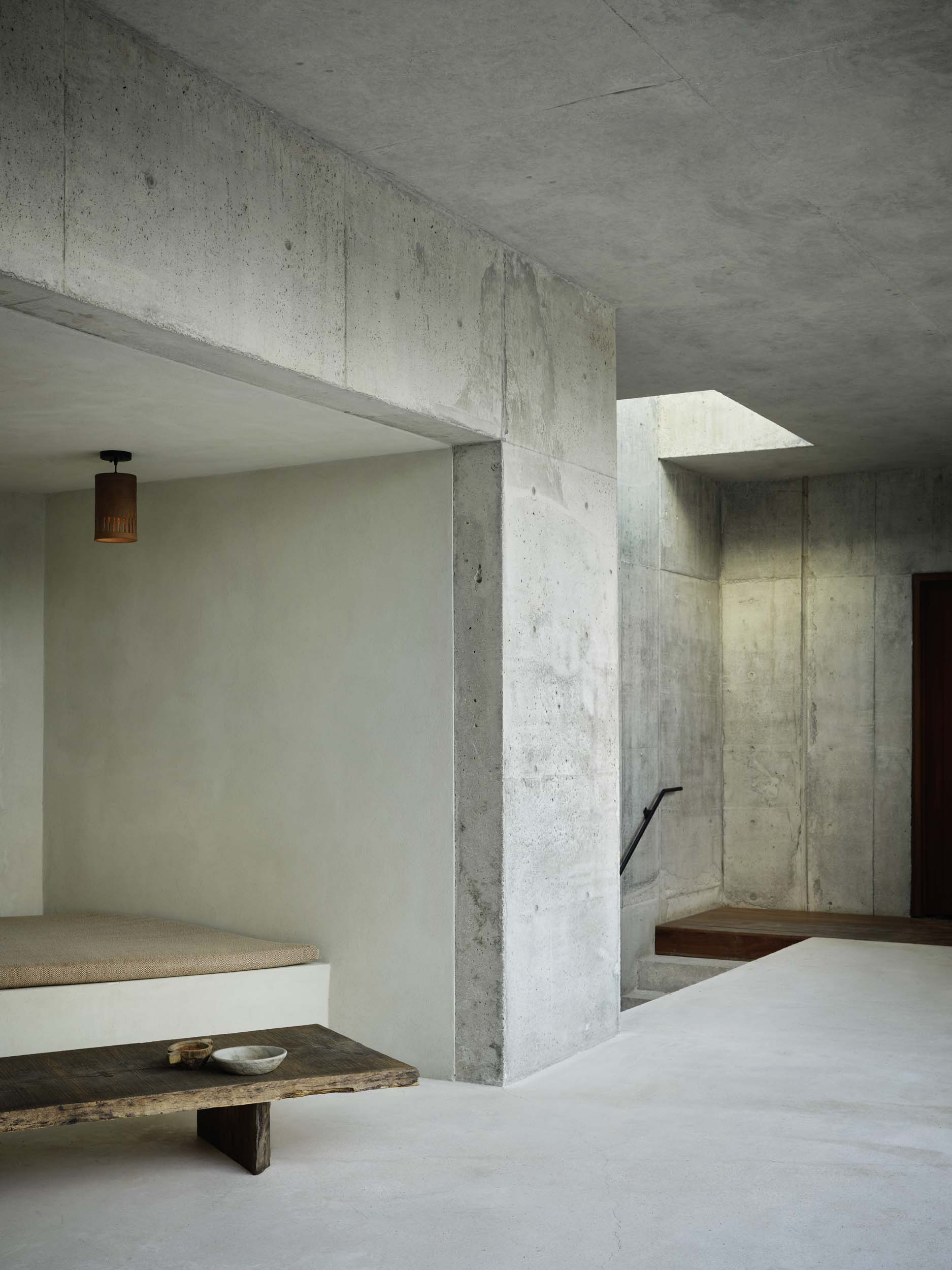
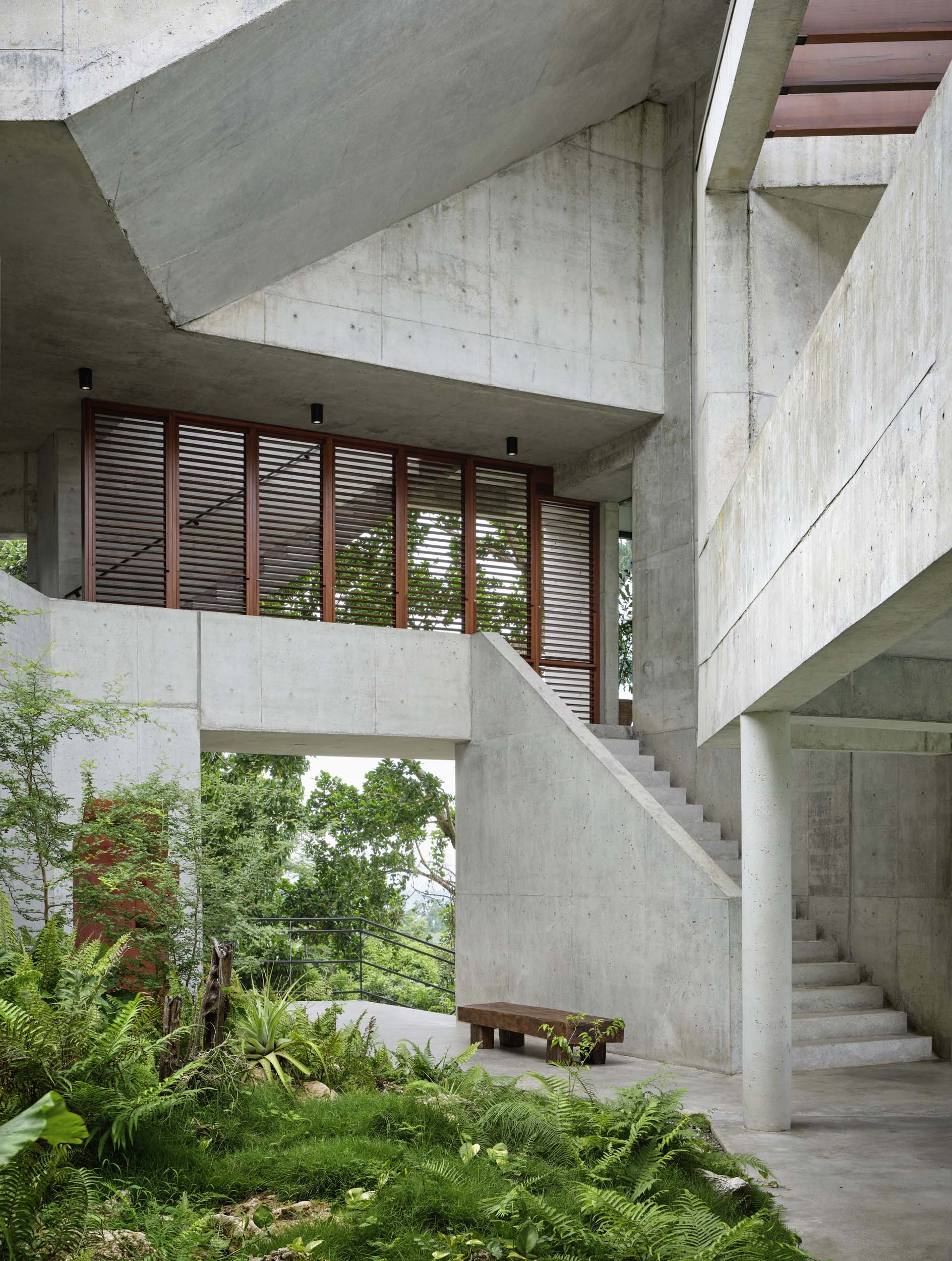
The layout connects each pavilion and room by prioritizing an indoor and outdoor connection. Each interior space is connected with external elements: patios, bridges, breezeways, and courtyards. The residence is designed to follow the contours of the land, with the main living room cantilevered over the ridge to best frame views of the Blue Lagoon. The design ensures that the built environment is always situated alongside the landscape. Trellises unite sky and concrete, while slatted wooden screens frame views inside the hideaway and tie in Caribbean wood shutters. These pieces are stitched together so that the retreat unfolds to reveal new surprising spaces. There’s no formal entryway to continue this fluidity.
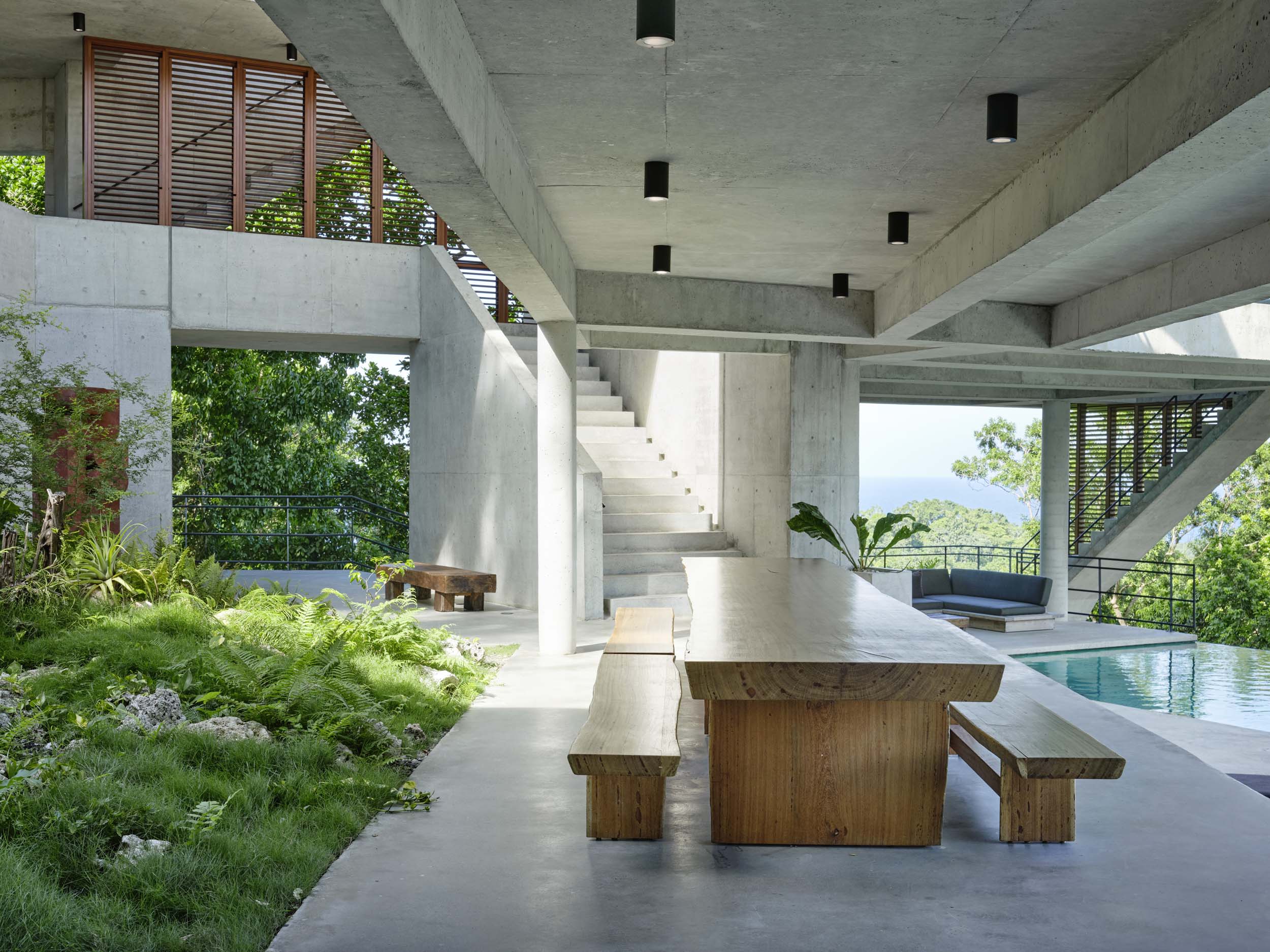
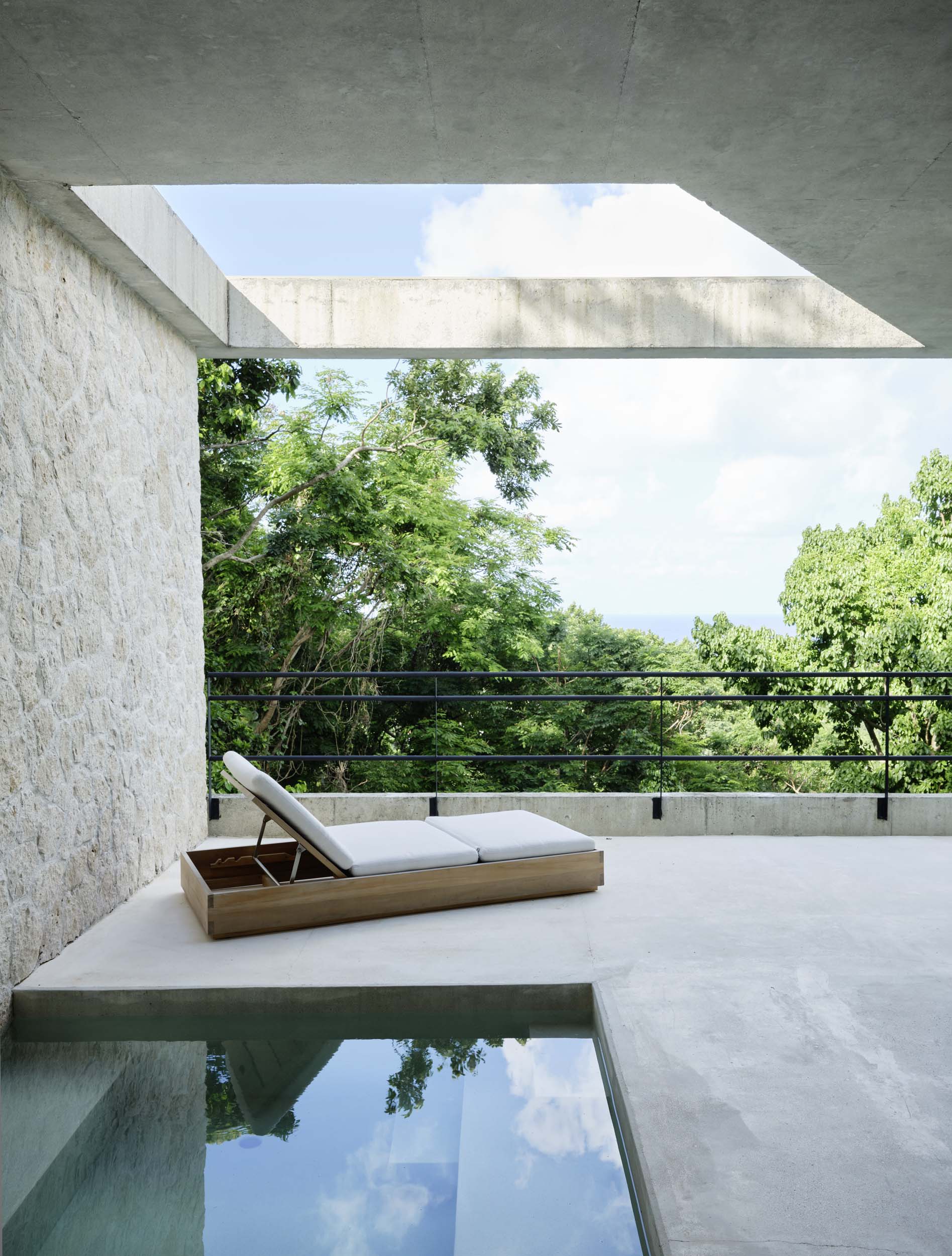
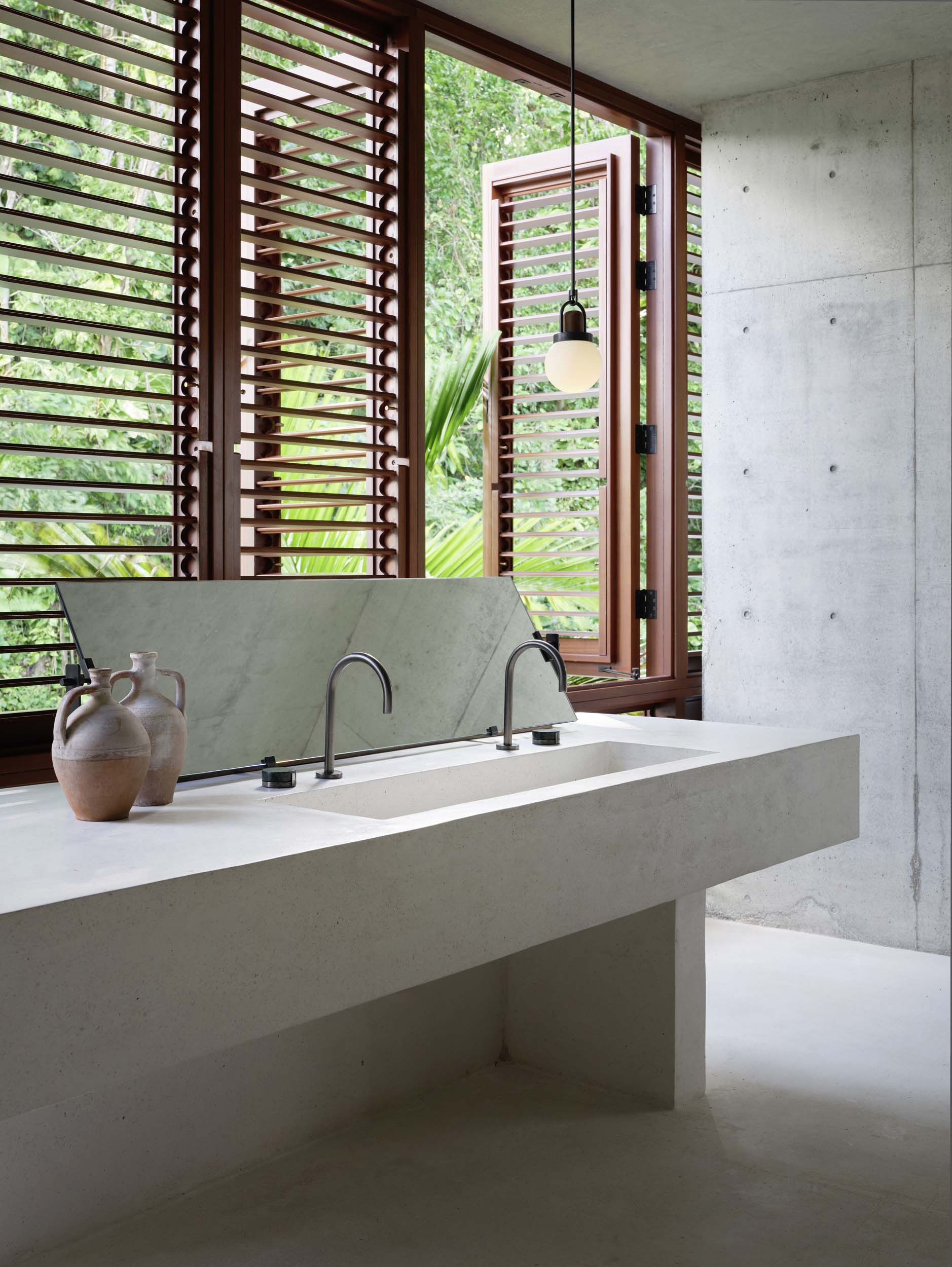
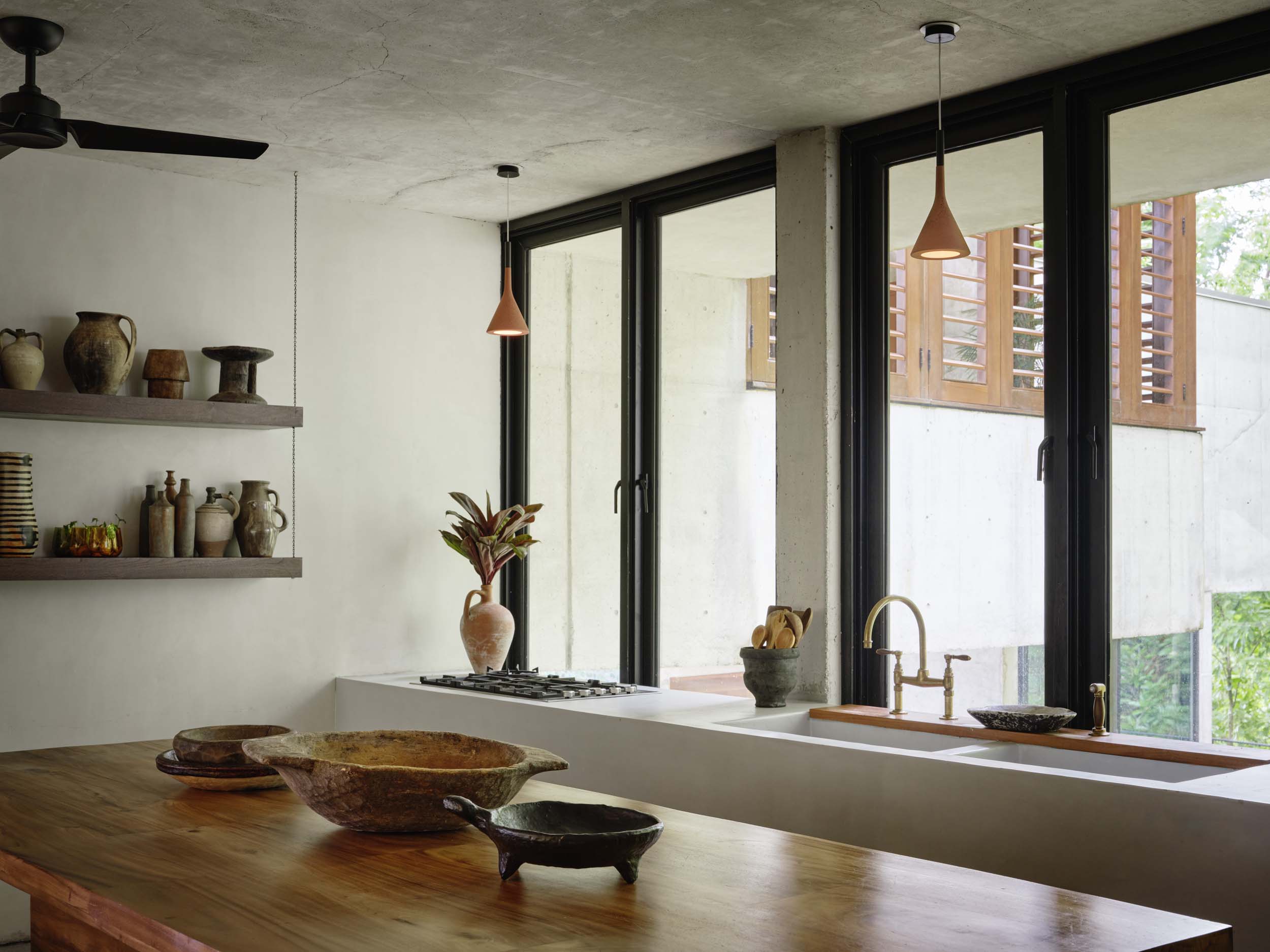
The designers lend a warmth and lightness to concrete not only by incorporating the indoor/outdoor elements, voids, and warm wood, but also through careful furnishings. Diplo’s longtime creative director Sara Nataf, as well as Katelyn Hinden, took point on the interior design. Natural limestone was preserved and integrated into the design, alongside earthy tones, rustic furniture, and green and blue tiles composed into a mural by Sofía Londoño and inspired by cellular plant life.
Geoponika designed much of the landscape within the design, incorporating previously existing elements such as an ackee house, a banana plantation, and a turtle pond. These elements are paired with new features—royal palms, ancient bamboo clusters, and a variety of fruit trees—to create a layered, lush retreat that lives up to Portland Parish’s own richness. The result harmonizes Brutalist forms with a lush, site-specific style. Hopefully it inspires equally lush beats, too.