
Antwerp is undergoing a cultural revival, though many might argue this major port town and unassuming capital of fashion has always maintained some level of influence. Part of this small but impactful city’s cache is its raft of museums that touch on creative topics as varied as Flemish Renaissance painting and radical performance art.
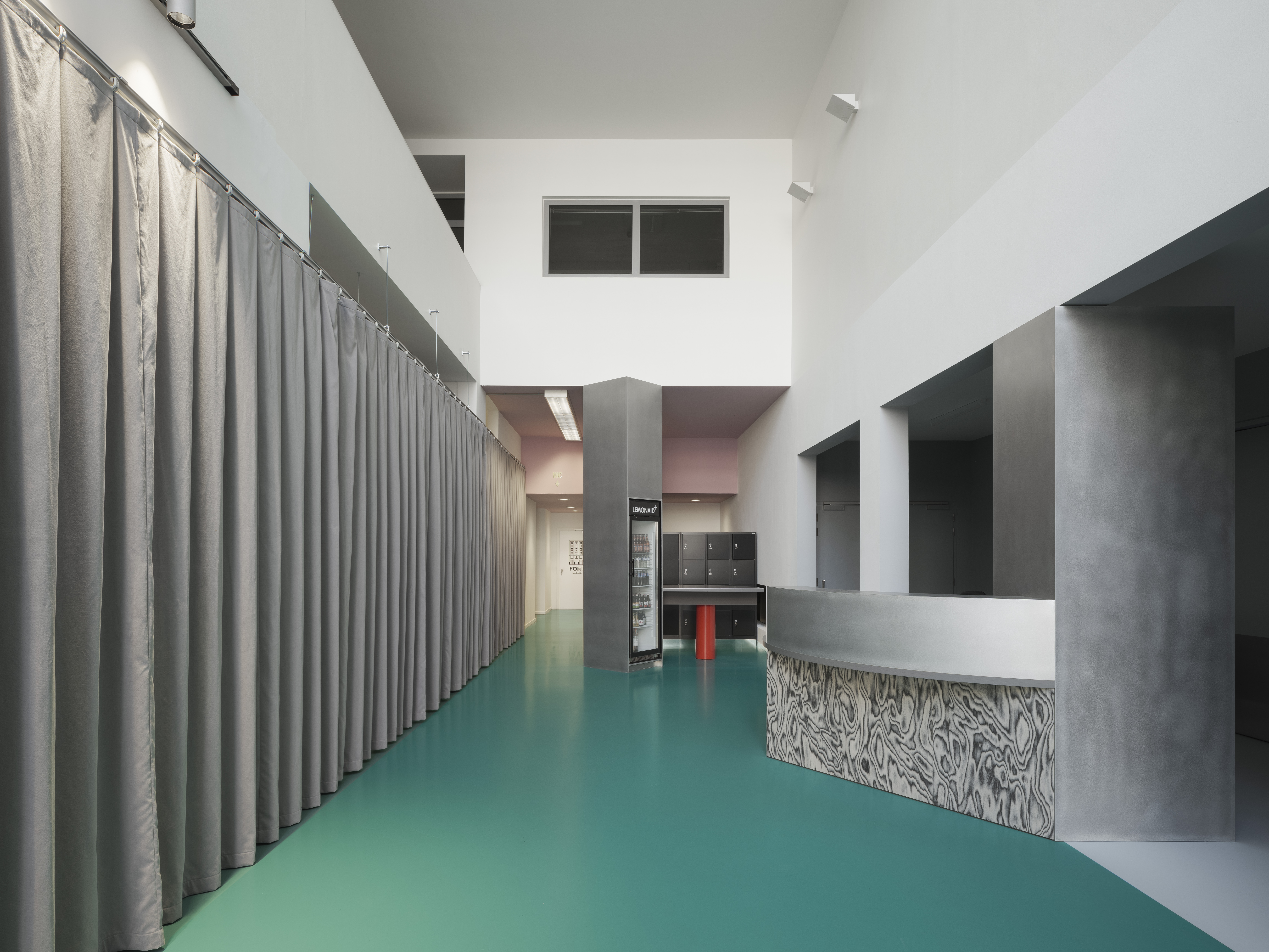
Among this bevy of specialized institutions is the world famous Fotomuseum Antwerp, or FOMU. Housed in a former warehouse, the kunsthalle-style platform has hosted solo exhibitions on Sally Mann, Cindy Sherman, and Zanele Muholi. Though a popular destination for 80,000 local and international visitors annually, its ground-level entrance was in dire need of a refresh.
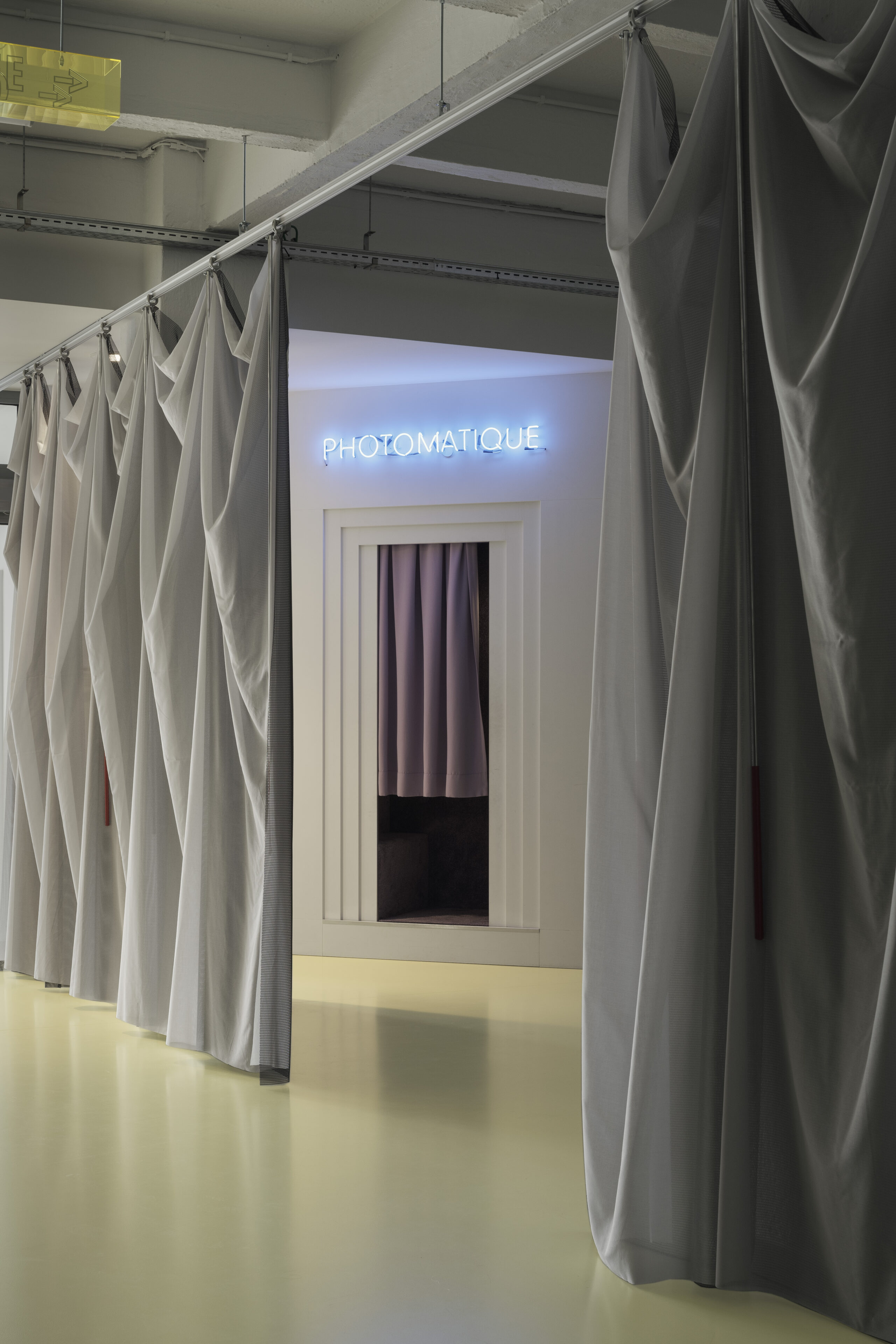
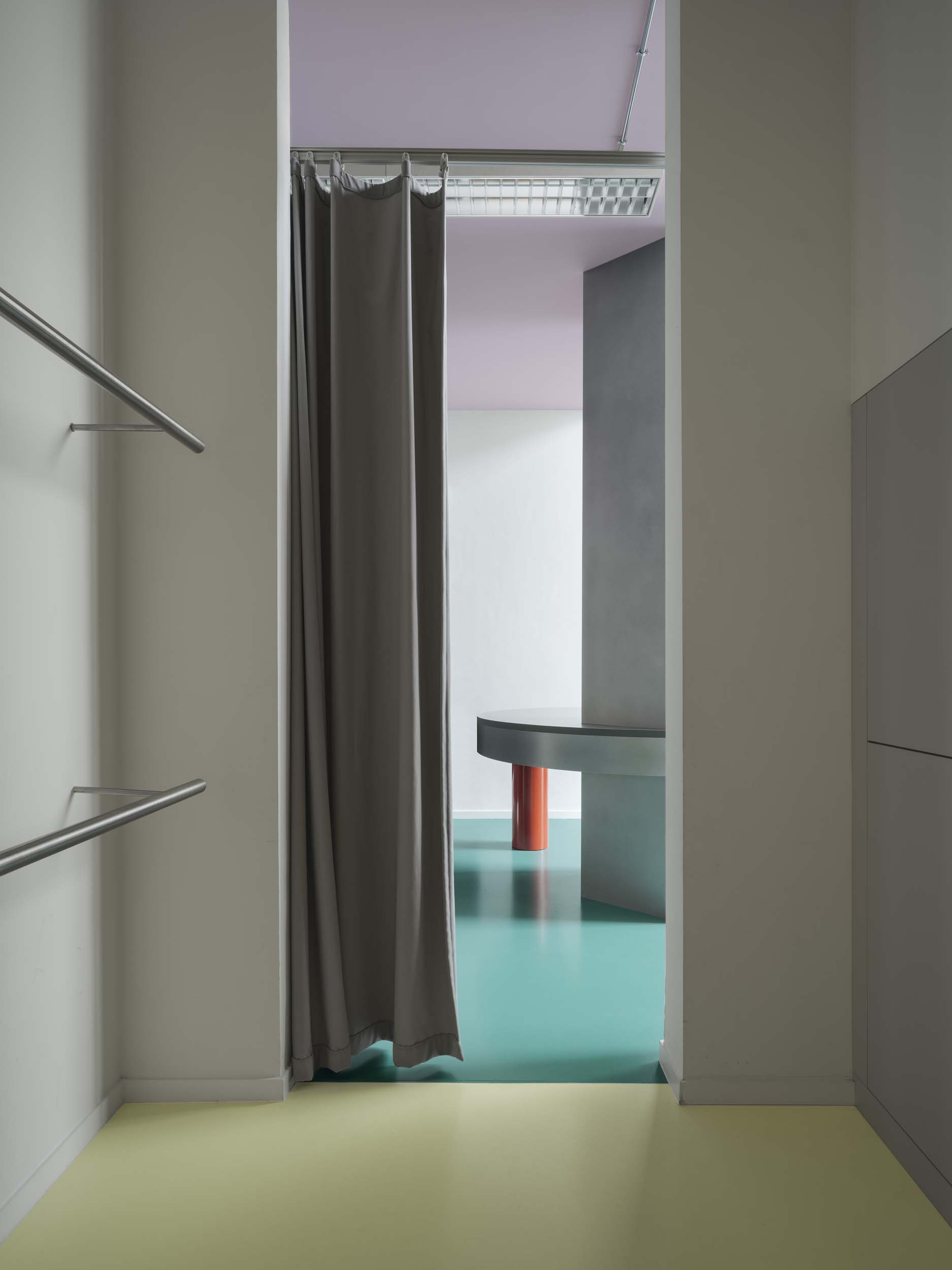
Answering an open call to reconfigure this essential space, local practice i.s.m.architecten devised a scheme predicated on better wayfinding and flexibility. The interior architecture firm’s winning design incorporates bold scenographic elements, easily decipherable signage, and visually striking material treatments.


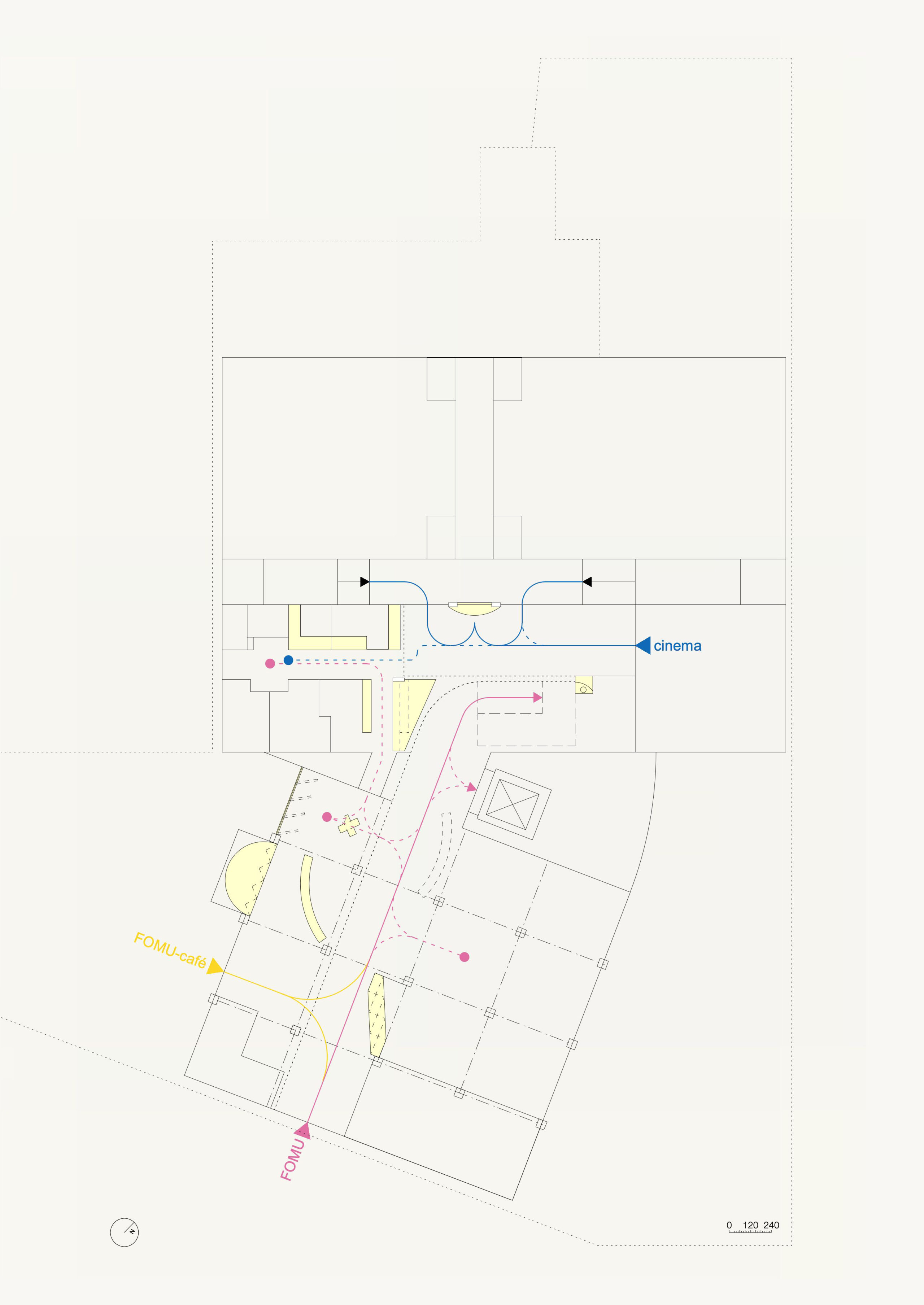
“Initially, the museum had to employ signage and staff to direct visitors up the stairs to the exhibition rooms,” said Wim Van der Vurst, practice coprincipal. Visitors were prone to “inadvertently” head toward the cinema instead of the museum: the stairs were situated laterally to this line of sight. Van der Vurst decided that “a spatial intervention was required to distinctly separate the two areas.”
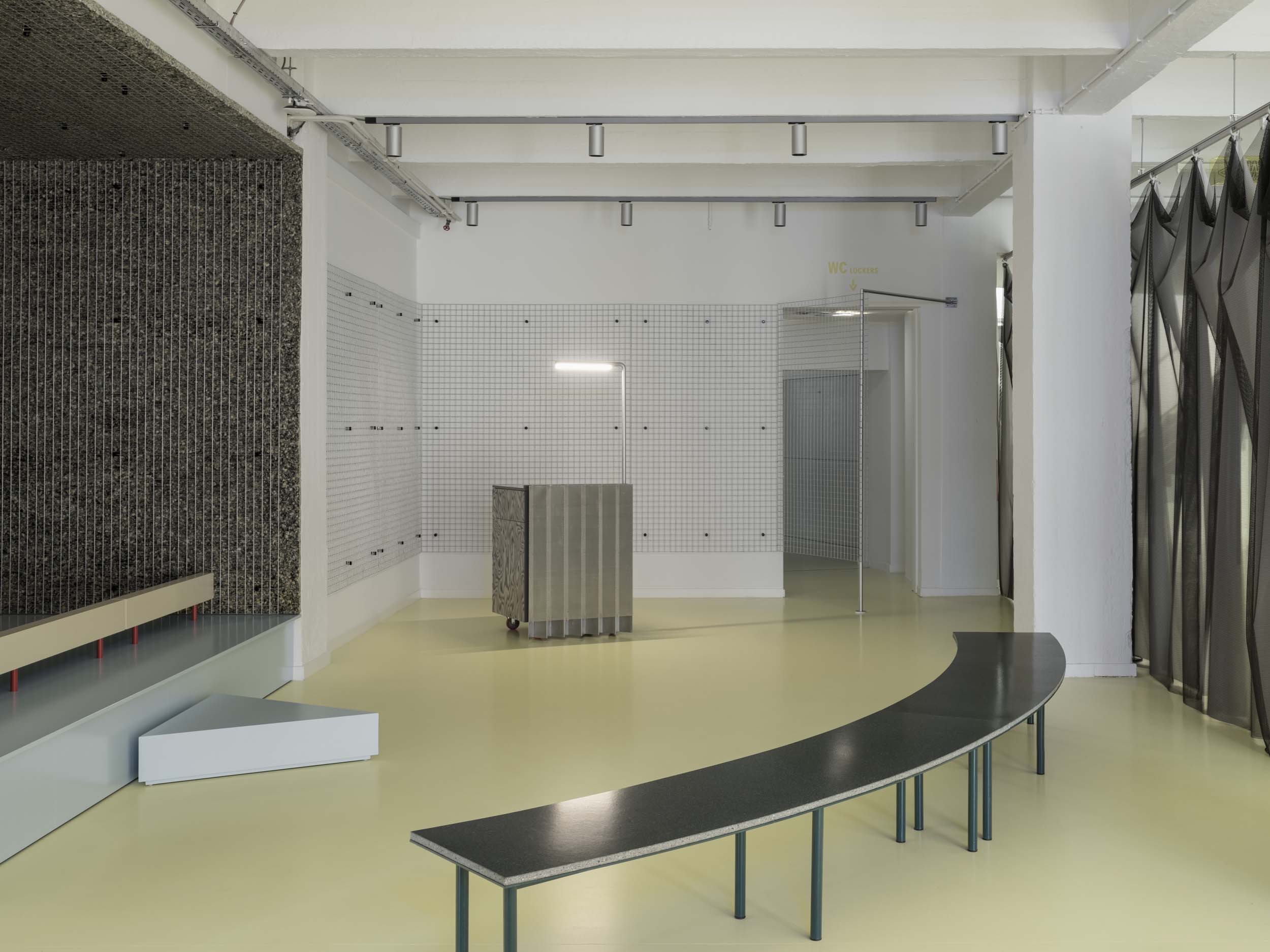
He and his team, including partner Koen Pauwels, worked around nonnegotiable constraints like the museum’s two entrances to introduce both hard and soft interventions. For example, a sculptural podium on wheels was constructed for impromptu lectures and capsule exhibitions alike.
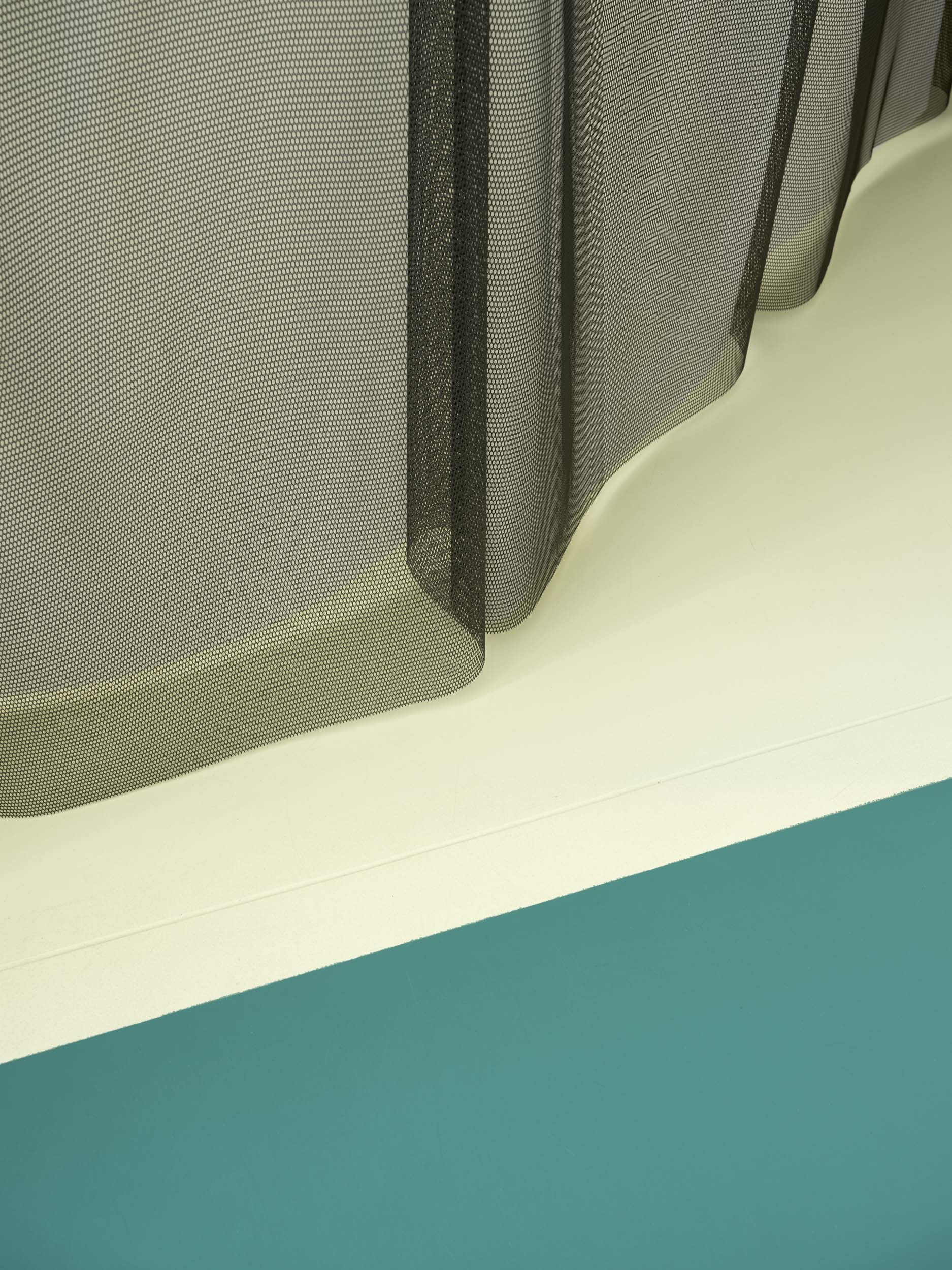
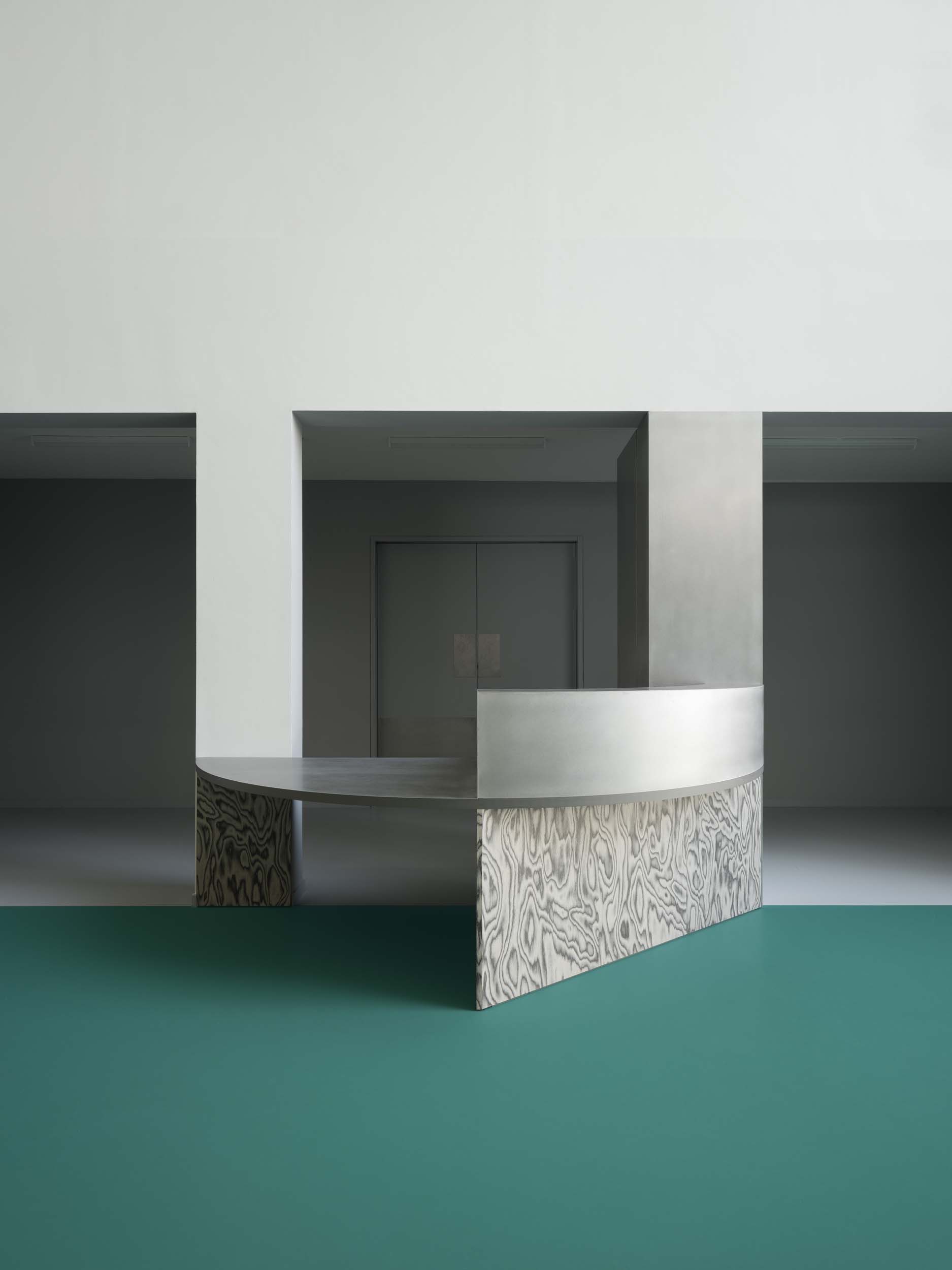
One of the most striking elements of i.s.m’s design is a continuous teal floor that “further demarcates the [space’s] two functions: light yellow for the museum and a darker green for the cinema.” This chromatic pairing reflects FOMU’s well-established visual identity, but also that of iconic camera brands like Kodak and Fujifilm.
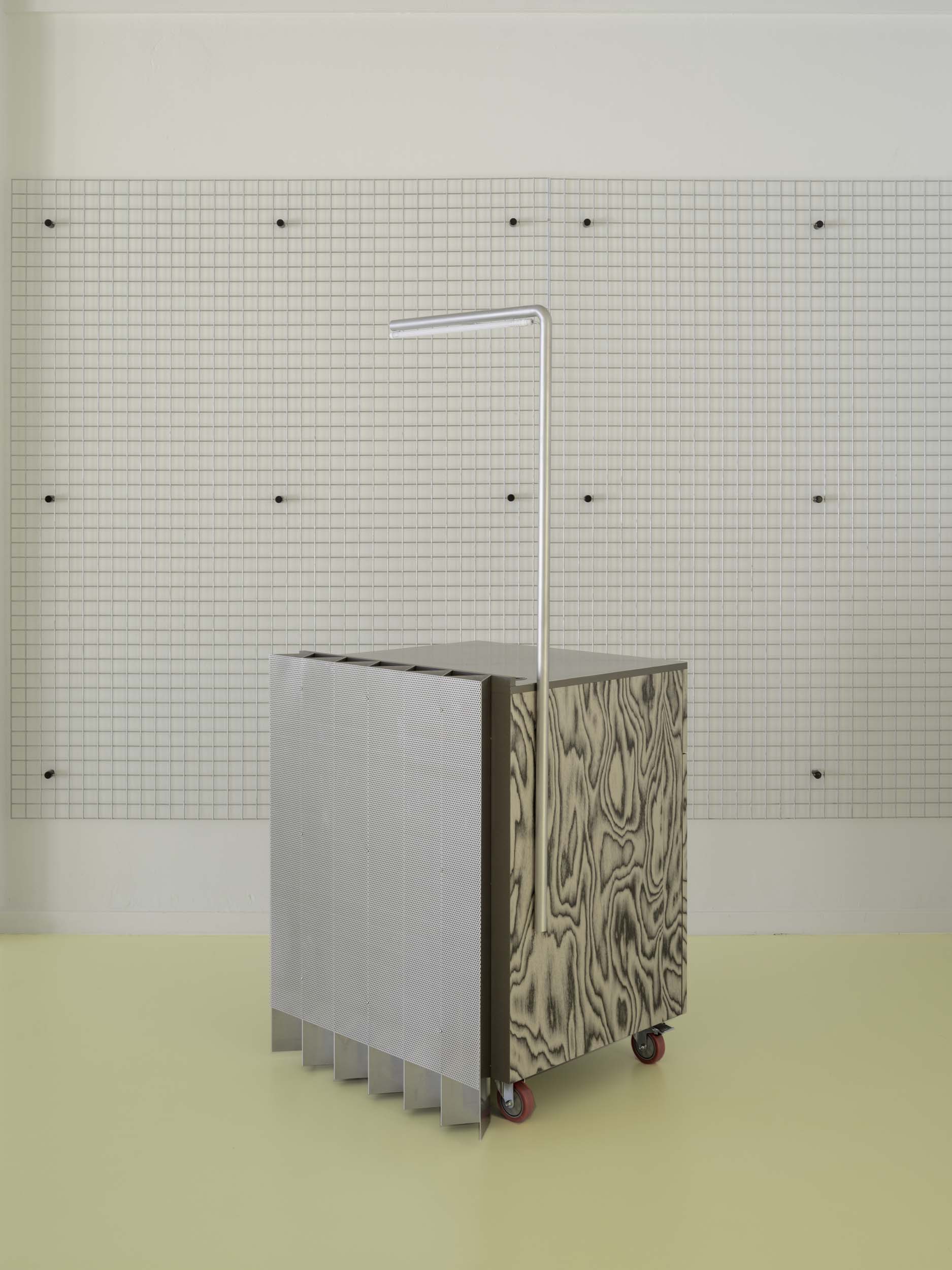
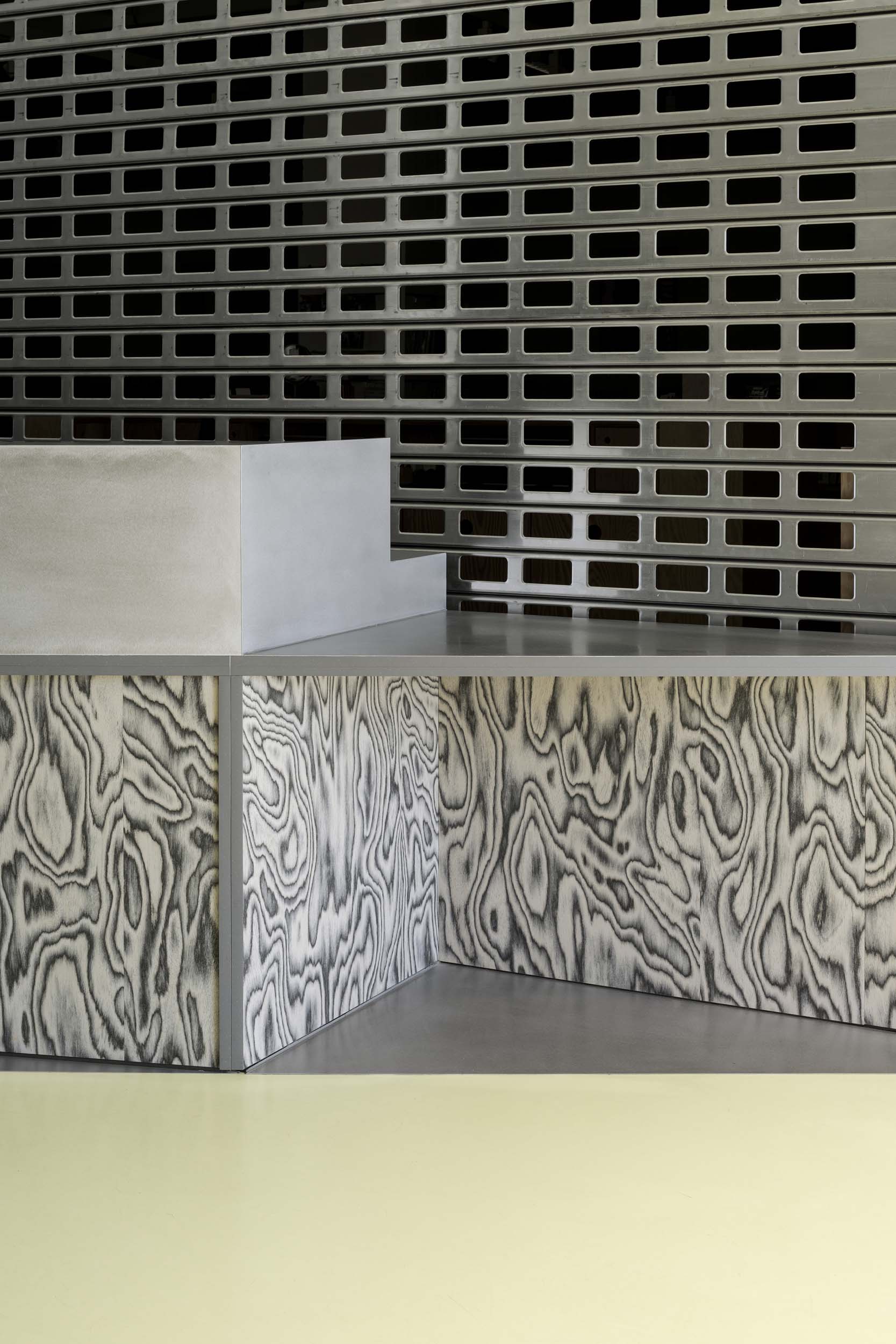
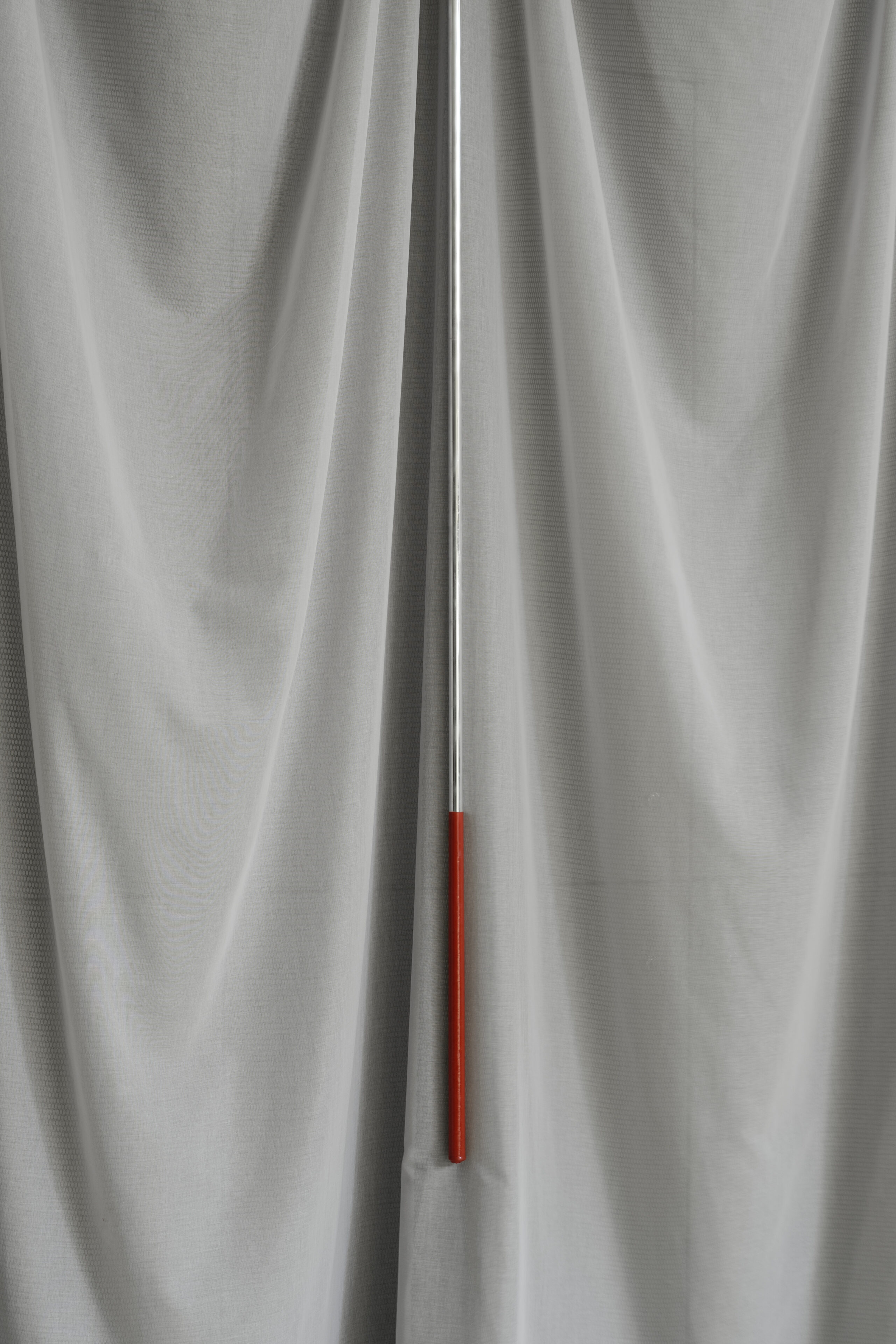
This colorway is also expressed in the use of sleek yet visually complex industrial components throughout, such as mesh metal wall panels and monolithic curved benches. Breaking up the monotony of iridescent aluminums and gray-to-black composites are pops of red—even implemented in curtain pulls.
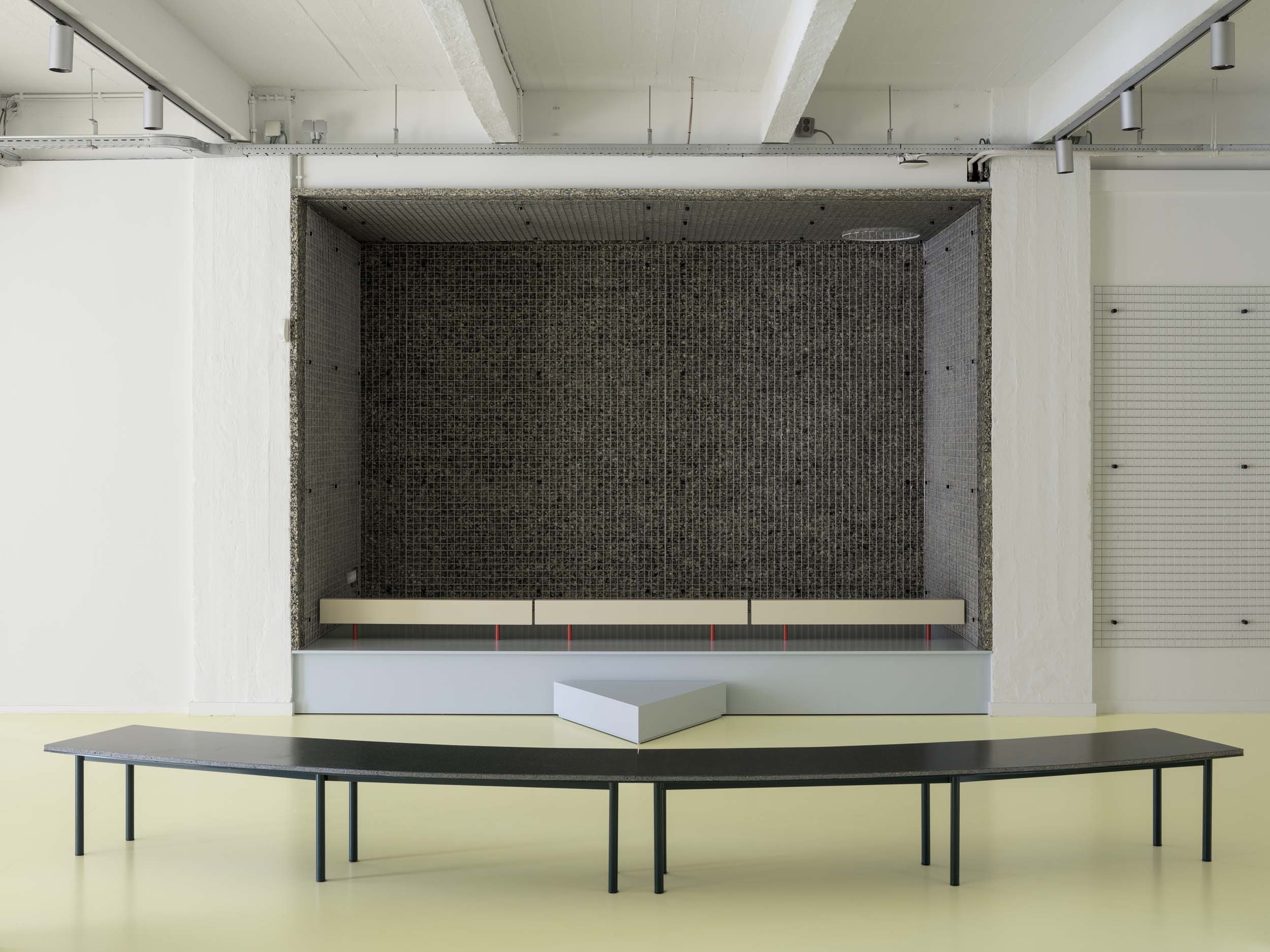
Other custom furnishings include a ticket counter with a triangular profile so as to not obstruct footfall. “These elements stand out due to their unique shape but are unified as a set through the consistent use of certain details and materials,” Van der Vurst added.
The 6,000-square-foot complex, incorporating many of FOMU’s auxiliary amenities and facilities, is also broken up by a large curtain developed by Brussels-based artist Flore Fockedey, who shapes her practice around the exploration of surfaces and the spaces they can make. Two types of drapery were incorporated as modular room dividers that can be opened or closed based on necessity. While a lush, double-sided textile adds a textural quality to the environment, a less ornate yet practical curtain encapsulates the cinema and provides sound insulation.
“This project reflects our firm’s emphasis on adaptive reuse and responsive design,” Van der Vurst concluded. “Similar to previous endeavors, our goal here was to create a space that is flexible, accessible, and engaging for the different stakeholders.”