
Swedish interior architecture firm, Joyn Studio, was tasked to transform a former industrial paint shop in Miami’s North River neighborhood into Fooq’s, an eclectic Middle Eastern restaurant. The restaurant originally opened in Downtown Miami in 2015. After a five year hiatus, owners David and Joshua Foulquier reimagined Fooq’s as an innovative and vibrant social hub. Joyn Studio mixed a warm color scheme and natural materials to reflect the bold Middle Eastern dishes served in the restaurant and the duo’s Iranian background.
Fooq’s marks the second restaurant collaboration between the Foulquier brothers and Joyn Studio. The first was Chez Fifi, where Joyn Studio transformed a former townhouse into the Parisian bistro in Manhattan. When asked how both restaurant projects compare, the cofounders of Joyn Studio, Lisa Grape, Helena Eliason, and Ida Wanler, shared with AN Interior, “The process is the same in many ways. Every project begins with a question—not about aesthetics, but about energy. What do we want to awaken? Where should the pulse rise or fall? Should the space invite movement or stillness?” The cofounders continued, “We start by decoding the culture of the place. Its rituals, dynamics, tensions, and invitations. We observe behavior before we shape the experience to understand how people naturally move and connect.”
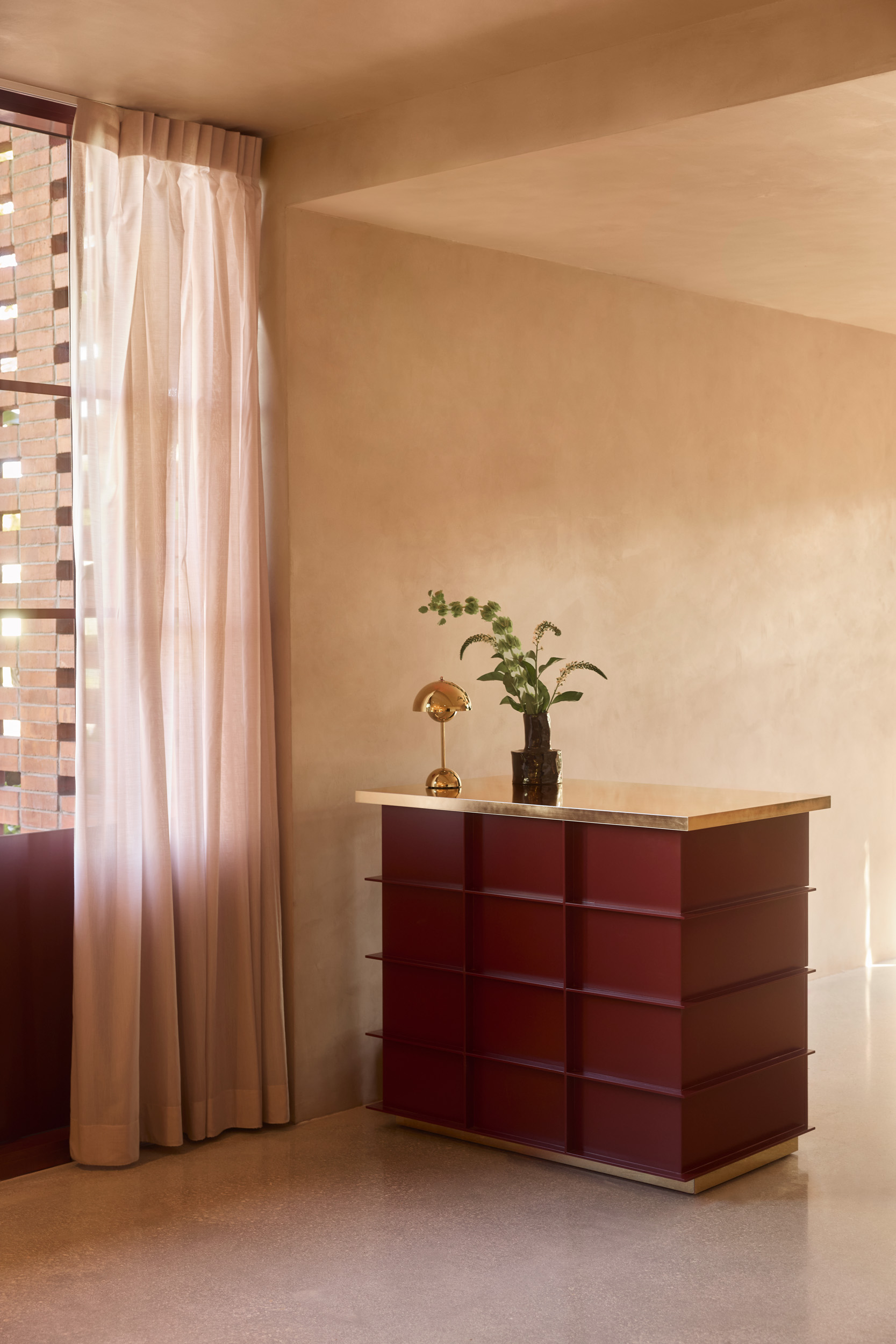
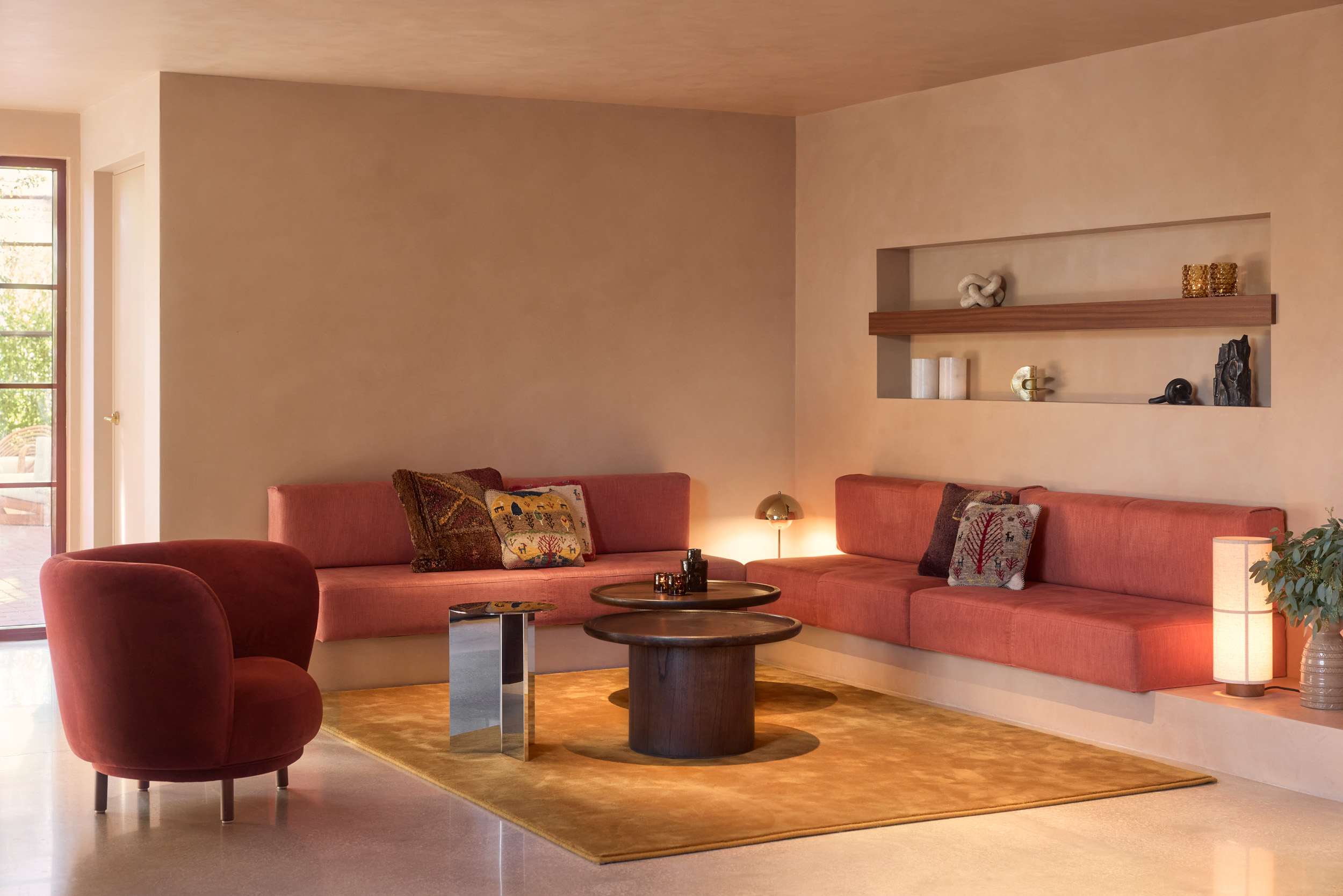
The restaurant’s facade is coated in a burnt red color with beige brick accents, all nestled within a tropical green landscape. The warm palette continues inside with an intimate bar and seating area. Beige plaster walls are met with two built-in red booths and a circular wooden coffee table, set against a plush ochre rug. Opposite of the benches is a quaint Dandy Chair by Swedish furniture company, Massproductions. The entrance provides an inviting introduction to the restaurant, and it’s only the first stop along the design’s journey.
“We love how you enter the restaurant first in an intimate space, not too big. Then you need to pass through an even more condensed space, the wine corridor, before you reach the large high ceiling dining room,” Joyn Studio cofounders continued. The narrow corridor gives way to walls covered with indigo subway tiles and an abstract blue and white wallpaper that could be likened to a modern adaptation of the Rorschach test.
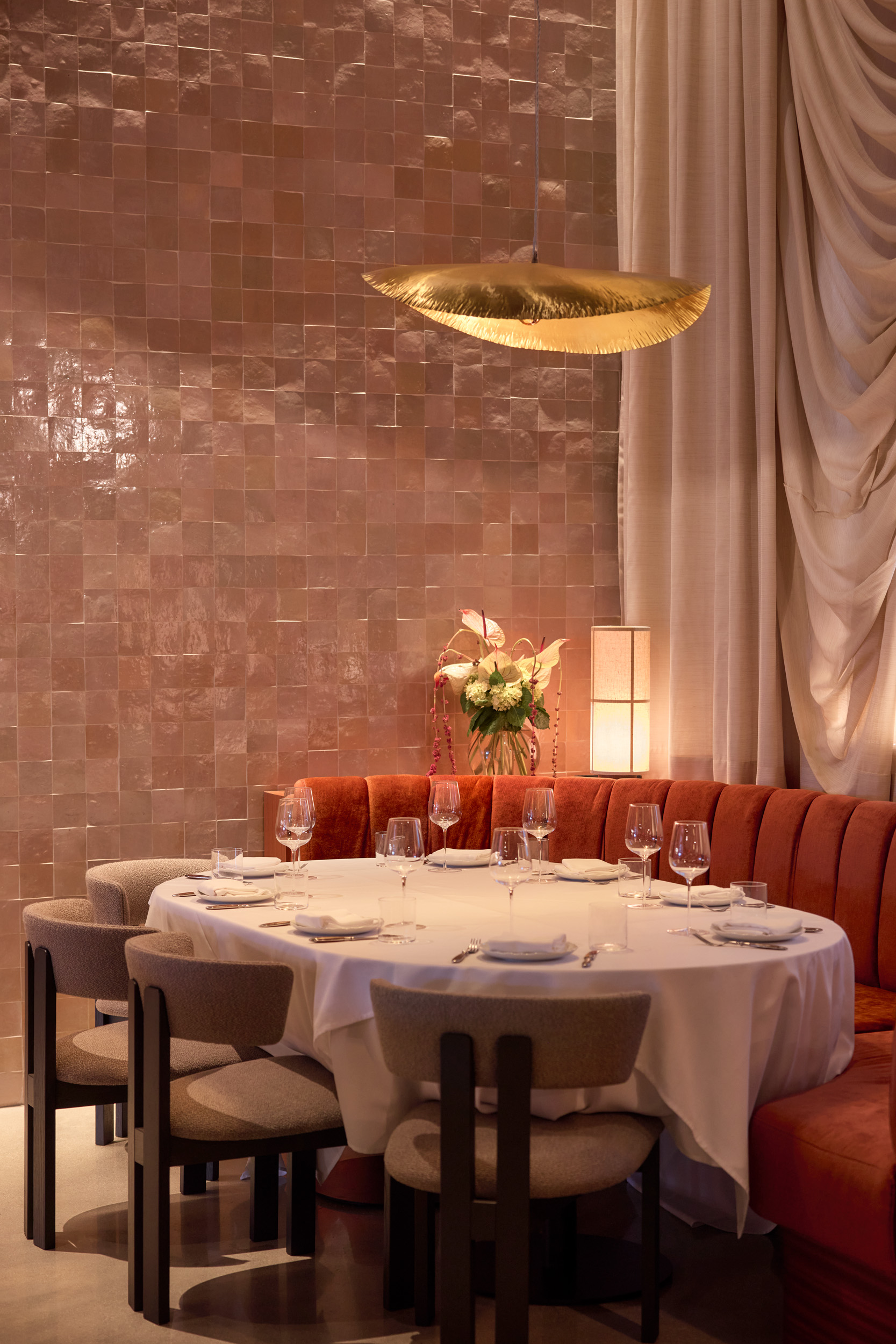
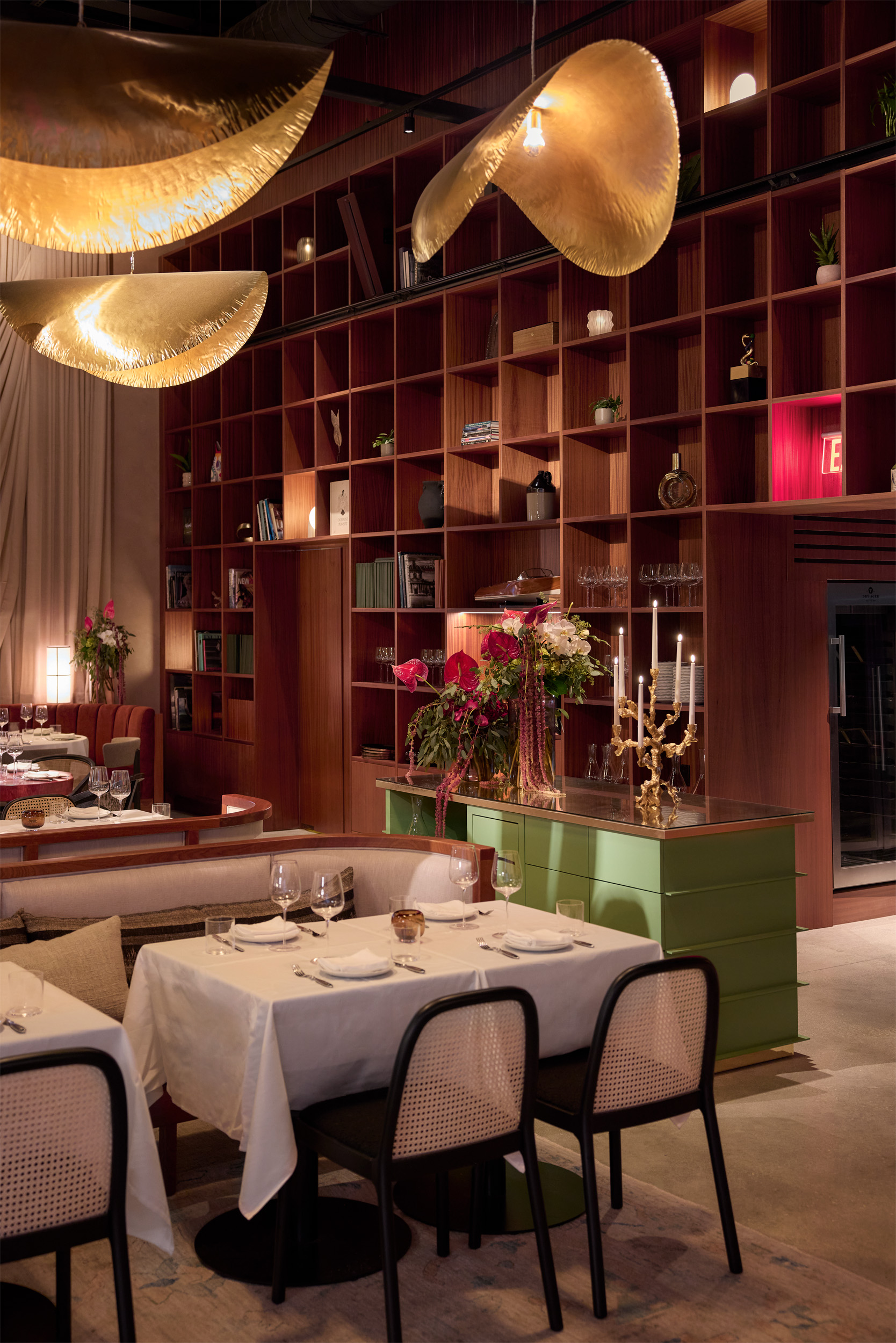
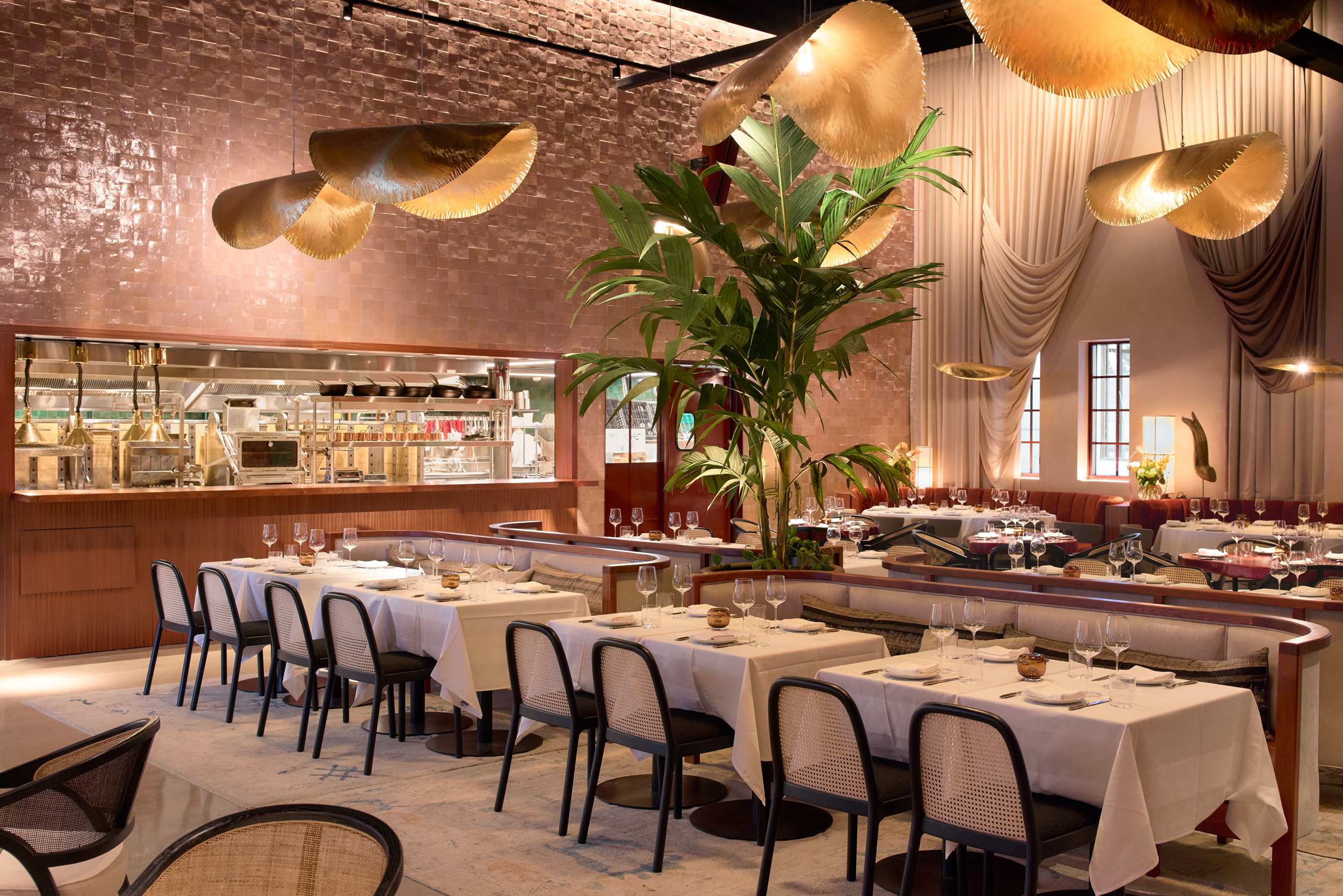
The heart of Fooq’s opens up after the narrow dark pathway. In the dining room, large folded brass disc light pendants by Italian furniture company Gervasoni add a whimsical sense. The lights are suspended from the double-height ceilings, creating a fluttering effect throughout the space. Below are crisp white tableclothed tables met with oatmeal-colored banquets and muted black wooden framed cane dining chairs by Aarhus. The surrounding walls, covered in soft pink handmade tiles, offer a dynamic textural shift in the dining area. Opposite the exposed kitchen, floor-to-ceiling bookshelves hold antiques, art, and other unique knick-knacks.
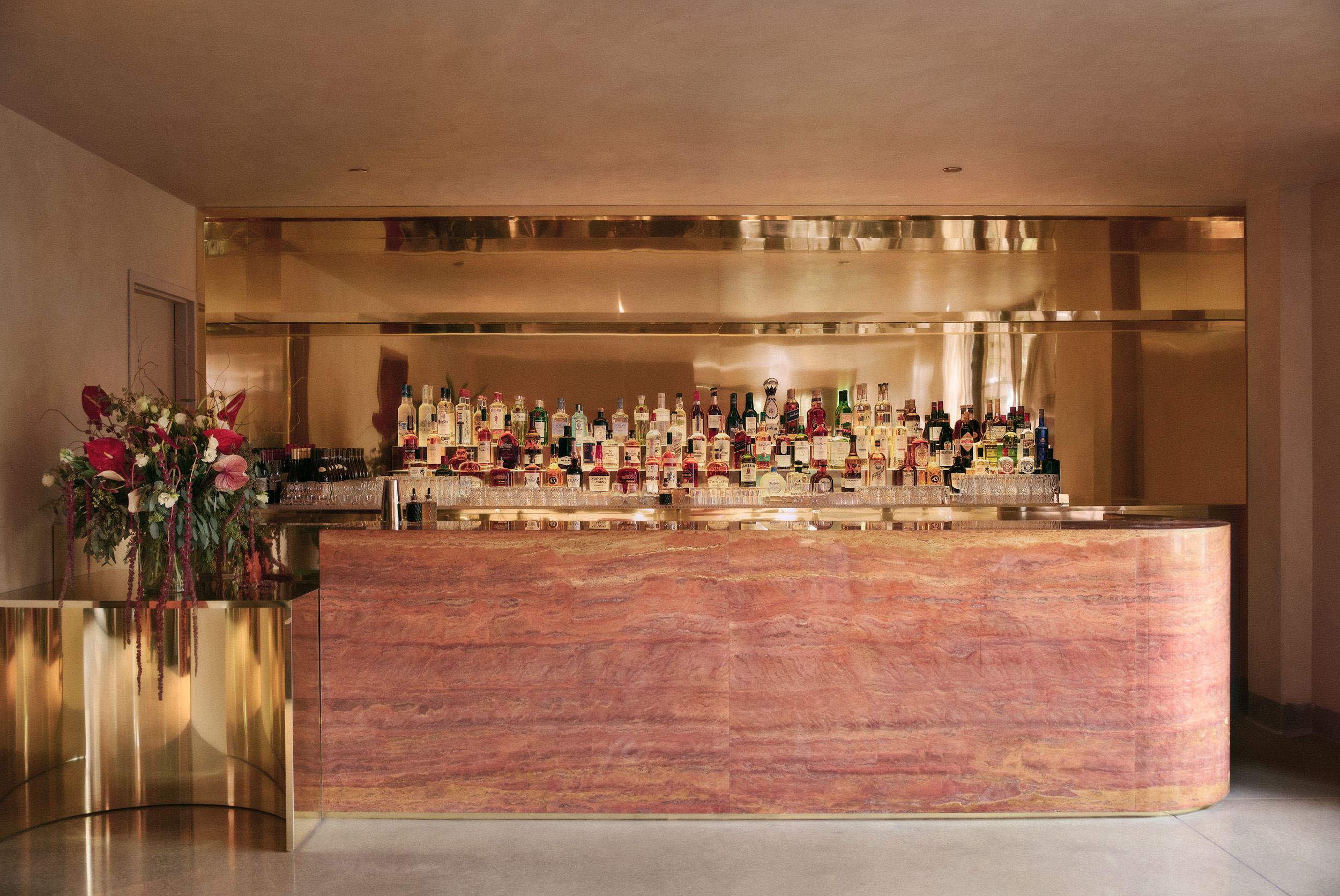
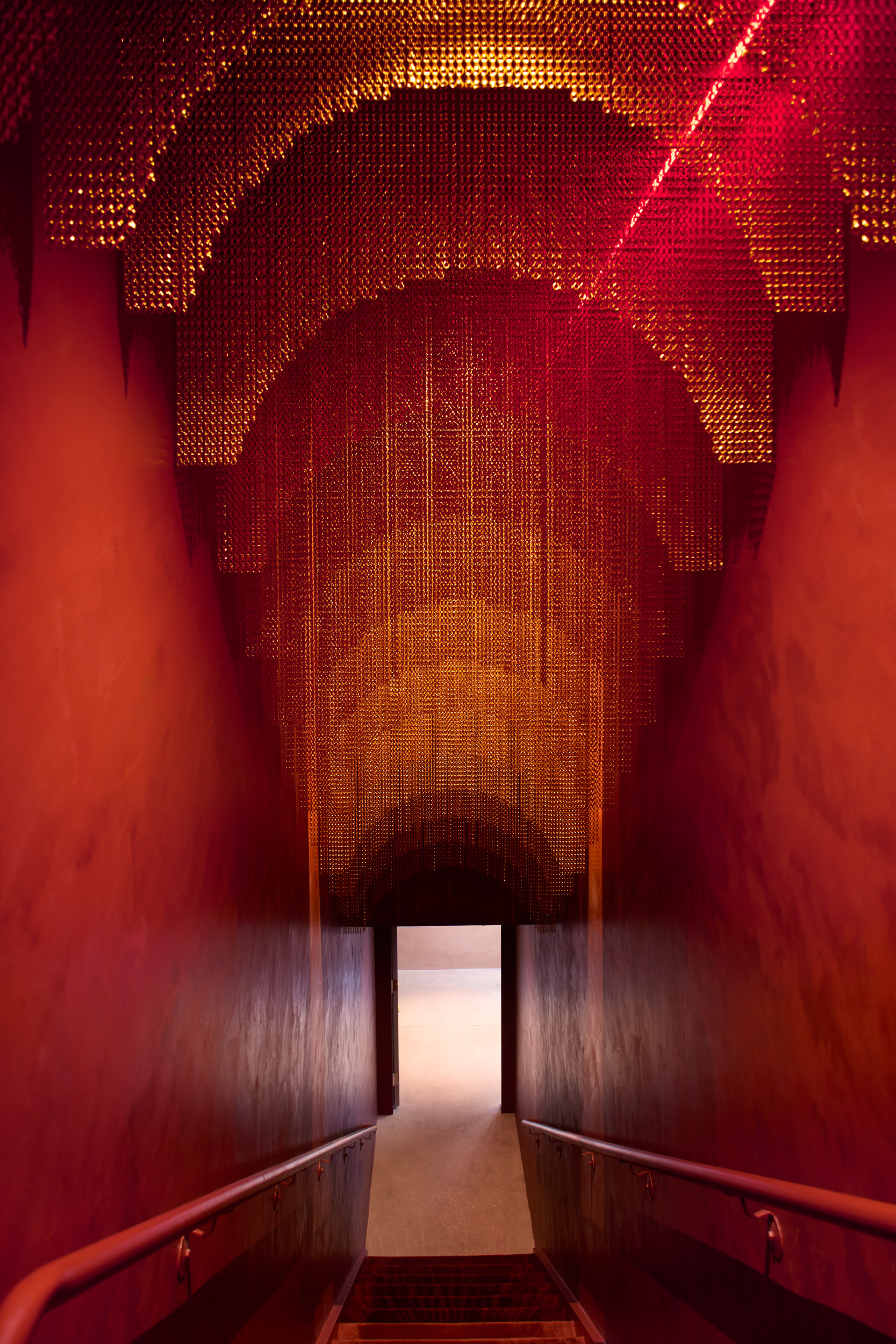
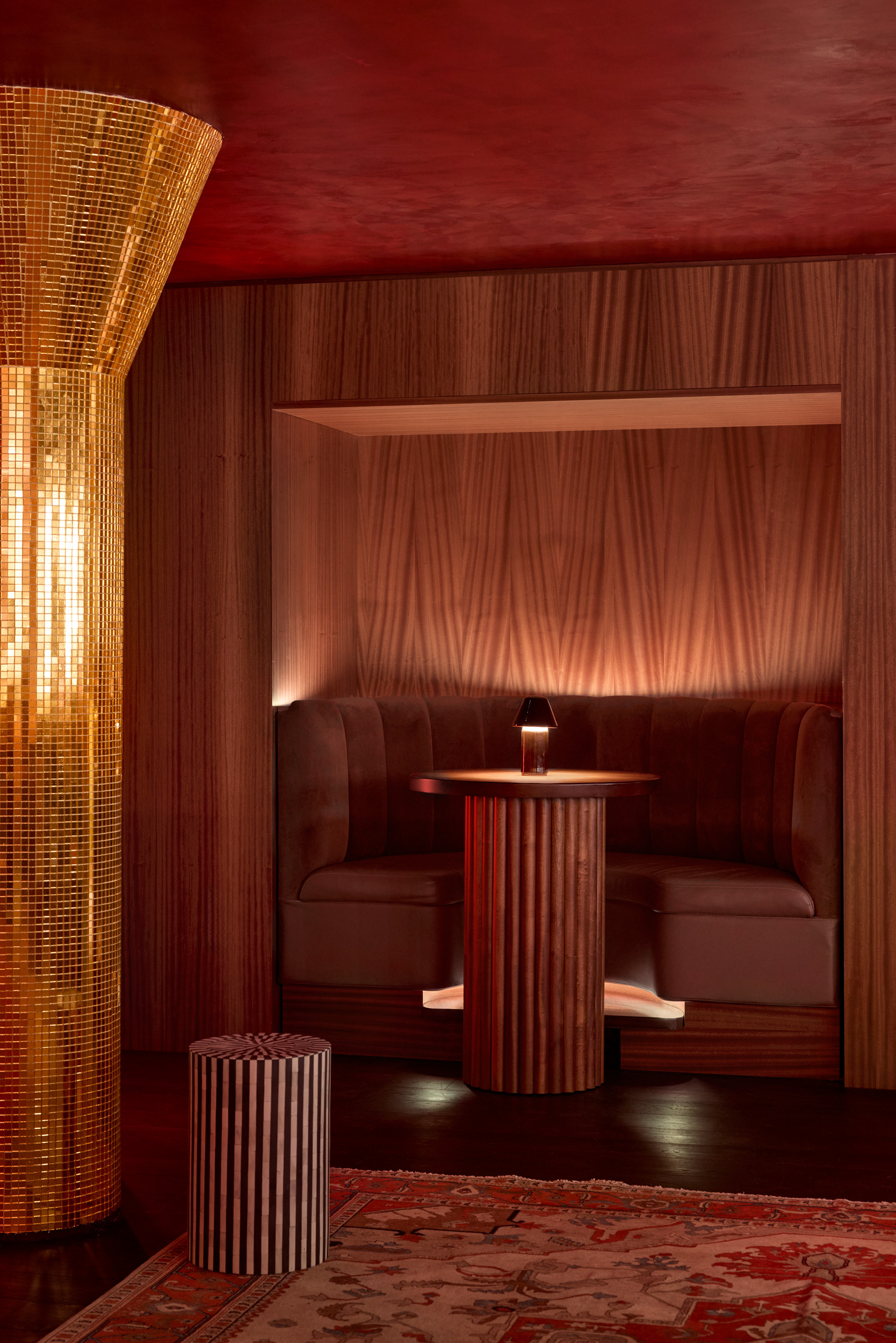
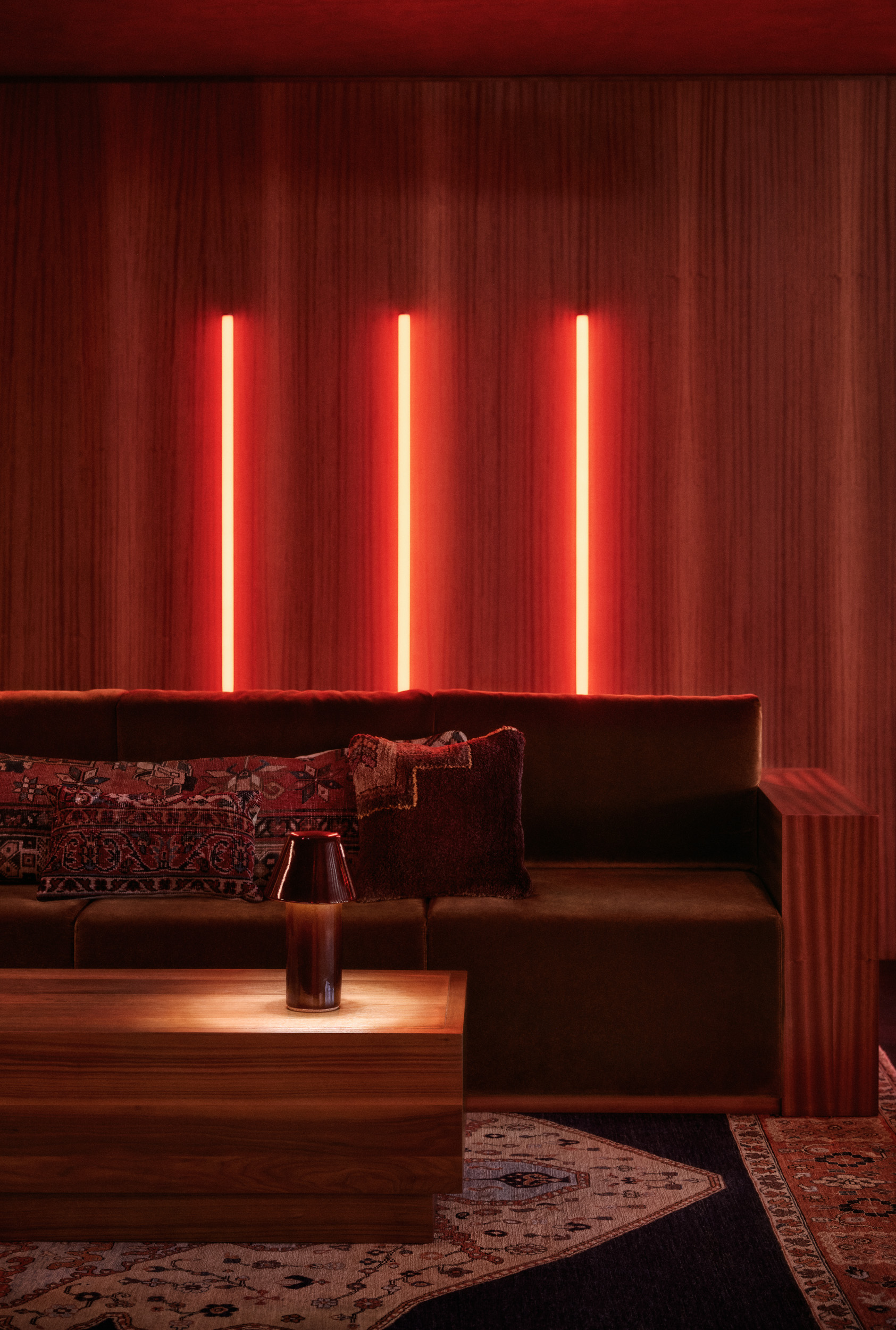
The Foulquier brothers wanted to create space in Fooq’s where the experience can continue after dinner: This is where the Lion’s Den comes into play. To get to the moody lounge, guests walk up a stairwell where the walls, ceiling, and handrails are completely covered in a dark, rich red. Contrasting it is a cascading series of sculptural golden chains suspended from the ceiling. The second-floor bar shifts to a totally different mood: low lighting, warm wooden applications, deep seating, and overlapping Persian rugs. Half of a golden disco ball hangs from the red ceiling. The reflective material expands to the structural pillars, which are encrusted in the same mirrored pieces.
Studio Joyn’s designs blend Miami’s cultural identity with bold Middle Eastern flair. The Swedish firm’s design ethos is “to put people in the right mood,” an intention that is evident throughout Fooq’s social and dining spaces.